
Reviewed · BALINESE COOKING CLASSES
From Ubud : Ubud Balinese cooking class with Market tour
The best part of this Ubud experience is that cooking begins long before the stove. In the morning, you visit the traditional market in Tampaksiring village, see rice paddies, then return to a Balinese home to turn local ingredients into nine dishes. It gives you a useful look at where the food starts, not just how it lands on your plate.
I like the friendly, hands-on format and the chance to cook in an outdoor kitchen at a Balinese house. I also like the practical finish: you eat the meal you made and receive copies of all nine recipes. The main caution is spice. One guest found the dishes far too hot, so ask for a milder version when you book.
In This Review
- Key points to know before booking
- A market-first introduction to Balinese food
- Rice paddies before the cooking begins
- Afternoon sessions trade scenery for canang making
- Building the spice paste from scratch
- Nine dishes, including tempe, chicken, and soup
- Eating what you prepared at a Balinese house
- What the $58 price really covers
- Pickup rules and timing matter
- Who will enjoy this class most
- Cancellation and planning notes
- Should you book this Ubud cooking class?
- FAQ
- Where does the cooking class take place?
- How long does the experience last?
- What is included in the morning class?
- Is the traditional market visit available in the afternoon?
- What does the afternoon class include instead?
- How many recipes will I prepare?
- Is a meal included?
- Is hotel pickup included?
- Can vegetarians join the class?
- How large is the group?
Key points to know before booking
- Morning and afternoon sessions differ: The market and rice-paddy visits are offered with the morning class. Afternoon participants make a canang offering instead.
- You cook nine Balinese recipes: The lesson includes spice paste, fried tempe, Balinese chicken, vegetable soup, and other local dishes.
- Wayan Aris leads the experience: Pickup, guiding, cooking instruction, and transport are included for hotels in central Ubud.
- The group is capped at 12 people: That is small enough for hands-on work, though the lesson may feel busy at full capacity.
- You finish with a buffet meal: The class is not just a demonstration. You help prepare the food, then sit down to eat it.
- Spice needs a quick conversation: Tell the provider about vegetarian needs at least one day ahead, and request less chili if you prefer gentler heat.
A market-first introduction to Balinese food
For the morning class, the day begins with hotel pickup in central Ubud and a drive toward Tampaksiring village. One family described the journey as about 40 minutes through villages, which gives you a useful change of scene before the cooking starts.
The traditional market visit is the most valuable part for anyone who likes to understand food in context. You see the ingredients before they are chopped, ground, seasoned, and cooked. Your guide can also help explain what you are seeing, and one especially warm account describes Wayan knowing people at the market. That sort of local connection can make a short visit feel less like a stop on a schedule.
Do not expect a long market tour with hours to browse. The visit is one part of a five-hour experience, and the class remains the main event. Still, the stop helps you recognize the ingredients used later, which makes the cooking lesson easier to follow.
The market is available with the morning class only. If you book the afternoon option, you will not get this visit, so check the start time carefully before paying.
More Balinese cooking classes:
- Ubud Cooking Class Bali with Balinese Chef
★ 5.0 · 1,609 reviews - Ubud: Cooking Class with Transfers and Optional Market Visit
★ 4.9 · 824 reviews - PRIVATE Authentic Balinese Cooking Class in Ubud at Putu’s Home
★ 5.0 · 644 reviews
Rice paddies before the cooking begins
The morning route also includes a visit to local rice paddies. This is a scenic pause, but it has a practical purpose too. Rice sits at the heart of Indonesian meals, and seeing cultivated fields gives you a little more sense of the work behind an everyday staple.
The supplied details do not promise a long walk or a formal farm lesson, so treat this as a short countryside visit rather than a full agricultural tour. Bring a camera, as suggested, and wear ordinary clothing that you do not mind cooking in later.
The combination of market and paddies works well because it links ingredients to place. You are not simply memorizing a recipe. You are seeing part of the local food chain, then returning to prepare a meal with your own hands.
Afternoon sessions trade scenery for canang making
The afternoon version follows a different pattern. Instead of the morning market and rice paddies, you make a canang offering.
Canang are small Balinese offerings, and making one adds a cultural activity that the morning class does not include. The information provided does not specify the exact materials or length of this part, so you should not book the afternoon class expecting a market visit as well.
This choice comes down to your interests. Pick the morning class if you want the strongest food-and-place connection, with the market and paddies. Pick the afternoon class if making a canang offering appeals to you more than an early market visit.
Building the spice paste from scratch
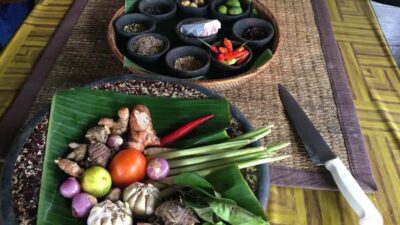
Back at the cooking venue, you receive a welcome drink, described as cold iced tea. Then you begin with the foundation of many Balinese dishes: a spice paste used as a base sauce.
This is where the class moves beyond simply following a recipe card. Balinese food often depends on a careful balance of aromatics, spice, salt, and heat. Preparing the paste helps you understand why several dishes can taste related while still being distinct.
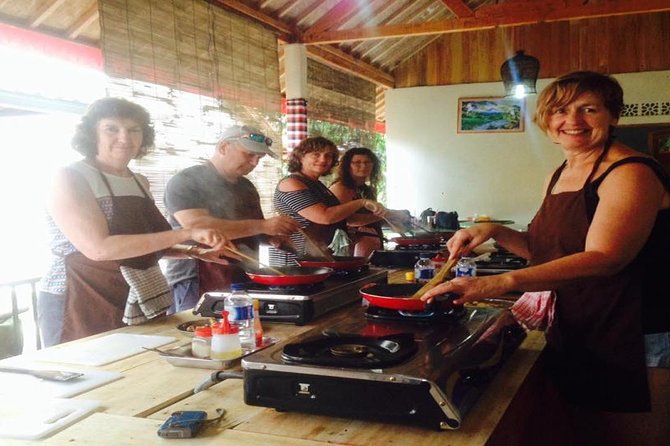
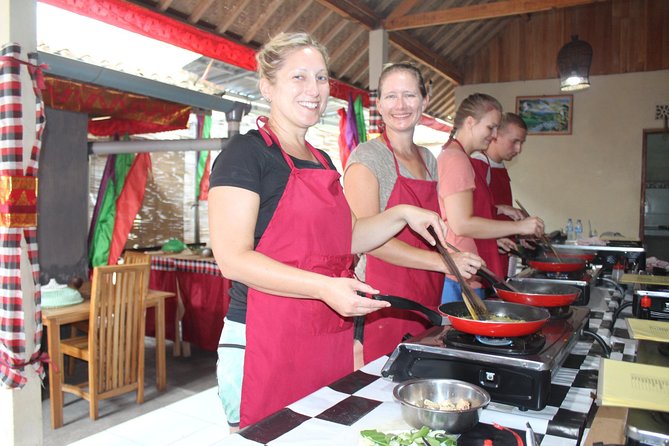
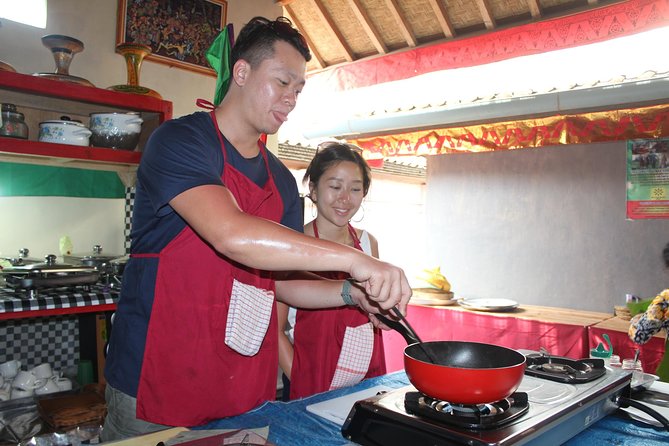
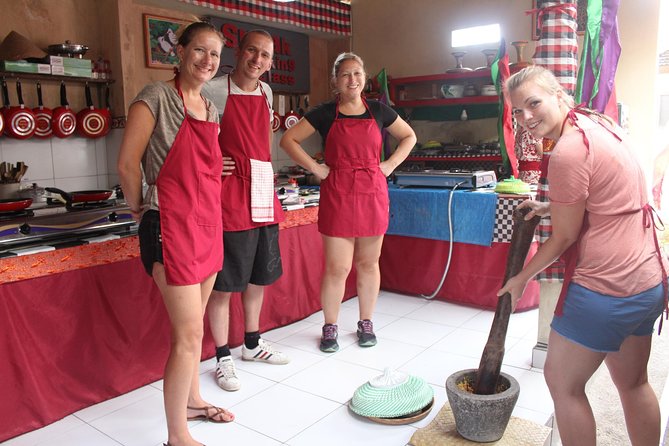
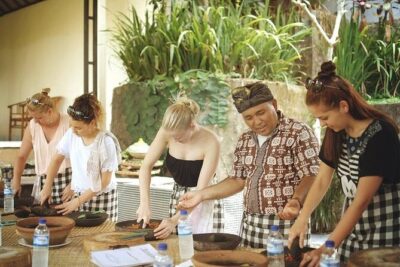
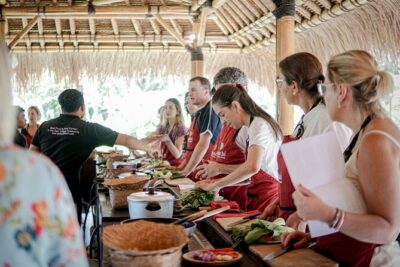
The class is hands-on, not just a cooking demonstration. You work through the ingredients and methods with instruction from Wayan and the local cooking team. One family found the lesson particularly successful because the guide shared local information while helping everyone prepare the food.
The group limit is 12 people. That is a reasonable size for a social class, and it should allow you to take part rather than watch from the back. If the class fills completely, you may have to share workstations or wait briefly for certain steps. The exact setup can vary, but the format is designed around participation.
More market visits in Ubud:
- Balinese Ubud cooking school (9 Dish Cooking and Market Tour)
★ 5.0 · 540 reviews - Ubud: Balinese Cooking Class and Market Tour
★ 4.8 · 531 reviews - Balinese Cooking class with traditional morning market visit
★ 5.0 · 161 reviews - PRIVATE Ubud Market Tour & Balinese Cooking Class with Putu
★ 5.0 · 125 reviews
Nine dishes, including tempe, chicken, and soup
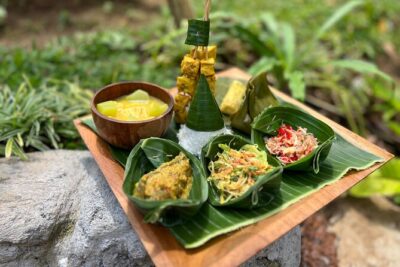
The class covers nine Balinese recipes. The supplied examples include fried tempe, Balinese chicken, vegetable soup, and other local dishes. You also prepare the central spice mixture that supports many of them.
Nine recipes is a generous amount for a five-hour experience. You get variety, but you should also expect a fairly active session. This is not the right pick if you want one slow, highly polished dish with a long chef demonstration. It is better for you if the fun lies in trying several preparations and learning a broad set of techniques.
The class can also introduce dishes that are less familiar than the standard tourist favorites. That gives the meal more character, although the exact nine recipes are not listed in the available details. You receive a PDF or copies of all nine recipes afterward, which is a useful benefit if you want to repeat the food at home.
A key point is to discuss heat before the class starts. One participant found the food so spicy that even people who normally enjoy chili struggled to eat it. Balinese cooking often uses strong seasoning, but there is no reason to suffer through the meal. Ask for reduced chili when you reserve or when the cooking begins.
Vegetarians should also make their needs known at least one day before the class. The provider specifically asks for advance notice, so do not leave this request until pickup time.
Eating what you prepared at a Balinese house
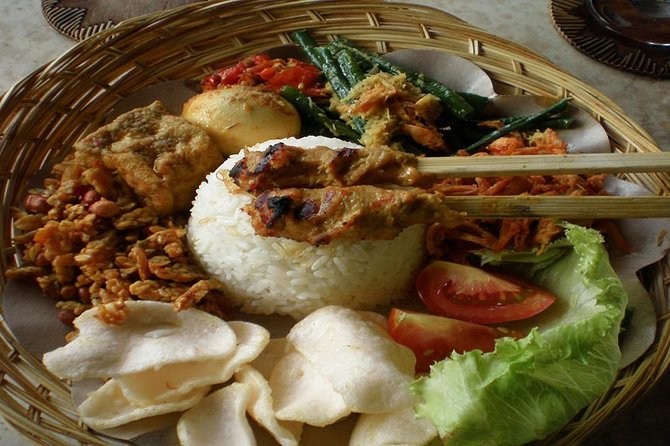
Once the cooking is finished, you sit down to eat the results. The experience includes food tasting and a buffet-style meal at a Balinese house. The schedule describes this as buffet lunch, while the inclusions also refer to dinner, so the meal depends on the session you choose.
This shared meal is one of the strongest parts of the day. You can see the finished dishes together, compare their flavors, and understand how the recipes work as a complete Balinese spread. It also gives the class a relaxed ending after the preparation work.
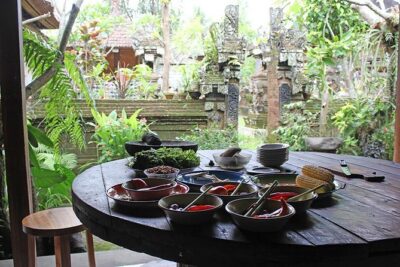
The cooking takes place in an outdoor kitchen according to one detailed account. That setting matters. You are not in a sleek cooking school designed for tourists. You are closer to the everyday home setting that makes the food feel connected to family life.
At the same time, a home kitchen is not a restaurant kitchen. Presentation may feel simple, and the pace can depend on the group. One less positive account found the presentation rushed and mechanical, even though the cooking itself was enjoyable. That is a fair warning: the quality of the experience may depend on how the session is paced and how much individual attention the group receives.
What the $58 price really covers
At $58, this is more than a cooking lesson. The price includes central Ubud hotel pickup and drop-off, an air-conditioned vehicle, a driver, a local guide, the welcome drink, food tasting, the meal, the market and rice-paddy visits for morning sessions, and the recipe copies.
That bundle makes the cost reasonable if you value convenience. You do not need to arrange a separate taxi to a village, find the market yourself, or pay for a meal after class. The transport also matters in Ubud, where short distances can take time on busy roads.
The value is strongest for couples, families, and people who want a full half-day activity rather than a short cooking demo. A family of four found the combination of village travel, market, paddies, and nine dishes worthwhile, especially because the children could share the cooking and take home the recipes.
The price does not cover alcoholic drinks. They are available to buy, but you should bring cash for extras and for any transport surcharge.
Pickup rules and timing matter
Included pickup and drop-off apply only to hotels in central Ubud. If you are staying outside the Ubud area, you must request transport in advance and pay an additional charge. Without that request, pickup will not be arranged.
This is an easy detail to miss when comparing experiences. Check your hotel location before booking, especially if you are staying in a resort area beyond central Ubud. Bring cash in case you need to pay the extra transport fee or purchase something during the day.
The experience lasts about five hours. Morning and afternoon schedules are not interchangeable because their sightseeing stops differ. Confirmation is provided at booking, and the provider asks you to reserve at least one day ahead.
Wear normal, comfortable clothing suitable for cooking. Bring a camera if you want photographs of the market, paddies, offering-making, or food preparation. Bottled water is included.
Who will enjoy this class most
I would recommend this experience to you if you want food to be the center of a cultural outing. It suits people who enjoy practical activities, families looking for a shared morning, and cooks who want recipes they can try again at home.
It is also a good choice if you prefer a small-group activity. The maximum of 12 people keeps the class more personal than a large demonstration, though a full group may still feel lively.
The morning option is best for first-time visitors who want several pieces of Ubud-area life in one outing: a market, rice paddies, village scenery, and cooking. The afternoon class is a better fit if you prefer a later start or want to make a canang offering.
I would hesitate to recommend it to you if you dislike chili, dislike group activities, or want a polished restaurant-style cooking school. The spice problem can likely be managed with an advance request, but the class remains rooted in local home cooking rather than formal culinary training.
Cancellation and planning notes
You can cancel for a full refund up to 24 hours before the experience starts. Changes or cancellations made less than 24 hours before the start time are not accepted for a refund.
Book at least one day ahead, especially if you need a vegetarian adaptation, lower spice, or pickup outside central Ubud. Confirm the pickup area and class time before finalizing your plans.
Should you book this Ubud cooking class?
Book it if you want a hands-on introduction to Balinese food with more substance than a simple recipe lesson. The market, rice paddies, outdoor kitchen, nine dishes, shared buffet meal, and take-home recipes give you plenty for five hours, and included transport adds real value.
Choose the morning session for the fuller food journey. Choose the afternoon option for canang offering making. Before booking, ask for less chili if needed, give advance notice of vegetarian requirements, and confirm any out-of-area transport charge.
The class is not perfect. The pacing may feel rushed, and the food may be too spicy for some people. But at $58, it offers a practical way to connect Ubud’s food, villages, and home cooking in one manageable half-day.
FAQ
Where does the cooking class take place?
The class takes place at a Balinese house and includes cooking in an outdoor kitchen.
How long does the experience last?
The experience lasts approximately five hours.
What is included in the morning class?
The morning class includes a visit to a traditional market in Tampaksiring village, a visit to local rice paddies, the cooking class, and the meal.
Is the traditional market visit available in the afternoon?
No. The traditional market visit is provided only with the morning class.
What does the afternoon class include instead?
The afternoon class includes making a canang offering instead of the morning market and rice-paddy visits.
How many recipes will I prepare?
You will prepare nine Balinese recipes, including dishes such as fried tempe, Balinese chicken, and vegetable soup.
Is a meal included?
Yes. The experience includes food tasting and a buffet-style meal. The schedule describes a buffet lunch, while the inclusions also mention dinner, depending on the class session.
Is hotel pickup included?
Pickup and drop-off are included for hotels in central Ubud. Transport outside Ubud requires an advance request and an additional charge.
Can vegetarians join the class?
Yes, but you must request a vegetarian option at least one day before the class.
How large is the group?
The experience has a maximum of 12 travelers.
More Workshops in Ubud
- Hands-On Silver Jewelry Making Near Ubud’s Monkey Forest
★ 4.9 · 1,789 reviews - Ubud Silver Class Jewelry making in bali
★ 5.0 · 978 reviews - Canggu: Bali Turtle Silver & Gold Workshop
★ 4.9 · 643 reviews - Balinese Farm Cooking Class by Pemulan Bali
★ 5.0 · 410 reviews
More Shopping Tours in Ubud
- Ubud Traditional Night Market Food Tour-All Inclusive
★ 4.4 · 95 reviews - Ubud Cooking Class with Optional Market Visit Pickup Included
★ 5.0 · 70 reviews - Balinese Cooking Class with Traditional Market Tour
★ 5.0 · 66 reviews - Ubud : Regular or Vegetarian cooking class with market visit
★ 4.8 · 57 reviews
Just added around Ubud
- Authentic hike in the forest with lunch at the inhabitant★ 5.0 · 3 reviews
- Heaven Gate, Tirtagangga and Tukad Cepung Waterfall – All Inclusive★ 5.0 · 3 reviews
- Half Day Uluwatu Temple Sunset, Kecak Dance and Seafood Dinner★ 3.5 · 3 reviews
- Ubud: White Water Rafting with visit Ubud Monkey Forest★ 5.0 · 3 reviews
- ️Bali All Inclusive Tour: Ubud – Tegalalang – Kintamani★ 5.0 · 3 reviews
- East Bali and Lempuyang Temple Tour★ 5.0 · 3 reviews
- Ubud: Temple, Swing, Waterfall, Rice Terrace & Monkey Forest★ 5.0 · 3 reviews
- Blue Lagoon Snorkeling and Lunch with Tukad Cepung Waterfall★ 5.0 · 3 reviews
Balinese Cooking Classes, compared.
Cooking Class with Transfers and Optional Market Visit
Read our review →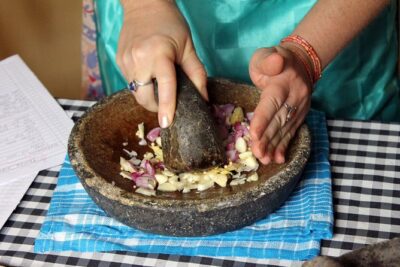
PRIVATE Authentic Balinese Cooking Class in Ubud at Putu’s Home
Read our review →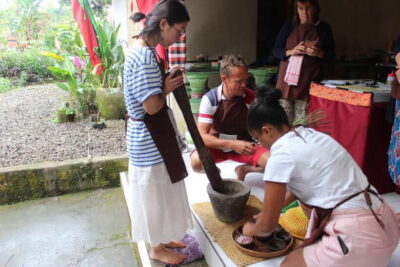
PRIVATE Balinese Cooking Class in Ubud with Dewa with Transfers
Read our review →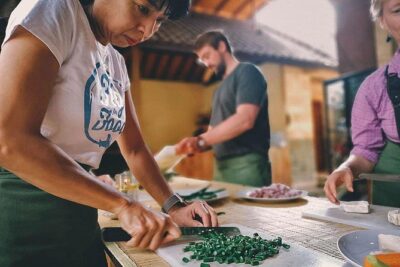
Balinese Cooking class with traditional morning market visit
Read our review →Browse the lists this tour appears in