
Reviewed · BALINESE COOKING CLASSES
Ubud: Balinese Cooking Class and Market Tour
Ubud’s best food lesson starts before the cooking begins. On the morning program, you visit a real local market, taste unfamiliar fruit, and see the ingredients that shape Balinese meals before preparing nine traditional dishes with a local chef in a family compound.
I like the market and rice-field stops because they connect the food to daily life, not just a kitchen counter. I also like the hands-on format: guides such as Putu and Wayan keep the work friendly and practical, while helping you avoid mistakes. The main drawback is simple: afternoon classes do not include the market or rice paddies, and the market can be cramped, muddy, and confronting for some people.
In This Review
- Key points at a glance
- A morning that starts at the market
- Rice paddies and the meaning of rice
- Entering the family compound
- Preparing nine Balinese dishes
- Afternoon class: a different version of the day
- What makes the market worthwhile, and what may not
- Vegetarian, vegan, and less-spicy needs
- Transport, meeting points, and timing
- The guides and the tone of the class
- Is $23 a good value?
- Who should book this cooking class?
- Should you book it?
- FAQ
- How long does the Ubud cooking class and market tour last?
- Does every class include a market visit?
- Is a rice-field visit included?
- How many dishes will I prepare?
- Is hotel pickup included?
- Can vegetarian, vegan, or non-spicy food be arranged?
- Is the class suitable for young children or wheelchair users?
Key points at a glance
- Nine dishes in four hours: You prepare sauces, vegetables, mains, and dessert, then sit down to eat the full meal.
- Morning market access: The guide explains local produce, offerings, and buying habits, with fruit tasting along the way.
- Rice-field context: Morning groups visit rice paddies and learn why rice matters so much in Balinese life.
- Family-run setting: The class takes place in a local compound, giving the cooking lesson a more personal feel than a formal culinary school.
- Small group format: With no more than 14 participants, you get a reasonable chance to chop, pound, mix, and cook.
- Strong value at $23: Hotel transfers within Ubud, the guide, food, market visit, and recipe PDF are included.
A morning that starts at the market
Choose the morning class if you want the fullest version of this experience. The day begins with pickup in the Ubud area, followed by a visit to a local market outside the polished tourist center.
This is a working market, not a staged food hall. You might see dirt floors, flies, tight aisles, raw meat, and the ordinary mess of food being sold. I consider that part of the point, but you should know what you are signing up for.
Your guide helps make sense of the scene. You learn how local people buy ingredients, what foods are used in cooking, and how Hindu offerings fit into everyday market life. Guides including Putu and Tata have been praised for clear English and a friendly way of explaining unfamiliar produce.
Fruit tasting adds a nice touch. You can try items you may not recognize, with the guide relating their flavors and textures to more familiar fruits. This is a small activity, but it turns the market from a photo stop into a useful lesson.
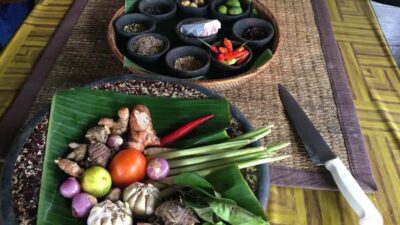
The market visit also gives you a better eye for the cooking class. After seeing chilies, herbs, vegetables, spices, and other ingredients in their everyday setting, you understand more about what appears on the preparation table. The food no longer feels like a list of exotic names.
More Balinese cooking classes:
- Ubud Cooking Class Bali with Balinese Chef
★ 5.0 · 1,609 reviews - Ubud: Cooking Class with Transfers and Optional Market Visit
★ 4.9 · 824 reviews - PRIVATE Authentic Balinese Cooking Class in Ubud at Putu’s Home
★ 5.0 · 644 reviews
Rice paddies and the meaning of rice
The morning itinerary also includes a visit to local rice paddies. This is not a long farm tour, but it provides a quiet change of pace after the market and adds cultural context to the meal ahead.
Your guide explains the importance of rice to Balinese people. One guide, Putu, has a rice field herself, which allows her to speak from personal experience. That kind of connection can make a short stop feel more useful than a general script about agriculture.
You should keep your expectations reasonable. The rice-field visit is an added stop, not a full countryside trek or farming workshop. Its value lies in helping you understand one of the basic foods at the heart of Balinese life.
The morning route can also show you more of the countryside around Ubud. Since the class is a few hours long and includes transport, market, paddies, and cooking, the schedule is active. Wear practical clothes and shoes that can handle uneven or dirty ground.
Entering the family compound
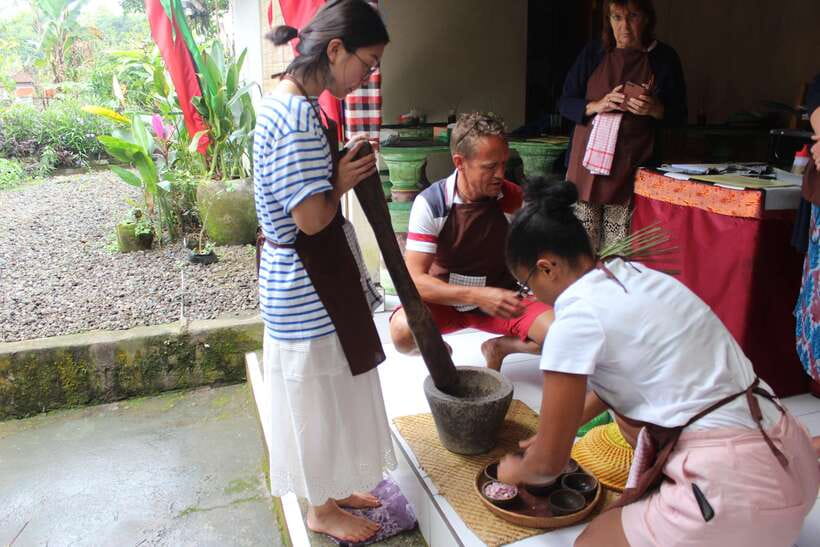
After the morning stops, you head to the cooking school in a Balinese family compound. This setting is one of the experience’s strongest features.
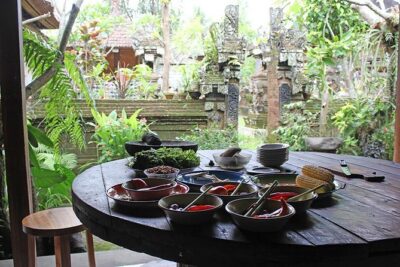
A compound feels more connected to local daily life than a generic restaurant kitchen. You are not simply watching a chef perform. You are working in a place linked to a family and its food traditions, with staff who guide the group through the meal.
The class is conducted in English. The chef first introduces the ingredients and explains what you will make. Then the group works through the preparation step by step.
The format balances hands-on work with assistance. You get real tasks to do, but the staff remains close enough to help if your knife work is slow, your spice paste needs more pounding, or your timing goes wrong. That is useful for beginners and still satisfying for people who already cook.
The group limit is 14 people. That is not a private class, but it is small enough to keep the session social and manageable. If the group is smaller, you can expect more direct participation. One afternoon group had only four people, making the work especially hands-on.
Preparing nine Balinese dishes
The central activity is the food. You prepare nine Balinese signature dishes by hand, then eat them together at the end.
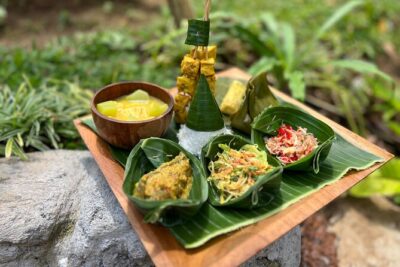
The exact menu is not provided in advance, so you should not book this expecting a particular dish. The program describes a broad spread that can include sauces, vegetables, main dishes, and dessert. That variety is part of the appeal: in one class, you see how several small preparations become a complete Balinese meal.
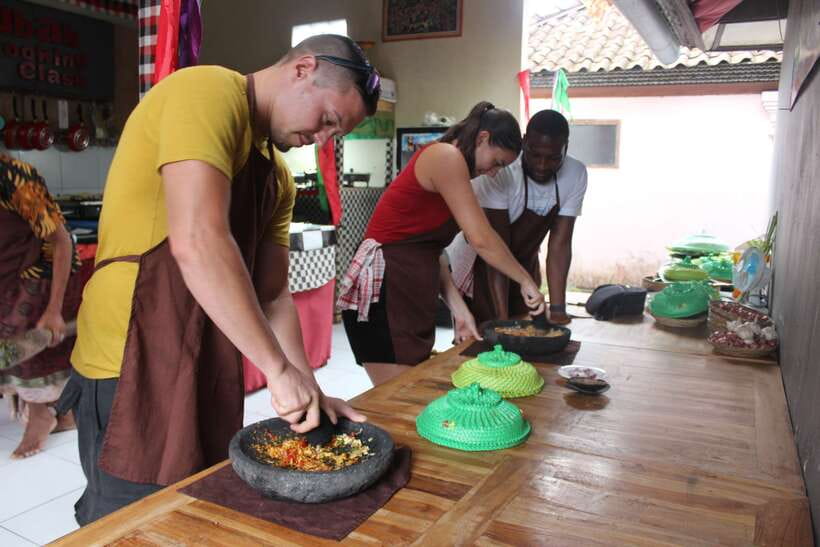
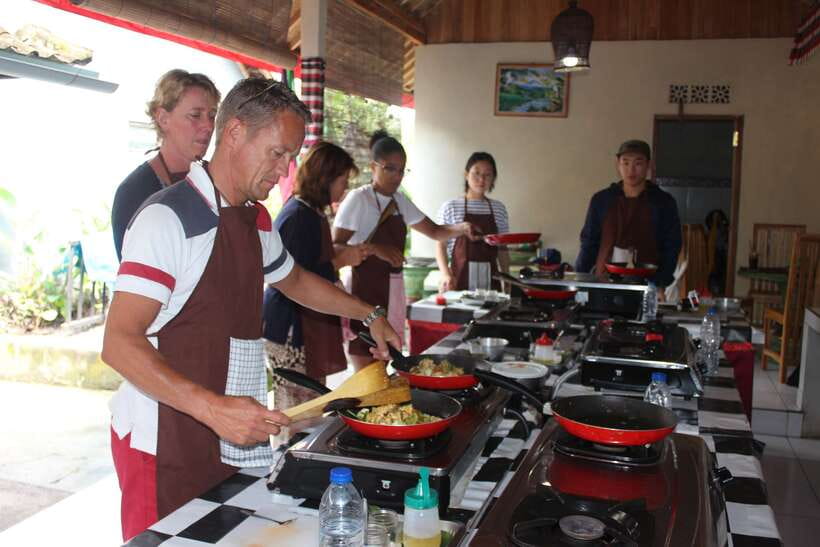
The cooking is arranged so that each participant takes part. You may chop, mix, pound, season, or help finish a dish, depending on the group and the stage of the class. The staff keeps things moving, which matters when nine dishes must be prepared within four hours.
I like this approach better than a demonstration where you watch a chef do everything. You leave with a sense of how the food comes together, not just a notebook of recipes. The work is also forgiving. The cooking team helps with the difficult parts, so you can enjoy the process without worrying that one mistake will ruin lunch.
The class has a social side, too. You cook alongside other people, share tasks, and laugh when the work gets messy. Solo participants can fit in easily, while couples and families have enough to do that the session does not feel passive.
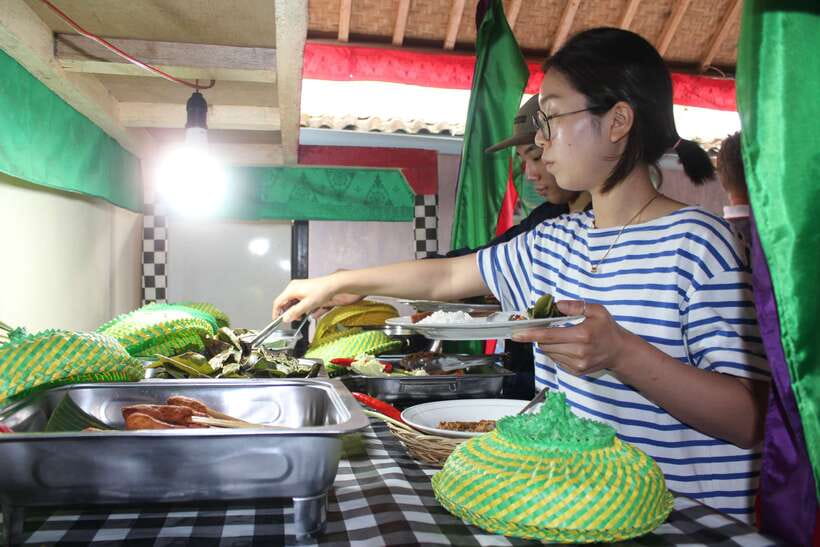
The food is designed to be eaten immediately. Once the dishes are finished, everyone sits down together and samples the results. Because you have helped prepare the meal, the final lunch feels like the payoff rather than a separate restaurant course.
The portions are substantial. With nine dishes on the table, you should expect a generous meal, not a few tiny tasting plates. Some participants have also found beers available for an additional charge, though drinks beyond the included welcome drink are not part of the listed price.
More market visits in Ubud:
- Balinese Ubud cooking school (9 Dish Cooking and Market Tour)
★ 5.0 · 540 reviews - Balinese Cooking class with traditional morning market visit
★ 5.0 · 161 reviews - PRIVATE Ubud Market Tour & Balinese Cooking Class with Putu
★ 5.0 · 125 reviews - Ubud Traditional Night Market Food Tour-All Inclusive
★ 4.4 · 95 reviews
Afternoon class: a different version of the day
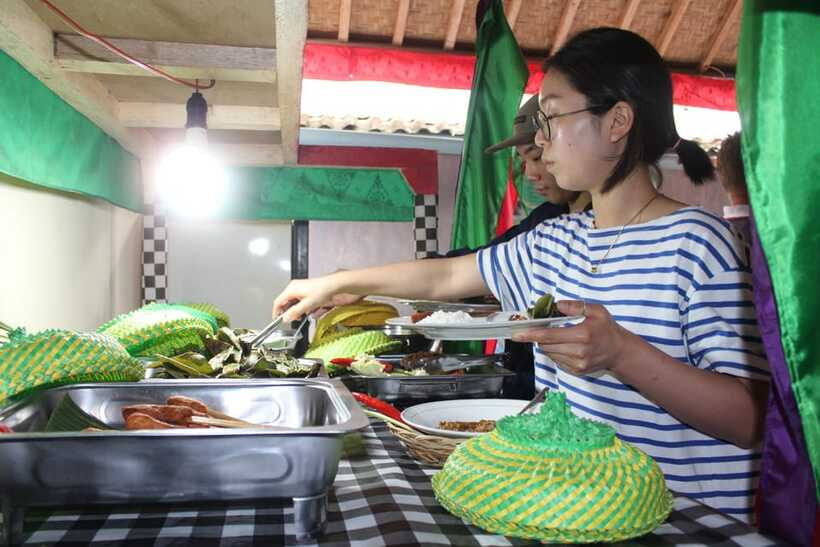
The afternoon session follows the cooking focus but changes the cultural stop. It does not include the traditional market or rice paddies.
Instead, the afternoon program includes making a canang offering. Canang refers to the small daily offering used in Balinese Hindu practice. Learning to arrange one gives you a closer look at a living religious tradition and the care that goes into ordinary household rituals.
This option may suit you if the cooking matters more than the market, or if your schedule does not allow an early start. It is also a practical choice during hot weather, since you skip the morning route and go directly into the class program.
You should book the afternoon session only if you are comfortable giving up the market and rice-field visits. The cooking itself remains the main event, but the two schedules are not interchangeable.
What makes the market worthwhile, and what may not
The market is the part I would value most if you want a sense of ordinary Bali. You see ingredients before they are cleaned, prepared, and placed on a cooking table. You also learn how food, commerce, and offerings share the same space.
Still, it is not designed for everyone. The narrow passages, dirt floor, flies, and raw meat can be off-putting. If you prefer a clean, carefully arranged market aimed at visitors, this stop may feel rough around the edges.
That roughness is also what gives it value. You are seeing a working market rather than a performance. Go with an open mind, keep your camera ready, and wear shoes that you do not mind getting dirty.
One practical point: the market is only part of the morning class. It cannot be added to an afternoon booking.
Vegetarian, vegan, and less-spicy needs
The cooking team can provide vegetarian and vegan options. A participant with allergies also received a non-spicy menu, which shows that the staff can adapt in at least some cases.
You should still explain dietary needs when booking and again at the start of the class. The supplied information does not promise accommodation for every allergy or restriction, so do not assume that all ingredients can be changed.
This class is a good fit for people who want to taste Balinese food but are unsure about strong chilies. The ability to prepare a milder version makes the experience more welcoming for a wider range of eaters.
Children under six are not suited to the activity. Older children and teenagers can take part, and a family with a 16-year-old enjoyed the cooking and found the dishes easy to follow.
Transport, meeting points, and timing
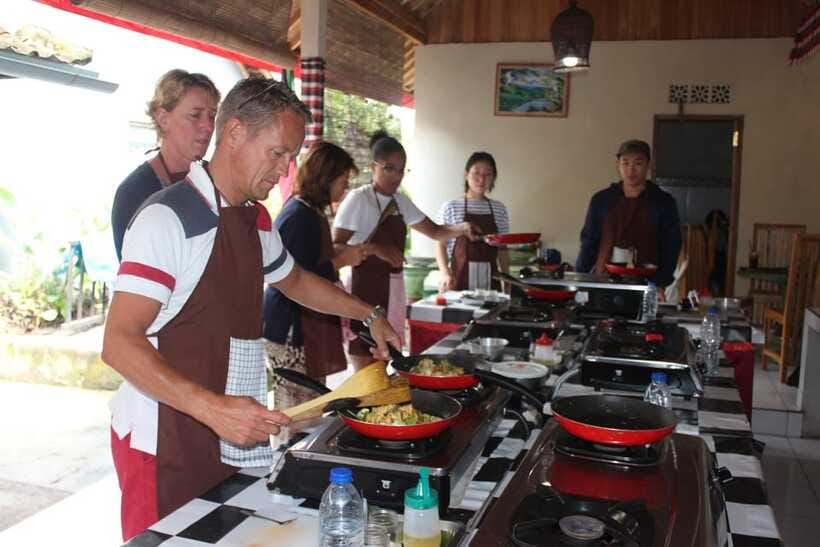
The experience lasts four hours. Starting times vary, so check the available morning and afternoon slots before booking.
Pickup and drop-off are included within the Ubud area. If you stay outside that zone, you may meet the shuttle near Ubud Palace or go directly to the class. Pickup beyond Ubud is not included.
Communication is an important part of the transport arrangement. Contact is made after booking, and drivers have been praised for arriving on time and keeping in touch. Some drivers have also helped people outside the pickup area by arranging a meeting point or, in some cases, returning them to their accommodation.
Do not count on that extra help as a guaranteed service. The clear rule is that free shuttle service covers Ubud only.
Bring a camera, cash, and headphones if you use them for communication or personal comfort. Comfortable clothing and sturdy shoes are sensible for the market and rice-field portions, although those items are not formally listed as required.
The class is not suitable for wheelchair users. You should also think about the market surface and tight spaces if you have mobility concerns.
The guides and the tone of the class
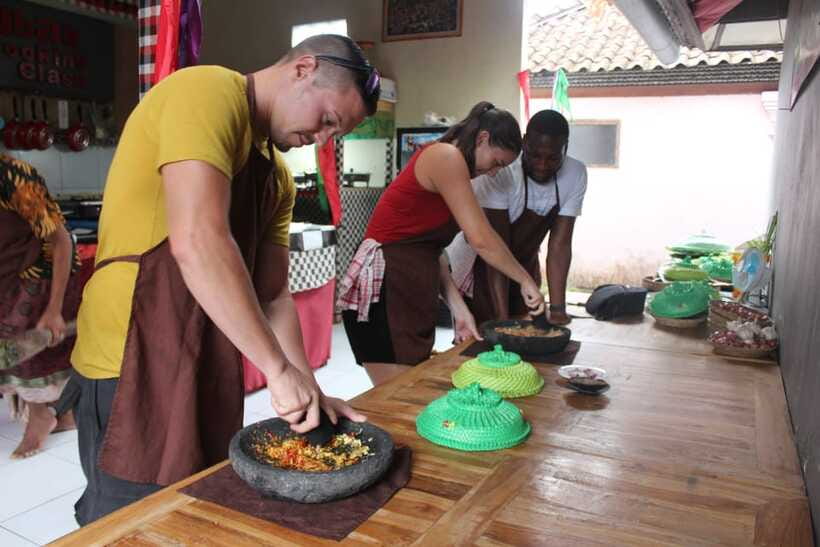
The people leading the activity shape much of its appeal. Putu has been singled out for explaining the market, fruit, rice fields, and local customs in an easy way. Wayan is known for patient instruction and a good sense of humor in the kitchen.
Other guides and cooking staff include Butu and Tata. Names and staffing can vary, but the pattern is clear: the team aims to be friendly, involved, and practical rather than formal.
That tone matters. Cooking nine dishes in a short class could feel rushed or intimidating, but the staff keeps the mood light while making sure everyone has a job. You can ask questions, work at your own pace, and let the chef handle the more technical steps when needed.
The result is less like a strict professional cooking course and more like a lively introduction to home-style Balinese food. You learn enough to repeat the recipes at home, without spending a full day on culinary theory.
Is $23 a good value?
At $23 per person, this is a strong value for a four-hour activity. The price covers a guide, transport within Ubud, a welcome drink, the market and rice-field visits for morning groups, nine dishes, the meal, and a PDF copy of the recipes.
The meal alone would make the price reasonable, especially given the amount of food produced. Add the transport and the morning cultural stops, and the package becomes one of the more cost-effective ways to spend half a day in Ubud.
The value is best for people who take part fully. If you only want to watch a chef cook, you may find the session long. If you chop, season, ask questions, and join the final meal, you get much more from the price.
The cooking school is family-run, and that adds a personal quality without making the activity expensive. You also leave with recipes you can use for lunch or dinner at home, which gives the class a life beyond Bali.
Who should book this cooking class?
I would choose this for first-time visitors who want an activity that combines food and culture without taking a full day. It suits couples, families with older children, solo participants, and anyone who likes meeting people through a shared meal.
Choose the morning program if you want the most complete experience. The market and rice paddies add the context that makes the cooking feel rooted in place.
Choose the afternoon program if you mainly want to cook, eat, and learn about canang offerings. It is also better for a later start, but remember that you will miss the market and rice fields.
This is not the right choice if you need a wheelchair-accessible activity, have a child under six, or dislike raw market conditions. It may also disappoint anyone searching for a highly specialized chef’s course or a guaranteed menu.
Should you book it?
Yes, if you want a hands-on introduction to Balinese food at a sensible price. The strongest version is the morning class, since the local market, fruit tasting, and rice-field visit give the nine-dish meal a clear connection to Bali.
I would book this ahead of time if the schedule fits, then confirm your pickup area and dietary needs. Bring cash, wear practical shoes, and expect a real market rather than a polished attraction. If you can accept that, this is a friendly, useful, and filling way to spend four hours in Ubud.
FAQ
How long does the Ubud cooking class and market tour last?
The activity lasts four hours. Check the available dates and starting times when booking.
Does every class include a market visit?
No. The local market visit is included only with the morning class. Afternoon participants take part in cooking and learn to make a canang offering instead.
Is a rice-field visit included?
Yes, but only for the morning class. The morning program visits local rice paddies and explains their importance in Balinese life.
How many dishes will I prepare?
You will prepare nine Balinese signature dishes and eat the food together at the end of the class.
Is hotel pickup included?
Pickup and drop-off are included for accommodations in the Ubud area. If you stay outside Ubud, you can meet the shuttle near Ubud Palace or go directly to the class. Transport outside Ubud is not included.
Can vegetarian, vegan, or non-spicy food be arranged?
Vegetarian and vegan options are available. A non-spicy menu has also been provided for a participant with allergies. Tell the provider about your dietary needs when booking.
Is the class suitable for young children or wheelchair users?
The activity is not suitable for children under six or for wheelchair users.
More Workshops in Ubud
- Hands-On Silver Jewelry Making Near Ubud’s Monkey Forest
★ 4.9 · 1,789 reviews - Ubud Silver Class Jewelry making in bali
★ 5.0 · 978 reviews - Canggu: Bali Turtle Silver & Gold Workshop
★ 4.9 · 643 reviews - Balinese Farm Cooking Class by Pemulan Bali
★ 5.0 · 410 reviews
More Shopping Tours in Ubud
- Ubud Cooking Class with Optional Market Visit Pickup Included
★ 5.0 · 70 reviews - Balinese Cooking Class with Traditional Market Tour
★ 5.0 · 66 reviews - Ubud : Regular or Vegetarian cooking class with market visit
★ 4.8 · 57 reviews - Bali Food Tour: Savor Street Food and Night Market Adventures
★ 5.0 · 46 reviews
Just added around Ubud
- Authentic hike in the forest with lunch at the inhabitant★ 5.0 · 3 reviews
- Heaven Gate, Tirtagangga and Tukad Cepung Waterfall – All Inclusive★ 5.0 · 3 reviews
- Half Day Uluwatu Temple Sunset, Kecak Dance and Seafood Dinner★ 3.5 · 3 reviews
- Ubud: White Water Rafting with visit Ubud Monkey Forest★ 5.0 · 3 reviews
- ️Bali All Inclusive Tour: Ubud – Tegalalang – Kintamani★ 5.0 · 3 reviews
- East Bali and Lempuyang Temple Tour★ 5.0 · 3 reviews
- Ubud: Temple, Swing, Waterfall, Rice Terrace & Monkey Forest★ 5.0 · 3 reviews
- Blue Lagoon Snorkeling and Lunch with Tukad Cepung Waterfall★ 5.0 · 3 reviews
Balinese Cooking Classes, compared.
Cooking Class with Transfers and Optional Market Visit
Read our review →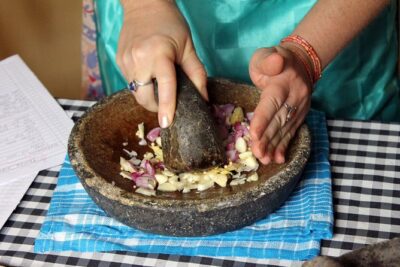
PRIVATE Authentic Balinese Cooking Class in Ubud at Putu’s Home
Read our review →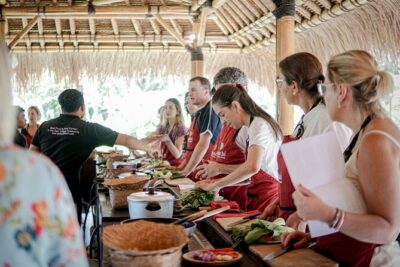
PRIVATE Balinese Cooking Class in Ubud with Dewa with Transfers
Read our review →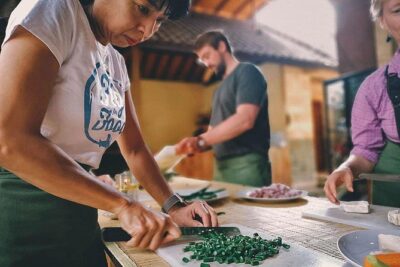
Balinese Cooking class with traditional morning market visit
Read our review →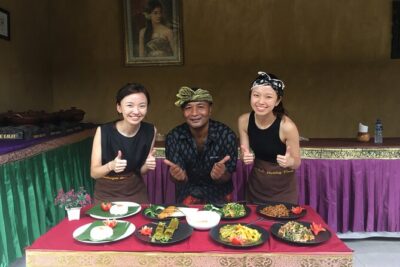
Browse the lists this tour appears in