
Reviewed · BALINESE COOKING CLASSES
Balinese Farm Cooking Class by Pemulan Bali
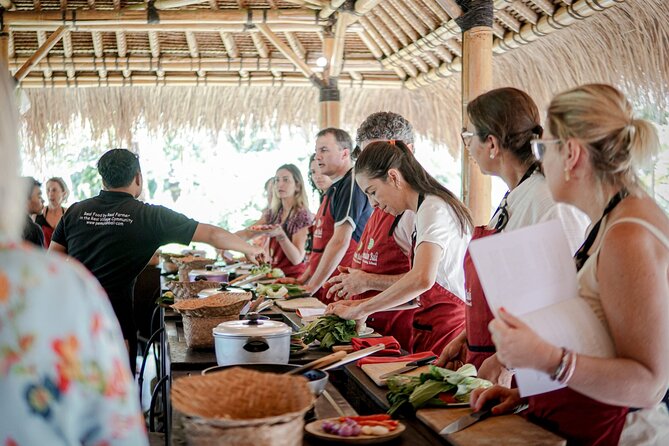
The best part of Pemulan Bali’s cooking class is that the meal begins before you reach the kitchen. On the morning departure, you visit a traditional market, then pick produce and herbs on the farm before preparing up to six Balinese and Indonesian dishes in an open-air kitchen.
I like the direct connection between garden and plate, and I like that you eat what you make rather than watch a chef do all the work. The main thing to consider is time: although the listed duration is about five hours, the class can run three to four hours or more depending on the menu and group.
In This Review
- Key points at a glance
- Why this Ubud cooking class feels different
- Choosing the right departure time
- From central Ubud to the traditional market
- Picking ingredients at Pemulan Bali’s organic farm
- Cooking six dishes in an open-air kitchen
- Eating together, with coffee, tea, and leftovers
- Group size, pace, and the social side
- Who should book this experience
- Practical booking advice for a smoother day
- Should you book Pemulan Bali?
- FAQ
- Where does the cooking class start?
- Where does the activity finish?
- How long does the experience last?
- What time does the morning class start?
- What time are the later classes?
- Does every class include a market visit?
- How many dishes will I prepare?
- Is food and drink included?
- Do I receive anything to take home?
- What happens if I need to cancel?
Key points at a glance
- Market first on the 7:30 AM class: Browse local produce and sample fresh fruit and treats before heading to the farm.
- Hands-on farm cooking: Pick ingredients from the organic garden, then use them in the recipes.
- A full shared meal: The menu can include appetizers, main dishes, and a communal dessert, with up to six dishes prepared.
- Open-air countryside setting: Cooking takes place in a peaceful farm kitchen rather than a formal cooking studio.
- Small enough to feel social: The maximum group size is 20 people, with group discounts available.
- Useful take-home extras: You receive recipes, coffee and tea, and any leftovers from the meal.
Why this Ubud cooking class feels different
Ubud has plenty of cooking classes, but this one puts the farm before the food. That matters. Instead of meeting a chef in a kitchen and receiving a tray of premeasured ingredients, you get a simple lesson in where Balinese cooking starts: at the market, in the garden, and among the herbs and spices used every day.
The experience is offered by Cooking Class Ubud, Pemulan Bali Balinese Farm Cooking School. Its farm setting gives the class a rural feel without taking away the practical side. You still get clear instruction, a set menu, and a finished meal. You also get a better sense of how vegetables and seasonings move from soil to cooking pot.
The class is listed at $39.71 per person. For a roughly five-hour activity that includes pickup from central Ubud, a market visit on the morning departure, the farm, instruction, a full meal, coffee and tea, recipes, and leftovers, that is a fair price. It is particularly good value if you want one activity that combines food, culture, and a countryside visit.
The price is not just paying for lunch. You are paying for the time spent walking through the market and farm, learning the ingredients, cooking several dishes, and eating as a group. Still, this is not the right choice if you want a quick demonstration or a short meal. Plan for several hours and let the schedule breathe.
More Balinese cooking classes:
- Ubud Cooking Class Bali with Balinese Chef
★ 5.0 · 1,609 reviews - Ubud: Cooking Class with Transfers and Optional Market Visit
★ 4.9 · 824 reviews - PRIVATE Authentic Balinese Cooking Class in Ubud at Putu’s Home
★ 5.0 · 644 reviews
Choosing the right departure time
You have three listed start times:
- Morning class: 7:30 AM
- Afternoon class: 12:30 PM
- Evening class: 4:00 PM
The morning class is the fullest version because it includes the traditional market visit. That early start is worth it if you want the most complete food experience and do not mind getting moving before Ubud heats up.
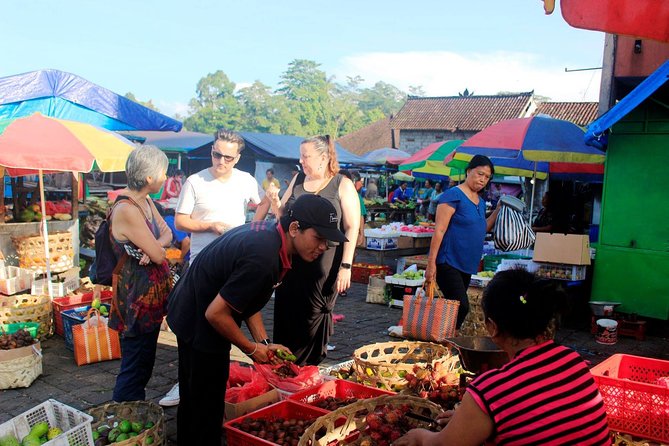
At the market, you can explore local produce and sample fresh fruits and treats. This is not simply a shopping stop. It gives you a chance to see the ingredients in their everyday setting before they are selected for the class. You may also find the market visit useful if you are still learning the names and uses of Balinese produce.
The afternoon and evening classes are useful for anyone who prefers a slower morning. The available information specifically identifies the market visit with the morning class, so do not assume the later departures include the same stop. If the market is important to you, book the 7:30 AM start.
The timetable deserves attention because the cooking itself can take time. One menu may include two appetizers, three main dishes, and a shared dessert. Another description refers to five dishes, while the main tour information promises six authentic dishes. The practical point is that the exact count or menu can vary, and you should expect a substantial session rather than a single recipe.
From central Ubud to the traditional market
Pickup is provided from the central Ubud meeting point at Pura Dalem Puri Peliatan, at F7R9+8P2 on Jl. Sukma Kesuma and Jl. Raya Ubud, in the Tebesaya area. The activity ends back at the same meeting point.
Starting in central Ubud keeps the arrival simple, especially if you are staying in or near town. The tour also sits near public transportation, and mobile tickets are accepted. The supplied information does not provide a detailed pickup map beyond the meeting point, so check the exact instructions after booking and allow enough time to reach Pura Dalem Puri Peliatan.
The morning market stop is the cultural heart of the day. You are not just handed ingredients with their names already attached. You get to look at the range of produce, see how fresh foods are presented, and taste some fruit or treats along the way.
This part will appeal to cooks who want context. It is also useful for first-time visitors who want something more grounded than a restaurant meal. The market makes the food lesson feel connected to daily life rather than staged only for a class.
The trade-off is the early start. A 7:30 AM meeting time may be inconvenient after a late night in Ubud, but the reward is the market visit and a cooler beginning to the day. If you choose the later class, you give up the specifically advertised market element.
Picking ingredients at Pemulan Bali’s organic farm
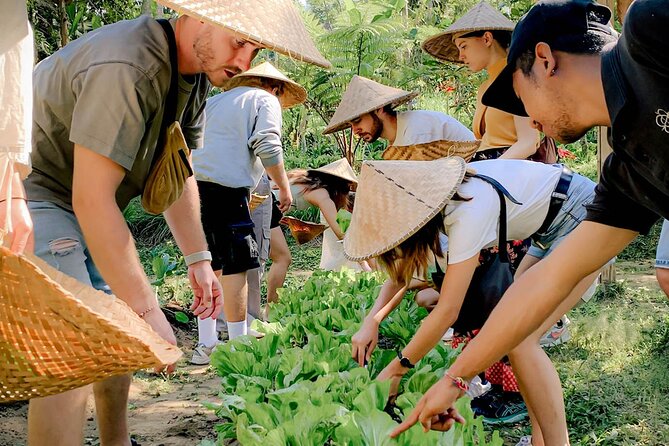
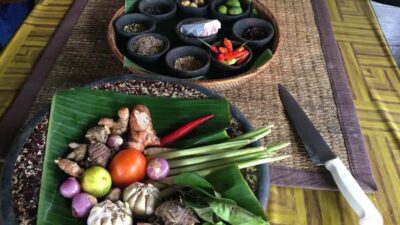
After the market, you head to the organic farm. Here you can pick fresh ingredients from the garden and learn about Balinese spices and plants commonly used in daily cooking.
This is the point where the class becomes genuinely hands-on. You are not simply observing a farm from a path. You select greens and herbs that become part of the meal. That small act changes how you think about the dishes later, because you have seen and handled the ingredients before chopping and cooking them.
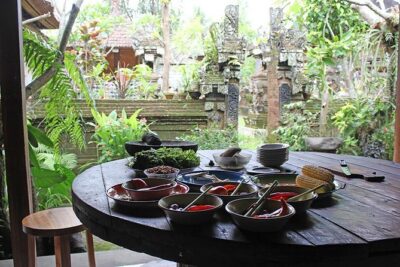
The farm also gives the day a welcome change of pace. Ubud’s center can be busy and traffic-heavy, while the class takes place in an open-air kitchen surrounded by peaceful countryside. The setting is part of the value, particularly if you want an afternoon away from shops, cafés, and motorbikes.
You should keep your expectations practical. This is a cooking class with a farm visit, not a dedicated agricultural tour. The available details promise an exploration of the garden and instruction about spices and plants, but not a long technical lesson in organic farming. The main purpose is to gather ingredients and understand their place in Balinese food.
A few more Ubud half-days to weigh up
- From Ubud: Authentic Bali Farm Cooking School & Organic Farm
★ 5.0 · 122 reviews - Balinese Cooking Class at Organic Farm
★ 5.0 · 51 reviews - Small-Group Farm Tour & Balinese Cooking Class in Ubud with Kadek
★ 5.0 · 16 reviews - Ubud: Organic Farm Harvest, Bali Cooking Class by Pemulan
★ 4.8 · 12 reviews
Cooking six dishes in an open-air kitchen
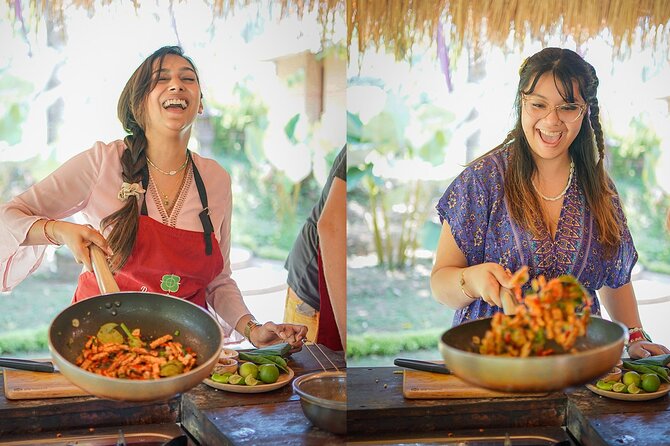
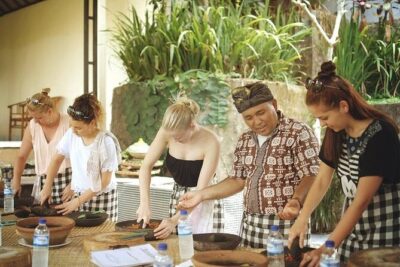
The class then moves into the kitchen, where chefs guide you through authentic Balinese and Indonesian recipes. The work is shared and practical. You prepare the food, learn how the recipes come together, and then sit down to eat what you have made.
The menu can be broad. One reported class included two appetizers, three main dishes, and a communal dessert. Other descriptions refer to five dishes, while the advertised format says six. This suggests that the menu may change by class, level, or available ingredients. You should book for the experience and range of dishes, not for one fixed list unless the provider confirms the exact menu.
A useful detail is that different class levels may be combined. One account describes an advanced class with a larger amount of food alongside another group. That can affect the pace and workload. If you are a beginner, the presence of more experienced cooks may make the session feel busier. If you already cook often, a broader menu may be a welcome challenge.
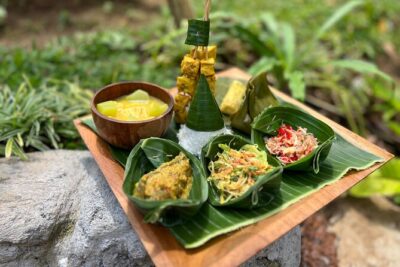
The strongest feature here is the amount of food you make. You are not spending five hours to prepare one plate. Multiple appetizers, main dishes, and dessert give you a fuller picture of Balinese cooking, from small shared bites to the meal’s central dishes.
You will also get the recipes afterward. That makes the class more useful than a meal that disappears as soon as you leave. The recipes give you a chance to repeat a dish at home, though the supplied information does not specify whether they are printed or digital.
The kitchen is open air, and the setting is part of the appeal. You cook close to nature rather than inside a polished culinary school. That can also mean you should be ready for outdoor conditions and changing weather. The class requires good weather, and a poor-weather cancellation can lead to a new date or a full refund.
Eating together, with coffee, tea, and leftovers
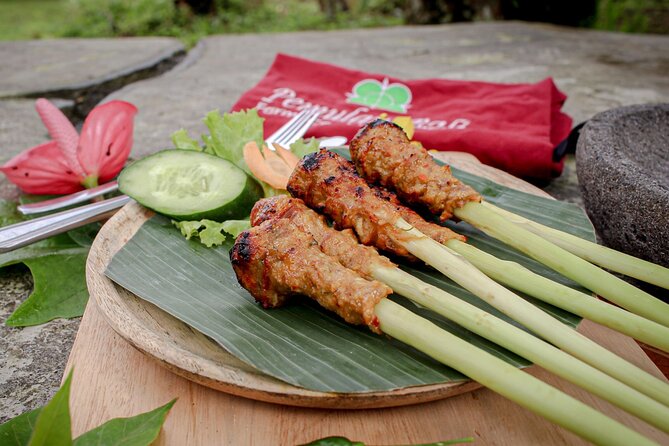
After the work comes the best kind of lesson: lunch or dinner. You eat the dishes together and can enjoy coffee and tea with the meal.
A shared meal suits Balinese food, which often works well when several dishes are placed on the table at once. It also gives the group time to compare what each person prepared and enjoy the social side of the class. You are not rushed out after a demonstration.
The class includes leftovers to take with you. That is a practical extra, especially after several hours of cooking. It also means you get to taste the food again later instead of trying to remember every flavor from one sitting.
The meal is a strong value point at $39.71. A restaurant meal alone might cost less, but it would not include the market, garden, instruction, recipes, or the time in the countryside. On the other hand, people who do not enjoy group meals or cooking may find the price less attractive. This is an activity where participation matters.
Group size, pace, and the social side
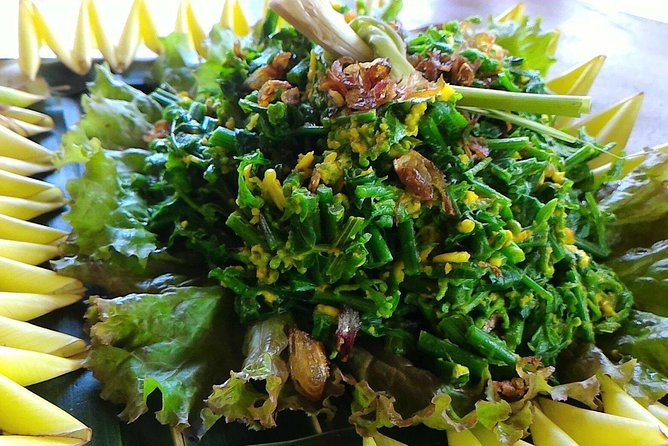
The maximum group size is 20 people. That is not a private lesson, but it is limited enough to support a shared class rather than a huge demonstration.
Your experience may depend on the mix of people in the group. A class with several beginners can move at a relaxed pace. A class that includes an advanced option or participants preparing a larger menu may feel more involved and take longer. The cooking structure appears designed for cooperation, so you should be comfortable working beside other people and sharing the finished food.
The social element is one of the reasons this class works well for couples, families, and solo visitors. You have natural conversation during the market, garden, cooking, and meal. Group discounts may make it a better deal for friends or families booking together.
The main drawback is predictability. With several departure times, different menus, and mixed skill levels, the exact rhythm may not be identical each day. If you need to be back in central Ubud at a strict hour, leave a generous buffer after the stated five-hour estimate.
Who should book this experience
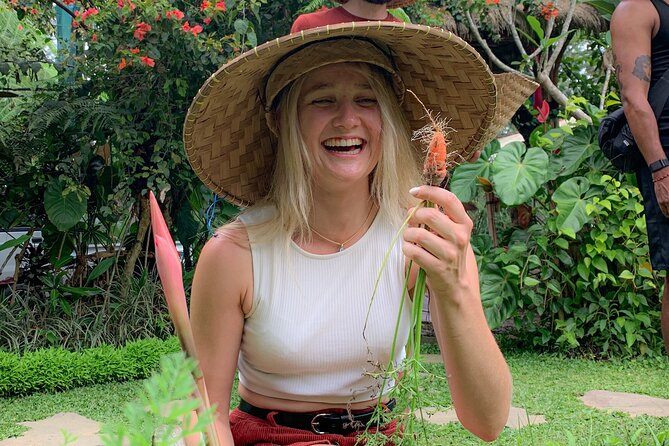
I would choose this class for you if food is one of your main ways of understanding a place. You get market produce, farm ingredients, local cooking methods, and a shared meal in one outing.
It is especially suitable for:
- First-time visitors to Ubud who want a cultural activity beyond temples and shopping
- Home cooks who enjoy learning by handling ingredients
- Families looking for a practical activity with food at the end
- Couples or friends who want a social half-day experience
- People who prefer a countryside setting to a formal cooking studio
- Anyone who wants recipes to use after returning home
It may not suit you if you want a private class, a short demonstration, or a fixed menu with an exact dish count. It may also be a poor fit if an early start is difficult, since only the morning class includes the market visit.
The experience allows service animals, and confirmation is received at booking. No special access details are provided beyond that, so contact the provider directly if you need specific arrangements.
Practical booking advice for a smoother day
Choose the morning departure if the market is a priority. Choose the afternoon or evening option if you prefer a less early start and are mainly interested in the farm and kitchen.
Meet at Pura Dalem Puri Peliatan in central Ubud, then return there at the end. The tour includes pickup from the central meeting point, but the details provided do not promise pickup from every hotel outside central Ubud. If you are staying farther away, confirm where you should join the group.
Allow at least three to four hours, and ideally the full approximate five-hour window. The multi-dish format is part of the attraction, but it also explains why the class may last longer than a simple cooking demonstration.
Free cancellation is available up to 24 hours before the start time for a full refund. Changes or cancellations inside that period are not accepted for a refund. The activity can also be moved or refunded if bad weather prevents the class, or if the minimum number of participants is not reached.
Should you book Pemulan Bali?
Book it if you want to cook rather than watch, and if a market, organic farm, and shared meal sound better to you than another restaurant reservation. The combination is unusually complete for the price, and the farm-to-table structure gives the food real context.
Pick the 7:30 AM class for the full market-to-farm progression. Give yourself plenty of time, accept that the menu and pace can vary, and expect a group setting. If those conditions suit you, Pemulan Bali is a strong choice for a useful, tasty, and distinctly local day in Ubud.
FAQ
Where does the cooking class start?
The class starts at Pura Dalem Puri Peliatan, F7R9+8P2, Jl. Sukma Kesuma and Jl. Raya Ubud, Tebesaya, Petulu, Ubud, Bali 80571, Indonesia.
Where does the activity finish?
The activity ends back at the meeting point.
How long does the experience last?
The listed duration is approximately five hours. You should allow at least three to four hours, since the cooking session and menu can take time.
What time does the morning class start?
The morning class starts at 7:30 AM.
What time are the later classes?
The afternoon class starts at 12:30 PM, and the evening class starts at 4:00 PM.
Does every class include a market visit?
The traditional market visit is specifically included with the morning class. The available information does not state that the afternoon or evening classes include it.
How many dishes will I prepare?
The experience is advertised as including six authentic Balinese and Indonesian dishes. The exact menu may vary, with descriptions also referring to five dishes or a menu of two appetizers, three main dishes, and a communal dessert.
Is food and drink included?
Yes. You eat the food prepared during the class, and coffee and tea are included.
Do I receive anything to take home?
Yes. You receive recipes and leftovers from the meal.
What happens if I need to cancel?
You can cancel up to 24 hours before the start time for a full refund. Cancellations or changes made less than 24 hours in advance are not accepted for a refund.
More Workshops in Ubud
- Hands-On Silver Jewelry Making Near Ubud’s Monkey Forest
★ 4.9 · 1,789 reviews - Ubud Silver Class Jewelry making in bali
★ 5.0 · 978 reviews - Canggu: Bali Turtle Silver & Gold Workshop
★ 4.9 · 643 reviews - Ubud: Balinese Cooking Class and Market Tour
★ 4.8 · 531 reviews
Just added around Ubud
- Authentic hike in the forest with lunch at the inhabitant★ 5.0 · 3 reviews
- Heaven Gate, Tirtagangga and Tukad Cepung Waterfall – All Inclusive★ 5.0 · 3 reviews
- Half Day Uluwatu Temple Sunset, Kecak Dance and Seafood Dinner★ 3.5 · 3 reviews
- Ubud: White Water Rafting with visit Ubud Monkey Forest★ 5.0 · 3 reviews
- Ubud: Temple, Swing, Waterfall, Rice Terrace & Monkey Forest★ 5.0 · 3 reviews
- ️Bali All Inclusive Tour: Ubud – Tegalalang – Kintamani★ 5.0 · 3 reviews
- East Bali and Lempuyang Temple Tour★ 5.0 · 3 reviews
- Blue Lagoon Snorkeling and Lunch with Tukad Cepung Waterfall★ 5.0 · 3 reviews
Balinese Cooking Classes, compared.
Cooking Class with Transfers and Optional Market Visit
Read our review →
PRIVATE Authentic Balinese Cooking Class in Ubud at Putu’s Home
Read our review →
PRIVATE Balinese Cooking Class in Ubud with Dewa with Transfers
Read our review →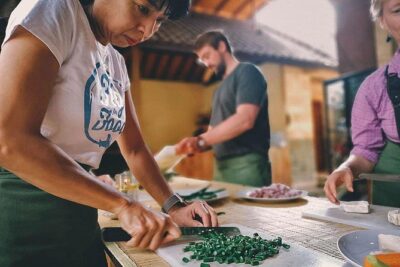
Balinese Cooking class with traditional morning market visit
Read our review →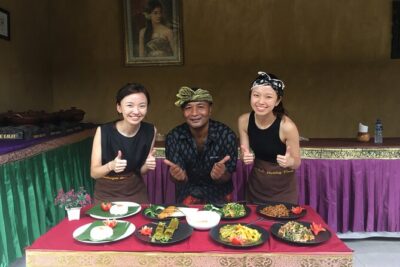
Browse the lists this tour appears in