
Reviewed · BALINESE COOKING CLASSES
Ubud: Cooking Class with Transfers and Optional Market Visit
Ubud’s best cooking classes do more than hand you a knife and a bowl of spices. This one takes you into Balinese food and family life, with a local chef explaining the ingredients, customs, architecture, and meaning behind the dishes. The morning option adds a market visit, while the afternoon and evening sessions go straight to the kitchen.
I like the hands-on format, where you chop, grind, mix, and cook rather than watch a demonstration. I also like the unusually generous meal, with some groups preparing around ten dishes and eating them buffet-style. The main drawback is that the market visit is only included in the morning option, and pickup is limited to Ubud Center unless you pay an extra 50,000 Indonesian rupiah per person from Sebali or Keliki.
In This Review
- Key points at a glance
- A cooking class that feels tied to Ubud
- Choosing the morning, afternoon, or evening session
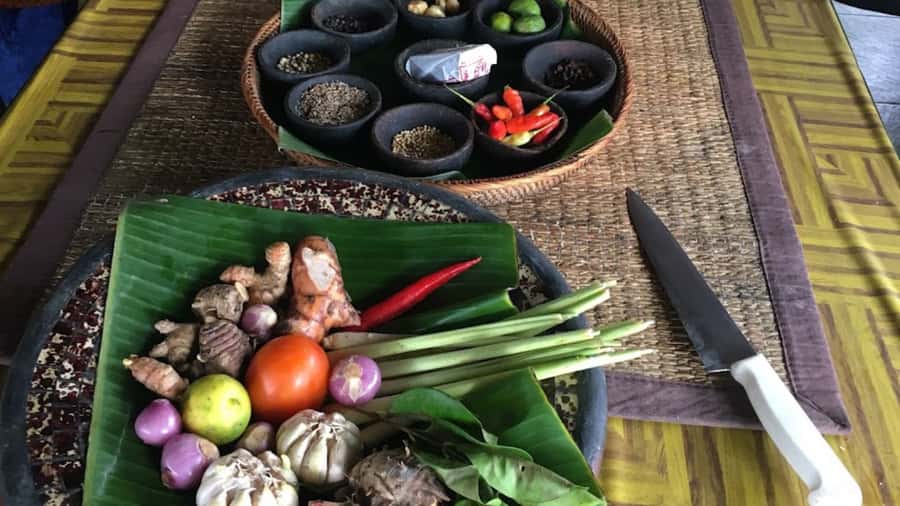
- The market visit and the ingredients behind Balinese food
- Inside the local compound and cooking space
- What you actually cook
- The cultural explanation is the real bonus
- Eating the meal you made
- Transfers, meeting point, and timing
- Is $21 good value?
- Who should book this Ubud cooking class?
- My verdict: book the morning if you can
- FAQ
- How much does the Ubud cooking class cost?
- How long does the experience last?
- Is hotel pickup included?
- Is the market visit included in every session?
- Is the class taught in English?
- How many people are in the group?
- Are vegetarian and other dietary alternatives available?
- What happens if I need to cancel?
Key points at a glance
- Morning market visit: Walk through Ubud’s food market with your chef and learn how local herbs, spices, fruit, and vegetables are used.
- Family-style cultural setting: Several sessions take place at a local compound or home, with explanations of Balinese religion, architecture, offerings, and daily life.
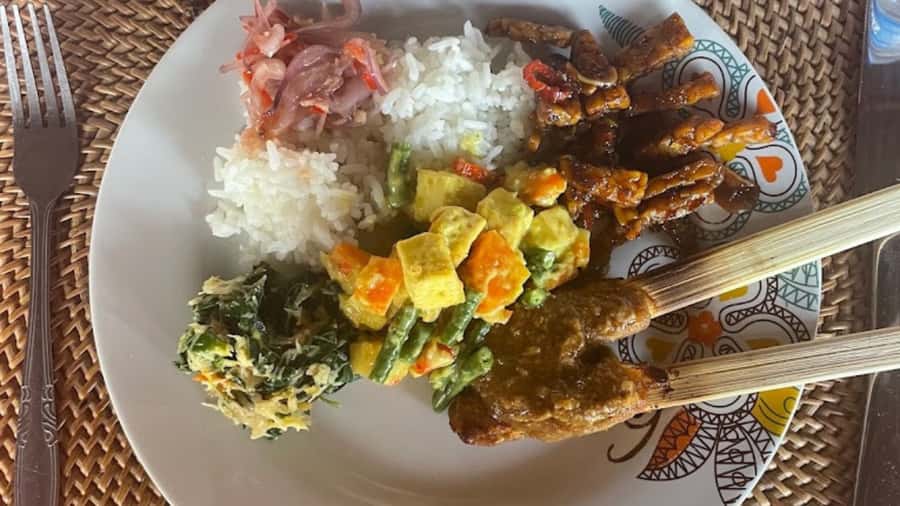
- Around ten dishes: Depending on the class menu, you may prepare curries, satays, soup, sambal, tempeh, pancakes, rice dishes, and dessert.
- Small groups: Numbers are limited to 10, with many sessions running closer to five to seven people.
- Good value at $21: Hotel transfers, the class, guide, and meal are included for morning and afternoon options in Ubud Center.
- Useful take-home extras: Some sessions provide a recipe booklet and a certificate of completion.
A cooking class that feels tied to Ubud
I like this experience because food is only one part of the lesson. You may begin with a welcome drink and local fruit, then hear about Balinese family compounds, Hindu customs, rice farming, and the small offerings made in daily life.
The exact flow can vary slightly by chef and session. Eri, Made, Madi, and Mate are names that appear in recent bookings, but your instructor will depend on the date and group. Each is presented as a local chef or host who guides the class in English.
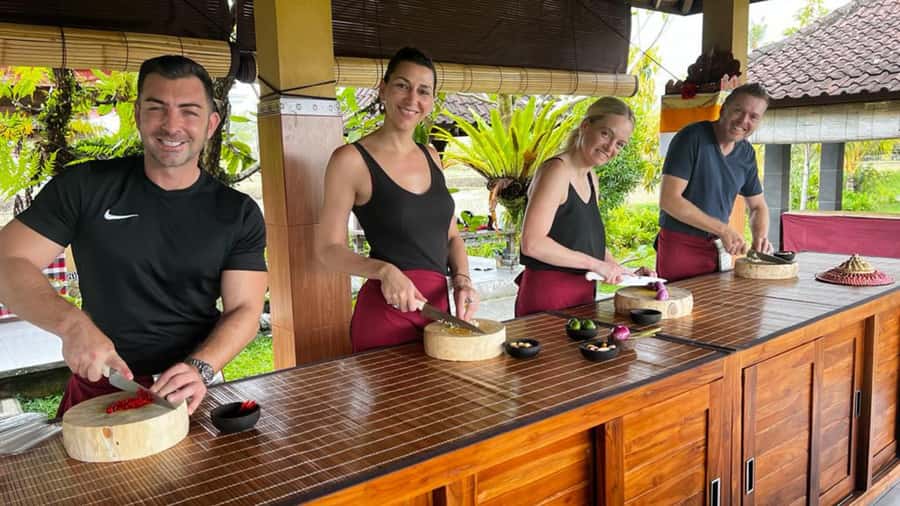
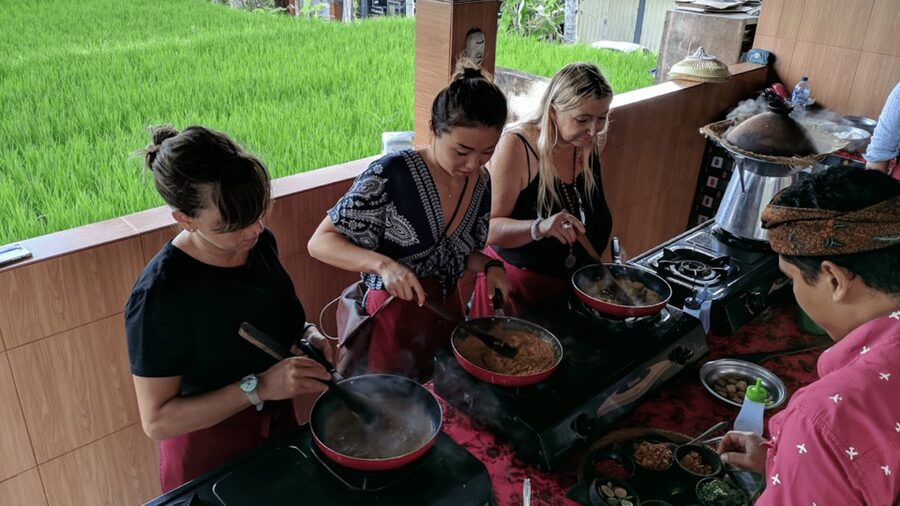
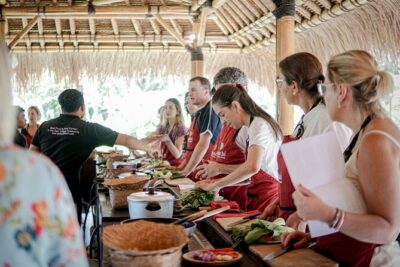
The cooking is done as a group, but you are not left standing at the back. You may be assigned to slice vegetables, pound spice paste, mix ingredients, prepare satay, or work on dessert. The class leaders explain what the rest of the group is doing, so you still learn the full recipe even when someone else has the pan or chopping board.
That team format suits beginners. You do not need previous cooking experience, and the pace is active without being frantic. The class usually lasts two to three hours, including the meal, so it fits neatly into a morning or evening in Ubud.
More Balinese cooking classes:
- Ubud Cooking Class Bali with Balinese Chef
★ 5.0 · 1,609 reviews - PRIVATE Authentic Balinese Cooking Class in Ubud at Putu’s Home
★ 5.0 · 644 reviews - Balinese Ubud cooking school (9 Dish Cooking and Market Tour)
★ 5.0 · 540 reviews
Choosing the morning, afternoon, or evening session
The morning class is the most complete version because it includes the market visit. After hotel pickup, you meet your guide and head to a local market where you can see the produce used in Balinese cooking before it reaches the kitchen.
The market stop is not simply a shopping errand. Your chef explains unfamiliar fruit, vegetables, roots, herbs, and spices, and shows you how ingredients connect to local cooking and religious customs. This is especially useful if you have seen spice pastes and piles of produce in Bali but had no idea what they were called or how they were used.
You should choose the morning option if food culture is a major reason for booking. The market gives the class a clearer beginning, moving from raw ingredients to prepared dishes. It also adds useful context before you start chopping.
The afternoon option includes the cooking class and meal but not the market tour. This may work better if you want a slower morning, have already visited Ubud Market, or prefer to avoid the warmest part of the day at an outdoor market.
The evening session is a practical choice for busy sightseeing days. It takes place after your daytime visits, and the completed meal becomes dinner. Since pickup and traffic arrangements can vary, check the exact meeting instructions when booking.
The market visit and the ingredients behind Balinese food
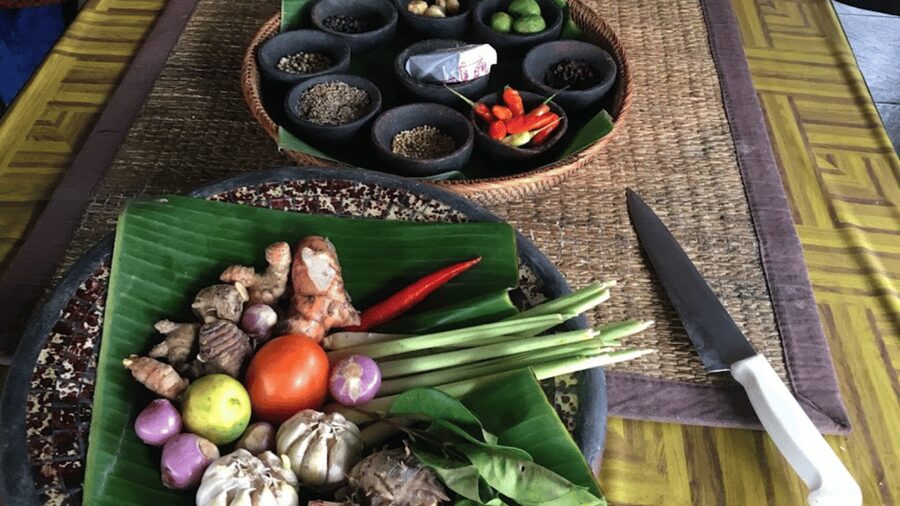
At the market, expect sensory overload in the pleasant sense: colorful produce, unfamiliar aromas, and ingredients that may not appear in your home kitchen. The important part is the explanation from your guide.
Balinese cooking relies on the balance of fresh aromatics and spice mixtures. You may learn how ingredients are combined before they are cooked, rather than treating each spice as a separate seasoning added at the end. The class also shows why preparation matters, especially when making a smooth base for curry, soup, sambal, or satay.
A market visit gives you a better idea of the work behind a Balinese meal. The food may arrive at the table in many small portions, but each one can require chopping, grinding, frying, simmering, or assembling.
The market can be busy and crowded, and it is not a quiet guided walk. You will get more from it if you stay close to the chef and ask questions. If you choose an afternoon or evening class, you will miss this part, so do not assume all time slots include it.
Inside the local compound and cooking space
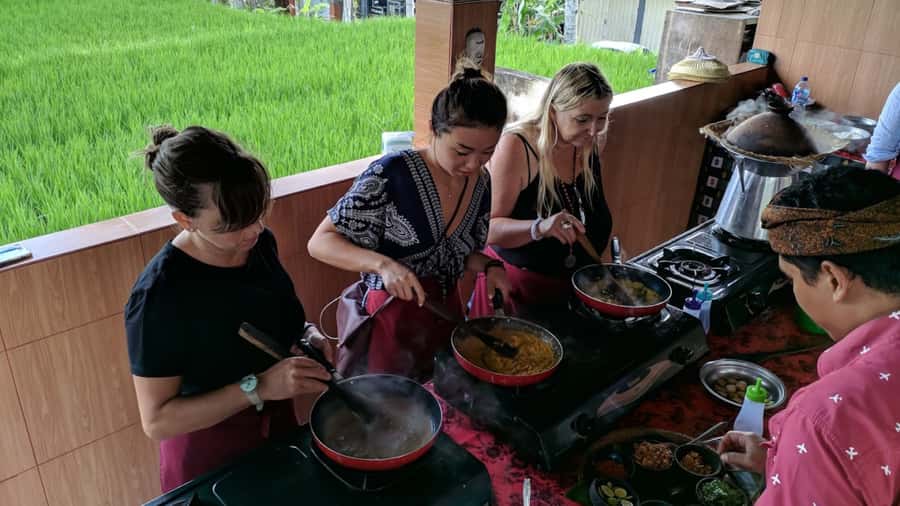
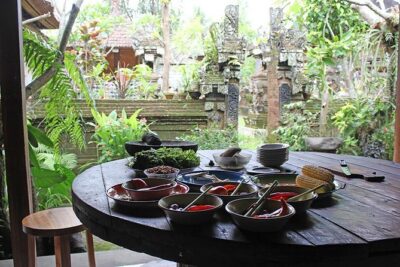
After the market, you travel to the cooking school. Several sessions are held in a family-style setting surrounded by tropical greenery, with some classes taking place in or beside a traditional local compound.
This setting is a major reason to book the class instead of taking a standard restaurant lesson. You may hear about family life, Hindu practice, traditional architecture, rice cultivation, and the role of food in ceremonies. Some sessions include making a canang, the small Hindu offering made from woven palm leaves and flowers.
The offering activity adds cultural meaning, but it should be treated respectfully rather than as a craft souvenir. Your host explains what the offering contains and why it is made. You may be able to take your creation back to your accommodation.
The cooking area is described as an outdoor kitchen with clean equipment and room for group preparation. You should expect a practical workspace rather than a polished professional culinary studio. That is part of the appeal, though anyone seeking a formal chef-school setup may find it simple.
Some people have also mentioned friendly family dogs at the property. That may be a pleasant bonus for animal lovers, but it is not a guaranteed part of the class.
More market visits in Ubud:
- Ubud: Balinese Cooking Class and Market Tour
★ 4.8 · 531 reviews - Balinese Cooking class with traditional morning market visit
★ 5.0 · 161 reviews - PRIVATE Ubud Market Tour & Balinese Cooking Class with Putu
★ 5.0 · 125 reviews - Ubud Traditional Night Market Food Tour-All Inclusive
★ 4.4 · 95 reviews
What you actually cook
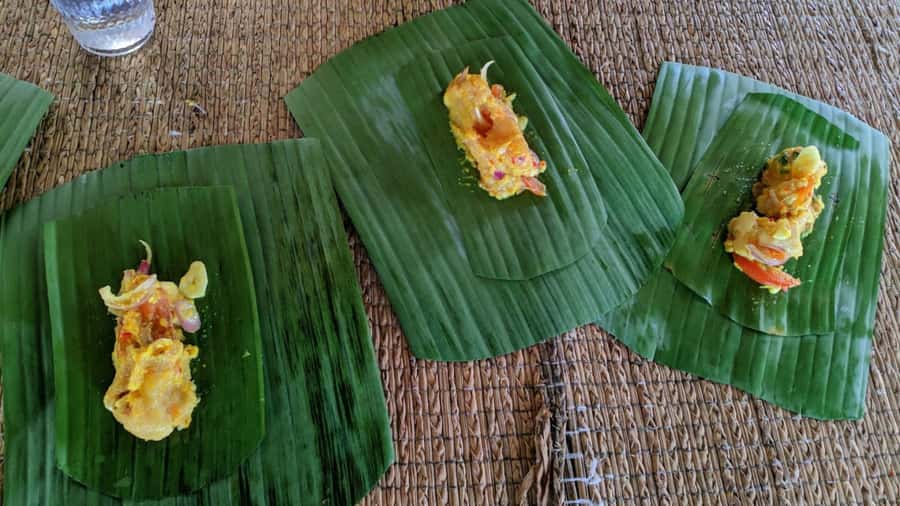
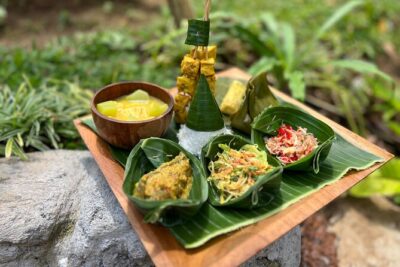
The menu can vary, but the class focuses on familiar Balinese staples and a broad spread of dishes. You may prepare a fragrant curry, savory satay, soup, sambal, vegetables, rice, sweet tempeh, pancakes, and other desserts.
The appeal is the range. Rather than making one complicated dish and leaving, you work through several cooking methods and flavor combinations. You get to see how a meal is built from small portions, sauces, spice pastes, grilled items, and sweets.
Sambal is often a favorite because it shows how fresh chilies and aromatics can change a meal. Tempeh is another useful lesson, especially when prepared in a sweet style. Pancakes are popular with children, and families with teenagers can split tasks so everyone gets involved.
The reviews supplied for this experience also describe groups making as many as ten dishes. That is a substantial amount of food for a $21 activity, although the precise number depends on the menu and class format.
You will not necessarily cook an individual portion of every dish from start to finish. This is a collaborative class. The chef divides the work among the group, then brings the dishes together for the final meal. If you want one-on-one instruction for every recipe, a private class would be a better fit, but that is not what this small-group experience promises.
The cultural explanation is the real bonus
A good Balinese cooking class should explain more than ingredients. Here, the hosts connect food with family, religion, architecture, farming, and hospitality.
You may learn about the importance of rice, the layout of a traditional compound, and the way offerings form part of everyday Hindu practice. One morning session also included an explanation of rice growing near the cooking site.
I find this cultural layer valuable because it helps you read Bali beyond its restaurant menus. A spice paste is not just a recipe step, and an offering is not merely decoration. The class gives you a modest but useful window into how food and tradition meet in daily life.
The quality of the cultural explanation depends on your chef. Eri is described as a warm and engaging host, while Made and Madi are praised for clear instruction and local context. The English is intended for an international group, and the experience includes an English-speaking live guide. An English audio guide is also listed.
Eating the meal you made
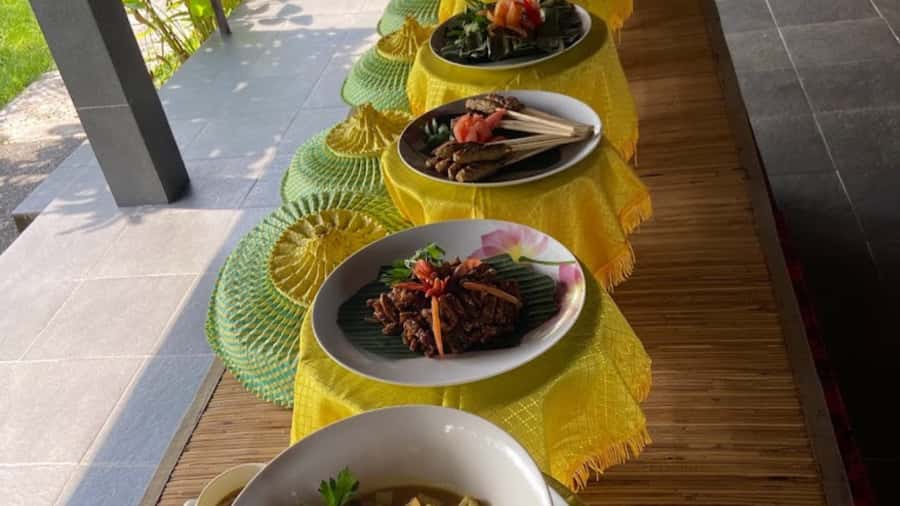
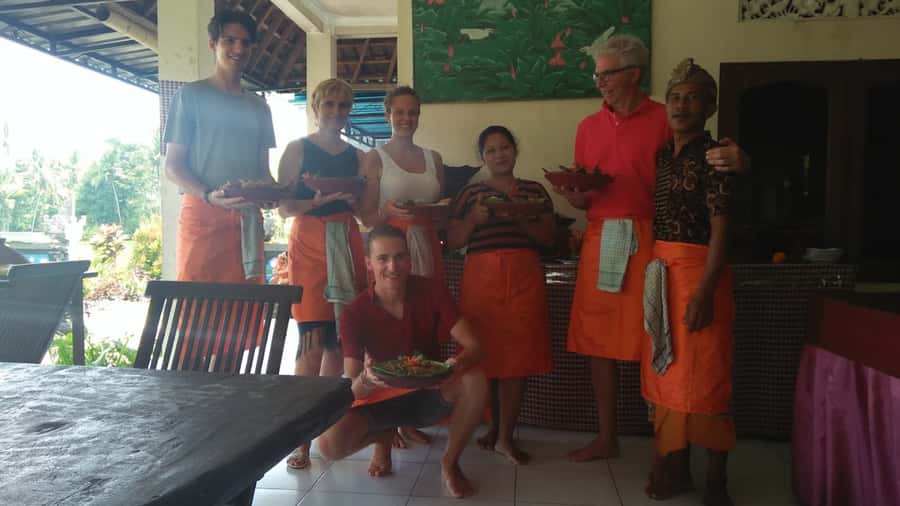
Once the cooking ends, everyone sits down together. The meal is served from the dishes prepared during the class, often in a buffet-style spread.
This final stage matters. You taste the effect of the spice work, compare dishes, and see how the separate tasks fit together. The meal also creates an easy social setting, since you have already spent the class chopping and cooking with the same people.
Come hungry. At this price, the meal is not a token sample. The menu can include enough dishes to feel like a full lunch or dinner, and many people consider the food one of the strongest parts of the experience.
Dietary needs should be communicated in advance. The class has provided alternatives for vegetarians, people avoiding fish, allergies, and some intolerances. The exact substitutions are not listed, so do not wait until the cooking begins to explain your needs.
After eating, you may receive a small recipe booklet and a certificate of completion. The recipe booklet is the more useful souvenir. It gives you a chance to recreate dishes at home, though you may need to find substitute ingredients depending on where you live.
Transfers, meeting point, and timing
Hotel pickup and drop-off are included for the morning and afternoon options when your accommodation is in Ubud Center. You should wait in your hotel lobby at the agreed time.
Pickup is not unlimited across the wider Ubud area. Sebali and Keliki incur an additional charge of 50,000 rupiah per person. If you are staying outside the standard pickup zone, confirm the fee before booking.
The meeting point is listed as the parking field, particularly for night sessions because of traffic. This is worth taking seriously. Ubud roads can be slow, and a clear pickup location saves time for both you and the driver.
If you have your own scooter or transport, the cooking location is reported to be about ten minutes from central Ubud. Parking is available, according to the practical information provided by people who drove themselves.
The class lasts two to three hours, but allow extra time for transfers. The market option adds another stage, and traffic can make the overall outing longer than the cooking time shown on the booking page.
Is $21 good value?
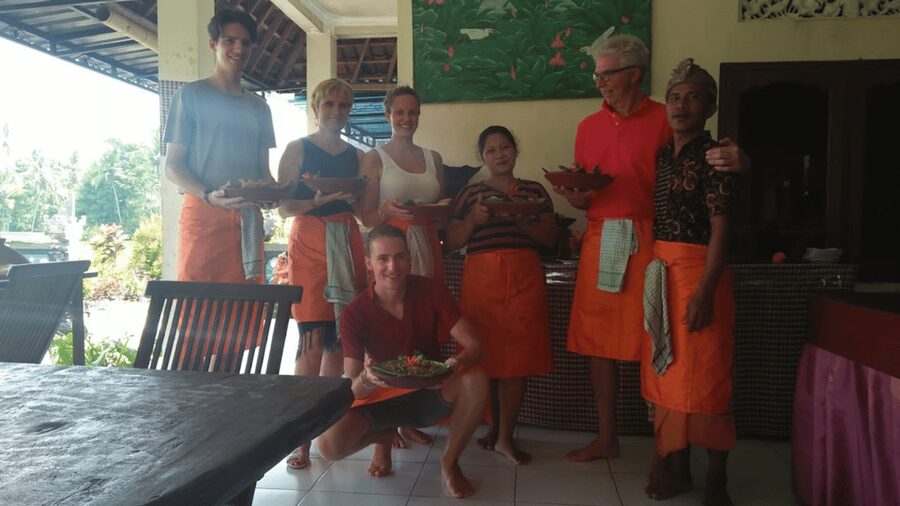
At $21 per person, this is strong value if you want food, instruction, and culture in one outing. The price includes the cooking class, English-speaking guide, meal, and Ubud Center transfers for the qualifying options. The morning version also includes the market tour.
You are not just paying for dinner. You are getting a guided introduction to ingredients, several cooking tasks, a large shared meal, and a cultural lesson. If your group prepares close to ten dishes, the price compares well with a standard meal in Ubud, even before counting transport and instruction.
The tradeoff is that this is a shared class, not a private culinary lesson. Your individual time with the chef may be brief when the group is full. The limit is 10 people, and many classes run with five to seven, which keeps the format manageable but does not guarantee personal attention at every step.
Free cancellation is available up to 24 hours before the activity for a full refund. You can also reserve now and pay later, which helps if your Ubud schedule is still changing.
Who should book this Ubud cooking class?
I would choose this for first-time visitors who want a friendly introduction to Balinese food without paying for a luxury food tour. It is also a good pick for couples, families, solo visitors, and teenagers who enjoy practical activities.
Families should find enough variety to keep younger cooks interested, especially with pancakes and dessert in the mix. Teenagers can take part in chopping and mixing rather than simply watching an adult cook.
The class also suits you if you want cultural contact in a structured setting. You will not be wandering independently through a village or attending a private family ceremony, but you may enter a local compound, speak with a Balinese host, and learn how food connects to ordinary life.
I would hesitate only if you dislike group activities, have severe dietary restrictions that require precise control, or want advanced culinary training. The class is designed for participation and enjoyment, not professional certification.
My verdict: book the morning if you can
I would book the morning option if the market, ingredients, and cultural setting matter most to you. It gives the experience a fuller arc, from shopping and local produce to cooking and eating.
Choose afternoon or evening if your schedule makes mornings awkward. You still receive the main cooking lesson and meal, and an evening class can be a pleasant way to finish a day in Ubud.
For $21, the combination of hands-on cooking, a substantial meal, local instruction, and possible family-compound access is hard to fault. Just check the pickup zone, tell the host about dietary needs, and remember that only the morning session includes the market visit.
FAQ
How much does the Ubud cooking class cost?
The listed price is $21 per person.
How long does the experience last?
The cooking class takes approximately two to three hours.
Is hotel pickup included?
Hotel pickup and drop-off are included for the morning or afternoon options when your accommodation is in Ubud Center.
Is the market visit included in every session?
No. The market tour is included only with the morning option.
Is the class taught in English?
Yes. The experience includes an English-speaking live guide and an English audio guide.
How many people are in the group?
The class is limited to 10 participants. Some sessions operate with smaller groups, such as five to seven people.
Are vegetarian and other dietary alternatives available?
Alternatives have been provided for vegetarians, people who do not eat fish, and some allergies or intolerances. Tell the provider about your needs in advance.
What happens if I need to cancel?
You can cancel up to 24 hours in advance for a full refund. The booking also offers a reserve-now, pay-later option.
More Workshops in Ubud
- Hands-On Silver Jewelry Making Near Ubud’s Monkey Forest
★ 4.9 · 1,789 reviews - Ubud Silver Class Jewelry making in bali
★ 5.0 · 978 reviews - Canggu: Bali Turtle Silver & Gold Workshop
★ 4.9 · 643 reviews - Balinese Farm Cooking Class by Pemulan Bali
★ 5.0 · 410 reviews
More Shopping Tours in Ubud
- Ubud Cooking Class with Optional Market Visit Pickup Included
★ 5.0 · 70 reviews - Balinese Cooking Class with Traditional Market Tour
★ 5.0 · 66 reviews - Ubud : Regular or Vegetarian cooking class with market visit
★ 4.8 · 57 reviews - Bali Food Tour: Savor Street Food and Night Market Adventures
★ 5.0 · 46 reviews
Just added around Ubud
- Authentic hike in the forest with lunch at the inhabitant★ 5.0 · 3 reviews
- Heaven Gate, Tirtagangga and Tukad Cepung Waterfall – All Inclusive★ 5.0 · 3 reviews
- Half Day Uluwatu Temple Sunset, Kecak Dance and Seafood Dinner★ 3.5 · 3 reviews
- Ubud: White Water Rafting with visit Ubud Monkey Forest★ 5.0 · 3 reviews
- ️Bali All Inclusive Tour: Ubud – Tegalalang – Kintamani★ 5.0 · 3 reviews
- East Bali and Lempuyang Temple Tour★ 5.0 · 3 reviews
- Ubud: Temple, Swing, Waterfall, Rice Terrace & Monkey Forest★ 5.0 · 3 reviews
- Batur Volcano Jeep Tour & Explore Best Waterfall in Bali★ 5.0 · 3 reviews
Balinese Cooking Classes, compared.
PRIVATE Authentic Balinese Cooking Class in Ubud at Putu’s Home
Read our review →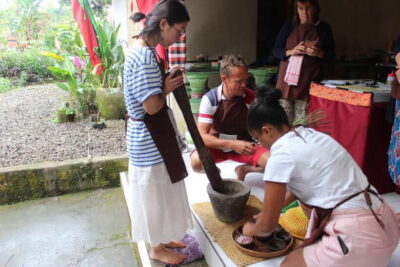
PRIVATE Balinese Cooking Class in Ubud with Dewa with Transfers
Read our review →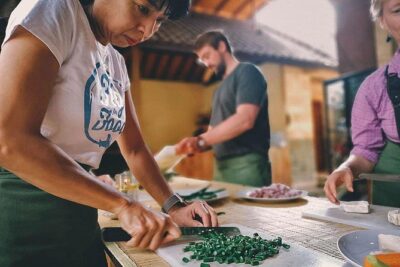
Balinese Cooking class with traditional morning market visit
Read our review →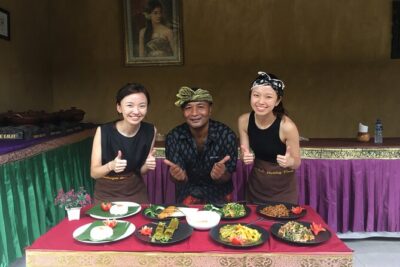
Browse the lists this tour appears in