
Reviewed · BALINESE COOKING CLASSES
Balinese Authentic Cooking Class in Ubud
The best part of this Ubud cooking class is that the food lesson begins long before the stove. You visit a local market, see a Balinese family compound, and pick some of the spices used in your meal. Ron and Putri are among the instructors, and both are praised for patient, friendly teaching.
I like the small-group format, capped at 15 people, and the chance to cook six dishes with fresh ingredients. I also like that the class explains daily Balinese life instead of treating cooking as a stand-alone activity. The morning market is only included in the morning session, and some people may find the pace a little rushed when several dishes are prepared at once.
In This Review
- Key points to know before booking
- A five-hour introduction to Balinese food and daily life
- The morning market gives the class its clearest start
- A traditional Balinese house adds cultural context
- The farm connects the ingredients to the plate
- Six dishes make this a real meal, not a tasting
- The meal is the payoff
- What the small group means in practice
- Pickup is useful, but check the zone
- Is $39.71 a fair price?
- Choosing morning, afternoon, or evening
- Who should book this class?
- Should you book the Lesung Bali cooking class?
- FAQ
- Where does the cooking class take place?
- How long does the experience last?
- Is pickup included?
- Are transfers available from outside Ubud?
- Does every class visit a traditional market?
- What food options are available?
- How many dishes will I cook?
- Is the class suitable for beginners?
- What is included in the price?
- What is the cancellation policy?
Key points to know before booking
- Morning classes include a local market visit: Afternoon and evening sessions skip this early market stop.
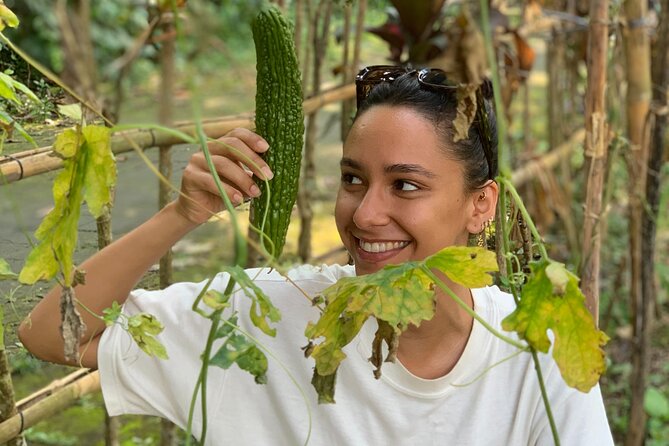
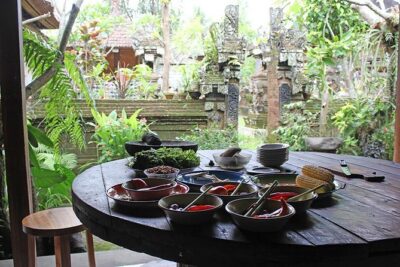
- The class takes place in west Ubud: Expect a countryside setting, a farm tour, and a separate cooking area.
- You cook a full six-dish meal: Regular, vegetarian, and vegan menus are available.
- Traditional techniques are part of the lesson: You will chop, pound spices with a lesung, and learn how Balinese dishes are assembled.
- Ubud pickup is included: Transfers outside Ubud cost extra, with separate car fees for southern Bali areas.
- Come hungry: Several people describe the finished meal as generous, with dessert and Balinese cake included.
A five-hour introduction to Balinese food and daily life
This is more than a recipe lesson. Lesung Bali places the cooking in a wider setting, so you can connect the ingredients on your plate with the homes, gardens, markets, and family customs around Ubud.
The experience lasts about five hours and takes place on the west side of Ubud, in a quieter countryside setting surrounded by greenery. Pickup is offered within the Ubud area in an air-conditioned vehicle, and mineral water, coffee or tea, taxes, and a Balinese cake are included.
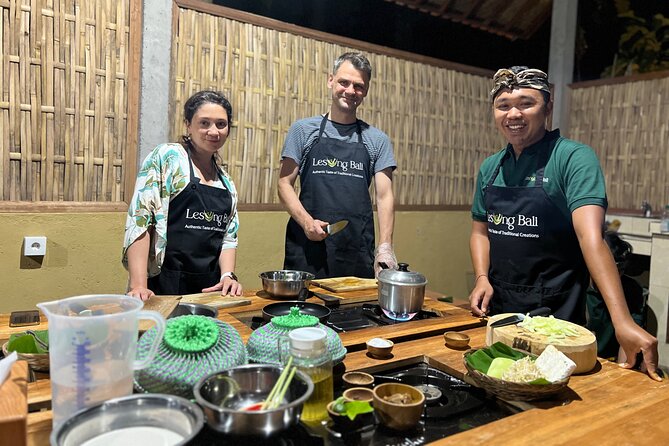
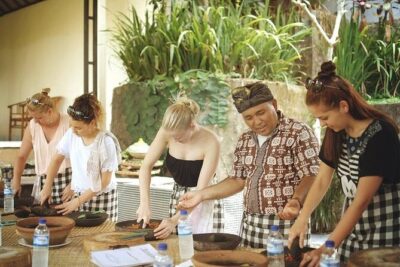
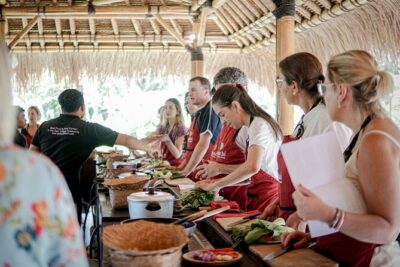
The group may contain up to 15 people, though smaller groups can happen. A small group matters here because the class is hands-on. You are not simply watching a chef prepare food at the front of a room. You should have a chance to chop, pound, mix, and cook with help close by.
The exact instructor can vary. Ron is praised for his humor and clear explanations, while Putri is described as patient and reassuring. Don has led both the cultural visit and the cooking, and Gustie has also provided pickup, shared information about ceremonies, and welcomed participants at his family home. Begul is another instructor whose lively style helped make the class enjoyable, though one person found that he sometimes added spices before explaining them.
More Balinese cooking classes:
- Ubud Cooking Class Bali with Balinese Chef
★ 5.0 · 1,609 reviews - Ubud: Cooking Class with Transfers and Optional Market Visit
★ 4.9 · 824 reviews - PRIVATE Authentic Balinese Cooking Class in Ubud at Putu’s Home
★ 5.0 · 644 reviews
The morning market gives the class its clearest start
Choose the morning session if you want the fullest itinerary. It begins with a visit to a traditional local market, where you see the spices and produce used in Balinese cooking and help buy ingredients from local sellers.
This stop gives useful context. Ingredients can look unfamiliar when they are already measured and arranged at a cooking station. Seeing them in the market helps you understand what they are, how they are sold, and how central fresh produce is to everyday food preparation.
You may also have the chance to try local fruit. The market is not just a shopping errand, but it is still a working local market rather than a staged food show. That means the experience may feel less polished than a formal culinary tour. It also means you get a more grounded look at ordinary food shopping.
The market is available in the morning class only. If that stop matters to you, do not assume the afternoon or evening option includes it. The later classes focus on the house, farm, and cooking portion.
A traditional Balinese house adds cultural context
After the market, the group visits a traditional Balinese home. This is one of the most useful parts of the experience for anyone who wants to understand how food fits into local life.
The visit explains the layout of a family compound, the buildings within it, and aspects of Balinese family life. Several sessions also include coffee, tea, snacks, or local foods while the guide talks about daily customs and traditions.
The presentation can vary. The grounds and compound are part of the visit, but you should not assume that every session includes a full tour inside the private living spaces. One participant was able to view the grounds and garden but did not go inside the house. That is a fair reminder that this is a respectful look at a local home, not a museum visit.
I like this pause before cooking. You are given time to sit, ask questions, and understand the setting instead of being hurried from one food task to the next. Guides such as Ron and Don have been praised for explaining Balinese family life, ceremonies, and community customs in a relaxed way.
The farm connects the ingredients to the plate
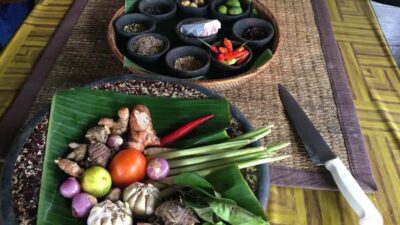
From the house, the class moves to the farm, where you explore the grounds and harvest spices for the meal. This is a simple idea, but it changes how you approach the cooking.
You see that the ingredients are not just items from a shopping list. Some come directly from the surrounding garden, and the class uses fresh produce and spices picked for the dishes. The farm also gives the cooking session a pleasant outdoor setting, with a slower countryside feel than you would get in a hotel kitchen.
The farm portion is not described as a long agricultural tour. Think of it as a short, practical introduction to the ingredients and their source. You select or gather some of what you will use, then return to the cooking area to prepare it.
The grounds are described as clean, attractive, and relaxing. Still, conditions can depend on weather, which is one reason the operator requires good weather for the activity. If poor weather causes a cancellation, you are offered another date or a full refund.
A few more Ubud half-days to weigh up
- Hands-On Silver Jewelry Making Near Ubud’s Monkey Forest
★ 4.9 · 1,789 reviews - Ubud Silver Class Jewelry making in bali
★ 5.0 · 978 reviews - Canggu: Bali Turtle Silver & Gold Workshop
★ 4.9 · 643 reviews - Ubud: Balinese Cooking Class and Market Tour
★ 4.8 · 531 reviews
Six dishes make this a real meal, not a tasting
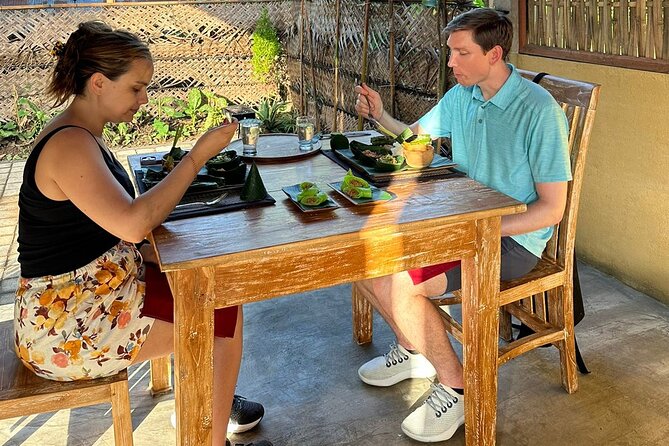
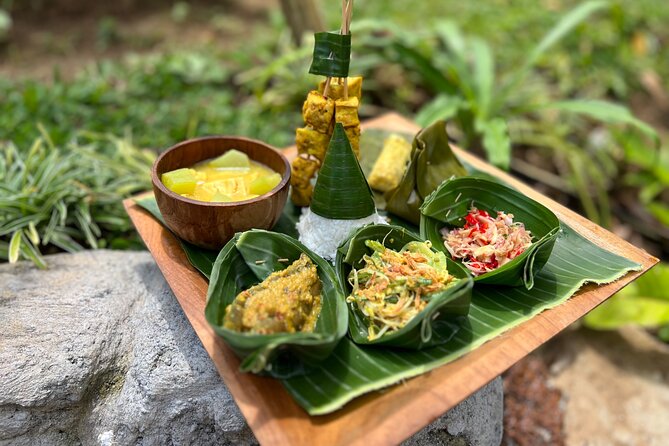
The class then turns to the main event: preparing a substantial Balinese meal. The menu can include six dishes, with regular, vegetarian, and vegan options available.
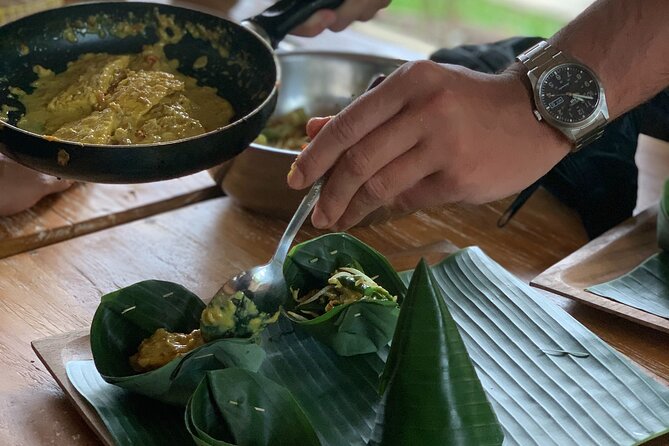
The precise dishes are not listed in the available details, so do not book expecting a fixed menu by name. What you can count on is a variety of authentic Balinese preparations, dessert, and a meal made from fresh ingredients. A Balinese cake is also included.
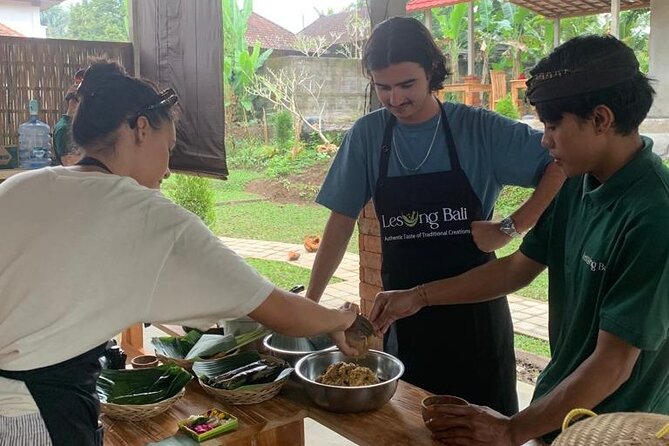
You take part in the preparation rather than watching the chef do everything. The lesson covers chopping, measuring, cooking, and the traditional use of a lesung, a large mortar and pestle used to pound spices. That pounding is one of the most memorable physical parts of the class. It also helps explain why Balinese food has such layered seasoning.
The chef demonstrates how much of each ingredient to use, how the cooking process works, and what else a dish needs. You can ask questions while working, and instructors generally offer hands-on help when needed. This suits beginners especially well. You do not need strong cooking skills to take part.
One small limitation is that the pace can become brisk when several dishes are prepared together. One person also wished the rice preparation had been more hands-on, since the rice was handled separately. If you want a slow, highly technical lesson on every individual component, this may feel more like a lively group workshop.
For most people, the variety is a strength. You learn several methods in one sitting, then taste how the spices work across different dishes.
The meal is the payoff
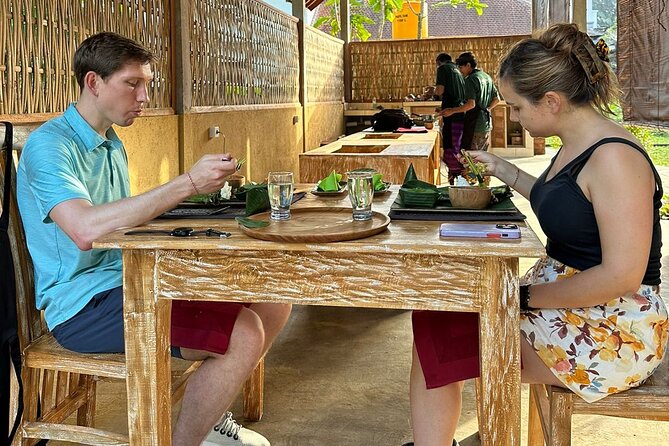
After cooking, you sit down to eat what you prepared. This is where the class feels practical rather than decorative. You can judge the seasoning, texture, and balance of the dishes while the steps are still fresh in your mind.
The portions are often generous. Some people found they had more food than they could finish, so arriving hungry is sensible. The meal may include six dishes and dessert, depending on the chosen menu.
The food also gives you a chance to notice what fresh spices do. Even if your finished dishes are not perfect, the instructor’s guidance helps you understand the basic pattern of Balinese cooking: prepare the spice mixture carefully, build flavor in stages, and use fresh ingredients where possible.
Coffee, tea, mineral water, and a Balinese cake are included. Extra drinks or other personal purchases are not specified, so bring a little local currency if you want to buy something beyond the included items.
What the small group means in practice
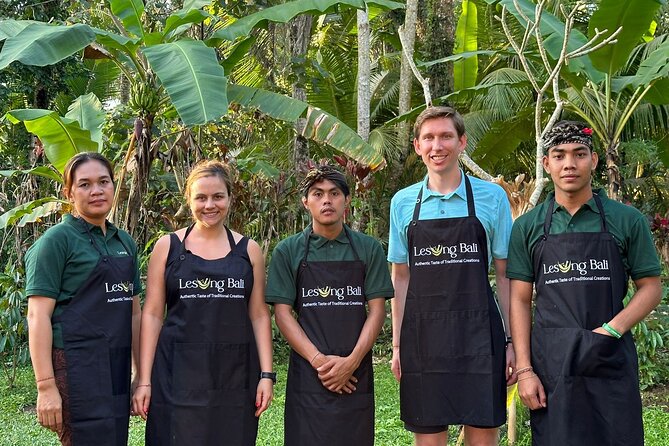
The maximum group size is 15, but the experience can be much smaller. One morning session had only one participant, leading to a private market tour and cooking class. Another group of four found the setting friendly and intimate.
A smaller group gives you more access to the chef, which matters when you are working with unfamiliar ingredients or using the large mortar and pestle. It also makes the house visit more conversational.
A group of 15 is still manageable, but personal attention will naturally vary. If the class is full, you may share workstations or wait briefly while the instructor moves between people. The available feedback suggests that the teaching is generally supportive, but a busy session could feel less leisurely than a private lesson.
Solo visitors can fit in well. You do not need to arrive with a partner or a large group, and the shared meal provides an easy social setting.
Pickup is useful, but check the zone
Free shuttle service is offered within the Ubud area. Pickup makes this easier to fit into a day of sightseeing, especially since the class is on Ubud’s western side and not necessarily within walking distance of your accommodation.
Communication about pickup has been described as clear and punctual, but you should still confirm your hotel details when booking. The included transfer is limited to Ubud.
If you are staying outside that area, extra transportation charges apply by car:
- Nusa Dua and Jimbaran: IDR 500,000
- Uluwatu: IDR 550,000
- Kuta, Seminyak, Sanur, and Canggu: IDR 450,000
These fees can change the value calculation for a solo participant. A group sharing one car may find the added cost reasonable, while someone staying in southern Bali may prefer a cooking class closer to the hotel.
Is $39.71 a fair price?
At $39.71 per person, the price covers much more than a cooking demonstration. You receive transport within Ubud, the cultural visits, the farm stop, instruction, ingredients, a full meal, drinks, a Balinese cake, and taxes.
I consider that good value if you want an activity that fills half a day and combines food with local culture. A cooking class alone might be cheaper in some destinations, but this one includes the market in the morning option, a home visit, and ingredient gathering at the farm.
The value is strongest for people who will use the lesson after returning home. You learn traditional techniques rather than simply eating dishes prepared by someone else. The class also works well as a break from Ubud’s cafes and restaurant circuit.
The price is less attractive if you only want to sample Balinese food, dislike group activities, or are staying far outside Ubud and must pay a large transfer fee. In that case, compare the total cost, not just the advertised per-person rate.
Choosing morning, afternoon, or evening
The morning class is the fullest choice because it includes the traditional market. It is best for people who want the strongest connection between shopping, local ingredients, and cooking.
The afternoon class may suit you if you prefer a later start or do not care about the market. You still receive the house, farm, and cooking portions described for the activity.
The evening class gives you a food-focused way to end the day. The cooking itself remains hands-on, and the meal is prepared during the session. If you want the market, choose morning instead.
All three options are listed as roughly five hours, but exact timing can depend on pickup and the pace of the group. The activity requires good weather and a minimum number of participants. If the operator cancels for either reason, you can choose a new date or receive a full refund.
Free cancellation is available up to 24 hours before the start time. Cancellations or changes within 24 hours are not refunded or accepted, so keep your schedule firm.
Who should book this class?
I would choose this for a first visit to Ubud if you want food and culture in the same outing. It suits beginners, couples, families, solo visitors, and anyone who enjoys learning by doing.
It is also a good fit for vegetarians and vegans because those menus are available. You should select or confirm your menu choice as part of the booking process so the cooking team can prepare appropriately.
You may want a different experience if you expect a professional chef’s school, a fixed fine-dining menu, or a very slow private lesson. This is a friendly cultural activity in a farm setting. Its strengths are warmth, fresh ingredients, traditional methods, and contact with local life.
Should you book the Lesung Bali cooking class?
Yes, if you want a practical half-day that explains where Balinese food comes from and lets you make a full meal yourself. The morning option offers the best overall program, with the market added to the house, farm, and cooking visits.
Book with realistic expectations. The group may reach 15 people, the menu can vary, and the pace may quicken while several dishes are underway. But at $39.71, with Ubud pickup and a generous meal included, the experience offers strong value for anyone curious about Balinese cooking and everyday culture.
FAQ
Where does the cooking class take place?
The class is located on the west side of Ubud, in a countryside setting surrounded by green areas.
How long does the experience last?
The activity lasts approximately five hours.
Is pickup included?
Free pickup and shuttle service are included within the Ubud area only.
Are transfers available from outside Ubud?
Yes, but they cost extra. The listed car charges are IDR 450,000 from Kuta, Seminyak, Sanur, and Canggu, IDR 500,000 from Nusa Dua and Jimbaran, and IDR 550,000 from Uluwatu.
Does every class visit a traditional market?
No. The traditional market visit is included with the morning class only.
What food options are available?
You can choose from regular, vegetarian, and vegan menu options.
How many dishes will I cook?
The class includes preparation of a variety of Balinese dishes, and the meal is described as including six dishes. Dessert is also included with some menu options.
Is the class suitable for beginners?
Yes. The cooking is hands-on, and the chefs provide demonstrations, explanations, and help during the preparation.
What is included in the price?
The price includes coffee or tea, mineral water, an air-conditioned vehicle, taxes and fees, a Balinese cake, and free Ubud-area shuttle service.
What is the cancellation policy?
You can cancel at least 24 hours before the start time for a full refund. Cancellations or changes made within 24 hours are not accepted and are not refunded.
Just added around Ubud
- Authentic hike in the forest with lunch at the inhabitant★ 5.0 · 3 reviews
- Heaven Gate, Tirtagangga and Tukad Cepung Waterfall – All Inclusive★ 5.0 · 3 reviews
- Half Day Uluwatu Temple Sunset, Kecak Dance and Seafood Dinner★ 3.5 · 3 reviews
- Ubud: White Water Rafting with visit Ubud Monkey Forest★ 5.0 · 3 reviews
- East Bali and Lempuyang Temple Tour★ 5.0 · 3 reviews
- Ubud: Temple, Swing, Waterfall, Rice Terrace & Monkey Forest★ 5.0 · 3 reviews
- ️Bali All Inclusive Tour: Ubud – Tegalalang – Kintamani★ 5.0 · 3 reviews
- Blue Lagoon Snorkeling and Lunch with Tukad Cepung Waterfall★ 5.0 · 3 reviews
Balinese Cooking Classes, compared.
Cooking Class with Transfers and Optional Market Visit
Read our review →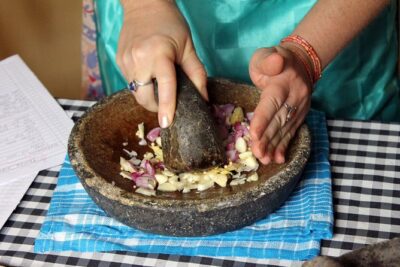
PRIVATE Authentic Balinese Cooking Class in Ubud at Putu’s Home
Read our review →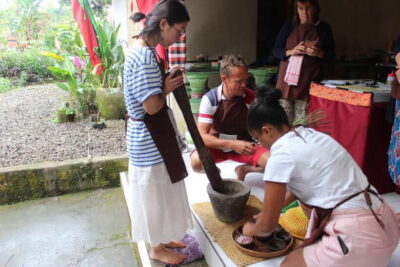
PRIVATE Balinese Cooking Class in Ubud with Dewa with Transfers
Read our review →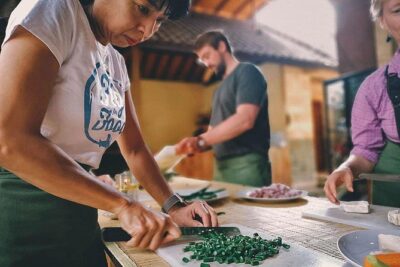
Balinese Cooking class with traditional morning market visit
Read our review →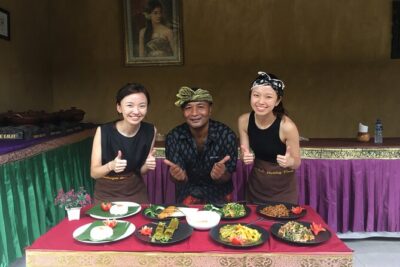
Browse the lists this tour appears in