
Reviewed · BALINESE COOKING CLASSES
PRIVATE Balinese Cooking Class in Ubud with Dewa with Transfers
The best part of this experience happens before the cooking begins. Dewa takes you through his village and family garden near Keliki, explaining the plants, farming, religion, and daily customs that give Balinese food its character. You then cook in his open kitchen with his wife, Jero, and eat the meal in their traditional family compound.
I like the garden-to-table connection, since you see ingredients such as galangal, cacao, nutmeg, lemongrass, and bananas growing near the house. I also like the private format, with your own group, round-trip transport from Ubud, and a recipe notebook to take home. The main consideration is that this is a home visit with local cooks, not a polished chef school, so the pace and teaching style feel personal rather than formal.
In This Review
- Key points to know
- A family compound north of Ubud
- The ride from Ubud to Keliki
- A garden tour with galangal, cacao, and nutmeg
- Inside the open kitchen with Jero
- Lunch or dinner made by your own hands
- What the private format is worth at $69
- Who will enjoy this most
- Practical details before you reserve
- Should you book Dewa’s Balinese cooking experience?
- FAQ
- How long does the Balinese cooking experience last?
- Is pickup included from my hotel?
- Is this a private activity?
- Who hosts the cooking class?
- Is a vegetarian meal available?
- What dishes might I learn to cook?
- Can I cancel for a full refund?
Key points to know
- Walk through Keliki village and the family garden before cooking, with explanations of plants, farming, and Balinese customs.
- Cook five to seven traditional dishes, depending on the session, using a mortar and pestle and a wood-fired stove.
- Meet Dewa, Jero, and their extended family inside a traditional walled compound with open pavilions around a courtyard.
- Eat the meal you prepare, with local beer and water included.
- Enjoy private round-trip transfers from Ubud, but arrange your own transport if staying outside the Ubud region.
- Request a vegetarian menu when booking, since dietary changes need advance notice.
A family compound north of Ubud
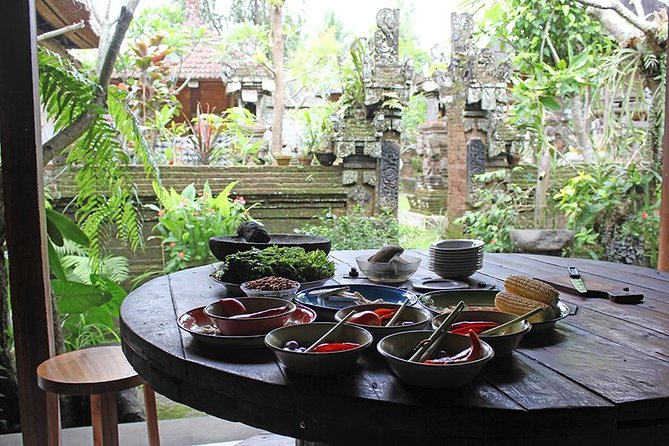
This four-hour experience takes place in Keliki, a village in the terraced foothills north of Ubud. The setting matters. You are not cooking in a hotel classroom or a purpose-built restaurant. You are welcomed into Dewa’s traditional Balinese family compound, where several open pavilions face a central courtyard.
That arrangement gives you a useful look at how a family home functions. The cooking area is open, the surroundings are green, and family life remains close by. You may meet other members of the extended household, rather than dealing only with a guide who leaves when the class ends.
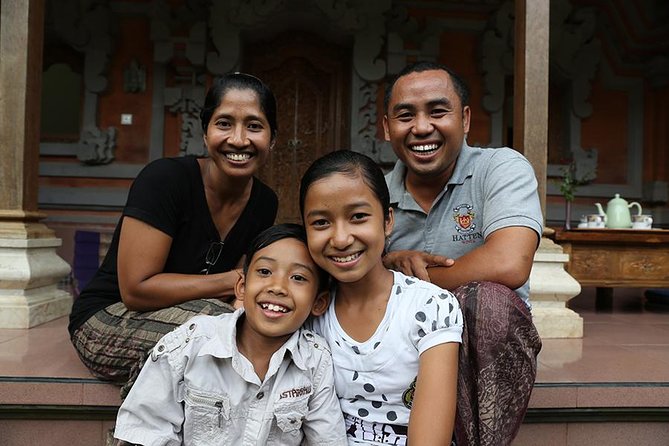
Dewa is the main host when available, and his wife, Jero, helps lead the cooking. If Dewa cannot host, an equally warm family member may take his place alongside Jero. The experience has a strong personal touch, which is one reason it feels very different from a standard cooking demonstration.
The activity is private, so only your group participates. That is useful if you want to ask questions, work at your own speed, or focus on particular ingredients. It also makes the visit a better fit for couples, families, or friends who prefer a quiet local encounter instead of a large class.
More Balinese cooking classes:
- Ubud Cooking Class Bali with Balinese Chef
★ 5.0 · 1,609 reviews - Ubud: Cooking Class with Transfers and Optional Market Visit
★ 4.9 · 824 reviews - PRIVATE Authentic Balinese Cooking Class in Ubud at Putu’s Home
★ 5.0 · 644 reviews
The ride from Ubud to Keliki
Round-trip transfers are included from hotels and vacation rentals in Ubud. The drive takes roughly 15 to 30 minutes according to the supplied details, though local traffic and your exact location can affect the timing.
The pickup is more than a convenience. Keliki is outside central Ubud, and the meeting point is Rumah Makan Jero Nini on Jl. Arjuna. A private vehicle removes the need to arrange a taxi for the outward and return journeys, and Dewa can meet you directly at his home once you arrive.
There is one important boundary: transport is offered only from the Ubud region. If you stay elsewhere, you need to make your own way to Keliki. Confirm the meeting details after booking, since confirmation is sent within 48 hours and depends on availability.
The drive leads away from Ubud’s central streets toward village roads and terraced foothills. Do not think of the transfer as a sightseeing tour in its own right, but it does help shift the setting from the town’s art shops and restaurants to a more rural part of Gianyar.
A garden tour with galangal, cacao, and nutmeg
The first main part of the visit is a walk through local gardens and the surrounding village. Dewa gathers or points out ingredients used in the meal, including herbs, spices, fruits, and plants with medicinal uses.
This is where the class gains its cultural value. A recipe list tells you what to add, but a garden walk shows how food fits into local life. You learn to recognize ingredients such as galangal, see where bananas and lemongrass grow, and hear how plants can be used for more than flavor.
Cacao and nutmeg are among the plants introduced, along with other local fruits and spices. Dewa also explains farming practices and the Balinese idea of living in balance with nature. Several accounts of the experience describe the village walk as a history and culture lesson, covering Balinese religion, customs, and the influence of Hinduism, Buddhism, and animism.
The walk may include village streets, forest paths, rice fields, or community garden areas. Wear comfortable shoes. This is practical advice, not a minor detail: the experience includes walking before you settle into the kitchen, and the ground may not feel like a paved city sidewalk.
You should also expect the garden part to be conversational. Dewa’s strength is storytelling and explanation, so the walk is not simply a quick ingredient checklist. If you want only a fast cooking lesson, this portion may feel long. If you want to understand why the food is prepared in a certain way, it is one of the most valuable parts.
Inside the open kitchen with Jero
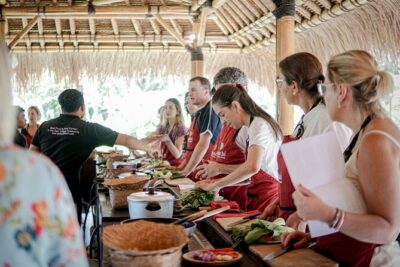
After the village and garden walk, you return to the family compound and join Dewa’s wife, Jero, in the open kitchen. Here, you learn to prepare several home-style Balinese dishes from fresh ingredients.
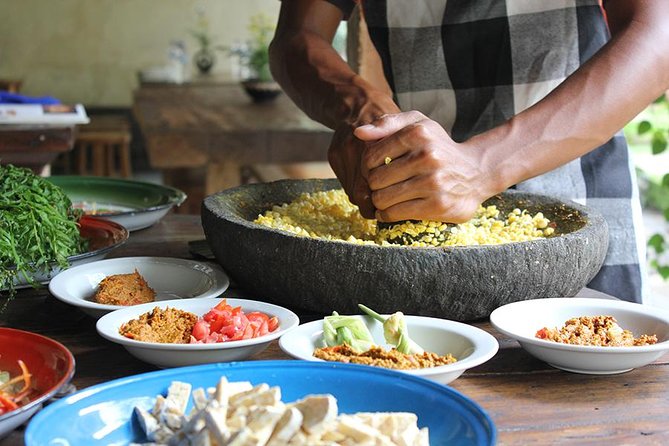
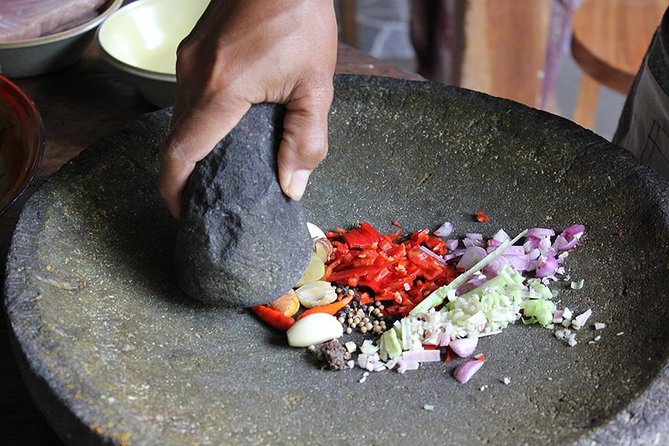
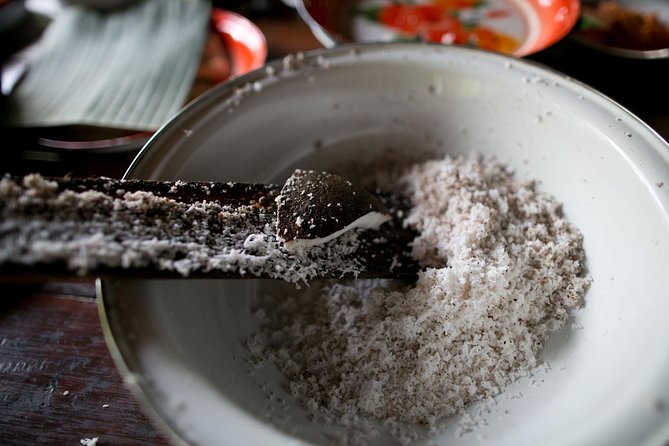
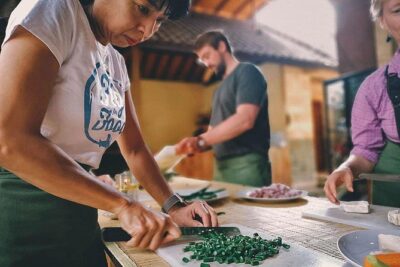
The work is hands-on. You may chop vegetables, grind spice pastes, and help prepare the dishes step by step. Traditional equipment is part of the lesson, especially the mortar and pestle. The method takes more effort than reaching for a blender, but it shows how texture and aroma are built into Balinese cooking.
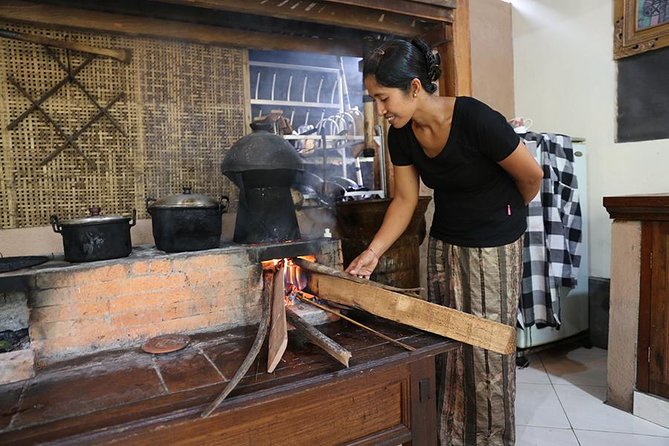
You also use a traditional wood-fired stove. This is an important difference from a modern cooking school. Heat control, timing, and the feel of the kitchen come from household practice rather than restaurant equipment. You are there to participate, not just watch someone else cook.
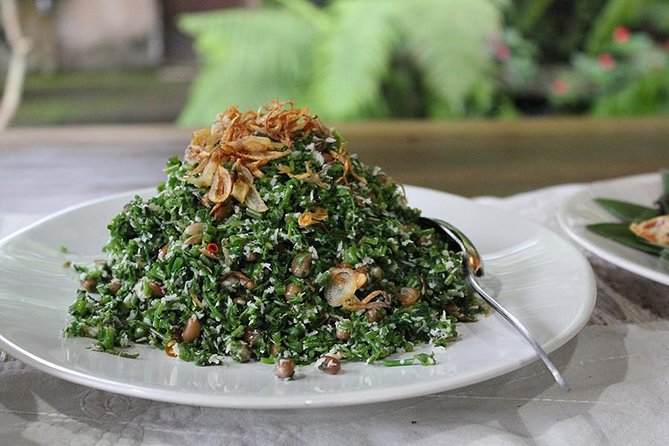
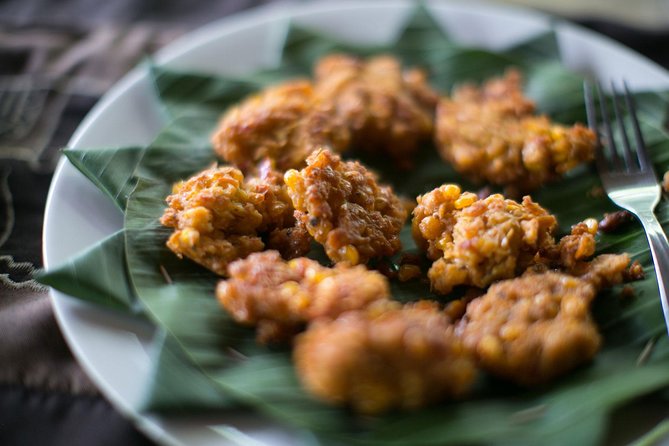
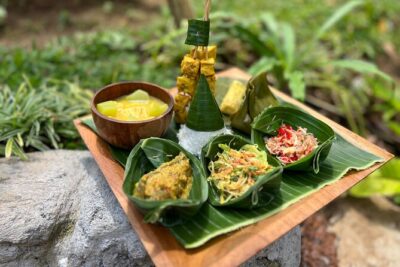
Possible dishes include pepes ikan, tuna grilled in banana leaves; bumbu kuning, chicken in a fresh turmeric and coconut milk sauce; and bregedel, hand-ground corn fritters. The full meal can include five, six, or even seven recipes, with a mix of salads, main dishes, fritters, and dessert.
The precise menu may vary, so you should not book this expecting a guaranteed fixed list beyond the examples provided. That flexibility is normal in a family kitchen and may reflect available ingredients. It also means the garden walk has a direct purpose: the plants you see help shape what appears on your plate.
A small handmade recipe book is provided for writing down the dishes. That is a useful souvenir, since the recipes are designed to be made again at home rather than admired and forgotten. The cooking is described as approachable, but this is not a professional certification course. Jero and Dewa share the methods used in their household, with an emphasis on local ingredients, health, and tradition rather than restaurant technique.
A few more Ubud half-days to weigh up
- Hands-On Silver Jewelry Making Near Ubud’s Monkey Forest
★ 4.9 · 1,789 reviews - Ubud Silver Class Jewelry making in bali
★ 5.0 · 978 reviews - Canggu: Bali Turtle Silver & Gold Workshop
★ 4.9 · 643 reviews - Ubud: Balinese Cooking Class and Market Tour
★ 4.8 · 531 reviews
Lunch or dinner made by your own hands
Once the cooking is finished, you sit down to eat what you helped prepare. Beer and water are included, and the meal takes place within the family compound rather than at a separate dining venue.
The food is fresh and strongly tied to the place. Turmeric, coconut milk, grilled banana leaves, corn, herbs, and spice pastes give you a clearer sense of Balinese cooking than a single restaurant dish usually can. You also know how each dish came together because you handled the ingredients yourself.
One useful point raised during the experience is that Balinese home cooking often relies on fresh herbs and spices for flavor instead of large amounts of salt. That does not mean the food is bland. It means the balance comes from the ingredients and the grinding, wrapping, frying, and cooking methods.
The meal can feel like a family invitation rather than the final stage of a class. Dewa shares stories about his family, spirituality, and the values that shape his daily life. That conversation is a major reason to choose this experience over a class in a commercial kitchen.
Allow time to relax at the table. The four-hour estimate includes transport, walking, cooking, and eating, so the schedule is not meant to rush you through a list of recipes. The exact length can depend on your group and the pace of conversation.
What the private format is worth at $69
At $69 per person, this costs more than a basic group cooking lesson in Bali. The price becomes easier to justify when you count what is included: a private activity, round-trip transfers from Ubud, a village and garden visit, a cooking session, a full meal, local beer and water, and access to a family home.
You are also paying for time with Dewa and his family, not just for ingredients. His explanations cover food, farming, village life, religion, and history. That wider focus is the heart of the experience.
The private setup is especially good value for a small group that would otherwise need to arrange transport and pay separately for a cultural visit. It is less compelling if your only goal is to learn advanced knife skills or professional kitchen methods. For that, seek a formal cooking school instead.
The activity has a 5 out of 5 rating from 213 ratings and a 99 percent recommendation rate in the supplied booking information. Those figures suggest a strong record, but the best match depends on your priorities. The experience earns its value through contact with a local family and the time spent in the village, not through luxury facilities.
Group discounts are available, and the private format means you do not share the class with unrelated participants. Ask about the discount when arranging the booking if you are traveling with several people.
Who will enjoy this most
I would choose this for you if food is a way to understand a place, not just something to photograph. It suits people who want to hear local stories, ask questions, and take part in ordinary household methods.
It is also a strong pick for:
- Couples looking for a private cultural activity in Ubud
- Families who want a hands-on introduction to Balinese food
- Home cooks who will actually use the recipes later
- Anyone interested in medicinal plants, farming, or local religious traditions
- People who prefer a rural village setting to a busy town attraction
The class may be less suitable if you dislike walking, need a tightly timed professional lesson, or want a guaranteed menu with exact quantities and techniques. You should also tell the provider about vegetarian needs when booking. A vegetarian meal is available on request, but advance notice is required.
Service animals are allowed, and the meeting point is near public transportation. Still, the included private transfer is the simplest option if you are staying within Ubud.
Practical details before you reserve
Plan for about four hours, including the village walk, garden visit, cooking, meal, and return transfer. Wear comfortable walking shoes and clothing suitable for a home cooking setting.
The activity ends back at the meeting point, with transport returning you to Ubud when pickup is included. If your accommodation is outside the Ubud region, the included transfer does not apply, and you will meet Dewa directly at his home in Keliki.
Confirmation arrives within 48 hours, subject to availability. Free cancellation is available if you cancel at least 24 hours before the local start time. Cancellations or changes made inside that window are not refunded or accepted.
Because the menu can include meat and fish, state dietary requirements at the time of booking. A private group also gives you a chance to explain allergies or food concerns early, even though the supplied information specifically confirms only the vegetarian option.
Should you book Dewa’s Balinese cooking experience?
Book it if you want a personal look at Balinese life along with your meal. The strongest features are the walk through Keliki, the garden ingredients, the traditional tools, the open family kitchen, and the chance to eat with the people who taught you.
I especially recommend it for a first visit to Ubud when you want something grounded in local life rather than another town-center activity. The cooking is the thread that connects the garden, family, religion, farming, and food.
Skip it if you are searching for a technical chef-led course or a quick class with no walking and no cultural discussion. For everyone else, the private transfers and broad cultural program make $69 a fair price for a half-day experience that gives you both a meal and recipes you can carry home.
FAQ
How long does the Balinese cooking experience last?
The experience lasts approximately four hours, including the village and garden visit, cooking session, meal, and return transfer.
Is pickup included from my hotel?
Round-trip transfers are included from hotels and vacation rentals in the Ubud region. If you stay outside Ubud, you must arrange your own transport to Keliki and meet Dewa at his home.
Is this a private activity?
Yes. Only your group participates, so you do not share the activity with unrelated participants.
Who hosts the cooking class?
Dewa hosts when available, with his wife Jero helping in the kitchen. If Dewa cannot host, an equally lovely family member may host alongside Jero.
Is a vegetarian meal available?
Yes. A vegetarian option is available, but you must request it when booking.
What dishes might I learn to cook?
Possible dishes include pepes ikan, tuna grilled in banana leaves; bumbu kuning, chicken cooked with fresh turmeric and coconut milk; and bregedel, hand-ground corn fritters. The menu may vary.
Can I cancel for a full refund?
Yes. You can cancel at least 24 hours before the experience’s local start time for a full refund. Cancellations or changes made less than 24 hours in advance are not accepted or refunded.
Just added around Ubud
- Authentic hike in the forest with lunch at the inhabitant★ 5.0 · 3 reviews
- Heaven Gate, Tirtagangga and Tukad Cepung Waterfall – All Inclusive★ 5.0 · 3 reviews
- Half Day Uluwatu Temple Sunset, Kecak Dance and Seafood Dinner★ 3.5 · 3 reviews
- Ubud: White Water Rafting with visit Ubud Monkey Forest★ 5.0 · 3 reviews
- ️Bali All Inclusive Tour: Ubud – Tegalalang – Kintamani★ 5.0 · 3 reviews
- East Bali and Lempuyang Temple Tour★ 5.0 · 3 reviews
- Ubud: Temple, Swing, Waterfall, Rice Terrace & Monkey Forest★ 5.0 · 3 reviews
- Blue Lagoon Snorkeling and Lunch with Tukad Cepung Waterfall★ 5.0 · 3 reviews
Balinese Cooking Classes, compared.
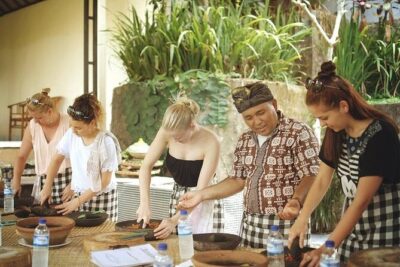
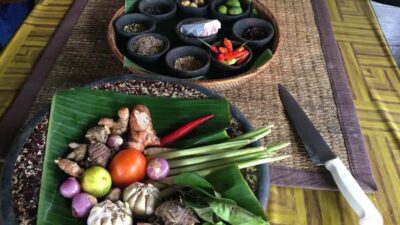
Cooking Class with Transfers and Optional Market Visit
Read our review →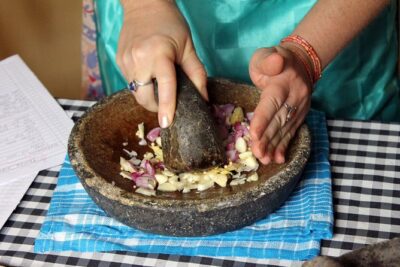
PRIVATE Authentic Balinese Cooking Class in Ubud at Putu’s Home
Read our review →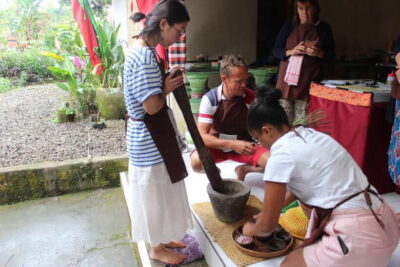
Balinese Cooking class with traditional morning market visit
Read our review →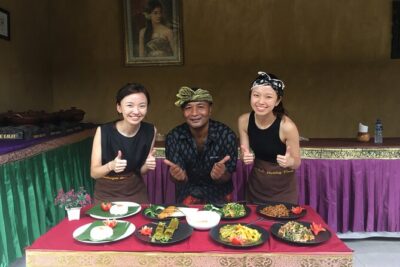
Browse the lists this tour appears in