
Reviewed · BALINESE COOKING CLASSES
PRIVATE Authentic Balinese Cooking Class in Ubud at Putu’s Home
The best part of this experience is not simply learning to cook. It is being welcomed into Putu’s family compound, where the kitchen, garden, temple, rice fields, and daily family life all connect. You prepare five Balinese dishes with ingredients from the property, then eat them with Putu’s family’s homegrown rice.
I like the private format, which lets Putu adjust the pace for children, older adults, vegetarians, vegans, and cooks with different skill levels. I also like the farm visit and home tour, especially the look at the household temple and traditional Balinese family layout. The main consideration is time: the home can be about 40 minutes from central Ubud, so allow a generous part of your day and avoid scheduling a tight appointment afterward.
In This Review
- Key details before you book
- Entering Putu’s traditional family compound
- Touring the garden before the cooking begins
- Cooking five dishes with simple local methods
- Sharing the Balinese feast with Putu’s family
- Why the private format matters
- Lunch or dinner: choosing the right timing
- Dietary needs and menu expectations
- Who will enjoy this class most
- Final verdict: book it for the home, not just the food
- FAQ
- How long does the Balinese cooking class last?
- Is the cooking class private?
- How many dishes will I prepare?
- Is hotel pickup included?
- Can I choose lunch or dinner?
- Are vegetarian and vegan options available?
- Are drinks included?
- Can I cancel for a full refund?
Key details before you book
- Five dishes from scratch: You chop, grind, season, steam, and grill rather than simply watch a demonstration.
- Putu’s family home: The class takes place in a traditional compound with family living areas, a temple, gardens, and farm space.
- Fresh farm ingredients: Much of the rice, fruit, vegetables, herbs, and spices come from Putu’s family property.
- Lunch or dinner choice: The class lasts about three hours, including roughly 1.5 hours of cooking and a shared meal.
- Private pickup from Ubud: Round-trip transport from a Ubud hotel is included, but accommodation outside Ubud costs extra.
- Flexible for groups: The activity suits couples, families, and larger private groups, with vegetarian and vegan options available by request.
Entering Putu’s traditional family compound
Your experience begins with pickup from your Ubud hotel and a drive into the countryside around Ubud. The home is not in the center of town, and that is part of the point. You leave behind the traffic and restaurant district for a more rural setting where family homes, gardens, orchards, and farm plots shape the day.
Putu welcomes you with her family, including her husband, grandparents, children, and other relatives who may help with the class. The setting is personal rather than commercial. You are not seated in a large teaching kitchen with a dozen strangers. Your group receives Putu’s attention, and she can bring children or less confident cooks into the process without slowing everyone down.
Before cooking, Putu shows you around the compound. She explains the purpose of the different sections of a traditional Balinese home, including the family temple and living spaces. This short introduction gives the food lesson useful context. In Bali, cooking is tied to family, farming, religious practice, and the seasons, so the home tour helps you understand why the ingredients and methods matter.
The compound also offers a glimpse of everyday life that you will not get from a standard Ubud restaurant. You may see rice, fruit, animals, and vegetables tended by Putu’s grandparents, who are rice farmers. The property includes tropical plants and garden produce, and Putu harvests ingredients for the meal when they are in season.
More Balinese cooking classes:
- Ubud Cooking Class Bali with Balinese Chef
★ 5.0 · 1,609 reviews - Ubud: Cooking Class with Transfers and Optional Market Visit
★ 4.9 · 824 reviews - Balinese Ubud cooking school (9 Dish Cooking and Market Tour)
★ 5.0 · 540 reviews
Touring the garden before the cooking begins
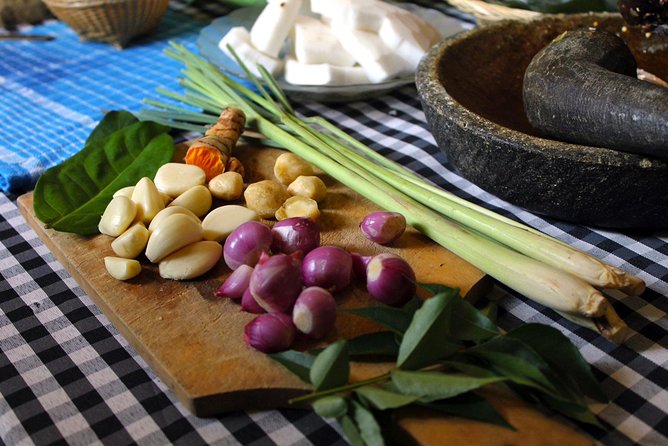
The garden visit is one of the strongest parts of the afternoon or evening. Instead of receiving a tray of anonymous ingredients, you see where some of the meal begins. Putu explains the spices, herbs, fruits, and vegetables used in Balinese cooking, along with traditional medicinal uses for some plants.
You might taste fresh fruit from the property, including mangosteen when it is available. The menu changes with the season, so the exact dishes are not fixed. That is a benefit if you want food that reflects what the family grows and what local markets provide, though it means you should not book expecting one guaranteed menu.
Putu’s explanations also connect food to Balinese customs. She talks about local life, Balinese Hinduism, family traditions, and the ceremonies taking place during your visit. Her humor helps keep the cultural talk relaxed. You get information, but not a formal lecture.
This section is especially useful for anyone who has eaten Indonesian food but wants to understand its building blocks. You see how fresh chilies, aromatics, coconut, herbs, and spices are handled before they become a finished dish. You also get a better sense of the work behind flavors that can seem effortless on a restaurant plate.
Cooking five dishes with simple local methods
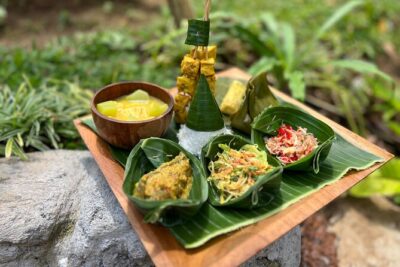
The actual lesson takes about 1.5 hours. Putu leads you through five Balinese dishes, with the menu shaped by the season and any dietary requests made during booking. Depending on the class, the food can include grilled fish, curry, satay, or banana leaf parcels.
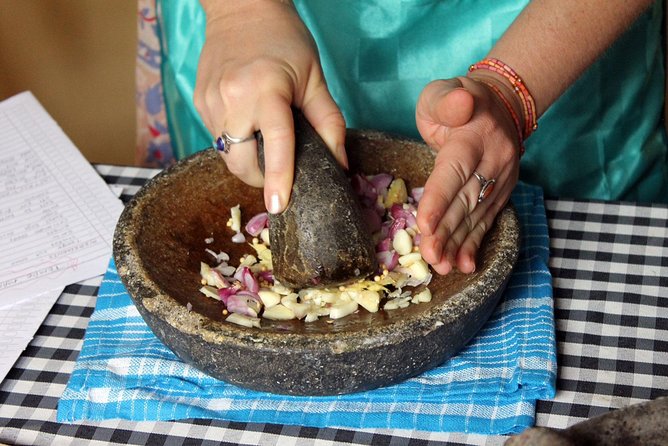
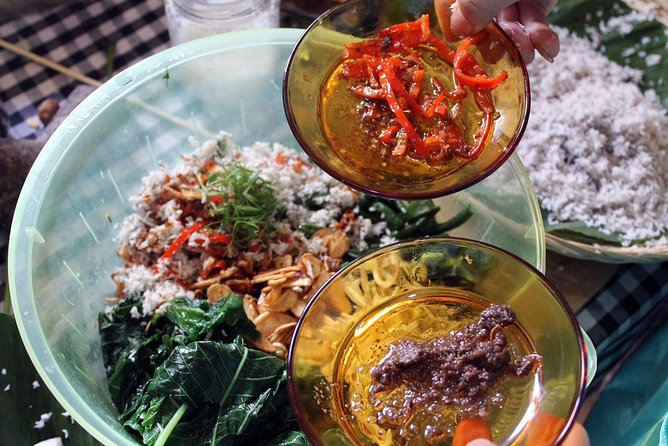
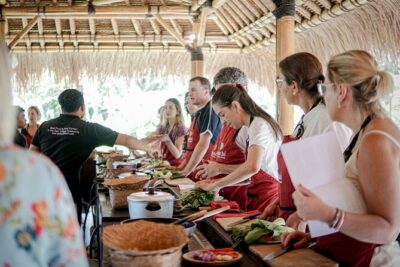
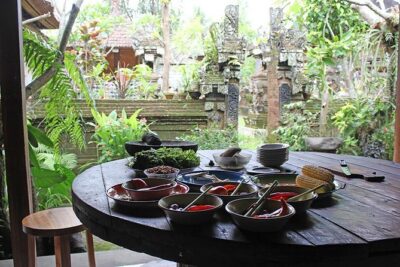
The cooking is hands-on. You chop ingredients, grind spice mixtures, season food, and help cook each dish. Traditional methods may include grinding ingredients by hand, grilling, steaming, and cooking rice. One group described using small cleavers on wooden chopping blocks, while another cooked rice over a wood-burning stove. The kitchen itself is simple, with a two-burner cooktop, but Putu works comfortably within that setup.
That simplicity is instructive. You see how a skilled cook builds several dishes without a large collection of equipment. Putu explains how to combine chilies and spices, and she can adjust the heat level to suit your group. This matters if you enjoy Indonesian flavors but do not want every dish to be painfully hot.
The class is suitable for beginners because Putu explains each step and assists when needed. It also works for people who already cook, since the focus is on Balinese techniques, ingredient combinations, and family methods rather than basic kitchen safety.
You should expect to participate, not just take photographs. The hands-on format is the reason to choose this class over a simple meal in Ubud. You get to feel the texture of the spice paste, learn how ingredients change during cooking, and see how separate preparations come together as a meal.
Sharing the Balinese feast with Putu’s family
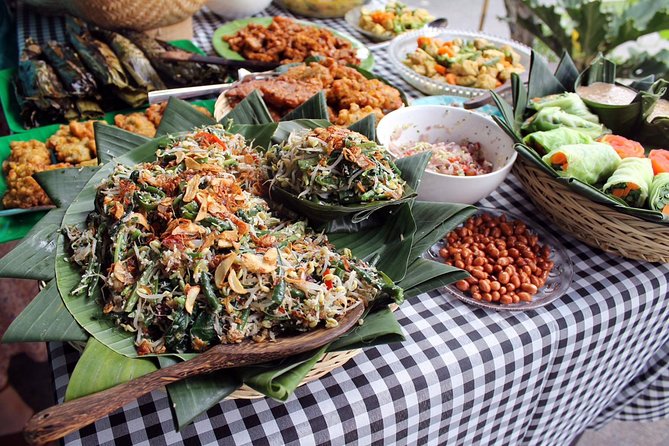
After the cooking, everyone sits down to eat. You try the five dishes together with rice grown by Putu’s grandparents. The meal is the payoff, but it is also another chance to talk about how Balinese families eat and which foods appear at home.
The portions are generous. Some groups received enough food to take leftovers back for breakfast or another meal, and Putu has provided takeaway containers when there was more than the group could finish. That is a useful practical detail, especially after a full cooking session.
The meal includes nonalcoholic drinks and one or two glasses of local alcohol. If you do not drink, the class still includes nonalcoholic beverages, and the cooking itself remains the focus.
Putu’s husband, Pasta, and other relatives may help with transport or the meal. The family involvement gives the evening a relaxed quality, although the exact mix of family members present can vary. You are visiting a working family home, not entering a staged cultural show, so the atmosphere may be informal and changeable.
You also receive recipes to take home. This makes the class more useful after Bali. You can try to recreate the dishes, adjust the chili level, and explain the ingredients to friends without relying on memory alone.
A few more Ubud half-days to weigh up
- Hands-On Silver Jewelry Making Near Ubud’s Monkey Forest
★ 4.9 · 1,789 reviews - Ubud Silver Class Jewelry making in bali
★ 5.0 · 978 reviews - Canggu: Bali Turtle Silver & Gold Workshop
★ 4.9 · 643 reviews - Ubud: Balinese Cooking Class and Market Tour
★ 4.8 · 531 reviews
Why the private format matters
A private class gives this experience its value. You share the activity only with your own group, so Putu can accommodate different ages and abilities. A family group ranging from young children to older adults can all take part, with simpler jobs for some and more involved tasks for others.
The format also suits couples and small groups who want time to ask questions. You can ask about the family temple, medicinal plants, rice farming, Balinese Hindu practices, or the difference between a home dish and a restaurant version without competing for the guide’s attention.
The class has worked well for groups as large as nine and for parties of different ages. Group discounts are available, though the exact price depends on the booking details. At $75 per person, the cost is not a bargain-basement cooking lesson, but it includes private instruction, a substantial meal, local drinks, hotel transfers within Ubud, taxes, and gratuities.
For a couple, the price buys more than recipes. You are paying for transport, a private host, a home visit, a farm and temple introduction, ingredients, cooking instruction, and dinner or lunch. Compared with booking separate transport and paying for a quality meal, the package can be good value if you care about personal contact and local context.
The value is weaker if your only goal is to learn a few quick recipes at the lowest possible cost. You are also giving up several hours that could be spent in Ubud’s center. This is an experience for people who want the setting and conversation as much as the food.
Lunch or dinner: choosing the right timing
You can choose a lunch or dinner class. Lunch gives you more daylight for seeing the garden, compound, and surrounding farm areas. It may be the better choice if you want to study plants and household details clearly.
Dinner has its own appeal. The outdoor kitchen is lit after sunset, and the cooking area remains organized and usable in the evening. A night class feels more intimate, but you will see less of the property once it is dark.
The experience lasts about three hours, including pickup, the home introduction, cooking, and the meal. Because the drive from central Ubud can take about 40 minutes, do not place a spa appointment, airport transfer, or major tour immediately afterward. Traffic can affect the return journey, and a generous meal is not something you will want to rush through.
Putu uses WhatsApp to communicate, so having the app on your phone is a practical help. Include your hotel name when booking so pickup can be arranged. Transport is included only from Ubud hotels. If you stay outside Ubud, ask about the extra transport charge before confirming.
Dietary needs and menu expectations
Vegetarian and vegan versions are available, but you need to request them at booking. The same applies to allergies, dietary restrictions, and cooking preferences. Do not wait until you arrive, since the ingredients and menu are planned in advance.
The menu varies by season. You may prepare fish, curry, grilled foods, banana leaf parcels, or other Balinese dishes based on what is available. If you need a specific ingredient avoided, state it clearly when reserving.
This flexibility makes the class a strong choice for plant-based eaters, but you should still confirm your needs ahead of time. The point is to cook the food the family actually prepares, and that food may include chilies, seafood, meat, or local alcohol unless you request alternatives.
Who will enjoy this class most
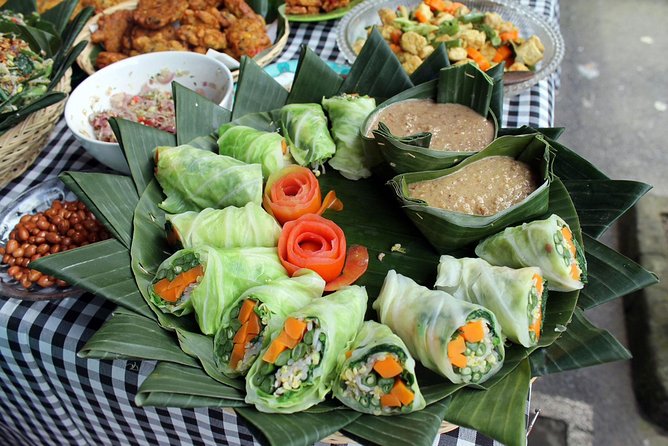
I would recommend this experience to food lovers who want to understand how Balinese cooking works at home. It is also a good match for anyone who values conversation, family contact, and rural surroundings more than a polished cooking-school facility.
Families should consider it seriously. Children can take part in chopping, mixing, tasting, and simpler preparation tasks, while older relatives can join at a comfortable pace. The private setting makes it easier to keep everyone involved.
It also suits couples on a honeymoon or a special trip. The activity is personal without being formal, and the shared meal gives you time to talk with your host and each other.
You may want to skip it if you dislike hands-on cooking, need a guaranteed menu, or have very limited time in Ubud. The kitchen is simple, the class is not a fast demonstration, and the drive takes you outside the center. You should also be comfortable entering a private family home and following local customs around the compound and temple.
Final verdict: book it for the home, not just the food
I would book Putu’s class if you want an experience that links Balinese food with family, farming, religion, and daily life. The five dishes and shared meal are satisfying, but the garden, home temple, grandparents’ rice farming, and easy family conversation give the afternoon or evening its lasting value.
The strongest reasons to book are the private format, Putu’s patient teaching, farm-grown ingredients, and included Ubud pickup. The main tradeoffs are the price, the distance from central Ubud, the seasonal menu, and the need to request dietary changes in advance.
If that sounds like your kind of Bali, this is a strong choice. Bring an appetite, leave room in your schedule, and keep your recipe booklet for the first rainy evening back home.
FAQ
How long does the Balinese cooking class last?
The experience lasts approximately three hours. The cooking lesson itself takes about 1.5 hours, followed by a shared meal.
Is the cooking class private?
Yes. Only your group participates in the activity, so the experience is private and personalized.
How many dishes will I prepare?
You will prepare five authentic Balinese dishes. The menu can change with the season and may include items such as grilled fish, curry, satay, or banana leaf parcels.
Is hotel pickup included?
Round-trip transport is included from hotels in Ubud. If you are staying outside Ubud, transport costs extra.
Can I choose lunch or dinner?
Yes. You can select a lunch or dinner class when booking.
Are vegetarian and vegan options available?
Yes. Vegetarian and vegan options are available, but you must request them when booking.
Are drinks included?
Nonalcoholic beverages are included, along with one or two glasses of local alcohol.
Can I cancel for a full refund?
You can receive a full refund if you cancel at least 24 hours before the experience start time. Cancellations or changes made less than 24 hours before the start time are not accepted for a refund.
Just added around Ubud
- Authentic hike in the forest with lunch at the inhabitant★ 5.0 · 3 reviews
- Heaven Gate, Tirtagangga and Tukad Cepung Waterfall – All Inclusive★ 5.0 · 3 reviews
- Half Day Uluwatu Temple Sunset, Kecak Dance and Seafood Dinner★ 3.5 · 3 reviews
- Ubud: White Water Rafting with visit Ubud Monkey Forest★ 5.0 · 3 reviews
- ️Bali All Inclusive Tour: Ubud – Tegalalang – Kintamani★ 5.0 · 3 reviews
- East Bali and Lempuyang Temple Tour★ 5.0 · 3 reviews
- Ubud: Temple, Swing, Waterfall, Rice Terrace & Monkey Forest★ 5.0 · 3 reviews
- Blue Lagoon Snorkeling and Lunch with Tukad Cepung Waterfall★ 5.0 · 3 reviews
Balinese Cooking Classes, compared.
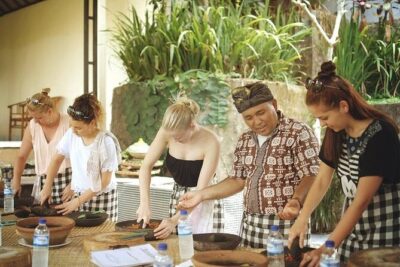
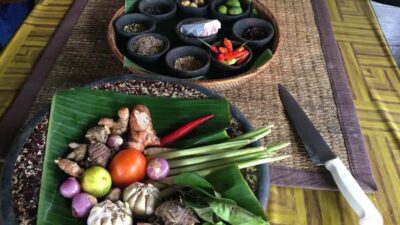
Cooking Class with Transfers and Optional Market Visit
Read our review →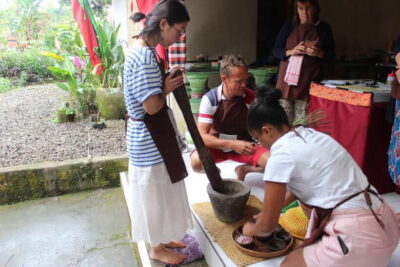
PRIVATE Balinese Cooking Class in Ubud with Dewa with Transfers
Read our review →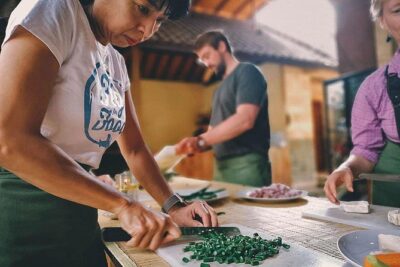
Balinese Cooking class with traditional morning market visit
Read our review →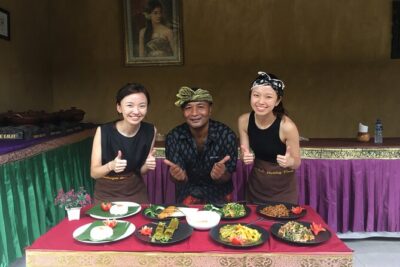
Browse the lists this tour appears in