
Reviewed · BALINESE COOKING CLASSES
Balinese Ubud cooking school (9 Dish Cooking and Market Tour)
The star of this Ubud experience is the nine-dish Balinese menu. You prepare soup, satay, chicken or tofu, tempe, lawar, sambal matah, spice paste, and klepon, then sit down to eat what you made. The morning version adds a local market and rice-paddy visit before the cooking begins.
I like the mix of food and daily life, especially the market stop and the chance to taste unfamiliar fruits and sweets. I also like that the class works for vegetarians and that hosts such as Yogi, Putu, Tata, and Wayan are praised for making the lesson lively and easy to follow.
The main thing to consider is transport. Pickup is included only within Ubud, and the cooking school can involve a lengthy drive from central Ubud. The class also serves a lot of food, so arrive hungry and expect a full half-day.
In This Review
- Key points to know before booking
- Nine Balinese dishes, not just a quick demonstration
- The morning market puts the recipes in context
- Rice paddies and a local house before the kitchen
- How hands-on is the cooking?
- What the food is like
- The meal makes the $58 price easier to judge
- Morning or afternoon: pick the right version
- Who will enjoy this class most?
- Practical details that prevent surprises
- Should you book the Subak cooking class?
- FAQ
- How long does the Balinese cooking class last?
- Where does the tour start and finish?
- Is hotel pickup included?
- Does every tour include a traditional market visit?
- What is included with the morning class?
- What does the afternoon class include instead of the market?
- Can I choose a vegetarian menu?
- Is food included after the cooking lesson?
Key points to know before booking
- Nine recipes in one class: You prepare a broad set of Balinese staples rather than only two or three showcase dishes.
- Morning means market time: The traditional market and rice-paddy visits are available with the morning option only.
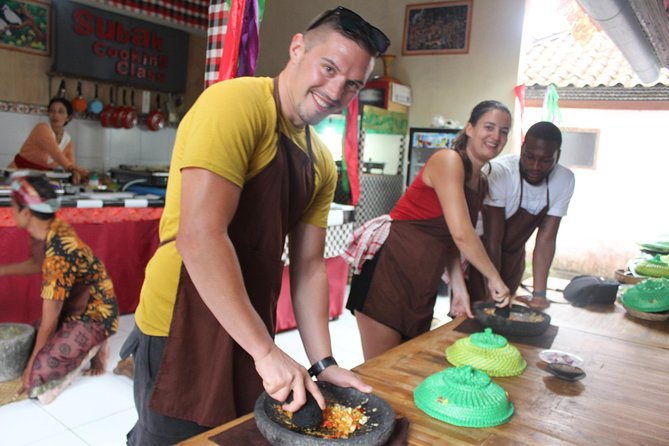
- You cook with guidance: Ingredients are prepared in advance, but you take part in the chopping, mixing, seasoning, and cooking.
- Choose your menu carefully: Book either the regular menu with chicken or the vegetarian menu with tofu and tempe.
- The meal is part of the lesson: You eat the dishes you prepare, and leftovers may be packed to take away.
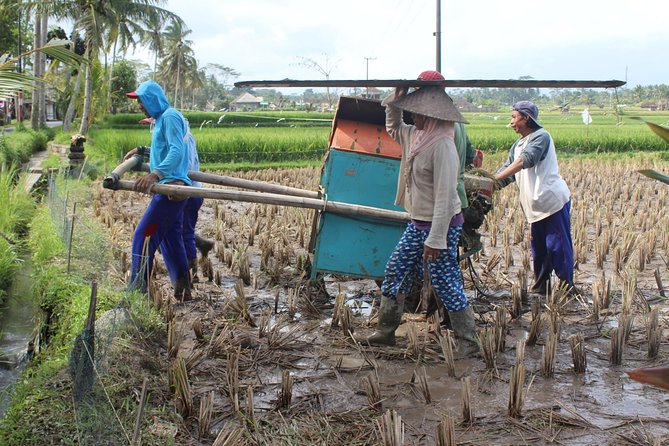
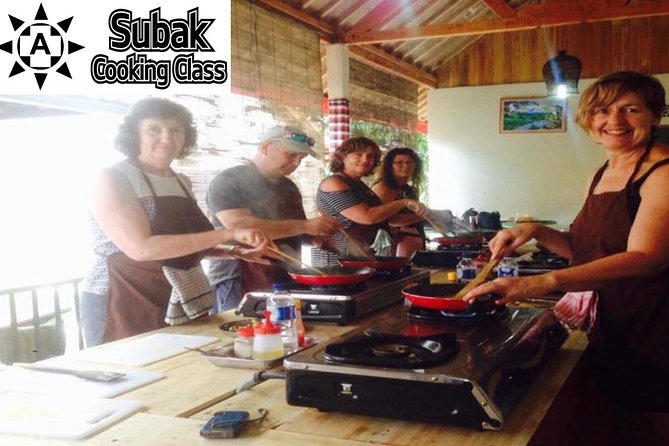
- Small enough to feel personal: The maximum group size is 14 people, with individual cooking stations reported in the class setup.
Nine Balinese dishes, not just a quick demonstration
Many cooking classes give you a taste of one curry and a plate of rice. This one aims higher, with nine recipes and a meal at the end. That makes the class especially useful if you want to understand the building blocks of Balinese food rather than simply watch a chef work.
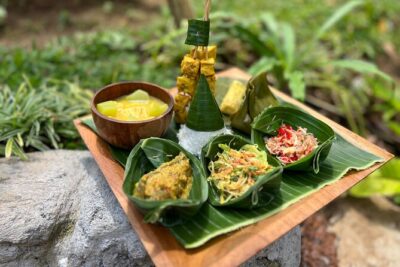
The regular menu includes Balinese vegetable soup, chicken cooked with coconut milk and local spice, sweet fried tempe, chicken sate lilit, chicken pepes steamed or grilled in banana leaf, lawar, sambal matah, base gede spice paste, and klepon cake. White rice accompanies the main dishes.
The menu has good range. You move from soup and savory dishes to raw sambal and a sweet dessert. You also see how the same family of spices can support very different textures and cooking methods.
The vegetarian menu swaps the chicken dishes for tofu bumbu Bali, tempe sate with peanut sauce, and pepes tofu. The soup, sweet tempe, lawar, sambal matah, base gede, klepon, and rice remain. Make your choice when booking, since the two menus are not interchangeable at the table.
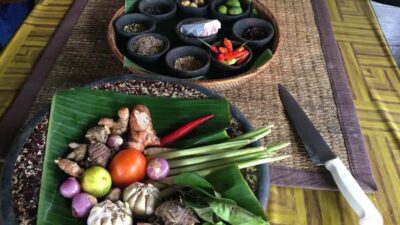
One useful detail is that base gede, the basic Balinese spice paste, is taught as its own recipe. This is the key lesson beneath much of the menu. Once you understand how the paste is built, you have a practical starting point for trying Balinese flavors at home.
More Balinese cooking classes:
- Ubud Cooking Class Bali with Balinese Chef
★ 5.0 · 1,609 reviews - Ubud: Cooking Class with Transfers and Optional Market Visit
★ 4.9 · 824 reviews - PRIVATE Authentic Balinese Cooking Class in Ubud at Putu’s Home
★ 5.0 · 644 reviews
The morning market puts the recipes in context
Choose the morning class if you want more than kitchen time. The program begins with a visit to a local market, where your guide explains the fruits, vegetables, spices, cakes, and other ingredients used in Balinese cooking.
This is not just a shopping stop. It gives you a clearer sense of how food appears before it reaches a restaurant plate. You can learn how people buy and sell ingredients, try fruits you may not recognize, and see flower offerings being assembled for temple use.
The market is also one of the best parts for curious eaters. The supplied details specifically mention tasting local fruits, sweets, and pastries. You may find this more revealing than a polished food tour because the focus is on ordinary ingredients and local buying habits.
Your guide can also explain how certain foods connect with Balinese culture, religion, and home cooking. Wayan and Tata are among the guides praised for explaining ingredients and local customs in clear English, while driver-guide Harry is specifically mentioned in one account of the morning route.
Allow for the market to be an active walking and tasting stop, not a place to eat a full breakfast. Since the cooking class follows, it is wise to keep some room in your stomach.
Rice paddies and a local house before the kitchen
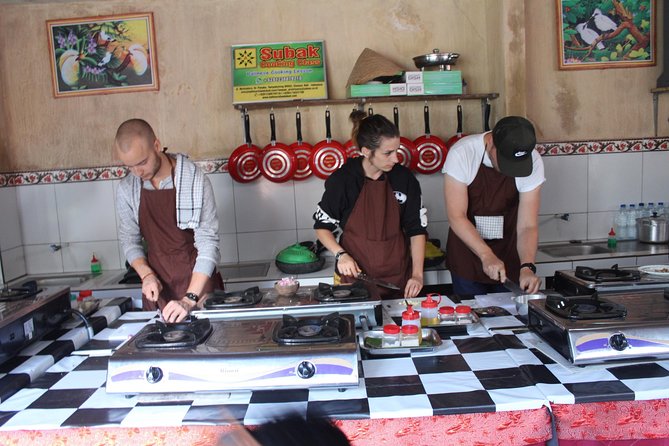
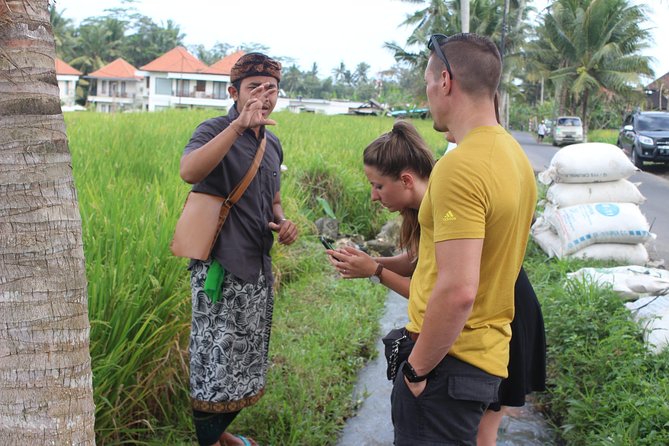
The morning program also includes a visit to rice paddies. You learn about growing rice in Bali, the different kinds of rice, and how long the crop takes to reach harvest. There are also photo opportunities, and one account describes a volcano view in the background.
This stop matters because rice is not merely a side dish on the Balinese table. It is part of the rhythm of village life, farming, ritual, and daily meals. Even a short visit helps connect the bowl of white rice at lunch with the work behind it.
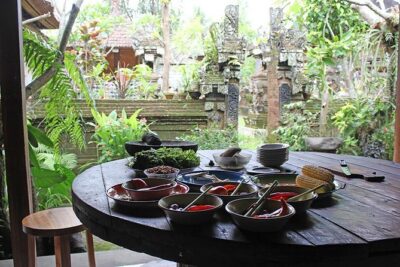
The route also includes a local Balinese house set up for cooking instruction. That setting gives the class a more home-based feel than a hotel demonstration kitchen. It is part of the appeal, though the drive into the countryside adds time to the outing.
The exact order of the market, rice field, house, and school can vary with the day’s arrangements. Plan on the morning version being a full half-day rather than a class that begins immediately after pickup.
How hands-on is the cooking?
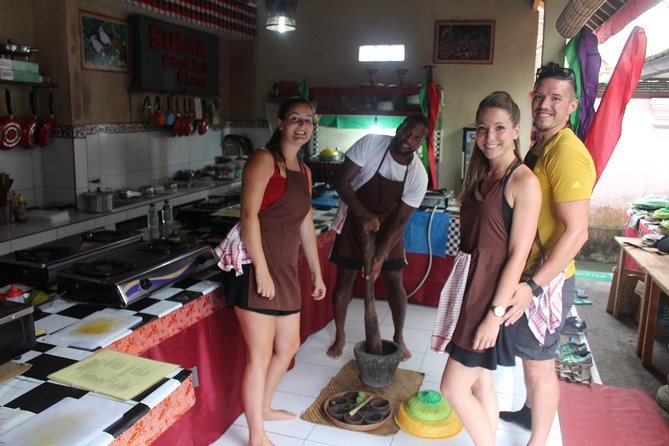
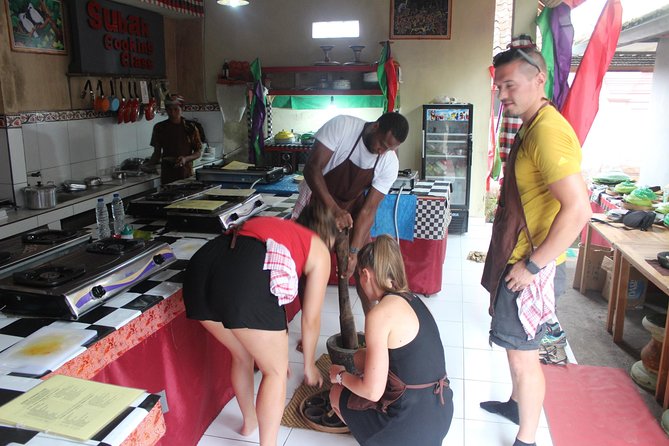
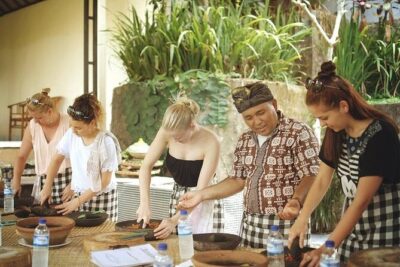
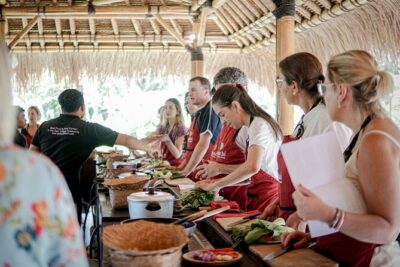
The class is designed for participation, with a chef guiding you through preparation step by step. You work in pairs or small groups, and the cooking setup is described as having individual stoves or stations so people can take part in the actual cooking.
That is important because the menu is large. With nine dishes, the staff need to prepare some ingredients in advance to keep the class within roughly five hours. You should expect to do the enjoyable parts of preparation and cooking, but not every task from washing and trimming to final cleanup.
This approach has a clear benefit. You can focus on seasoning, texture, wrapping banana leaves, shaping sate lilit, and learning the order of each recipe instead of spending the whole session on repetitive chopping.
There is one point to watch. One dissatisfied participant felt that too much preparation had been done before the class and that it was hard to hear the instructor during staff conversations. That may not be typical, but it is a fair reminder to ask questions, stay close to the chef, and speak up if you cannot hear an instruction.
The class has received a 4.9 rating from 540 reviews, with 99 percent recommending it. The strongest pattern is clear: people value the friendly instructors, the large menu, the organization, and the taste of the finished food. Several instructors are named warmly, including Yogi, Putu, and Gus, who are praised for humor, clear explanations, and cultural background.
More market visits in Ubud:
- Ubud: Balinese Cooking Class and Market Tour
★ 4.8 · 531 reviews - Balinese Cooking class with traditional morning market visit
★ 5.0 · 161 reviews - PRIVATE Ubud Market Tour & Balinese Cooking Class with Putu
★ 5.0 · 125 reviews - Ubud Traditional Night Market Food Tour-All Inclusive
★ 4.4 · 95 reviews
What the food is like
Balinese food often depends on a strong spice base, fresh aromatics, coconut, chili, and contrasting textures. This menu lets you sample those ideas in several forms.
Sambal matah is a raw mixture finished with coconut oil, so it brings a fresh, sharp note rather than the cooked depth of the base gede paste. Lawar combines vegetables with Balinese spices. Sate lilit shows a different technique, with seasoned meat shaped around a skewer.
Pepes uses banana leaf as a wrapper for steaming or grilling. This teaches you how wrapping affects aroma and moisture, not just how to assemble a dish. The coconut-milk chicken gives the meal a softer, richer element, while sweet tempe adds a crisp and sugary contrast.
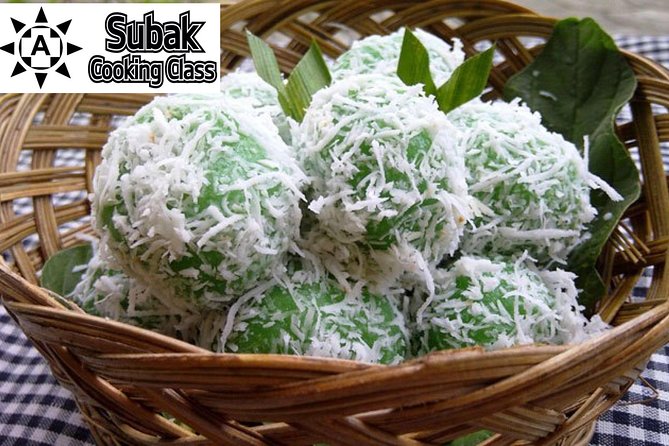
Klepon ends the meal on a playful note. These boiled sticky-flour balls contain palm sugar and are served as a sweet finish. It is a useful dessert to learn because the ingredients are simple, but shaping and cooking it correctly still require care.
The food can be spicy, though the class can adjust the heat. One participant specifically noted making a milder version while others in the group preferred more spice. Tell the instructor early if you want less chili, rather than waiting until the final seasoning.
You may also have enough food left over to take back to your hotel. The portions are generous, and several accounts describe being very full by the end. That is good value, but it makes an early snack or large breakfast a poor idea.
The meal makes the $58 price easier to judge
At $58, this is not the cheapest cooking lesson in Bali. But the price includes about five hours of activity, a guide, transport within Ubud, the market and rice-paddy visits on the morning option, kitchen equipment, bottled water, recipes to take home, food tasting, and lunch or dinner made from the class.
The nine-dish menu is the strongest value point. You are not paying for one recipe and a small tasting plate. You get a wide set of techniques and a substantial meal, plus a cultural route before the class if you choose the morning schedule.
The value is also better for people who will use the recipes later. If you enjoy cooking at home, the copy of the recipes gives the class a longer life after Bali. Base gede, sambal matah, lawar, and klepon can each become useful additions to your own kitchen.
Transport changes the calculation. Pickup and drop-off are offered within the Ubud area, but people staying outside Ubud may pay an additional charge. The activity starts and ends at Ubud Palace, and you should not assume that a hotel outside the stated area will receive free pickup.
One account also describes a long drive of about 50 minutes from the meeting point to the cooking area. That is not necessarily the timing for every departure, but you should leave room in your schedule and confirm the pickup plan before booking.
Alcoholic drinks are not included. Bring cash if you need to pay an extra transport charge, and keep your booking confirmation available when meeting the operator.
Morning or afternoon: pick the right version
The morning option is the better choice if food shopping, rice farming, and village life appeal to you. It includes the traditional market and rice-paddy visit, followed by the kitchen session and meal.
The afternoon option leaves out the traditional market. Instead, it includes making a Balinese offering. Choose this version if the ritual side of local life interests you more than market browsing, or if you prefer not to start early.
The afternoon schedule may also suit you if your morning is already committed. Just remember that you will not receive the market visit with that departure.
Both versions include the cooking lesson, food, recipes, water, and local hosts. The morning route simply adds more outdoor stops, while the afternoon route offers the offering-making activity.
Who will enjoy this class most?
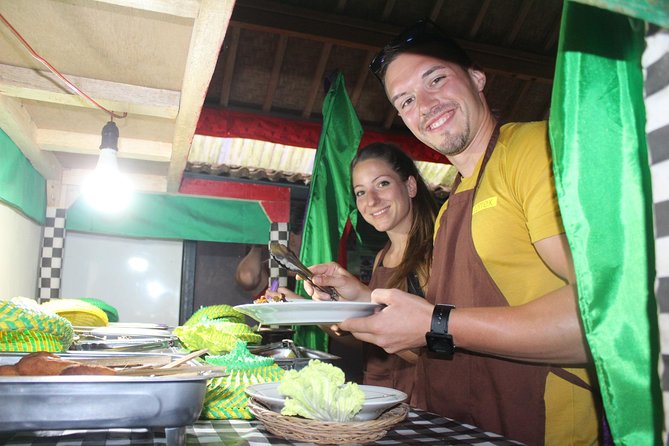
I would recommend it to food lovers who want practical skills and to families who can handle a fairly long session. The warm, humorous instruction makes it suitable for beginners, and the menu gives adults and children several jobs to share.
It also works well for couples and friends. The cooking is often done with a partner, and the final meal is served as a social group experience. You do not need previous cooking experience.
Vegetarians have a proper alternative rather than a plate of rice and vegetables added at the last minute. The tofu and tempe menu covers the main techniques and keeps the nine-recipe format.
You should think twice if you want a short, quiet demonstration or if you dislike group cooking. Fourteen people is the stated maximum, and a busy kitchen can make it harder to hear every instruction. The lengthy transfer may also frustrate you if your Ubud schedule is tight.
Practical details that prevent surprises
The advertised duration is approximately five hours. The activity begins at Ubud Palace, at F7V7+72R, Jl. Raya Ubud No. 8, and ends back at the same meeting point.
Pickup and drop-off are included in the Ubud area only. If you stay outside Ubud, request transport in advance and expect an added fee. Do not simply assume it has been arranged.
Bring a camera for the market, rice fields, local house, and food preparation. Wear normal comfortable clothing, and bring cash for any extra transport cost.
The tour accepts mobile tickets, and confirmation is received when you book. The cancellation rule is simple: cancel at least 24 hours before the local start time for a full refund. Changes or cancellations inside that 24-hour window are not accepted for a refund.
Should you book the Subak cooking class?
Book it if you want a generous meal, nine Balinese recipes, and a look at local food culture beyond Ubud’s restaurant streets. The morning option gives the strongest overall experience because the market and rice paddies explain where the ingredients and rice come from.
At $58, the class earns its price through the menu size, included meal, recipe copy, equipment, guide, and Ubud-area transport. Just confirm the pickup details, allow extra time for the drive, and choose the regular or vegetarian menu before you go.
Skip it if you want to cook every ingredient from start to finish or need an activity that lasts only two hours. For most first-time visitors who like food, culture, and a relaxed shared meal, this is a very good use of half a day in Ubud.
FAQ
How long does the Balinese cooking class last?
The experience lasts approximately five hours, including the cooking session, meal, and the additional morning or afternoon activities.
Where does the tour start and finish?
The meeting point is Ubud Palace, at F7V7+72R, Jl. Raya Ubud No. 8, Ubud. The activity ends back at the meeting point.
Is hotel pickup included?
Pickup and drop-off are included within the Ubud area. Staying outside Ubud may involve an additional transport charge, and you need to request that pickup in advance.
Does every tour include a traditional market visit?
No. The traditional market visit is provided only with the morning class.
What is included with the morning class?
The morning option includes a local market visit and a rice-paddy visit, along with the cooking class, food, bottled water, recipes, equipment, guides, and meal.
What does the afternoon class include instead of the market?
The afternoon option includes making a Balinese offering. The traditional market visit is not included in that schedule.
Can I choose a vegetarian menu?
Yes. You can choose a vegetarian menu with tofu and tempe dishes instead of the regular chicken menu. Select your preference when booking.
Is food included after the cooking lesson?
Yes. Lunch or dinner made from the food you prepare is included, along with food tasting. Leftovers may be available to pack and take away.
More Shopping Tours in Ubud
- Ubud Cooking Class with Optional Market Visit Pickup Included
★ 5.0 · 70 reviews - Balinese Cooking Class with Traditional Market Tour
★ 5.0 · 66 reviews - Ubud : Regular or Vegetarian cooking class with market visit
★ 4.8 · 57 reviews - Bali Food Tour: Savor Street Food and Night Market Adventures
★ 5.0 · 46 reviews
Just added around Ubud
- Authentic hike in the forest with lunch at the inhabitant★ 5.0 · 3 reviews
- Heaven Gate, Tirtagangga and Tukad Cepung Waterfall – All Inclusive★ 5.0 · 3 reviews
- Half Day Uluwatu Temple Sunset, Kecak Dance and Seafood Dinner★ 3.5 · 3 reviews
- Ubud: White Water Rafting with visit Ubud Monkey Forest★ 5.0 · 3 reviews
- ️Bali All Inclusive Tour: Ubud – Tegalalang – Kintamani★ 5.0 · 3 reviews
- East Bali and Lempuyang Temple Tour★ 5.0 · 3 reviews
- Ubud: Temple, Swing, Waterfall, Rice Terrace & Monkey Forest★ 5.0 · 3 reviews
- Ubud Adventure: ATV Thrills, Monkey Encounters, & Waterfall★ 5.0 · 3 reviews
Balinese Cooking Classes, compared.
Cooking Class with Transfers and Optional Market Visit
Read our review →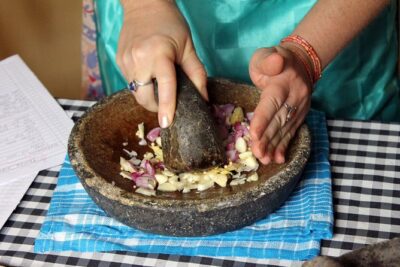
PRIVATE Authentic Balinese Cooking Class in Ubud at Putu’s Home
Read our review →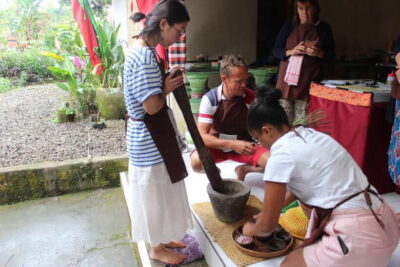
PRIVATE Balinese Cooking Class in Ubud with Dewa with Transfers
Read our review →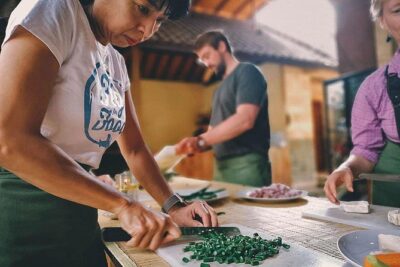
Balinese Cooking class with traditional morning market visit
Read our review →Browse the lists this tour appears in