
Reviewed · BALINESE COOKING CLASSES
Balinese Cooking Class at Organic Farm
The best part of this Ubud cooking class happens before you reach the stove: you walk through Mai Organic Farm, pick herbs and vegetables, smell spices, and learn how local produce reaches the table. Then you cook six Balinese dishes, including tuna sate and corn fritters, over a traditional wood-fired stove.
I like the farm-to-table connection, and I like the calm, communal setting in a gubuk hut. Fresh coconut water, juices, infused water, herbal drinks, Balinese coffee, and lemongrass tea make this more than a standard cooking lesson. The one thing to consider is the five-hour length and outdoor setting, especially if the weather turns wet or you prefer a quick city activity.
In This Review
- Key things to know before booking
- A farm visit before the cooking begins
- From farm produce to a Balinese lunch
- Eating together in the gubuk hut
- Why the small group matters
- The community purpose behind Mai Organic Farm
- What the $40 price includes in practical terms
- Pickup, meeting point, and timing
- Who will enjoy this class most
- A few limitations to keep in mind
- Should you book the Mai Organic Farm class?
- FAQ
- Where does the Balinese cooking class take place?
- Is pickup available from Ubud?
- How long does the experience last?
- How many dishes will I cook?
- What drinks are included?
- Will I pick the ingredients myself?
- Does the class use a wood-fired stove?
- How many people can join the class?
- Where does the activity end?
- Can I cancel for a full refund?
Key things to know before booking
- You harvest the ingredients yourself: The farm walk supplies much of the produce used in the meal.
- The cooking is genuinely hands-on: You can take part as much or as little as you like, from preparing sauces to helping cook on the wood-fired stove.
- Six Balinese dishes are included: The menu includes examples such as tuna sate and corn fritters, with sate lilit listed as a featured specialty.
- The class supports Pejeng farmers: Mai Organic Farm works with local growers and villagers to improve farming resources and income.
- The group is small: The experience is promoted for as few as eight people, though the additional details give a maximum of 10.
- Central Ubud pickup is available: Round-trip transfers are offered from central Ubud hotels and rentals, while the farm is in Pejeng near Tampaksiring.
A farm visit before the cooking begins
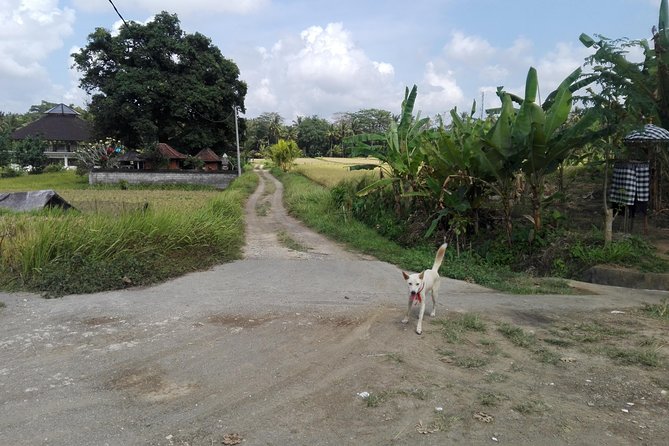
Mai Organic Farm is in Pejeng, outside Ubud, at Subak Kana, Banjar Panglan. The activity begins and ends at the farm, but pickup is offered from central Ubud hotels and rentals. That transfer matters because the meeting address is rural and may not be convenient to reach by casual taxi arrangements.
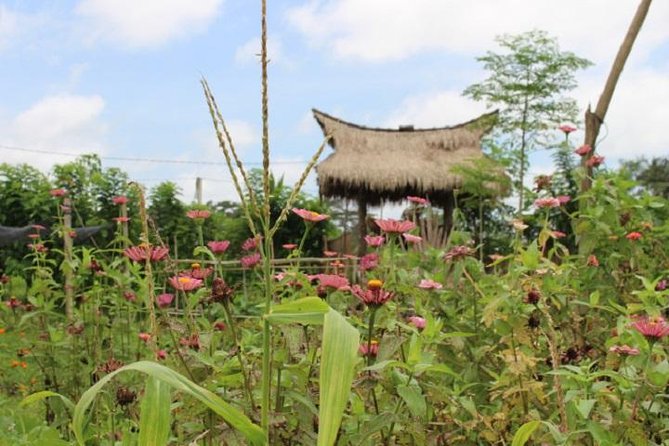
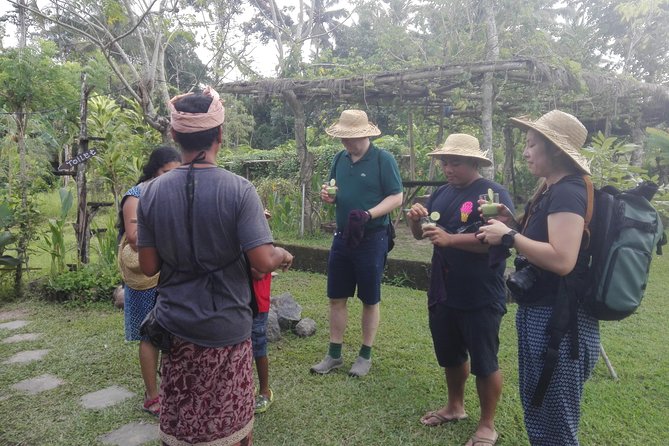
You start with a welcome drink in a shaded area of the farm. This gives the group time to settle in while the staff explain Mai Organic Farm’s community work and growing methods. The tone is informal rather than classroom-like. You are there to learn, but you are also part of a shared morning with other people.
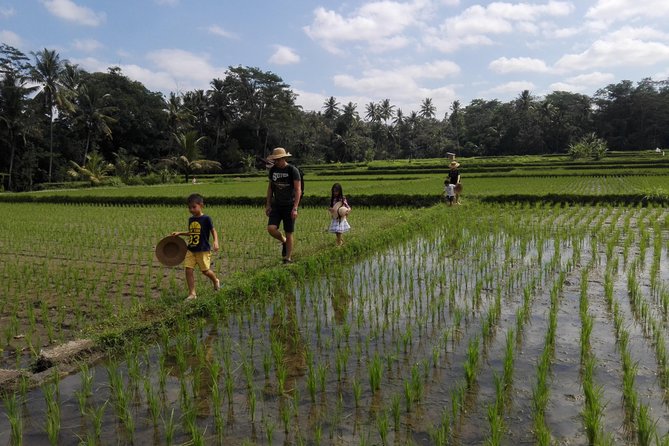
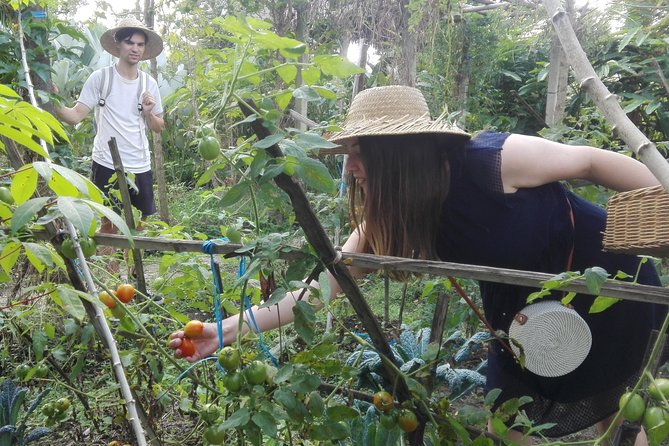
The farm walk is the heart of the experience. You learn about organic farming and the Balinese subak system, a traditional water-management system recognized by UNESCO. The class does not treat farming as a decorative backdrop. It explains how water, fields, farmers, and community life connect in Bali.
You then collect ingredients for the cooking session. This simple step changes the way you see the meal. A herb or vegetable is no longer just something placed on a chopping board. You have seen where it grows and handled it before preparing it.
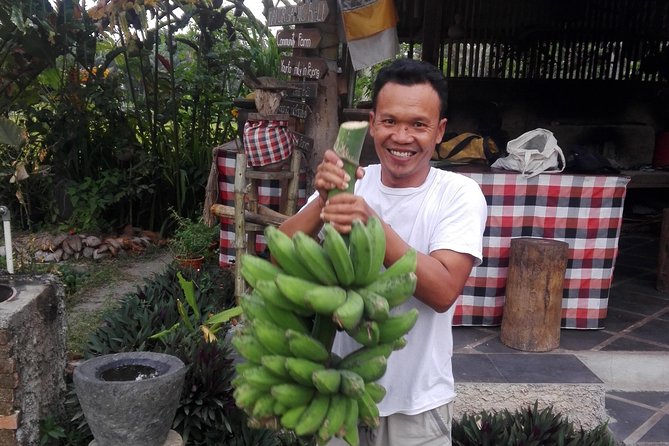
The exact crops available can change with the season. You might pick herbs, fruit, and vegetables, and you may taste fruit straight from the farm. Some people have enjoyed discovering unfamiliar spices by smell and trying produce directly from the garden. That makes the walk useful even if you already know your way around a Balinese kitchen.
Wear clothes and shoes that can handle a farm path. The activity is outdoors for much of the early portion, and the experience requires good weather. If rain causes a cancellation, you are offered another date or a full refund.
More Balinese cooking classes:
- Ubud Cooking Class Bali with Balinese Chef
★ 5.0 · 1,609 reviews - Ubud: Cooking Class with Transfers and Optional Market Visit
★ 4.9 · 824 reviews - PRIVATE Authentic Balinese Cooking Class in Ubud at Putu’s Home
★ 5.0 · 644 reviews
From farm produce to a Balinese lunch
After the farm tour, you move to the Mai Organic Farm cooking area and receive a fresh juice made with local fruit and vegetables. Other drinks served during the experience include infused water, herbal drinks, Balinese coffee, and lemongrass tea. Fresh coconut water is also part of the welcome for some sessions.
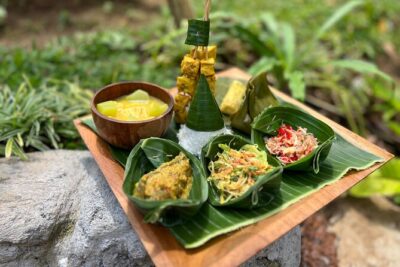
The cooking class covers six Balinese dishes. The supplied examples include tuna sate and corn fritters, while sate lilit kebab is one of the advertised highlights. Sate lilit is different from the familiar skewered meat found elsewhere in Indonesia. The mixture is wrapped around a stick rather than threaded onto it, giving you a useful lesson in Balinese preparation rather than just another grilled dish.
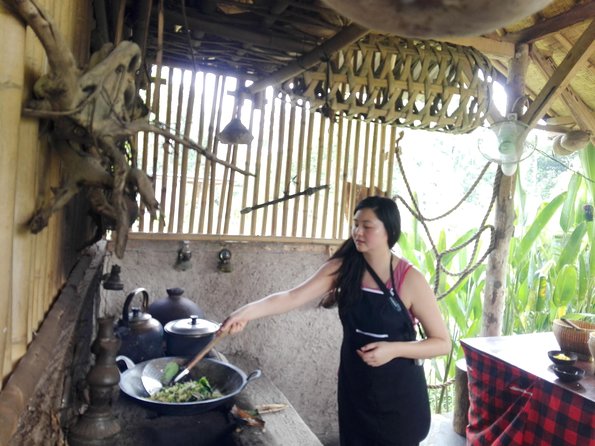
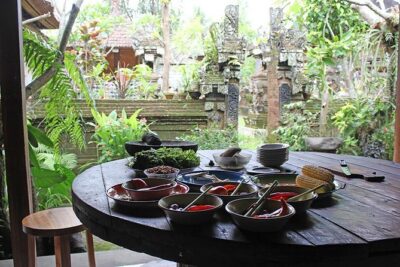
You work with the ingredients gathered on the farm and prepare the sauces and base components with the group. The class also uses an outdoor grill and fire stove. Cooking over wood gives the session a physical quality that an indoor demonstration cannot match, though it can also mean smoke, heat, and a less controlled cooking environment.
The level of participation is flexible. You can help with much of the preparation, or you can take a quieter role and watch parts of the process. That makes the class suitable for mixed groups, including families where younger children may not want to handle every task. Children aged six and nine have taken part successfully, and older children aged 12 and 13 also enjoyed the activity.
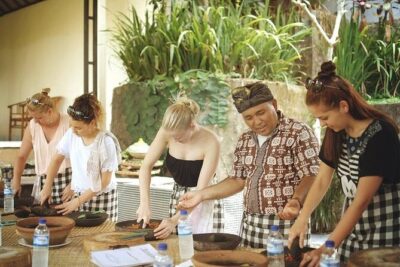
Do not expect a polished cooking-school setup with each person working at a separate station. The value here is communal cooking, with several people contributing to a shared meal. If you want to master every recipe independently, this may feel less structured. If you want to cook alongside local hosts and make lunch together, it is a strong fit.
Eating together in the gubuk hut
The final meal is served in a tranquil gubuk, a traditional-style hut on the farm. You eat the dishes you helped prepare with the rest of the group. That shared table is important. The class does not end when the cooking is finished, and you are not sent away with a quick taste while the staff clears the kitchen.
The food is the payoff for the farm walk and the preparation. You have seen the ingredients, helped make the sauces or fritters, and watched the dishes cook over fire. That connection makes the lunch feel more substantial than a restaurant meal, even though the price remains modest.
A recipe book may also be provided, giving you a way to repeat parts of the meal at home. Since the class includes six dishes, the recipes offer more lasting value than a single demonstration. Still, the exact contents of any recipe material are not specified, so I would treat it as a useful extra rather than the main reason to book.
The hosts create a relaxed atmosphere, and English-language instruction is available. A staff member named Kadek is associated with the experience and has been noted for asking how the class could be improved. That suggests an open, practical approach to hosting, rather than a rigid performance repeated without room for questions.
Why the small group matters
The experience is promoted with a cap of eight people, while the formal activity details state a maximum of 10. I would expect a small group, but I would confirm the number when your booking is confirmed if personal instruction is important to you.
A group of this size gives you a better chance to help with real tasks. You are less likely to spend the whole session watching someone else chop, stir, or grill. It also makes the meal in the hut easier to enjoy as a social occasion.
There is a tradeoff. With communal cooking, everyone may not perform every step of every dish. Some tasks will be shared, and your exact role can depend on the group. The flexible format works well for curious beginners, but experienced cooks looking for detailed individual correction may want to set their expectations accordingly.
The relaxed setup also suits couples, friends, and families. It is not aimed only at serious food enthusiasts. You can learn about crops, farming, and Balinese food customs even if you have little kitchen experience.
A few more Ubud half-days to weigh up
- Balinese Farm Cooking Class by Pemulan Bali
★ 5.0 · 410 reviews - From Ubud: Authentic Bali Farm Cooking School & Organic Farm
★ 5.0 · 122 reviews - Small-Group Farm Tour & Balinese Cooking Class in Ubud with Kadek
★ 5.0 · 16 reviews - Ubud: Organic Farm Harvest, Bali Cooking Class by Pemulan
★ 4.8 · 12 reviews
The community purpose behind Mai Organic Farm
Mai Organic Farm is connected to a community movement in Pejeng. Its stated goal is to support local farmers and villagers by helping improve income and access to resources. The class gives you a direct way to spend money with that project rather than only visiting a commercial cooking studio.
That purpose adds meaning to the farm tour, but you should still judge the activity on the experience itself. The appeal is not simply that the farm has a community mission. You also get a real garden walk, fresh ingredients, a small-group cooking session, and a complete meal.
The farm’s focus on organic produce is part of the teaching. You hear how the food is grown, then use some of it in the kitchen. The lesson is practical and easy to understand because it is tied to lunch.
The subak explanation is another strong point. Bali’s rice-growing traditions are often described only through photographs and scenic stops. Here, the subject comes up during a working farm visit, giving you a better sense of farming as a shared system rather than a pretty view.
What the $40 price includes in practical terms
At about $40 per person, this is good value if you use the full five hours. You are paying for transportation from central Ubud, the farm visit, instruction, ingredients, multiple drinks, six dishes, and the meal. A shorter cooking demonstration may cost less, but it will not offer the same garden-to-table sequence.
The value is strongest for people who want several experiences combined in one booking. You get a cultural lesson, a farm visit, food preparation, drinks, and lunch without arranging separate activities. The transfer also removes some of the hassle of finding the farm in Pejeng.
The price is less compelling if you only want to learn one or two recipes. Six dishes and a five-hour schedule require a real time commitment. You should also remember that the activity ends back at the meeting point, so you need to plan the rest of your day from the farm or use the included return transfer if arranged.
The class is often booked well ahead, with reservations averaging about 17 days in advance. That is a useful planning clue. If this is important to your Ubud schedule, reserve early rather than assuming you can find an opening the day before.
Pickup, meeting point, and timing
The official meeting point is Mai Organic Farm Bali, Subak Kana, Banjar Panglan, Pejeng, in the Gianyar area. Pickup is available from central Ubud hotels and rentals, but the supplied information does not say that every address outside central Ubud is covered.
You receive booking confirmation within 48 hours, subject to availability. Give yourself enough time for that confirmation before building other fixed plans around the activity.
The total duration is approximately five hours. That usually makes it a half-day commitment, though the exact pickup timing is not provided here. Ask for the pickup time and any hotel coverage details when you book, particularly if you have a temple visit, transfer, or flight later that day.
The activity ends at the farm meeting point. If you use the round-trip transfer, confirm that the return arrangements are included for your particular pickup location.
Who will enjoy this class most
I would recommend this class to you if food is a way you like to understand a place. The farm walk gives you more context than a cooking lesson held entirely indoors, and the subak discussion adds a specifically Balinese element.
It is also a good pick for families. Young children can take part in harvesting and group cooking, and older children can help with more of the preparation. The five-hour length may be too much for very young children who need frequent breaks, but the shaded welcome area, outdoor setting, and shared meal provide some variety.
Couples and friends will appreciate the social format. You do not need to arrive with a large group, since the small class encourages people to cook and eat together. Solo visitors can also fit in easily, though the experience is built around participation with others rather than private instruction.
I would be more cautious if you have limited mobility or dislike uneven outdoor surfaces, since the program includes a farm walk and ingredient picking. The supplied information does not describe accessibility arrangements, so ask the provider before booking if that affects your decision.
A few limitations to keep in mind
The menu is described through examples rather than a fully fixed list. You know you will prepare six Balinese dishes, but the exact seasonal ingredients and final dishes may vary. That is normal for a farm-based class, yet it matters if you need a specific menu.
The wood-fired stove is part of the charm, but it is not the easiest cooking method. Expect a hands-on outdoor environment rather than a clean, air-conditioned kitchen. Hot weather, smoke, and rain are possible considerations.
The class also depends on other people. You may be sharing chopping, grilling, and serving tasks, and the pace can change with the group. The option to participate as much or as little as you like helps, but this is not a private lesson.
Finally, the group-size information is slightly inconsistent. The highlights cap the class at eight, while the additional information allows up to 10. That difference is small, but it is worth confirming if you are booking mainly for individual attention.
Should you book the Mai Organic Farm class?
I would book it if you want a farm-based Balinese food experience, not just a recipe lesson. The strongest features are the ingredient harvesting, the explanation of organic farming and subak, cooking over fire, and eating the finished meal together.
At $40, the combination of pickup, five hours of activity, drinks, six dishes, and lunch makes sense for a half-day in Ubud. Families, couples, friends, and curious solo visitors should find plenty to do.
I would skip it only if you need a tightly timed schedule, a private kitchen station, or an indoor setting. For everyone else, this offers a thoughtful way to connect food with farming and community life around Ubud. Book ahead, confirm your pickup details, and arrive ready to work with the group.
FAQ
Where does the Balinese cooking class take place?
The class takes place at Mai Organic Farm Bali in Subak Kana, Banjar Panglan, Pejeng, in the Gianyar area of Bali.
Is pickup available from Ubud?
Yes. Round-trip pickup is offered from central Ubud hotels and rentals. The exact coverage for your address should be confirmed when booking.
How long does the experience last?
The experience lasts approximately five hours.
How many dishes will I cook?
You will prepare six Balinese dishes. Examples include tuna sate, corn fritters, and sate lilit kebab.
What drinks are included?
The experience includes juice, infused water, herbal drinks, Balinese coffee, and lemongrass tea. Fresh coconut water is also served as a welcome drink in some sessions.
Will I pick the ingredients myself?
Yes. The farm walk includes picking ingredients that you will use during the cooking class.
Does the class use a wood-fired stove?
Yes. Traditional outdoor cooking methods include a wood-fired stove and grill.
How many people can join the class?
The experience is promoted as a small-group activity capped at eight people, while the additional information lists a maximum of 10. Confirm the expected group size when you book.
Where does the activity end?
The activity ends back at Mai Organic Farm, the meeting point.
Can I cancel for a full refund?
Yes. You can cancel at least 24 hours before the local start time for a full refund. Cancellations or changes made less than 24 hours before the start time are not refunded or accepted. If poor weather causes a cancellation, you are offered another date or a full refund.
More Workshops in Ubud
- Hands-On Silver Jewelry Making Near Ubud’s Monkey Forest
★ 4.9 · 1,789 reviews - Ubud Silver Class Jewelry making in bali
★ 5.0 · 978 reviews - Canggu: Bali Turtle Silver & Gold Workshop
★ 4.9 · 643 reviews - Ubud: Balinese Cooking Class and Market Tour
★ 4.8 · 531 reviews
Just added around Ubud
- Authentic hike in the forest with lunch at the inhabitant★ 5.0 · 3 reviews
- Heaven Gate, Tirtagangga and Tukad Cepung Waterfall – All Inclusive★ 5.0 · 3 reviews
- Half Day Uluwatu Temple Sunset, Kecak Dance and Seafood Dinner★ 3.5 · 3 reviews
- Ubud: White Water Rafting with visit Ubud Monkey Forest★ 5.0 · 3 reviews
- ️Bali All Inclusive Tour: Ubud – Tegalalang – Kintamani★ 5.0 · 3 reviews
- East Bali and Lempuyang Temple Tour★ 5.0 · 3 reviews
- Ubud: Temple, Swing, Waterfall, Rice Terrace & Monkey Forest★ 5.0 · 3 reviews
- Blue Lagoon Snorkeling and Lunch with Tukad Cepung Waterfall★ 5.0 · 3 reviews
Balinese Cooking Classes, compared.
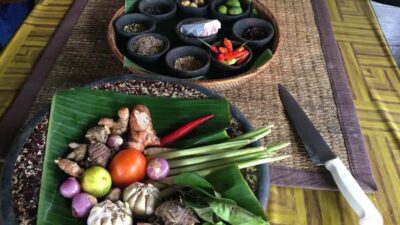
Cooking Class with Transfers and Optional Market Visit
Read our review →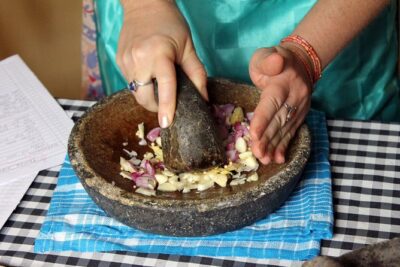
PRIVATE Authentic Balinese Cooking Class in Ubud at Putu’s Home
Read our review →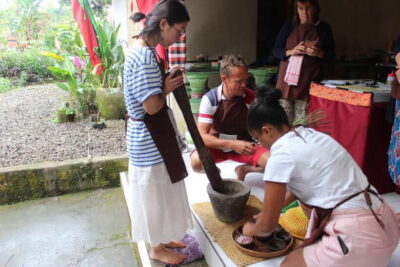
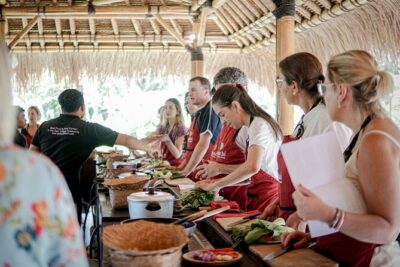
PRIVATE Balinese Cooking Class in Ubud with Dewa with Transfers
Read our review →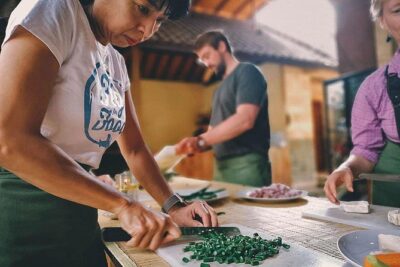
Balinese Cooking class with traditional morning market visit
Read our review →Browse the lists this tour appears in