
Reviewed · BALINESE COOKING CLASSES
Ubud : Regular or Vegetarian cooking class with market visit
Ubud’s best food lesson may begin far from the kitchen. This class takes you through a local morning market and rice fields before you sit down to prepare roughly eight Balinese dishes yourself. I like the market-to-table idea, and I like that vegetarian, vegan, meat-free, and meat-eating participants can cook in the same class while making their own food.
The guides, including Tata, Yogi, Harry, and Komah, add a friendly, lively touch, and the pickup service is well organized. The main consideration is the morning market: its animal stalls can be upsetting, especially if you are vegetarian or vegan. Choose the afternoon option if you would rather skip that part.
In This Review
- Key points at a glance
- From Ubud Palace to the morning market
- Rice fields and the story behind Bali’s crops
- Meeting the Balinese cooking team
- What you actually cook and eat
- The meal at the end
- Morning or afternoon: choosing the right version
- Heat, stairs, and transport details
- Is $23 good value in Ubud?
- Who will enjoy this class most?
- Should you book it?
- FAQ
- How much does the cooking class cost?
- What is included in the price?
- Does the morning class include a market visit?
- Does the afternoon class include the market?
- Is the rice-field visit included?
- How many dishes will I cook?
- Can vegetarians and meat-eaters attend together?
- Where do I meet the guide?
- Is the class suitable for wheelchair users?
- What should I bring?
Key points at a glance
- Market and rice-field visit: The morning option includes about 25 to 30 minutes at a local market, followed by an explanation of how rice grows and when it is harvested.
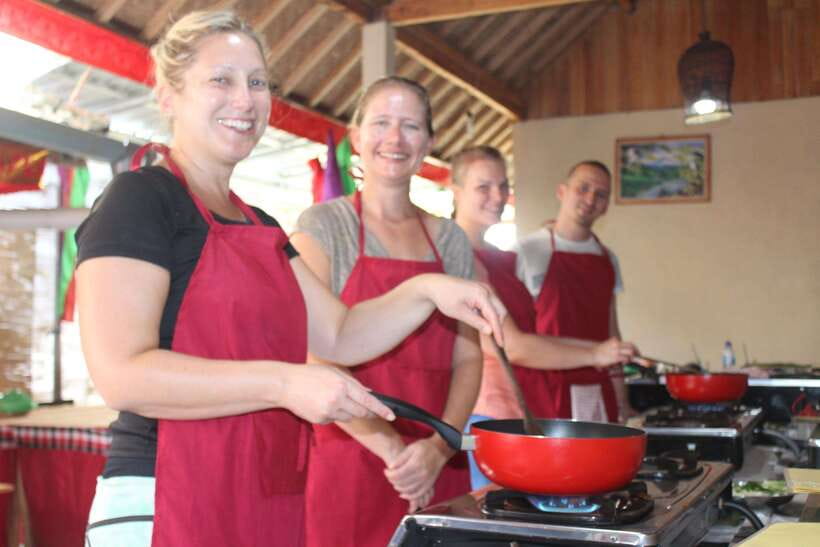
- Eight hands-on dishes: You prepare the food yourself, then eat it as a lunch or dinner buffet. The program also refers to at least nine recipes, so confirm the exact menu when booking.
- Flexible dietary choices: Vegetarian and vegan food can be prepared alongside meat dishes, and you make your own portions.
- Good value at $23: Pickup in central Ubud, ingredients, equipment, water, recipes in PDF form, instruction, and a cooked meal are included.
- Two different class moods: Morning brings the market and rice fields. Afternoon skips the market and includes making a Hindu offering called a canang.
- Practical limits: The class is not suitable for wheelchair users, and pickup outside central Ubud requires meeting at Ubud Palace.
From Ubud Palace to the morning market
The day begins around 7:30am. If you stay in central Ubud, pickup is included. If you are outside the stated center area, you need to meet the shuttle at the front of Ubud Palace, a clear and useful fallback point.
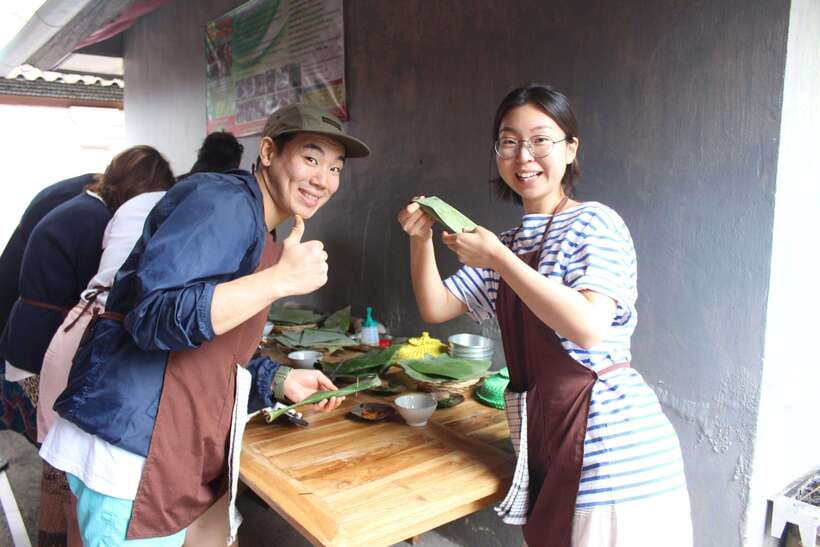
That early start matters. Markets are best visited in the morning, when local shopping is underway and produce for the day is being bought and sold. You spend about 25 to 30 minutes looking around, with a Balinese host explaining how people buy ingredients and how vendors arrange their goods.
This is not a long market tour, so set your expectations properly. You are getting a short introduction rather than a major food-market expedition. Still, it gives the cooking class a useful beginning. Instead of seeing ingredients only after they have been chopped and measured, you see them in the setting where they are sold.
You should bring cash. It is listed as an essential item, even though the cooking class itself includes the main costs. The tour does not include alcohol, and oversized luggage is not allowed, so arrive with a small day bag rather than a suitcase.
There is one important personal-choice issue here. The market may include live animals and conditions that some people find difficult. One participant who was otherwise delighted with the class found this part distressing because of animal-welfare concerns. If that sounds like it would trouble you, book the afternoon class instead. You will miss the market, but you will avoid the uncomfortable part and still get the cooking lesson.
More Balinese cooking classes:
- Ubud Cooking Class Bali with Balinese Chef
★ 5.0 · 1,609 reviews - Ubud: Cooking Class with Transfers and Optional Market Visit
★ 4.9 · 824 reviews - PRIVATE Authentic Balinese Cooking Class in Ubud at Putu’s Home
★ 5.0 · 644 reviews
Rice fields and the story behind Bali’s crops
After the market, the morning program includes a stop at local rice fields. You can take photographs and hear how rice is grown, how many types are found in Bali, and how long the crop takes to reach harvest.
This stop helps explain why rice appears so often in Balinese meals and daily life. It is not simply a scenic pause for photographs. The guide connects the fields to farming and food, giving you a clearer sense of where a major part of the local diet begins.
The information provided does not give a fixed amount of time for the rice-field visit. Treat it as a short educational stop on the way to the kitchen, not as a separate walking tour. You should also expect the amount of time outside to depend on the morning schedule and transport.
The afternoon option takes a different route. Instead of the market and rice fields, it includes making a Hindu offering called a canang. That choice may suit you if cultural tradition interests you more than shopping for ingredients, or if you want to avoid the animal stalls at the market.
Meeting the Balinese cooking team
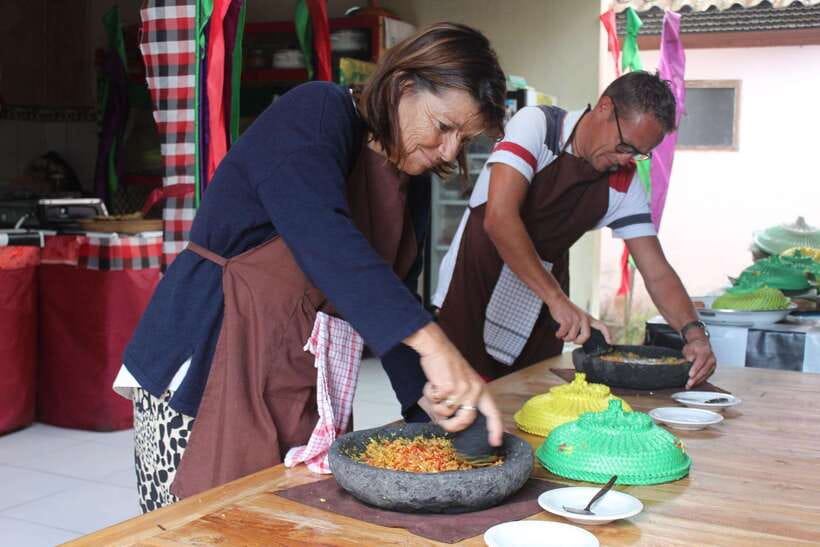
The cooking class is led in English by a Balinese chef and local host. Several guides are named in the feedback: Tata and Yogi are praised for their humor and clear help, Harry is associated with the market and rice-field visit, and Komah is described as a lively cooking teacher.
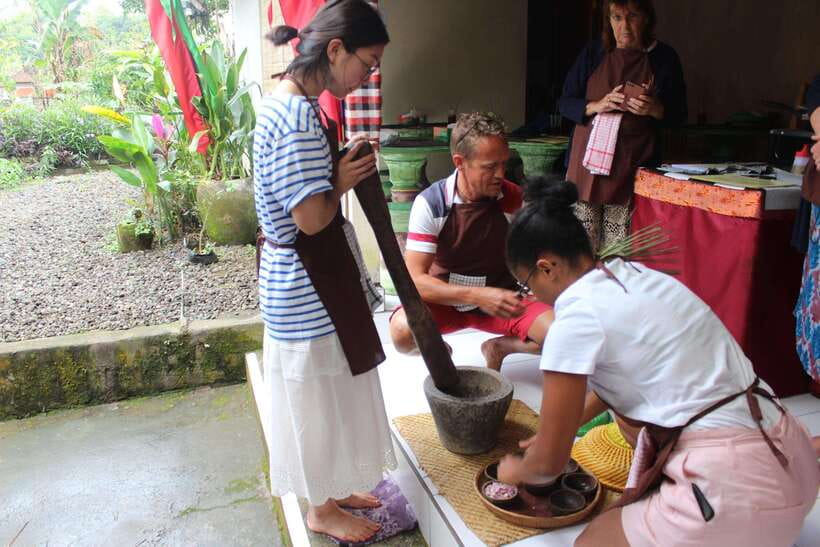
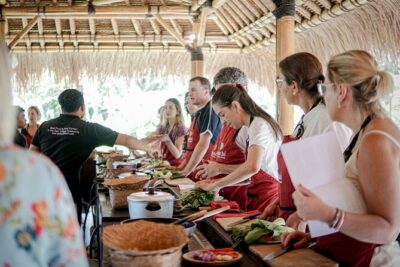
The class is set up for practical work rather than a demonstration where you sit and watch. Your cooking area and equipment are provided, and the instructions are given step by step. One especially useful touch is the use of laminated food photographs, which makes it easier to keep track of the dishes as the lesson moves along.
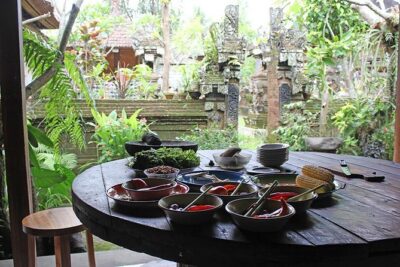
The kitchen is described as clean and well organized. That matters when several people are chopping, mixing, and cooking at once. You also get bottled mineral water, which is welcome in Ubud’s heat.
The class can include mixed groups. A vegan couple and a meat-eating partner can attend together, and vegetarian participants can cook their own food beside people preparing meat. You are not simply handed a separate plate at the end. You take part in making your own dishes.
That arrangement also worked for a participant who wanted vegan food while a parent preferred food without chili. It suggests useful flexibility, but you should state your dietary needs clearly before cooking begins. The experience is described as vegetarian and vegan friendly, yet the class may still include meat-eating participants.
What you actually cook and eat
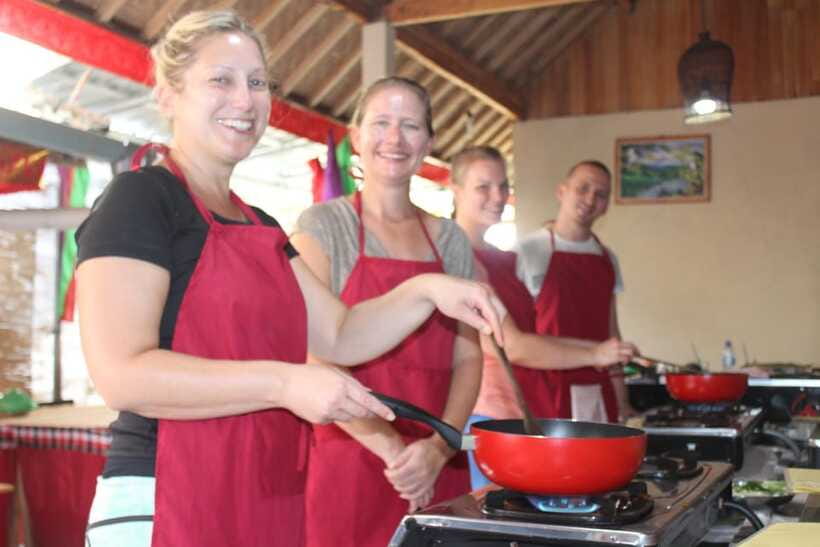
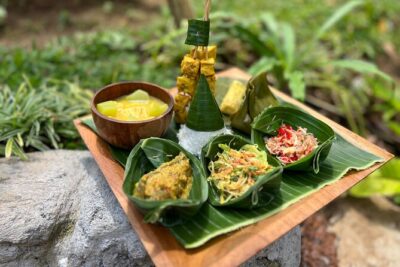
The program centers on preparing eight Balinese dishes by hand. The description also refers to sharing at least nine recipes, so there is a small inconsistency in the numbers. I would treat eight cooked dishes as the reliable expectation and ask for the current menu if the exact recipe count matters to you.
The important part is the amount of participation. You prepare the food, taste it as you work, and then sit down to eat what you have made. The meal is served as a lunch or dinner buffet, depending on the class option.
Cooking eight dishes is a generous amount for a class priced at $23. It also means the lesson is likely to feel busy. You are not paying for one carefully plated recipe and a short talk. You are working through several preparations before sharing the finished meal.
The advantage is variety. You get a broader look at Balinese flavors and cooking methods, then receive a PDF copy of the recipes so you can try them at home. The practical value is greater if you plan to cook after returning home. Take notes about ingredient substitutions and spice levels while the chef is explaining them, since the PDF may give you the recipe but not every small kitchen tip.
The possible downside is quantity. Eight dishes can be a lot of food and a lot of steps, especially if you prefer a slow, highly detailed lesson focused on only one or two recipes. The class is designed for an active group setting, so you may have less time to linger over each dish.
A few more Ubud half-days to weigh up
- Balinese Vegan Cooking Class with Fresh Harvesting & Garden Tour
★ 5.0 · 86 reviews
The meal at the end
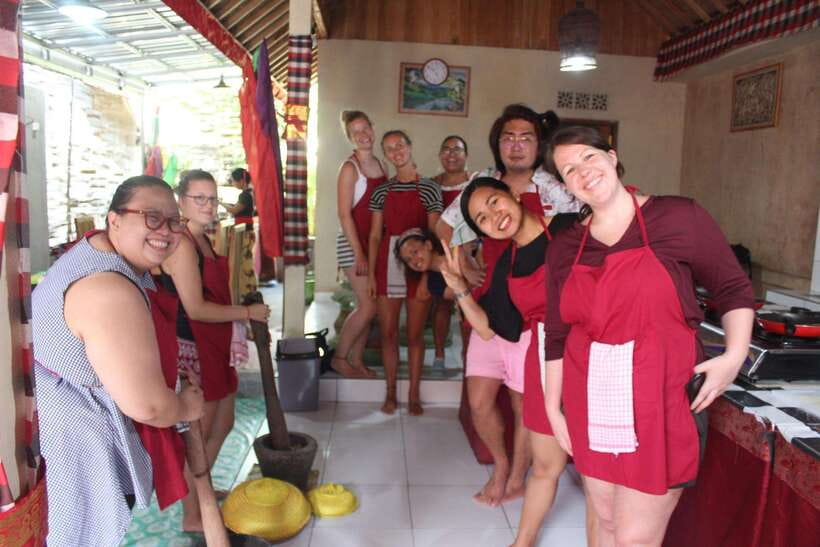
After the cooking, you eat together. The final meal is included, and people cook enough food that some groups cannot finish everything. That makes the class work as both an activity and a substantial meal.
I like this format because the food has a clear connection to your own effort. You are not just tasting a restaurant version of Balinese cooking. You can see what went into the dishes, remember the techniques, and compare your results with the food prepared by the rest of the group.
The class is also social. You share the meal with other participants, which can be a pleasant part of the day if you enjoy meeting people while traveling. If you prefer a private lesson, this may feel less personal, since the setup is clearly made for a group.
The food is described as delicious and full of flavor, but spice preferences can vary. The information confirms that individual dietary needs can be accommodated, including vegan food and food without chili. Still, explain your limits early rather than waiting until the cooking has started.
Morning or afternoon: choosing the right version
Your choice of class time changes more than the clock.
Choose the morning class if you want:
- A local market visit
- A short look at rice fields
- Explanations about ingredients, rice types, and harvest timing
- A 7:30am start and a daytime meal
The morning option gives you the strongest connection between local shopping, farming, and cooking. It is the better fit if you want the food lesson to include a little sightseeing and cultural context.
Choose the afternoon class if you want:
- To skip the market
- To avoid the market’s animal stalls
- To make a Hindu canang offering
- A later cooking schedule
The afternoon option is especially sensible for vegetarian and vegan participants who may find the market visit uncomfortable. It also suits anyone who would rather focus on cooking and a cultural craft than start early.
The included meal is described as lunch or dinner, depending on your choice. The exact duration is not supplied, so do not plan a tightly timed afternoon or evening appointment afterward.
Heat, stairs, and transport details
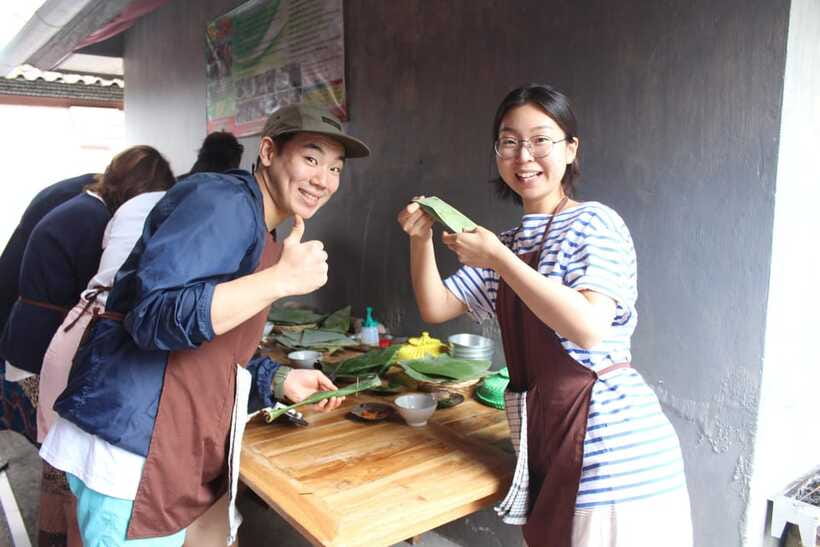
Transport receives strong praise for clear communication and safe driving. Central Ubud pickup is included, while people staying outside the center need to meet at Ubud Palace. The activity ends back at the meeting point, so you do not need to arrange a separate return ride within the stated area.
The transport details are worth taking seriously because Ubud traffic and scattered accommodation can make pickup confusing. Keep your phone available, confirm where the vehicle will wait, and look for the driver rather than assuming the car can reach your accommodation.
The kitchen can be hot. An afternoon group found that one ceiling fan was not enough to keep everyone comfortable, although cold bottled water was supplied. Wear light clothing you do not mind cooking in, and bring cash as requested.
The class is not suitable for wheelchair users. There are several short but steep steps leading upstairs to the kitchen, so the setting may also be difficult for anyone with limited mobility, even if they do not use a wheelchair. The supplied information does not promise step-free access.
Oversized luggage is not allowed. Leave large bags at your accommodation and bring only what you need for the morning or afternoon.
Is $23 good value in Ubud?
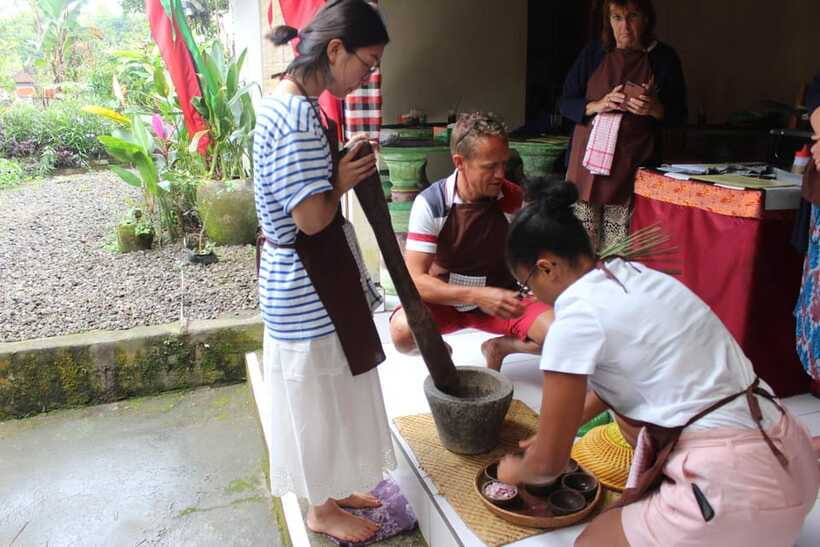
At $23 per person, this is strong value if you want several elements in one outing. The price includes transport within central Ubud, a local guide, the market visit on the morning option, the rice-field stop, kitchen equipment, mineral water, recipe PDFs, food tasting, and the final lunch or dinner buffet.
You are also paying for instruction, not just ingredients. The class gives you a chance to learn recipes you can repeat at home, which adds value after the holiday ends.
The price is less compelling if you have no interest in cooking or if you want a quiet meal with little group interaction. The class asks you to work, taste, and follow instructions. It is a hands-on food activity, not simply a restaurant visit.
Compared with booking separate transport, a market outing, and a meal, the combined price is sensible. The main trade-off is comfort and pace: the kitchen may be warm, the class can be lively, and eight dishes require concentration.
Who will enjoy this class most?
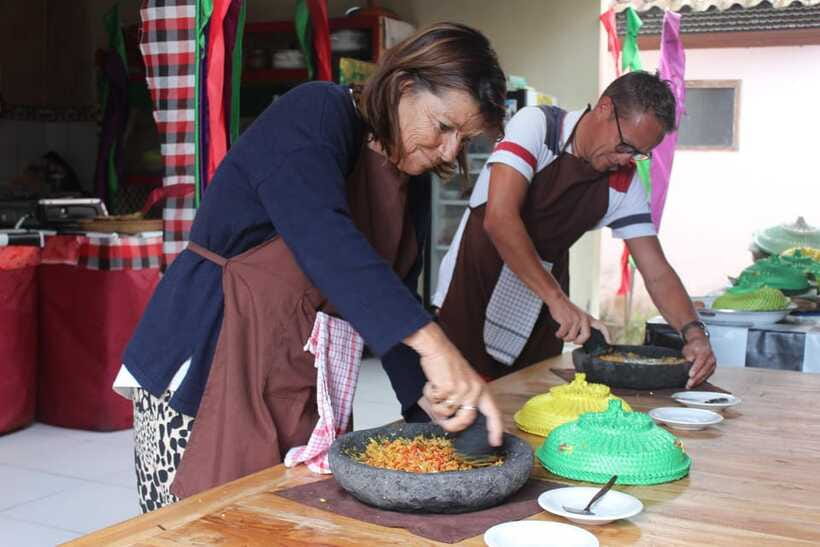
I would recommend it to first-time visitors who want an easy introduction to Balinese food and daily ingredients. It also suits couples with different diets, provided both people are comfortable cooking in the same group.
Families may enjoy the practical format, though the supplied information does not specify a minimum age. You should confirm age rules before booking if children are involved.
Vegetarians and vegans have a useful choice. The morning class offers the market and rice fields, while the afternoon class avoids the market and adds canang-making. If animal welfare is a major concern for you, the afternoon version is the safer choice.
This is less suitable if you need wheelchair access, dislike warm kitchens, cannot manage short steep stairs, or want a private class with a slow pace. It is also not the right pick if you are searching for an alcohol-inclusive food tour, since alcohol is not included.
Should you book it?
Book this Ubud cooking class if you want to make a full meal, learn recipes you can use at home, and add a short market or rice-field visit to the day. At $23, it packs a lot into one affordable activity, and the organized transport and friendly teachers make it easy for a first visit to Bali.
Choose the morning class for the strongest food-and-farming connection. Choose the afternoon class if you want canang-making or prefer to avoid the market’s animal stalls. Before booking, confirm the current dish count, share any dietary needs, and make sure the stairs and heat will not be a problem.
FAQ
How much does the cooking class cost?
The price is $23 per person.
What is included in the price?
The price includes central Ubud pickup and drop-off, mineral water, kitchen equipment, a PDF recipe copy, food tasting, and a lunch or dinner buffet. A Balinese local guide or host is also included.
Does the morning class include a market visit?
Yes. The morning option includes a visit to a local market lasting about 25 to 30 minutes.
Does the afternoon class include the market?
No. The market tour is available only with the morning class. The afternoon option includes making a Hindu canang offering instead.
Is the rice-field visit included?
Yes, the morning class includes a visit to local rice fields, with an explanation of how rice grows, the types of rice found in Bali, and harvest timing.
How many dishes will I cook?
The program says you will cook eight Balinese dishes. It also refers to at least nine recipes, so ask for the exact current menu if the number is important to you.
Can vegetarians and meat-eaters attend together?
Yes. Vegetarian, vegan, and meat-eating participants can be in the same class, and each person makes their own food.
Where do I meet the guide?
The guide waits at the front of Ubud Palace. Pickup is available in central Ubud, while people staying outside the center can meet the shuttle there.
Is the class suitable for wheelchair users?
No. The activity is not suitable for wheelchair users, and access to the kitchen includes several short but steep steps.
What should I bring?
Bring cash, light clothing suitable for cooking, and no oversized luggage. Alcohol is not included.
More Shopping Tours in Ubud
- Ubud Traditional Night Market Food Tour-All Inclusive
★ 4.4 · 95 reviews - Ubud Cooking Class with Optional Market Visit Pickup Included
★ 5.0 · 70 reviews - Balinese Cooking Class with Traditional Market Tour
★ 5.0 · 66 reviews
More Market Visits in Ubud
- Balinese Ubud cooking school (9 Dish Cooking and Market Tour)
★ 5.0 · 540 reviews - Ubud: Balinese Cooking Class and Market Tour
★ 4.8 · 531 reviews - Balinese Cooking class with traditional morning market visit
★ 5.0 · 161 reviews - PRIVATE Ubud Market Tour & Balinese Cooking Class with Putu
★ 5.0 · 125 reviews
Just added around Ubud
- Besakih Temple Tour – Traditional Bali Village – All Inclusive★ 5.0 · 46 reviews
- Besakih Temple Tour – Mother Temple in Bali★ 5.0 · 33 reviews
- Besakih Temple Tour: the Biggest Temple in Bali★ 5.0 · 8 reviews
- Exploring Beji Guwang hidden canyon★ 4.5 · 52 reviews
- Nusa Penida Snorkeling with Manta Bay and Land Tour★ 4.5 · 280 reviews
- Private Bali Tour: Kintamani Volcano and Besakih Temple★ 5.0 · 7 reviews
- Spa at Flying Bamboo with Dining Included at Botanist★ 5.0 · 204 reviews
- Ubud: Relaxing Spa Balinese Massage Package★ 4.8 · 32 reviews
Balinese Cooking Classes, compared.
Cooking Class with Transfers and Optional Market Visit
Read our review →
PRIVATE Authentic Balinese Cooking Class in Ubud at Putu’s Home
Read our review →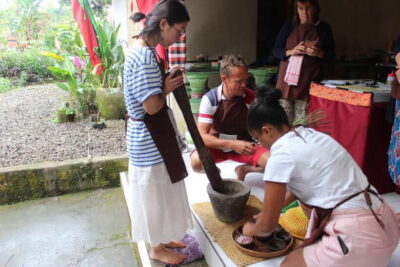
PRIVATE Balinese Cooking Class in Ubud with Dewa with Transfers
Read our review →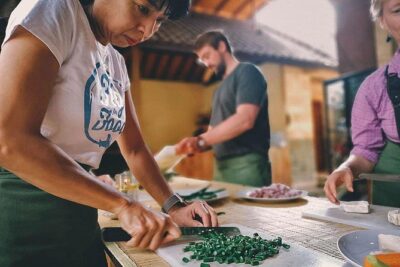
Balinese Cooking class with traditional morning market visit
Read our review →Browse the lists this tour appears in