
Reviewed · BALINESE COOKING CLASSES
Vegetarian Ubud Cooking Class Bali
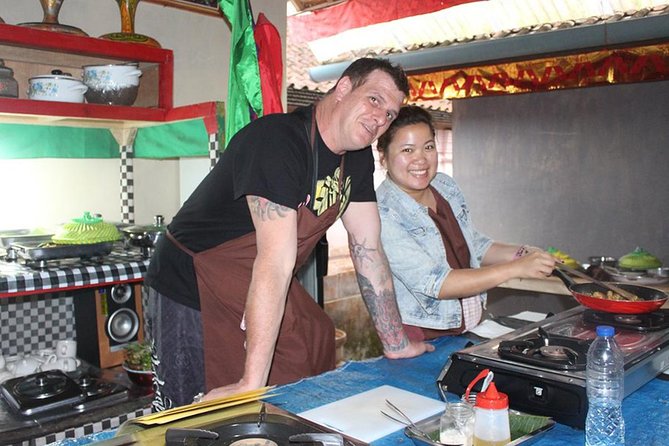
Balinese cooking becomes much easier to understand when you handle the ingredients yourself. This four-hour class takes you from a traditional market visit to grinding spices in an ulekan, then on to nine vegetarian dishes with tofu, tempe, and fresh vegetables.
I like the market stop because it gives the meal a local setting, not just a cooking bench. I also like the rice-field explanation included along the way, plus the useful recipe file you can take home. The main concern is pickup reliability: one booking ended before it began after the promised hotel transfer did not arrive and messages went unanswered.
In This Review
- Key points to know before booking
- What the four-hour class is really about
- Starting at the traditional market
- Rice fields and the setting near Tampaksiring
- Grinding spice paste with an ulekan
- Preparing nine vegetarian dishes
- Choosing morning lunch or afternoon dinner
- The value of the $39 price
- Transfers from central Ubud hotels
- What worked especially well
- The main weaknesses to weigh
- Who will enjoy this class most
- How to prepare for the day
- Should you book the Vegetarian Ubud Cooking Class?
- FAQ
- Where does the cooking class take place?
- How long does the experience last?
- Is the class suitable for vegetarians?
- How many dishes will I prepare?
- Does the price include hotel pickup?
- Is lunch or dinner included?
Key points to know before booking
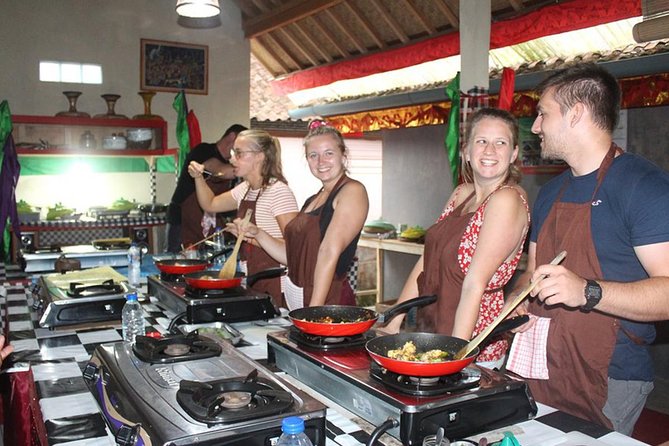
- Nine meat-free Balinese dishes: You prepare a full spread built around tofu, tempe, vegetables, and other plant-based ingredients.
- Market shopping comes first: The class connects ingredients on the plate with the traditional market where they are bought.
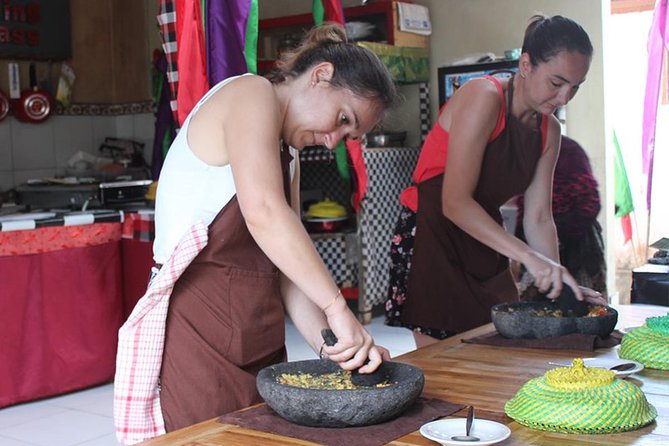
- Hands-on spice work: You use an ulekan, a traditional stone mortar and pestle, rather than simply watching a chef cook.
- Morning or afternoon timing: Morning includes lunch, while the afternoon session includes dinner.
- Central Ubud transfers: Pickup and drop-off are offered from central Ubud hotels only.
- Small-to-medium group size: The class accepts a maximum of 15 people, so it is not a private lesson but should remain manageable.
What the four-hour class is really about
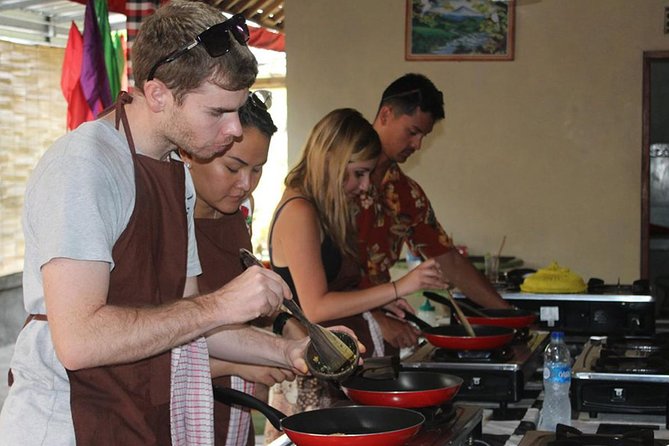
This experience is not just a meal with a recipe card attached. It gives you a short introduction to how Balinese food is built, starting with market ingredients and ending with a shared vegetarian feast.
The class is operated by Wandernesia at Subak Cooking Class, near Tampaksiring in Gianyar Regency. You can arrange pickup from a central Ubud hotel, or meet the group directly at the cooking-class location.
The professional local chef speaks English and guides the session. You should expect cooking equipment, a welcome drink, bottled water, and a copy of nine recipes after the class.
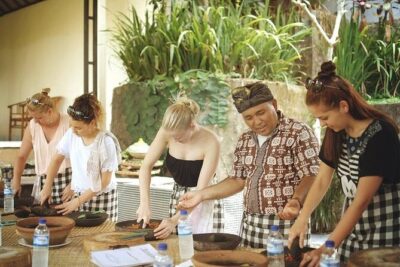
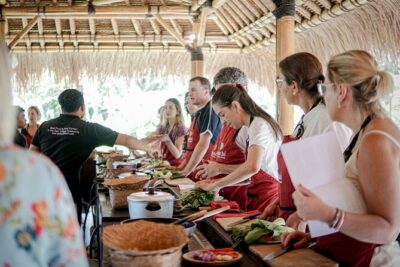
The class is designed for people who want to participate. You will not simply sit at a demonstration table while someone else does the work. The useful part is handling the ingredients, preparing spice pastes, and seeing how separate components become a complete Balinese meal.
More Balinese cooking classes:
- Ubud Cooking Class Bali with Balinese Chef
★ 5.0 · 1,609 reviews - Ubud: Cooking Class with Transfers and Optional Market Visit
★ 4.9 · 824 reviews - PRIVATE Authentic Balinese Cooking Class in Ubud at Putu’s Home
★ 5.0 · 644 reviews
Starting at the traditional market
The market visit gives the class its strongest sense of place. Instead of beginning with ingredients already measured and arranged, you get a look at where local produce and cooking supplies are purchased.
You will have personal expenses at the market, so bring some Indonesian rupiah if you plan to buy something. The class price does not cover these purchases, and the exact amount depends on what you choose to buy.
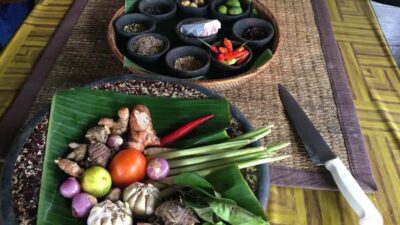
This is also where the cooking lesson begins in a quiet way. You can see the sort of fresh vegetables and other ingredients that later appear in the dishes. For a vegetarian, that connection matters. You are not being handed a generic meat-free menu designed after the fact. The food centers on tofu, tempe, vegetables, and Balinese seasoning from the start.
The market portion may be less appealing if you want four uninterrupted hours at the stove. It adds travel and walking, and the available details do not specify how long you spend there. Still, I see it as a worthwhile trade if you want context rather than just a cookbook lesson.
Rice fields and the setting near Tampaksiring
The experience also includes an explanation of rice fields. That is a small detail, but it helps connect the food to daily life in Bali. Rice is not merely a side dish on a menu. It is part of the island’s food system and rural identity.
The class location is in the Tampaksiring area, outside central Ubud. You should keep that in mind when comparing this experience with cooking schools located in town. The rural setting may make the outing feel more like a short countryside trip, but it also makes dependable transportation especially important.
The supplied information does not describe the exact view from the cooking site or promise a particular farm walk. I would treat the rice-field explanation as an added part of the outing, not as a separate sightseeing tour.
Grinding spice paste with an ulekan
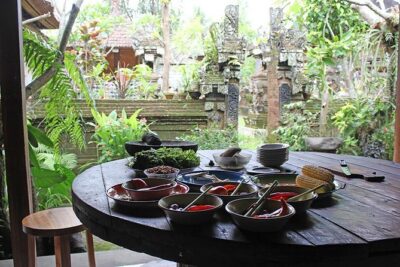
The most distinctive cooking technique is preparing spice paste with a traditional ulekan. This is a stone mortar and pestle used to crush and combine ingredients by hand.
You will notice a difference between this method and using a blender. Grinding by hand takes more effort, but it also shows how Balinese cooks build flavor from raw ingredients. The motion, texture, and aroma are part of the lesson.
This is the sort of detail that makes the class useful after you return home. You may not own the same stone tool, but you will understand what the paste should look and feel like before it goes into a pan.
The chef leads the work, so you do not need prior cooking experience. The class is suitable for friends and family groups, and cooking together gives everyone a clear job. With a maximum of 15 people, you should have company around the work area without joining a huge busload.
A few more Ubud half-days to weigh up
- Balinese Vegan Cooking Class with Fresh Harvesting & Garden Tour
★ 5.0 · 86 reviews - Ubud : Regular or Vegetarian cooking class with market visit
★ 4.8 · 57 reviews
Preparing nine vegetarian dishes
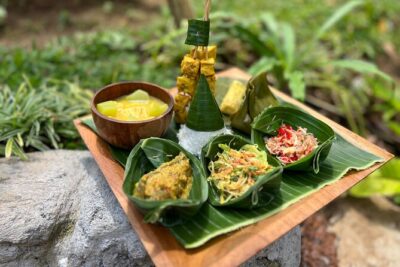
Nine separate dishes is a generous amount for a four-hour class. It also means the class will move at a steady pace. You should expect a broad sampling of Balinese vegetarian cooking rather than a slow, detailed lesson on one recipe.
The supplied menu information names tofu, tempe, and fresh vegetables but does not list all nine dishes. That is worth noting if you need to check specific ingredients for allergies or dietary rules. Vegetarian food is the focus, but the exact recipe list is not provided before booking.
Tofu and tempe give the meal substance. Tempe, made from fermented soybeans, is especially useful for understanding an Indonesian staple that may be less familiar to some home cooks. Fresh vegetables keep the menu from feeling heavy, while the spice paste provides the main flavor base.
You should expect to work with several preparations at once. One dish may need chopping while another simmers, and the chef will help organize the order. The practical lesson is not only how to cook each item, but also how to put a complete meal on the table without treating every component as a separate project.
For many people, nine recipes make the price easier to justify. You are not paying for a single lunch or dinner. You are paying for instruction, ingredients, equipment, a market visit, a meal, and recipes you can try later.
Choosing morning lunch or afternoon dinner
You can choose a morning or afternoon session. The morning option includes lunch and bottled water. The afternoon option includes dinner and bottled water.
That simple choice can shape your Ubud day. A morning class leaves the afternoon open for other plans. An afternoon class may suit you better if you want a relaxed start and a cooked evening meal.
The tour lasts approximately four hours, so leave room around it rather than scheduling another fixed activity immediately afterward. Pickup, the ride to the location, the market portion, and the cooking itself all take time.
Water and a welcome drink are included. Other beverages can be purchased, but the supplied details do not give prices or a full drink menu. If you prefer to keep spending predictable, plan on the included water and budget separately for anything else.
The value of the $39 price
At $39 per person, this class sits in a reasonable range for an experience that includes instruction, food, equipment, a market visit, and central Ubud transfers. The strongest value comes from the combination of the meal and the nine recipes, not from the meal alone.
A restaurant dinner for $39 might give you a polished plate, but it would not show you how to make the spice paste or explain the ingredients at the market. A cheaper cooking demonstration might teach less and exclude transport or the recipe file.
The value drops if you do not need pickup, dislike group cooking, or want a very detailed lesson on each dish. Nine recipes in four hours means you will learn the main method for each preparation, but you should not expect a private culinary course.
The maximum group size is 15. That is small enough for a social class, but it is not the same as one-on-one coaching. If you want the chef to correct every knife stroke or answer lengthy technical questions, a private class would likely suit you better, though this experience is not advertised as private.
Transfers from central Ubud hotels
Pickup and drop-off are offered from central Ubud hotels only. If your hotel is outside that area, you may need to meet the group directly at Subak Cooking Class, located on Jl. Werkudara in Tampaksiring.
This transfer arrangement is helpful because the cooking site is not in central Ubud. You avoid arranging a separate ride if your hotel qualifies, and the return transfer is included.
I would confirm the pickup point and time before the day of the class. One serious service problem involved a scheduled hotel pickup that did not arrive, followed by an hour of waiting and unanswered communications. That is a major warning for anyone relying on a tight schedule.
The experience provider is Wandernesia, and booking confirmation is supposed to arrive within 48 hours, subject to availability. Keep the confirmation and contact details handy. If you are not at a central Ubud hotel, use the direct meeting option only after confirming the exact arrangements.
The class is near public transportation, but no route details are supplied. I would not assume that public transport is the easiest solution without checking the route from your accommodation.
What worked especially well
The vegetarian focus is the clearest strength. A meat-free member of a mixed group is specifically accommodated, while the rest of the group still gets a full Balinese meal rather than a plate of plain vegetables.
The market visit is another strong point. It gives you something to see and discuss before the cooking starts, and it helps explain why certain ingredients matter.
The rice-field explanation adds local context without requiring a separate tour. It is a brief but useful reminder that the food you cook is tied to farming and rural life.
I also value the take-home recipe file. Recipes are provided digitally as a copy of the nine dishes, so you can recreate the meal after returning home. That makes the experience last beyond the final lunch or dinner.
The main weaknesses to weigh
The biggest weakness is the risk connected with pickup communication. A missed transfer is not a minor inconvenience when the class is outside central Ubud. You could lose the entire experience, and the strict cancellation policy makes this harder to absorb.
The booking is non-refundable and cannot be changed for any reason. If you cancel or request an amendment, the amount paid will not be returned. This policy makes it especially important to check your schedule, hotel location, and pickup details before paying.
The exact nine-dish menu is not provided. If you have food allergies or need to avoid particular ingredients, ask for the recipes or ingredient list before booking. The class is vegetarian, but vegetarian does not automatically answer every dietary question.
The class has a maximum of 15 people, which is a reasonable group size but still means a shared experience. You may need to wait briefly while other people finish a task, and the chef’s attention will be divided.
Who will enjoy this class most
I would recommend this class to you if you enjoy learning through your hands. It suits home cooks, curious eaters, vegetarians, and families or friends who want a shared activity rather than another sightseeing stop.
It is also a good choice if you want a taste of rural Bali near Ubud without booking a full-day excursion. The market visit and rice-field explanation add useful local detail to the meal.
The class may not suit you if you need a private lesson, have a tight timetable, or want a guaranteed hotel transfer without confirming the details. It is also less suitable if your main goal is sampling food rather than preparing it.
For a mixed group, the vegetarian format works well because tofu, tempe, vegetables, and spice pastes form the center of the meal. The class does not appear to treat vegetarian cooking as a side option.
How to prepare for the day
Before booking, check that your hotel is in central Ubud and confirm the transfer arrangement. If you plan to meet at the cooking school, make sure you have the full address and a practical way to reach Tampaksiring.
Bring some cash for personal market purchases. The tour price covers the planned class but not anything you decide to buy at the traditional market.
Choose the session that matches your day. Morning means lunch, while afternoon means dinner, so the timing can replace one meal rather than add another large one to your schedule.
Wear clothing suitable for hands-on cooking. The supplied details do not specify a dress code or protective clothing, so keep your plans practical and avoid anything you would not want near spice paste or cooking oil.
If you have allergies, ask about the nine recipes before committing. The class is vegetarian, but the available information does not confirm every ingredient or substitution.
Should you book the Vegetarian Ubud Cooking Class?
Book it if you want a practical, meat-free introduction to Balinese food and value the market visit, traditional spice grinding, and nine take-home recipes. At $39, the combination of food, instruction, equipment, and central Ubud transfers is fair.
I would be cautious if pickup is essential and you have no flexibility. Confirm the hotel transfer directly, allow extra time, and remember that the non-refundable policy leaves little room for a change of plans.
My call is a qualified yes for food-focused visitors who want to cook, not just eat. The lesson has real local flavor, and the market and ulekan work give it more substance than a standard demonstration. Just treat the transport arrangement as something to verify carefully before you pay.
FAQ
Where does the cooking class take place?
The class takes place at Subak Cooking Class on Jl. Werkudara, Tampaksiring, in Gianyar Regency, Bali.
How long does the experience last?
The cooking class lasts approximately four hours.
Is the class suitable for vegetarians?
Yes. The experience is designed around Balinese vegetarian food, including tofu, tempe, fresh vegetables, and other plant-based dishes.
How many dishes will I prepare?
You will prepare nine separate Balinese dishes during the class.
Does the price include hotel pickup?
Pickup and drop-off are included for hotels in central Ubud only. You can also meet the class directly at the location.
Is lunch or dinner included?
Yes. The morning session includes lunch and bottled water. The afternoon session includes dinner and bottled water. A welcome drink is also included, while other beverages are available for purchase.
More Workshops in Ubud
- Hands-On Silver Jewelry Making Near Ubud’s Monkey Forest
★ 4.9 · 1,789 reviews - Ubud Silver Class Jewelry making in bali
★ 5.0 · 978 reviews - Canggu: Bali Turtle Silver & Gold Workshop
★ 4.9 · 643 reviews - Ubud: Balinese Cooking Class and Market Tour
★ 4.8 · 531 reviews
Just added around Ubud
- Authentic hike in the forest with lunch at the inhabitant★ 5.0 · 3 reviews
- Heaven Gate, Tirtagangga and Tukad Cepung Waterfall – All Inclusive★ 5.0 · 3 reviews
- Half Day Uluwatu Temple Sunset, Kecak Dance and Seafood Dinner★ 3.5 · 3 reviews
- Ubud: White Water Rafting with visit Ubud Monkey Forest★ 5.0 · 3 reviews
- ️Bali All Inclusive Tour: Ubud – Tegalalang – Kintamani★ 5.0 · 3 reviews
- East Bali and Lempuyang Temple Tour★ 5.0 · 3 reviews
- Ubud: Temple, Swing, Waterfall, Rice Terrace & Monkey Forest★ 5.0 · 3 reviews
- Batur Volcano Jeep Tour & Explore Best Waterfall in Bali★ 5.0 · 3 reviews
Balinese Cooking Classes, compared.
Cooking Class with Transfers and Optional Market Visit
Read our review →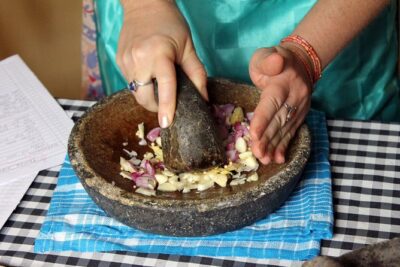
PRIVATE Authentic Balinese Cooking Class in Ubud at Putu’s Home
Read our review →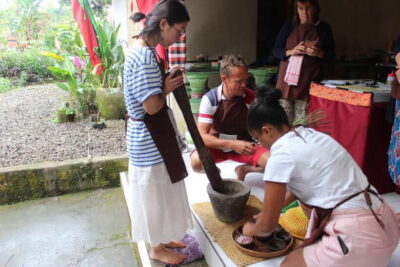
PRIVATE Balinese Cooking Class in Ubud with Dewa with Transfers
Read our review →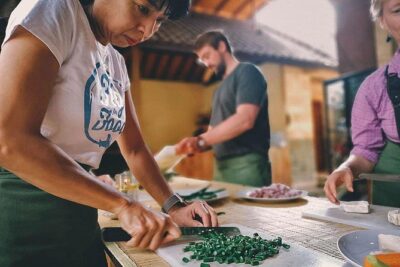
Balinese Cooking class with traditional morning market visit
Read our review →Browse the lists this tour appears in