
Reviewed · RICE TERRACE TOURS
Ubud: Balinese Cooking Class, Rice Field & Market Tour
Ubud’s best food lessons begin long before the stove. This five-hour experience takes you from a traditional market to rice fields, then into a Balinese family home where food, religion, farming, and daily life come together. I like the market tasting stops and the chance to make Base Gede, the spice paste used as a foundation for many Balinese dishes.
I also like the small group limit of six, since it gives you room to ask questions and handle the ingredients yourself. The main drawback is timing: an afternoon class skips the market because it closes earlier, and the walking portions can feel warm without good shoes, sunscreen, and water.
In This Review
- Key points to know before booking
- From Ubud market stalls to the Balinese kitchen
- Rice fields and the Subak water system
- A Balinese home, family rules, and daily offerings
- Making Base Gede and cooking the Balinese menu
- What the five-hour schedule feels like
- Is $23 a good value?
- Practical advice for a comfortable morning
- Who should book this Ubud cooking class?
- FAQ
- How long does the Ubud cooking class and tour last?
- Is hotel pickup included?
- Does every class visit the traditional market?
- What language is the tour conducted in?
- How many people are in the cooking class?
- Can children join the experience?
- Should you book it?
Key points to know before booking
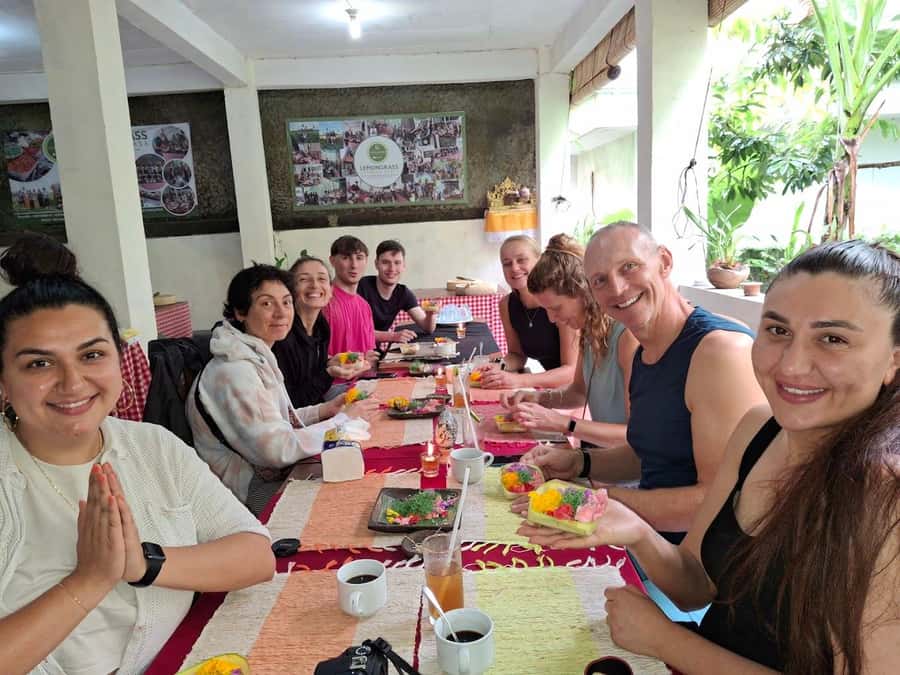
- Start with the market for the fullest cultural picture: Morning participants visit local stalls, learn about produce and spices, and may taste fruit and sweets.
- See rice farming through the Subak system: Your guide explains how water is shared, rice is planted, and crops are harvested.
- Enter a real family setting: The house visit covers Balinese architecture, household customs, and family life.
- Make a Canang Sari offering: You learn why these small daily offerings express thanks to the gods.
- Cook a substantial meal: The class includes detailed ingredient explanations, hands-on preparation, and Base Gede or Base Rajang.
- Expect practical pickup limits: Hotel transfer is included only within Ubud. You arrange your own way to the meeting point from Sanur, Kuta, Nusa Dua, or other areas.
From Ubud market stalls to the Balinese kitchen
I like this tour because it gives you the backstory behind the food. A cooking class alone can teach you how to chop and stir, but this one first shows where ingredients fit into everyday Balinese life.
The morning begins with pickup from your Ubud accommodation or an agreed meeting point. Pickup reports have included careful handling of awkward locations. If a hotel lane is too narrow for a car, you may be brought by scooter to the main road before continuing by vehicle. Be ready in the lobby at the stated time, since the day has several stops and traffic around Ubud can affect the schedule.
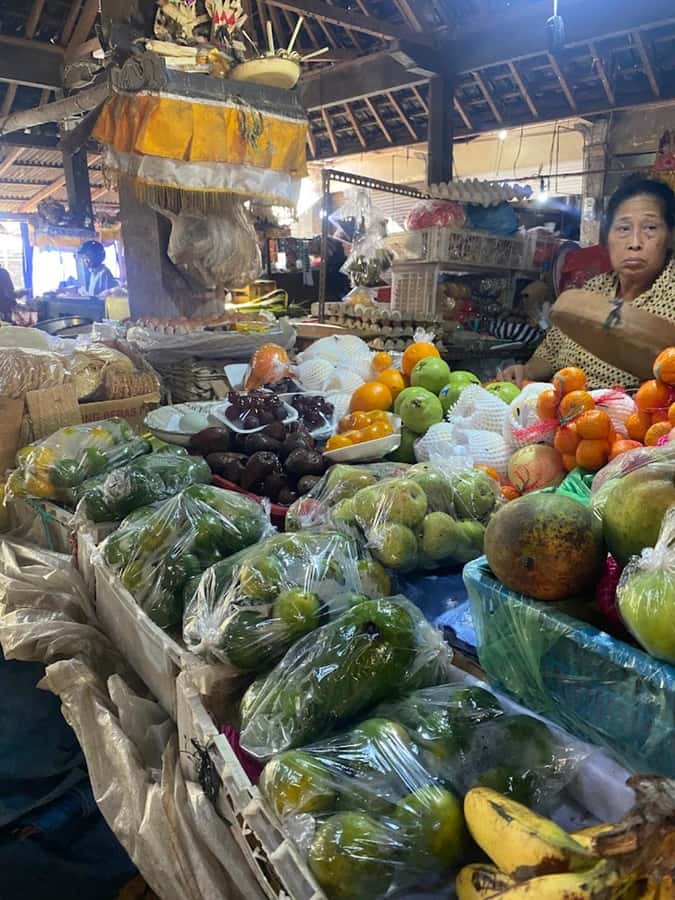
The first main stop is a traditional market. Here, your English-speaking guide introduces rice, spices, fruit, vegetables, fish, and meat. You are not simply shown a row of stalls and rushed onward. The point is to understand what local cooks buy, how ingredients appear in daily meals, and how the market functions as part of ordinary Balinese life.
Morning timing matters. The market visit is included for the morning class, but an afternoon class does not visit because the market is already closed. If the market is important to you, choose the earlier start and bring a hat, sunscreen, and water. You might also taste local fruit or sweets, depending on what is available during the visit.
That tasting element is useful because it turns unfamiliar ingredients into something you can recognize later at the cooking table. Still, this is a working market, not a staged food show. The experience is about seeing local shopping and ingredients in context, so conditions can be simple and busy.
More Balinese cooking classes:
- Ubud Cooking Class Bali with Balinese Chef
★ 5.0 · 1,609 reviews - Ubud: Cooking Class with Transfers and Optional Market Visit
★ 4.9 · 824 reviews - PRIVATE Authentic Balinese Cooking Class in Ubud at Putu’s Home
★ 5.0 · 644 reviews
Rice fields and the Subak water system
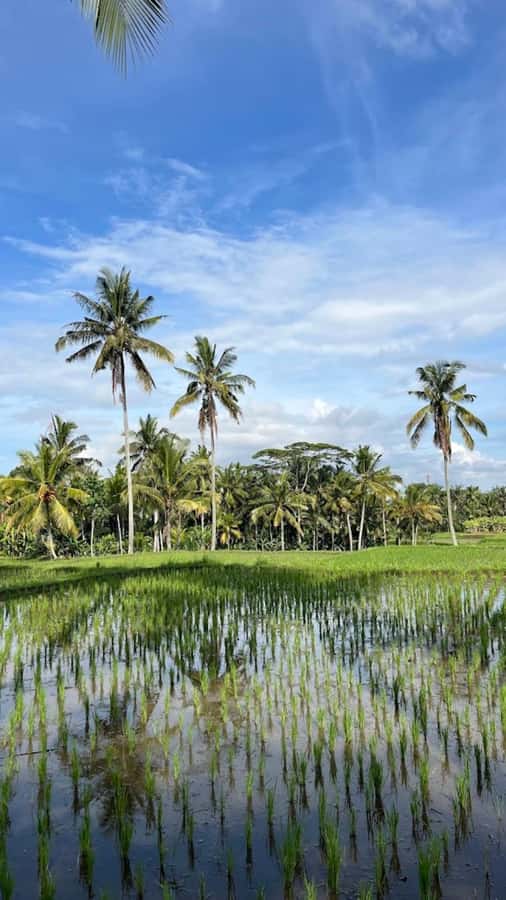
After the market, the tour heads to a rice field in the family’s village. This stop adds something that many short cooking classes miss: an explanation of how food reaches the kitchen.
Your guide explains the cycle of rice planting, growth, harvesting, and the work involved at each stage. You also learn about Subak, the traditional water-management system that distributes irrigation among rice fields. The subject matters because rice farming in Bali is not just an individual task. Water, land, labor, and community responsibilities are closely connected.
The rice-field walk is also one of the more physical parts of the outing. Comfortable shoes are a must, and a hat helps in the open sun. The activity is suitable for most ages, but children under 10 are not accepted, and anyone who dislikes walking should know that the tour is not entirely seated.
What you see will depend on the season and the day’s conditions. The supplied details promise an explanation of the process, not a guaranteed chance to plant or harvest rice yourself. I would treat this as a short educational walk rather than a farm-work session.
A Balinese home, family rules, and daily offerings
The next stop takes you into a Balinese family home, where the cooking class is held. This is where the tour moves from farming and ingredients to the structure of daily life.
Your guide explains the concept behind Balinese buildings and the rules that shape family living. You learn how the home is organized and how architecture connects with household customs. The explanation is valuable because it gives context to the courtyards, buildings, and rituals you may notice elsewhere in Bali without fully understanding them.
The offering lesson focuses on Canang Sari, a small daily offering made as a sign of thankfulness to the gods. You take part in making one and hear about its meaning. This is a modest activity, but it gives you a direct way to understand a practice you will often see outside homes, shops, temples, and businesses.
The offering is not treated as a decorative craft alone. The lesson connects the materials and arrangement with gratitude, routine, and religious life. That makes this portion especially useful if you want cultural context rather than a cooking class with a few unrelated sightseeing stops.
Guide quality matters here. Ari, Ery, and Padma are named in the supplied feedback, with particular praise for clear explanations, patience, humor, and friendly hosting. Since the exact guide can depend on the date, you should not book on the assumption that one specific person will lead your session. The important point is that the guide is expected to teach in English and lead both the cultural visits and the kitchen work.
Making Base Gede and cooking the Balinese menu
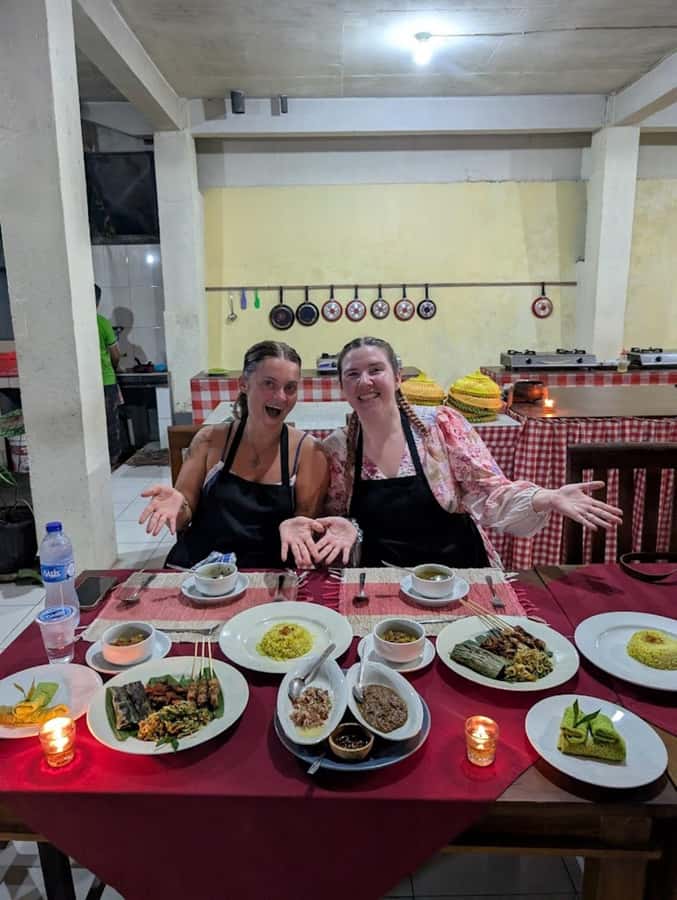
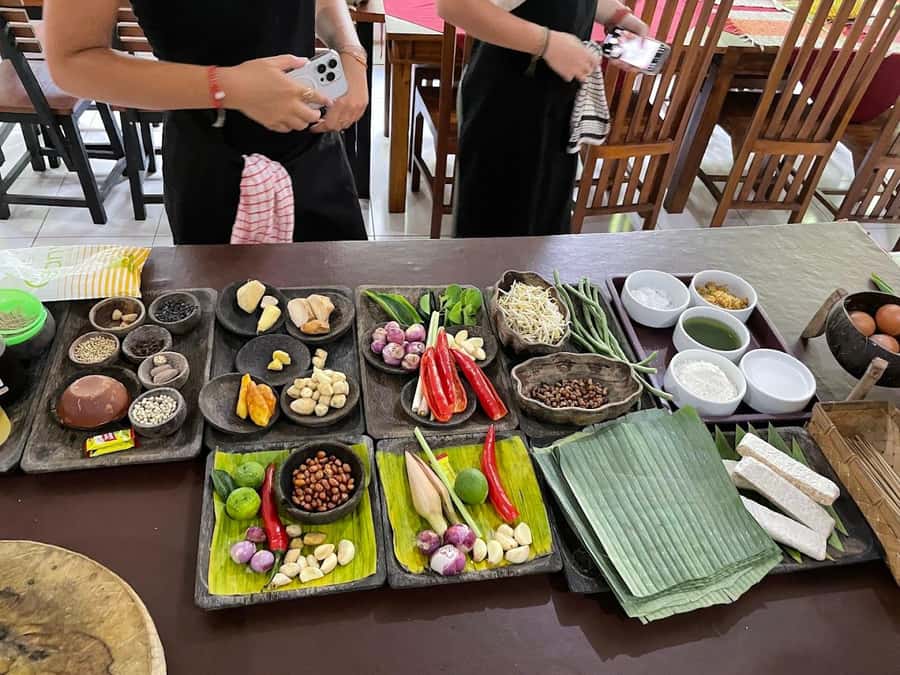
The kitchen session is the heart of the experience, but it works better because you have already seen the ingredients in their local setting. You receive a detailed explanation of what goes into the dishes and how Balinese cooks use spices to build flavor.
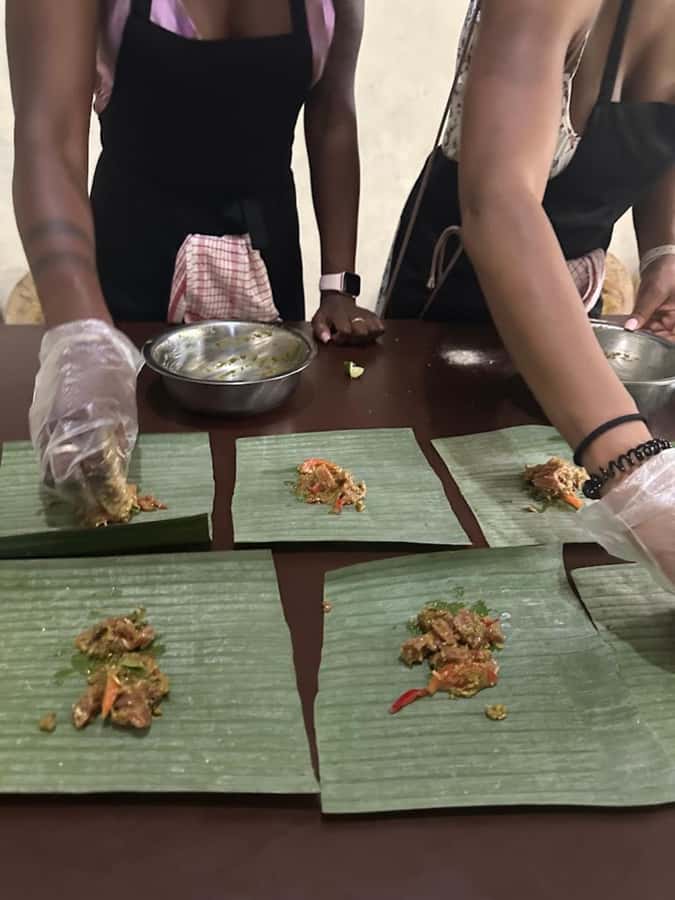
A central task is making Base Gede, also called Base Rajang. This traditional sauce or spice mixture acts as a base for many Balinese dishes. You get to work with the ingredients rather than simply watch a demonstration, including grinding or processing spices by hand.
That hands-on step is important. Balinese cooking often depends on balancing several aromatic ingredients, and the base paste helps you understand how the flavor begins before the main dish is assembled. You will not leave knowing only a recipe title. You will have a clearer sense of how a key preparation fits into Balinese cooking.
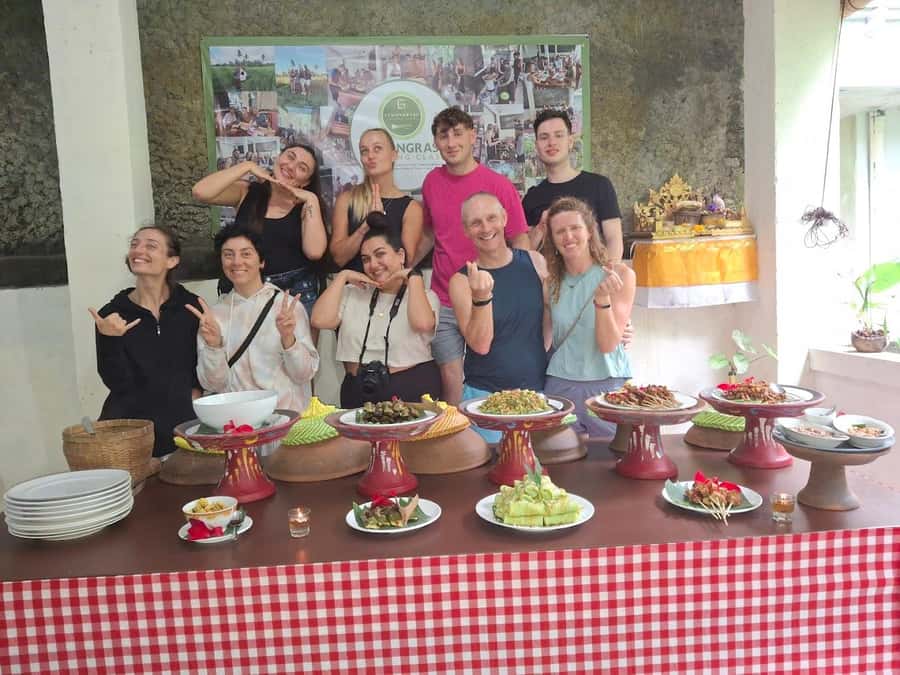
The exact menu can vary, but one session described a 10-dish meal. You may prepare several dishes and eat what you make at the end. Another useful touch is the recipe book provided in at least some sessions, giving you a better chance of repeating the food at home instead of relying on fading memories.
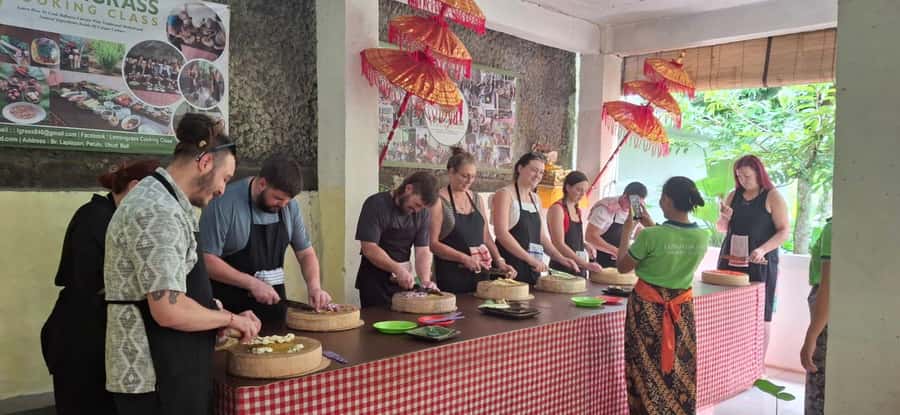
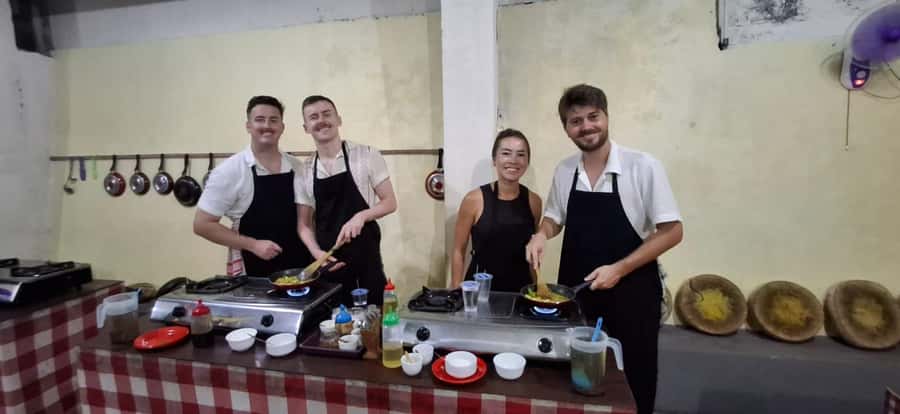
Expect an active class. You might chop, grind, mix, and handle ingredients under the guide’s direction. The small group limit helps here. With as few as two participants, you may get to try nearly every step. With a full group of six, you should still have a manageable class, but individual time at each task can be shorter.
A welcome drink may be served before the cooking begins. It is a small comfort after the market and rice-field visits, especially on a hot day. Personal expenses are not included, so budget separately for anything beyond the tour itself.
More rice terrace walks near Ubud:
- Ubud: Monkey Forest, Jungle Swing, Rice Terrace, and Water Temple
★ 5.0 · 7,160 reviews - Ubud: Waterfalls, Water Temple & Rice Terraces Private Tour
★ 5.0 · 5,484 reviews - Ubud: Full-Day Rice Terrace, Monkey Forest & Waterfall
★ 5.0 · 2,634 reviews - Full-Day Tour to Water Temples and UNESCO Rice Terraces in Bali
★ 5.0 · 2,539 reviews
What the five-hour schedule feels like
The full experience lasts about five hours, including transport between the different stops. It is best understood as a half-day cultural program with cooking at its center, not a quick kitchen lesson.
A typical morning flow is:
- Hotel pickup within the Ubud area
- Visit to a traditional market
- Tasting and explanation of local ingredients
- Walk and talk in a rice field
- Visit to a Balinese family home
- Explanation of architecture and family life
- Canang Sari offering activity
- Hands-on cooking class
- Shared meal made during the lesson
- Return transfer
The order and precise length of each part can change. The market and rice field are likely to feel brief compared with the cooking session, but that is a sensible balance. The class needs enough time for preparation, instruction, and eating.
The tour is conducted in English and is limited to six participants. That makes it a better choice than a large demonstration if you want to ask about ingredients, traditions, or cooking methods. It also means the group can feel more personal, particularly when the class takes place in a family home.
Pickup is included only in Ubud. If you stay in Sanur, Kuta, Nusa Dua, or another area, you need to arrange transport to the designated Ubud meeting point. Check this before booking, since the low advertised price is less attractive if you must add a long cross-island transfer.
Is $23 a good value?
At $23 per person, this offers strong value if you want more than a meal and a recipe lesson. The price includes hotel pickup within Ubud, the market visit, rice-field stop, cultural explanation, offering activity, cooking instruction, and the meal you prepare.
The key value comes from the range of experiences packed into five hours. You are not paying only for ingredients and kitchen time. You also receive an introduction to the Subak water system, a look at family architecture, and an explanation of Canang Sari.
The small group size makes the price even more appealing. A class capped at six gives you a better chance to participate, while the cultural stops prevent the morning from feeling like a standard restaurant workshop.
There are limits. Personal expenses are excluded, and pickup does not cover the wider Bali resort areas. Afternoon participants also lose the market visit, so the best value comes from a morning booking within Ubud.
Practical advice for a comfortable morning
Wear shoes that you can walk in comfortably. The rice-field section and market visit are not difficult hikes, but you will be on your feet and may encounter uneven ground.
Bring a hat, sunscreen, water, and a camera. The open rice fields can be sunny, and the market and family home offer different kinds of pictures. Ask before photographing people, stalls, or household areas.
Tell the operator about any food concerns before the class if the booking process allows it. The supplied details do not specify vegetarian, vegan, allergy, or religious-diet arrangements, so you should not assume a menu change is available.
The activity is listed as suitable for all ages, with children under 10 excluded. Because the day includes walking, food preparation, and cultural instruction, it suits older children, couples, friends, and solo participants who enjoy being involved rather than simply watching.
Free cancellation is available up to 24 hours before the activity for a full refund, and you can reserve now and pay later. Those policies help if your Ubud schedule is still changing, but they do not remove the need to verify your pickup location and start time.
Who should book this Ubud cooking class?
I would choose this tour if you want a first look at Balinese life that connects food with farming, religion, and family customs. It is especially good for visitors staying in Ubud who prefer a small group and want to prepare a full meal rather than watch a chef work alone.
It also suits anyone who wants a practical cultural introduction. The market makes ingredients easier to recognize, the rice-field stop explains the land behind the food, and the family home gives the cooking lesson a real setting.
I would think twice if you want a long, quiet rice-field walk, a highly specialized culinary course, or a full afternoon market visit. The afternoon option skips the market, and the five-hour schedule gives each part a reasonable but limited amount of time.
FAQ
How long does the Ubud cooking class and tour last?
The experience lasts five hours, including the market, rice field, Balinese home, offering activity, cooking class, and included transfers within the Ubud area.
Is hotel pickup included?
Yes, pickup is included for accommodations within Ubud. If you stay in Sanur, Kuta, Nusa Dua, or another area, you need to arrange your own transport to the designated meeting point in Ubud.
Does every class visit the traditional market?
No. The market visit is available with the morning class. Afternoon classes do not include the market because it is already closed.
What language is the tour conducted in?
The tour is conducted in English, including the market, rice-field, family-home, offering, and cooking explanations.
How many people are in the cooking class?
The activity is a small-group experience limited to six participants.
Can children join the experience?
The activity is suitable for most ages, but children under 10 are not permitted to participate.
Should you book it?
Book it if you want a well-priced morning that combines food, farming, and Balinese customs in one manageable outing. The strongest version is the morning class from a Ubud hotel, when you can visit the market, taste local ingredients, learn about Subak, make a Canang Sari, and finish with a hands-on meal.
Skip it if your priority is a market visit in the afternoon, a luxury cooking-school setting, or a class focused only on advanced technique. For most Ubud visitors, though, the modest price and broad cultural scope make this a practical way to understand what is on the plate and the life around it.
More Shopping Tours in Ubud
- Ubud Traditional Night Market Food Tour-All Inclusive
★ 4.4 · 95 reviews - Ubud Cooking Class with Optional Market Visit Pickup Included
★ 5.0 · 70 reviews - Balinese Cooking Class with Traditional Market Tour
★ 5.0 · 66 reviews - Ubud : Regular or Vegetarian cooking class with market visit
★ 4.8 · 57 reviews
More Market Visits in Ubud
- Balinese Ubud cooking school (9 Dish Cooking and Market Tour)
★ 5.0 · 540 reviews - Ubud: Balinese Cooking Class and Market Tour
★ 4.8 · 531 reviews - Balinese Cooking class with traditional morning market visit
★ 5.0 · 161 reviews - PRIVATE Ubud Market Tour & Balinese Cooking Class with Putu
★ 5.0 · 125 reviews
Just added around Ubud
- Authentic hike in the forest with lunch at the inhabitant★ 5.0 · 3 reviews
- Heaven Gate, Tirtagangga and Tukad Cepung Waterfall – All Inclusive★ 5.0 · 3 reviews
- Half Day Uluwatu Temple Sunset, Kecak Dance and Seafood Dinner★ 3.5 · 3 reviews
- Ubud: White Water Rafting with visit Ubud Monkey Forest★ 5.0 · 3 reviews
- East Bali and Lempuyang Temple Tour★ 5.0 · 3 reviews
- Ubud: Temple, Swing, Waterfall, Rice Terrace & Monkey Forest★ 5.0 · 3 reviews
- ️Bali All Inclusive Tour: Ubud – Tegalalang – Kintamani★ 5.0 · 3 reviews
- Blue Lagoon Snorkeling and Lunch with Tukad Cepung Waterfall★ 5.0 · 3 reviews
Rice Terrace Tours, compared.

Monkey Forest, Jungle Swing, Rice Terrace, and Water Temple
Read our review →
Waterfalls, Water Temple & Rice Terraces Private Tour
Read our review →
Full-Day Rice Terrace, Monkey Forest & Waterfall
Read our review →
Full-Day Tour to Water Temples and UNESCO Rice Terraces in Bali
Read our review →
Monkey Forest, Ceking Rice Terraces and More– Full Day
Read our review →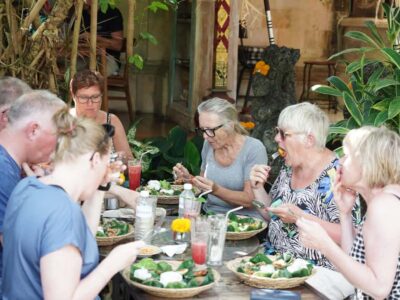
Rice Terraces & Villages Half-Day Fat Tire E-Bike Tour
Read our review →
Downhill Cycling with Volcano, Rice Terraces and Meal
Read our review →
Ubud Top Attractions: Waterfalls, Temples and Rice Terraces
Read our review →Browse the lists this tour appears in