
Reviewed · RICE TERRACE TOURS
Ubud: Rice Terraces & Villages Half-Day Fat Tire E-Bike Tour
The best part of this tour is not simply reaching a famous rice terrace. It is the way you get there, by fat tire e-bike through narrow country lanes, past working fields, village homes, and temples. The ride gives you a close look at Bali beyond Ubud’s central streets, while the electric motor takes much of the strain out of hills and warm weather.
I especially like the chance to learn about the subak irrigation system at Cekingan Rice Terrace, and the finish at a local restaurant with a Balinese meal. The main consideration is that you still need to ride a bicycle confidently, including a short section through Ubud traffic. This is an assisted bike tour, not a passive sightseeing trip.
In This Review
- Key points to know
- Why an e-bike is a smart way to see Ubud
- Pickup from Ubud and the ride to the countryside
- Jalan Cinta and the rice-field lanes
- Tegalalang village and a closer look at local life
- Temples, family compounds, and Balinese culture
- Cekingan Rice Terrace and the subak system
- Traffic, safety, and the real level of effort
- Coffee stops, swings, and route flexibility
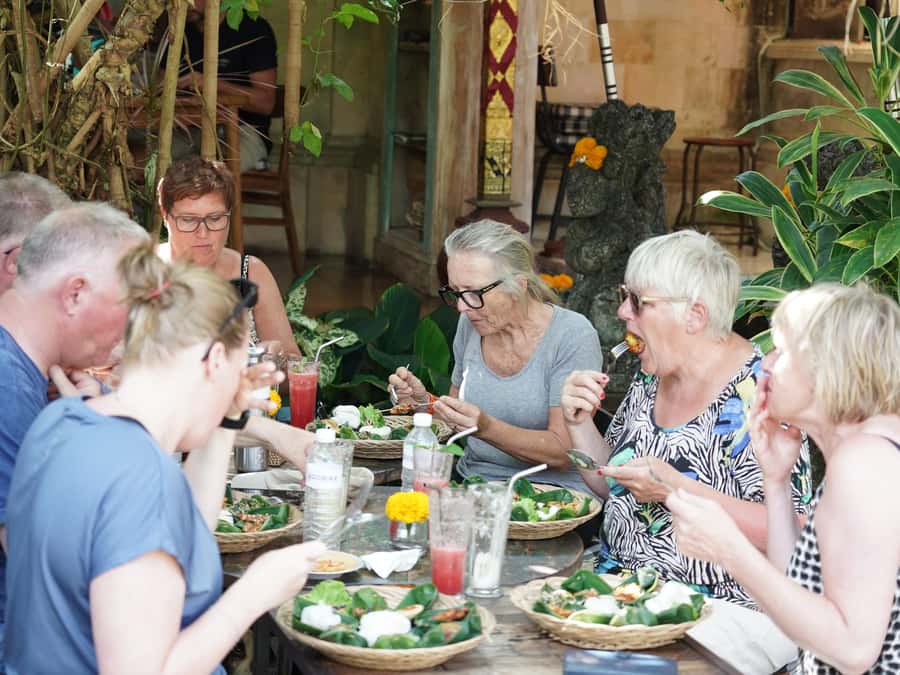
- Balinese lunch in Ubud
- Is $33 a good value for four hours?
- Who should book this Ubud e-bike tour?
- Should you book it?
- FAQ
- How long does the Ubud rice terrace e-bike tour last?
- Where does hotel pickup take place?
- How early should I wait for pickup?
- Is lunch included?
- Is an e-bike and helmet provided?
- What language does the guide speak?
- How many people are in the group?
- Can someone who cannot ride a bicycle join?
Key points to know
- Cekingan Rice Terrace: See the ancient subak irrigation system and learn how water supports both farming and village life.
- Back roads around Tegalalang: Ride through rice fields, small villages, and quieter lanes that cars cannot easily reach.
- Patient local guides: Guides including Wayan, Kadek, Made, and others are praised for safety, clear English, encouragement, and cultural insight.
- Easy electric assistance: The e-bikes handle much of the effort, though you still need basic cycling skills and balance.
- Traditional Balinese stops: Depending on the day, you may visit a temple, family compound, coffee and tea stop, or other village sites.
- Lunch included: A Balinese meal at a local restaurant in Ubud gives the four-hour outing a satisfying finish.
Why an e-bike is a smart way to see Ubud
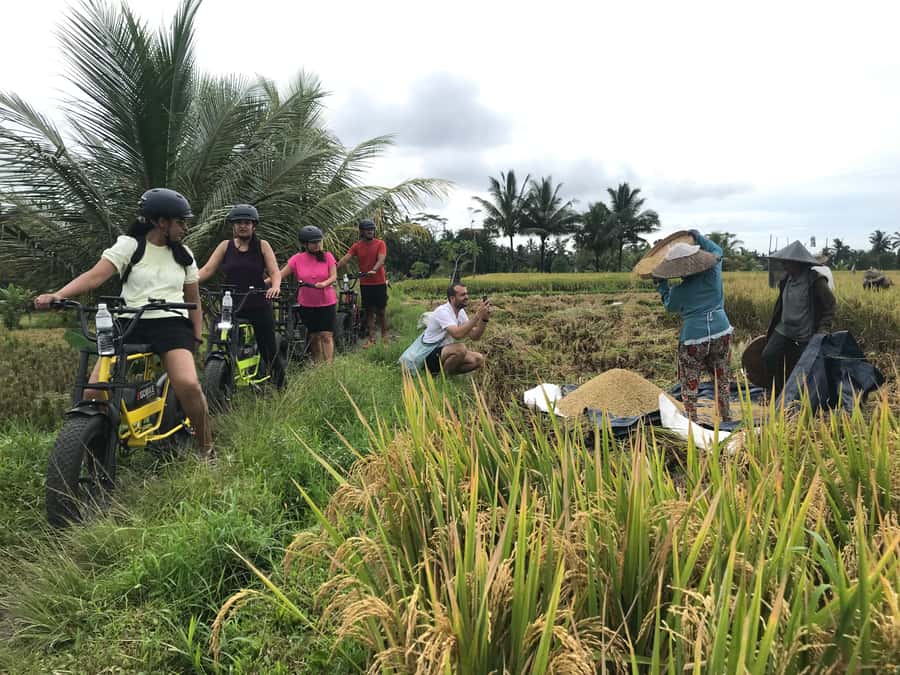
Ubud is easy to admire from a car, but a car keeps you behind glass and often leaves you staring at traffic. A bicycle gets you closer to the fields and homes, yet ordinary cycling can be hard work in Bali’s heat and on sloping roads.
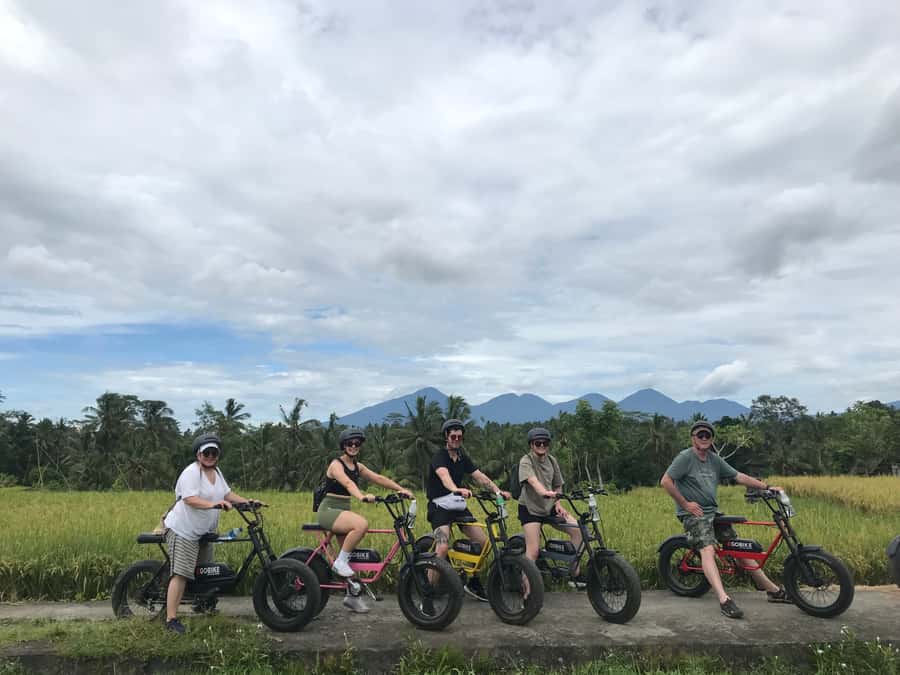
This tour uses well-maintained fat tire e-bikes with electric assistance. Several people who had not ridden for years found the bikes manageable after a short warm-up. One older group included riders with no e-bike experience, and the guide took time to build their confidence. The motor can do much of the work, but you still steer, brake, and balance the bike yourself.
I would not book this if you cannot ride a bicycle. The tour is also not suitable for people under 4 feet 9 inches, or 150 centimeters, or over 260 pounds, or 118 kilograms. Those limits relate to the bikes and safe handling.
The group is limited to 10 people. That matters here. You are riding on small roads and stopping for explanations, so a smaller group is easier to manage than a large cycling procession. Guides generally ride at the front and back, helping with traffic and keeping the group together.
More rice terrace walks near Ubud:
- Ubud: Monkey Forest, Jungle Swing, Rice Terrace, and Water Temple
★ 5.0 · 7,160 reviews - Ubud: Waterfalls, Water Temple & Rice Terraces Private Tour
★ 5.0 · 5,484 reviews - Ubud: Full-Day Rice Terrace, Monkey Forest & Waterfall
★ 5.0 · 2,634 reviews
Pickup from Ubud and the ride to the countryside
Hotel pickup and drop-off are included within 5 kilometers of central Ubud. You need to wait in your hotel lobby about an hour before the activity begins. That early pickup is worth noting when planning your morning, but it gives the operator time to reach the bike starting point and get everyone ready.
The transfer from Ubud takes about an hour according to the schedule. Exact timing can depend on your pickup location and road conditions. If your hotel sits outside the 5-kilometer pickup area, transport is not included, so check your location before booking.
At the starting point, you receive a helmet, water, and a fat tire e-bike. Raincoats are available if needed. You should still bring sunscreen, as the shade changes quickly once you leave the village roads and enter the open rice fields.
The initial instructions matter. Take a few minutes to test the controls, especially if this is your first e-bike ride. One rider found the controls took time to understand, but the guide stayed patient and encouraging. That is the right approach: start slowly, learn how much assistance you want, and do not feel pressured to race ahead.
Jalan Cinta and the rice-field lanes
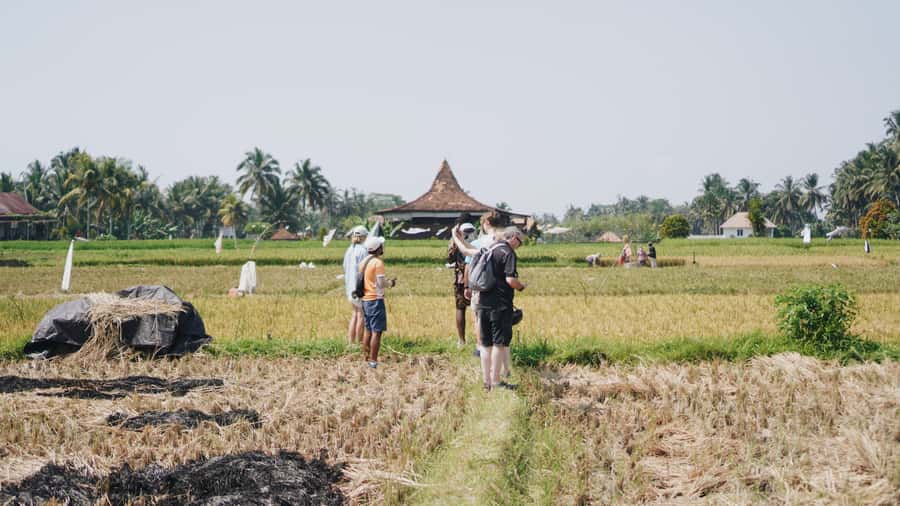
One early section takes you through the farm area of Jalan Cinta, which means Street of Love. Here, the appeal is the simple rhythm of rural Bali: narrow tracks, green fields, and rice growing toward harvest.
This is a good place to settle into the bike. You are not just stopping at a viewpoint and taking a quick photo. You are moving through the farming area itself, with time to see how much of the countryside is still shaped by agriculture.
Conditions will change with the season. The fields may look bright green, golden, or partly harvested. The supplied information describes ripening rice, but the exact appearance depends on when you visit. Paths can also feel more challenging after rain, so be ready for damp conditions and bring clothing that can handle a splash.
The electric motor is most useful here because it lets you look around instead of focusing only on the next hill. Still, keep your attention on the road. Small country lanes can be uneven, and you may share them with local traffic.
Tegalalang village and a closer look at local life
The stop at Tegalalang gives the ride a cultural purpose. You are not only looking at scenery. You learn about village life, local customs, and the way homes and family compounds function.
Several guides have taken time to explain traditional Balinese homes and family arrangements. This can be one of the most rewarding parts of the outing because it puts the rice fields into context. Farming, religion, family, and village organization are not separate subjects here. They connect in daily life.
The exact stops can vary. Some outings include a traditional family home, while others include a coffee and tea tasting or a temple visit. Some people choose to skip the coffee stop if they have already visited one elsewhere in Bali. A flexible guide may adjust the route to suit the group.
That flexibility is useful, but it also means you should not expect every group to follow an identical script. If you have a strong preference, such as spending more time at a family compound or avoiding a swing attraction, tell your guide early. One guide adjusted the outing for a smaller group and replaced a more common attraction with a quieter local stop.
More cycling days around Ubud:
- Electric Cycling Tour of Ubud with Free Hotel Transfer and Lunch
★ 5.0 · 1,397 reviews - Ubud: Downhill Cycling with Volcano, Rice Terraces and Meal
★ 5.0 · 536 reviews - Half-Day Ubud Electric Cycling Tour to Tirta Empul Water Temple
★ 5.0 · 315 reviews - Electric Bike Tour in Ubud
★ 5.0 · 281 reviews
Temples, family compounds, and Balinese culture
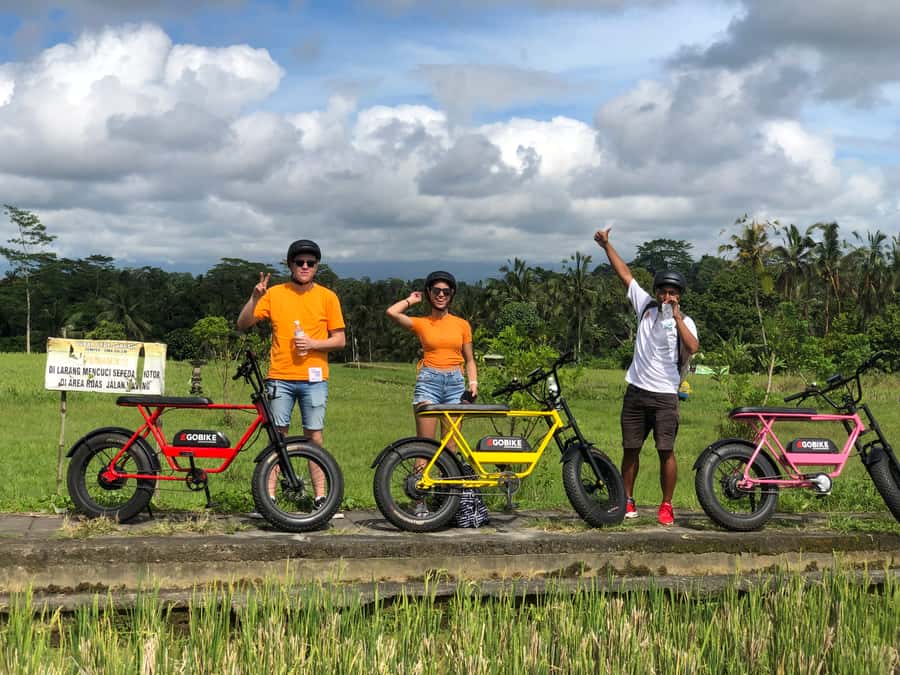
The tour includes stops at village temples along the way. A temple visit gives you a chance to ask practical questions about Balinese Hindu beliefs and the role of temples in community life.
Bring respectful clothing for cultural stops. The provided information does not specify a dress code, but temples in Bali commonly require appropriate cover for shoulders and knees. Since the tour details do not promise a particular temple on every departure, think of this as a possible part of the route rather than a guaranteed named attraction.
A traditional family compound can be more revealing than a polished cultural show. You might see how space is arranged for family members and daily routines, while your guide explains customs from personal experience. Guides such as Wayan, Kadek, Made, and others have been praised for sharing stories about their families, home villages, and Balinese traditions in clear English.
This is also where the small-group setup earns its keep. With no more than 10 people, you can ask questions without holding up a large crowd. If you are curious about ceremonies, farming, homes, or village responsibilities, this is the point to speak up.
Cekingan Rice Terrace and the subak system
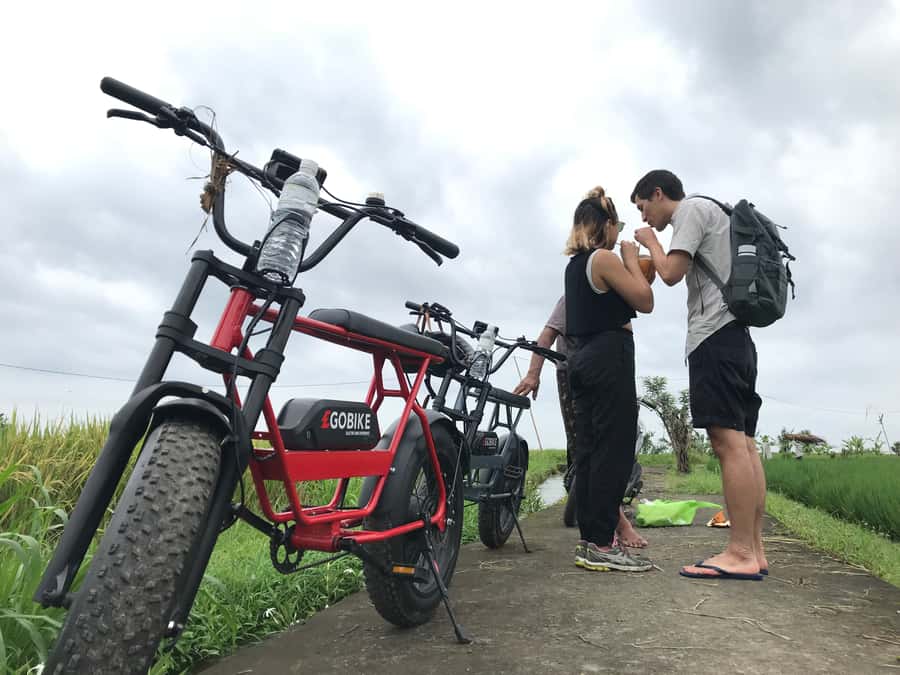
The main rice-terrace stop is Cekingan Rice Terrace. You get time for photos and an explanation of the subak irrigation system, an ancient cooperative method recognized as part of a UNESCO World Heritage site.
Subak is more than a network of channels carrying water downhill. It links farmers, temples, and village cooperation. The system helps create an artificial ecosystem in which water is shared across the terraces. That gives the view a human story: the curves and steps in the fields are not just pretty shapes, but the result of organized work and long-standing local practice.
You will want comfortable shoes for walking near the fields. The tour is mainly a cycling experience, but the rice terraces are best appreciated when you pause and look closely. Paths beside paddies may be narrow or slippery, especially in wet weather.
The word terrace can suggest a single postcard viewpoint. This stop is better understood as a working agricultural area. Farmers may be present, and conditions can be muddy or active rather than perfectly staged. That is part of its value, but it also means you should not expect a quiet photo stop every minute.
Traffic, safety, and the real level of effort
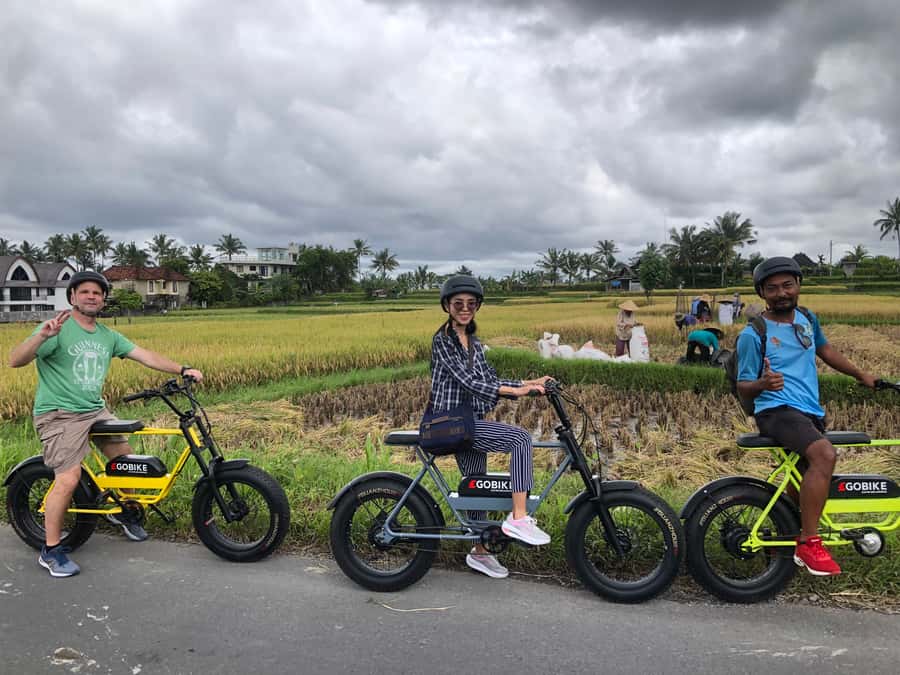
Most of the route is outside central Ubud, on quieter roads and small tracks. One account described about 10 minutes of riding through town, which felt more intimidating than the countryside. That brief urban stretch is the main section where you need extra attention.
The guides put strong emphasis on safety. Some groups have had two guides, one leading and one following behind. They give directions, watch the road, and help less confident riders. In one case, a guide swapped bikes after a flat tire, allowing the ride to continue without fuss.
Even with electric assistance, this is not effortless sightseeing. You may encounter hills, turns, uneven paths, and changing surfaces. The motor reduces the physical demand, but it does not remove the need to brake and steer carefully.
If you are an uncertain cyclist, tell the guide before setting off. A warm-up and a slower pace may be enough. The tour is a good fit for active seniors and families with older children who meet the height requirement, but it is not designed for someone who has never ridden a bike.
Coffee stops, swings, and route flexibility
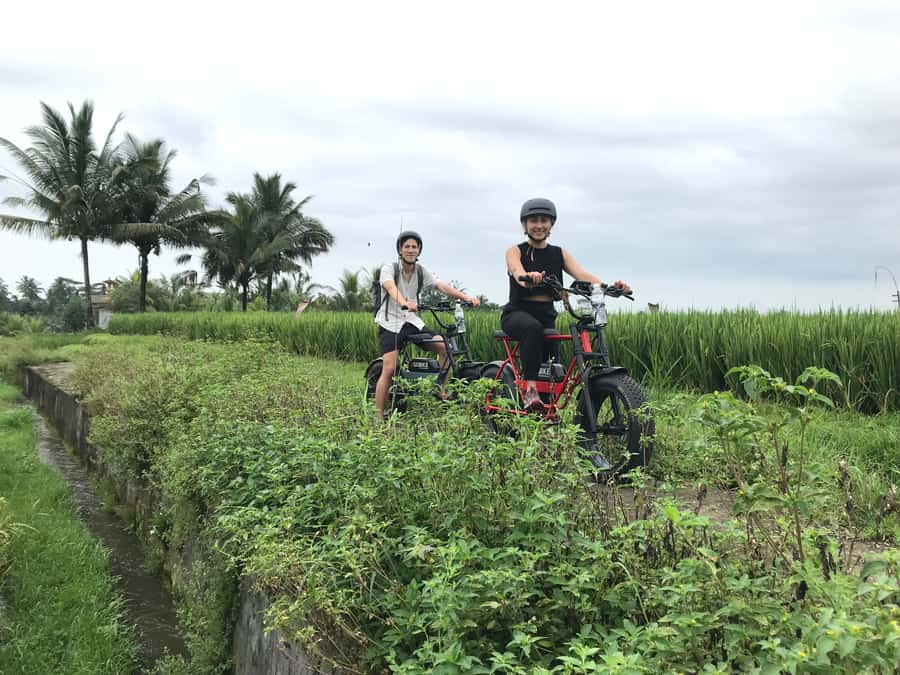
Some departures include a coffee plantation or coffee and tea tasting. This can be a pleasant break, especially if you want a quick look at another local product. It is not the central reason to book the tour, and the route can sometimes skip it when the group has already done a similar stop.
A swing experience may also appear as part of the day. Swings are common around Tegalalang, so this can add a playful photo opportunity, but it is not essential to the rice-field experience. Some people prefer to avoid the more familiar swing stops and use the time for a family home, a quieter viewpoint, or simply watching local activity.
The practical lesson is to ask your guide what is planned that day. The core elements are the e-bike ride, countryside, village and rice-terrace stops, cultural interpretation, and lunch. Extra stops can shift according to weather, group interest, and what you have already seen.
Some guides take photos and short videos during the outing. A few have assembled a short summary video afterward and supplied the original images. This is a thoughtful extra, but it is not listed as a formal inclusion, so treat it as a pleasant possibility rather than something guaranteed.
Balinese lunch in Ubud
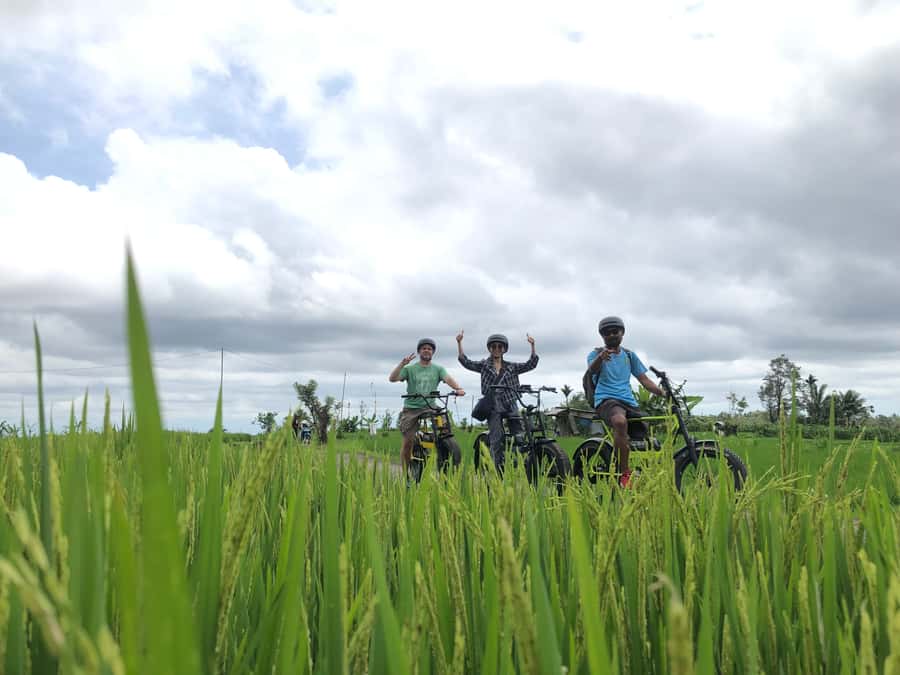
After roughly an hour and a half of riding and stops around Tegalalang, the tour returns to Ubud for a 45-minute lunch. The meal is included and takes place at a local restaurant or warung.
This final stop is more useful than it may sound. After cycling in the sun, you want food, water, and a chance to sit down. The lunch also gives you a taste of everyday Balinese cooking without requiring you to search for a restaurant afterward.
Many of the meals described are served in small, attractive local places that are easy to miss from the main road. The food receives some of the strongest praise, with dishes described as tasty and delicious. The exact menu is not specified, so do not book this expecting a particular dish.
Water is included, and two bottles were provided to at least one group. Bring extra water if you tend to drink heavily in hot weather, but the operator does provide water along the route. Lunch is a good point to ask your guide any final questions before the return to your hotel.
Is $33 a good value for four hours?
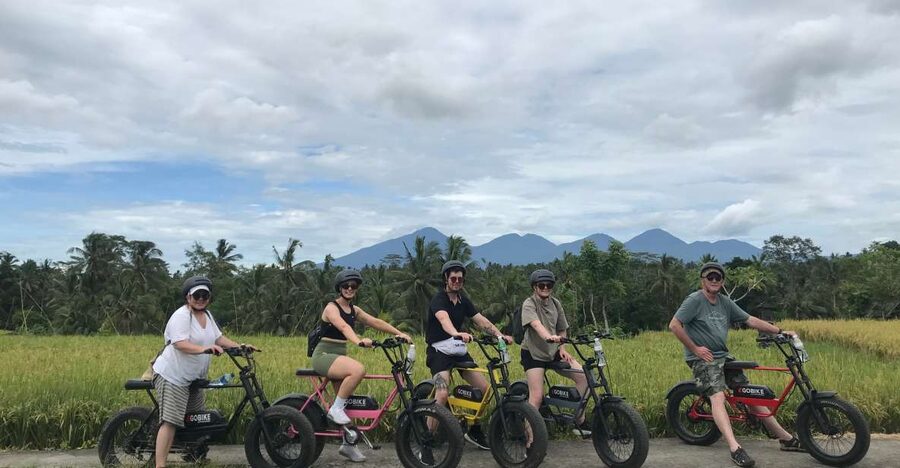
At $33 per person, this is a strong value if you want several Bali experiences in one compact outing. The price includes pickup and drop-off within the Ubud area, the e-bike, helmet, guide, water, raincoat when needed, and lunch.
You are paying for more than a bike rental. The transport, route planning, road support, cultural explanations, rice-terrace access, and meal would cost more to arrange separately. The small group, capped at 10, also gives the tour a personal feel without the price of a private guide.
The trade-off is time. Four hours is enough for a satisfying look at Ubud’s countryside, but not enough for a slow village visit or a long hike through the terraces. The pickup and transfer take a meaningful part of the day, so this works best when you want a focused half-day rather than an all-day rural tour.
Free cancellation is available up to 24 hours before departure, and you can reserve now and pay later. Starting times vary, so check availability when choosing a date. The tour is offered in English.
Who should book this Ubud e-bike tour?
I would choose this for a first or second day in Ubud, when you want to understand the area before spending more time in town. It gives you an overview of rice farming, village life, temples, and countryside roads in a single outing.
It suits:
- Couples looking for an active cultural experience
- Families with children who meet the height requirement
- Active older adults who want electric assistance
- Visitors with limited time in Ubud
- People who prefer local roads to a standard car excursion
- Anyone interested in Balinese homes, farming, and village customs
I would choose something else if you cannot ride a bike, dislike uneven roads, or want a completely relaxed vehicle tour. You should also consider the heat and the short ride through Ubud traffic. Sunscreen is essential, and a morning departure may be more comfortable than riding later in the day.
With a rating of 4.9 from 602 reviews, the strongest pattern is clear: people value the guides, the safety care, the easy bikes, the rice fields, and the lunch. The names vary by departure, but Wayan, Kadek, Made, and other guides are repeatedly singled out for patience, humor, clear English, and local stories.
Should you book it?
Book this tour if you want to see Ubud from the seat of a bicycle, not through a car window. The ride adds just enough activity to make the rice fields feel real, while the electric motor keeps the hills from turning into a workout.
The best reason to go is the combination of countryside access and local explanation. You get Cekingan’s subak system, Tegalalang’s village setting, possible temple and family-home visits, and a Balinese lunch for $33. Just confirm that your hotel is within 5 kilometers of Ubud center, arrive in the lobby early for pickup, bring sunscreen, and be honest about your cycling ability.
FAQ
How long does the Ubud rice terrace e-bike tour last?
The tour lasts four hours, including pickup arrangements, the cycling experience, stops, and lunch.
Where does hotel pickup take place?
Pickup is available from hotels within a 5-kilometer radius of central Ubud. Pickup outside that area is not included.
How early should I wait for pickup?
You should wait in your hotel lobby 60 minutes before the scheduled activity start time.
Is lunch included?
Yes. A Balinese lunch at a local restaurant in Ubud is included.
Is an e-bike and helmet provided?
Yes. The tour provides a fat tire e-bike and helmet. Water is also included, and a raincoat is available if necessary.
What language does the guide speak?
The live guide speaks English.
How many people are in the group?
The tour is a small-group experience with a maximum of 10 participants.
Can someone who cannot ride a bicycle join?
No. The tour is not suitable for people who cannot ride a bike. It also has a minimum height of 150 centimeters and a maximum weight of 118 kilograms.
More Half-Day in Ubud
- Half-Day Tour: Uluwatu Temple and Kecak Fire Dance Show
★ 5.0 · 63 reviews - Half-Day Electric Fat Bike Tour of Ubud
★ 5.0 · 51 reviews - Ubud: Half-Day Tegallalang Electric Cycling Tour
★ 4.9 · 24 reviews - Ubud: Private Half-Day Tour with Rice Terrace & Waterfall
★ 5.0 · 23 reviews
More E-Bikes in Ubud
- Ubud eBikes Tour to Tegallalang Rice Terrace
★ 5.0 · 507 reviews - Ubud: E-Bike Tour with Rice Terrace and Village Visit
★ 4.9 · 71 reviews - E-Bike: Ubud Rice Terraces & Traditional Villages Cycling
★ 4.6 · 37 reviews - Explore Ubud with Electric Bike
★ 5.0 · 27 reviews
Just added around Ubud
- Authentic hike in the forest with lunch at the inhabitant★ 5.0 · 3 reviews
- Heaven Gate, Tirtagangga and Tukad Cepung Waterfall – All Inclusive★ 5.0 · 3 reviews
- Half Day Uluwatu Temple Sunset, Kecak Dance and Seafood Dinner★ 3.5 · 3 reviews
- Ubud: White Water Rafting with visit Ubud Monkey Forest★ 5.0 · 3 reviews
- East Bali and Lempuyang Temple Tour★ 5.0 · 3 reviews
- Ubud: Temple, Swing, Waterfall, Rice Terrace & Monkey Forest★ 5.0 · 3 reviews
- ️Bali All Inclusive Tour: Ubud – Tegalalang – Kintamani★ 5.0 · 3 reviews
- Blue Lagoon Snorkeling and Lunch with Tukad Cepung Waterfall★ 5.0 · 3 reviews
Rice Terrace Tours, compared.
Monkey Forest, Jungle Swing, Rice Terrace, and Water Temple
Read our review →
Waterfalls, Water Temple & Rice Terraces Private Tour
Read our review →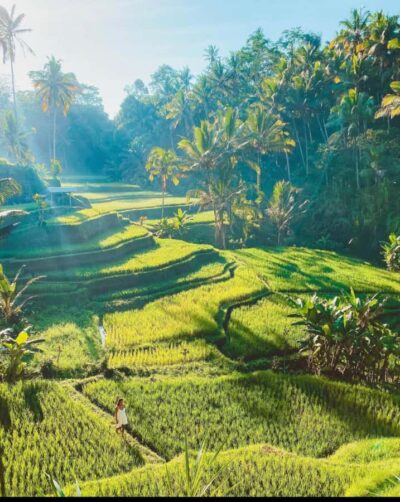
Full-Day Rice Terrace, Monkey Forest & Waterfall
Read our review →
Full-Day Tour to Water Temples and UNESCO Rice Terraces in Bali
Read our review →
Monkey Forest, Ceking Rice Terraces and More– Full Day
Read our review →
Downhill Cycling with Volcano, Rice Terraces and Meal
Read our review →
Ubud Top Attractions: Waterfalls, Temples and Rice Terraces
Read our review →
Bali/Ubud: Swing, Zipline & SkyBike Rice Terrace Adventure
Read our review →Browse the lists this tour appears in