
Reviewed · BALINESE COOKING CLASSES
The Authentic Balinese Cooking Experience
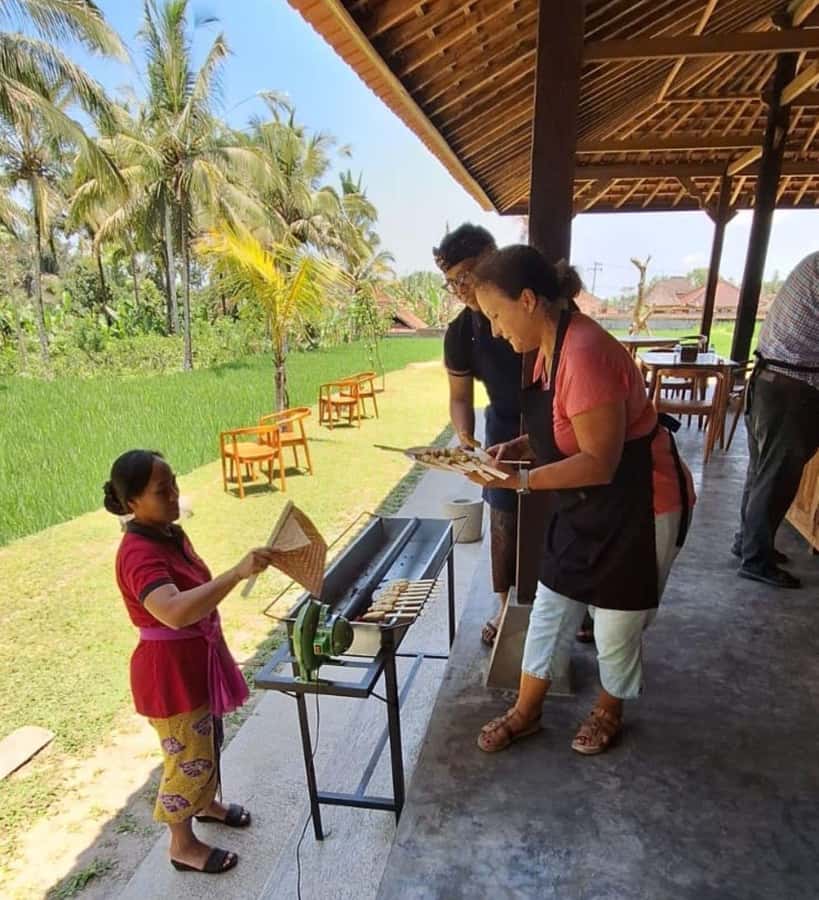
The best part of this experience is that the cooking starts before you reach the kitchen. You walk through a traditional Balinese house, see how family space and religious customs fit together, then pass farms and rice fields before preparing a full meal. I like the farm stop for its simple lesson in local plants, and I like that you eat food you made yourself beside the fields. The main thing to consider is that each cooking station is shared by two people, so you will not have a fully private work space.
At $33 per person, this is a strong value if you want more than a standard cooking class. You get Ubud-area pickup and drop-off, a house visit, farm walk, fruit tasting, equipment, recipes, water, and a meal. Allow four hours, and remember that soft drinks and beer cost extra.
In This Review
- Key points
- A Balinese cooking class that begins at home
- Walking from the house to the rice fields
- Young coconut first, then a full cooking session
- What the two-person stations mean
- Eating your own food beside the fields
- Why the cultural side adds value
- Pickup, timing, and practical limits
- Who will enjoy this experience most
- Should you book The Authentic Balinese Cooking Experience?
- FAQ
- How long does The Authentic Balinese Cooking Experience last?
- How much does the experience cost?
- Is hotel pickup included?
- How many people can join the group?
- Is the cooking station private?
- What food will I prepare?
- What languages does the instructor speak?
- What is included in the price?
Key points
- The class begins with culture, not chopping: Visit a traditional Balinese house and learn about its layout and customs.
- Walk through everyday Bali: The route to the kitchen passes local activity, farms, plants, fruit trees, and rice fields.
- Cook a substantial menu: Prepare five types of main dishes plus one dessert, then eat your own creations.
- A small group keeps it personal: No more than eight people attend, with one cooking station shared by two people.
- The meal comes with a view: Lunch or dinner is served beside green rice fields, with a possible sunset setting in the afternoon.
- Ubud pickup is included: Hotel pickup and drop-off are provided within the Ubud area.
A Balinese cooking class that begins at home
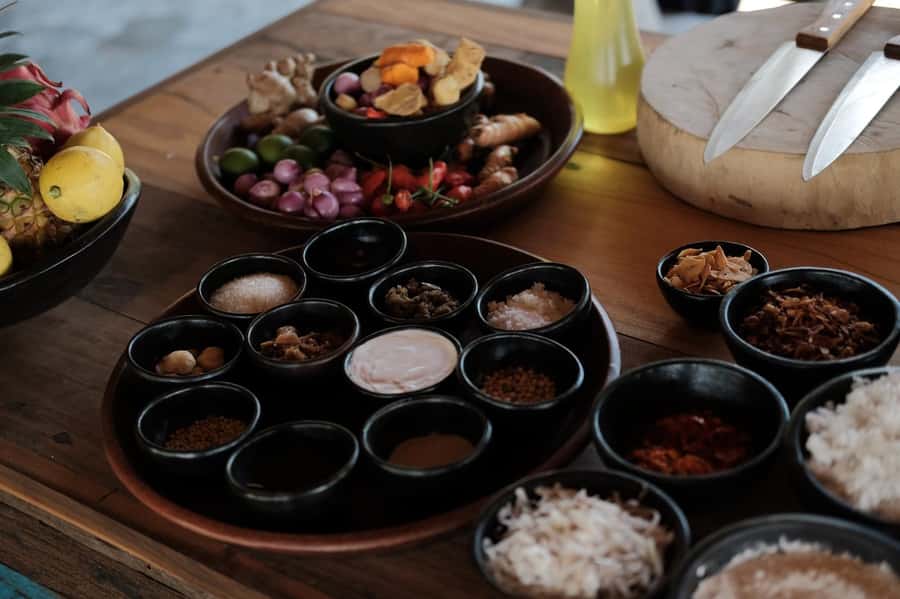
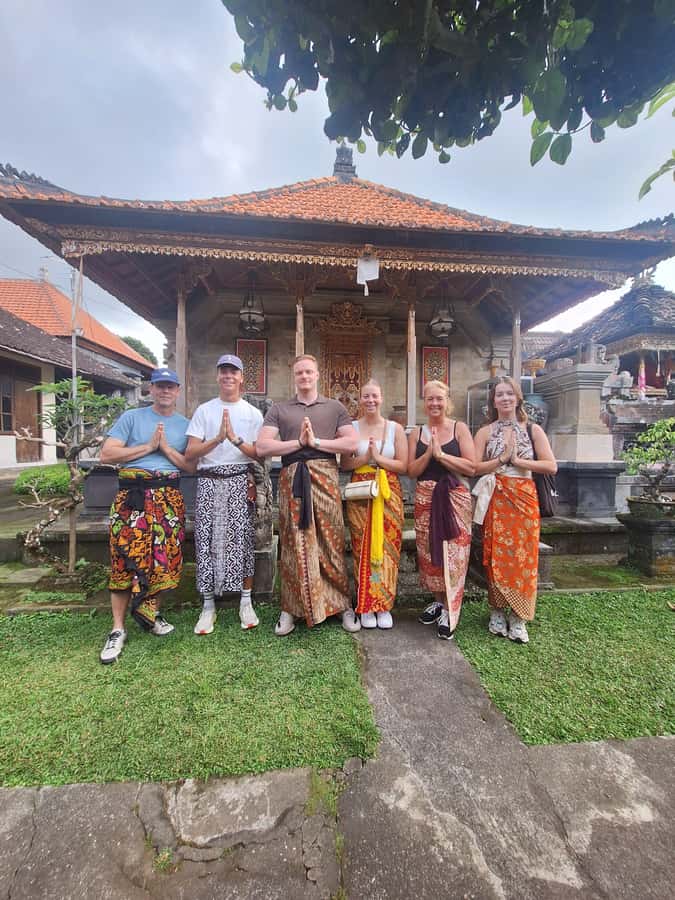
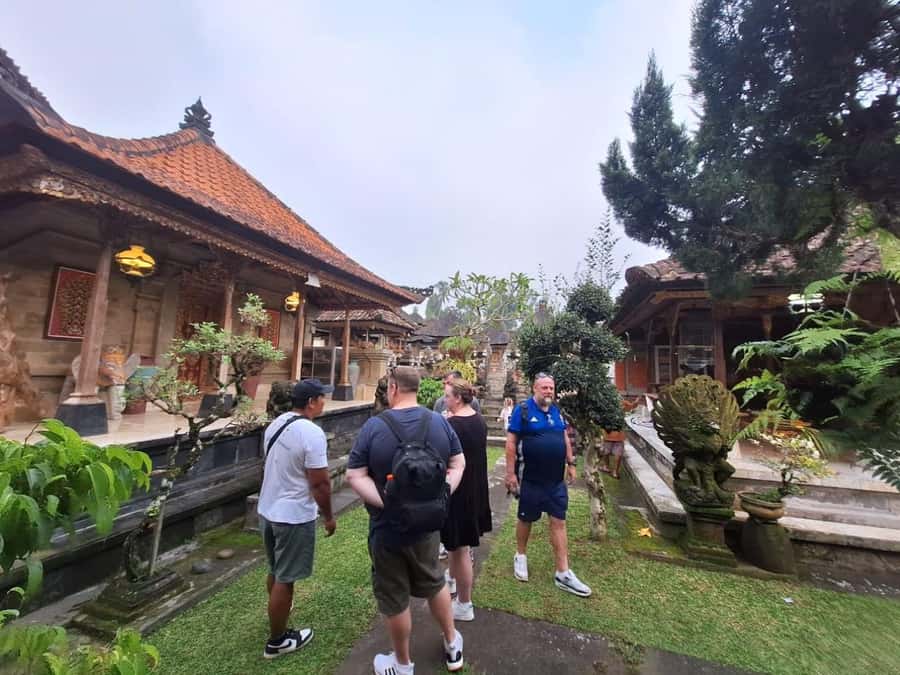
Many cooking classes rush you straight to a workbench. This one takes a slower route. Your first stop is a traditional Balinese house, where you learn how the home is arranged and hear about local cultural customs. That matters because Balinese food makes more sense when you see how cooking, family life, and religious practice sit close together.
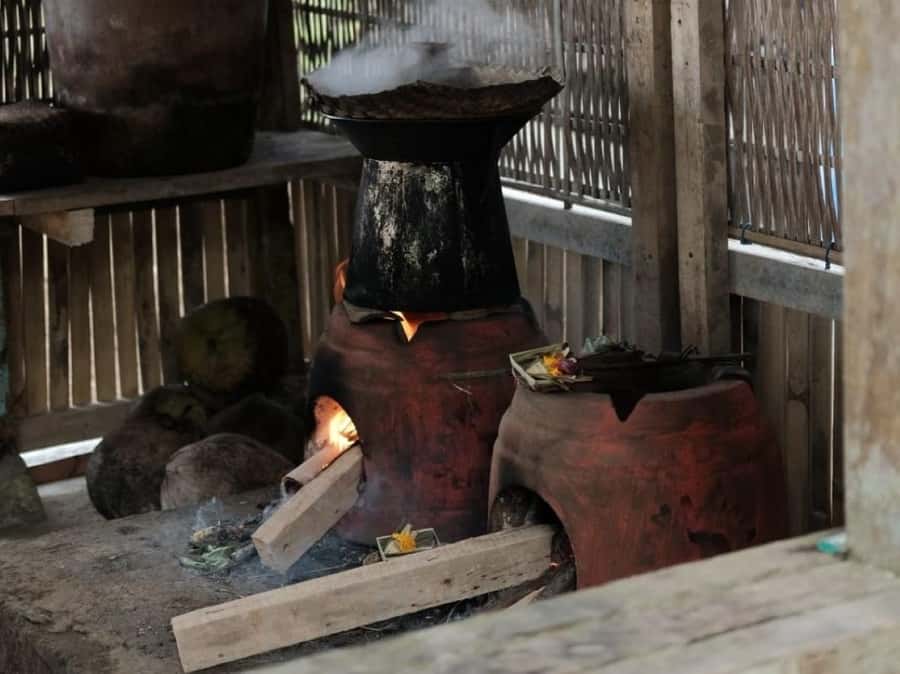
The visit is hosted in a private home, giving the experience a more personal feel than a quick stop at a museum or staged cultural attraction. You may see family temples as part of the visit, an especially meaningful detail noted by the people who enjoyed this experience. The focus is not on putting on a show. It is on explaining how a Balinese home works.
You should expect an active visit rather than a long formal talk. The available information does not give a fixed list of rooms or household features, so the exact route can vary. Still, the house visit gives you useful context before you handle the ingredients yourself.
More Balinese cooking classes:
- Ubud Cooking Class Bali with Balinese Chef
★ 5.0 · 1,609 reviews - Ubud: Cooking Class with Transfers and Optional Market Visit
★ 4.9 · 824 reviews - PRIVATE Authentic Balinese Cooking Class in Ubud at Putu’s Home
★ 5.0 · 644 reviews
Walking from the house to the rice fields
After the house tour, you walk to the cooking site through the countryside. The route includes views of rice fields and glimpses of local daily life. This short walk is one of the experience’s best touches because it connects the food on your plate with the place where people live and work.
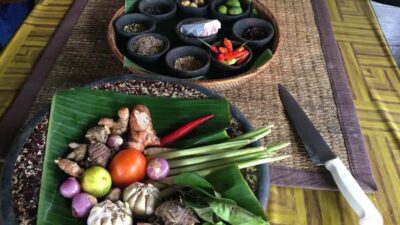
You also stop at a farm to learn about local plants. This is not just a photo stop. Balinese cooking depends on fresh herbs, roots, spices, and leaves, and seeing the plants in the ground helps you understand why the flavors are so layered. You can also taste local fruit and take part in harvesting it.
The information does not specify the farm crops or fruit available on the day. That is worth keeping in mind if you have a particular ingredient in mind. The selection will depend on what is growing and ready to eat.
Wear shoes that are comfortable for walking. The activity includes a house visit, a farm stop, and a walk through the rice-field area before the cooking begins. A camera is recommended, but leave pets at home.
Young coconut first, then a full cooking session
At the cooking place, you receive a welcome drink of young coconut. It is a fitting start in Bali’s warm climate, and it gives you a brief pause before the hands-on work begins.
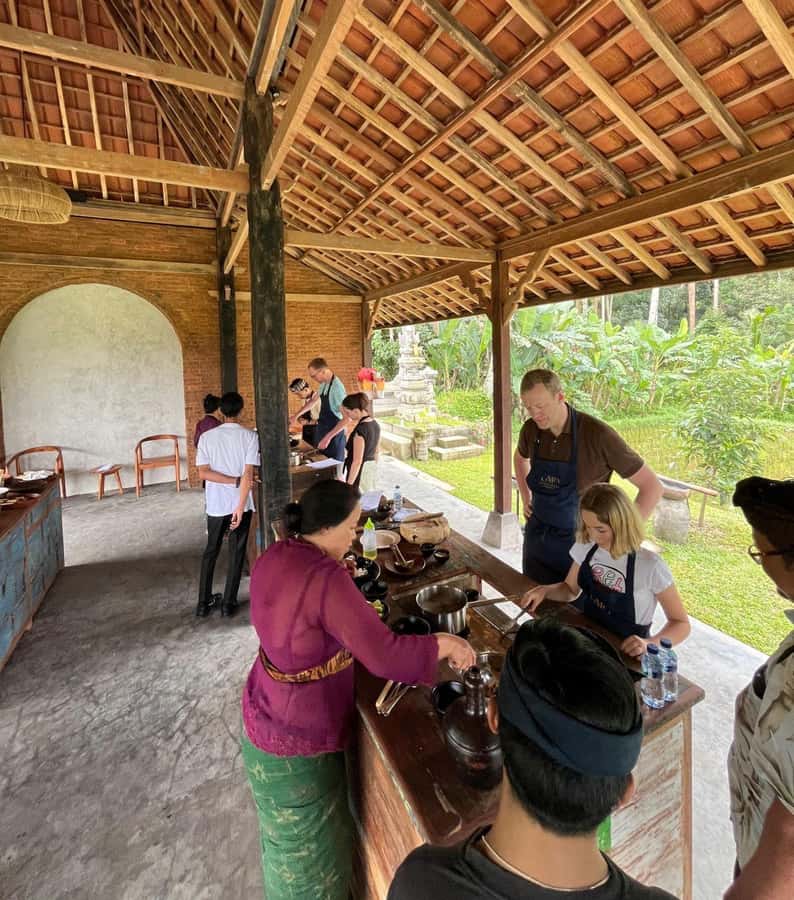
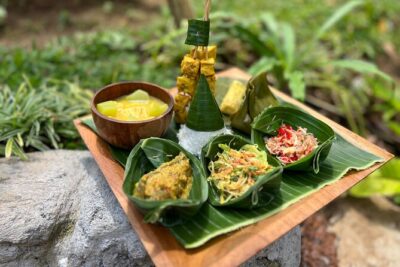
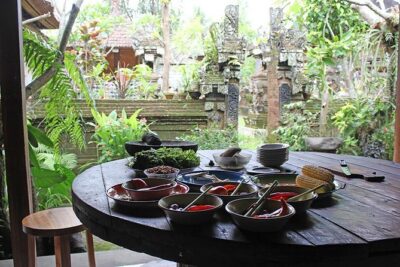
The class prepares five main dishes and one dessert. The exact dish names are not provided, but the lesson centers on traditional Balinese cooking, local spices, and the balance of flavors. You chop, grind, and simmer under the direction of an English or Indonesian-speaking Balinese instructor.
The instructor guides you through each stage and explains the role of the ingredients. You are not simply watching a demonstration while someone else does the difficult work. You prepare the food yourself and season it according to your taste.
That last point is useful for several reasons. If you prefer stronger spice, you have some control over the final result. If you are cautious with heat, you can adjust your portion. It also means the meal feels like your own work rather than a plate handed to you at the end.
Cooking equipment is supplied, as are recipes and mineral water. The recipe book gives the experience value after you return home, although the available details do not say how many recipes it contains or whether all six dishes appear in it.
What the two-person stations mean
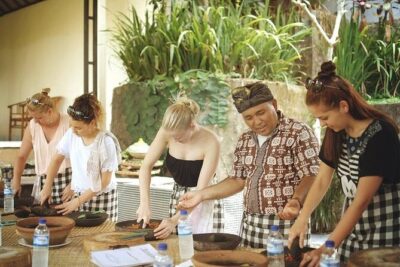
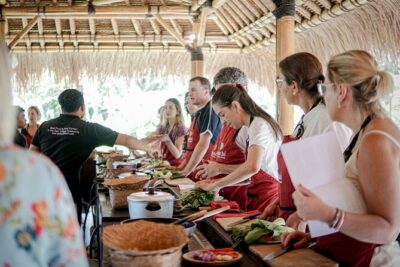
The group is limited to eight people, which is small enough for the instructor to offer guidance around the room. However, each cooking station is shared by two people. If you are traveling with a partner or friend, this arrangement should be easy. You can divide tasks, compare seasoning, and work together.
If you want to control every chop and stir yourself, sharing may feel less ideal. This is not a private class for one person or one booking. The small-group format keeps the cost down and allows a social atmosphere, but it also means you should expect some cooperation at the work station.
The format suits couples, friends, and solo visitors who do not mind meeting other people. It is also a good choice for someone who says they do not enjoy cooking but wants a cultural activity with plenty of guidance. The class is practical without requiring advanced kitchen skills.
A completely different day out, same corner of Ubud:
- All-Inclusive Ubud Private Tour
★ 5.0 · 14,344 reviews - Best of Ubud Full-Day Tour with Jungle Swing
★ 5.0 · 8,571 reviews - Ubud: Monkey Forest, Jungle Swing, Rice Terrace, and Water Temple
★ 5.0 · 7,160 reviews - Ubud: Waterfalls, Water Temple & Rice Terraces Private Tour
★ 5.0 · 5,484 reviews
Eating your own food beside the fields
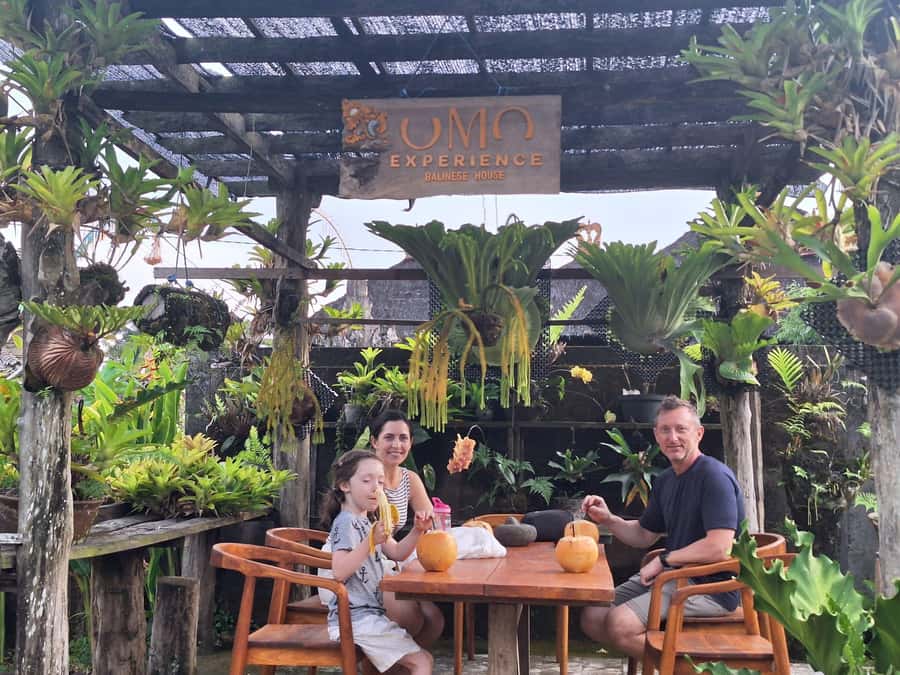
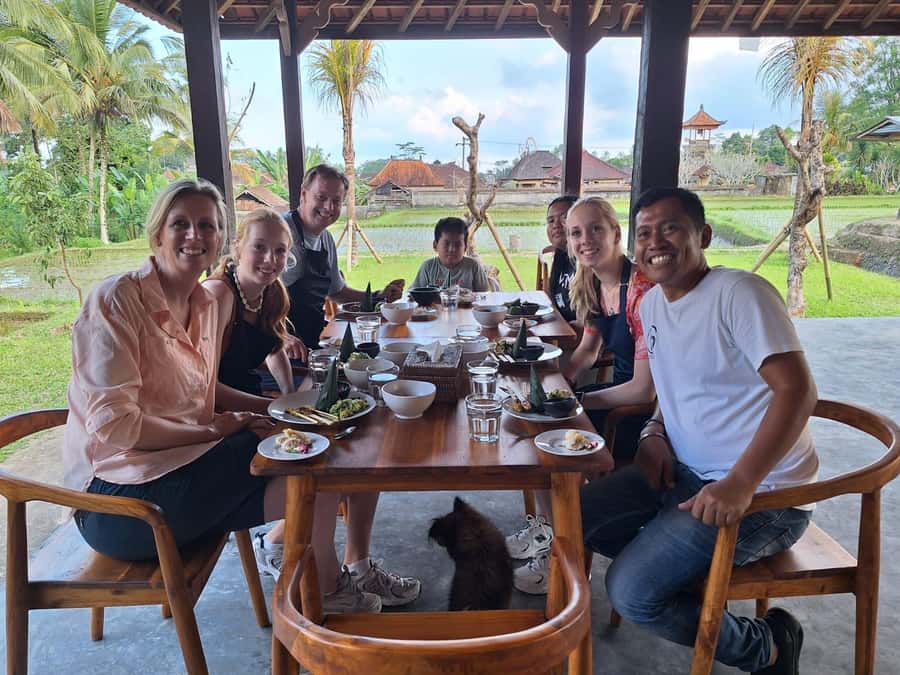
After roughly two hours of cooking, you sit down to eat the meal you prepared. The setting is beside green rice fields, and an afternoon start may finish with sunset views. The scenery adds something real to the meal, rather than serving as a backdrop for a short photo stop.
I like this part because it completes the lesson. You have seen ingredients growing, learned where they fit in Balinese food, and then tasted the finished dishes. The setting also slows the pace after the work in the kitchen.
The meal you cook is included in the price. Soft drinks and beer are not included, but you can buy them if you want one. Young coconut and mineral water are provided.
Do not expect a restaurant menu or a choice of many separate dishes. You prepare the set menu offered for the class, with the ability to season your food to suit your taste. That is a strength for hands-on learning, but less suitable if you want a fully flexible meal.
Why the cultural side adds value
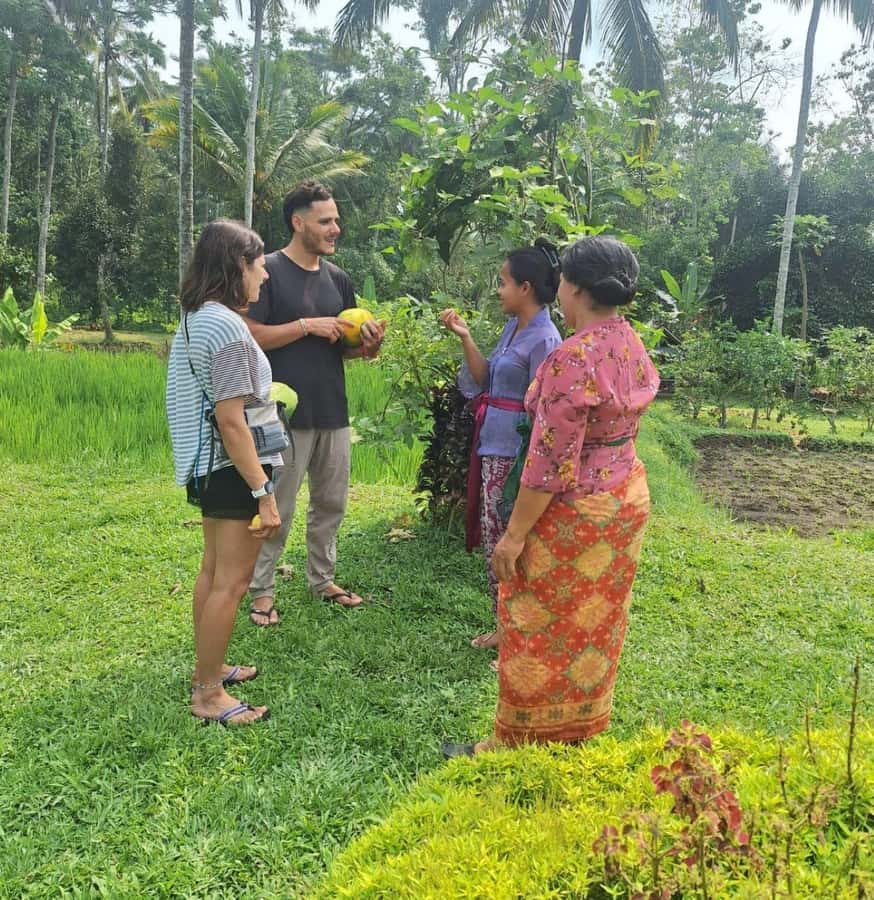
At $33, the class gives you much more than four hours at a stove. The price includes transport within Ubud, a house visit, farm tour, fruit harvesting, welcome drink, equipment, recipe book, water, and the meal. If you booked separate transport and paid for a meal elsewhere, the difference would reduce the value of a basic cooking lesson.
The cultural visits are especially useful for your first days in Bali. Food can feel disconnected from place when you only order it in a restaurant. Here, the house, plants, farm, walk, and rice fields give you a clearer picture of how local ingredients and daily routines relate to the dishes.
The experience also received a perfect 5.0 rating from four bookings, with praise focused on the warm welcome, the home and garden visit, the setting, and the helpful cooking team. One particularly useful point is that a couple who normally had no interest in cooking still enjoyed the class. That suggests the activity works as a cultural outing, not only as a lesson for serious cooks.
Pickup, timing, and practical limits
The four-hour duration makes this manageable within an Ubud schedule. Hotel pickup and drop-off are included for the Ubud area, which removes the need to arrange a taxi to a rural cooking site. If you are staying outside Ubud, confirm transport arrangements before booking because the included pickup is specifically for Ubud.
Starting times vary, so check availability for the day you want. An afternoon session may offer the chance to eat as the sun sets, though the exact sunset conditions are not guaranteed. A morning or midday session may suit you better if you want to keep the evening free.
You should bring a camera. Wear something comfortable for walking and cooking, though no special clothing or equipment is listed as required. Pets are not allowed, and the activity is not suitable for wheelchair users.
The experience can be canceled up to 24 hours in advance for a full refund. You can also reserve now and pay later, which helps if your Ubud plans are still shifting.
Who will enjoy this experience most
I would recommend it to you if you want a small-group activity with real contact with local life. It suits people who enjoy food but also want to see a home, garden, farm, and countryside setting. Couples are a natural fit because the shared station gives two people a task to do together.
It is also a good option for families with older children who can take part in chopping and mixing, though the supplied information does not specify an age minimum. Solo participants can join, but remember that the group may pair you at a shared station.
You may want a different activity if you need wheelchair access, dislike group cooking, or want a menu with named dishes and many alternatives. The five-dish format is fixed, and the station sharing is part of the setup.
Should you book The Authentic Balinese Cooking Experience?
Book it if you want a four-hour cultural outing that uses food as the main thread. The traditional house, family temples, farm walk, fruit tasting, and rice-field meal make this broader than a typical cooking lesson, while the $33 price includes the key costs.
I would be especially keen to book this early in an Ubud stay. You will learn about ingredients and customs, get an easy introduction to the countryside, and leave with recipes you can use later. Just confirm that you are comfortable walking, sharing a cooking station, and traveling to the class from an Ubud-area hotel.
FAQ
How long does The Authentic Balinese Cooking Experience last?
The experience lasts four hours.
How much does the experience cost?
The price is $33 per person.
Is hotel pickup included?
Hotel pickup and drop-off are included for hotels in the Ubud area.
How many people can join the group?
The group has a maximum of eight participants.
Is the cooking station private?
No. Each cooking station is shared by two people.
What food will I prepare?
You will prepare five types of main dishes and one type of dessert, then eat the food you cook.
What languages does the instructor speak?
Instruction is available in English and Indonesian.
What is included in the price?
The price includes Ubud-area hotel pickup and drop-off, a traditional Balinese house visit, farm tour, local fruit harvesting, young coconut welcome drink, cooking equipment, recipe book, mineral water, and the meal you prepare. Soft drinks and beer are available for purchase but are not included.
Just added around Ubud
- Authentic hike in the forest with lunch at the inhabitant★ 5.0 · 3 reviews
- Heaven Gate, Tirtagangga and Tukad Cepung Waterfall – All Inclusive★ 5.0 · 3 reviews
- Half Day Uluwatu Temple Sunset, Kecak Dance and Seafood Dinner★ 3.5 · 3 reviews
- Ubud: White Water Rafting with visit Ubud Monkey Forest★ 5.0 · 3 reviews
- ️Bali All Inclusive Tour: Ubud – Tegalalang – Kintamani★ 5.0 · 3 reviews
- East Bali and Lempuyang Temple Tour★ 5.0 · 3 reviews
- Ubud: Temple, Swing, Waterfall, Rice Terrace & Monkey Forest★ 5.0 · 3 reviews
- Blue Lagoon Snorkeling and Lunch with Tukad Cepung Waterfall★ 5.0 · 3 reviews
Balinese Cooking Classes, compared.
Cooking Class with Transfers and Optional Market Visit
Read our review →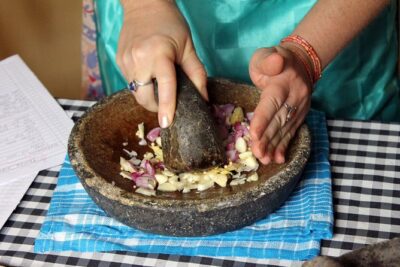
PRIVATE Authentic Balinese Cooking Class in Ubud at Putu’s Home
Read our review →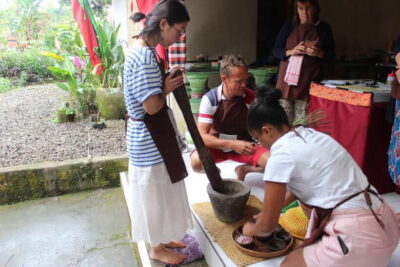
PRIVATE Balinese Cooking Class in Ubud with Dewa with Transfers
Read our review →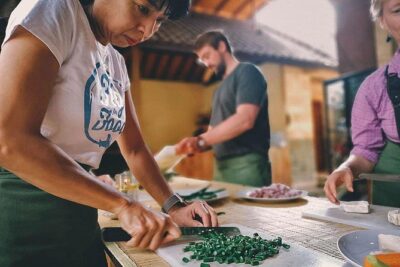
Balinese Cooking class with traditional morning market visit
Read our review →Browse the lists this tour appears in