
Reviewed · BALINESE COOKING CLASSES
Exclusive Authentic Balinese Cooking Class at Family home
The best part of this six-hour experience is that the cooking happens in a Balinese family compound, not a polished restaurant classroom. You visit Payangan Market, meet the family, see an open kitchen, and prepare a full meal using chopping blocks, stone mortars, and traditional methods.
I like the local market visit and the fact that you do nearly every step yourself. I also like the personal touch from chef Nyoman Mahendra, whose market explanations, home tour, and cooking guidance turn a meal into a useful lesson about Balinese life.
The main drawback is the location. Payangan is outside central Ubud, and the schedule can take most of your day. Pickup is free only in the Ubud and Payangan areas, while longer transfers cost extra. You should also note the non-refundable booking policy.
In This Review
- Key things to know before booking
- A family kitchen instead of a tourist show
- Payangan Market: start with local ingredients
- Entering the compound and meeting the family
- The dishes you prepare by hand
- Why the hands-on format works
- The meal is the payoff
- Price, transport, and the real value
- Who should book this experience
- Practical ways to get more from the day
- Should you book the Balinese family cooking class?
- FAQ
- Where does the Balinese cooking class take place?
- How long does the experience last?
- Is hotel pickup included?
- What food will I prepare?
- Can I request a vegetarian menu?
- Do I need previous cooking experience?
- What is the maximum group size?
- What happens if the weather is poor?
Key things to know before booking
- Shop at Payangan Market: See the produce, spices, snacks, and local foods used in everyday Balinese cooking.
- Cook five traditional dishes: Prepare items such as jukut urab, sate lilit, tahu mesanten, chayote soup, and dadar gulung.
- Use old-school techniques: Chop spice mixtures on a wooden block and grind them in a stone mortar.
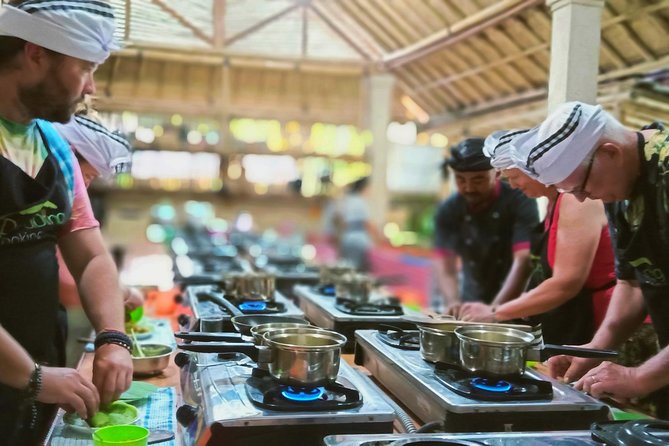
- Work at your own station: Cooking tools, ingredients, and kitchen equipment are supplied for each participant.
- Eat what you make: Morning sessions end with lunch, while afternoon sessions finish with dinner.
- Choose a private format: Your booking is limited to your own group, with one to 12 participants.
A family kitchen instead of a tourist show
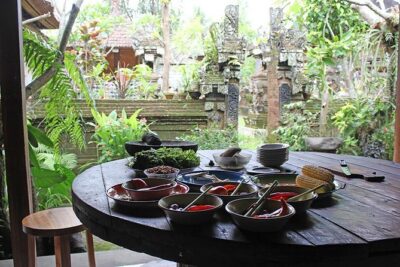
This class gives you a close look at Balinese food in the place where it belongs: a family home. The kitchen is open-air and set within a traditional compound, with gardens, family spaces, and the daily details that a restaurant cannot show you.
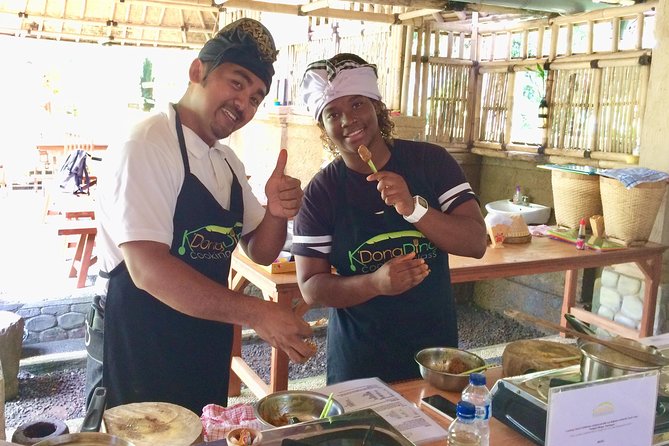
Chef Nyoman Mahendra is named as the main instructor, and one-on-one sessions have also been led by Wayan. The teaching style is hands-on. You are not simply watching a cook demonstrate a dish while you take notes. You chop, pound, grind, mix, shape, grill, and cook the food yourself.
That matters because Balinese cuisine is built around preparation. The spice paste, often called a base in Balinese cooking, gives many dishes their character. You learn two basic approaches: chopping ingredients finely on a wooden chopping block and grinding them in a stone mortar before cooking the mixture.
This can be physical work, especially when you are grinding a firm mixture by hand. That is part of the point. You feel how the ingredients change, and you understand why Balinese cooks treat the spice paste as a central part of the meal rather than a minor seasoning.
More Balinese cooking classes:
- Ubud Cooking Class Bali with Balinese Chef
★ 5.0 · 1,609 reviews - Ubud: Cooking Class with Transfers and Optional Market Visit
★ 4.9 · 824 reviews - PRIVATE Authentic Balinese Cooking Class in Ubud at Putu’s Home
★ 5.0 · 644 reviews
Payangan Market: start with local ingredients
The market visit begins the experience. The meeting point is Payangan Traditional Farmer Market on Unnamed Road in Melinggih, Payangan. Morning classes visit the traditional morning market, while afternoon classes use a night market.
You can expect to see vegetables, spices, snacks, and other food sold for local use. The guide explains ingredients that may be unfamiliar to you, which helps later when you are asked to prepare them in the kitchen. A market walk is especially useful here because you connect the raw ingredients with the finished dishes.
The market also gives you a more ordinary view of the area than a food stop designed only for visitors. One account of the experience included a look at freshly cooked suckling pig being sold at a local restaurant. That is not presented as a separate tasting stop, so do not book this expecting a food crawl. The value is in seeing what is available and learning how the ingredients fit into Balinese meals.
If you want the market portion, choose your timing carefully. The morning option may suit you if you prefer fresh produce and daytime activity. The afternoon option gives you a night-market setting and ends with dinner. Ask the operator to confirm the exact pickup time and market schedule before you go.
Entering the compound and meeting the family
After the market, you continue to the family compound near Ubud. The setting is one of the strongest reasons to choose this class over a standard cooking studio.
You receive a welcome drink of Bali coffee or tea, along with a Balinese cake or seasonal snack. Water is available for refills, but you are asked to bring your own bottle to reduce single-use plastic. That is a small practical detail, but it is worth remembering before pickup.
The compound tour adds context to the cooking. You may see family areas, garden spaces, and the way a traditional Balinese home is arranged. One experience also included an introduction to a rescued pet monkey, while another mentioned native bees kept by the family for honey. These details are not guaranteed features, but they show the kind of personal setting this class offers.
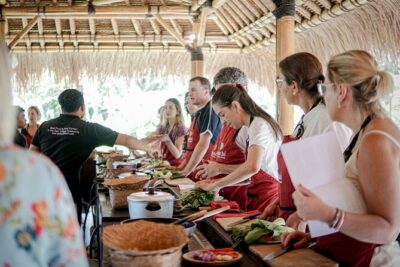
The cooking area is open-air, but it has kitchen equipment and roughly 12 individual workstations. You should not expect a luxury culinary school. Instead, you get a clean, practical workspace where the food preparation is the focus.
The dishes you prepare by hand
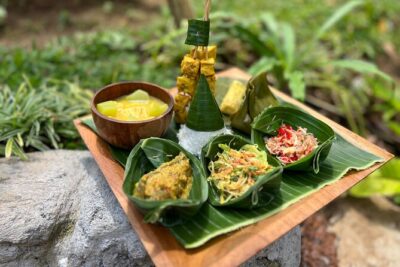
The menu is designed to give you a broad taste of Balinese cooking. The listed dishes include:
- Jukut urab, a vegetable dish with seasoned coconut
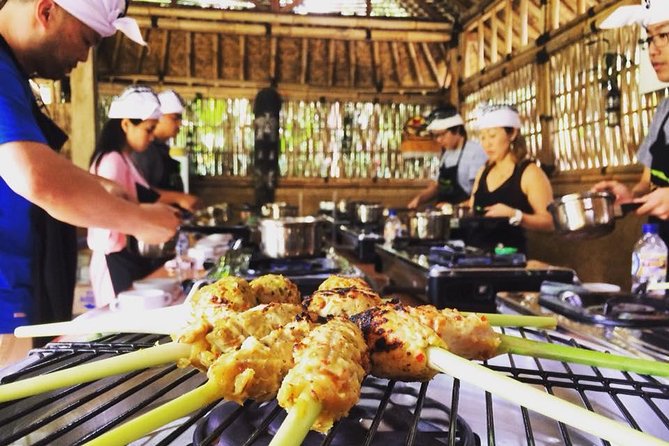
- Sate lilit ayam, or a chicken version of Balinese minced satay
- Sate lilit with tofu as a vegetarian alternative
- Calon be siap with chayote soup, with a tofu option available
- Tahu mesanten
- Dadar gulung, a sweet rolled pancake-style dessert
The menu description includes vegetarian alternatives, but you need to request them in advance. Do not wait until you arrive, since the ingredients must be prepared according to your dietary needs.
The class covers several cooking actions rather than one complicated recipe. You may chop aromatics, grind spices, prepare sauces, form the sate lilit mixture, cook vegetables, and make the dessert. The result is a meal with different textures and flavors, not just a single dish that you sample and forget.
The dessert, dadar gulung, provides a sweet finish after the savory dishes. It also makes the class more appealing for families with older children, though the minimum age is 12 and children must be accompanied by an adult.
A few more Ubud half-days to weigh up
- Hands-On Silver Jewelry Making Near Ubud’s Monkey Forest
★ 4.9 · 1,789 reviews - Ubud Silver Class Jewelry making in bali
★ 5.0 · 978 reviews - Canggu: Bali Turtle Silver & Gold Workshop
★ 4.9 · 643 reviews - Ubud: Balinese Cooking Class and Market Tour
★ 4.8 · 531 reviews
Why the hands-on format works
Many cooking classes leave you with a plate of food but little sense of how to repeat it at home. This one supplies a recipe book, so you have a practical souvenir rather than another trinket in your luggage. A culinary workshop certificate is also included.
I especially like that each participant has an individual station. In a group of 10 or 12, that makes a real difference. You are less likely to spend the session waiting for your turn with one shared cutting board or mortar.
The class is private, but that does not always mean one-to-one instruction. A booking can include up to 12 people, and your group participates together. If you book alone, you may receive very close instruction. If you book with a larger family or group, the experience will feel more social and may involve more waiting during shared explanations.
The provider’s vehicle holds up to six passengers. Groups of seven to 12 need to pay an additional $15 per person for the extra guests, according to the supplied conditions. Confirm the vehicle plan if your party is larger than six.
The meal is the payoff
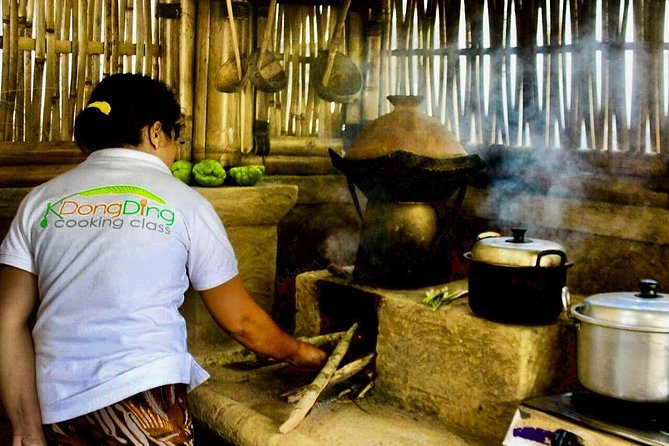
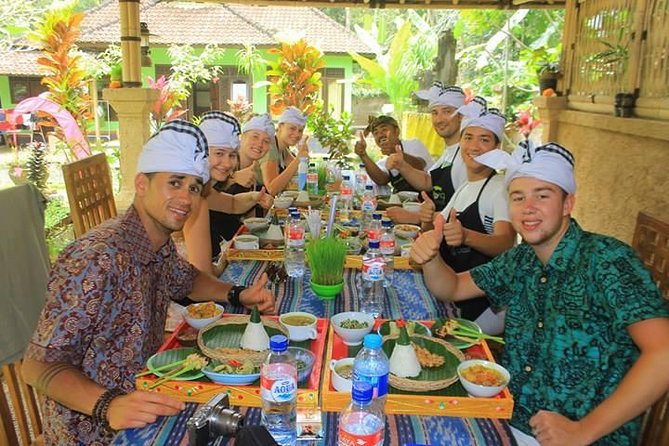
Morning sessions include lunch, and afternoon sessions include dinner. In both cases, the meal is made by your own group and served after the cooking is finished.
That timing gives the day a satisfying shape. You see the ingredients at the market, learn the method, prepare the food, and then sit down to eat it. The meal is not an add-on after the main event. It is the final test of whether you understood the seasoning and cooking steps.
The food has earned especially strong praise for its flavor, but you should keep your expectations realistic. This is a traditional Balinese menu, not a choice of international dishes. Spice, coconut, herbs, and strong seasoning are likely to be part of the experience, though exact heat levels can be discussed with the instructor.
Coffee or tea is provided at the welcome, and seasonal snacks are included. Bottled water is not included, so bring a refillable bottle.
Price, transport, and the real value
At $75, this is not the cheapest cooking lesson around Ubud. The fee includes the market visit, private instruction, ingredients, cooking tools, your meal, a recipe book, a certificate, coffee or tea, snacks, and free pickup and drop-off in Ubud and Payangan.
I think the price is fair if you value the setting and the full six-hour format. You are paying for more than food preparation. The market, compound tour, family contact, and meal make this closer to a cultural half-day than a short cooking demonstration.
The value is less clear if you only want to learn one or two recipes. In that case, the six-hour schedule may feel long. You also need to factor in extra transport if you are staying outside the included area.
Transfers from Sanur cost about IDR 350,000 per booking under one set of conditions, while another note lists IDR 350,000 as about $30. Hotels in Kuta, Seminyak, Legian, Nusa Dua, and Jimbaran are listed at about IDR 500,000 per booking, described as roughly $35 to $40. Since the supplied prices vary slightly, confirm the current transfer fee when booking.
Pickup is offered in the Ubud and Payangan areas. The stated meeting point is Payangan Market, and the activity ends back at the meeting point, so do not assume every hotel transfer detail is automatic. Send your hotel name and ask exactly where the driver will meet you.
Who should book this experience
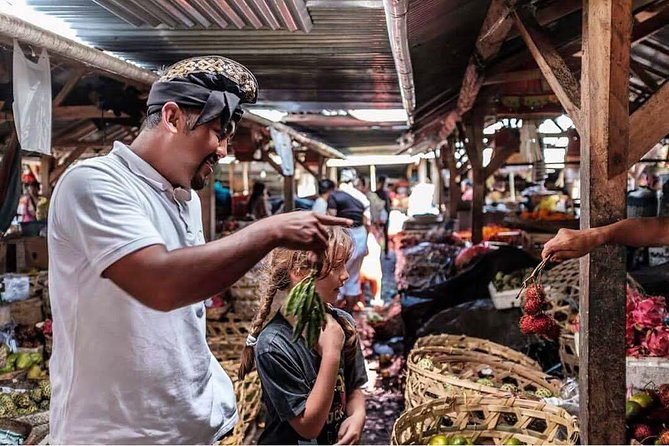
This class suits you if food is your way into a culture. It is also a good choice if you prefer family-run experiences, want to cook rather than watch, and have enough time in Ubud for a full day outside the town center.
You do not need previous cooking experience. The activities are taught step by step, and the instructor guides you through the preparation. Basic comfort with chopping, pounding, and working in an open kitchen will help.
It can work well for couples, families with teenagers, and small private groups. The minimum age is 12, and children must have an adult with them. A group of up to 12 can reserve the date for its own party, but larger groups need to contact the provider for a separate arrangement.
You may want to skip it if you dislike hands-on food preparation, have severe dietary restrictions that were not discussed before booking, or have only a short window in Ubud. The class requires good weather, and the booking is non-refundable. If bad weather cancels the experience or the minimum number is not met, you are offered another date, another experience, or a full refund.
Practical ways to get more from the day
Tell the operator about allergies and dietary needs when you book. Vegetarian dishes are available, including tofu alternatives, but advance notice is required.
Wear clothes that can handle a little food splatter and choose comfortable footwear. You will be moving between a market, a compound, and a cooking area for several hours.
Bring a refillable water bottle. You can refill it at the class, and bottled water is not included.
If you care most about the market, ask for the morning session. If you prefer a night-market visit followed by dinner, choose the afternoon option.
Keep your schedule light afterward. The class lasts approximately six hours, and the transport from Ubud or other areas may add time. You will get more from the lesson if you are not watching the clock.
Should you book the Balinese family cooking class?
I would book this if you want a personal look at Balinese food and home life rather than a quick demonstration in central Ubud. The strongest features are the visit to Payangan Market, the family-compound setting, the traditional spice work, and the fact that you eat a meal prepared by your own hands.
The $75 cost makes sense for a six-hour private experience with transport in the included area, a full meal, recipes, and instruction. Just confirm the pickup, dietary arrangements, market timing, and any transfer fee before paying.
If you want a calm, practical introduction to Balinese cooking with plenty of cultural detail, this is a strong choice. If your main goal is a short class or a central Ubud location, choose something simpler.
FAQ
Where does the Balinese cooking class take place?
The class takes place near Ubud in a Balinese family compound. The listed meeting point is Payangan Traditional Farmer Market in Melinggih, Payangan, Bali.
How long does the experience last?
The experience lasts approximately six hours, including the market visit, compound tour, cooking class, and meal.
Is hotel pickup included?
Free pickup and drop-off are provided in the Ubud and Payangan areas. Extra charges apply for hotels in areas such as Sanur, Kuta, Seminyak, Legian, Nusa Dua, and Jimbaran.
What food will I prepare?
The listed menu includes jukut urab, sate lilit ayam, calon be siap with chayote soup, tahu mesanten, and dadar gulung. Tofu alternatives are available for several dishes.
Can I request a vegetarian menu?
Yes. Vegetarian options are available, but you must provide the request when booking so the food can be prepared in advance.
Do I need previous cooking experience?
No previous cooking experience is required. The class is hands-on, and the instructor teaches the preparation and cooking methods step by step.
What is the maximum group size?
The minimum is one participant and the maximum is 12 participants per booking. The activity is private, so only your group participates.
What happens if the weather is poor?
The experience requires good weather. If it is canceled because of poor weather, you are offered a different date or a full refund.
Just added around Ubud
- Authentic hike in the forest with lunch at the inhabitant★ 5.0 · 3 reviews
- Heaven Gate, Tirtagangga and Tukad Cepung Waterfall – All Inclusive★ 5.0 · 3 reviews
- Half Day Uluwatu Temple Sunset, Kecak Dance and Seafood Dinner★ 3.5 · 3 reviews
- Ubud: White Water Rafting with visit Ubud Monkey Forest★ 5.0 · 3 reviews
- ️Bali All Inclusive Tour: Ubud – Tegalalang – Kintamani★ 5.0 · 3 reviews
- East Bali and Lempuyang Temple Tour★ 5.0 · 3 reviews
- Ubud: Temple, Swing, Waterfall, Rice Terrace & Monkey Forest★ 5.0 · 3 reviews
- Blue Lagoon Snorkeling and Lunch with Tukad Cepung Waterfall★ 5.0 · 3 reviews
Balinese Cooking Classes, compared.
Cooking Class with Transfers and Optional Market Visit
Read our review →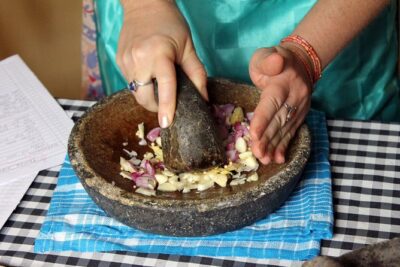
PRIVATE Authentic Balinese Cooking Class in Ubud at Putu’s Home
Read our review →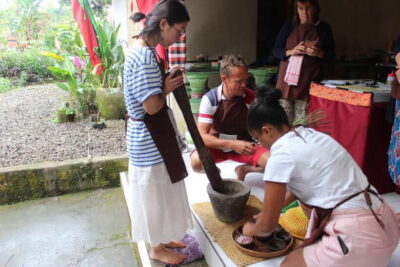
PRIVATE Balinese Cooking Class in Ubud with Dewa with Transfers
Read our review →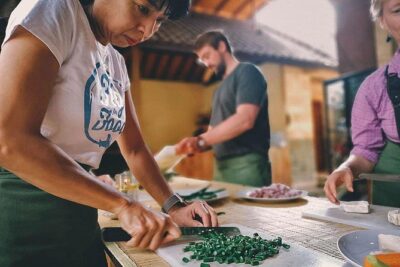
Balinese Cooking class with traditional morning market visit
Read our review →Browse the lists this tour appears in