
Reviewed · BALINESE COOKING CLASSES
Be a real Balinese with Traditional Balinese Cooking Class
The best part of this experience is that the cooking happens in a real family home in Delodsema Village, not in a polished cooking studio. You’ll explore a small village, handle fresh spices and herbs, cook with Kadek and Sangayu’s family, then eat your meal in the local style, with the dishes placed on the floor.
I like the personal scale and the chance to learn how food fits into Balinese daily life. I also like the welcome drink, snack, sarong, temple visit, and family setting. The main drawback is the mixed transport information: pickup from central Ubud costs an extra IDR 350,000 roundtrip, and the Tirta Empul water blessing described in the overview is not included in the detailed village itinerary, so confirm exactly what your booking covers.
In This Review
- Key points to know before booking
- Cooking with a Balinese family in Delodsema
- Exploring a village of about 60 families
- A welcome drink, snack, and sarong
- Preparing lunch with local ingredients
- Eating lunch from dishes placed on the floor
- The temple visit and an important booking detail
- Ubud transport and the real cost
- What makes this better than a standard cooking class
- Who should book this class?
- Should you book this Delodsema cooking class?
- FAQ
- Where does the cooking class take place?
- How long does the experience last?
- Is transportation from Ubud included?
- What food and drinks are included?
- Is this a private activity?
- Can menstruating women enter the temple?
- Can I cancel for a full refund?
Key points to know before booking
- Cooking takes place in a family home: You are welcomed by Kadek, Sangayu, and their extended family rather than placed in a large class.
- Delodsema is a tiny traditional village: Only about 60 families live here, giving the visit a quieter setting than central Ubud.
- Lunch is part of the lesson: You prepare several Balinese dishes, then eat them from dishes set on the ground.
- The class includes local customs: You receive a sarong, see the family temple and house, and learn how to eat in the local way.
- Transport costs extra: The meeting point is Delodsema Traditional Village, with Ubud pickup available for IDR 350,000 roundtrip.
- Check the temple portion carefully: The overview mentions Tirta Empul, but the detailed schedule focuses on the village cooking class.
Cooking with a Balinese family in Delodsema
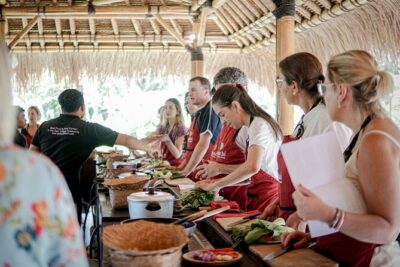
This is a small, private activity built around contact with one Balinese family. That matters because the setting shapes the whole lesson. Instead of simply watching a chef demonstrate recipes, you work with fresh ingredients and take part in the meal from start to finish.
Kadek and Sangayu host the class in their family home. The home is also where extended family members live, so you get a look at an everyday household rather than a venue designed only for visitors. That makes the experience feel personal, though it also means you should expect a home setting, not a restaurant kitchen with a formal classroom layout.
The activity lasts about three hours. The cooking is the main event, but the visit also includes a village walk, a look at the house and temple, a welcome snack, and time to share food with the family. You are not rushing between several commercial attractions.
The class requires at least two people per booking, and the minimum age is 18. Since this is a private activity, only your own group takes part. That gives you more room to ask questions and work directly with the hosts.
More Balinese cooking classes:
- Ubud Cooking Class Bali with Balinese Chef
★ 5.0 · 1,609 reviews - Ubud: Cooking Class with Transfers and Optional Market Visit
★ 4.9 · 824 reviews - PRIVATE Authentic Balinese Cooking Class in Ubud at Putu’s Home
★ 5.0 · 644 reviews
Exploring a village of about 60 families
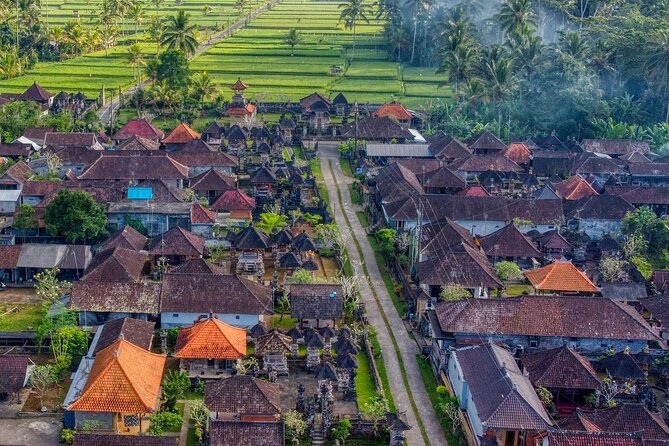
Delodsema Traditional Village sits in Taro, in the Tegallalang area north of Ubud. The meeting point is on Delodsema Road, and the activity ends there unless you arrange paid transport.
The village is described as home to only about 60 families. That small scale is one of the strongest reasons to choose this class. You are not just arriving at a cooking school with a Balinese theme. You are starting with a walk through a lived-in community and learning about the setting where the hosts prepare and eat their own food.
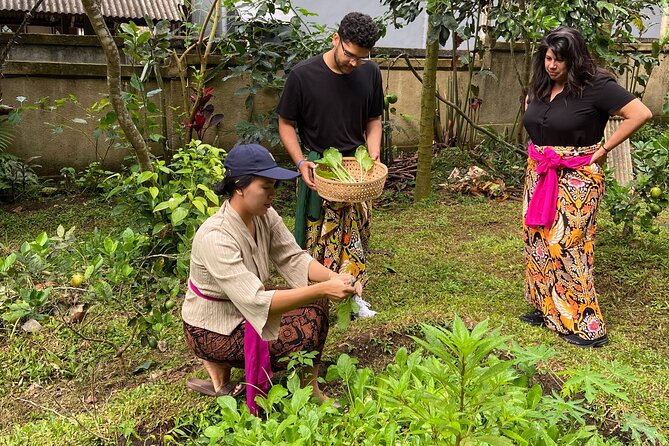
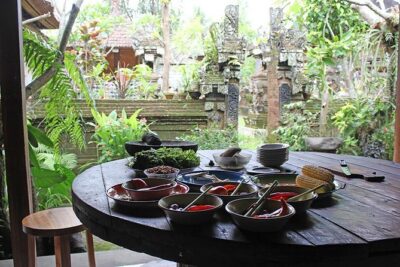
You’ll be shown traditional spices and herbs used in Balinese cooking. The hands-on part begins early, as fresh ingredients are placed in your hands for preparation. I find this more useful than simply receiving a printed recipe, because you see the ingredients before they are chopped, mixed, or cooked.
The visit also includes the family temple and house. This adds cultural context to the meal. Balinese food is tied to home life, religious practice, family gatherings, and offerings, so seeing those spaces helps explain why a cooking class here includes more than recipes.
Keep your expectations sensible. The supplied details do not name the dishes or provide a full menu, so you should not book this expecting to prepare one specific meal. Instead, expect a selection of Balinese foods and an explanation of how to prepare and eat them locally.
A welcome drink, snack, and sarong
Your visit begins with a Balinese welcome drink and snack. A sarong is provided as part of the experience, which is useful when visiting the family temple and helps you dress in a way that respects local customs.
The sarong is not just a souvenir prop. It signals that the visit includes cultural spaces where clothing matters. You should still wear comfortable, modest clothing underneath, since you will be moving around during the cooking session and visiting the temple area.
The welcome is also a chance to settle into the family setting before cooking begins. The pace is likely more relaxed than a tightly timed commercial class, although the exact order of the activities can vary.
Bottled water and Balinese coffee or tea are included. The class therefore covers the basic refreshments as well as lunch. If you have dietary needs, ask before booking, since the available information does not specify vegetarian, vegan, allergy, or other menu options.
Preparing lunch with local ingredients
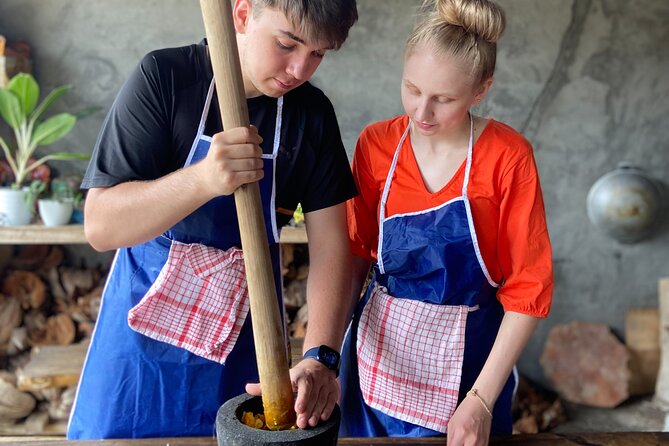
The cooking lesson is designed to let you cook like a local and eat like a local. That means you should expect active participation rather than a demonstration where you sit back and take notes.
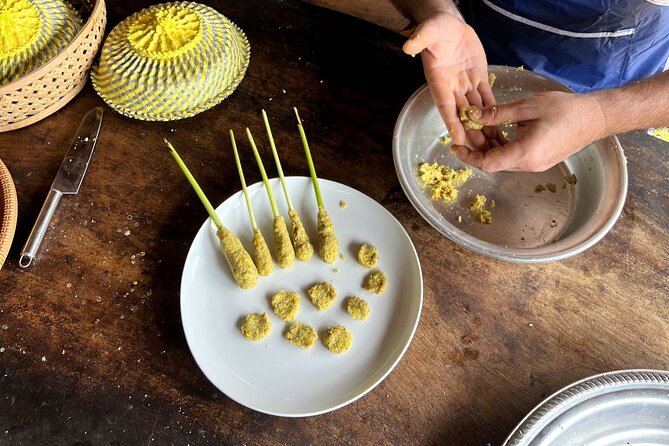
You’ll work with traditional spices, herbs, and other fresh ingredients while preparing the meal with the family. The details do not list individual recipes, but the class promises a variety of Balinese dishes. The hosts explain the cooking process as you work, giving you a practical feel for how the ingredients come together.
This hands-on approach is the class’s main value. At $30 per person, the price is modest for a private three-hour activity that includes lunch, a welcome snack, bottled water, coffee or tea, a sarong, the village visit, and the cooking instruction. You are paying for time with a family and a cultural setting as much as for the food itself.
The value is strongest if you want a personal experience and do not need a famous menu. If you only want to learn a precise set of recipes to recreate at home, the lack of a published dish list may be a concern. Ask the provider what you will cook before committing.
A few more Ubud half-days to weigh up
- Hands-On Silver Jewelry Making Near Ubud’s Monkey Forest
★ 4.9 · 1,789 reviews - Ubud Silver Class Jewelry making in bali
★ 5.0 · 978 reviews - Canggu: Bali Turtle Silver & Gold Workshop
★ 4.9 · 643 reviews - Ubud: Balinese Cooking Class and Market Tour
★ 4.8 · 531 reviews
Eating lunch from dishes placed on the floor
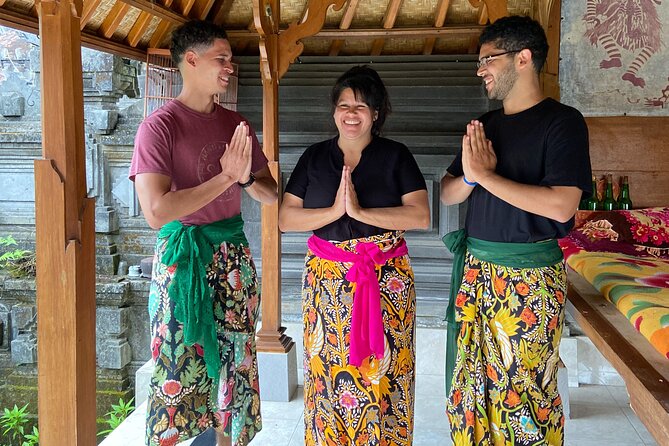
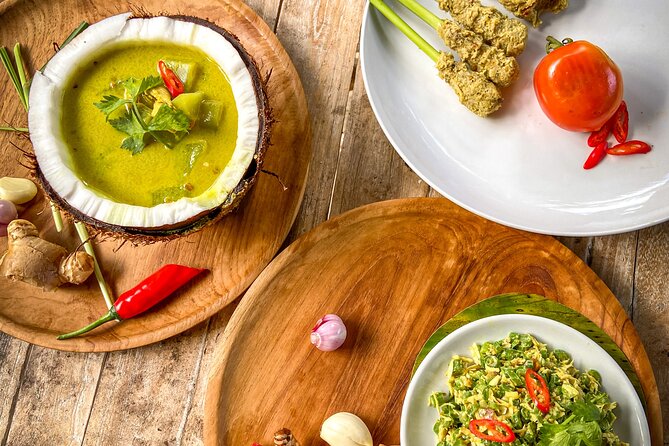
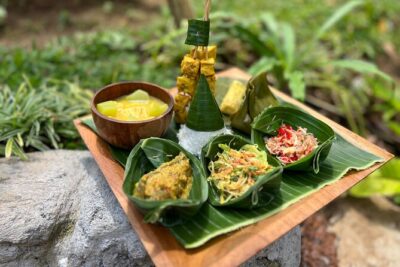
At the end of the cooking session, the dishes are placed on the ground and the hosts explain how to eat in the local style. This is an important part of the activity, not a decorative detail.
You learn that a Balinese meal can be social and informal, with food shared in a family setting. Eating this way gives the cooking lesson a clear finish: you prepare the food, sit down with the family, and learn the customs around serving and eating it.
Some people will find this more memorable than sitting at a dining table. Others may prefer a more familiar setup. If sitting on the floor is difficult for you, ask about arrangements in advance. The supplied information does not promise chairs or alternative seating.
The meal is included, and you get to sample a range of the dishes you helped prepare. That makes the class a good choice for anyone who wants lunch to be part of the lesson rather than a separate stop afterward.
The temple visit and an important booking detail
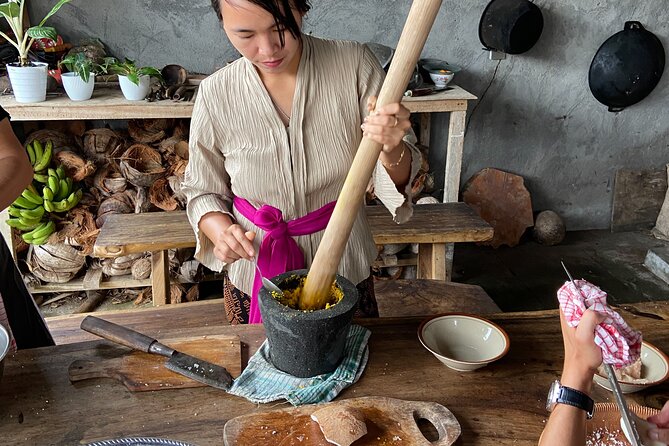
The detailed village schedule includes a visit to the family temple and house. The broader description also mentions a private water blessing ritual at Tirta Empul Temple, along with gathering offerings and incense before going there.
However, the information provided for the detailed activity lists only Delodsema Traditional Village as the stop and says the experience lasts three hours. It also says temple entrance is at your own expense in the broader description. Because of this mismatch, you should confirm the plan directly with the provider before booking.
Ask three simple questions:
- Is Tirta Empul included in this exact cooking-class booking?
- Is the water blessing ritual part of the three-hour village activity or a separate arrangement?
- Are temple entrance fees and transport included?
This is especially important if the temple ritual is the main reason you are interested. The cooking class itself is clearly described, while the Tirta Empul portion needs clarification.
Balinese custom does not allow menstruating women to enter the temple or bathe there. The activity also states that most people can participate, but it does not give detailed accessibility information for the home, village paths, or floor seating.
Ubud transport and the real cost
The advertised price is $30 per person. That covers the class and listed inclusions, but transport from central Ubud costs an additional IDR 350,000 roundtrip.
The meeting point is Delodsema Traditional Village, not a central Ubud hotel. If you have your own transport, the base price offers good value. If you need pickup, add the transport fee when comparing this class with other Ubud cooking experiences.
The description promises door-to-door private two-way transfers from Ubud hotels, while the inclusion details say transport is available from central Ubud at extra cost. Treat the paid transfer as an option rather than assuming it is included in the $30 price.
The drive from Ubud is described in the experience details as about 30 minutes north for one participant’s pickup. Actual travel time can vary, but the point is clear: this is not a walk-in Ubud activity. You are trading convenience for a more rural village setting.
A private transfer also keeps the day simple. You do not need to find the village on your own if you pay for pickup, and the activity ends back at the meeting point. Confirm the pickup zone and final price before you go.
What makes this better than a standard cooking class
A standard cooking class can teach you recipes. This one gives you a window into the household behind the recipes.
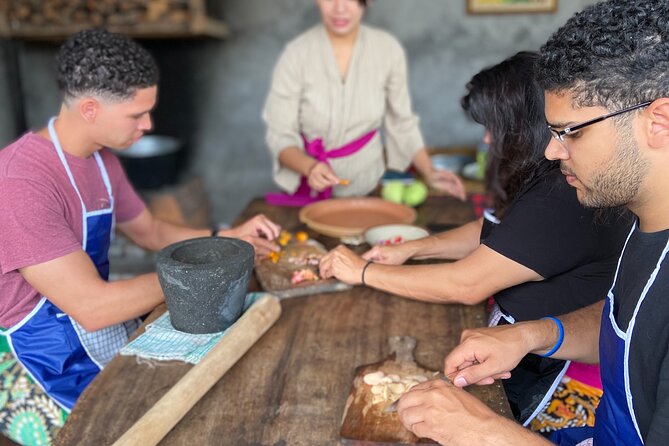
You see where the family lives, walk through a small village, learn about local ingredients, visit a temple and house, and share food in a traditional manner. The cooking is tied to daily life instead of separated from it.
The family setting is also useful if you enjoy asking questions. A private class lets you shape the conversation around food, customs, family life, or the village. The hosts are identified as Kadek and Sangayu, names worth remembering when arranging pickup or confirming the meeting details.
The tradeoff is that the experience may feel less polished than a purpose-built cooking school. The setting is a home, and the details are informal. That is a benefit for some people and a limitation for others.
Who should book this class?
I would choose this for you if you want a small-scale Balinese experience with food at its center. It suits couples, friends, and adults who value personal contact more than a long list of attractions.
It is especially good for people who want to get away from central Ubud for a few hours. The village setting, family home, and meal on the floor give the class a stronger local focus than a lesson held in a hotel or tourist kitchen.
It may not suit you if you need a published menu, formal accessibility details, or a guaranteed Tirta Empul ritual. It is also not available to solo bookers under the stated rules, since at least two people must book.
The class is a particularly good fit if you enjoy food but also want to understand the place where it is prepared. You will not simply leave with a meal. You will leave with a better sense of how cooking, family, home, and temple life connect in this Balinese village.
Should you book this Delodsema cooking class?
Book it if the family-home setting is what attracts you. The strongest features are the private format, hands-on preparation, small village, local ingredients, and meal served in the traditional style.
At $30 per person, the package is fair value when you count the three-hour class, lunch, welcome snack, sarong, drinks, temple and house visit, and direct time with Kadek and Sangayu’s family. The extra Ubud transport charge changes the calculation, but it is still reasonable if you want a private ride to a village outside town.
Before paying, confirm the transport cost, the exact meeting point, the menu, and whether Tirta Empul is included. If you want a genuine family setting and do not mind a simple, informal format, this is a strong choice. If you are mainly seeking the water blessing ritual, clarify that detail first.
FAQ
Where does the cooking class take place?
The class takes place at Delodsema Traditional Village on Delodsema Road, Taro, Tegallalang, Gianyar Regency, Bali 80561, Indonesia.
How long does the experience last?
The detailed activity lasts about three hours. The general duration is listed as approximately two to three hours.
Is transportation from Ubud included?
Transport from central Ubud is available for an additional IDR 350,000 roundtrip. The meeting point itself is in Delodsema Traditional Village.
What food and drinks are included?
Lunch, a Balinese welcome snack, bottled water, and Balinese coffee or tea are included. The specific dishes are not listed.
Is this a private activity?
Yes. Only your group participates, and a minimum of two people is required per booking.
Can menstruating women enter the temple?
No. Balinese custom does not allow menstruating women to enter the temple or bathe there.
Can I cancel for a full refund?
You can cancel for a full refund if you do so at least 24 hours before the experience starts. Cancellations or changes made less than 24 hours before the start time are not accepted for a refund.
Just added around Ubud
- Authentic hike in the forest with lunch at the inhabitant★ 5.0 · 3 reviews
- Heaven Gate, Tirtagangga and Tukad Cepung Waterfall – All Inclusive★ 5.0 · 3 reviews
- Half Day Uluwatu Temple Sunset, Kecak Dance and Seafood Dinner★ 3.5 · 3 reviews
- Ubud: White Water Rafting with visit Ubud Monkey Forest★ 5.0 · 3 reviews
- ️Bali All Inclusive Tour: Ubud – Tegalalang – Kintamani★ 5.0 · 3 reviews
- East Bali and Lempuyang Temple Tour★ 5.0 · 3 reviews
- Ubud: Temple, Swing, Waterfall, Rice Terrace & Monkey Forest★ 5.0 · 3 reviews
- Blue Lagoon Snorkeling and Lunch with Tukad Cepung Waterfall★ 5.0 · 3 reviews
Balinese Cooking Classes, compared.
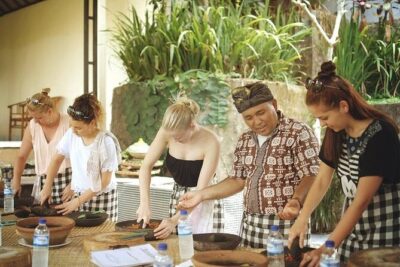
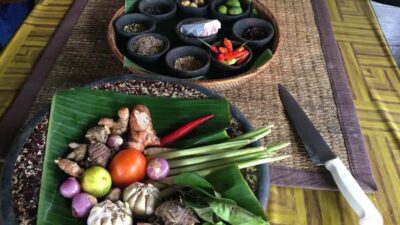
Cooking Class with Transfers and Optional Market Visit
Read our review →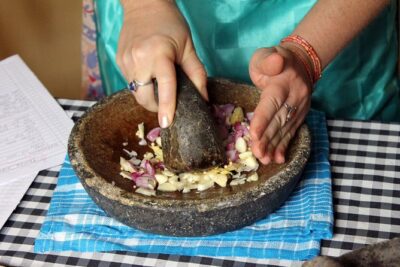
PRIVATE Authentic Balinese Cooking Class in Ubud at Putu’s Home
Read our review →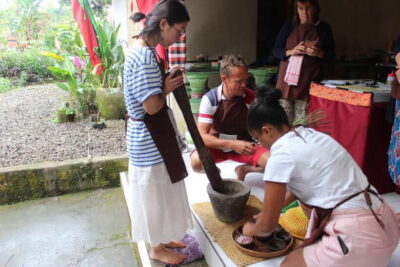
PRIVATE Balinese Cooking Class in Ubud with Dewa with Transfers
Read our review →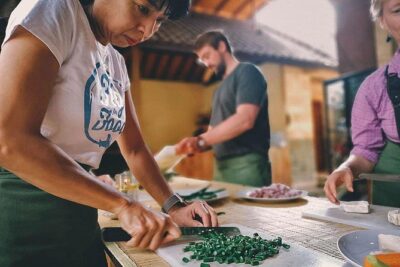
Balinese Cooking class with traditional morning market visit
Read our review →Browse the lists this tour appears in