
Reviewed · BALINESE COOKING CLASSES
Bali : Experiences of Ubud Paon Cooking Class
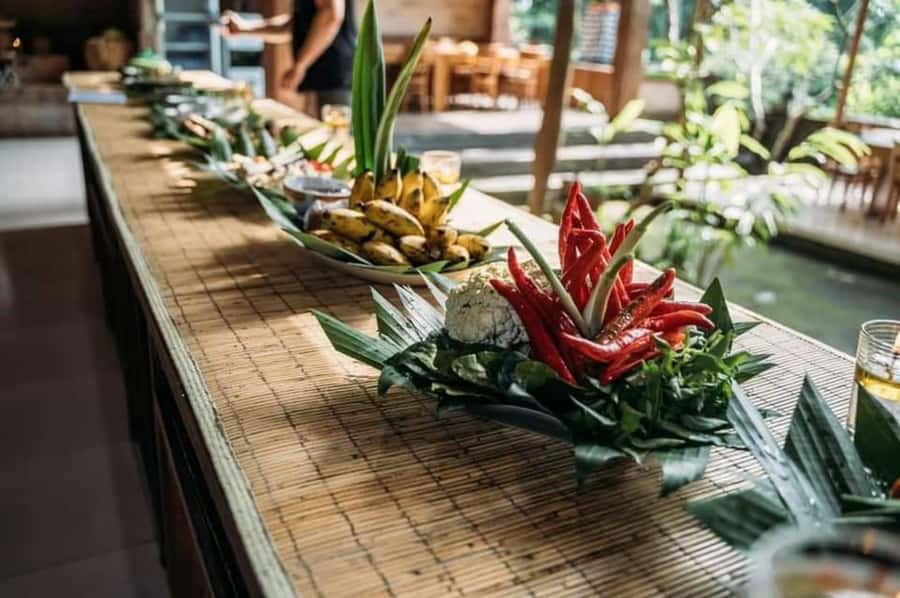
The best part of this Ubud cooking class is that it begins with food shopping, not just a demonstration. With the morning option, you meet at an Ubud market at 8 am, choose herbs, spices, vegetables, and meat, then continue to a community kitchen in Laplapan village, where your host Puspa guides you through traditional Balinese recipes.
I like the hands-on format, where you take part in the preparation rather than watching someone else do all the work. I also like the practical touches: you receive a recipe book, learn ingredient alternatives for cooking at home, and eat the lunch you prepare.
The main consideration is timing. The morning class starts early, and the full experience takes three to four hours. Pickup is available from Ubud, Canggu, and Sanur, but rides from outside those areas cost an extra $5 per person.
In This Review
- Key points to know before booking
- From the Ubud market to Laplapan village
- Cooking with Puspa in a community kitchen
- What the hands-on format adds
- The meal at the end
- Balinese food culture beyond the recipe
- Is $40 a fair price?
- Timing, transport, and cancellation
- Who will enjoy this class most?
- Should you book the Ubud Paon cooking class?
- FAQ
- How much does the Ubud Paon cooking class cost?
- How long does the cooking class last?
- Does the morning option include a market visit?
- Where does the cooking class take place?
- Is lunch included?
- What language is the class offered in?
- Can I cancel the booking?
Key points to know before booking
- Shop at an Ubud market: The 8 am option begins by selecting fresh herbs, spices, vegetables, and meat.
- Cook in Laplapan village: The class takes place in a community kitchen rather than a standard restaurant classroom.
- Work with Puspa: Your English-speaking host guides you through the recipes and preparation.
- Take part at every station: Participants rotate between tasks, so you get to handle more than one part of the meal.
- Eat what you prepare: Lunch is included, giving you a chance to taste the finished dishes while they are fresh.
- Bring the recipes home: A recipe book and ingredient substitutions help you repeat the dishes outside Bali.
From the Ubud market to Laplapan village
This experience gives you two useful views of Balinese food. First, you see the ingredients in a local market setting. Then you learn how those ingredients are prepared in a village kitchen.
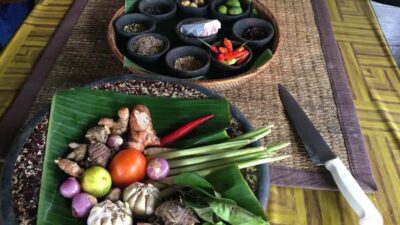
If you choose the morning option, your day starts at 8 am at the Ubud market meeting point. You can pick out fresh herbs and spices, crisp vegetables, and choice cuts of meat before heading onward. That market stop matters because it connects the cooking lesson to the ingredients themselves. You are not simply handed a bowl of prepared items with no explanation of where they came from.
The market portion is also a good reason to choose this class over a shorter cooking demonstration. You get a sense of what goes into Balinese cooking before you start chopping, mixing, or seasoning. The information provided does not specify the exact market or the precise dishes you will prepare, so you should think of this as a general food-market visit rather than a fixed market tour.
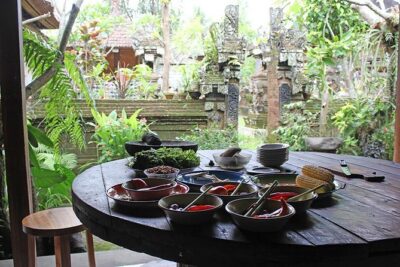
After shopping, you continue to Laplapan village for the cooking class. The setting is a fully equipped community village kitchen called Paon Kitchen. This gives the experience a local feel while still providing the practical space needed for several people to cook together.
You should arrive at the meeting point at least 10 minutes before the activity begins. If you arrange pickup, confirm your location carefully. Pickup is offered in the Ubud area, Canggu, and Sanur. Locations outside those areas carry an extra charge of $5 per person.
More Balinese cooking classes:
- Ubud Cooking Class Bali with Balinese Chef
★ 5.0 · 1,609 reviews - Ubud: Cooking Class with Transfers and Optional Market Visit
★ 4.9 · 824 reviews - PRIVATE Authentic Balinese Cooking Class in Ubud at Putu’s Home
★ 5.0 · 644 reviews
Cooking with Puspa in a community kitchen
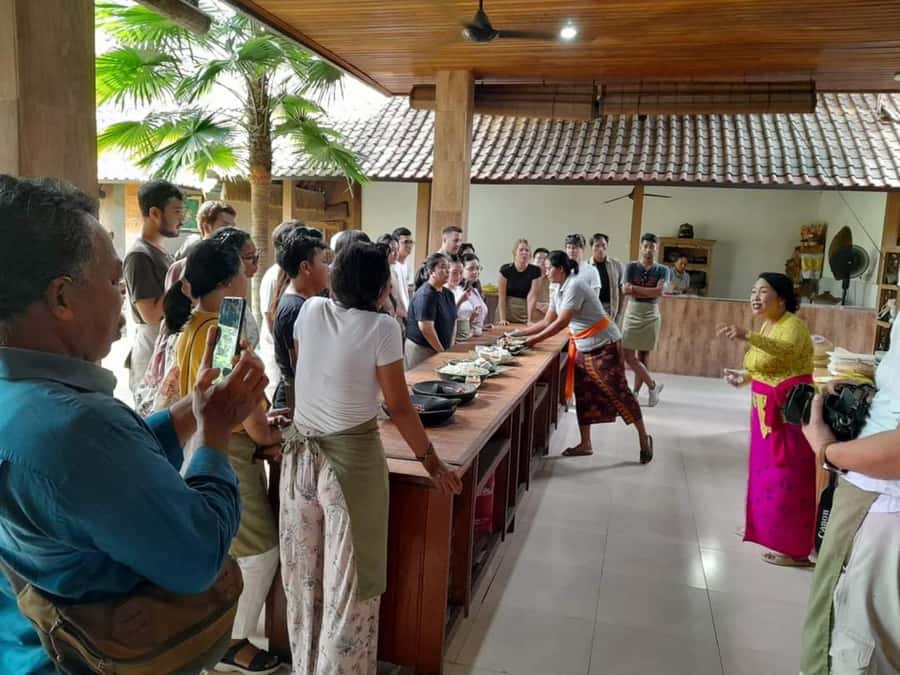
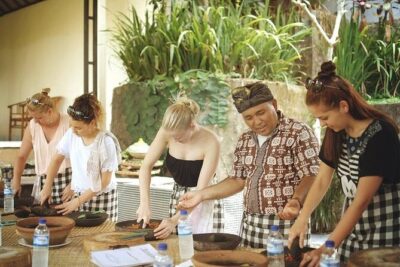
At the kitchen, Puspa welcomes you and leads the class in English. The emphasis is on learning by doing. You are not there only to watch a Balinese cook prepare lunch while you take photographs.
The class uses traditional ingredients and preparation methods, with spicy food treated as an important part of the meal. If you enjoy chili and strong seasoning, this focus should suit you. If you prefer mild food, it is sensible to ask about spice levels during the class, although the available information does not promise a specific mild-food option.
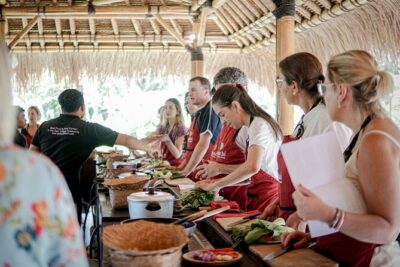
One of the most useful features is the way the cooking tasks are shared. Participants rotate between stations, so you can take part in different jobs instead of staying with one simple task from start to finish. That structure keeps the class active and gives you a better sense of how the separate ingredients come together.
The instruction is designed to be practical. You learn the recipe, handle the ingredients, and receive guidance as you work. That makes the class a better fit for someone who wants to cook Balinese food later, not just enjoy a one-time meal.
A recipe book is included. You also learn alternatives for ingredients that may be hard to find outside Bali. This is a small but valuable detail. Some cooking classes leave you with a pleasant memory but no realistic way to repeat the meal. Here, the substitutions make the recipes more useful once you return home.
What the hands-on format adds
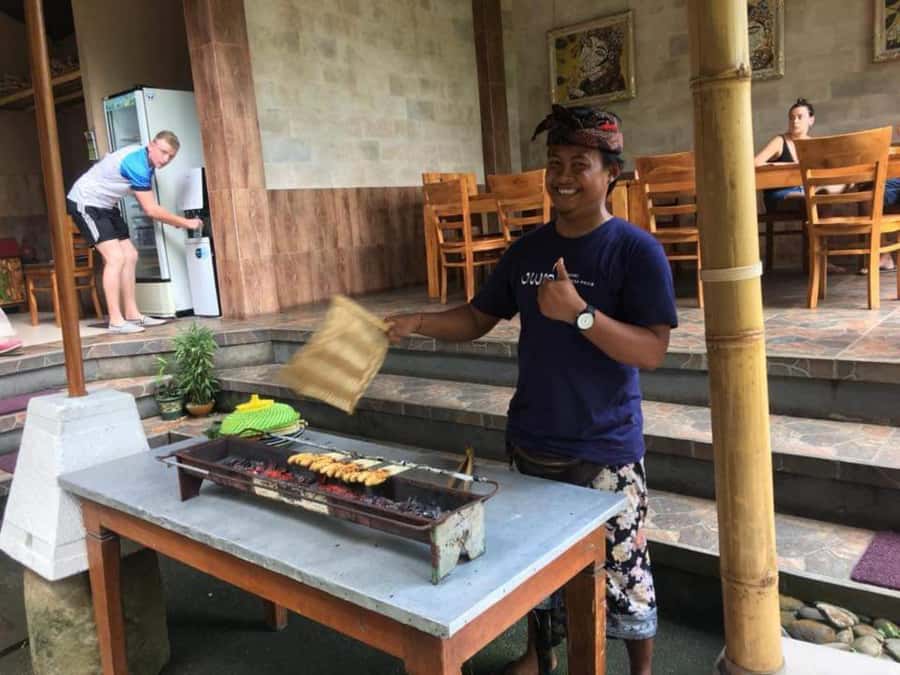
A cooking lesson can mean different things in Bali. Some are mainly demonstrations, while others put you directly at the preparation table. This one is clearly aimed at participation.
You should expect to work at several stations as the class progresses. The available feedback points to good instruction and a chance for each participant to try the different tasks. That rotation matters, especially in a small group, because it prevents one person from doing all the interesting work.
The small-group option is another plus. Group size can affect a cooking class more than people expect. A large crowd makes it harder to hear instructions and easier to become a spectator. A small group should give you more direct contact with Puspa and more room to ask questions, though the exact number of participants is not stated.
The English-language format keeps the lesson accessible to international visitors. You will need enough English to follow cooking instructions and communicate with the host. No other teaching language is listed.
The class is also suited to mixed cooking abilities. Someone with little kitchen experience can follow the guided steps, while a keen home cook can pay closer attention to ingredients, technique, and substitutions. The lesson appears to value participation over showing off complicated culinary skill.
The meal at the end
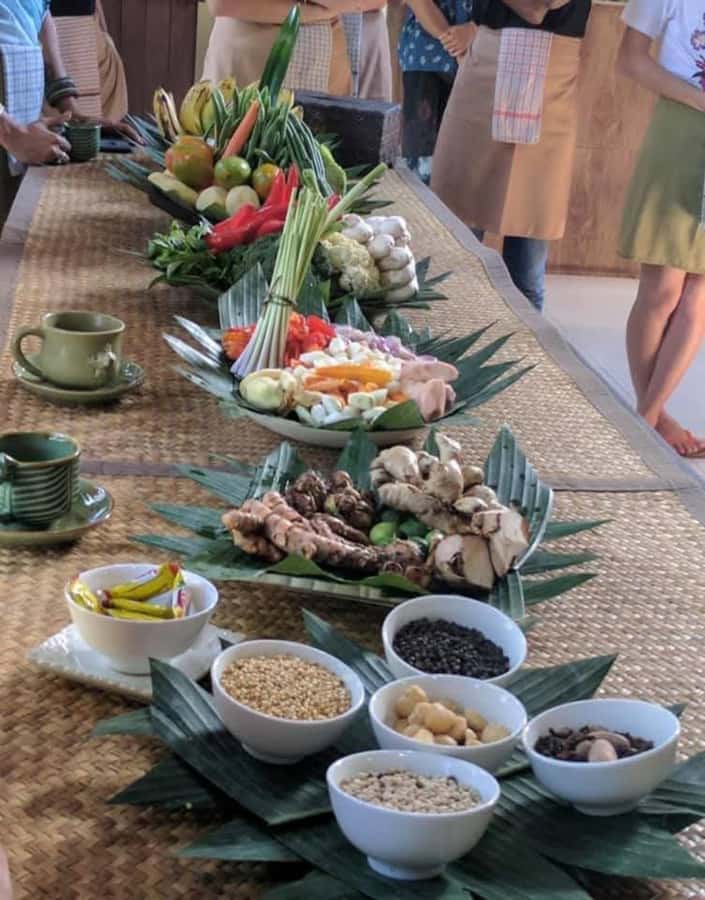
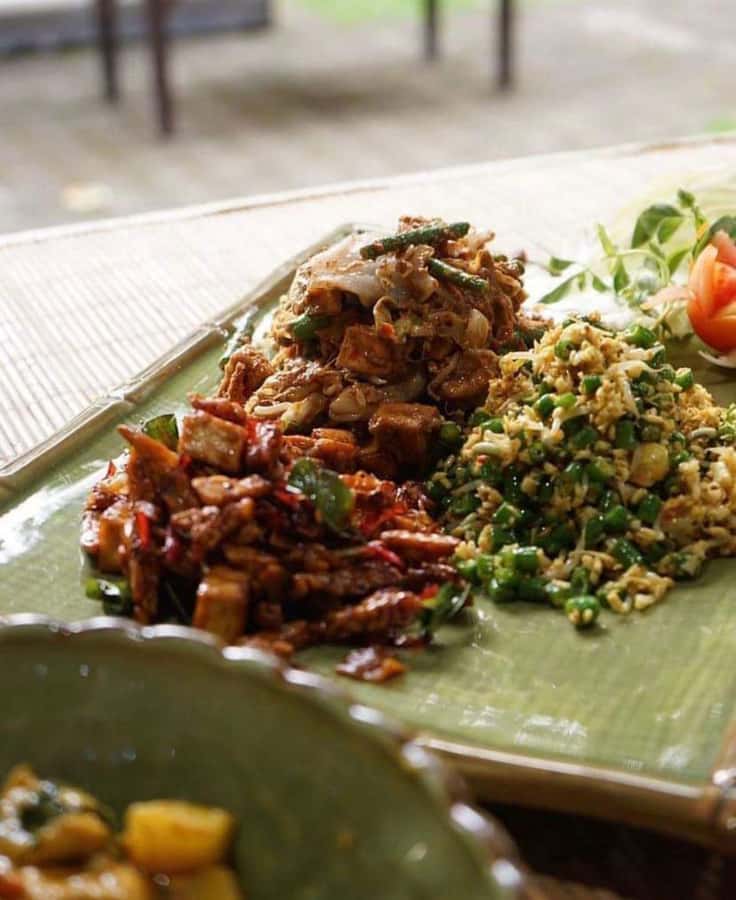
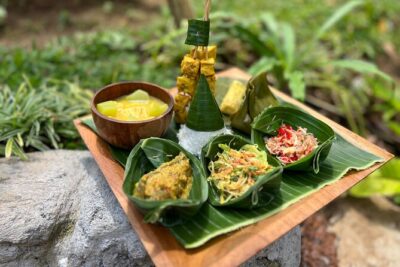
Lunch is included, and you eat the food prepared during the class. That gives the experience a satisfying finish. You can see the ingredients at the market, handle them in the kitchen, and then sit down to taste the result.
The exact menu is not provided, so you should not book this expecting a named list of dishes. What is clear is the focus on authentic Balinese food, traditional ingredients, and spicy flavors. The class is less about choosing from a restaurant menu and more about understanding how a local meal is built.
Eating your own work also helps you judge the cooking process. You notice how much spice works for you, how the ingredients fit together, and which parts you would change when preparing the food at home. That turns lunch into part of the lesson rather than a separate meal included simply for convenience.
The meal is especially useful for anyone planning to cook for friends or family after returning home. The recipe book and ingredient alternatives give you a starting point, while the meal helps you remember the taste and texture you are trying to recreate.
A few more Ubud half-days to weigh up
- Hands-On Silver Jewelry Making Near Ubud’s Monkey Forest
★ 4.9 · 1,789 reviews - Ubud Silver Class Jewelry making in bali
★ 5.0 · 978 reviews - Canggu: Bali Turtle Silver & Gold Workshop
★ 4.9 · 643 reviews - Ubud: Balinese Cooking Class and Market Tour
★ 4.8 · 531 reviews
Balinese food culture beyond the recipe
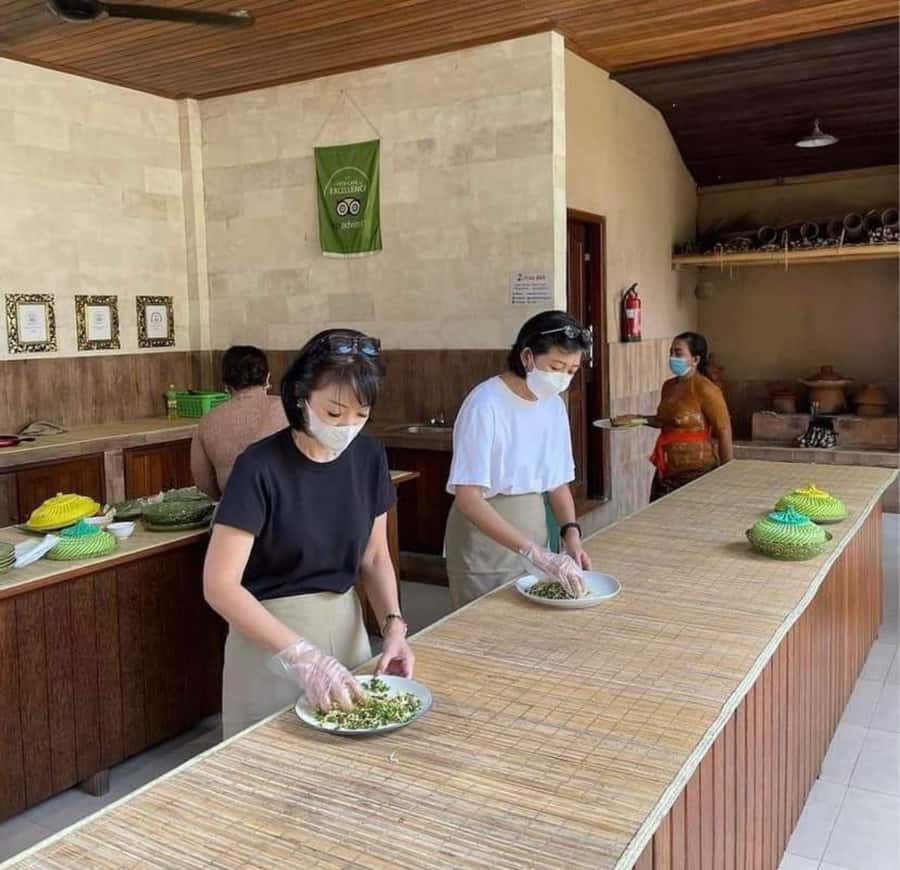
The class is presented as more than a cooking lesson. It introduces food culture and the spirit of Balinese village life through the act of preparing and sharing a meal.
That cultural angle is strongest in the setting. Cooking in a community village kitchen gives the activity a connection to everyday local life that a hotel kitchen may not provide. You are still taking part in a planned experience, but the village location helps put the food in a wider context.
The market visit adds another layer. Herbs, spices, vegetables, and meat are not abstract items on a printed recipe sheet. You see them before they are cleaned and prepared. This makes the food feel connected to the place you are visiting.
You should keep your expectations realistic. The experience lasts only three to four hours, so it cannot offer a full course in Balinese culture or a detailed tour of village life. Its cultural value comes through the food, the market, the kitchen, and the host’s guidance.
Is $40 a fair price?
At $40 per person, the class sits in a reasonable range for a half-day food experience in Bali, especially because lunch is included. You are paying for more than a single meal. The price covers the cooking class, admission for the class, and the meal you prepare.
If you use the included pickup option from an eligible area, the package becomes more convenient. Pickup is available from Ubud, Canggu, and Sanur. If you are staying elsewhere, the added $5 per person is modest, but you should include it in your budget.
The value depends on what you want from a food activity. If you only want to eat Balinese food, a restaurant meal will cost less. If you want to learn recipes, handle ingredients, visit a market, and take home instructions, this class offers more lasting value.
I think the recipe book and ingredient substitutions strengthen the price. They turn the class into something you can use after Bali, rather than a meal that ends when you leave the kitchen.
Personal expenses are not included, so allow extra money for anything outside the listed class and meal. The available information does not specify other optional costs.
Timing, transport, and cancellation
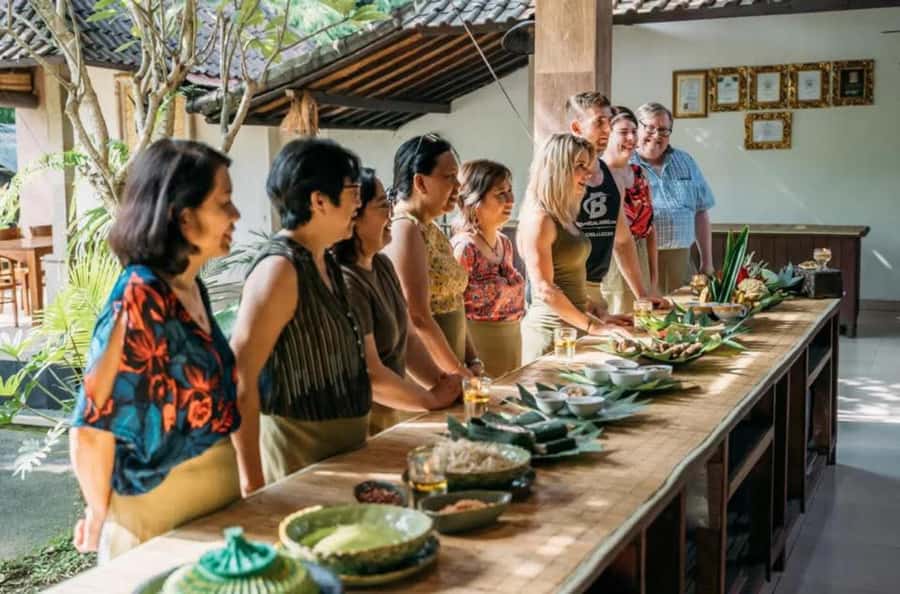
The experience lasts three to four hours, with starting times dependent on availability. The early option begins at 8 am with the market visit. That schedule works well if you want to finish a major activity before the hottest part of the day, but it may not suit anyone who prefers slow mornings.
The meeting point requires arrival 10 minutes before the start. That is particularly important if you are meeting rather than using pickup. Give yourself enough time to reach the location without turning the first part of the class into a race.
Hotel transfer and return are included when you select the appropriate option. Pickup areas include Ubud, Canggu, and Sanur. Outside those areas, the additional fee is $5 per person.
You can cancel up to 24 hours in advance for a full refund. The reserve-now, pay-later option also lets you hold a place without paying at the time of booking, which is useful if your Bali plans are still shifting.
Who will enjoy this class most?
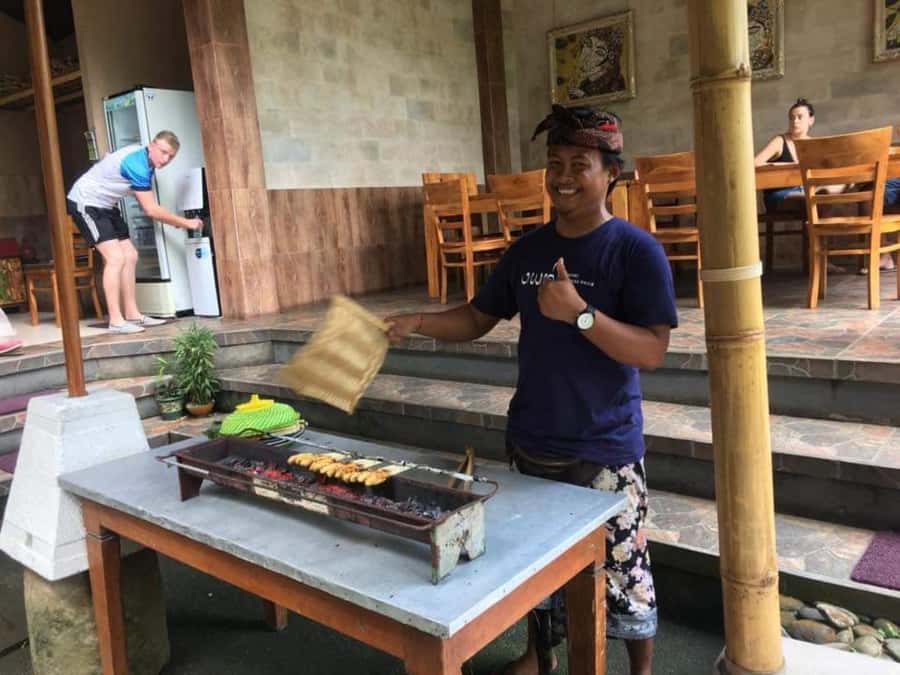
I would recommend this experience to anyone who wants an active food experience rather than a passive meal. It suits home cooks, curious eaters, and people who like bringing practical skills home from a trip.
It is also a good choice for couples, families, and small groups who enjoy working together. The station rotation gives everyone a chance to take part, and the small-group option should make the instruction easier to follow.
The class may be less suitable if you dislike spicy food, though the available information does not explain how much the heat level can be adjusted. It may also be a poor fit if you have only a short window in Ubud, since the activity takes three to four hours and the morning option begins at 8 am.
You should also check the pickup details before booking if you are staying outside Ubud, Canggu, or Sanur. The extra $5 is not a major cost, but it is better to know about it ahead of time.
Should you book the Ubud Paon cooking class?
I would book this class if you want to understand Balinese food by preparing it yourself. The market visit, village kitchen, rotating stations, English guidance from Puspa, included lunch, and recipe book give the experience a useful mix of culture and practical cooking.
The main reasons to pause are the early start, the three to four-hour commitment, and the lack of a published dish list. If you need a specific menu or prefer a quick demonstration, this may not be the right choice.
For most people who enjoy food and want more than a restaurant meal, $40 is a fair price. You leave with lunch, a better sense of Balinese ingredients, and recipes you can try again at home.
FAQ
How much does the Ubud Paon cooking class cost?
The price is $40 per person. Pickup from areas outside Ubud, Canggu, and Sanur costs an additional $5 per person.
How long does the cooking class last?
The experience lasts three to four hours. Starting times depend on availability.
Does the morning option include a market visit?
Yes. The morning option begins at 8 am at the Ubud markets, where you can choose herbs, spices, vegetables, and meat before going to the kitchen.
Where does the cooking class take place?
The class takes place at Paon Kitchen in Laplapan village, in a fully equipped community village kitchen.
Is lunch included?
Yes. Lunch is included, and you eat the food prepared during the cooking class.
What language is the class offered in?
The host or greeter speaks English, and English is the listed language for the activity.
Can I cancel the booking?
Yes. You can cancel up to 24 hours before the activity for a full refund. The reserve-now, pay-later option is also available.
Just added around Ubud
- Heaven Gate, Tirtagangga and Tukad Cepung Waterfall – All Inclusive★ 5.0 · 3 reviews
- Authentic hike in the forest with lunch at the inhabitant★ 5.0 · 3 reviews
- Half Day Uluwatu Temple Sunset, Kecak Dance and Seafood Dinner★ 3.5 · 3 reviews
- Ubud: White Water Rafting with visit Ubud Monkey Forest★ 5.0 · 3 reviews
- ️Bali All Inclusive Tour: Ubud – Tegalalang – Kintamani★ 5.0 · 3 reviews
- East Bali and Lempuyang Temple Tour★ 5.0 · 3 reviews
- Ubud: Temple, Swing, Waterfall, Rice Terrace & Monkey Forest★ 5.0 · 3 reviews
- Blue Lagoon Snorkeling and Lunch with Tukad Cepung Waterfall★ 5.0 · 3 reviews
Balinese Cooking Classes, compared.
Cooking Class with Transfers and Optional Market Visit
Read our review →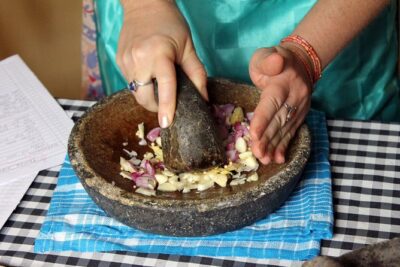
PRIVATE Authentic Balinese Cooking Class in Ubud at Putu’s Home
Read our review →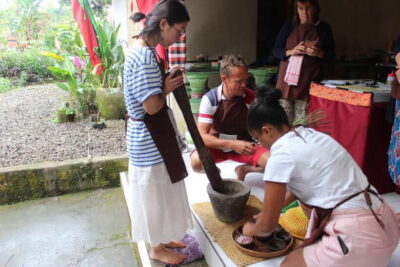
PRIVATE Balinese Cooking Class in Ubud with Dewa with Transfers
Read our review →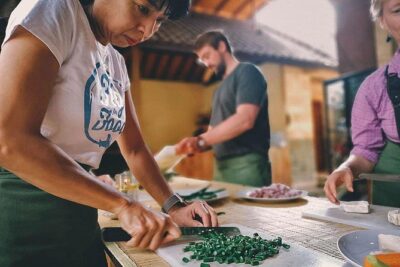
Balinese Cooking class with traditional morning market visit
Read our review →Browse the lists this tour appears in