
Reviewed · BALINESE COOKING CLASSES
Bali Cooking Class with Culture Experience
Ubud’s food culture makes the most sense when you see the ingredients before they reach the plate. This six-hour class begins at a morning market, then moves to a Balinese family compound where Dewa and the cooking team explain the herbs, spices, home shrines, and daily customs behind the meal.
I like the market visit, which gives you a practical look at fresh Balinese produce, and the home setting, which feels more personal than a restaurant kitchen. The main consideration is the early 7:30 am start and the long six-hour schedule, so this suits you best if you want a full food and culture outing rather than a quick cooking lesson.
In This Review
- Key points at a glance
- Why this Ubud cooking class feels different
- The 7:30 am start and pickup from central Ubud
- Shopping for the meal at a local morning market
- Coffee, banana fritters, and a look inside Balinese family life
- Cooking a complete Balinese menu
- Lunch is part of the lesson
- What the $62 price buys you
- Who will enjoy this six-hour experience
- A few practical points before booking
- What makes the food experience memorable
- Should you book Lobong Culinary Experience?
- FAQ
- Where does the cooking experience take place?
- What time does the experience start?
- How long does the class last?
- What food is included?
- How many people can join the class?
- Can I cancel for a refund?
Key points at a glance
- Morning market shopping: Help identify fresh herbs, spices, fruit, and vegetables used in your meal.
- Family compound setting: Cook in a Balinese home with time to hear about family life and home shrines.
- Dewa’s welcome: Begin with coffee, tea, or mineral water plus freshly made Pisang Goreng banana fritters.
- A full menu: Prepare an appetizer, several main dishes, side dishes, and dessert.
- Small-group format: The class accepts no more than 12 people, keeping the lesson reasonably personal.
- Take-home help: Receive an illustrated recipe booklet with photos, directions, tips, and space for notes.
Why this Ubud cooking class feels different
Many cooking classes give you a recipe, a workstation, and a meal. This one builds the lesson around the place where the food is bought and the family setting where it is prepared.
You begin at a local morning market. Your family host shops for the ingredients while explaining what you are seeing. This matters because Balinese cooking depends on fresh aromatics, spices, fruit, and vegetables, and many of those ingredients look or smell quite different from what you may use at home.
The market portion also gives the food a clear starting point. You are not simply handed a tray of prepared ingredients. You see the raw materials first, learn how they fit into the meal, and then watch them become lunch later in the day.
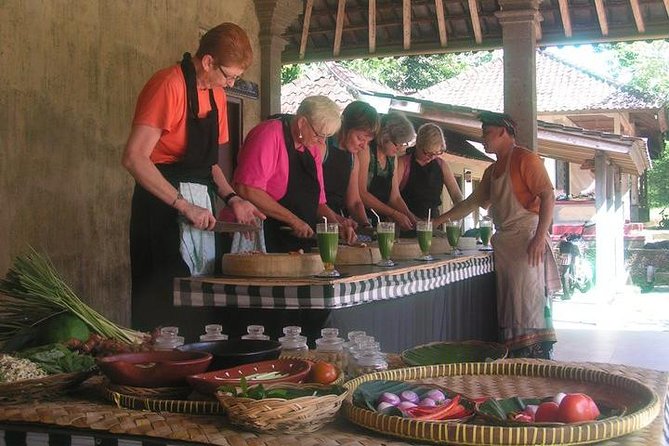
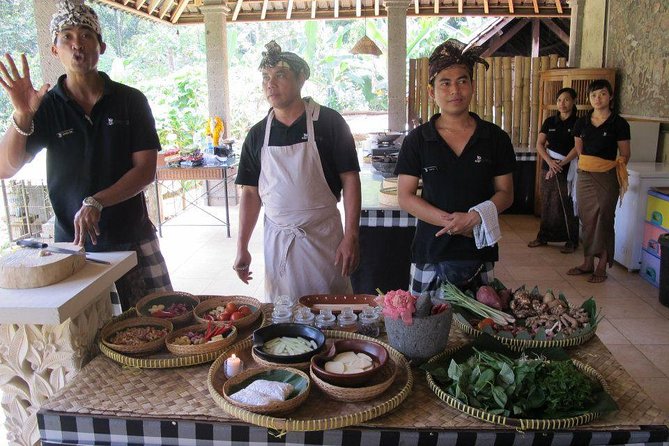
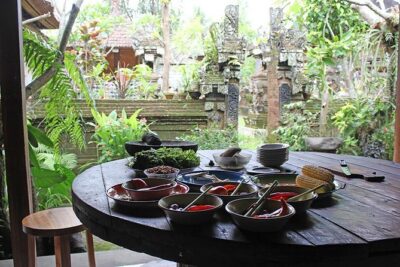
After the market, you head to the cooking pavilion at the family home. Dewa welcomes you with a hot drink or mineral water and his fresh banana fritters. This small breakfast snack is a useful touch, since the early start means you may not have eaten much before pickup.
The setting adds another layer. While the cooking area is prepared, you hear about Balinese family life, home shrines, and everyday culture. This is not a formal sightseeing stop, but it helps explain why food, family, and ritual are so closely linked in Balinese homes.
More Balinese cooking classes:
- Ubud Cooking Class Bali with Balinese Chef
★ 5.0 · 1,609 reviews - Ubud: Cooking Class with Transfers and Optional Market Visit
★ 4.9 · 824 reviews - PRIVATE Authentic Balinese Cooking Class in Ubud at Putu’s Home
★ 5.0 · 644 reviews
The 7:30 am start and pickup from central Ubud
The experience starts at 7:30 am, with round-trip transfers offered from central Ubud hotels. That makes the morning easier if you are staying in the main Ubud area and do not want to arrange a taxi before sunrise.
The early hour is also useful for the market visit. A morning market is the right place to see produce and ingredients as part of the daily shopping routine, rather than arriving after the main activity has ended.
You should confirm your pickup details after booking. Confirmation is sent within 48 hours, subject to availability, and the experience has a maximum of 12 participants. A group of that size is not private, but it should allow you to see the demonstrations and ask questions without the class feeling like a large workshop.
The six-hour length is worth noting. This is not a one-hour lesson squeezed between other Ubud activities. Plan to give it most of your morning and afternoon, and avoid booking another fixed appointment too close to the finish.
Shopping for the meal at a local morning market
The market is the first real lesson. Your family host selects and explains the fresh ingredients that will later appear in your dishes, including herbs, spices, fruits, and vegetables.
This part is valuable even if you already enjoy cooking. Balinese food often relies on combinations of fragrant ingredients, and understanding those ingredients is easier when you can see them whole, smell them, and hear how they are used.
The information provided does not promise a fixed market name or a set list of dishes for every date. That may be a benefit. The menu can be connected to what is fresh and available, rather than relying on an identical display every day.
You may also have the chance to try fruit that is difficult to find in the United States. That is one of the pleasures of the stop: it is not only shopping for lunch, but also a chance to notice produce that may be unfamiliar at home.
Do not expect a major attraction with signs and displays. The value comes from the ingredients and the conversation. If you prefer a cooking class that starts immediately with chopping and frying, this market visit may feel like extra time. If you want food connected to local life, it is one of the strongest parts of the day.
Coffee, banana fritters, and a look inside Balinese family life
Back at the compound, Dewa offers coffee, tea, or mineral water along with Pisang Goreng, crispy banana fritters made fresh for the welcome.
This snack gives the morning a friendly rhythm. You can settle in, taste something local, and listen while the staff checks the cooking pavilion. The banana fritters are not a substitute for lunch, but they take the edge off the early start.
The cultural talk covers Balinese lifestyles, families, and home shrines. Those details help you read the setting around you. A Balinese family compound is not simply a pretty backdrop for a cooking lesson, and the explanation of home life gives the visit more meaning.
The experience is held at a beautiful Balinese home, according to the supplied details. Still, you should book this for the food and cultural exchange rather than for a formal house tour. The emphasis remains on preparing and eating the meal.
A few more Ubud half-days to weigh up
- Hands-On Silver Jewelry Making Near Ubud’s Monkey Forest
★ 4.9 · 1,789 reviews - Ubud Silver Class Jewelry making in bali
★ 5.0 · 978 reviews - Canggu: Bali Turtle Silver & Gold Workshop
★ 4.9 · 643 reviews - Ubud: Balinese Cooking Class and Market Tour
★ 4.8 · 531 reviews
Cooking a complete Balinese menu
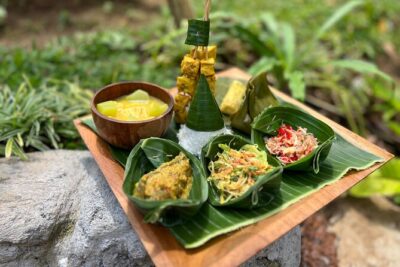
The class teaches a full menu rather than one signature dish. You prepare an appetizer, several traditional main dishes, accompanying side dishes, and dessert.
That broad menu is good value for anyone who wants to understand how a meal works as a whole. You get to see how different flavors and textures sit together, rather than learning one recipe in isolation.
The exact menu is not specified in advance, so you should not book if you need to know the precise dishes before paying. The advantage is that the lesson can reflect the ingredients selected at the market and the way the host teaches Balinese home cooking.
The class is led by a professional chef, with Dewa involved in the welcome and cultural portion. The family host also plays an important role during market shopping. Together, those elements suggest a lesson that combines practical instruction with the story behind the food.
You receive an illustrated instructional booklet with the menu, recipes, directions, photos, and cooking tips. There is also space for personal notes. This is especially useful because a long class can give you more information than you can remember once you leave.
The booklet also improves the value of the $62 price. You are paying for transport, market guidance, snacks, instruction, lunch, and a take-home reference, not just for the ingredients used during the class.
Lunch is part of the lesson
After preparing the menu, you sit down to eat what you made. This is the natural payoff, but it also gives you a chance to judge the recipes as a complete meal.
The food is described as traditional, healthy, and delicious, with fresh ingredients from the morning shopping stop. You should keep your expectations practical: the result depends on your group, the guidance you receive, and the ingredients available that day.
One particularly meaningful detail is the closing ritual of gratitude after the meal. It links the cooking to Balinese customs and gives the experience a thoughtful ending, rather than finishing as soon as the last dish is served.
Dessert is also prepared during the class and eaten as part of the final meal. The experience ends with your own freshly made dessert, so you get a complete beginning-to-end cooking session.
What the $62 price buys you
At $62, this is not the cheapest way to eat in Ubud. Local food is inexpensive, and you could spend far less on a plate of prepared food.
The comparison changes when you count what is included. You receive pickup from central Ubud hotels, a market visit, a snack and drink, instruction from a professional chef, ingredients, a full lunch, cultural discussion, and a recipe booklet.
I see the price as fair for visitors who want both a meal and a structured cultural activity. The home setting adds value that a standard restaurant meal cannot provide, and the booklet gives you a way to repeat the dishes after returning home.
The value is weaker if you mainly want to eat Balinese food without cooking. It is also less compelling if you have already booked several food tours and cooking classes during your Bali trip. For a first serious introduction to Balinese food, though, the combination is well rounded.
Who will enjoy this six-hour experience
This class suits you if you like to learn by doing. You will get the most from it if you enjoy asking about ingredients, trying unfamiliar fruit, and taking notes while you cook.
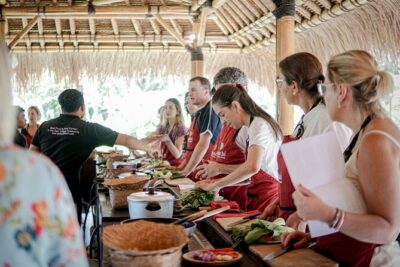
It is also a good choice for couples, families, and small groups who want an activity with more substance than a restaurant visit. The 12-person maximum keeps the group from becoming huge, though the experience is not described as private.
You should also like a slower schedule. The market, welcome, cultural talk, cooking, meal, and closing ritual all take time. That is the point, but it means the class will occupy a large part of your day.
People with a strong interest in Balinese culture may find the home setting more rewarding than a purpose-built cooking school. You get a look at family life and home shrines alongside the recipes.
A few practical points before booking
Wear something comfortable for a morning of market shopping and cooking. The supplied information does not state a dress code, so you should check directly if you have specific clothing concerns.
The class is near public transportation, but pickup is offered from central Ubud hotels. If you are staying outside central Ubud, do not assume transport is included. Confirm the pickup area before booking.
The experience requires a minimum number of participants. If that minimum is not reached, the provider may offer another date or experience, or give you a full refund.
You can cancel for a full refund if you do so at least 24 hours before the local start time. Changes or cancellations made within 24 hours are not refunded or accepted, so keep that deadline in mind when arranging other Bali plans.
The booking confirmation arrives within 48 hours and depends on availability. Since the start time is early, it is sensible to make sure you have the confirmed meeting details before the evening before the class.
What makes the food experience memorable
The strongest part of this class is the connection between place, people, and food. You start by seeing the ingredients in a local market, then enter a family compound, hear about Balinese customs, prepare the meal, and finish with a shared lunch.
That sequence gives the day a clear shape. You are not only following instructions at a counter. You are learning why the ingredients matter and how they fit into a Balinese household setting.
The welcome from Dewa, the freshly made Pisang Goreng, and the closing gratitude ritual add personal touches. They help the experience feel like an invitation into a home rather than a standard cooking demonstration.
The consistently high rating, 5 out of 5 from 78 ratings with 100 percent recommending it, matches the parts I would value most: the warm family setting, careful organization, fresh ingredients, and the chance to learn about culture while cooking.
Should you book Lobong Culinary Experience?
Book it if you want a full morning and afternoon built around food, not simply a recipe lesson. The market visit, family compound, cultural explanation, professional instruction, and meal make this a strong choice for a first cooking experience in Ubud.
I would be more cautious if you dislike early starts, have limited time, or need a guaranteed menu. The exact dishes are not listed, and the six-hour format requires a real commitment.
For most food-minded visitors staying in central Ubud, the $62 price offers solid value. You leave with a meal you prepared, a better sense of Balinese ingredients and customs, and written recipes to try at home.
FAQ
Where does the cooking experience take place?
The experience takes place in Ubud, beginning at a local morning market and continuing at a Balinese family home and cooking pavilion. Pickup is offered from central Ubud hotels.
What time does the experience start?
The stated start time is 7:30 am.
How long does the class last?
The experience lasts approximately six hours.
What food is included?
You prepare an appetizer, several traditional main dishes, accompanying side dishes, and dessert. You also receive a breakfast snack of Pisang Goreng banana fritters, along with coffee, tea, or mineral water.
How many people can join the class?
The activity has a maximum of 12 participants.
Can I cancel for a refund?
Yes. You can cancel at least 24 hours before the local start time for a full refund. Cancellations or changes made less than 24 hours before the start are not refunded or accepted.
Just added around Ubud
- Authentic hike in the forest with lunch at the inhabitant★ 5.0 · 3 reviews
- Heaven Gate, Tirtagangga and Tukad Cepung Waterfall – All Inclusive★ 5.0 · 3 reviews
- Half Day Uluwatu Temple Sunset, Kecak Dance and Seafood Dinner★ 3.5 · 3 reviews
- Ubud: White Water Rafting with visit Ubud Monkey Forest★ 5.0 · 3 reviews
- East Bali and Lempuyang Temple Tour★ 5.0 · 3 reviews
- Ubud: Temple, Swing, Waterfall, Rice Terrace & Monkey Forest★ 5.0 · 3 reviews
- ️Bali All Inclusive Tour: Ubud – Tegalalang – Kintamani★ 5.0 · 3 reviews
- Blue Lagoon Snorkeling and Lunch with Tukad Cepung Waterfall★ 5.0 · 3 reviews
Balinese Cooking Classes, compared.
Cooking Class with Transfers and Optional Market Visit
Read our review →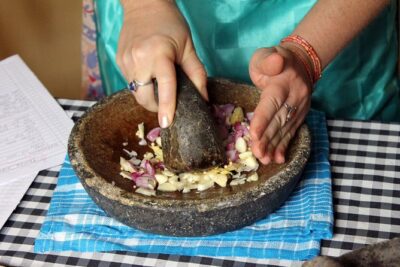
PRIVATE Authentic Balinese Cooking Class in Ubud at Putu’s Home
Read our review →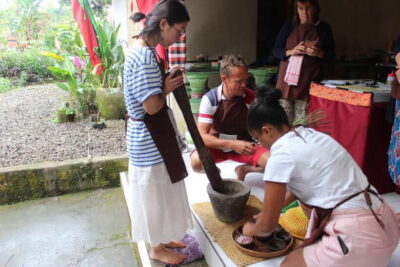
PRIVATE Balinese Cooking Class in Ubud with Dewa with Transfers
Read our review →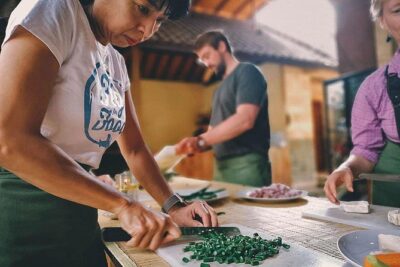
Balinese Cooking class with traditional morning market visit
Read our review →Browse the lists this tour appears in