
Reviewed · BALINESE COOKING CLASSES
Authentic Balinese Cooking Class with Ubud Tour – All Inclusive
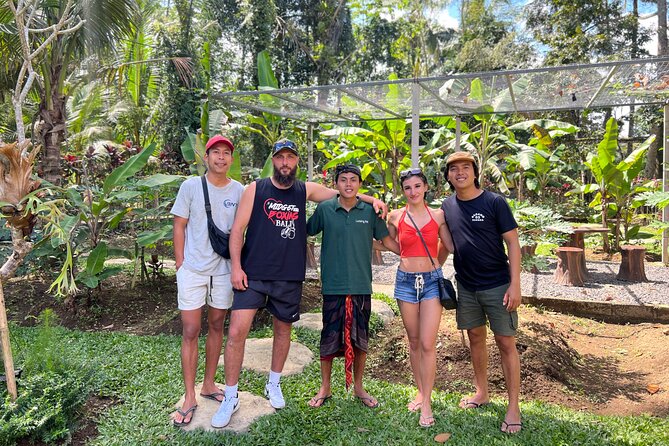
The best part of this Ubud day is that cooking is only one piece of it. You begin with ordinary Balinese life, from a traditional market and family home to a farm where ingredients are gathered, then turn those ingredients into lunch with a local chef. Later, temples, macaques, and Tegenungan Waterfall add the classic Ubud sights.
I like the farm-to-table setup, since you do not simply watch a chef open packets of prepared ingredients. I also like the choice of regular, vegetarian, or vegan menus, along with hotel pickup, lunch, and a private car included in the $59 price. The main drawback is the long schedule: at about eight hours, this is a full day rather than a quick cooking lesson, and the market visit is available only with the morning class.
In This Review
- Key points at a glance
- A full day that connects food, family life, and nature
- Start with the traditional market, if you choose the morning class
- Visit a Balinese home and see how space is used
- Gather spices at the farm before cooking
- Learn Balinese techniques with the lesung
- See the gray macaques at Ubud Sacred Monkey Forest
- Finish at Tegenungan Waterfall
- What the $59 price really covers
- Who will enjoy this Bali cooking experience most
- Practical planning before you book
- Final call: should you book it?
- FAQ
- How long does the experience last?
- What locations offer pickup and drop-off?
- Is the traditional market visit included with every class?
- What types of cooking menus are available?
- Is lunch included?
- Are entrance fees included?
- Are drinks included?
- What happens if bad weather cancels the tour?
Key points at a glance
- Market visit in the morning: Shop for spices at a traditional Balinese market before cooking.
- Local home and cultural context: See how a Balinese house is arranged and learn about local life.
- Farm-picked ingredients: Walk through the farm and harvest spices used in your meal.
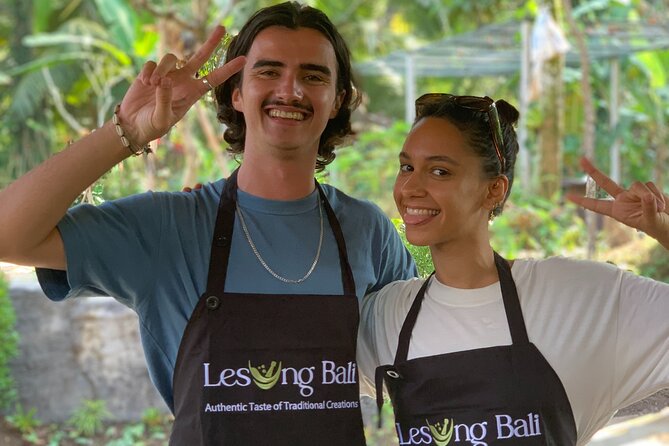
- Hands-on cooking: Practice chopping, pounding spices with a lesung mortar and pestle, and preparing lunch.
- Two major Ubud-area sights: Visit Ubud Sacred Monkey Forest and Tegenungan Waterfall after class.
- Broad pickup coverage: Pickup and drop-off are offered in Ubud, Kuta, Seminyak, Sanur, Nusa Dua, Jimbaran, Canggu, and Legian.
A full day that connects food, family life, and nature
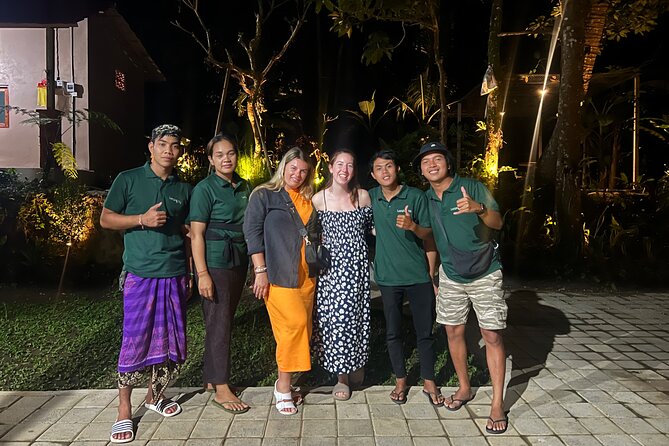
This experience works best as an introduction to Bali because it joins several parts of the island in one day. You are not limited to a kitchen classroom. The schedule moves from a market to a local home, then to a farm, a cooking session, Monkey Forest, and Tegenungan Waterfall.
That variety is the main reason to consider it. You get a taste of rural life, food traditions, Hindu surroundings, and Bali’s scenery without arranging separate transport for every stop. The tradeoff is pace. Eight hours gives the day room to breathe, but you should expect a busy outing rather than a slow, single-focus class.
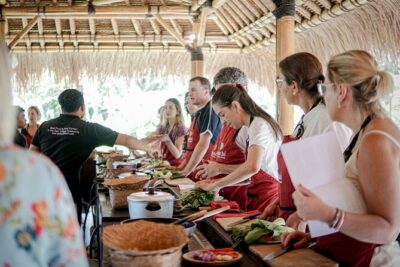
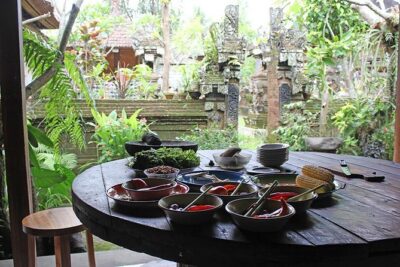
The cooking location is on the west side of Ubud, surrounded by green countryside. That setting matters. You are learning in an area connected to farms and village life, not in a city hotel kitchen designed mainly for convenience.
More Balinese cooking classes:
- Ubud Cooking Class Bali with Balinese Chef
★ 5.0 · 1,609 reviews - Ubud: Cooking Class with Transfers and Optional Market Visit
★ 4.9 · 824 reviews - PRIVATE Authentic Balinese Cooking Class in Ubud at Putu’s Home
★ 5.0 · 644 reviews
Start with the traditional market, if you choose the morning class
The morning option begins with a visit to a traditional market. You will see where local ingredients are bought and help purchase spices for the class. This makes the meal more meaningful because you encounter the ingredients before they reach the cooking table.
The market stop is also one of the more useful cultural parts of the day. A spice is not just a line in a recipe here. You get to handle the raw materials and see the everyday setting where they are traded. For someone visiting Bali for the first time, this offers a better sense of daily life than a cooking class that starts with neatly arranged bowls.
There is one important scheduling detail: the traditional market tour is offered only during the morning class. If this stop is high on your list, confirm that you select the morning departure. The supplied information does not give an exact start time, so check the booking details for your pickup time.
Visit a Balinese home and see how space is used
Next, you visit a local house. The purpose is not simply to peek inside, but to learn about Balinese culture, lifestyle, and the way the buildings are placed within the home compound.
This stop adds useful context before the cooking begins. Food traditions make more sense when you have seen a little of the household setting behind them. You may also be offered Balinese coffee and traditional sweets during the visit, details that make this part feel personal rather than rushed.
The home visit is especially worthwhile if you want more than a food demonstration. It gives you a chance to notice how local life is organized and how a house reflects Balinese customs. Just keep your expectations realistic. The available information does not specify how long the visit lasts or name the host, so the depth of the conversation may depend on the day and the group.
Gather spices at the farm before cooking
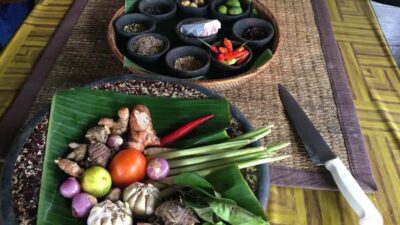
After the market and house visit, the group goes to the farm. You first decide which menu to prepare, then explore the growing area and harvest spices for the meal.
I like this order. You see the ingredients in the market, find some of them in the farm, and then use them in the kitchen. It gives you a clear link between the land, the market, and the plate.
The experience includes cooking utensils, an apron, bottled water, and coffee or tea. Those practical inclusions mean you do not need to pack much beyond comfortable clothing and whatever you normally carry for a day outside. No alcohol is included, so plan on a food-focused lunch with nonalcoholic drinks.
The farm setting also makes the class feel different from a standard demonstration. You are not only watching a chef work. You get a chance to take part in the early stages of the meal, though the exact amount of harvesting and preparation can vary with the chosen menu and the day’s schedule.
A few more Ubud half-days to weigh up
- Hands-On Silver Jewelry Making Near Ubud’s Monkey Forest
★ 4.9 · 1,789 reviews - Ubud Silver Class Jewelry making in bali
★ 5.0 · 978 reviews - Canggu: Bali Turtle Silver & Gold Workshop
★ 4.9 · 643 reviews - Ubud: Balinese Cooking Class and Market Tour
★ 4.8 · 531 reviews
Learn Balinese techniques with the lesung
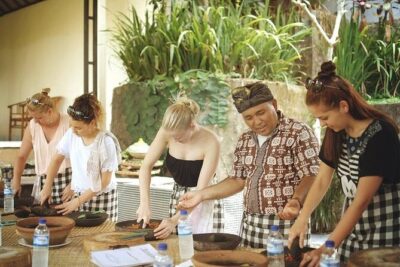
The chef then demonstrates how to prepare authentic Balinese food using fresh ingredients from the farm. A central technique is pounding spices with a lesung, the traditional mortar and pestle.
This is the kind of detail that gives the class its character. You will learn how to chop and pound ingredients in the Balinese way, then hear how much of each ingredient to use and what else is needed for the selected dishes. These are practical skills you can remember after returning home, unlike a demonstration where you only watch the finished meal appear.
The class offers regular, vegetarian, and vegan menu choices. That flexibility makes the experience suitable for different diets, but you need to choose your preference during the class or booking process as directed by the operator. The information does not list the exact dishes, so do not book expecting a particular recipe unless the provider confirms the menu.
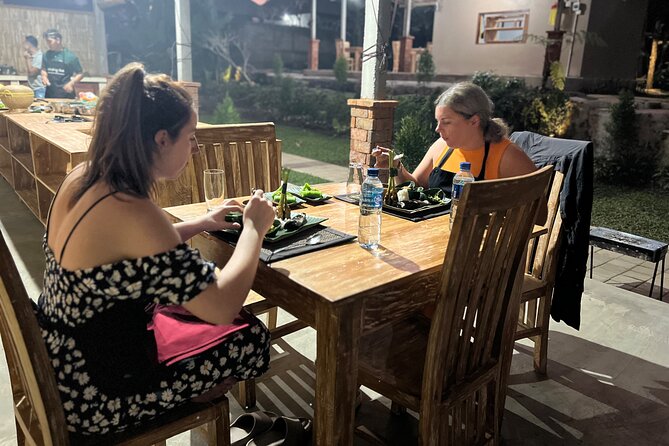
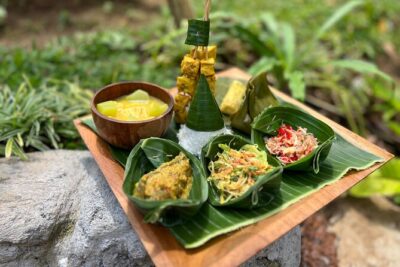
Lunch is included, and the final meal is the payoff for the work. One especially appealing detail is the balance between instruction and participation. The cooking is described as fun and well paced, so you should have time to follow along without feeling that the chef is racing ahead.
See the gray macaques at Ubud Sacred Monkey Forest
After lunch, the itinerary turns to one of Ubud’s best-known sights, Sacred Monkey Forest. Inside the forest, gray macaques roam among Hindu temples.
This is a strong choice for a first Ubud visit because it combines nature and religious architecture in one stop. You will see more than monkeys. The forest setting and temple structures provide a change of mood after the kitchen and farm.
Still, this is not a quiet wildlife outing. The macaques are free-roaming animals, and the stop is built around seeing them in their temple surroundings. Keep your belongings secure and follow on-site instructions. The provided details do not specify the exact amount of free time, so expect the visit to fit within a larger day rather than serve as a long, unhurried forest walk.
The entrance fee is included, which keeps the day’s price easier to judge. You are not paying the advertised amount and then adding admission at every major stop.
Finish at Tegenungan Waterfall
The final sightseeing stop is Tegenungan Waterfall, one of Bali’s most popular waterfalls and a convenient addition to an Ubud-area outing. The draw is the waterfall scenery, a strong visual finish after a day centered on food and village life.
This stop gives you a chance to shift from cultural activities to Bali’s natural setting. You can expect a view of the waterfall area, but the supplied information does not state whether swimming, a specific trail, or a particular viewing platform is part of the visit. Do not plan the stop around activities that have not been confirmed.
Weather can affect the day. The experience requires good weather, and if poor conditions force cancellation, you are offered another date or a full refund. That rule is sensible for an outdoor itinerary with a waterfall stop, but it means you should keep some flexibility in your Bali schedule.
What the $59 price really covers
At $59 per person, this is a strong package if you want several experiences in one day. The price includes pickup and drop-off, an air-conditioned vehicle, a private car, the cooking class, utensils, apron, bottled water, coffee or tea, lunch, and entrance fees.
The value comes from the combination. A standalone cooking lesson might give you more time with the chef, while a separate sightseeing trip might offer longer stops at Monkey Forest and Tegenungan. This outing combines both, along with a market, home, and farm visit, so it suits you if variety matters more than maximum time at any one location.
Pickup is available from a wide list of areas: Ubud, Kuta, Seminyak, Sanur, Nusa Dua, Jimbaran, Canggu, and Legian. That makes the tour practical even if you are staying outside Ubud, though a distant pickup could make the day feel longer. The tour lasts about eight hours, and the exact route and timing may depend on your pickup point and the class schedule.
A private car is included, while the activity allows a maximum of 15 participants. The information does not clearly explain whether the private car applies to each booking party or to the transport arrangement for the tour, so ask the provider if private transportation for your own group is essential.
Who will enjoy this Bali cooking experience most
I would recommend this tour to first-time visitors who want an easy introduction to several sides of Bali. It is also a good match for couples, families, and food-minded visitors who want an actual meal at the center of the day rather than only sightseeing from a vehicle.
Vegetarians and vegans have useful menu options, and the class is more hands-on than a simple chef demonstration. The local home and market visits also make it a better choice for you if everyday culture matters as much as famous sights.
You may want a different activity if you are an experienced cook seeking advanced instruction, or if you prefer a relaxed half-day with no extra stops. The exact dishes are not listed, and the day includes several locations. That means the experience favors breadth, participation, and convenience over specialist culinary training.
It may also be less suitable for anyone who dislikes long sightseeing days or wants complete control over the schedule. You will be moving from place to place, and weather can affect the outdoor portions.
Practical planning before you book
Wear clothing suitable for cooking and a day that includes outdoor stops. An apron is provided, but comfortable clothes and shoes will make the farm and sightseeing portions easier.
If the market is important to you, select the morning class. Afternoon timing removes that stop, although the cooking, home, farm, Monkey Forest, and waterfall portions remain the central features described for the experience.
The activity is booked on average 72 days ahead, which suggests planning early is sensible during popular travel periods. Confirmation is received at booking, and group discounts are available. The maximum group size is 15 people, so you should not expect a completely private lesson unless the provider confirms that arrangement.
Free cancellation is available up to 24 hours before the start time for a full refund. Changes or cancellations inside that 24-hour window are not accepted for a refund, and the cut-off uses local time. Alcoholic drinks are not included.
Final call: should you book it?
Book this experience if you want one full Bali day with food, culture, nature, and transport handled together. The market, home, and farm visits give the cooking class a more local shape, while the lesung technique and fresh-picked spices make the meal feel connected to its setting.
The $59 cost is reasonable for the number of inclusions, particularly if you would otherwise pay separately for transport, lunch, entrance fees, and a cooking lesson. Choose the morning option for the market, confirm your pickup details, and allow the full eight hours.
Skip it if your priority is an in-depth culinary course, a slow village visit, or a tightly controlled private itinerary. For a first visit to Bali, though, this is a practical and enjoyable way to meet the island through its food before finishing with two familiar Ubud-area sights.
FAQ
How long does the experience last?
The tour lasts approximately eight hours.
What locations offer pickup and drop-off?
Pickup and drop-off are offered in Ubud, Kuta, Seminyak, Sanur, Nusa Dua, Jimbaran, Canggu, and Legian.
Is the traditional market visit included with every class?
No. The traditional market tour is available with the morning class only.
What types of cooking menus are available?
You can choose from regular, vegetarian, and vegan menu options.
Is lunch included?
Yes. Lunch is included in the experience.
Are entrance fees included?
Yes. Entrance fees are included.
Are drinks included?
Coffee or tea and bottled water are included. Alcoholic beverages are not included.
What happens if bad weather cancels the tour?
You will be offered a different date or a full refund if the experience is canceled because of poor weather.
Just added around Ubud
- Authentic hike in the forest with lunch at the inhabitant★ 5.0 · 3 reviews
- Heaven Gate, Tirtagangga and Tukad Cepung Waterfall – All Inclusive★ 5.0 · 3 reviews
- Half Day Uluwatu Temple Sunset, Kecak Dance and Seafood Dinner★ 3.5 · 3 reviews
- Ubud: White Water Rafting with visit Ubud Monkey Forest★ 5.0 · 3 reviews
- ️Bali All Inclusive Tour: Ubud – Tegalalang – Kintamani★ 5.0 · 3 reviews
- East Bali and Lempuyang Temple Tour★ 5.0 · 3 reviews
- Ubud: Temple, Swing, Waterfall, Rice Terrace & Monkey Forest★ 5.0 · 3 reviews
- Blue Lagoon Snorkeling and Lunch with Tukad Cepung Waterfall★ 5.0 · 3 reviews
Balinese Cooking Classes, compared.
Cooking Class with Transfers and Optional Market Visit
Read our review →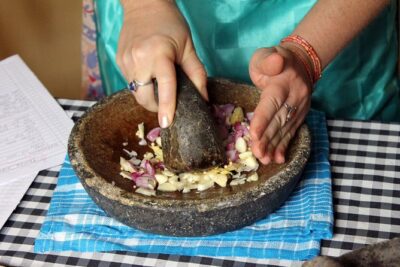
PRIVATE Authentic Balinese Cooking Class in Ubud at Putu’s Home
Read our review →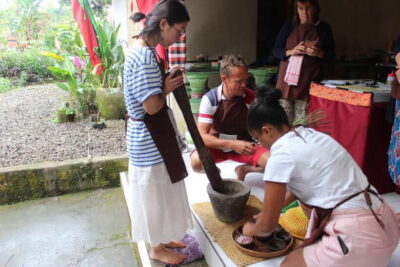
PRIVATE Balinese Cooking Class in Ubud with Dewa with Transfers
Read our review →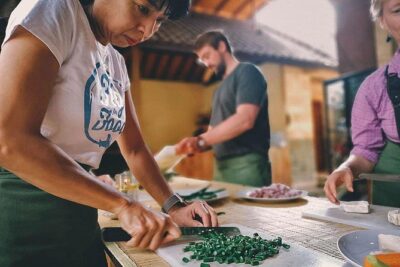
Balinese Cooking class with traditional morning market visit
Read our review →Browse the lists this tour appears in