
Reviewed · WORKSHOPS
Ubud: Traditional Balinese Music Lesson
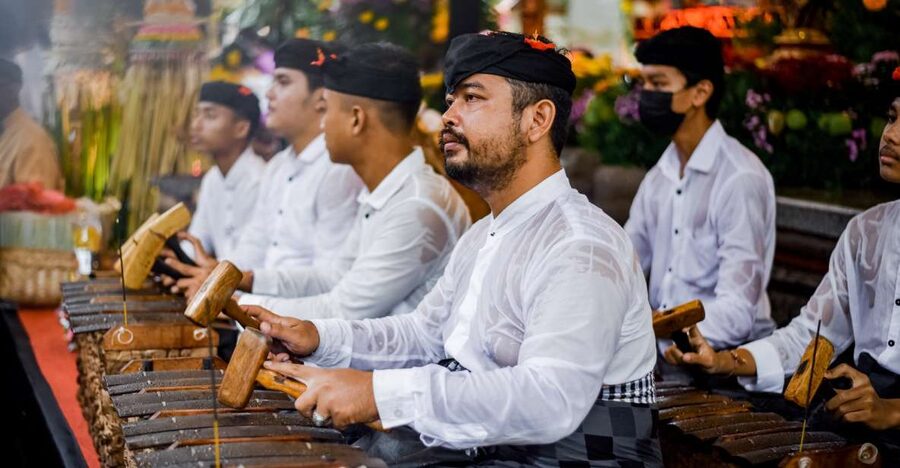
Balinese gamelan is not simply a collection of metal instruments played together. It is a group conversation, built from interlocking rhythms, shared timing, and close attention to the musicians around you. In this two-hour Ubud lesson, Putu introduces you to gamelan selonding, explains its place in Balinese culture, and then puts instruments in your hands.
I like two things right away: the class is genuinely hands-on, and the small group limit of six allows the teaching to stay personal. I also like that Putu brings both inherited Balinese traditions and formal music training from Bali’s Art University.
The main consideration is that this is a focused lesson at Pondok Permata Homestay, not a sightseeing tour. You will not visit several Ubud attractions or watch a full staged performance. You will spend your time learning, listening, and practicing.
In This Review
- Key Points to Know Before Booking
- Why This Lesson Gives You More Than a Gamelan Photo
- Meeting Putu at Pondok Permata Homestay
- The First Part: Gamelan History and Balinese Culture
- Learning the Instruments One Step at a Time
- Playing a Complete Theme Together
- What Makes the Teaching Special
- Is Two Hours Enough?
- The $22 Price: Good Value for a Cultural Activity
- Who Should Book This Experience?
- Practical Details That Matter
- How This Fits Into an Ubud Itinerary
- Should You Book the Balinese Music Lesson?
- FAQ
- Where does the Balinese music lesson take place?
- How long does the lesson last?
- How much does the experience cost?
- What type of Balinese music will I learn?
- What happens during the class?
- Do I need musical experience?
- Who teaches the lesson?
- What languages are available?
- How many people can join?
- Can I cancel the booking?
Key Points to Know Before Booking
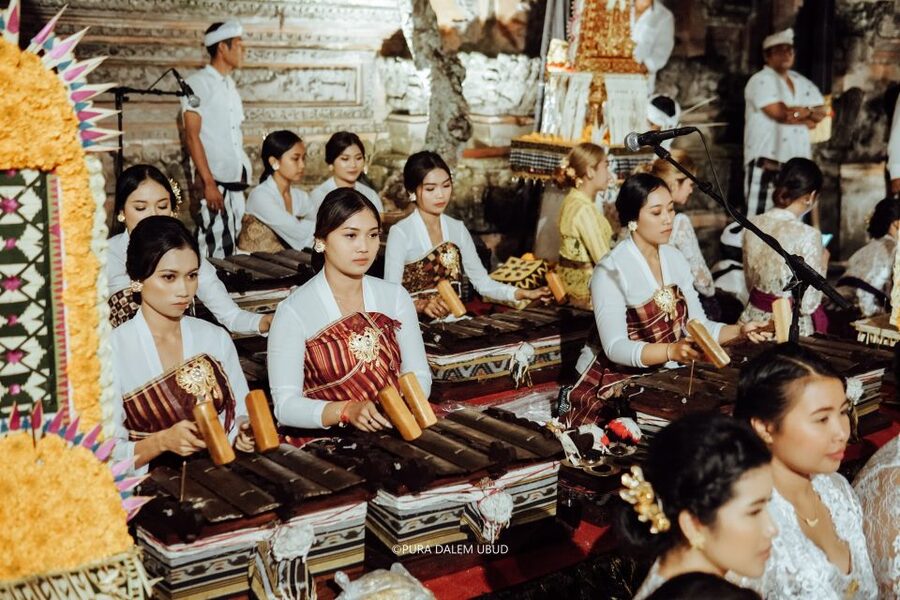
- You learn gamelan selonding, a traditional Balinese musical form, rather than receiving only a short demonstration.
- Putu teaches history and technique, then helps you play a complete theme with the group.
- Beginners are welcome, and the lesson can also satisfy trained musicians who want to discuss rhythm, tuning, and ensemble playing.
- The class lasts two hours and takes place at Pondok Permata Homestay, with no transport included.
- Groups are limited to six people, though a solo booking may feel much like a private lesson.
- The cost is $22 per person, with free cancellation up to 24 hours before the start time.
Why This Lesson Gives You More Than a Gamelan Photo
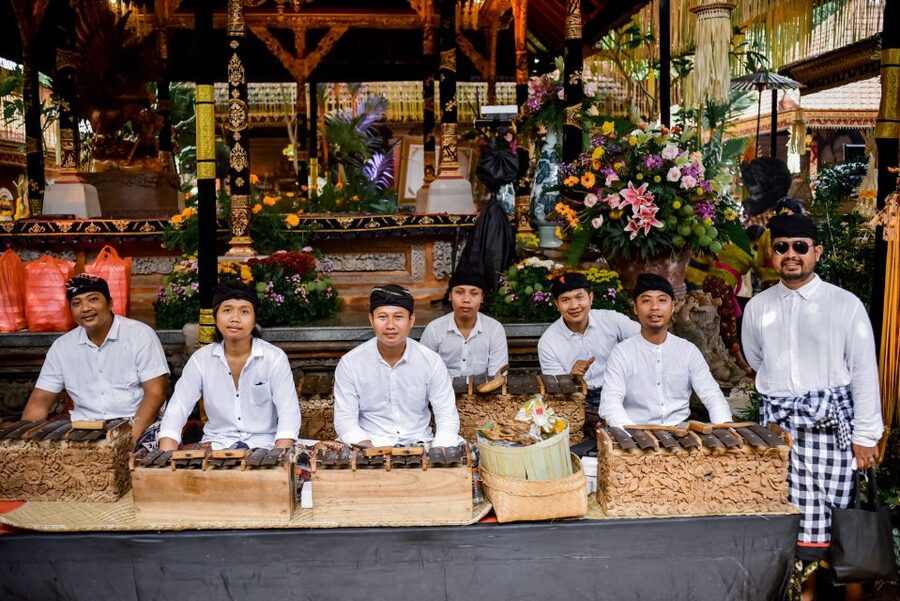
Many cultural activities in Bali let you watch. This one asks you to take part. That difference matters because gamelan can sound mysterious when heard from a distance. Once you sit with the instruments and learn how the parts fit together, the music becomes easier to understand.
The class focuses on gamelan selonding and traditional Balinese instruments. You first receive an explanation of the music’s background and history. Then Putu demonstrates how to hold and strike the instruments, how to follow the rhythm, and how your part fits with the rest of the ensemble.
The lesson is not built around reading Western musical notation. Several participants have learned a short song by ear and played different parts together by the end. That approach gives you a practical sense of how Balinese ensemble music works, even if you cannot read music or have never played an instrument.
I especially like the connection between the lesson and Ubud’s performance culture. If you attend a Legong dance or another Balinese performance during your stay, the music may make more sense afterward. You will have some idea of how the patterns are built and why the group must listen closely to one another.
A few more Ubud half-days to weigh up
- Hands-On Silver Jewelry Making Near Ubud’s Monkey Forest
★ 4.9 · 1,789 reviews - Ubud Cooking Class Bali with Balinese Chef
★ 5.0 · 1,609 reviews - Ubud Silver Class Jewelry making in bali
★ 5.0 · 978 reviews
Meeting Putu at Pondok Permata Homestay
The meeting point is Pondok Permata Homestay, which is also where the entire activity takes place. You go directly there, take the lesson, and finish at the same spot. No hotel transfer or sightseeing stop is included, so you will need to arrange your own way to the homestay.
The instructor is identified as Putu, a Balinese musician who has taught for about 16 years. He studied traditional Balinese music at the Art University in Bali and has taught many students. Some of the supplied session details refer to the teacher as Dodo, Dudu, or Du-du, so it is sensible to confirm the instructor’s name and meeting instructions when you book.
The setting is useful for this type of activity. A lesson in a working local space keeps the focus on the instruments and the teacher rather than on a polished tourist show. The tradeoff is simple: you should expect a practical teaching environment, not a formal concert hall.
The First Part: Gamelan History and Balinese Culture
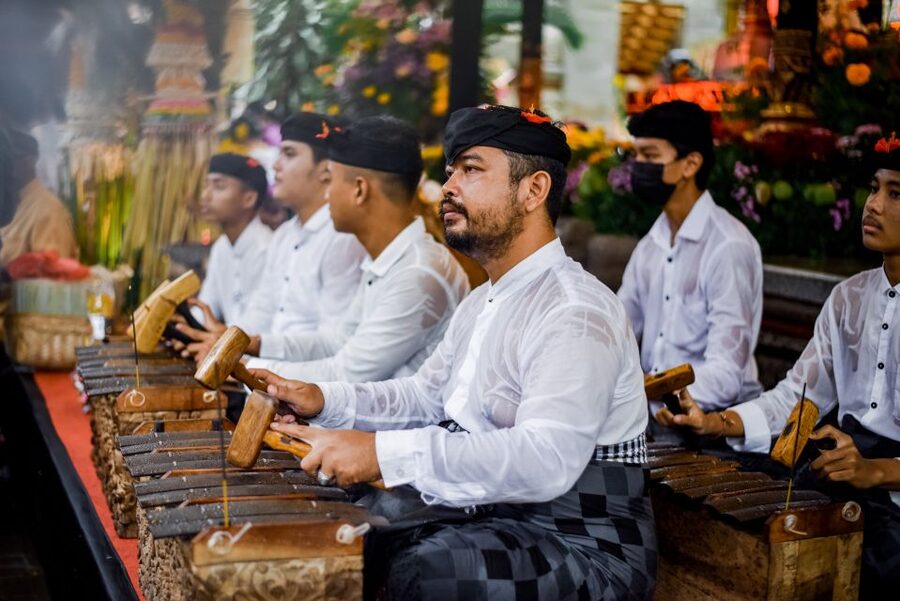
The class begins with an explanation of Balinese gamelan and its cultural setting. This opening gives you a frame for what you are about to hear and play. Without it, the instruments can seem like a wall of bright, fast sound. With it, you can start to notice how the music is organized.
Putu explains the traditions behind the music and the role of the instruments in a Balinese ensemble. He also discusses different styles and orchestras, according to the lesson details. This is a strong part of the experience for anyone who plans to attend dance or theater performances in Ubud.
The historical introduction is not meant to replace a full academic course. It is a short, useful briefing before the practical work begins. If you have detailed questions about Balinese and Western music, the instructor can also discuss differences in tonality and ensemble structure.
That comparison may be especially interesting for musicians. Western music often places more attention on a central melody, harmony, or individual performer. Gamelan depends on coordinated parts, repeated patterns, and the group’s shared pulse. You begin to hear music less as a single line and more as a system of pieces working together.
Learning the Instruments One Step at a Time
After the introduction, Putu demonstrates the instruments and shows you the basic playing technique. You learn how to strike the instrument and how to control the sound. The lesson is practical, so you do not spend the full two hours listening to a lecture.
This part calls for patience. Gamelan playing may look easy when an experienced musician performs it, but timing and coordination take attention. You may need to watch Putu closely, copy a short pattern, and repeat it several times before it feels natural.
That is where the small group matters. With no more than six participants, Putu can watch how each person is handling the part. If you book alone, the session may feel like a private music lesson. Couples and small groups can learn separate parts and then hear the piece come together.
The teacher’s approach is encouraging and adaptable. The supplied details describe him as patient and clear, with a good sense of how quickly to move through the material. That makes the lesson suitable for people with no musical background, while still leaving room for more experienced players to ask technical questions.
A completely different day out, same corner of Ubud:
- All-Inclusive Ubud Private Tour
★ 5.0 · 14,344 reviews - Best of Ubud Full-Day Tour with Jungle Swing
★ 5.0 · 8,571 reviews - Ubud: Monkey Forest, Jungle Swing, Rice Terrace, and Water Temple
★ 5.0 · 7,160 reviews - Ubud: Waterfalls, Water Temple & Rice Terraces Private Tour
★ 5.0 · 5,484 reviews
Playing a Complete Theme Together
The most rewarding part comes when the separate exercises become an ensemble piece. Putu teaches a short song in different parts, often without written scores. You play one part while the other musicians handle theirs, then the group works toward a complete theme.
This is where the lesson’s central idea becomes clear: you are not trying to play louder or faster than the other musicians. You are trying to fit your part into the shared rhythm. If one person loses the pattern, the group must recover together.
By the end, you may be able to play a simple theme with Putu and the other participants. The experience notes describe people recording short videos of their playing, which can be a nice way to remember the session. Ask before filming, and keep your phone from becoming a distraction while you are learning.
The final group playing is also the point where beginners and experienced musicians meet on equal ground. A professional pianist may notice details about rhythm and tuning that a first-time player misses, but both still have to listen and respond. The activity is not a test. It is a short introduction to a musical system that depends on cooperation.
What Makes the Teaching Special
Putu’s background gives the lesson useful range. He learned traditional Balinese music through his culture and elders, then studied music formally at university. That combination lets him explain both the local tradition and the technical side of playing.
I would pay attention to his explanation of the instruments and the group structure. You are not only learning which object to strike. You are learning why the ensemble sounds the way it does and how each player contributes to the result.
The class also appears to adjust to the person in front of the teacher. A complete beginner can work through a basic pattern without needing previous training. A professional musician can ask more detailed questions about tonal systems, orchestras, and the differences between Balinese and Western musical ideas.
The names Dodo and Dudu appear in several session descriptions, while the activity information identifies the musician as Putu. This may simply reflect nicknames or variations in transcription, but I would confirm the name at booking so there is no confusion when you arrive.
Is Two Hours Enough?
Two hours is a sensible length for a first encounter. You have time for cultural context, an instrument demonstration, technique practice, and a group piece. A shorter session might leave you with only a quick introduction, while a much longer first lesson could become tiring for people unused to the playing style.
Do not expect to master Balinese gamelan in one visit. The goal is to understand the basic method and experience ensemble playing. You should leave with a clearer ear, a short piece under your fingers, and a better sense of what you hear at Balinese performances.
The pace may vary depending on the group. A solo lesson can move quickly into detailed instruction. A group of six may take longer to coordinate, but it also gives you the chance to hear several parts working together. Either way, the class is limited in size rather than run as a large workshop.
Starting times are not fixed in the information provided. You need to check availability when choosing a date and time.
The $22 Price: Good Value for a Cultural Activity
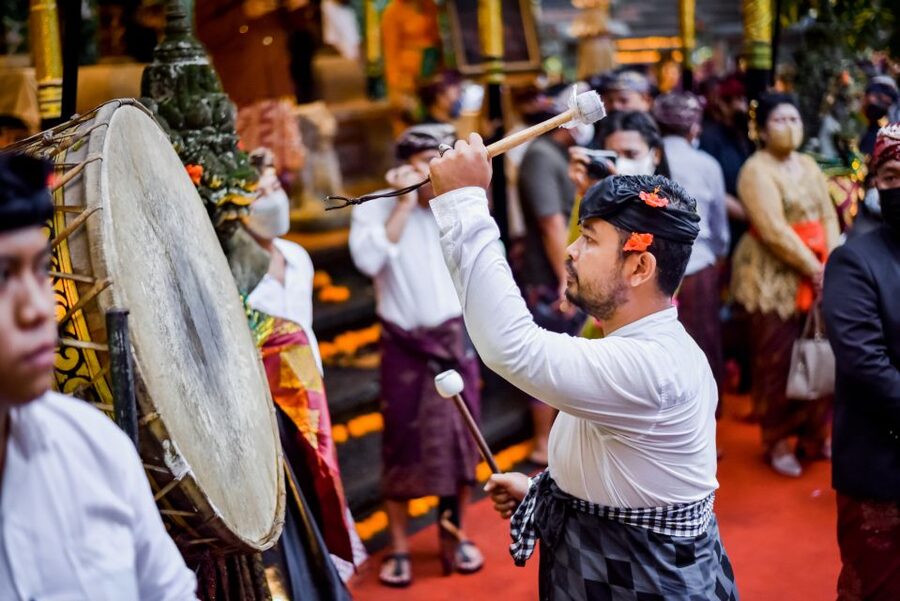
At $22 per person, this is a reasonable price for a two-hour lesson with an experienced instructor and access to traditional instruments. You are paying for direct teaching, not simply admission to a performance.
The value is strongest if you take part actively. If you want to sit back and listen to Balinese music, a concert or dance performance may suit you better. If you want to understand the music by trying it yourself, this lesson offers more personal contact for the money.
A small group also improves the value. Six people is still enough for an ensemble, but it is small enough for Putu to correct technique and answer questions. A solo or two-person booking may feel particularly worthwhile if you want more individual attention.
The price does not include transport to Pondok Permata Homestay. You should factor in the cost and time of getting there, especially if the lesson does not fit neatly with other plans in Ubud.
Who Should Book This Experience?
I would recommend this class to several types of people:
- You want a local cultural activity that involves doing, not only watching.
- You have never played an instrument but enjoy rhythm and group music.
- You are a musician interested in Balinese and Western musical differences.
- You have seen Balinese dance and want to understand the music behind it.
- You are traveling alone and would appreciate the feel of a private lesson.
- You are a couple or small group looking for a shared activity in Ubud.
You do not need musical training. The teacher starts with basic technique and guides you through the parts. You should, however, be ready to listen carefully and repeat patterns. This is a music lesson, so the experience rewards attention more than passive sightseeing.
It may not suit you if you want a fast-moving itinerary, a full performance, or a broad tour of Ubud. The activity stays in one place for two hours and concentrates on one tradition.
Practical Details That Matter
The experience is offered in English and Indonesian. If you need highly technical explanations in English, the depth may depend on the topic and the pace of the class, but the activity is designed for English-speaking participants.
Alcohol and drugs are not allowed. The activity ends back at the meeting point, and no separate transport is included.
You can reserve now and pay later, which helps if your Bali schedule is still changing. Free cancellation is available up to 24 hours before the activity for a full refund. Check the exact starting time and meeting directions before you set out.
Wear something comfortable enough for sitting and playing. The supplied information does not specify a dress code or seating arrangement, so confirm any special needs directly before booking rather than assuming the venue can accommodate them.
How This Fits Into an Ubud Itinerary
This lesson works well on a day when you want a break from temples, markets, and traffic. Since it lasts two hours and begins and ends at Pondok Permata Homestay, you can place it between other plans if the available time matches your schedule.
It also makes sense before attending a Balinese dance performance. The lesson can give you a few musical reference points, so you may listen for repeating patterns and group interaction during the show. Taking the class afterward works too, especially if you want to discuss music you have just heard.
I would not book it as a rushed add-on between distant Ubud attractions. You need time to reach the homestay, settle in, and give your attention to the lesson. The experience is at its best when you treat it as the main activity for that part of the day.
Should You Book the Balinese Music Lesson?
Book this if you want a direct, friendly introduction to Balinese culture and do not mind making music yourself. Putu’s long teaching experience, formal study, and focus on both history and practice give the class substance. The chance to learn a short piece and play it with others is the real payoff.
At $22, it is a strong value for solo visitors, couples, musicians, and curious beginners. Skip it only if you are looking for a performance rather than participation, or if getting to Pondok Permata Homestay is inconvenient.
For most people with an interest in Balinese culture, two hours is enough to change the way you hear gamelan afterward. You will not leave as a master, but you will have a much better idea of how the sound is made.
FAQ
Where does the Balinese music lesson take place?
The activity takes place at Pondok Permata Homestay in Ubud, Bali. You go directly to the homestay for the lesson.
How long does the lesson last?
The lesson lasts two hours. Starting times depend on availability when you book.
How much does the experience cost?
The listed price is $22 per person.
What type of Balinese music will I learn?
The lesson introduces you to traditional Balinese music called gamelan selonding.
What happens during the class?
You learn about the history of Balinese gamelan, receive an explanation of playing technique, and practice traditional Balinese instruments.
Do I need musical experience?
No previous musical experience is stated as a requirement. The class is described as suitable for people who are musical and for people who are not.
Who teaches the lesson?
The instructor is identified as Putu, a Balinese musician who has taught Balinese music for about 16 years. Some activity details also refer to the teacher as Dodo, Dudu, or Du-du, so confirm the instructor’s name when booking.
What languages are available?
The lesson is offered in English and Indonesian.
How many people can join?
The activity is a small-group experience limited to six participants.
Can I cancel the booking?
Yes. You can cancel up to 24 hours in advance for a full refund. The activity also offers reserve now and pay later booking.
Just added around Ubud
- Authentic hike in the forest with lunch at the inhabitant★ 5.0 · 3 reviews
- Heaven Gate, Tirtagangga and Tukad Cepung Waterfall – All Inclusive★ 5.0 · 3 reviews
- Half Day Uluwatu Temple Sunset, Kecak Dance and Seafood Dinner★ 3.5 · 3 reviews
- Ubud: White Water Rafting with visit Ubud Monkey Forest★ 5.0 · 3 reviews
- Ubud: Temple, Swing, Waterfall, Rice Terrace & Monkey Forest★ 5.0 · 3 reviews
- ️Bali All Inclusive Tour: Ubud – Tegalalang – Kintamani★ 5.0 · 3 reviews
- East Bali and Lempuyang Temple Tour★ 5.0 · 3 reviews
- Blue Lagoon Snorkeling and Lunch with Tukad Cepung Waterfall★ 5.0 · 3 reviews
Workshops, compared.
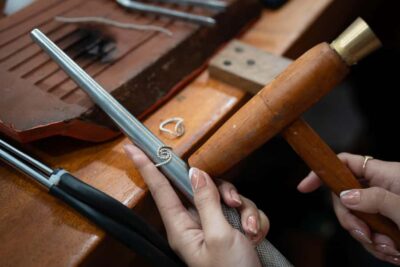
Hands-On Silver Jewelry Making Near Ubud’s Monkey Forest
Read our review →

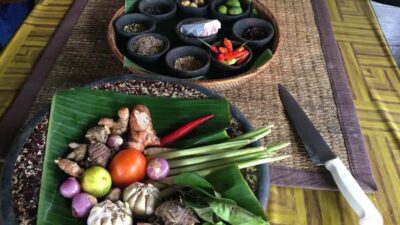
Cooking Class with Transfers and Optional Market Visit
Read our review →
PRIVATE Authentic Balinese Cooking Class in Ubud at Putu’s Home
Read our review →

Browse the lists this tour appears in