
Reviewed · WORKSHOPS
Ubud: Three- hour Balinese Decorative Fruit Carving Class
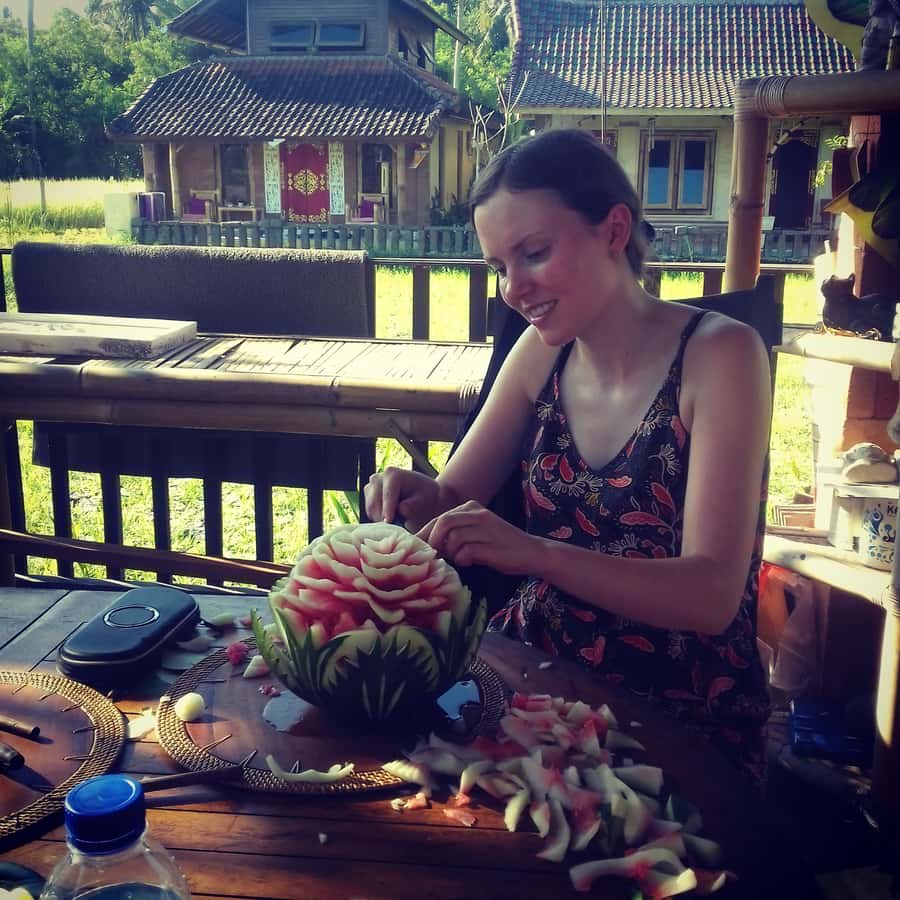
A melon becomes a flower in your hands during this cheerful Ubud craft class. In three hours, you learn the basic cuts, practice on fruit, and leave with a carved melon decoration rather than just another holiday photograph.
I like the patient, friendly teaching style and the fact that you can use the skill at home. I also like the welcome drink, Balinese cake, and small-group setting, which keep the class relaxed. The main caution is timing: some sessions may finish early if you move quickly, so ask for extra designs and practice before packing up.
In This Review
- Key points to know before you book
- Making a flower from an ordinary melon
- What the three hours actually involve
- The teacher makes the difference
- Why the small group matters
- WS Art Studio and getting there
- The refreshments and Balinese touch
- What you can take home
- Is $24 a fair price in Ubud?
- Who will enjoy this class most?
- Should you book the Ubud fruit-carving class?
- FAQ
- How long is the Balinese fruit-carving class?
- How much does the class cost?
- What is included in the price?
- Is transportation to WS Art Studio included?
- What languages are spoken during the class?
- Can children join the class?
Key points to know before you book
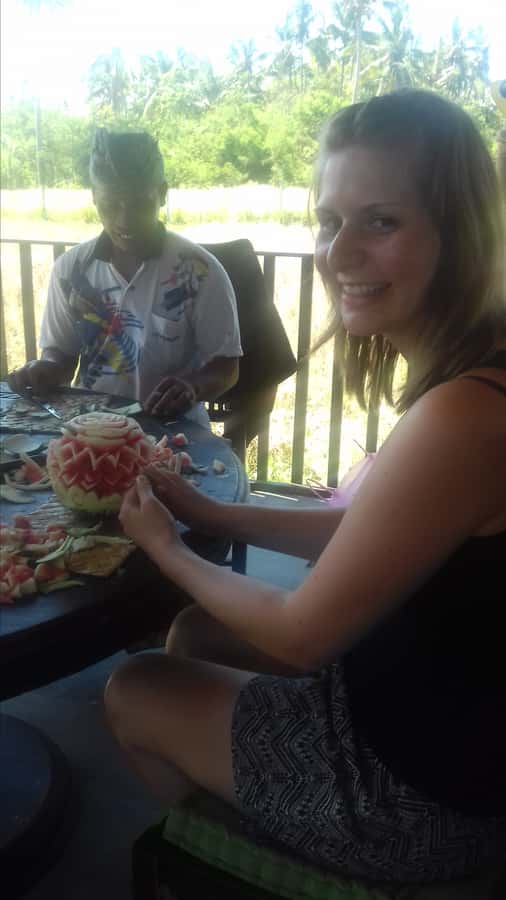
- You carve your own melon flower: The class ends with a handmade decoration you can show at home.
- You may practice more than melon: Carrots, vegetables, watermelon, and simple table decorations can be covered if time and materials allow.
- The teacher demonstrates every cut: This makes the class suitable for beginners who have never handled a fruit-carving knife.
- The class is limited to 10 people: A smaller group gives you a better chance to ask questions and get help.
- Transport is your responsibility: WS Art Studio is not reached by included hotel pickup, so plan your own ride in Ubud.
- The $24 price includes refreshments: Water, tea, coffee, and a Balinese cake are included, with other drinks available to buy.
Making a flower from an ordinary melon
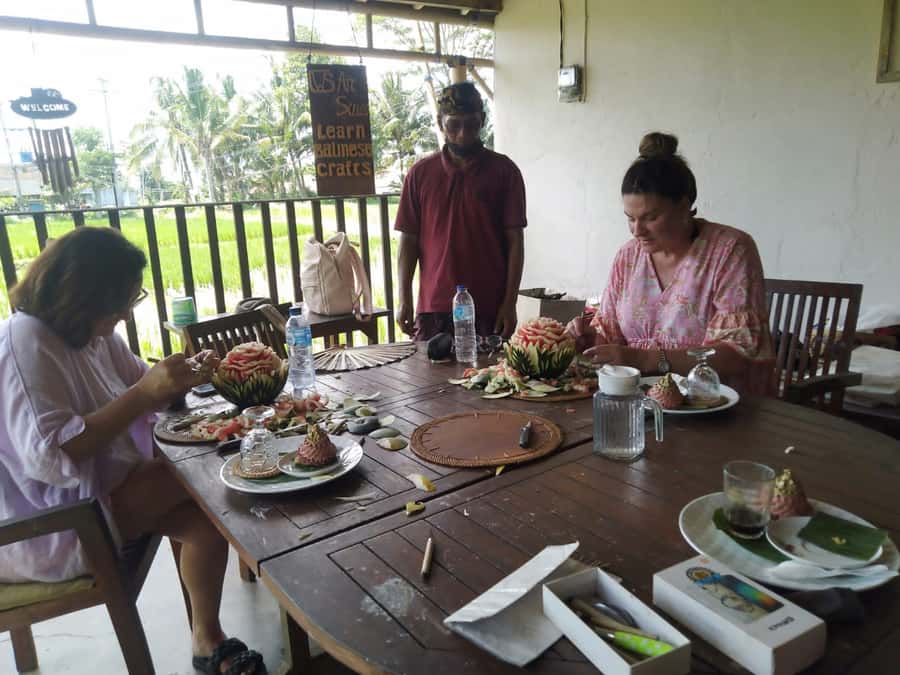
The appeal here is simple. You sit down with a piece of fruit and a small carving knife, then learn how a few controlled cuts can turn it into a table decoration.
The class begins with the basics of decorative fruit carving. Your instructor demonstrates how to hold the fruit, where to place the knife, and how to shape the cuts. You then copy the movements yourself. The process is hands-on, so you are not simply watching a craft demonstration.
The main project is a melon flower. You return home with your first carved melon design, and several people have also made a watermelon rose. That gives the class a clear finish line. You are not left wondering what you were supposed to produce.
I appreciate that the class is built for beginners. You do not need an artistic background or prior carving skill. You only need to be old enough to use a small, sharp knife safely and to follow directions carefully.
The instructor is described as social and funny, with a friendly manner that helps first-timers relax. Clear demonstrations are especially important here because fruit carving looks more difficult than it is. The cuts need control, but the project is broken into manageable steps.
A few more Ubud half-days to weigh up
- Hands-On Silver Jewelry Making Near Ubud’s Monkey Forest
★ 4.9 · 1,789 reviews - Ubud Cooking Class Bali with Balinese Chef
★ 5.0 · 1,609 reviews - Ubud Silver Class Jewelry making in bali
★ 5.0 · 978 reviews
What the three hours actually involve
The advertised session lasts three hours, though your pace can affect how much you do. A typical visit begins with a welcome drink: water, tea, or coffee. You also receive a Balinese cake, a small local snack that makes the arrival feel more like a visit to a workshop than a formal lesson.
After the introduction, the teacher explains the basic shapes and cuts. The first exercise is likely to be simple, helping you get used to the knife and the texture of the fruit. From there, you work toward the melon flower.
The value of this format is that you get time to correct mistakes. Fruit is forgiving in one sense, but a cut cannot be put back. A teacher who watches your hand position and angle can save you from wasting the piece you are working on.
If you finish your first melon quickly, ask for another project. One student completed a second melon and still had time for a simple table decoration. Another brought a photograph of vegetable cutting and received extra instruction. That is useful advice: arrive with a little curiosity and ask what else you can try.
The class can also include watermelon and carrot carving. These materials give you different ways to practice. A watermelon can produce a rose or larger flower shape, while carrots let you work on smaller cuts and details.
Do not assume every session will fill every minute with a long list of projects. The available material and the instructor’s approach may vary. One session reportedly had limited materials and fewer ideas, while another ended around two hours after the main work was complete. If you want the full three hours, say so politely and ask for extra practice.
The teacher makes the difference
Fruit carving is a practical craft, but the mood of the class matters. A patient teacher can make a sharp knife feel manageable. A rushed teacher can make a three-hour lesson feel short.
The strongest part of this class is the direct instruction. The teacher demonstrates each cut, then gives you a chance to repeat it. That rhythm works well for visual learners. You can watch the movement, try it, and ask a question before moving on.
The instructor has also been praised for explaining more complex designs in a way that beginners can follow. That matters because the first flower may give you enough confidence to attempt something more detailed.
The listed teaching languages are English and Indonesian. You should be able to ask questions and follow the main instructions in either language. If you have a particular design in mind, show a picture at the start rather than waiting until the end. This can help the teacher judge what is possible with the available fruit and time.
There is no named instructor provided for this class, so I would not book it expecting a particular personality or teacher. The guide is presented as a social, funny man in the main description, while one session was led by a woman. The practical point is that staff may vary, and your class style may vary with them.
Why the small group matters
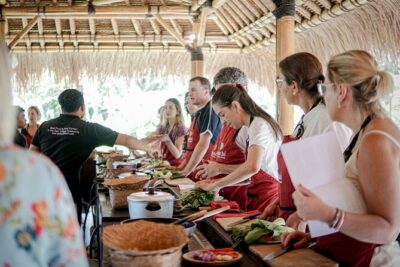
The class accepts up to 10 people. That is small enough to allow personal help, though the amount of attention will depend on how many people actually attend.
A one-to-one session gives you plenty of room to ask detailed questions. You can stop the teacher and ask how to make a specific flower, how to cut a vegetable, or how to fix a design that has gone uneven. In a full group, you may need to wait briefly while the instructor checks another person’s work.
For most people, a group of 10 is a good balance. You get the friendly energy of a shared activity without the feel of a large demonstration. If you are shy about trying a new skill, watching others make the same early mistakes can take away some pressure.
Families should note the age limits. The class is not suitable for children under 9, or for children under 90 centimeters tall. That rule makes sense because the activity uses a sharp carving knife. Older children can take part only if they can safely follow instructions and handle the tool with care.
The class is listed as wheelchair accessible. If you use a wheelchair, it is still sensible to confirm any specific seating or workspace needs before arrival, since the supplied details do not explain the room layout.
A completely different day out, same corner of Ubud:
- All-Inclusive Ubud Private Tour
★ 5.0 · 14,344 reviews - Best of Ubud Full-Day Tour with Jungle Swing
★ 5.0 · 8,571 reviews - Ubud: Monkey Forest, Jungle Swing, Rice Terrace, and Water Temple
★ 5.0 · 7,160 reviews - Ubud: Waterfalls, Water Temple & Rice Terraces Private Tour
★ 5.0 · 5,484 reviews
WS Art Studio and getting there
The meeting point is WS Art Studio Balinese Handicrafts. Transportation is not included, so you need to arrange your own way there and back.
The studio can feel out of the way within Ubud. A Grab or Gojek motorbike taxi is one practical option, and motorbike rides are allowed for this location. Online car services are not allowed in Ubud according to the local transport advice provided for the class, so do not wait until the last minute to sort out your ride.
I would leave extra time for the journey. A late arrival reduces your carving time, and this is not an activity you want to join halfway through the knife demonstration. Check the meeting point carefully and keep the studio name available on your phone.
The setting is described as serene, which suits the pace of the class. You are there to work with your hands, not rush between sights. Still, the location is part of the price calculation. At $24 per person, the class is reasonable if you are already nearby. If your transport takes a large share of your budget or time, the total cost becomes less attractive.
The refreshments and Balinese touch
The included drink and snack are modest, but they add something useful. You can arrive, settle in, and begin without needing to buy refreshments immediately. Water, tea, coffee, and a Balinese cake are included, while other drinks are available for purchase.
The snack is not the reason to book, but it gives the workshop a local touch. You are learning a Balinese decorative tradition while sitting down to a small taste of Bali. That feels more personal than a generic craft activity.
This is also a good choice if you want a break from temples, shopping, and sightseeing. You spend the session making something instead of collecting another view. The finished flower gives you a physical reminder of the afternoon, even if the fruit itself does not last forever.
What you can take home
The main souvenir is your carved melon flower. Depending on the design and material available, you may also make a watermelon rose, carrot carving, or another simple decoration.
The real souvenir is the method. Once you understand the basic cuts, you can try the same idea on fruit at home. The class description makes a strong point about using the skill to entertain friends and family, and that is where the activity earns its keep.
You do not need to recreate an elaborate centerpiece every weekend. A small carved flower can add a fun touch to a meal or gathering. The class gives you enough practice to begin experimenting on your own, but your results will depend on how much you practice after returning home.
I would not expect to become a professional fruit carver in one afternoon. You should expect to learn a beginner-friendly design and gain enough confidence to try related cuts. That is a fair result for a three-hour class.
Is $24 a fair price in Ubud?
At $24, the price is good for a three-hour, hands-on activity, particularly because refreshments and the fruit-carving materials are included. You are paying for instruction, practice time, a finished decoration, and a skill you can repeat later.
The value is strongest if you enjoy creative activities. If you would rather spend your Ubud time at a major cultural site, this class may feel less essential. It is not a sightseeing tour, and there is no sightseeing route built into the session.
The price also compares well with the personal nature of the lesson. A private session can give you more individual help, while a full group still has a maximum of 10 people. If you share the class with a friend, you get a light social activity and two handmade souvenirs for the same basic fee.
Remember to include transport in your budget. The studio does not provide transfers, and the location may be inconvenient from parts of Ubud. A cheap class can lose some of its value if reaching it becomes difficult, so check your route before booking.
Who will enjoy this class most?
I would choose this for you if you like making things, want a break from standard sightseeing, or are looking for a small activity to share with a friend. It also suits anyone who enjoys hosting at home and wants a simple party trick that is more interesting than another souvenir.
It works well for beginners because the instructor demonstrates each cut and the project builds step by step. You do not need to arrive with a plan, though having a photo of a design can help if you finish early.
The class may suit older children, couples, solo visitors, and small groups of friends. It is less suitable for very young children, anyone uncomfortable with sharp tools, or anyone who wants a tightly scheduled three-hour program with a guaranteed series of different projects.
If you are a fast worker, manage your expectations. You may complete the main melon design in about an hour and a quarter, then need to request more instruction. Ask for vegetables, another melon, a watermelon rose, or table decoration ideas. This is the best way to get more from the session.
Should you book the Ubud fruit-carving class?
Book it if you want a hands-on Ubud activity with a clear result, a friendly teaching style, and a useful skill you can repeat at home. The melon flower is a charming souvenir, and the $24 price includes refreshments and materials.
I would book with two practical conditions. First, arrange transport in advance because pickup is not included and the studio may be out of the way. Second, tell the instructor that you want to use the full three hours if you finish the first design early.
Skip it if you need a full schedule of guaranteed projects or if sharp tools are not suitable for your group. For everyone else, this is an easygoing, good-value workshop that lets you make something rather than simply buy it.
FAQ
How long is the Balinese fruit-carving class?
The scheduled duration is three hours. Your actual carving time may vary if you finish the main design early, so ask for additional projects or practice if needed.
How much does the class cost?
The price is $24 per person.
What is included in the price?
The class includes three hours of basic decorative fruit-carving instruction, fruit-carving practice, a welcome drink of water, tea, or coffee, and a Balinese cake snack. Other drinks are available for purchase.
Is transportation to WS Art Studio included?
No. You must arrange your own transportation to the meeting point at WS Art Studio Balinese Handicrafts.
What languages are spoken during the class?
The host or greeter can speak English and Indonesian.
Can children join the class?
Children under 9 years old cannot join. The class is also not suitable for children under 90 centimeters tall because the activity involves a small, sharp carving knife.
Just added around Ubud
- Authentic hike in the forest with lunch at the inhabitant★ 5.0 · 3 reviews
- Heaven Gate, Tirtagangga and Tukad Cepung Waterfall – All Inclusive★ 5.0 · 3 reviews
- Half Day Uluwatu Temple Sunset, Kecak Dance and Seafood Dinner★ 3.5 · 3 reviews
- Ubud: White Water Rafting with visit Ubud Monkey Forest★ 5.0 · 3 reviews
- ️Bali All Inclusive Tour: Ubud – Tegalalang – Kintamani★ 5.0 · 3 reviews
- East Bali and Lempuyang Temple Tour★ 5.0 · 3 reviews
- Ubud: Temple, Swing, Waterfall, Rice Terrace & Monkey Forest★ 5.0 · 3 reviews
- Blue Lagoon Snorkeling and Lunch with Tukad Cepung Waterfall★ 5.0 · 3 reviews
Workshops, compared.
Hands-On Silver Jewelry Making Near Ubud’s Monkey Forest
Read our review →

Cooking Class with Transfers and Optional Market Visit
Read our review →
PRIVATE Authentic Balinese Cooking Class in Ubud at Putu’s Home
Read our review →
Browse the lists this tour appears in