
Reviewed · WORKSHOPS
Bali Fruit Carving Class
Fruit carving turns an ordinary watermelon or papaya into a small work of art. At this two-hour class in Lodtunduh, you’ll learn how patience and a steady hand can make flowers, insects, animals, or even your name from fruit. The rice-field setting gives the activity a calm, creative feel.
I like the small group of no more than 10, which gives the instructor room to guide each student. I also like that the $39 price includes every tool and material, plus a welcome drink, traditional snack, and certificate. The main drawback is simple: you must arrange your own transport, and the booking is non-refundable.
In This Review
- Key points to know before you book
- Turning papaya and watermelon into decoration
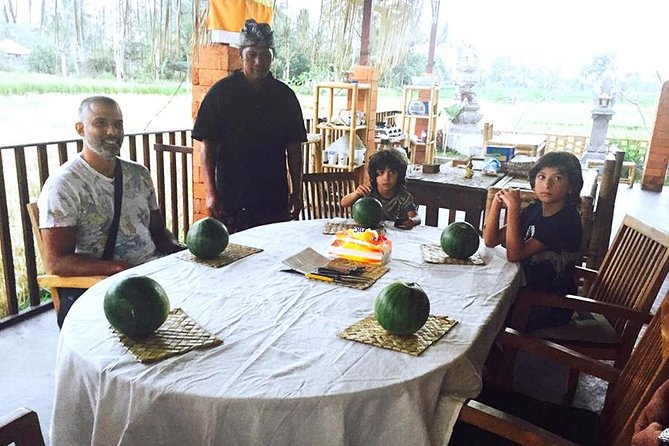
- A calm morning at WS Art Studio
- What happens during the two-hour class
- Why the small group matters
- The rice-field view adds more than decoration
- Welcome drink, traditional snack, and certificate
- Is $39 a fair price?
- Who will enjoy this class most?
- Practical timing and meeting advice
- How this compares with a typical Ubud outing
- What previous participants found most memorable
- Should you book the Bali Fruit Carving Class?
- FAQ
- Where does the Bali Fruit Carving Class take place?
- What time does the class begin?
- How long does the fruit carving class last?
- How many people can join the class?
- What is included in the price?
- Is transportation included?
- Can I cancel or change my booking?
Key points to know before you book
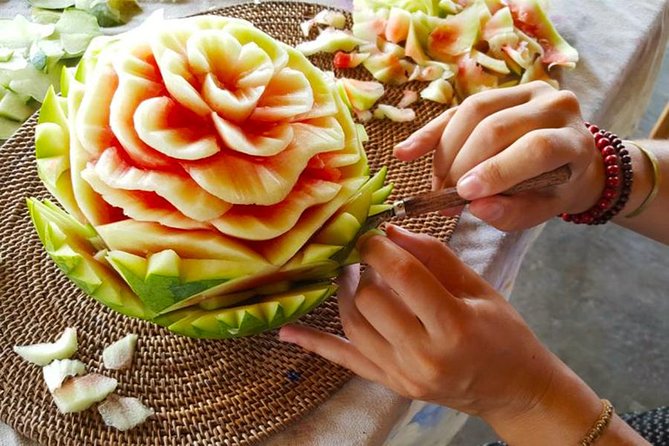
- You carve real fruit into art: Practice with melons, papaya, carrots, and similar produce.
- The class lasts about two hours: The 10:00 am start leaves much of your day free.
- The group is capped at 10 people: This is a more personal class than a large workshop.
- The setting looks beyond the studio: A rice-field outlook adds a quiet backdrop to the work.
- Everything for the class is supplied: Tools, materials, a drink, snack, and certificate are included.
- You meet at WS Art Studio in Lodtunduh: The activity begins and ends at the same studio.
Turning papaya and watermelon into decoration
Fruit carving is not just cutting shapes into food. It asks you to slow down and think in small steps. A plain piece of produce becomes your working material, and the finished design depends on careful lines, measured cuts, and patience.
The class is designed to suit both children and adults, with a listed age range of 4 to 65. That broad range tells you something useful about the activity. You do not need advanced art skills, but you do need to stay focused and handle the tools carefully.
Your instructor demonstrates the basic technique, then guides you as you practice. The planned designs include flowers, animals, insects, and names. You may work with watermelons, papaya, carrots, and other fruit or vegetables suited to carving.
This makes the class different from a standard cooking lesson. You are not mainly learning a recipe. You are learning how to shape food for display, then enjoying the fact that your artwork is edible. It is a hands-on craft with a practical, tasty result.
A few more Ubud half-days to weigh up
- Hands-On Silver Jewelry Making Near Ubud’s Monkey Forest
★ 4.9 · 1,789 reviews - Ubud Cooking Class Bali with Balinese Chef
★ 5.0 · 1,609 reviews - Ubud Silver Class Jewelry making in bali
★ 5.0 · 978 reviews
A calm morning at WS Art Studio
The meeting point is WS Art Studio Balinese Handicrafts in Lodtunduh, at C7X4+JFP, Lodtunduh, Ubud, Gianyar Regency, Bali 80571. The class begins at 10:00 am and ends back at the studio.
Lodtunduh is close to Ubud and is known for its craft activity and rural surroundings. The location is near public transportation, but no transport service is included. You should plan your route before leaving, especially if you are relying on a driver or local transport.
The studio setting matters here. One of the best details about the experience is the outlook toward rice fields, which gives you something peaceful to look at while you work. Fruit carving rewards concentration, and a quiet view can make two hours at the table feel relaxed rather than rushed.
The same studio also offers other handicraft activities, including wood carving and jewelry craft. That does not form part of this fruit carving class, but it gives the location a wider craft focus. If your group has different interests, it may be worth asking what other workshops are available, though the fruit carving activity itself follows its own two-hour plan.
What happens during the two-hour class
The exact sequence can vary, but you can expect the session to move from demonstration to practice. The instructor first shows how to approach the fruit and use the carving equipment. You then work through the technique yourself.
At the start, the lesson is likely to feel more technical than artistic. You need to understand how much pressure to use and how to make controlled cuts. That is why patience is central to the class. A rushed cut can spoil a shape, while a careful hand gives you more control.
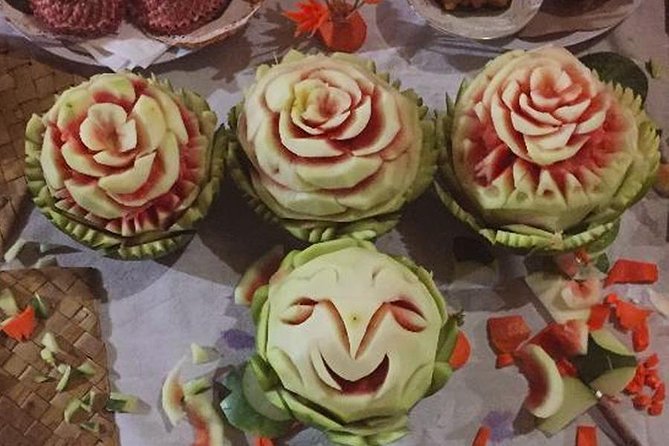
Once you understand the basic method, you can work toward a design. Flowers are a natural choice for beginners because their petals can be built from repeated shapes. An insect or animal asks you to think more about outline and proportion. Carving your name offers a personal result and may be a good option if you want something easy to identify in photographs.
The supplied materials remove much of the hassle. You do not need to shop for the right fruit, bring carving tools, or carry equipment across Bali. You simply arrive at the studio and begin with what is provided.
The class is not described as a full meal or a market visit. The snack and welcome drink are small hospitality touches, not a replacement for lunch. Plan your food around the activity if you need a substantial meal afterward.
Why the small group matters
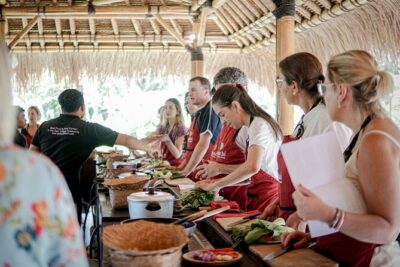
A maximum of 10 people is a useful limit for a craft lesson. Fruit carving depends on watching the technique closely, then getting help when your cut does not go as planned. In a crowded room, the instructor would have less time for individual guidance.
The group size also makes this a practical choice for families or friends who want to make something together. Children can take part, but the activity still asks for concentration and care. Adults should help younger children follow the instructor’s directions and use the tools responsibly.
For solo visitors, the small format may feel less anonymous than a large group workshop. You have a better chance to ask questions and show the instructor your progress. The class is still a shared activity, so it may suit you if you like learning beside other people without joining a large tour.
The age range is listed as 4 to 65. If someone in your party falls outside that range, confirm eligibility before booking. The available information does not provide a separate child price or a special family format, so the stated price of $39 applies per person.
A completely different day out, same corner of Ubud:
- All-Inclusive Ubud Private Tour
★ 5.0 · 14,344 reviews - Best of Ubud Full-Day Tour with Jungle Swing
★ 5.0 · 8,571 reviews - Ubud: Monkey Forest, Jungle Swing, Rice Terrace, and Water Temple
★ 5.0 · 7,160 reviews - Ubud: Waterfalls, Water Temple & Rice Terraces Private Tour
★ 5.0 · 5,484 reviews
The rice-field view adds more than decoration
The rural outlook is one of the most appealing parts of the setting. Fruit carving is a quiet activity, and the view helps create a slower morning away from Ubud’s busy streets.
You are not being taken on a full countryside tour, and the rice fields are not presented as a separate sightseeing stop. Think of them as a backdrop while you work. That distinction matters if you are comparing this with a tour built around major sights.
The view also fits the character of the class. You are making a traditional decorative craft from a familiar local food, in an area associated with Balinese handicrafts. The activity gives you a closer look at the care behind food presentation, rather than simply showing you finished objects.
One past participant found the outlook calming and creative, and that is a useful way to think about the setting. The class is best for a quiet morning of making something, not for checking off a long list of attractions.
Welcome drink, traditional snack, and certificate
The welcome drink and traditional snack are included in the price. They give you a small taste of Balinese hospitality before or during the lesson, depending on how the class is arranged.
The snack is one reason to see the activity as more than a simple paid craft table. Still, keep your expectations in proportion. The snack is described as traditional, but no specific dish is named, and the experience does not include a full breakfast or lunch.
At the end, you receive a certificate. It will not turn you into a professional food artist, but it gives the morning a clear finish and a keepsake to take home. If you are traveling with children, the certificate may be especially useful as proof of what they learned and made in Bali.
The strongest value comes from the combination: instruction, equipment, raw materials, refreshments, and a certificate. You are not paying $39 only for access to a table and some fruit.
Is $39 a fair price?
At $39 per person, this is not the cheapest way to spend two hours in Ubud. It is also not an unreasonable price for a small, guided craft session with all supplies included.
The price includes the instructor’s demonstrations, the fruit and other materials, carving equipment, a welcome drink, a traditional snack, and a certificate. The maximum group size of 10 improves the value because you are paying for a lesson with room for personal help, not just a demonstration from a distance.
The value is strongest if you are interested in making something yourself. If you only want photographs of decorative fruit, the cost may feel high. If you enjoy crafts, food presentation, or hands-on cultural activities, the included materials make the price easier to justify.
You must add your own transport costs. Since transport service is not included, the total cost depends on how you reach Lodtunduh. The studio is near public transportation, which helps, but you still need to handle the journey to and from the meeting point.
The booking is non-refundable and cannot be changed for any reason. That is the biggest financial caution. Only reserve once your schedule is firm.
Who will enjoy this class most?
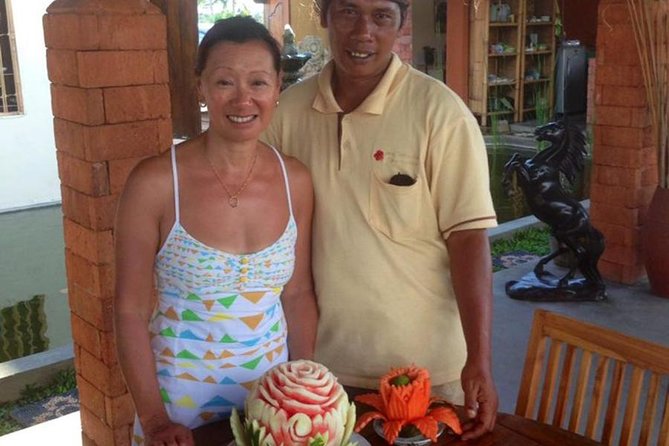
This experience suits you if you like creative activities that leave you with something physical to show for your time. It is also a good fit for families, couples, friends, and solo visitors who prefer a calm morning to a long sightseeing program.
You will probably enjoy it most if you can accept that the finished carving may not look perfect. The class is about learning the technique and trying the craft, not producing a professional centerpiece on your first attempt.
Children can participate within the listed age range, but younger children may need close adult attention. The description says most people can take part, though it does not provide specific information about wheelchair access or other support needs. If you have an accessibility concern, ask the provider before making a non-refundable booking.
The activity may also suit repeat visitors to Bali who have already seen many temples and markets. It offers a different kind of morning, one based on making rather than observing.
Practical timing and meeting advice
The class starts at 10:00 am, and you should arrive with enough time to find WS Art Studio. The meeting point is given as WS Art Studio Balinese Handicrafts, so keep the full name and location available on your phone.
A mobile ticket makes the booking easy to carry. Confirmation is sent within 48 hours, subject to availability, so do not assume the place is final until you receive confirmation.
The activity begins and ends at the same studio. That makes planning simpler than a class with several pickup points. You can arrange your next stop from Lodtunduh after the session, but the tour itself does not provide onward transport.
Since the class takes about two hours, a 10:00 am start should leave the afternoon open. You can pair it with other Ubud plans, but allow time for the journey between places. The class is not a hop-on, hop-off experience, and no hotel pickup is included.
How this compares with a typical Ubud outing
Many Ubud activities ask you to look, walk, photograph, or taste. This one asks you to make. That difference gives the class its appeal.
You spend the morning working with your hands instead of moving from one sight to another. The result is personal, even if your flower has an uneven petal or your carved lettering is not perfectly straight. Those small flaws are part of learning a precise craft.
The activity also gives you a connection to Balinese handicraft traditions without claiming to be a full cultural study. You receive a guided introduction to fruit carving, not a long lecture on the history of the art. That keeps the session focused and approachable.
If you want a packed schedule, dramatic scenery, or a full meal, choose another activity. If you want two quiet hours, a rural studio, and a new skill you can try again at home, this class makes better sense.
What previous participants found most memorable
The most consistent praise centers on the skill itself. One person described fruit carving as a useful ability that could be applied to many kinds of food. That is an important point: you are learning a method, not just copying one decorative object.
The peaceful rice-field outlook also adds to the experience. It gives you a calm place to concentrate and makes the class feel connected to the countryside around Ubud.
The morning refreshments receive positive attention as well. The traditional snack and welcome drink are modest inclusions, but they help break up the work and make the session feel hospitable.
The instructor is described as courteous and able to explain the craft clearly. You should still remember that this is a practical workshop, not a formal culinary school. The main benefit is guided practice with a friendly teacher and the chance to leave with a certificate and a carved piece.
Should you book the Bali Fruit Carving Class?
Book it if you want a small, hands-on activity in Ubud and like the idea of turning fruit into flowers, animals, insects, or lettering. The included materials, refreshments, certificate, and group limit give the $39 price reasonable value for a two-hour class.
Skip it if you prefer sightseeing, dislike careful craft work, or need flexible cancellation. You must arrange your own transport, and the booking cannot be refunded or amended.
For families, creative couples, and visitors who want a slower morning in Lodtunduh, this is an appealing choice. Arrive ready to work patiently, and judge success by the skill you learn rather than by producing a flawless display piece.
FAQ
Where does the Bali Fruit Carving Class take place?
The class takes place at WS Art Studio Balinese Handicrafts in Lodtunduh, Ubud, Gianyar Regency, Bali 80571, Indonesia. The location code provided is C7X4+JFP.
What time does the class begin?
The class starts at 10:00 am.
How long does the fruit carving class last?
The activity lasts approximately two hours.
How many people can join the class?
The class has a maximum of 10 participants.
What is included in the price?
The price includes a certificate, welcome drink, traditional snack, equipment, and materials.
Is transportation included?
No. Transport service is not included. The studio is near public transportation, but you must arrange your own way to and from the meeting point.
Can I cancel or change my booking?
No. The experience is non-refundable and cannot be changed for any reason. Confirmation is sent within 48 hours of booking, subject to availability.
Just added around Ubud
- Authentic hike in the forest with lunch at the inhabitant★ 5.0 · 3 reviews
- Heaven Gate, Tirtagangga and Tukad Cepung Waterfall – All Inclusive★ 5.0 · 3 reviews
- Half Day Uluwatu Temple Sunset, Kecak Dance and Seafood Dinner★ 3.5 · 3 reviews
- Ubud: White Water Rafting with visit Ubud Monkey Forest★ 5.0 · 3 reviews
- ️Bali All Inclusive Tour: Ubud – Tegalalang – Kintamani★ 5.0 · 3 reviews
- East Bali and Lempuyang Temple Tour★ 5.0 · 3 reviews
- Ubud: Temple, Swing, Waterfall, Rice Terrace & Monkey Forest★ 5.0 · 3 reviews
- Blue Lagoon Snorkeling and Lunch with Tukad Cepung Waterfall★ 5.0 · 3 reviews
Workshops, compared.
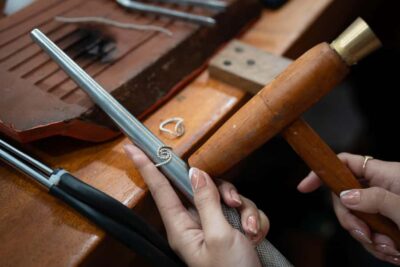
Hands-On Silver Jewelry Making Near Ubud’s Monkey Forest
Read our review →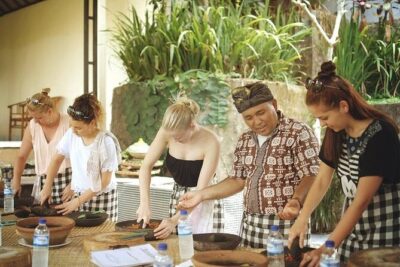

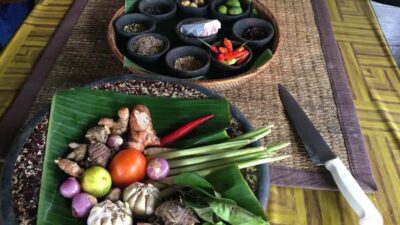
Cooking Class with Transfers and Optional Market Visit
Read our review →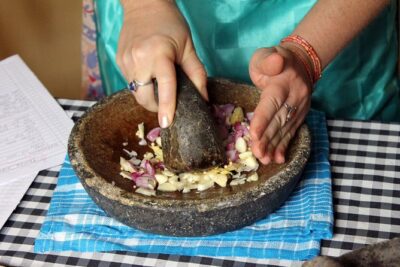
PRIVATE Authentic Balinese Cooking Class in Ubud at Putu’s Home
Read our review →
Browse the lists this tour appears in