
Reviewed · TIRTA EMPUL PURIFICATION
Spiritual Journey with private purification ceremony, local priest – Ubud
The heart of this private Ubud experience is a Balinese purification ceremony at an old riverside temple in Tampaksiring. You wear a sarong, pray, and stand beneath free-flowing water as part of a Hindu ritual meant to cleanse the body and mind. Afterward, you meet a local priest and healer, eat lunch in a village, and continue through temple country.
I like the way the day links ceremony with ordinary life. You are not simply driven from one photo stop to another. You cycle through villages, see rice terraces, hear about Balinese customs, and sit down for local food. I also like the private format, with guides Eka and Gede reported as attentive and helpful, including handling a bicycle change after a puncture.
The main consideration is pace. This is an early, full eight-hour day with cycling, wet clothes, stairs or uneven temple paths, and a ceremony that should be approached respectfully rather than as a spa treatment. The spiritual visit may feel personal and meaningful, but it will not suit everyone.
In This Review
- Key points
- Why the purification ceremony is the day’s center
- Kintamani begins with coffee and a bicycle
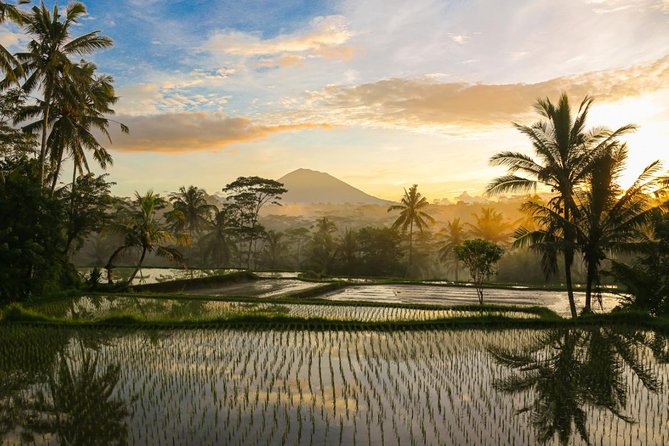
- What you see between villages and rice terraces
- Meeting the local priest after the water ritual
- Lunch in an old village
- The return to Ubud includes more temples
- What the $120 price really covers
- Who should book this Ubud experience
- Practical details before you reserve
- Should you book it?
- FAQ
- What is the price of the experience?
- How long does the tour last?
- What time does the tour start?
- Is hotel pickup available?
- Is this a private tour?
- What is included in the price?
- Are donations and gratuities included?
- Do I need to bring a sarong or towel?
- Can I cancel for a full refund?
Key points
- Purification at a riverside temple: Wear the supplied sarong and towel while taking part in a traditional water ceremony.
- Cycling through Kintamani: Ride mostly downhill for about two hours through villages, jungle-like stretches, temples, and rice fields.
- A local priest and healer: Spend time with a Balinese spiritual figure after the ceremony.
- Village lunch: Eat local food in an old village and talk with local people rather than staying at a standard tourist restaurant.
- Private transportation: Pickup is offered, and only your own group joins the activity.
- A full day for $120: The price covers transport, food, bicycle use, water, coffee or tea, ceremony clothing, and fees, though donations and gratuities are extra.
Why the purification ceremony is the day’s center
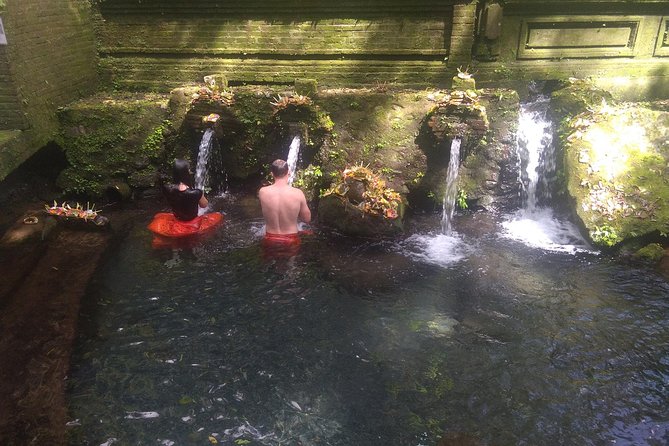
Balinese Hindu purification, often called melukat, uses flowing water as a form of prayer and renewal. Here, the ritual takes place at an ancient temple beside a river in the Tampaksiring area. Water passes over you beneath a waterfall or spring, with the purpose of clearing away negativity and restoring balance.
You receive a sarong and towel, which makes the practical side easier. Still, this is a religious ceremony, not a staged shower. You should follow your guide’s instructions, dress modestly, and treat the temple as a place of worship. The exact order of prayers and water stations is not provided in advance, so allow the local priest or guide to set the rhythm.
I see this as the strongest reason to book the experience. Many Ubud activities show you temples from the outside. This one gives you a structured way to learn what ritual means in Balinese Hindu life, provided you are comfortable taking part in a ceremony rather than simply observing.
The water may be cool, and you should expect to get wet. Bring or wear something practical beneath the sarong, though the supplied towel is useful afterward. Because the activity depends on good weather, the schedule can change if conditions are poor.
More Tirta Empul purification ceremonies:
- Tirta Empul: Temple Tour with Optional Spiritual Cleansing
★ 4.9 · 1,257 reviews - Half-Day Ubud Electric Cycling Tour to Tirta Empul Water Temple
★ 5.0 · 315 reviews - Ubud Tour – Balinese Healing By Shaman And Self Purification
★ 5.0 · 236 reviews
Kintamani begins with coffee and a bicycle
Pickup begins at about 7:30 am, setting an early tone for the day. From your Ubud hotel, private transport takes you toward Kintamani, where the morning includes coffee or tea tasting and a small breakfast at a plantation.
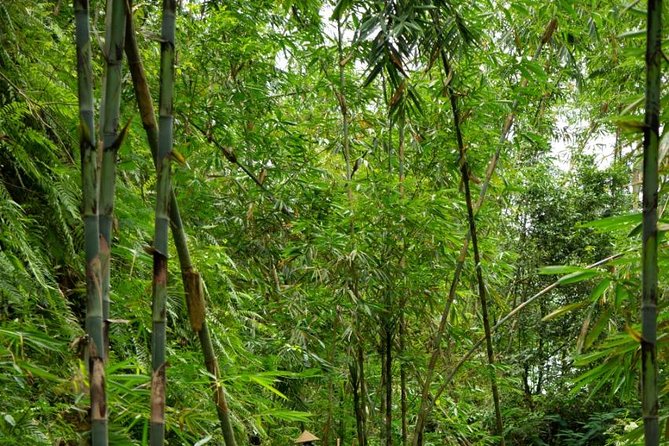
The starting area offers views toward the volcano and lake, along with a large bamboo forest. The tour description does not promise a particular volcano viewpoint or a set breakfast menu, so treat this as a simple morning stop rather than a full café meal. If you need a substantial breakfast, it is sensible to eat before pickup or ask what the included light meal contains.
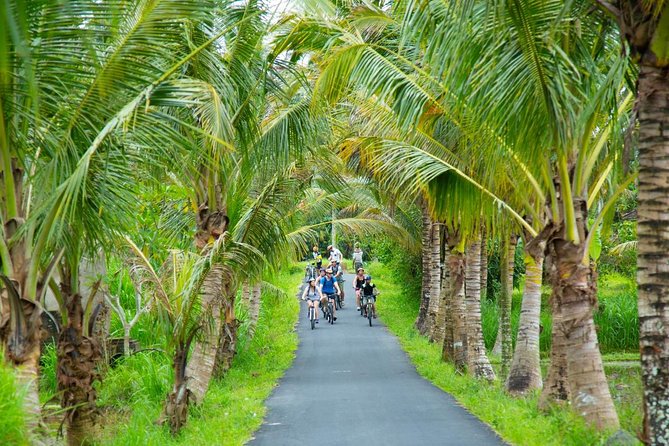
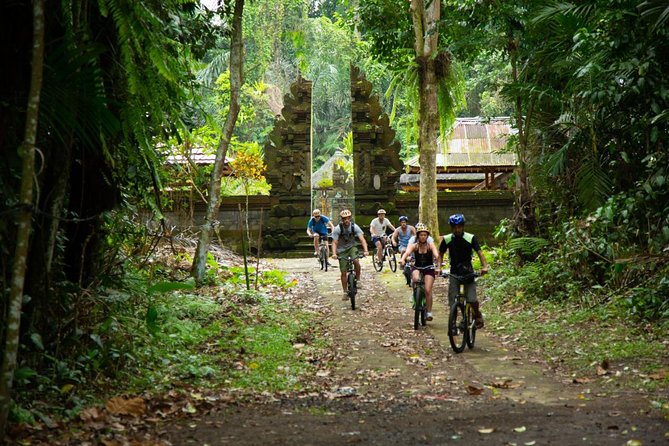
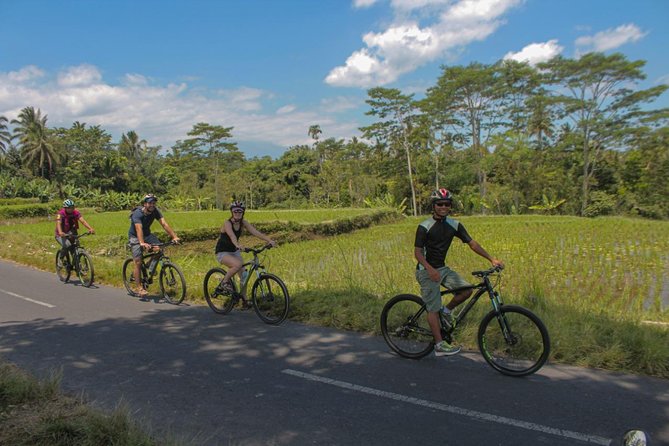
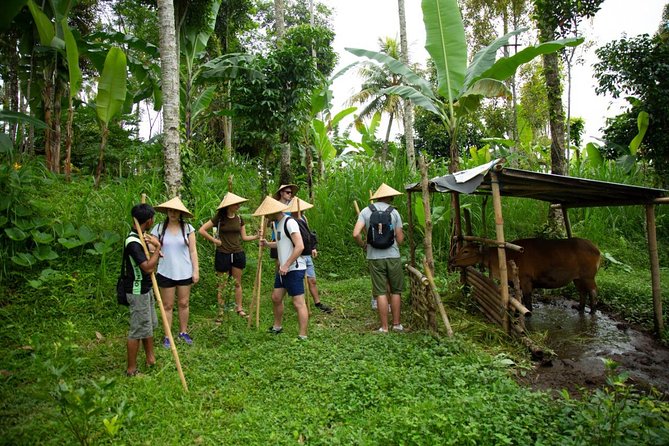
The cycling section lasts around two hours. The route is described as mostly moderate downhill riding through lush, jungle-like areas, villages, small temples, and rice terraces. Your guide explains local history and customs while you move through places protected for their cultural and natural importance.
This is a useful way to see rural Bali because the bicycle puts you closer to the road, fields, and village life than a car window does. You may notice more of the changing scenery, and you can pause more naturally than on a standard drive. The tradeoff is physical effort. Even a mostly downhill ride takes balance, stamina, and attention, especially on uneven roads or if rain changes the surface.
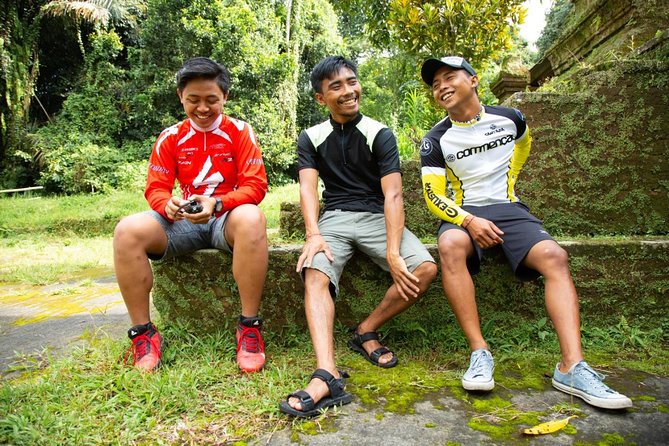
Bicycle quality can matter on a day like this. One guide, Eka, is specifically praised for keeping the ride safe and organized, including arranging a replacement bicycle after a puncture. That does not guarantee a trouble-free ride, but it suggests the team is prepared to respond when equipment fails.
What you see between villages and rice terraces
The cycling route is designed around ordinary Balinese settings rather than major ticketed attractions. You pass through villages, temple areas, and rice fields, with the guide explaining how local culture fits into daily life.
The experience may appeal to you if you want context as well as scenery. A rice terrace is more interesting when you understand its place in village life, religious practice, and farming traditions. The same is true of a small temple. You are not just collecting photographs. You are given an explanation of why these places matter.
The route also includes secret spots and temples on the return to Ubud. Since these places are not named, you should not book expecting a fixed list of famous sights. The benefit is flexibility and a less rigid day. The drawback is that you cannot compare every stop in advance or know exactly how long you will spend at each one.
This is one reason a private tour helps. Your group can ask questions and receive more direct attention than on a large coach. The day is still shaped by driving time, ceremony timing, lunch, and weather, but it should feel less crowded than a standard group outing.
Meeting the local priest after the water ritual
After purification, the experience continues with a visit to a local priest and spiritual healer, known in Bali as a Balian. The stated aim is to leave feeling relaxed, healthier, and renewed, though those effects are personal rather than something any tour can promise.
The value of this stop is the chance to hear about spiritual practice from someone who carries a role within the local community. It also gives you a chance to ask questions about Balinese Hinduism, prayer, healing, and the relationship between people, temples, and sacred water.
Approach the meeting with an open but sensible mind. You can respect the ceremony without accepting every spiritual claim as medical fact. The activity is not described as a medical consultation, and it should not replace professional healthcare. If you are unsure about any part of the ritual, ask your guide before taking part.
The private setting may make this portion more comfortable. You are not trying to hear a priest over a crowd, and you can spend more time discussing what you have just experienced. The tour does not specify the priest’s name or the exact form of the meeting, so expect a local cultural encounter rather than a scripted performance.
More healing and blessing ceremonies in Ubud:
- Taman Beji Griya Waterfall: Holy Bathing/Soul Retreat Ritual
★ 4.8 · 634 reviews - Ubud: Spiritual Cleansing, Palm Reading, & Trauma Healing
★ 4.5 · 217 reviews - Ubud: Soul Retreat & Holistic Mantra Healing Experiences
★ 4.8 · 144 reviews - Bali: Ubud Sound Yoga & Energy Healing Experience
★ 4.8 · 112 reviews
Lunch in an old village
The three-hour middle section includes the priest visit, lunch, and time to learn about local life. Lunch is served in a village, with local food in a special setting beneath Kintamani mountain.
This matters because meals often explain a place better than a rushed monument stop. You can ask about ingredients, family life, village customs, and the role of religion in everyday routines. The plan also includes time to chat with local people, although the amount of conversation will depend on the day and the people available.
The menu is not specified. If you have allergies, dietary restrictions, or strong food preferences, confirm them before booking rather than assuming the meal can be changed. Bottled water is included, along with coffee or tea and the small breakfast earlier in the day.
I would not expect a polished restaurant atmosphere. The appeal is the local setting and the chance to slow down after the bicycle ride and ceremony. If you prefer a predictable menu, air-conditioning, and a quick meal, this part may feel less comfortable. If you enjoy eating where local life is visible, it is one of the better uses of the tour’s long midday pause.
The return to Ubud includes more temples
After lunch, you spend about two hours visiting additional temples and lesser-known places on the way back to Ubud. This section rounds out the day rather than adding one major headline attraction.
The exact stops can vary, since the description does not name them. That uncertainty is worth noting when you compare this outing with a tour built around fixed sights. You are paying for a broad cultural route, private guiding, and the ceremony, not a guaranteed checklist of specific temples.
By this point, you may be ready for a quieter ride. The morning starts early, and cycling plus ritual can make the day feel long. On the other hand, the return route breaks up the drive and gives you more chances to ask about Balinese Hinduism, local history, and village customs.
Drop-off at your hotel follows the final stops, with the entire experience lasting about eight hours. The listed schedule includes roughly 30 minutes for the end of the tour, so do not plan an important evening appointment too tightly against the expected return.
What the $120 price really covers
At $120, this is not the cheapest way to see temples around Ubud. The price makes more sense when you count what is bundled into a private full-day outing: hotel pickup, private transport, a bicycle, bottled water, coffee or tea, a small breakfast, lunch, a towel and sarong, and entrance fees and taxes.
You also receive a guide for a day that combines several different activities. Organizing private transport, cycling, a priest visit, a village meal, and a purification ceremony yourself could take considerable time. The price is strongest for couples, families, or small groups who value privacy and want one arrangement rather than several separate bookings.
Group discounts are offered, but the exact discount is not stated. Ask for the total price before booking if you are traveling with several people. Donations and gratuities are not included, so carry some local cash if you wish to contribute at a temple or thank the guide and priest.
The private format is a real benefit here. Religious ceremonies and conversations with a priest can feel awkward in a large group. With only your own party participating, you have more room to ask questions and move at a comfortable pace.
Who should book this Ubud experience
I would recommend this day to you if you want more than sightseeing. It suits people who are interested in Balinese Hinduism, village life, spiritual customs, and active travel. The bicycle ride is a good match for anyone who enjoys seeing the countryside at a slower speed than a car allows.
It is also a strong choice for first-time visitors who want several sides of Bali in one day: mountain views, rural roads, rice fields, temples, a religious ritual, a local meal, and time with a priest. Guides Eka and Gede are named in the experience details and are associated with careful organization, cultural explanations, and attention to bicycle safety.
Think twice if you want a lazy day, a tightly fixed sightseeing list, or a purely observational tour. The activity involves an early start, physical movement, wet clothing, and participation in a sacred practice. The description says most people can take part, but it does not provide detailed accessibility information for the cycling route, temple paths, or waterfall area.
Pickup is offered, and confirmation arrives at booking. The activity is private, but it may still require a minimum number of participants. If that minimum is not met, you are offered another date or experience, or a full refund.
Practical details before you reserve
Wear something suitable for cycling and a religious site. You will be given a sarong for the purification ceremony, but modest clothing remains the safest choice. Bring a change of clothes if you do not want to spend the rest of the day in damp clothing.
Plan for weather changes. The experience requires good weather, and a cancellation for poor conditions should result in a different date or a full refund. The cancellation policy also allows a full refund if you cancel at least 24 hours before the local start time. Cancellations or changes within 24 hours are not refunded or accepted.
You should also be ready for a day with varied levels of comfort. Private transport provides relief between stops, while the bicycle route and temple visits add activity. The supplied water, towel, sarong, and lunch reduce the amount you need to organize, but you should still bring personal medication and any items you need for the day.
Should you book it?
Book this tour if the purification ceremony and priest visit are your main interests, and if you want those experiences joined to a real village meal and a rural bicycle ride. The private format, included transport, and attentive support from guides such as Eka and Gede make the $120 price reasonable for a full day.
Skip it if you are uncomfortable with religious participation, cannot manage a moderate bicycle ride, or want famous sights named and guaranteed in advance. For the right person, this is less a temple checklist than a personal introduction to Bali’s spiritual customs and village life. That focus is exactly what gives the day its value.
FAQ
What is the price of the experience?
The listed price is $120. Group discounts are offered, though the exact discount is not stated.
How long does the tour last?
The experience lasts approximately eight hours, including pickup, cycling, the purification ceremony, the priest visit, lunch, temple stops, and hotel drop-off.
What time does the tour start?
The stated start time is 7:30 am.
Is hotel pickup available?
Yes. Pickup is offered, and the tour ends with drop-off at your hotel in Ubud.
Is this a private tour?
Yes. Only your own group participates in the private activity.
What is included in the price?
The price includes coffee or tea, a small breakfast, private transportation, lunch, bottled water, bicycle use, a towel and sarong for the purification ceremony, fees, and taxes.
Are donations and gratuities included?
No. Donations and gratuities are not included.
Do I need to bring a sarong or towel?
No. A sarong and towel are provided for the purification ceremony.
Can I cancel for a full refund?
Yes, if you cancel at least 24 hours before the experience start time. Cancellations or changes made within 24 hours are not refunded or accepted.
Just added around Ubud
- Authentic hike in the forest with lunch at the inhabitant★ 5.0 · 3 reviews
- Heaven Gate, Tirtagangga and Tukad Cepung Waterfall – All Inclusive★ 5.0 · 3 reviews
- Half Day Uluwatu Temple Sunset, Kecak Dance and Seafood Dinner★ 3.5 · 3 reviews
- Ubud: White Water Rafting with visit Ubud Monkey Forest★ 5.0 · 3 reviews
- ️Bali All Inclusive Tour: Ubud – Tegalalang – Kintamani★ 5.0 · 3 reviews
- East Bali and Lempuyang Temple Tour★ 5.0 · 3 reviews
- Ubud: Temple, Swing, Waterfall, Rice Terrace & Monkey Forest★ 5.0 · 3 reviews
- Blue Lagoon Snorkeling and Lunch with Tukad Cepung Waterfall★ 5.0 · 3 reviews
Tirta Empul Purification, compared.
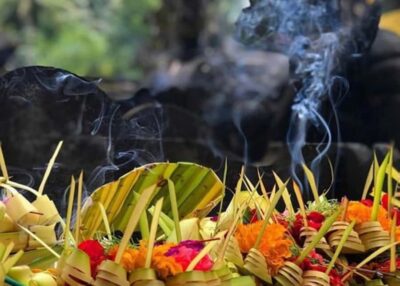
Temple Tour with Optional Spiritual Cleansing
Read our review →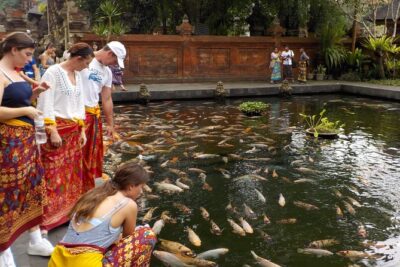
Half-Day Ubud Electric Cycling Tour to Tirta Empul Water Temple
Read our review →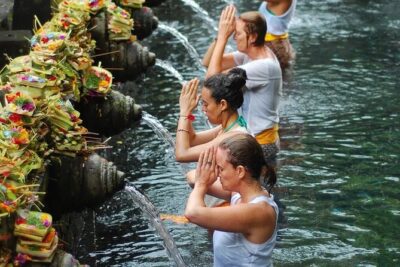
Ubud Tour – Balinese Healing By Shaman And Self Purification
Read our review →Melukat Ceremony and Temple Tour at Tirta Empul Temple
Read our review →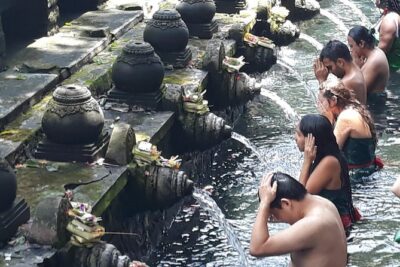
Skip the Line Tirta Empul Temple Entrance Ticket All Inclusive
Read our review →
Tirta Empul, Rice Terrace, Waterfall and Custom Tour
Read our review →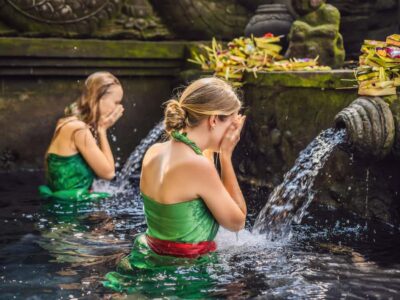
East Bali Tour: Lempuyang Temple – Gate of Heaven, Tirta Gangga, Virgin Beach
Read our review →Browse the lists this tour appears in