
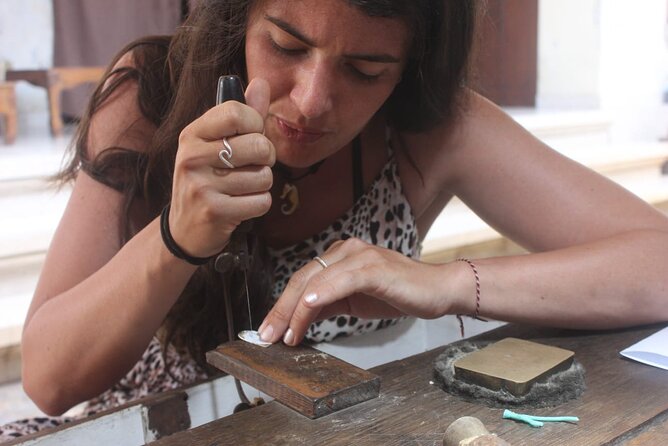
Reviewed · SILVER JEWELRY WORKSHOPS
Private Traditional Bali Silver Jewelry Making Class
Celuk is Bali’s silver village, and this class lets you work at the bench rather than simply browse finished jewelry. I like the private instruction, which gives you room to ask questions, change your design, and learn each step at a useful pace. I also like the family-run setting, with cold drinks, snacks, and a personal souvenir at the end.
The main catch is the silver allowance. The tour details mention both 5 grams and 10 grams, while extra silver costs IDR 50,000 per gram. Confirm the included amount before booking, especially if you want a larger ring, pendant, or pair of earrings.
In This Review
- Key points to know before you book
- Why a silver class beats another souvenir shop
- Arriving in Celuk from Ubud
- The first hour: choosing a design and learning the tools
- The middle of the class: cutting, stamping, and shaping
- Soldering, sanding, and polishing your finished piece
- The family welcome and local feel
- Is the $48 price good value?
- Who will enjoy this class most
- Practical details that affect your day
- Should you book the Celuk silver class?
- FAQ
- Where does the silver jewelry class take place?
- How long does the class last?
- Is the class private?
- What jewelry-making techniques will I learn?
- Can I make my own design?
- How much silver is included?
- Is hotel pickup included?
Key points to know before you book
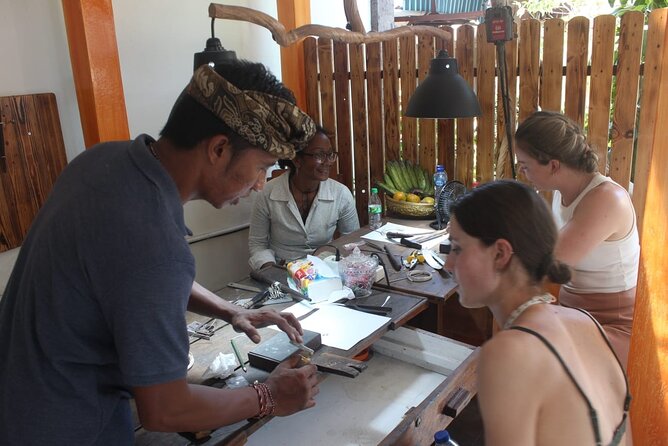
- You work in Celuk, Bali’s silver-making center, outside Ubud in Sukawati, Gianyar Regency.
- The class lasts about three hours, with hands-on practice in sawing, stamping, hammering, soldering, sanding, and polishing.
- Your class is private, so only your group takes part and the tutor can focus on your design.
- You can bring your own idea, or choose a pattern from samples and catalogues at the workshop.
- Arik is praised for patient, step-by-step teaching, while another account names Ari as a helpful instructor.
- Hotel pickup is optional and costs extra, with different prices for Ubud, Sanur, Canggu, Seminyak, Kuta, Nusa Dua, and other areas.
Why a silver class beats another souvenir shop
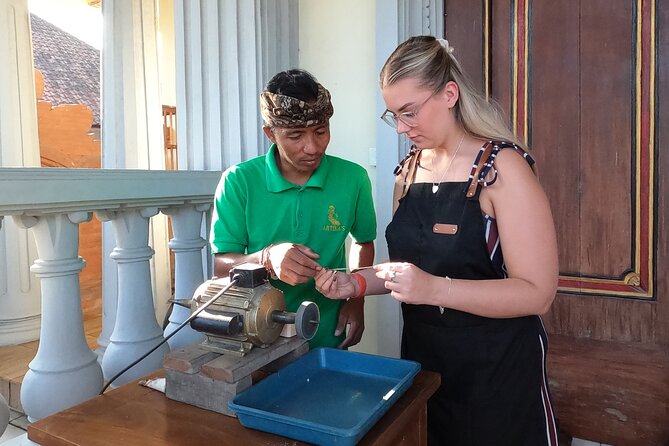
I like souvenirs that carry a story. A carved mask or woven textile can be beautiful, but a ring or pendant you help shape has a more personal connection to your time in Bali. You remember the crooked first cut, the careful filing, and the moment the dull metal begins to shine.
This class is also more active than a standard craft demonstration. You are not only watching a silversmith work. You handle the tools, make design choices, and take part in the stages that turn a piece of silver into wearable jewelry.
That does not mean you become a professional silversmith in three hours. The tutor will guide you through difficult parts, and the finished piece may receive help or correction along the way. That is part of the value. You get a short introduction to a real local craft, not a promise of mastery.
The private format matters here. Jewelry making involves small tools, close work, and decisions that can be hard to make in a large class. With only your group present, you can ask Arik or another tutor to explain a technique again, simplify a design, or suggest a better way to make an idea work.
More silver jewellery workshops:
- Hands-On Silver Jewelry Making Near Ubud’s Monkey Forest
★ 4.9 · 1,789 reviews - Ubud Silver Class Jewelry making in bali
★ 5.0 · 978 reviews - Canggu: Bali Turtle Silver & Gold Workshop
★ 4.9 · 643 reviews
Arriving in Celuk from Ubud
The meeting point is Rajata Silver Class in Celuk, Sukawati, in Gianyar Regency. The class ends at the same place, so you need to arrange your own way there unless you pay for a hotel transfer.
Celuk is a practical setting for this activity because it is associated with Bali’s silversmiths. You are learning in the village where the craft is part of daily work, rather than in a polished tourist studio far from the production process.
The exact meeting point is important. If you are staying in central Ubud, ask for the workshop address and allow enough time for the drive. Bali traffic can make a short distance take longer than expected, though no travel time is specified in the activity details.
Paid return transfers are available by car. The listed prices are 450,000 Indonesian rupiah from central Ubud or Sanur, 500,000 from Seminyak, Kuta, or Legian, and 550,000 from Canggu, Nusa Dua, or Jimbaran. Uluwatu is listed at 600,000. These charges are per car, according to the information provided, so the value improves if your group shares the ride.
If you are already planning a day around Sukawati or nearby craft villages, meeting at the workshop is likely the simplest choice. If you want door-to-door convenience, add the transfer when arranging the class rather than assuming it is included.
The first hour: choosing a design and learning the tools
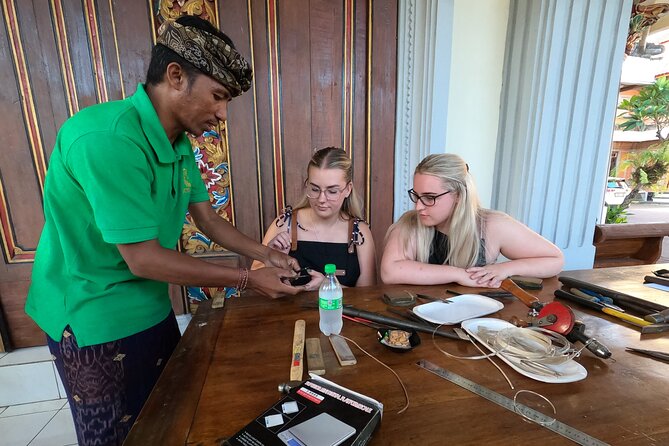
The class begins with an introduction to the equipment and basic safety. This is not wasted time. Silver work includes cutting, shaping, heat, and small hand tools, so understanding what each tool does helps you work with more care.
You can create a design from scratch or use a sample. A catalogue and examples around the workshop can help if you arrive without a clear plan. I recommend bringing a simple idea, such as a plain band, an initial, a small symbol, or a modest textured pendant.
A complicated design may not fit comfortably into the time or silver allowance. One particularly useful part of the instruction is the tutor’s help in deciding what will work. The guidance is practical: some ideas need too much metal, too many joins, or more time than the class allows.
You may also add initials or a personal mark. One class participant made a ring and etched initials into it, a small detail that turns a standard shape into a personal keepsake.
The included silver amount needs clarification. One description states 0.35 ounce, or 10 grams, while the included-items section states 5 grams. Since extra silver is charged at IDR 50,000 per gram, contact the provider before class and ask which allowance applies to your booking.
The middle of the class: cutting, stamping, and shaping
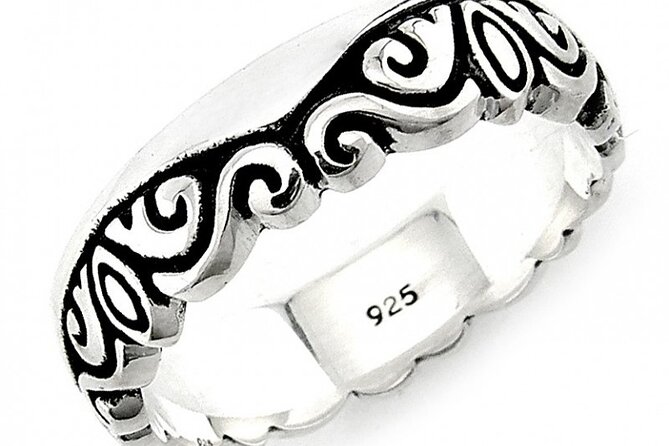
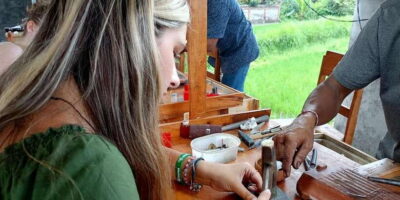
Once you settle on a design, you begin working the silver. Sawing is one of the first hands-on skills, and it requires more control than force. The tutor can show you how to keep the cut steady and how to avoid damaging the outline of your piece.
Stamping and hammering add texture and shape. These steps can make a simple band more distinctive, but they also require restraint. A few deliberate marks may look better than heavy or uneven hammering, especially on a small ring.
This part of the activity is where the private setup earns its keep. You can try a technique, pause, and ask for correction before moving on. If you are making jewelry with a partner, each person can choose a different design and receive individual help rather than following a single group demonstration.
The process is hands-on, but it is still guided. You should not expect to operate every stage without assistance. Soldering, in particular, requires careful handling and is best treated as a technical step under close supervision.
The class is suitable for most people, according to the activity information, but it is still a craft session. You will be using your hands for several hours and concentrating on small details. If you prefer a quick, passive outing, this may feel slow. If you enjoy making things, the steady pace is the point.
A few more Ubud half-days to weigh up
- Ubud Cooking Class Bali with Balinese Chef
★ 5.0 · 1,609 reviews - Ubud: Cooking Class with Transfers and Optional Market Visit
★ 4.9 · 824 reviews - PRIVATE Authentic Balinese Cooking Class in Ubud at Putu’s Home
★ 5.0 · 644 reviews - Ubud: Balinese Cooking Class and Market Tour
★ 4.8 · 531 reviews
Soldering, sanding, and polishing your finished piece
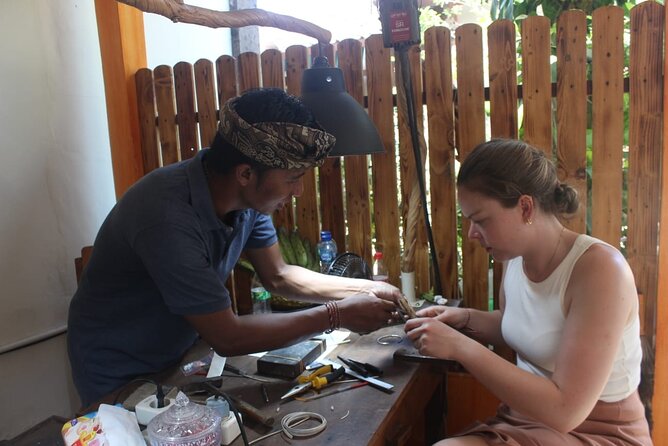
Soldering joins parts of the jewelry. This may be used for a ring, a pendant, or another design that needs more than one piece of silver. The tutor’s role is especially important here because a neat join affects both the look and strength of the final item.
After shaping and joining, you move on to sanding. This removes rough edges and helps refine the form. It is not the most glamorous stage, but it is where a handmade object begins to look finished rather than merely assembled.
Polishing brings out the silver’s shine. The change can be satisfying: a piece that looked plain or cloudy during the earlier stages becomes more presentable at the end. You leave with jewelry made to your chosen design or adapted from a workshop sample.
Keep your expectations sensible. Handmade jewelry created in a short class will have signs of the maker’s hand. That is a benefit for many people, though anyone seeking a perfectly uniform commercial finish may prefer to buy a finished item from a shop.
The family welcome and local feel
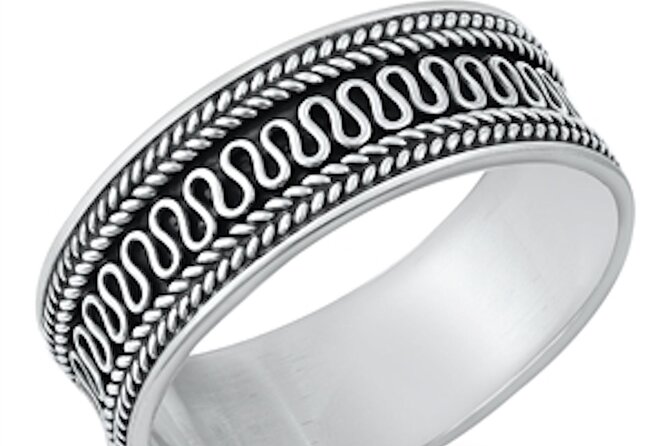
The class has a personal tone. You can expect a private workshop setting and a family welcome, with cold drinks or bottled water and snacks included. The hospitality is a useful touch during a three-hour activity, especially when you are concentrating on detailed work.
The family connection also gives the class more character than a basic craft lesson. One account describes several generations of silversmithing in the family, though the provided details do not specify exactly how long the workshop has operated. What you can expect is instruction tied to a local household and working craft tradition.
Arik is singled out for patient, clear teaching. Another account names Ari and describes the family as helpful throughout the process. Because the instructor assigned to your session may vary, I would not book solely on the promise of one particular person. Still, these names are useful if you want to request Arik when arranging your visit.
The setting may include ordinary family life around the workshop. That can mean a more relaxed atmosphere, but it is not the same as a silent professional classroom. If you value direct contact with a local family, this is a plus. If you want a highly formal studio, keep that difference in mind.
Is the $48 price good value?
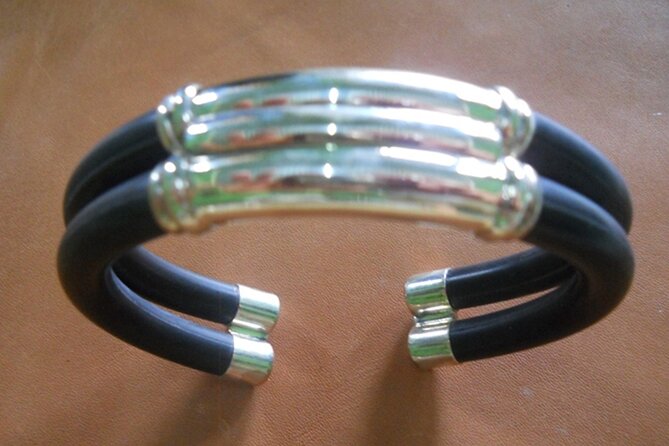
At $48 per person, the class is reasonably priced for a private, three-hour activity that includes instruction, tools, refreshments, and a piece of jewelry to take home. The price makes the most sense when you value the process, not just the amount of silver.
The metal allowance is the deciding detail. Five grams is enough for a small ring or modest design, but a larger piece may require more. If the 10-gram allowance applies, you have more freedom. Since the supplied details conflict, get a clear answer before you pay or arrive.
Extra silver costs IDR 50,000 per gram. That is not necessarily a problem, but it makes design planning important. A thick ring, a broad pendant, or several pieces can use more metal quickly. Ask how much your chosen design is likely to need.
The private format adds value for couples, families, and small groups. You are paying for a tutor focused on your party rather than joining a crowded class. For solo visitors, the price is higher per person than a shared lesson, but the personal guidance may make the work easier and more enjoyable.
Hotel transportation is not part of the base price. Add the car charge when comparing the total cost with other Ubud activities. If four people share a transfer, it becomes a more manageable extra. If you are alone, using your own transport may be cheaper.
Who will enjoy this class most
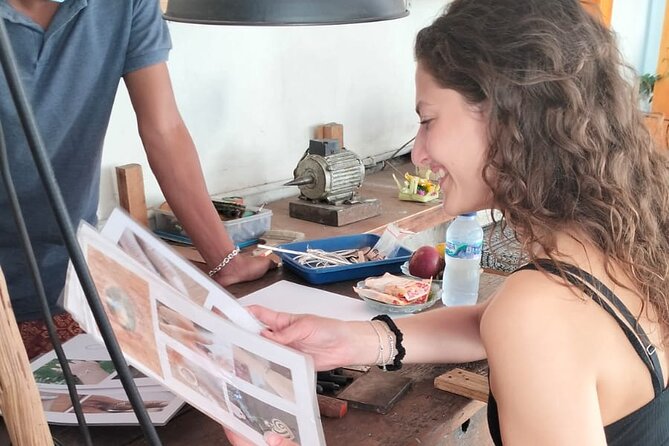
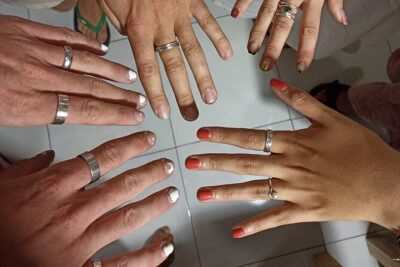
I would choose this experience if you want a useful souvenir, enjoy small creative tasks, or are looking for an activity beyond temples and rice terraces. It works well for couples who want matching or complementary rings, parents and older children, and friends who want to make different pieces side by side.
It is also a good fit for someone who already has a design in mind. Bring a sketch or a reference image, but keep it simple enough to make within three hours and the available silver. The tutor can help adapt an ambitious idea.
This class may be less suitable if you want to produce several large pieces. The silver allowance and time limit are real constraints. It is also not ideal if you dislike hand tools, close work, or a process that includes sanding and repeated adjustments.
The class is private, and only your group participates. That makes it easier for people with different skill levels to work together. One person can make a plain band while another tries stamping or a small decorative element.
Practical details that affect your day
The duration is about three hours. Plan it as a focused half-day activity rather than something to squeeze between two tightly timed attractions. The activity begins and ends at Rajata Silver Class unless you arrange paid return transport.
A mobile ticket is provided, and confirmation is received at booking. The activity requires good weather. If poor weather causes cancellation, you are offered another date or a full refund.
Free cancellation is available if you cancel at least 24 hours before the local start time. Cancellations within 24 hours are not refunded, and changes inside that period are not accepted. This matters if your Bali plans are still shifting.
Wear something comfortable for seated handwork and avoid bringing a design that depends on complex stones or elaborate settings. The included activity focuses on working with silver and the listed techniques. No stones, special materials, or additional design services are specified.
The class includes bottled water or a soft drink and snacks, but personal expenses are not included. If you decide to use more silver, pay the extra charge directly as arranged with the provider.
Should you book the Celuk silver class?
Book it if you want to make a small, personal piece and prefer a local workshop to a standard shopping stop. The private tutor, family setting, and chance to use your own design give the experience real substance. Arik’s patient teaching is a strong reason to request him if possible, though instructor availability should be confirmed.
Before booking, ask two questions: Is my booking allocated 5 grams or 10 grams of silver, and how much will my planned design use? Also confirm transport if you are not making your own way to Celuk.
I would skip it only if you want a large amount of jewelry, a perfectly polished professional finish, or a short activity with no technical work. For everyone else, this is a thoughtful Ubud-area choice that leaves you with both a new skill and something you can wear.
FAQ
Where does the silver jewelry class take place?
The class takes place at Rajata Silver Class in Celuk, Sukawati, Gianyar Regency, Bali. Celuk is a craft village outside Ubud and a center for silver craftsmen in Bali.
How long does the class last?
The activity lasts approximately three hours.
Is the class private?
Yes. Only your group participates in the activity, with a private silver class guide.
What jewelry-making techniques will I learn?
The class covers tool use and safety, sawing, stamping, hammering, soldering, sanding, and polishing.
Can I make my own design?
Yes. You can create your own design or use inspiration from samples and catalogues at the workshop. The tutor can help you decide which ideas will work within the time and available silver.
How much silver is included?
The information provided is inconsistent. The overview states 10 grams, while the included-items section states 5 grams. Confirm the exact allowance with the provider before booking. Additional silver is listed at IDR 50,000 per gram.
Is hotel pickup included?
No. Return hotel transfer is available for an extra charge. The listed prices range from 450,000 Indonesian rupiah for Sanur or central Ubud to 600,000 for Uluwatu, depending on your pickup area.
Just added around Ubud
- Heaven Gate, Tirtagangga and Tukad Cepung Waterfall – All Inclusive★ 5.0 · 3 reviews
- Authentic hike in the forest with lunch at the inhabitant★ 5.0 · 3 reviews
- Half Day Uluwatu Temple Sunset, Kecak Dance and Seafood Dinner★ 3.5 · 3 reviews
- Ubud: White Water Rafting with visit Ubud Monkey Forest★ 5.0 · 3 reviews
- ️Bali All Inclusive Tour: Ubud – Tegalalang – Kintamani★ 5.0 · 3 reviews
- East Bali and Lempuyang Temple Tour★ 5.0 · 3 reviews
- Ubud: Temple, Swing, Waterfall, Rice Terrace & Monkey Forest★ 5.0 · 3 reviews
- Blue Lagoon Snorkeling and Lunch with Tukad Cepung Waterfall★ 5.0 · 3 reviews
Silver Jewelry Workshops, compared.
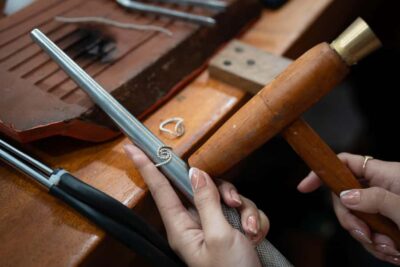
Hands-On Silver Jewelry Making Near Ubud’s Monkey Forest
Read our review →
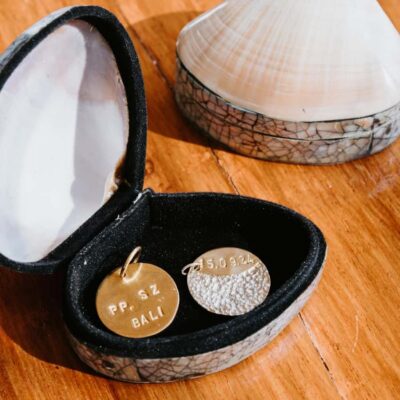

Ubud Silver Artistry Class: Create Unique Jewelry in Bali
Read our review →Ubud Monkey Forest Silver Class – Craft Your Own Silver Jewelry
Read our review →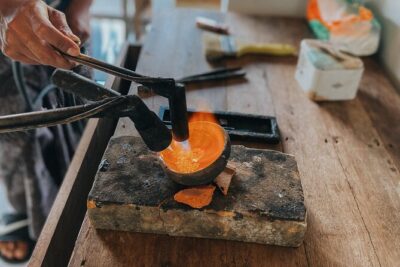
Browse the lists this tour appears in