
Reviewed · SHOW
Ubud: Dinner Show Lost City – Story of Humanity Experience
The unusual hook here is that you do not simply watch a dinner show. You choose between Lemuria, guided by emotion and nature, and Atlantis, driven by technology and productivity. The story then pulls you into a mythic battle with dancers, fire, light, music, and audience participation. I like the creative setting beside a river and the way the meal becomes part of the performance.
I also like the Flame of Humanity story, which gives the show a clear idea to chew on after dinner: love, gratitude, courage, and ego all shape a good human life. The main caution is that this is not a polished, conventional theater production. Its location can be hard to find, and its symbolic plot may feel confusing or overly earnest if you prefer a simple dance performance.
In This Review
- Key points to know before booking
- A dinner show built around a choice
- The river setting and the opening Lemuria dance
- Atlantis arrives with technology and a secret weapon
- Shauja, the Flame, and four human virtues
- Fire, light, costumes, and music in a small setting
- Making your bread dish with ancient toppings
- Watching the Spice Masters cook
- The final battle and the point of the story
- Who will get the most from the $23 price
- Timing, group size, and booking flexibility
- My call: book it for novelty, not tradition
- FAQ
- How long does the Lost City Story of Humanity Experience last?
- How much does the experience cost?
- Is dinner included?
- Are drinks included?
- What kind of food activity takes place?
- Do I need to choose a side?
- What do the two sides represent?
- Is the activity conducted in English?
- Is a small group option available?
- Can I cancel for a refund?
Key points to know before booking
- Choose your side at the start: Support the nature-centered Lemurians or the technology-minded Atlanteans.
- The 90-minute show is interactive: You may be asked to participate rather than sit quietly throughout.
- Fire and the Flame of Humanity drive the story: Expect fire dances, costumes, music, and light effects.
- The dinner is part of the event: Create a bread-based dish with toppings and spices, then watch Spice Masters cook it.
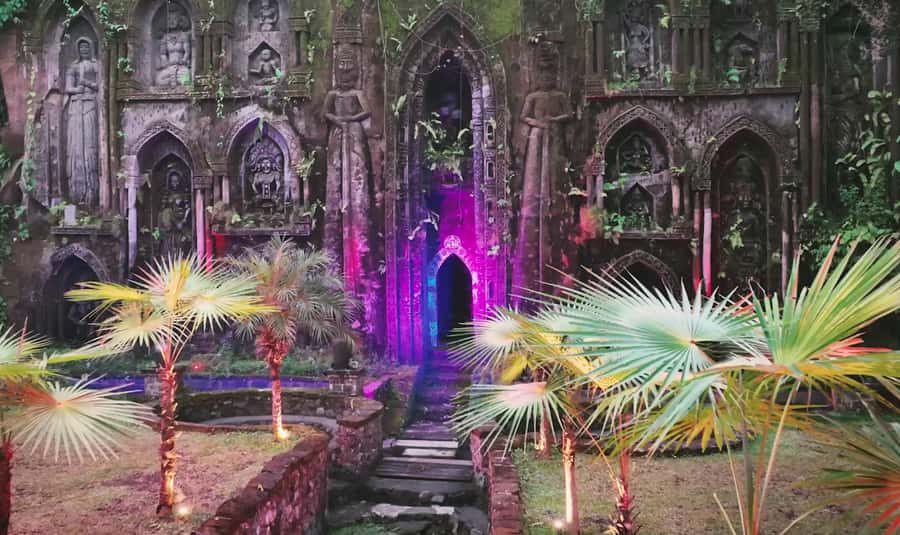
- The setting adds much of the charm: The venue is described as a temple ruin beside a river, though the location can be difficult to find.
- The price is modest for a meal and show: At $23 per person, the value is strongest if you enjoy unusual, participatory theater.
A dinner show built around a choice
The Lost City experience begins with a simple decision. You are asked to pick Lemurian or Atlantian before the story develops.
The Lemurians represent humanity, emotion, nature, and connection. The Atlanteans favor technology and productivity as the road to happiness. This choice is more than a theme printed on a program. It gives you a role in the room and makes the audience part of the story from the opening moments.
That interactive design will appeal to you if you enjoy being included. It may not suit you if you want a quiet meal with a show happening several feet away. The activity description does not specify exactly how often you will be called on, so expect participation without assuming that every person will be placed at the center of the action.
An English-speaking host or greeter helps introduce the experience. No individual guide names are provided, but the activity is offered in English, and a small-group option is available.
A few more Ubud half-days to weigh up
- Uluwatu Sunset, Kecak Dance, and Dinner Jimbaran Beach
★ 5.0 · 3,681 reviews - Spa at Flying Bamboo with Dining Included at Botanist
★ 5.0 · 204 reviews - Ubud: Dance Show + Dinner at Lost City – Story of Humanity
★ 4.5 · 94 reviews
The river setting and the opening Lemuria dance
The setting is one of the experience’s strongest features. One account describes a temple ruin directly beside a river, while another notes that the venue is somewhat hidden. That combination is useful to know: the place itself may feel special once you arrive, but you should not treat the meeting point as obvious.
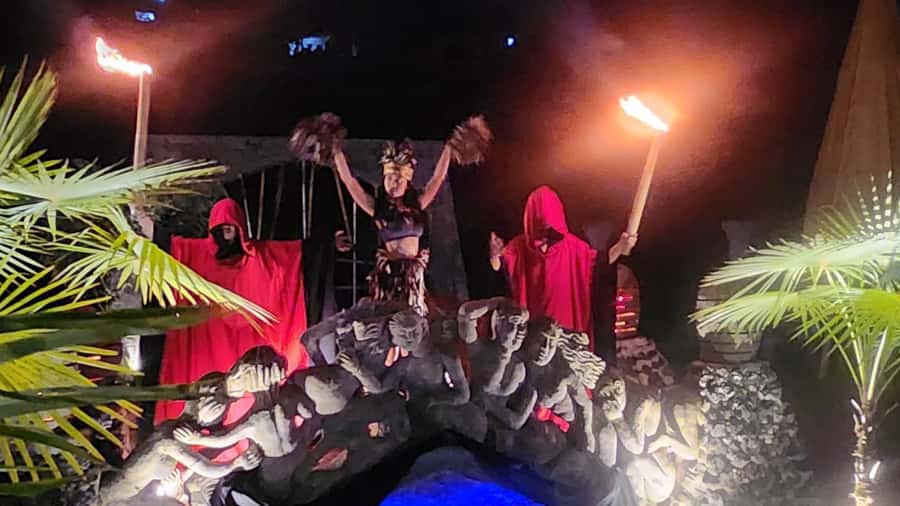
The first major scene is the Lemuria Harmony Dance, set during the royal wedding of Shauja and Halifu. The ceremony presents Lemuria as a society built around love, gratitude, and a bond with the earth. Costumes, music, and movement establish a storybook world before the conflict begins.
This opening is less about factual archaeology than fantasy and symbolism. Lemuria and Atlantis are used as opposing ideas. If you arrive expecting a historically accurate account of lost civilizations, you may be disappointed. If you enjoy myth, movement, and a moral story, the setup gives the show a clear direction.
The wedding also makes the later threat personal. The audience first sees a peaceful celebration, then watches that peace come under pressure from the Atlanteans and their belief that technology can replace feeling.
Atlantis arrives with technology and a secret weapon
The Atlanteans enter as the force of control and efficiency. Their secret weapon is designed to turn innocent Lemurians into emotionless automata. That plot device is direct and easy to understand, even when the show’s larger mythology becomes more theatrical.
The Lemurian resistance answers with song and harmony. This is where the production’s mix of music, dance, light, and audience involvement becomes important. The conflict is not presented only as a fight with weapons. It is a clash between singing, feeling, and human connection on one side, and mechanical progress on the other.
The story does not pretend that technology is simply evil. Instead, it asks you to consider what happens when productivity becomes more important than emotion. That question gives the evening some substance beyond costumes and special effects.
The plot then takes a darker turn. Many Lemurians are lost, including Halifu, Shauja’s new husband. Her grief pushes the story forward and gives the central character a reason to challenge the elders rather than accept a passive role.
Shauja, the Flame, and four human virtues
The elders of Lemuria decide that humanity’s heart and spirit must be protected. They bring out the Flame of Humanity, a symbolic fire meant to awaken four Guardians connected to love, gratitude, courage, and ego.
This is the show’s main idea in physical form. The flame is not just a prop. It represents the qualities the story says are needed to remain fully human when technology becomes overwhelming.
Shauja wants the elders to act quickly and help her husband. They refuse, telling her that no woman may touch the flame. She and the Bird of Unity then steal it and set out to find the four Guardians.
The gender rule is deliberately old-fashioned and becomes part of Shauja’s challenge. She is not simply waiting for a hero to rescue her. She takes the central risk herself, even when the elders deny her a role. That gives the story a stronger emotional center than the opening wedding alone would provide.
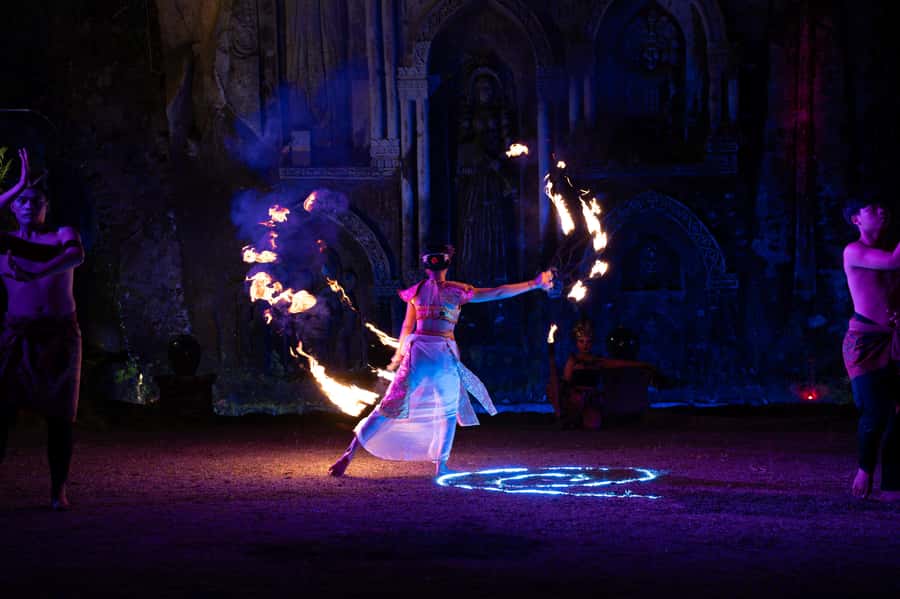
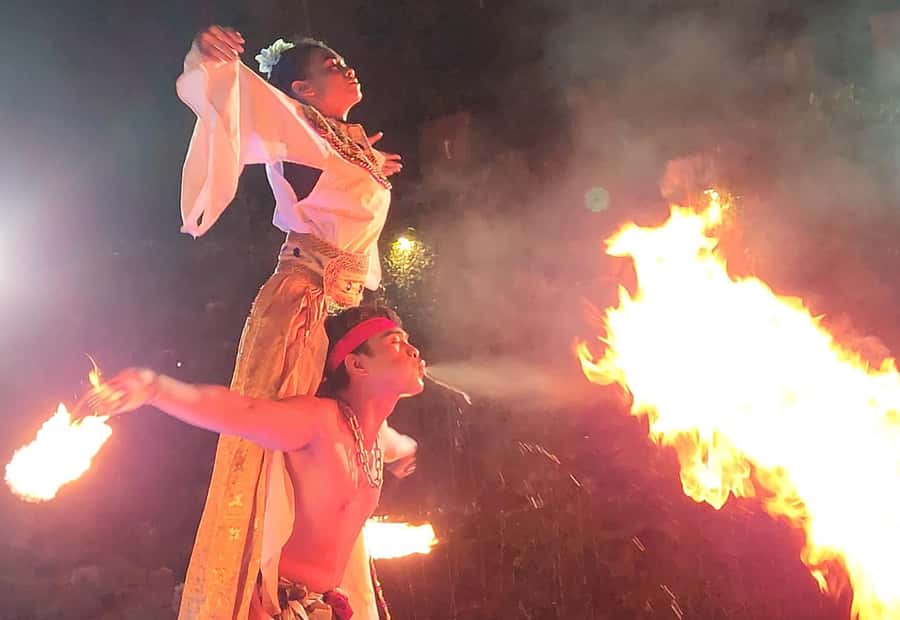
Each Guardian presents a test. Shauja uses the flame to awaken their powers, and the production brings these moments to life through different fire dances. Expect the show to lean into visual symbolism rather than realistic action. Fire is central, so you are watching an event designed for atmosphere and spectacle as much as for plot.
A completely different day out, same corner of Ubud:
- All-Inclusive Ubud Private Tour
★ 5.0 · 14,344 reviews - Best of Ubud Full-Day Tour with Jungle Swing
★ 5.0 · 8,571 reviews - Ubud: Monkey Forest, Jungle Swing, Rice Terrace, and Water Temple
★ 5.0 · 7,160 reviews - Ubud: Waterfalls, Water Temple & Rice Terraces Private Tour
★ 5.0 · 5,484 reviews
Fire, light, costumes, and music in a small setting
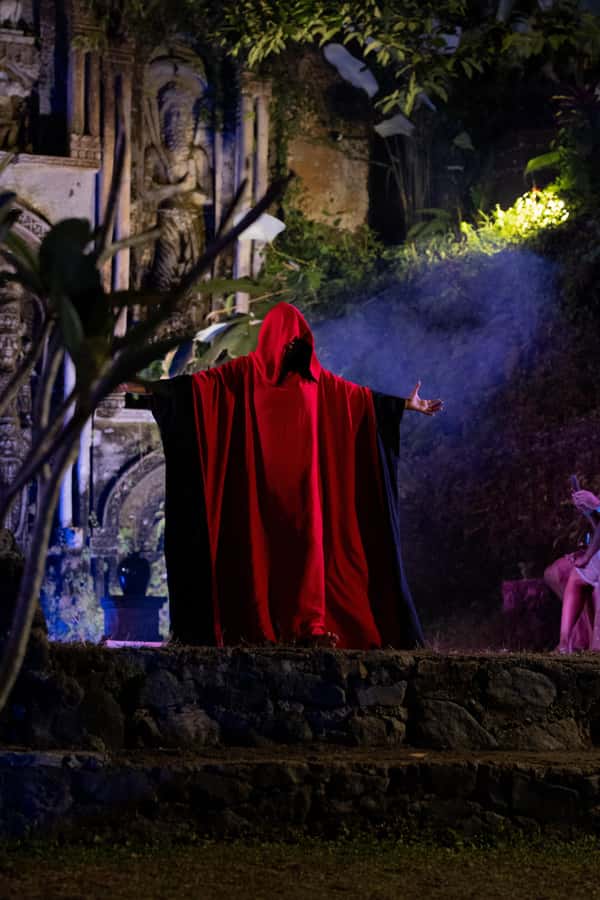
The production’s visual tools are simple but effective in combination. Costumes establish the two societies. Light changes the mood. Music carries the emotional sections. Fire gives the Guardian scenes a physical focus that ordinary stage movement could not provide.
I would not compare this to a large commercial theater production. The appeal is closer to a community performance with a strong setting and an imaginative concept. The smaller scale can make the audience interaction feel more immediate, but it also means the show may seem unconventional or rough around the edges.
That distinction matters. One person can find the production inventive and worth the effort, while another can find the purpose unclear and the evening disappointing. The supplied rating of 4.3 from 37 ratings suggests that the experience generally lands well, but the range from one to five stars also shows that personal taste plays a major role.
The show’s location seems to be part of the design rather than a neutral hall. A temple ruin beside a river gives the myth a natural setting, and the unusual venue can be worth the trip by itself. At the same time, the hidden location is a practical drawback. Check the exact meeting point for your selected option instead of assuming every booking uses the same place.
Making your bread dish with ancient toppings
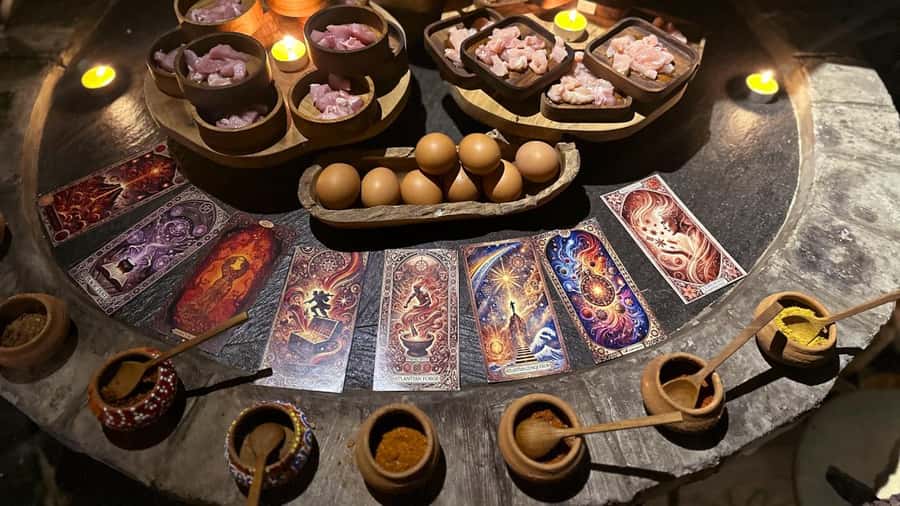
The dinner is not an afterthought served after the curtain closes. You create your own dish using fresh bread, ancient toppings, and unusual spices.
This activity gives the audience something practical to do during the evening. Instead of receiving an identical plate without context, you make choices about your food and watch it become part of the event. The ancient toppings and spice theme also support the lost-city concept without requiring the meal to be formal or elaborate.
The information provided does not list the exact toppings, spice varieties, or serving sequence. You should therefore treat the menu as part of the surprise rather than booking this for a specific dish. If you have strict dietary needs, no detailed dietary information is provided, so ask the provider before paying.
The all-you-can-eat dinner is included in the $23 price. Drinks and alcohol are not included. For many people, that inclusion makes the price attractive, especially because you receive both dinner and a 90-minute performance rather than paying for a show alone.
Watching the Spice Masters cook
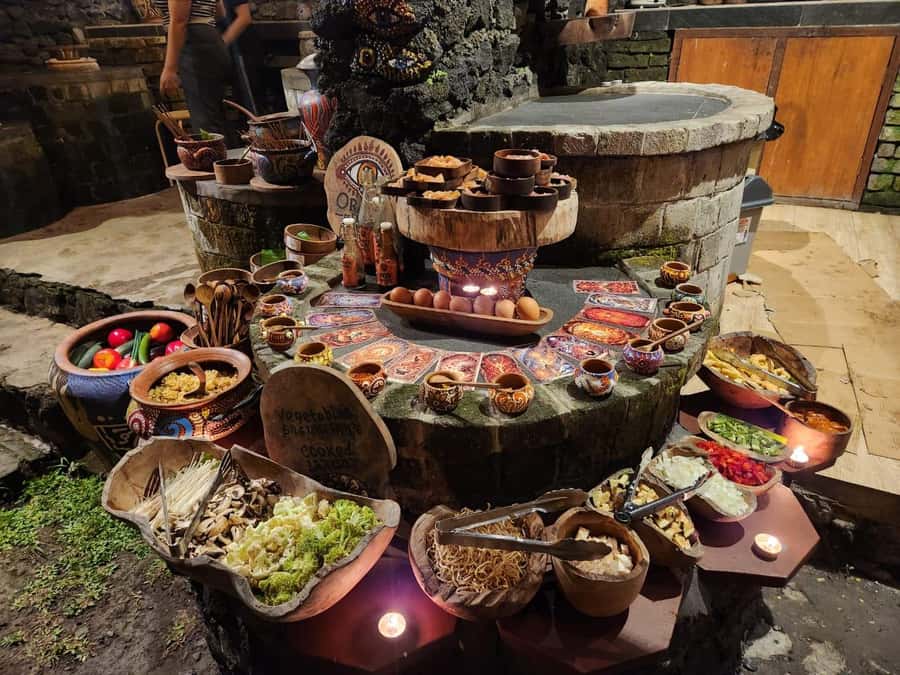
After you create your dish, Spice Masters cook it in front of you so the spices can infuse the food. This gives the dinner a performance element of its own and keeps the meal connected to the story.
You are not simply watching dancers and then moving to a separate restaurant. Cooking, flavor, and audience activity are woven into the same evening. That makes the event a good choice for a group with different interests. One person can focus on the show, another on the food, and everyone still shares the same activity.
The phrase all-you-can-eat is important for value, but it does not tell you how long the food service lasts or exactly how many courses are offered. I would see the meal as a generous part of a themed evening, not as a substitute for a carefully planned restaurant dinner.
The lack of included drinks is easy to manage if you know it in advance. Keep your budget open for beverages, since the $23 headline price covers the dinner and show but not alcohol or other drinks.
The final battle and the point of the story
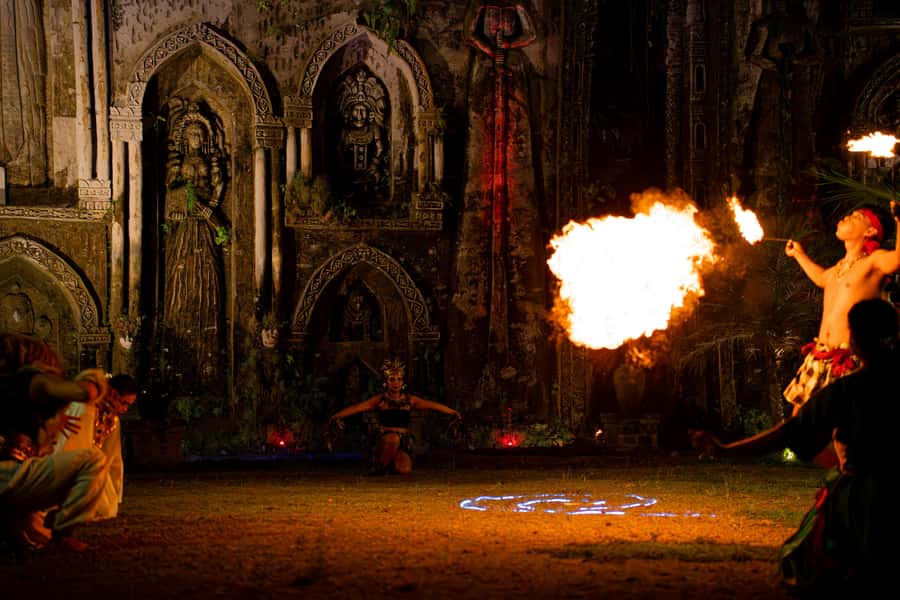
The story reaches its climax with a battle of wills between Lemurians and Atlanteans. The outcome is described as unexpected, so the ending is intended to challenge the simple idea that one side is entirely right and the other entirely wrong.
That is a useful choice. The show begins with a clear opposition between heart and technology, but its final lesson asks what it means to be a great human. The answer is tied to the four Guardians: love, gratitude, courage, and ego.
The ego element may seem surprising beside the other virtues. It suggests that the story is not asking you to erase the self, but to understand and control it. You do not need to agree with every part of the message to find the question worthwhile.
I would give yourself a little mental room for the show’s symbolic style. The plot includes royal weddings, ancient civilizations, emotionless machines, a stolen flame, a unity bird, and fire-powered Guardians. That is a lot to absorb in 90 minutes. The reward is an event with a clear personality. The drawback is that the narrative can feel strange or hard to follow.
Who will get the most from the $23 price
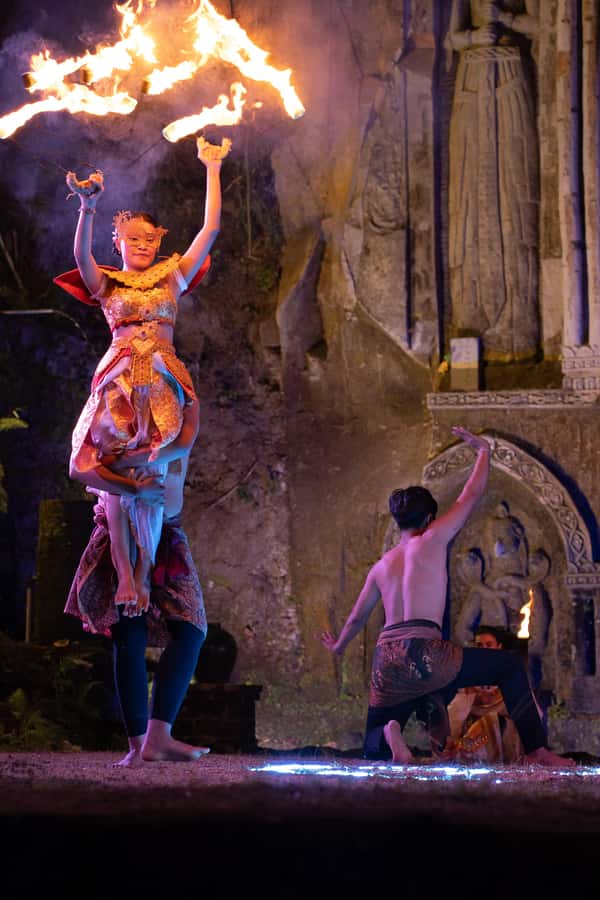
At $23 per person, the package offers solid value if you want something different from a standard Bali dinner. You receive the dance show, a booklet and gifts, an interactive food activity, an all-you-can-eat dinner, and an unusual venue.
The value is strongest for:
- Couples looking for an evening built around a story rather than a normal meal
- Families with older children who enjoy costumes, fire, and participation
- Groups with mixed interests in food, theater, and cultural-style performance
- Visitors who have already seen more traditional Bali dance and want something less familiar
- People who enjoy reflective themes about technology, emotion, and human behavior
It may be a poor match if you want a strictly traditional Balinese performance, a quiet dinner, a famous central venue, or a polished stage production with a straightforward plot.
The age restrictions are inconsistent in the supplied information, listing children under 2, 3, and 4, as well as babies under 1. The safe practical reading is that very young children are not suitable. Confirm the current age rule when booking if you are bringing children.
Timing, group size, and booking flexibility
The activity lasts 90 minutes, with starting times depending on availability. That makes it easy to place into an evening schedule, but the meeting point can vary by booking option, so confirm the exact location before setting out.
A small group is available. That matters here because audience participation works better when the room does not feel enormous. It may also make the food activity and side selection feel more personal, though the exact group size is not stated.
Cancellation is free up to 24 hours before the activity for a full refund. You can also reserve now and pay later. These policies are useful when your Ubud plans are still changing, especially because the location and starting time need a little advance checking.
The provider is Lemuria, the Lost City. English is the listed language, and an English-speaking host or greeter is provided.
My call: book it for novelty, not tradition
I would book the Lost City Story of Humanity Experience if you want an imaginative, participatory night with dinner and visual effects at a reasonable price. The river setting, fire dances, community feel, and hands-on spice cooking give the evening several points of interest beyond the central plot.
I would skip it if you need a simple story, a well-known cultural performance, or a clearly traditional presentation. The hidden location and unusual style require some patience, and the story may feel like too much if you prefer your dinner entertainment to stay in the background.
For the best chance of enjoying it, choose your Lemurian or Atlantian side with an open mind, allow time to locate the venue, and think of the $23 as payment for a playful evening package rather than a fine-dining meal. If that sounds like your kind of night, this is a worthwhile alternative to another ordinary dinner in Ubud.
FAQ
How long does the Lost City Story of Humanity Experience last?
The experience lasts 90 minutes.
How much does the experience cost?
The listed price is $23 per person.
Is dinner included?
Yes. An all-you-can-eat dinner is included, along with the dance show, a booklet, and gifts.
Are drinks included?
No. Drinks and alcohol are not included.
What kind of food activity takes place?
You create a dish with fresh bread, ancient toppings, and unique spices. Spice Masters then cook it in front of you so the spices infuse the food.
Do I need to choose a side?
Yes. Because the show is interactive, you need to choose Lemurian or Atlantian.
What do the two sides represent?
Lemurians are connected with humanity, emotions, and nature. Atlanteans focus on technology and productivity.
Is the activity conducted in English?
Yes. The listed language is English, and an English-speaking host or greeter is provided.
Is a small group option available?
Yes. A small group option is available.
Can I cancel for a refund?
You can cancel up to 24 hours in advance for a full refund. Reserve now and pay later is also available.
More Show in Ubud
- Bali: Ubud Palace Legong Dance Show Ticket
★ 4.4 · 3,979 reviews - Bali: Ubud Kecak and Fire Dance Show Tickets
★ 4.4 · 2,631 reviews - Half-Day Tour: Uluwatu Temple and Kecak Fire Dance Show
★ 5.0 · 63 reviews - Private Tour: Full-Day Tanah Lot and Uluwatu Temples with Kecak Fire Dance Show
★ 5.0 · 57 reviews
Just added around Ubud
- Authentic hike in the forest with lunch at the inhabitant★ 5.0 · 3 reviews
- Heaven Gate, Tirtagangga and Tukad Cepung Waterfall – All Inclusive★ 5.0 · 3 reviews
- Half Day Uluwatu Temple Sunset, Kecak Dance and Seafood Dinner★ 3.5 · 3 reviews
- Ubud: White Water Rafting with visit Ubud Monkey Forest★ 5.0 · 3 reviews
- ️Bali All Inclusive Tour: Ubud – Tegalalang – Kintamani★ 5.0 · 3 reviews
- East Bali and Lempuyang Temple Tour★ 5.0 · 3 reviews
- Ubud: Temple, Swing, Waterfall, Rice Terrace & Monkey Forest★ 5.0 · 3 reviews
- Ubud Adventure: ATV Thrills, Monkey Encounters, & Waterfall★ 5.0 · 3 reviews
Show, compared.
Dance Show + Dinner at Lost City – Story of Humanity
Read our review →
Half-Day Tour: Uluwatu Temple and Kecak Fire Dance Show
Read our review →
Private Tour: Full-Day Tanah Lot and Uluwatu Temples with Kecak Fire Dance Show
Read our review →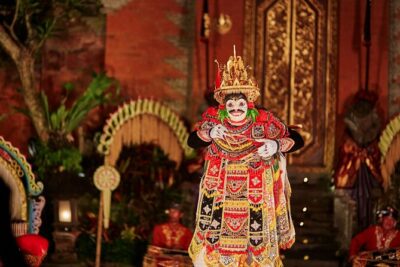
Barong Dance and Keris Cultural Dance Show Tickets
Read our review →
Browse the lists this tour appears in