
Reviewed · MONKEY FOREST TOURS
Ubud: Monkey Forest, Rice Terraces & Sacred Temples
Ubud’s best sights come together in one long, well-paced day: mossy temple ruins, free-roaming macaques, bright rice terraces, and a quiet jungle purification temple. The most unusual stop is Mengening, where you learn to make a canang sari, the small flower offering seen throughout Bali.
I like the way this tour mixes famous sights with a more intimate temple visit. I also like the practical setup: hotel pickup, entrance fees, bottled water, and an English-speaking guide are included for $69 per person.
The tradeoff is time. Twelve hours on Bali roads is a full day, and the itinerary gives you a broad introduction rather than a slow, in-depth visit to each place. Traffic can also stretch the ride home.
In This Review
- Key points at a glance
- Why this Ubud day works
- Goa Gajah and the carved Elephant Cave
- Walking among the macaques at Monkey Forest
- Ubud Palace and the town’s royal center
- Tegalalang’s famous rice terraces
- Mengening Temple and the canang sari workshop
- What the guides add to the day
- Transport, timing, and the real cost of the day
- Who should book this Ubud tour?
- Booking details and cancellation
- FAQ
- What is included in the $69 tour price?
- How long does the Ubud tour last?
- How many people can join the tour?
- Which places are visited?
- Is hotel pickup available?
- Can I cancel for a full refund?
- Should you book it?
Key points at a glance
- Goa Gajah first: Explore the Elephant Cave, carved entrance, bathing pools, and old temple remains before the day gets too hot.
- Monkey Forest with a guide: Walk through mossy jungle paths among free-roaming macaques and sacred stone carvings.
- Tegalalang views: Stop for one of Bali’s most famous rice terrace scenes, with time for photos and a look at hillside farming.
- Mengening’s offering workshop: Learn how to make a canang sari and why these offerings matter in everyday Balinese life.
- Named guides praised for care: Dan, Ariana, Laras, Haris, Gunawan, and others are associated with warm explanations and patient service.
- Simple all-day value: Hotel transport, admission fees, water, and the workshop are included in the $69 price.
Why this Ubud day works
This is a sightseeing day with a clear purpose: show you the main Ubud area while adding cultural context. You are not simply driven from one photo stop to another. At several points, the guide explains Balinese customs, temple use, and daily religious practice.
That matters in Ubud. A temple can look like a handsome stone gateway if nobody explains what happens there. The macaques can seem like comic photo subjects until you understand that Monkey Forest is also a sacred sanctuary. The offering workshop helps connect the grand temples with ordinary Balinese life.
The day begins at 9:30 am with hotel pickup. The exact drive time depends on where you are staying, but the schedule allows roughly 12 hours from departure to return. An air-conditioned vehicle is a welcome feature in Bali, where heat, humidity, and road traffic can make a full day tiring.
The group can include up to 20 people. That is small enough for a guide to address the group clearly, though it is not a private tour. If you want to stop for long photographs or set your own pace, a private outing would offer more freedom.
More Monkey Forest visits:
- Ubud: Monkey Forest, Jungle Swing, Rice Terrace, and Water Temple
★ 5.0 · 7,160 reviews - Ubud: Full-Day Rice Terrace, Monkey Forest & Waterfall
★ 5.0 · 2,634 reviews - Hands-On Silver Jewelry Making Near Ubud’s Monkey Forest
★ 4.9 · 1,789 reviews
Goa Gajah and the carved Elephant Cave
Goa Gajah is the first major stop, with about 90 minutes set aside for the visit. The name means Elephant Cave, although the site is not simply a cave built for elephants. Its best-known feature is the dramatic stone entrance, cut with faces and decorative details that give the doorway a watchful, almost theatrical look.
Inside, the cave is compact. The wider site matters just as much as the dark interior. You can see ancient bathing pools, temple remains, and stonework set among greenery. The combination gives Goa Gajah a sense of age without requiring a long walk.
I would pay close attention to the guide here. The carvings and ruins are much easier to appreciate when you know how the site fits into Balinese religious life. The guide can also help you understand what is a functioning sacred place and what is an archaeological remnant.
The 90-minute stop is generous enough for a guided visit and photographs. Still, anyone expecting a huge cave complex may be surprised. Goa Gajah is a concentrated historic site, not an underground attraction that takes half a day.
Wear something suitable for temple grounds. The supplied information does not specify a dress code, but this is a sacred site, so modest clothing is the sensible choice. A lightweight cover-up is useful for a full day of temple visits.
Walking among the macaques at Monkey Forest
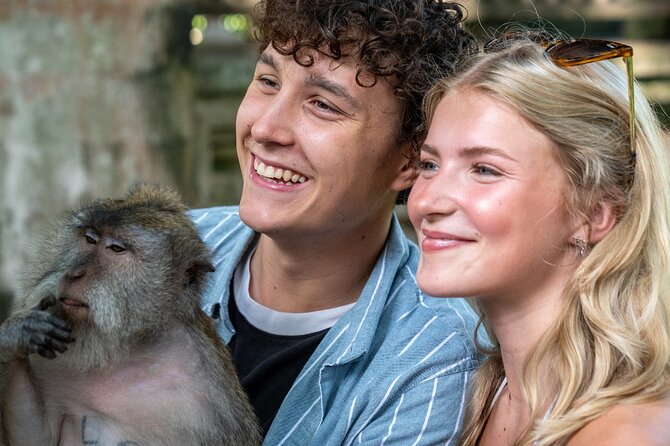
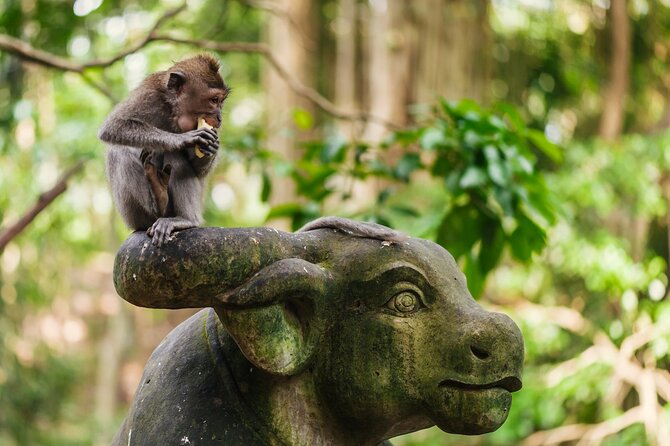
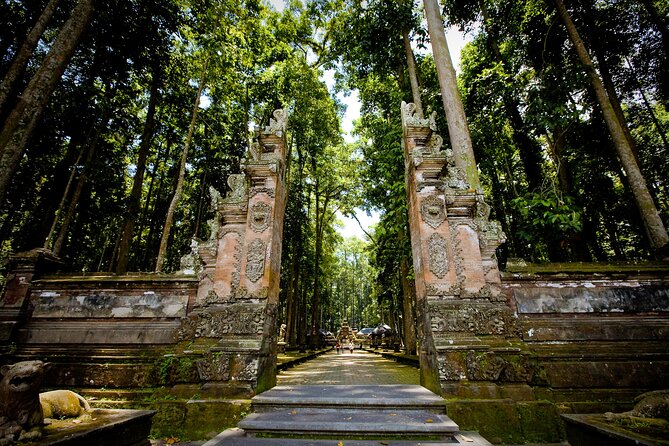
The Sacred Monkey Forest Sanctuary follows Goa Gajah, with another 90 minutes to explore. Here, the setting is as important as the animals. Leafy paths wind past moss-covered temples, old stone carvings, and thick jungle growth, creating one of Ubud’s most memorable walks.
The macaques roam freely. That gives the visit a lively, unpredictable feel, but it also means you should follow the guide’s instructions closely. Keep personal items secure and do not treat the monkeys like tame pets. The guide is there to help you enjoy the encounter without turning it into a risky one.
I like this stop because it combines nature, religion, and architecture in one place. You can watch the macaques, then look up at a carved gateway or a temple wall softened by moss. The setting feels far removed from Ubud’s roads, even though it is part of the town.
Ninety minutes should be enough for a good walk without making the visit drag. The paths may involve uneven ground and walking in humid conditions, so comfortable shoes are more useful than stylish sandals.
The monkeys are a major reason people book this tour, but the sanctuary deserves more than a quick animal photograph. Listen for the explanation of the temple grounds and sacred role of the forest. That turns a popular attraction into a more thoughtful stop.
Ubud Palace and the town’s royal center
The route continues to Ubud Palace for about 90 minutes. This is one of the town’s most recognisable landmarks, with traditional Balinese gateways, courtyards, and detailed stone decoration.
Compared with Goa Gajah and Monkey Forest, the palace visit is more architectural. You will spend less time in thick greenery and more time looking at the design of the royal compound. The guide can point out features that are easy to miss when you are focused only on taking pictures.
The stop also gives the day a useful change of pace. After walking around monkeys and temple ruins, a shorter look at the palace keeps the itinerary varied. The 90-minute allowance may feel generous if the palace area is quiet, but it can also allow time for careful photographs and explanation.
This is not a full museum tour based on the information provided. Think of it as an introduction to Ubud’s royal setting and traditional design. If royal history is your main interest, you may want a separate visit elsewhere in Ubud, but this stop works well as part of a broad first-day overview.
More rice terrace walks near Ubud:
- Ubud: Waterfalls, Water Temple & Rice Terraces Private Tour
★ 5.0 · 5,484 reviews - Full-Day Tour to Water Temples and UNESCO Rice Terraces in Bali
★ 5.0 · 2,539 reviews - Ubud: Monkey Forest, Ceking Rice Terraces and More– Full Day
★ 4.7 · 917 reviews - Ubud: Rice Terraces & Villages Half-Day Fat Tire E-Bike Tour
★ 4.9 · 602 reviews
Tegalalang’s famous rice terraces
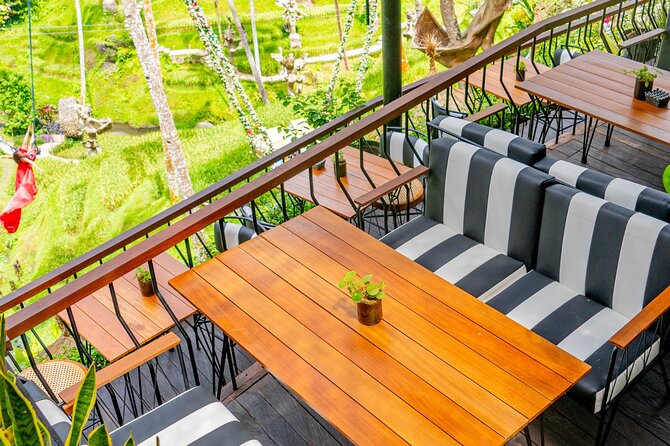
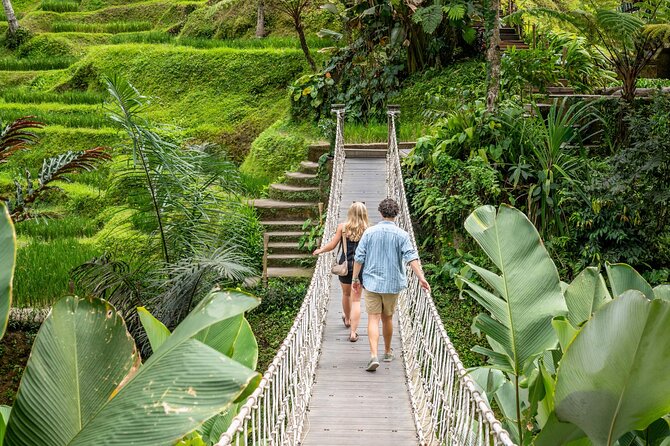
In the early afternoon, you reach the Tegalalang Rice Terraces. The visit lasts about 90 minutes and focuses on the broad views of green paddies cut into the hillsides.
This is the classic Ubud photo stop. From the viewpoint, you can see layers of rice fields stepping down the slope. The scene is easy to understand at a glance, but a guide adds useful context by explaining how rice farming fits into Balinese village life and the wider pattern of water, work, and worship.
I like that Tegalalang appears after the cultural sites. By this point, you have seen temples and royal architecture, so the terraces add the working countryside to the picture of Ubud. Bali is not only ceremonies and stone carvings. It is also cultivated land shaped by generations of farming.
The drawback is that Tegalalang is one of Bali’s most photographed places. It can feel busy, and the main viewpoint may be more about taking in the view than having a quiet walk through the paddies. The tour information promises sweeping views, not a long trek through the terraces, so set your expectations accordingly.
Bring water and sun protection. Bottled water is included, but you may want more for a warm afternoon. The air-conditioned vehicle provides relief between stops.
Mengening Temple and the canang sari workshop
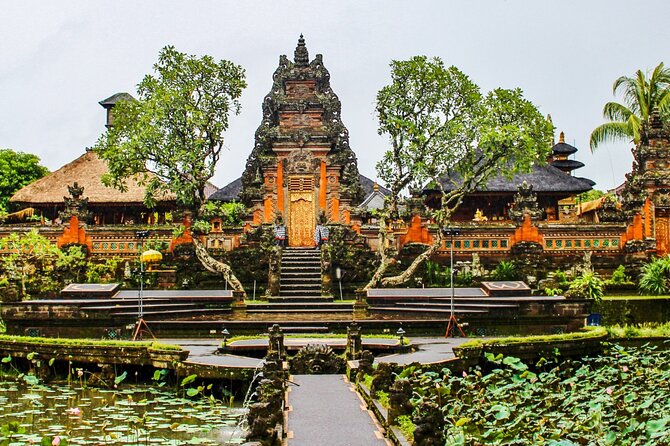
The most distinctive part of the day comes at Mengening Temple, where about two hours are planned. This is a quieter purification temple in a jungle setting, away from Ubud’s most famous sights.
The temple visit offers a different mood from Monkey Forest and Tegalalang. Instead of crowds, animals, or a wide hillside view, you get a more peaceful setting tied to Balinese purification practices. The exact ritual details are not fully specified, so you should treat this as an introduction rather than a full religious ceremony.
The hands-on canang sari workshop is the special touch. A canang sari is a small offering made with flowers and other simple materials. You learn how to assemble one and what it means in daily Balinese life.
I find this more useful than simply being shown an offering from a distance. Making one gives you a practical way to understand the care behind the small flower trays you see outside homes, shops, and temples across Bali. It also gives the guide a natural opening to explain how religion is woven into ordinary routines.
The two-hour allocation allows time for the workshop and temple visit without a rushed exit. This may be the strongest cultural portion of the tour, especially if you want something beyond the usual Ubud checklist.
Because Mengening is a sacred place, follow local instructions about clothing and behavior. The information provided confirms the offering workshop and temple visit, but it does not specify bathing or participation in a purification ceremony. Do not assume that a water ritual is included.
What the guides add to the day
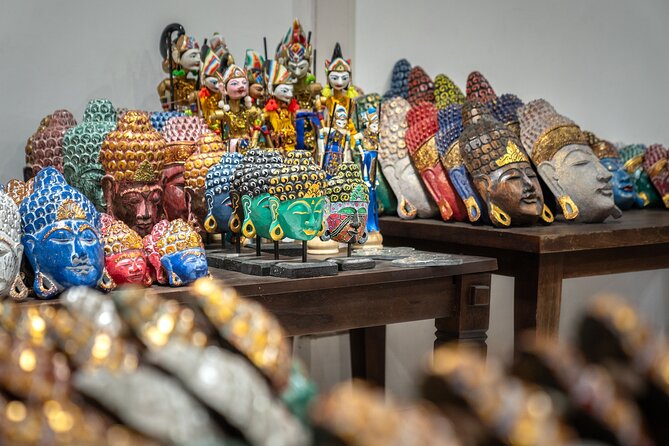
The quality of a full-day tour depends heavily on the guide. This route asks one person to explain archaeology, temple customs, royal design, farming, and religious offerings in a single day.
Several guides are associated with the experience. Dan and Ariana are praised for clear cultural explanations and careful attention. Laras is noted for patient, detailed English explanations and hospitality. Haris is described as friendly and especially good at discussing Bali’s people, religion, culture, and traditions.
Gunawan is remembered for going beyond sightseeing help when a guest lost a mouth retainer. That small detail says something useful about the service style you can expect: the guide is not limited to reciting facts at each stop. Drivers such as Mariyasa, Juliantara, Nengah, and Gus Alit are also singled out for friendly service and safe handling of Bali’s busy roads.
You cannot choose a particular guide from the information supplied, so treat those names as examples rather than a guarantee. The consistent pattern is what matters: patient explanations, friendly manners, and guides who take care of practical problems.
Transport, timing, and the real cost of the day
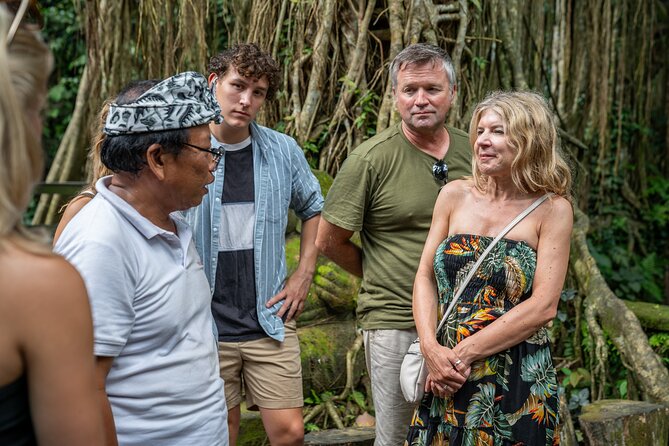
The price is $69 per person. For a 12-hour outing, that is a fair package if you value convenience. Hotel pickup and drop-off, an air-conditioned vehicle, admission fees, bottled water, an English-speaking guide, and the canang sari workshop are all included.
You are also paying to avoid arranging several separate rides around Ubud. Goa Gajah, Monkey Forest, Ubud Palace, Tegalalang, and Mengening are easier to connect by vehicle than on foot or with improvised transport.
The first and final portions of the schedule are driving time. The return journey is listed at about two hours, with arrival in the late afternoon or early evening. Bali traffic can make road time unpredictable, so do not schedule a fixed dinner reservation immediately after the stated return.
The maximum group size is 20. That keeps the cost below a private tour, but the group may still gather at gates, wait for slower walkers, or take longer to load back into the vehicle. The upside is that you get a guide without paying private-tour rates.
Gratuities are optional, and personal expenses are not included. The package does not list meals, so plan to ask about food arrangements or carry money for your own meal. The provided schedule places Tegalalang in the early afternoon, but it does not state exactly when or where lunch happens.
Who should book this Ubud tour?
I would choose this tour if you have one main day for Ubud and want a broad introduction without handling transport yourself. It suits first-time visitors who want temples, monkeys, scenery, and a cultural activity in one package.
It is also a good match for people who prefer explanation to simple sightseeing. The canang sari workshop and temple context give the day more meaning than a string of viewpoints.
Families and mixed-age groups may appreciate the variety. The macaques hold attention, the palace and temples add culture, and the rice terraces provide a memorable outdoor stop. Most people can participate, though you should be comfortable with walking around temple grounds and spending a long day on the road.
I would hesitate if your ideal day means lingering at one site. Six main stops, each with a set time, leave limited room for wandering. I would also think twice if you dislike animal sanctuaries, humid walks, or long drives in traffic.
The listed rating is 5 out of 5 from 69 ratings, with 100 percent recommending the experience. That is an unusually strong record, and the praise focuses on the parts that matter most on a guided day: friendly guides, clear cultural explanations, patient service, and careful driving.
Booking details and cancellation
Pickup is offered, and the stated start time is 9:30 am. Confirmation is provided at booking, and the activity is open to most people.
You can cancel for a full refund up to 24 hours before the start time. Cancellations or changes made within 24 hours are not accepted for a refund, based on the local start time.
FAQ
What is included in the $69 tour price?
The price includes an air-conditioned vehicle, hotel pickup and drop-off, an English-speaking guide, entrance fees, bottled water, and the canang sari offering workshop.
How long does the Ubud tour last?
The experience lasts approximately 12 hours, beginning at 9:30 am and returning in the late afternoon or early evening.
How many people can join the tour?
The maximum group size is 20 people.
Which places are visited?
The itinerary includes Goa Gajah, the Sacred Monkey Forest Sanctuary, Ubud Palace, Tegalalang Rice Terrace, and Mengening Temple.
Is hotel pickup available?
Yes. Hotel pickup and drop-off are included, although the supplied information does not specify pickup areas or individual pickup times.
Can I cancel for a full refund?
Yes. You can cancel at least 24 hours before the experience start time for a full refund. Cancellations or changes made less than 24 hours before the start time are not accepted.
Should you book it?
Book this tour if you want to see several essential Ubud sights in one organized day and you value a guide who explains Balinese culture along the way. The strongest reason to choose it is the combination of major stops with Mengening Temple and the canang sari workshop.
Skip it if you want a private, slow-paced day or already plan to visit these places independently. At $69, the tour offers solid value through transport, admissions, and guidance, but the long schedule means you trade freedom for convenience. For a first look at Ubud, that is a sensible bargain.
More Temple Days Around Ubud
- Tirta Empul: Temple Tour with Optional Spiritual Cleansing
★ 4.9 · 1,257 reviews - Bali Instagram: Gate of Heaven Temple Tour
★ 5.0 · 737 reviews - Ubud Top Attractions: Waterfalls, Temples and Rice Terraces
★ 5.0 · 460 reviews - Private Tour: Uluwatu Temple & Southern Bali Highlights
★ 5.0 · 387 reviews
Just added around Ubud
- Authentic hike in the forest with lunch at the inhabitant★ 5.0 · 3 reviews
- Heaven Gate, Tirtagangga and Tukad Cepung Waterfall – All Inclusive★ 5.0 · 3 reviews
- Half Day Uluwatu Temple Sunset, Kecak Dance and Seafood Dinner★ 3.5 · 3 reviews
- Ubud: White Water Rafting with visit Ubud Monkey Forest★ 5.0 · 3 reviews
- ️Bali All Inclusive Tour: Ubud – Tegalalang – Kintamani★ 5.0 · 3 reviews
- East Bali and Lempuyang Temple Tour★ 5.0 · 3 reviews
- Ubud: Temple, Swing, Waterfall, Rice Terrace & Monkey Forest★ 5.0 · 3 reviews
- Blue Lagoon Snorkeling and Lunch with Tukad Cepung Waterfall★ 5.0 · 3 reviews
Monkey Forest Tours, compared.

Monkey Forest, Jungle Swing, Rice Terrace, and Water Temple
Read our review →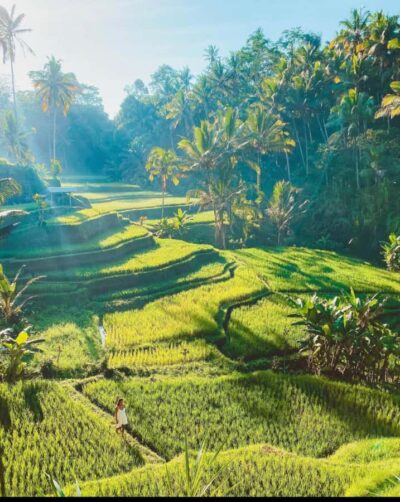
Full-Day Rice Terrace, Monkey Forest & Waterfall
Read our review →
Hands-On Silver Jewelry Making Near Ubud’s Monkey Forest
Read our review →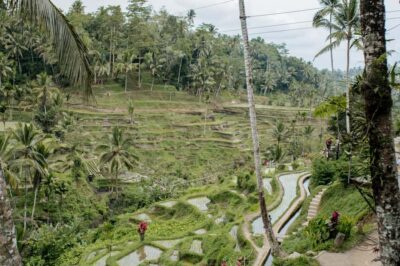
Monkey Forest, Ceking Rice Terraces and More– Full Day
Read our review →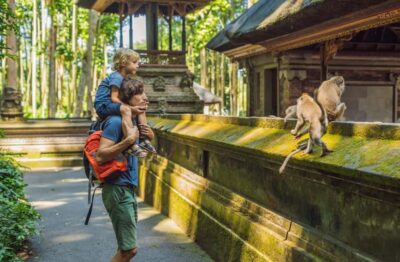
Sacred Monkey Forest Sanctuary Ticket and Guided Tour
Read our review →
Gorilla Cave ATV Bali Ubud, Monkey Forest, Temple, and Lunch
Read our review →
Saraswati Temple, Monkey Forest, Ubud Waterfalls
Read our review →Browse the lists this tour appears in