
Reviewed · MOUNT BATUR SUNRISE TREKS
Ubud: Kintamani Downhill Cycling with small group & Private
Kintamani to Ubud is a fine place for a bicycle ride because the road does much of the hard work. About 80 percent of this route is downhill, with gentle slopes through villages, rice fields, and temple areas rather than a punishing mountain workout. I like that the ride gives you more than pretty scenery: you stop at a local school and family compound, then have time to ask questions and meet people along the way.
I also like the careful route choice described by Javier, who rode with Dode. The ride used quieter secondary roads, with regular rest stops and safety gear ready at the start. The main consideration is transport: you must reach Pukuh Sari in Kintamani yourself, and lunch, Mount Batur admission, and return transport are not included.
In This Review
- Key points to know before booking
- Why the downhill route works so well
- Starting at Pukuh Sari in Bayung Gede
- Riding the village roads toward Ubud
- The local school stop
- Entering a Balinese family compound
- Temple views and Balinese spiritual life
- Rice fields and the changing scenery
- What the 150 minutes includes
- What the $21 price really covers
- Sharing or private: which option suits you
- Who will enjoy this ride most
- Practical details to settle before you go
- Should you book the Kintamani downhill ride?
- FAQ
- Where does the cycling tour start?
- How long does the cycling experience last?
- Is the route difficult?
- What is included in the price?
- Is transport from Ubud included?
- Are small-group and private options available?
Key points to know before booking
- Mostly downhill riding: About 80 percent of the route runs downhill, making it suitable for a range of cycling abilities.
- Real village access: Stops include a local school, a Balinese family compound, a temple, and working rice fields.
- Kintamani starting point: Meet at Pukuh Sari in Bayung Gede, not in central Ubud.
- Small group or private: Choose the format that best fits your comfort level and preference for personal attention.
- Useful inclusions: A bicycle, helmet, mineral water, refreshment, cold towel, English or Indonesian guide, and insurance are provided.
- Good value at $21: The price covers a guided cultural ride lasting about 150 minutes, but not transfers or lunch.
Why the downhill route works so well
The clever idea here is simple: begin high in Kintamani and cycle toward Ubud, using a route that is mainly downhill. You still need to steer, brake, and pay attention, but you are not signing up for a long climb through Bali’s hills.
That makes this a good choice if you want an active morning without giving over the whole day to exercise. The ride lasts about 150 minutes, or two and a half hours, which is long enough to see several parts of rural Bali but short enough to fit beside other plans.
The downhill claim should not be read as no effort at all. A bicycle ride still requires balance and control, and gentle slopes can bring their own work when you are braking. You should be comfortable riding a bicycle before booking, but the route is described as suitable for all skill levels and not difficult.
I would especially consider this ride if you have been spending time in Ubud’s busy center and want to see the countryside at a slower pace. From a bicycle, you can notice small details that disappear from a car window: a temple entrance, a family compound, a schoolyard, or the changing shape of the rice fields.
More Mount Batur sunrise treks:
- Mount Batur Sunrise Hike and Natural Hot Spring Option
★ 5.0 · 1,927 reviews - Mount Batur Sunrise Hike with Breakfast
★ 5.0 · 1,757 reviews - Mount Batur Sunrise Jeep Tour with Optional Activities
★ 5.0 · 1,555 reviews
Starting at Pukuh Sari in Bayung Gede
The meeting point is Pukuh Sari, Bayung Gede, in Kintamani, Bangli Regency. This is important because the activity is not a hotel pickup from Ubud. You need to arrange your own way to the starting point by taxi, Gojek, Grab, or another preferred form of transport.
Plan this part carefully. The price is low at $21 per person, but that value depends on you handling the transfer. If you are already staying near Kintamani, the arrangement is easy. If you are staying in Ubud, allow enough time to reach the meeting point and confirm the starting time when you book.
At Pukuh Sari, you receive the bicycle and helmet before setting off. The guide provides a safety briefing, and the supplied gear includes mineral water. Javier specifically found the meeting point easy to locate and said Dode had the equipment ready, including safety gear and water.
That early preparation matters. A good start lets you check the bicycle, adjust your helmet, and ask how the route works before you begin. If you have any concern about your fitness or road riding, say so at the start. The guide can explain the pace and the road conditions before the group moves out.
Riding the village roads toward Ubud
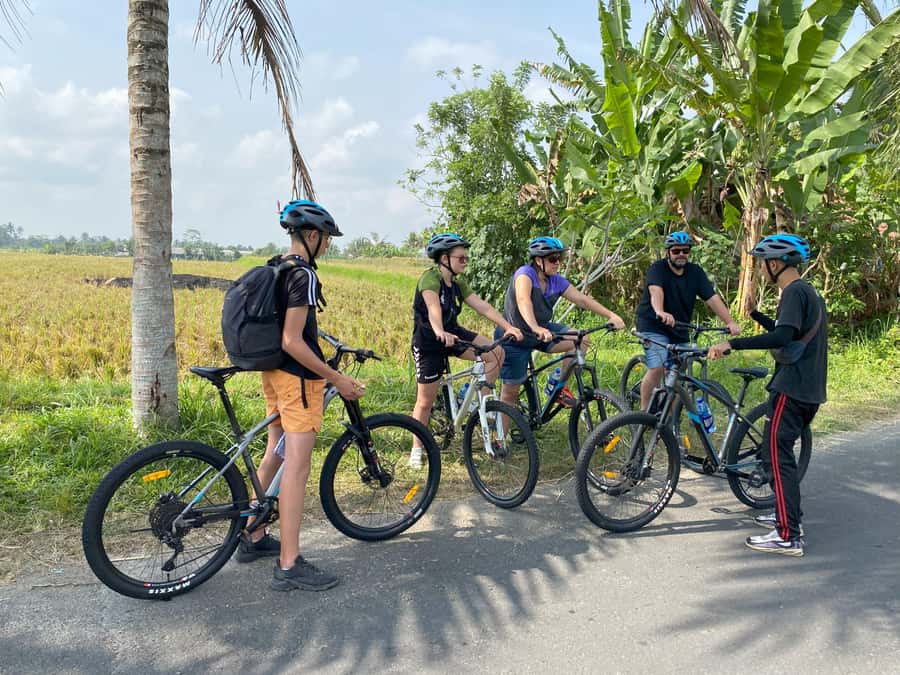
The ride takes you from village to village, using a route designed to keep traffic manageable. The most useful detail from the firsthand account is that Dode used secondary roads away from heavier traffic. That can make a big difference if you are uneasy about cycling in Bali.
You will still need to follow the guide, watch the road, and use your brakes carefully. The route is not described as a closed cycling track. It is a guided bicycle outing through lived-in areas, so expect ordinary village movement rather than a completely isolated path.
The reward is a closer look at daily Bali. You pass homes, temples, cultivated fields, and local roads that connect communities. The guide is available in English or Indonesian, so you can ask about what you are seeing instead of simply riding past it.
A small group should give you a more relaxed ride than a large departure. The private option makes sense if you want more control over the pace or prefer to keep the outing just for your own party. The supplied information does not give a fixed maximum group size, so check the available option when booking.
The local school stop
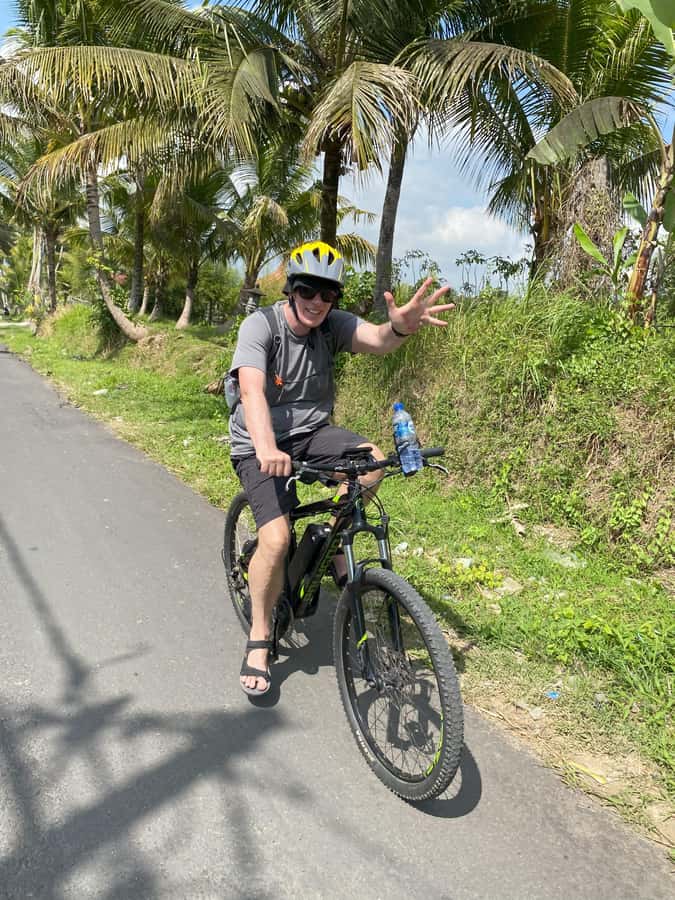
One of the most useful stops is a local school. This gives the ride a social point of interest instead of making it only a scenic outing.
You can gain insight into Bali’s education system and ask questions through the guide. The stop is valuable because it places village life in a real setting. You are not looking at a staged cultural display. You are seeing one of the institutions that serves the local community.
Keep your expectations sensible. The information does not specify the school’s name, class schedule, or how long the stop lasts. It is best to treat it as a guided visit and sightseeing stop rather than a formal school tour with a detailed presentation.
Your guide helps make this stop work. English and Indonesian guiding is included, and the tour is built around conversation with local people. Bring curiosity, listen respectfully, and follow the guide’s directions about where to stand and what you may photograph.
More cycling days around Ubud:
- Electric Cycling Tour of Ubud with Free Hotel Transfer and Lunch
★ 5.0 · 1,397 reviews - Ubud: Rice Terraces & Villages Half-Day Fat Tire E-Bike Tour
★ 4.9 · 602 reviews - Ubud: Downhill Cycling with Volcano, Rice Terraces and Meal
★ 5.0 · 536 reviews - Half-Day Ubud Electric Cycling Tour to Tirta Empul Water Temple
★ 5.0 · 315 reviews
Entering a Balinese family compound
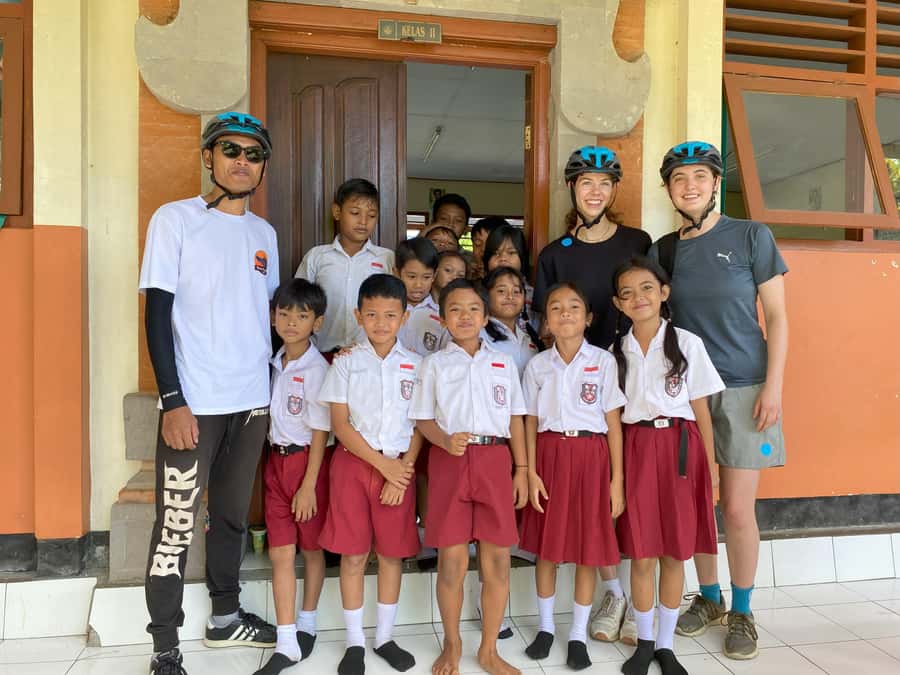
The family compound is another strong part of the ride. A compound is not simply a pretty house. It is a lived-in family space, and the chance to meet residents gives you a more direct look at Balinese home life.
The stop is listed as a visit, walk, photo stop, and guided tour. You can expect to leave the bicycle briefly, look around, and hear about the place from the guide and residents. This is one of the moments where the small-group or private format can help, since a quieter group is less awkward in a family setting.
The exact activities at the compound are not specified, so you should not expect a cooking lesson, ceremony, or craft demonstration unless the guide confirms it. What you do get is a chance to ask questions and see a local home environment as part of a normal village route.
I like this stop because it adds human scale to the scenery. Rice fields and temples are important, but a family compound helps you understand how people live among them. It is also a reminder to behave as you would in someone’s home: ask before taking close-up photos and let the guide manage the introduction.
Temple views and Balinese spiritual life
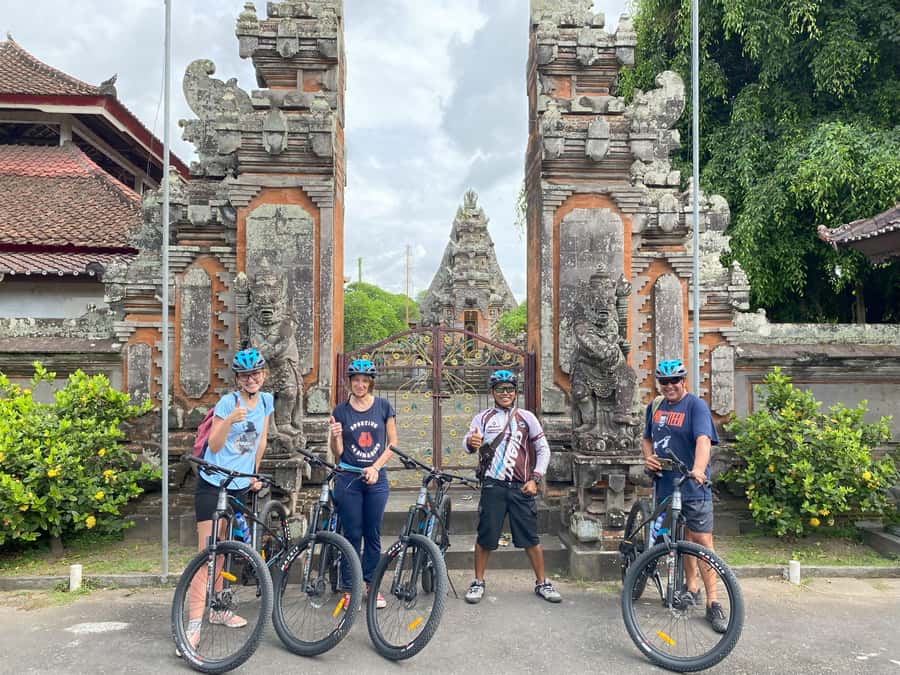
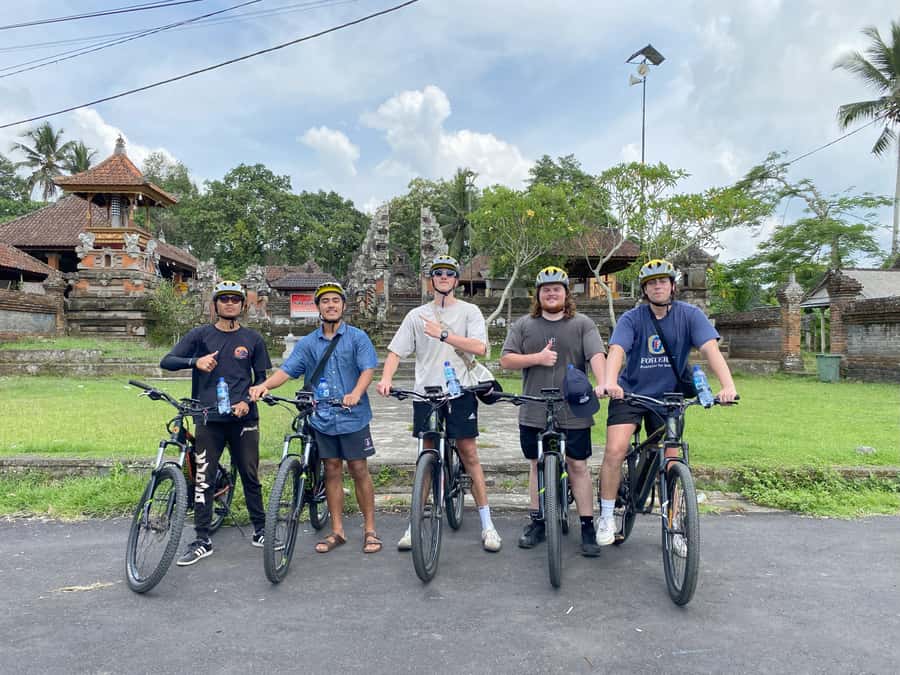
The route also includes a village temple. The guide explains its spiritual significance, giving you context for the decorated gates, shrines, and religious spaces you see throughout Bali.
The details of the temple are not provided, and the visit may be a short stop rather than a full ceremony visit. Dress and behavior should be respectful. Follow the guide’s directions, and do not assume that every area is open to visitors.
This stop works best when you connect it with the rest of the ride. A temple beside village homes and agricultural land shows how closely religious life and everyday life sit together in Bali. You are not simply checking off another attraction. You are seeing one part of the local community in its setting.
Javier found the temples especially memorable along with the rice fields. That combination is a good reason to bring a phone or camera, but keep your attention on the road during the ride. The best photographs may come during the planned stops, when you can pause properly.
Rice fields and the changing scenery
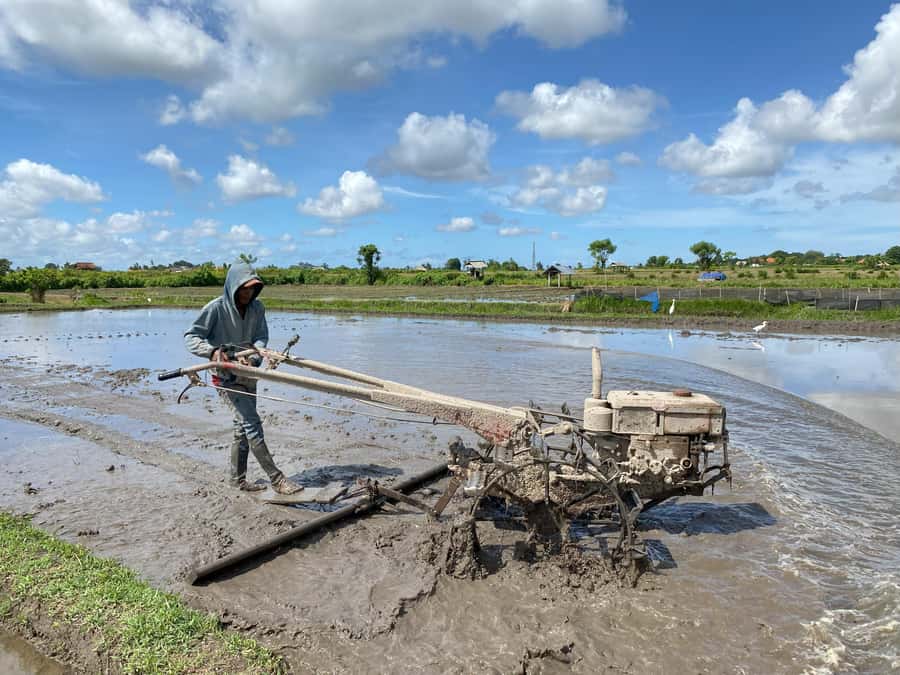
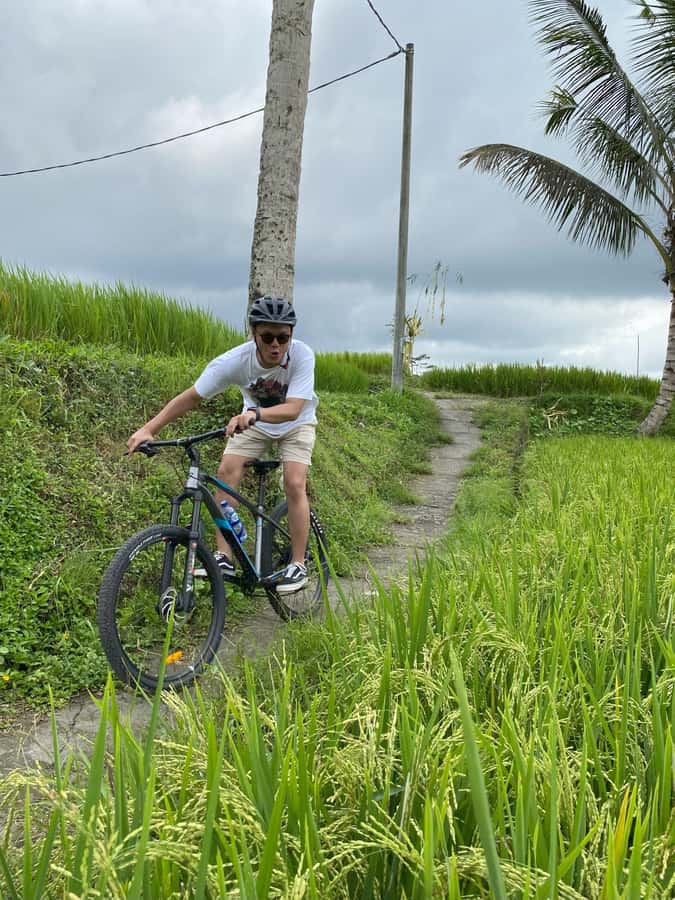
The rice fields provide the broad views that make the downhill route feel special. As you cycle between villages, the scenery changes from road edges and homes to open cultivated areas. The route lets you see Bali’s agricultural side without spending the entire day on foot.
The word scenic can be overused, but here it has a practical meaning. You are moving through fields rather than simply stopping at one viewpoint. That gives you a sense of how the countryside connects together.
Conditions can change with the season, and the provided details do not promise a particular crop stage or harvest scene. You should book this for the overall ride and rural setting, not for one guaranteed photograph.
There are several planned opportunities to stop for photos and rest. Mineral water, a refreshment, and a cold fresh towel are included. Those small comforts matter in Bali’s heat, especially after riding and standing at several stops.
What the 150 minutes includes
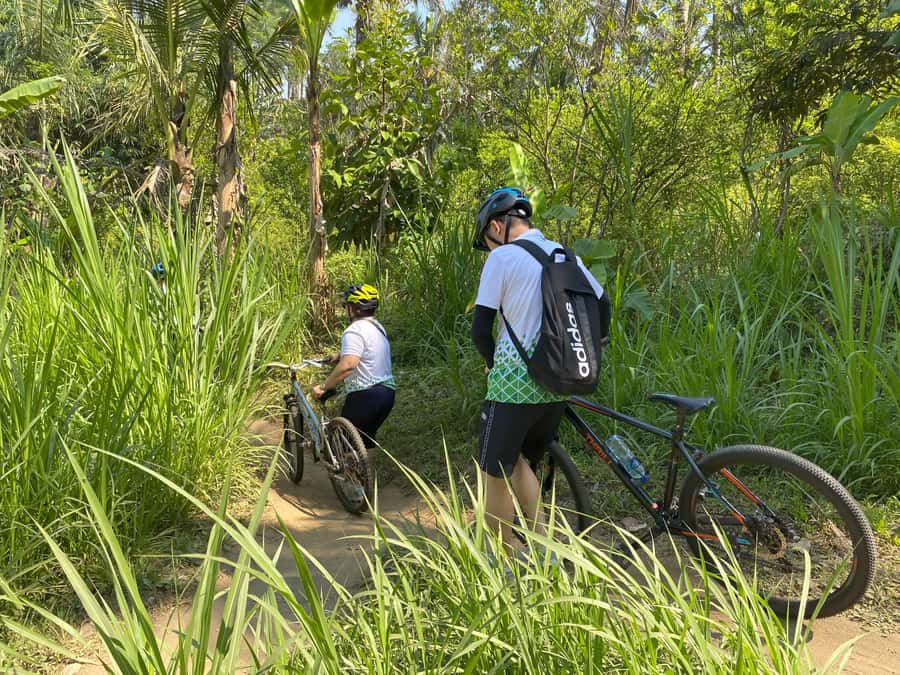
The advertised duration is 150 minutes. Within that time, you have the bicycle ride, safety briefing, sightseeing, village visits, photo stops, and breaks. The activity is therefore more than a continuous downhill run.
The exact time spent at each location is not stated. Your guide may adjust the pace depending on the group, road conditions, and how much time people need at the school, family compound, temple, and rice fields.
That format suits you if you want a compact cultural activity. It is less suitable if you want a full-day cycling expedition or a long, athletic ride. The route is designed to be approachable and social, with the cycling used as a way to connect the stops.
One scheduling detail deserves attention: the supplied timing information includes a confusing reference to a 15-hour itinerary, while the activity duration is clearly listed as 150 minutes. Treat two and a half hours as the expected duration, and confirm your departure time and meeting instructions before setting out.
What the $21 price really covers
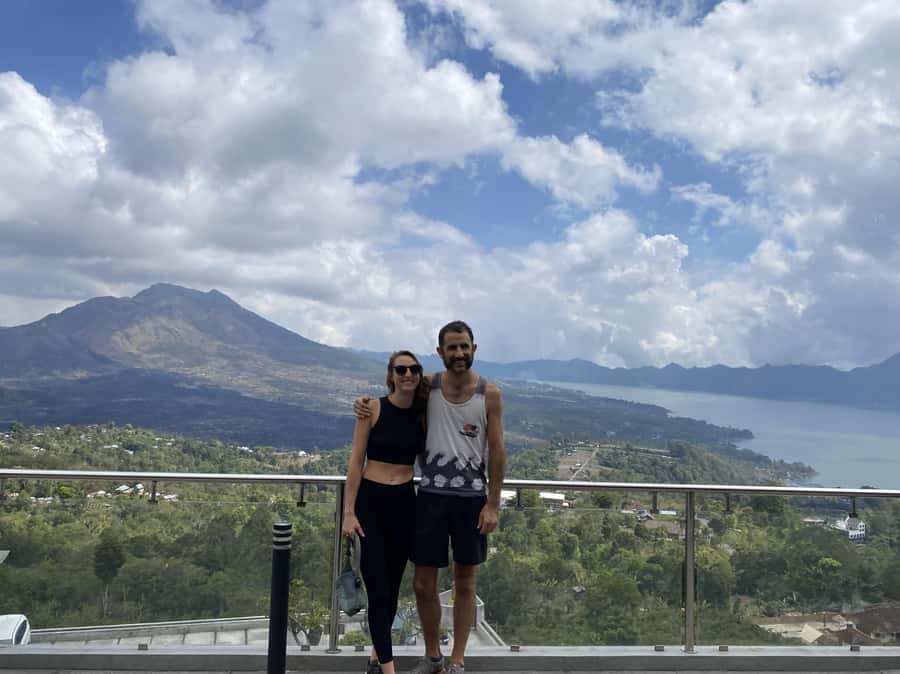
At $21 per person, this is strong value if you are already arranging transport to Kintamani. You receive the bicycle, helmet, guide, water, refreshment, cold towel, and insurance coverage listed at IDR 2,500,000 for ages 5 to 65.
The guide is the main part of the value. Without local explanations, the school, compound, temple, and fields would be pleasant stops but not as meaningful. Dode and Agus are two guides praised by name in the supplied experiences. Agus was linked with beautiful scenery, while Dode was noted for having the ride equipment ready and explaining the route clearly.
Still, the low price does not cover everything. You pay for your own transport to and from the start, lunch is not included, and Mount Batur admission is separate. The activity also does not promise hotel pickup or a meal at the finish.
For a visitor comparing tours, the key question is not simply price. Ask yourself if you want a short guided ride with cultural stops, and if you can reach Pukuh Sari without needing a costly private transfer. If the answer is yes, the price is appealing. If you need door-to-door service from Ubud, calculate that extra cost first.
Sharing or private: which option suits you
The sharing option is likely the practical choice for solo visitors or couples who want to keep the cost down. You ride with other people and follow a common pace, but the route is intended for mixed abilities.
The private option is better if your party wants more personal attention or prefers not to adjust to another group. It may also be useful for families, though the stated insurance age range is 5 to 65, and the included coverage applies to those ages.
The tour is not described as difficult, but you should still choose honestly. If you are nervous on bicycles, tell the guide before departure. If you are confident and want a faster athletic ride, this may feel gentle because much of the route is downhill and the main goal is cultural sightseeing.
Who will enjoy this ride most
I would recommend this for you if you want:
- A gentle introduction to cycling in Bali
- Rural views without a long climb
- A short activity that fits into a wider Ubud plan
- Direct contact with village life
- A guide who can explain local places in English or Indonesian
- A small-group or private setting
It is especially useful for people who want more than a road trip through the countryside. You stop, walk, listen, and ask questions. That makes the outing feel more connected to local life than a simple viewpoint transfer.
I would hesitate if you dislike cycling, need hotel pickup included, want a full meal, or are searching for a demanding mountain route. I would also check the meeting point carefully if you are relying on public transport or ride-hailing, since the activity begins in Kintamani rather than Ubud.
Practical details to settle before you go
Free cancellation is available up to 24 hours before the activity for a full refund, and you can reserve now and pay later. Starting times depend on availability, so check the date and departure slot before paying.
The live guide service is available in English and Indonesian. A bicycle and helmet are supplied, along with water, a refreshment, and a cold towel. Insurance coverage is listed for people aged 5 to 65, with a stated amount of IDR 2,500,000.
Bring a willingness to follow road instructions and allow time for your own transport. Since lunch is not included, plan food separately rather than assuming it will be part of the ride. Mount Batur entry is also not included, so this bicycle experience should be treated as a separate activity from a Mount Batur admission visit.
Should you book the Kintamani downhill ride?
Book it if you want a short, easygoing bicycle route with genuine village stops, and you can arrange your own way to Pukuh Sari. The combination of downhill riding, rice fields, temples, a school, and a family compound gives the $21 price real substance.
The strongest reason to choose it is the balance. You get active movement without a hard climb, cultural contact without a long formal tour, and countryside views without giving up an entire day. Just confirm the start time, choose sharing or private, and budget separately for transport and lunch.
FAQ
Where does the cycling tour start?
The tour starts at Pukuh Sari, Bayung Gede, Kintamani, Bangli Regency, Bali 80652.
How long does the cycling experience last?
The stated duration is 150 minutes, or about two and a half hours.
Is the route difficult?
The route is described as not difficult because about 80 percent of it is downhill, with gentle slopes that suit all skill levels.
What is included in the price?
The price includes a bicycle, helmet, mineral water, refreshment, cold fresh towel, an English or Indonesian guide, and insurance coverage listed at IDR 2,500,000 for ages 5 to 65.
Is transport from Ubud included?
No. You need to arrange your own transport to the Pukuh Sari meeting point and your return transport. Taxi, Gojek, and Grab are listed as possible ways to reach the start.
Are small-group and private options available?
Yes. You can choose between a sharing group and a private group option.
Just added around Ubud
- Authentic hike in the forest with lunch at the inhabitant★ 5.0 · 3 reviews
- Heaven Gate, Tirtagangga and Tukad Cepung Waterfall – All Inclusive★ 5.0 · 3 reviews
- Half Day Uluwatu Temple Sunset, Kecak Dance and Seafood Dinner★ 3.5 · 3 reviews
- Ubud: White Water Rafting with visit Ubud Monkey Forest★ 5.0 · 3 reviews
- ️Bali All Inclusive Tour: Ubud – Tegalalang – Kintamani★ 5.0 · 3 reviews
- East Bali and Lempuyang Temple Tour★ 5.0 · 3 reviews
- Ubud: Temple, Swing, Waterfall, Rice Terrace & Monkey Forest★ 5.0 · 3 reviews
- Blue Lagoon Snorkeling and Lunch with Tukad Cepung Waterfall★ 5.0 · 3 reviews
Mount Batur Sunrise Treks, compared.
Mount Batur Sunrise Hike and Natural Hot Spring Option
Read our review →

Mount Batur Sunrise Jeep Tour with Optional Activities
Read our review →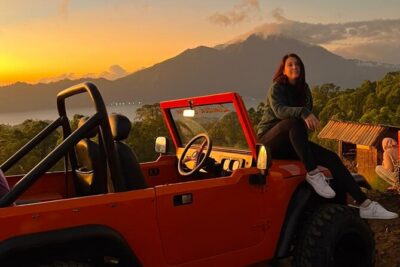

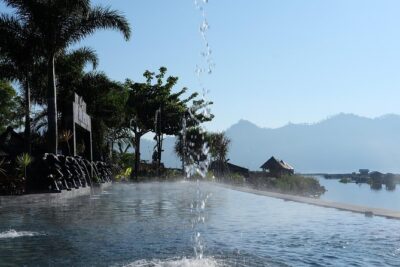
Mount Batur Sunrise Trekking Private All Inclusive
Read our review →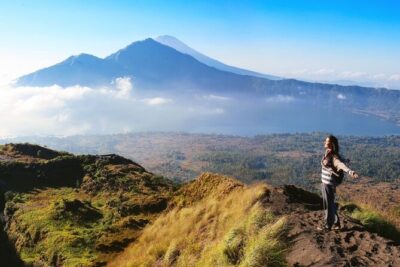

Mount Batur Sunrise Trekking (Private Tour and Breakfast at Restaurant)
Read our review →Browse the lists this tour appears in