
Reviewed · RICE TERRACE TOURS
Ubud: Cycling Tour Local Villages, Temple, and Rice Field
The best part of this three-hour cycling tour is the setting: you start high near Kintamani, with views toward Mount Batur and its caldera lake, then roll downhill through rice fields and village lanes toward Ubud. You spend less time grinding up hills and more time stopping to see how Balinese families live, grow rice, worship, and make coffee.
I like the easy downhill route and the number of cultural stops packed into a short morning. I also like that breakfast, lunch, a bike, helmet, water, insurance, and coffee and tea tasting are included. The main consideration is that this is not a quiet, pedal-at-your-own-rhythm ride from start to finish. There is transport, a set route, and several planned stops, so check the pickup area and physical requirements before booking.
In This Review
- Key points at a glance
- Why this route works so well from Kintamani to Ubud
- Starting with breakfast and the Mount Batur view
- Rolling through villages, homes, and a local school
- Rice fields up close, not just from a viewpoint
- The temple stop and Bali’s spiritual side
- Coffee, tea, and the Luwak question
- Lunch makes the $23 price especially strong
- What the guide adds to the ride
- Who should book, and who should think twice
- Timing, cancellation, and practical booking advice
- Should you book this Ubud cycling tour?
- FAQ
- How long does the cycling tour last?
- Where does the ride start?
- Is hotel pickup included?
- Is the route suitable for beginners?
- What meals are included?
- Is coffee tasting included?
- What equipment is provided?
- What language does the guide speak?
- Can I cancel the booking?
Key points at a glance
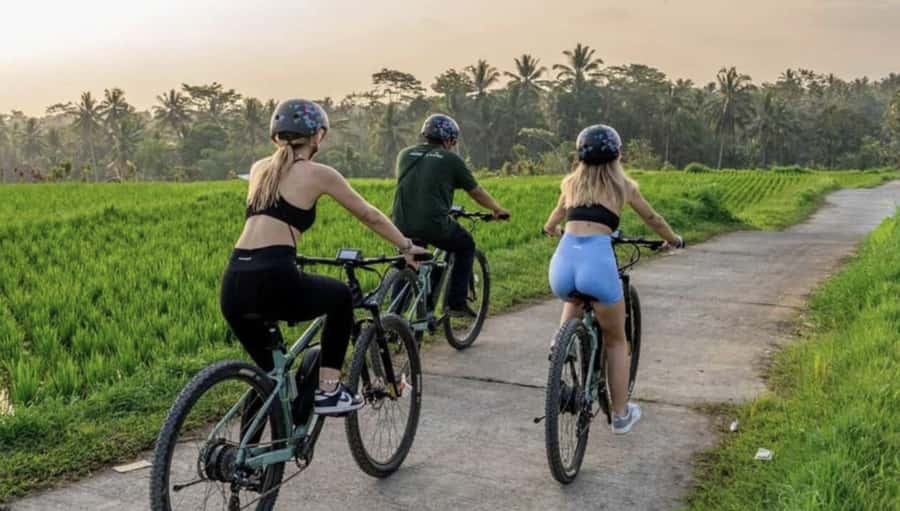
- Mostly downhill from Kintamani: The route suits most fitness levels better than a hilly ride, though you still need to control a bike for several hours.
- Mount Batur views at the start: The high starting point gives you a striking opening view before the ride moves into Bali’s rural interior.
- Real village stops: You visit a traditional Balinese home, village areas, a school, and rice fields rather than simply cycling past them.
- Coffee and tea tasting included: The plantation stop explains local production and includes a sample of Luwak coffee.
- Breakfast and Balinese lunch: Food is part of the morning, not an extra charge, which helps make the $23 price good value.
- Guide quality matters: English-speaking guides such as Froggie help explain customs, farming, and the places along the route.
Why this route works so well from Kintamani to Ubud
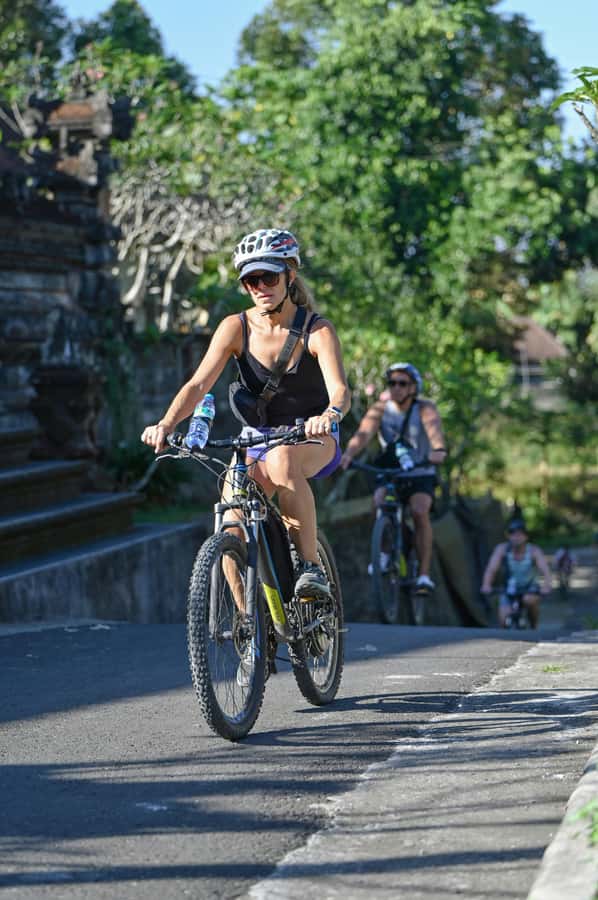
Many Ubud bike tours sell the idea of countryside cycling, but the route design matters more than the bike itself. Starting around Kintamani puts you above much of the ride, so the main direction is downhill through Gianyar toward Ubud. That makes the tour approachable for people who want to ride but do not want a hard day of climbing.
You should still expect active cycling. Downhill does not mean effortless. You will need to brake, steer, and remain comfortable on a bicycle while moving between villages and rice fields. The tour is described as suitable for most fitness levels, but it excludes people with several medical and mobility concerns, so be honest about your ability before booking.
The ride has a leisurely rhythm rather than a race format. You stop for pictures, short visits, explanations, coffee, and food. That pace is useful in Bali, where the most interesting details can be easy to miss from a moving vehicle: a family compound, a shrine, a rice field edge, or the way a village is organized.
More rice terrace walks near Ubud:
- Ubud: Monkey Forest, Jungle Swing, Rice Terrace, and Water Temple
★ 5.0 · 7,160 reviews - Ubud: Waterfalls, Water Temple & Rice Terraces Private Tour
★ 5.0 · 5,484 reviews - Ubud: Full-Day Rice Terrace, Monkey Forest & Waterfall
★ 5.0 · 2,634 reviews
Starting with breakfast and the Mount Batur view
Pickup depends on the option you choose. If you select the Ubud transfer, the activity includes private transport to and from the Ubud area. The exact morning start time is confirmed after booking, and pickup is complimentary in selected Ubud locations.
The ride begins at Cantik Agriculture. There, the guide explains the trip during breakfast, fits you with a bike and helmet, and gives a safety briefing. This is a practical start. You can eat before cycling, ask questions about the route, and make sure the bike feels right before setting off.
Kintamani is the high point of the experience. From here, you can look toward Mount Batur and its caldera lake before beginning the descent. The view gives you a quick sense of Bali’s volcanic geography, while the ride afterward shows how that high country feeds the farms and rice-growing areas below.
Bring a light layer if you are sensitive to cooler morning air, though the supplied information only specifically recommends comfortable clothing and cycling clothing. Cash is also worth carrying for personal expenses and any gratuities.
Rolling through villages, homes, and a local school
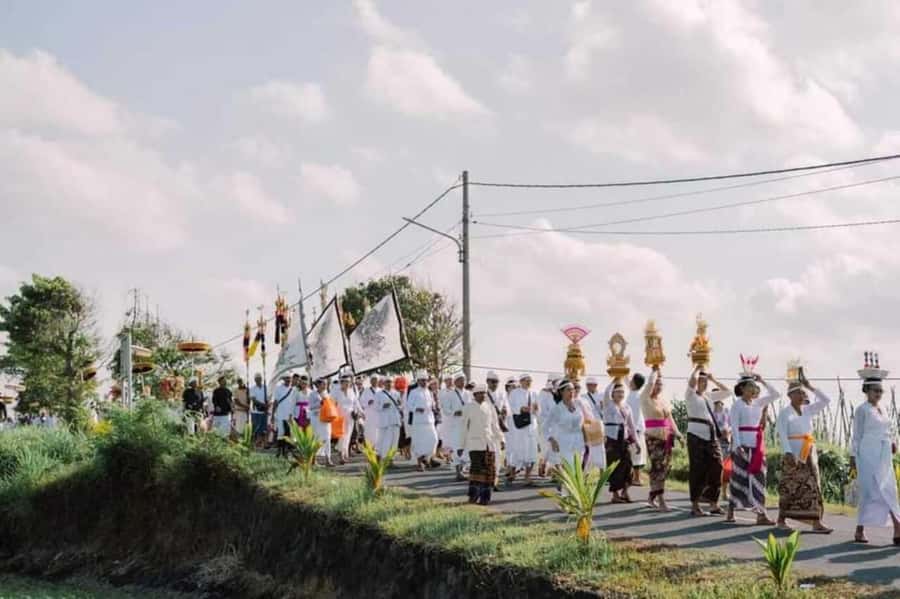
The first cultural stops give the tour its strongest sense of place. You visit a traditional Balinese village and have the chance to see a local home, learn about daily life, and meet people in the community. This is more useful than a generic cultural talk because you are looking at the physical spaces where family and religious life take place.
Balinese homes are often closely tied to custom and ceremony. The guide explains what you are seeing and helps connect the buildings and household practices to everyday life. You should be respectful with photography and follow the guide’s advice about where to stand and what you may photograph.
A school visit is also part of the route. The stop gives families a direct look at one part of ordinary community life, and it was a favorite feature for several people who took the tour. It is especially appealing if you are traveling with children, since a school visit can make the area feel more real than a polished cultural attraction.
The school stop may not suit everyone. It is a short tour with several planned visits, so you should not expect a long, independent conversation with residents or a private village walk. The value comes from the guide’s explanations and the chance to observe respectfully, not from a staged performance.
Rice fields up close, not just from a viewpoint
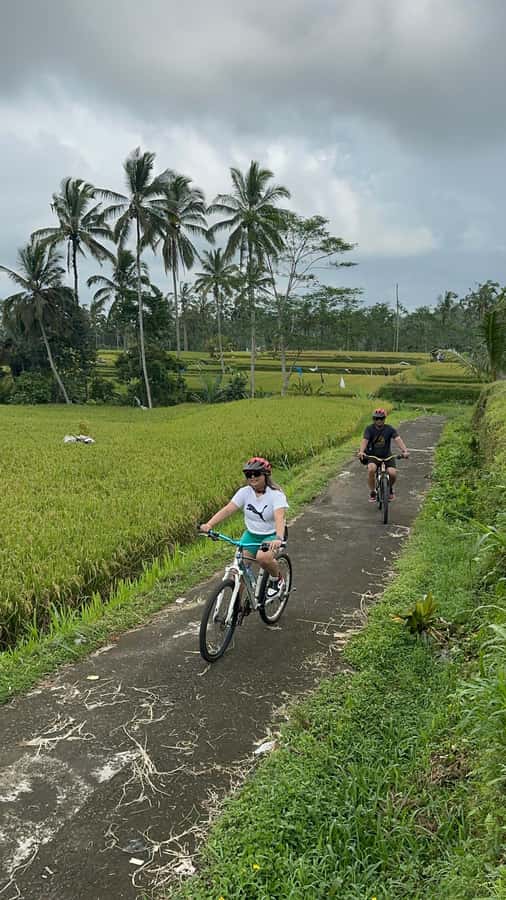
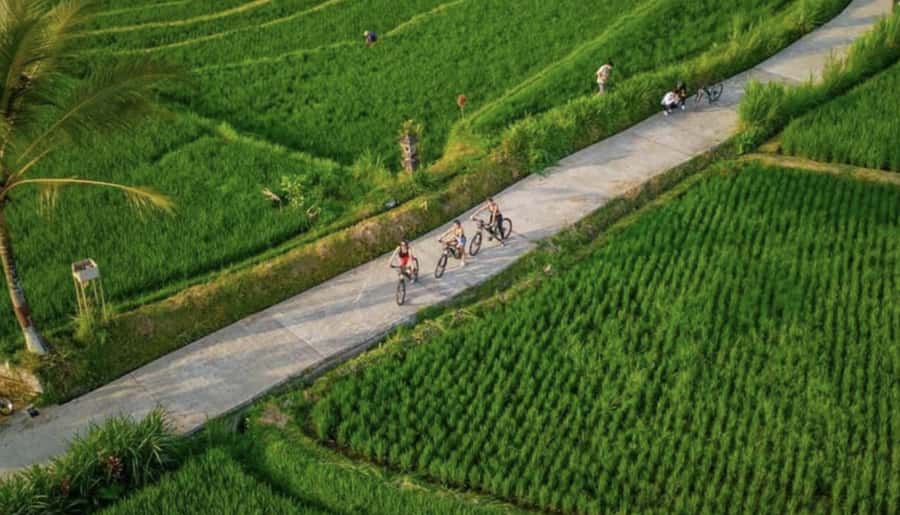
The cycling route takes you close to the rice fields, where you can stop to look at the work behind Bali’s famous green terraces. Your guide explains the importance of rice paddies and the effort involved in growing and preparing rice.
This is one of the better reasons to choose a bike tour over a car trip. From a vehicle, rice fields can become scenery. On a bicycle, you move slowly enough to notice the narrow paths, farm activity, water channels, and changing views across the paddies. The tour also leaves room for photographs and short breaks.
The word rice field covers a lot of ground in Bali. Some sections may be broad and open, while others are reached through narrower rural lanes. The supplied information does not specify the exact road surface or bike model, so you should expect normal outdoor conditions rather than a smooth city cycle path.
The route is scenic, but you should not confuse it with a fully independent countryside ride. The guide controls the pace and route, and the group has to keep moving between stops to fit the three-hour schedule. That structure is helpful if you want an organized introduction, but less ideal if you want to spend a long time photographing one terrace.
More temple days around Ubud:
- Full-Day Tour to Water Temples and UNESCO Rice Terraces in Bali
★ 5.0 · 2,539 reviews - Tirta Empul: Temple Tour with Optional Spiritual Cleansing
★ 4.9 · 1,257 reviews - Bali Instagram: Gate of Heaven Temple Tour
★ 5.0 · 737 reviews - Ubud Top Attractions: Waterfalls, Temples and Rice Terraces
★ 5.0 · 460 reviews
The temple stop and Bali’s spiritual side
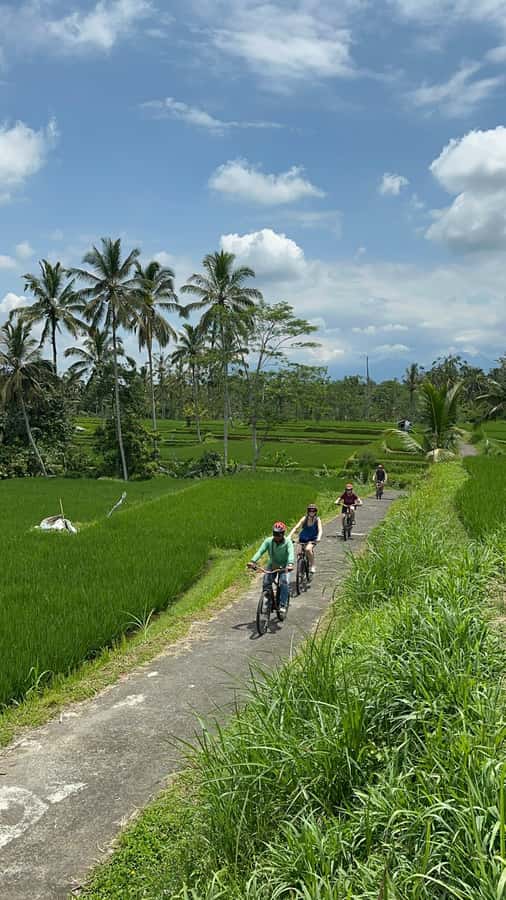
The temple visit changes the mood of the morning. After village and farming stops, you enter a sacred space marked by stone carvings and a quieter atmosphere. The guide explains the temple’s role and helps you understand the spiritual side of local life.
Temple visits in Bali call for modest, comfortable clothing and good manners. The supplied information does not set out a detailed dress code, so follow your guide’s instructions at the entrance. Do not treat the temple as a backdrop alone. The carvings and courtyards have religious meaning, and your conduct matters.
This stop works well because it adds context to what you see in the villages. Balinese culture is not presented only as food, scenery, or craft. You also see the role of worship and sacred architecture in the community.
The trade-off is time. A three-hour tour cannot provide a long temple study or a detailed architectural lecture. Think of this as an introduction that adds meaning to the ride, not a dedicated temple tour.
Coffee, tea, and the Luwak question
The coffee plantation stop offers a break from cycling and a chance to sample different coffees and teas. You can try Luwak coffee, one of Bali’s best-known specialty products, while learning about traditional coffee-making methods.
Coffee tastings can vary in style, so keep your expectations sensible. This is included as part of the cycling route, not presented as a full coffee education course. You get a taste, some background, and time to enjoy the surroundings before continuing.
If you are interested in Luwak coffee, use the stop as a chance to ask questions about how the coffee is produced and how the plantation treats the animals involved. The supplied details confirm the tasting and traditional production explanation, but they do not provide an animal-welfare policy or plantation certification. If that issue matters to you, ask before sampling or buying anything.
There is no need to purchase coffee or other products unless you want to. Personal expenses are not included, so carry cash if you plan to buy something. The free tasting itself is included.
Lunch makes the $23 price especially strong
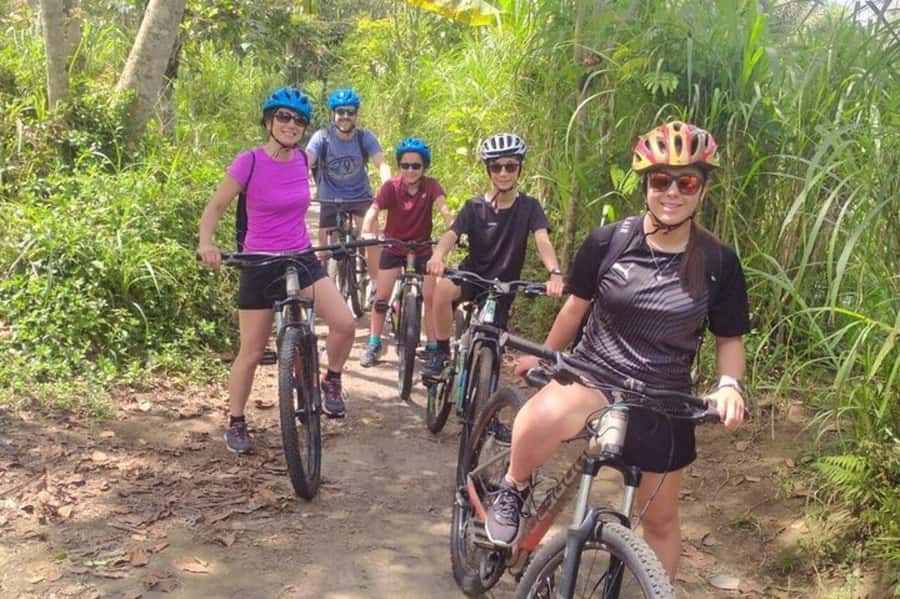
The advertised cost is $23 per person. For that price, you receive the bike, helmet, insurance, local English-speaking guide, bottled water, breakfast, lunch, and coffee and tea tasting. Ubud-area pickup and drop-off are included only when you select the appropriate option, so compare the booking choices carefully.
That is a strong package for a short Bali activity. Transport alone can add to the cost of a morning excursion, while meals and equipment remove several small expenses. The value is best if you want a guided introduction to rural Bali and would otherwise need to arrange a driver, bicycle, guide, and lunch separately.
Lunch comes at a local restaurant after the ride. It gives you time to relax and eat Balinese food instead of rushing straight back to your hotel. The exact dishes are not specified, so do not book expecting a particular menu. If you have dietary needs, ask in advance.
The price does not include personal expenses or gratuities. Bring cash for those items. Alcohol is not allowed in the vehicle, which is a sensible rule for a morning activity that includes cycling and transfers.
What the guide adds to the ride
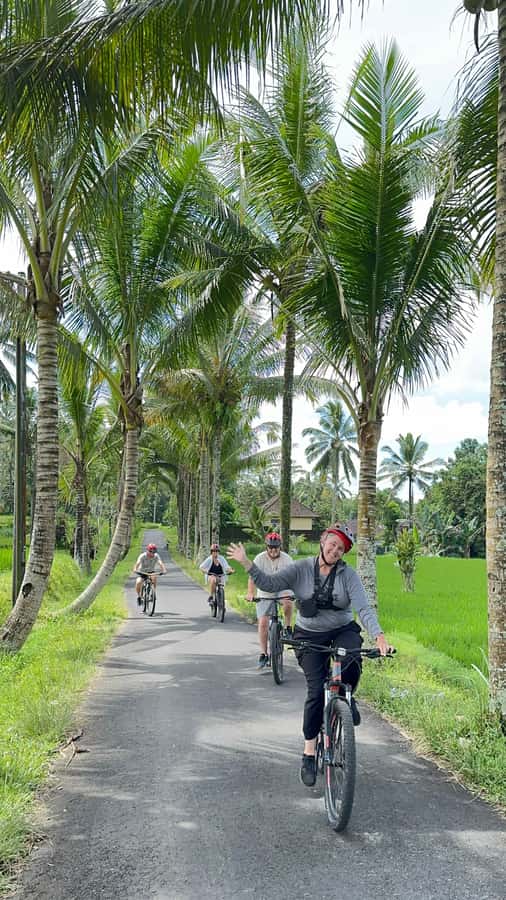
A guide is important here because the tour is built around interpretation, not only scenery. The guide explains the rice fields, village customs, temple setting, and coffee production while keeping the group on the route.
Guide Froggie is specifically associated with this experience, although guide assignment is not guaranteed. If Froggie is leading your group, you can expect the warm, helpful style described in the available feedback. More broadly, the tour provides a live guide in English, so you can ask questions as you go rather than relying on signs or a printed route.
The guide also handles practical matters: bike fitting, safety instructions, stop timing, and the transition from cycling to food and transport. That is useful if you are unfamiliar with Bali’s rural roads.
The experience is better suited to people who enjoy a social, guided outing than to cyclists seeking speed or technical riding. Families have found the easy downhill format appealing, and the school, home, and coffee stops give children several changes of focus.
Who should book, and who should think twice
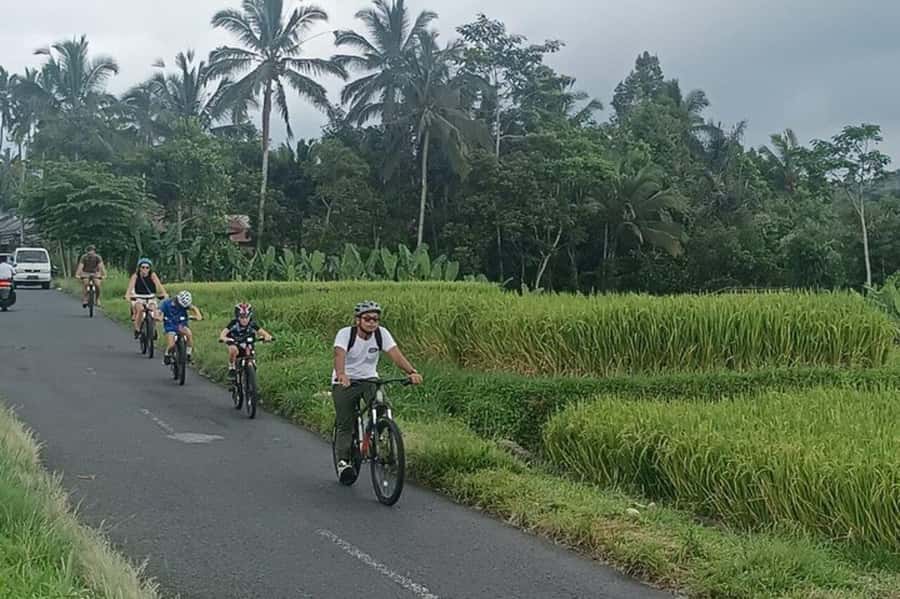
I would recommend this for first-time visitors who want more than Ubud’s cafes and shops. It gives you mountain views, farms, villages, a temple, coffee, and a local meal in a compact morning.
It is also a good fit for families and mixed-ability groups, since the route is mainly downhill and described as moderate. The tour has multiple stops, so you are not expected to cycle continuously for three hours.
You should think twice if you have back problems, high blood pressure, epilepsy, mobility impairments, or another condition affected by cycling. Pregnant women, babies under one year, people over 95, and people above the stated weight limits are also listed as unsuitable. The information includes several different weight limits, 100 kilograms, 130 kilograms, and 140 kilograms, so ask the operator which bike limit applies before paying.
There is also a contradiction in the supplied accessibility information. The activity is marked wheelchair accessible, but wheelchair users are listed as not suitable. Treat the safety restriction as the more important guidance and confirm directly if accessibility affects your booking.
Comfortable clothes and proper cycling clothing are sensible. A raincoat is supplied if rain arrives, and the tour includes cycling equipment and a helmet. You should still be ready for outdoor weather and bring cash for extras.
Timing, cancellation, and practical booking advice
The tour lasts three hours, with a morning start. Pickup and drop-off depend on the selected option and the Ubud area covered. If your accommodation is outside the included pickup zone, confirm the meeting point rather than assuming a transfer is provided.
The main meeting point is Cantik Agriculture, where breakfast and the trip explanation take place. The activity information also lists drop-off locations in the Gianyar area and Ubud, so check the final arrangements after booking.
Free cancellation is available up to 24 hours before the activity for a full refund. You can also reserve now and pay later, which helps if your Bali schedule is still changing. Exact start times are subject to availability and are confirmed on booking.
The experience has a 4.8 rating from 12 reviews, with the strongest praise focused on the gentle downhill route, friendly guides, coffee tasting, school visit, traditional home, and rice fields. Those are also the features I would use to judge the tour. The scenery gets you there, but the human-scale stops make the morning worthwhile.
Should you book this Ubud cycling tour?
Book it if you want an affordable, organized way to see rural Bali without committing to a demanding cycling day. The combination of Mount Batur views, a downhill route, village life, rice farming, a temple, coffee tasting, breakfast, and lunch gives you a lot for $23.
I would be especially inclined to book if you are traveling with family, have limited time in Ubud, or want a first look at Balinese life beyond the town center. Choose another activity if you want a long, athletic ride, complete independence, or extended time at one temple or rice field.
Before confirming, check the pickup option, medical restrictions, weight limit, and accessibility details. If those fit your needs, this is a practical and personable introduction to the countryside around Ubud.
FAQ
How long does the cycling tour last?
The cycling tour lasts three hours. It begins in the morning, with the exact start time confirmed when you book.
Where does the ride start?
The activity starts at Cantik Agriculture after breakfast and a trip briefing. Transport takes you to the Kintamani starting area when the selected option includes pickup.
Is hotel pickup included?
Pickup and drop-off are included for selected Ubud-area options. Check the exact option and coverage area when booking.
Is the route suitable for beginners?
The ride is mainly downhill and is described as suitable for most fitness levels with moderate physical demands. You still need to control and ride a bicycle safely.
What meals are included?
A light breakfast and lunch are included. The exact lunch menu is not specified.
Is coffee tasting included?
Yes. The tour includes free tasting of coffee and tea at a coffee plantation, including the chance to sample Luwak coffee.
What equipment is provided?
The tour provides a bike, helmet, insurance, bottled water, and a raincoat if it rains.
What language does the guide speak?
The live guide speaks English.
Can I cancel the booking?
You can cancel up to 24 hours before the activity for a full refund. A reserve-now, pay-later option is also available.
More Cycling Days Around Ubud
- Electric Cycling Tour of Ubud with Free Hotel Transfer and Lunch
★ 5.0 · 1,397 reviews - Ubud: Rice Terraces & Villages Half-Day Fat Tire E-Bike Tour
★ 4.9 · 602 reviews - Ubud: Downhill Cycling with Volcano, Rice Terraces and Meal
★ 5.0 · 536 reviews - Half-Day Ubud Electric Cycling Tour to Tirta Empul Water Temple
★ 5.0 · 315 reviews
Just added around Ubud
- Authentic hike in the forest with lunch at the inhabitant★ 5.0 · 3 reviews
- Heaven Gate, Tirtagangga and Tukad Cepung Waterfall – All Inclusive★ 5.0 · 3 reviews
- Half Day Uluwatu Temple Sunset, Kecak Dance and Seafood Dinner★ 3.5 · 3 reviews
- Ubud: White Water Rafting with visit Ubud Monkey Forest★ 5.0 · 3 reviews
- Ubud: Temple, Swing, Waterfall, Rice Terrace & Monkey Forest★ 5.0 · 3 reviews
- ️Bali All Inclusive Tour: Ubud – Tegalalang – Kintamani★ 5.0 · 3 reviews
- East Bali and Lempuyang Temple Tour★ 5.0 · 3 reviews
- Blue Lagoon Snorkeling and Lunch with Tukad Cepung Waterfall★ 5.0 · 3 reviews
Rice Terrace Tours, compared.
Monkey Forest, Jungle Swing, Rice Terrace, and Water Temple
Read our review →
Waterfalls, Water Temple & Rice Terraces Private Tour
Read our review →
Full-Day Rice Terrace, Monkey Forest & Waterfall
Read our review →
Full-Day Tour to Water Temples and UNESCO Rice Terraces in Bali
Read our review →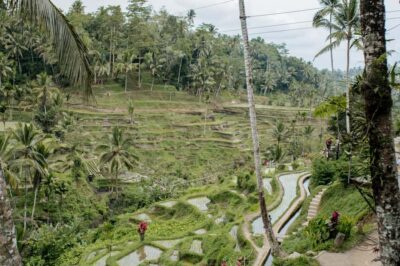
Monkey Forest, Ceking Rice Terraces and More– Full Day
Read our review →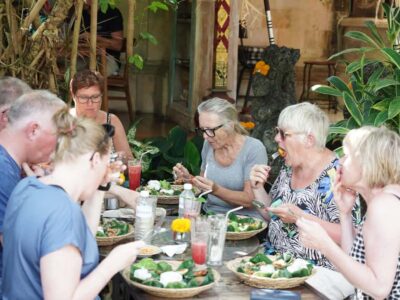
Rice Terraces & Villages Half-Day Fat Tire E-Bike Tour
Read our review →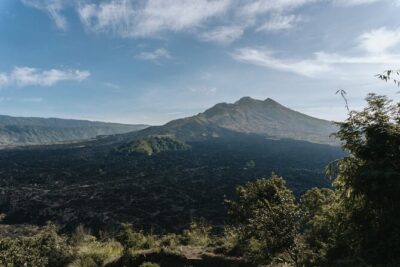
Downhill Cycling with Volcano, Rice Terraces and Meal
Read our review →
Ubud Top Attractions: Waterfalls, Temples and Rice Terraces
Read our review →Browse the lists this tour appears in