
Reviewed · BALINESE DANCE SHOWS
Ubud: ARMA Cultural Dance Performance Tickets
At ARMA Museum, Balinese dance turns old legends, sacred beliefs, and warnings about nature into a compact 45-minute performance. I like the small, intimate setting and the chance to see serious cultural storytelling without paying for a long, formal theater production.
I also like the choice of six distinct shows, from the famous Kecak Dance to the more unusual Barong Prakpak, which links deforestation with harm to animals. The main thing to note is that your ticket covers a selected performance, not every show or the museum galleries, so check the exact program and starting time before booking.
In This Review
- Key things to know before you book
- Why ARMA makes a good setting for Balinese dance
- What your 45 minutes may include
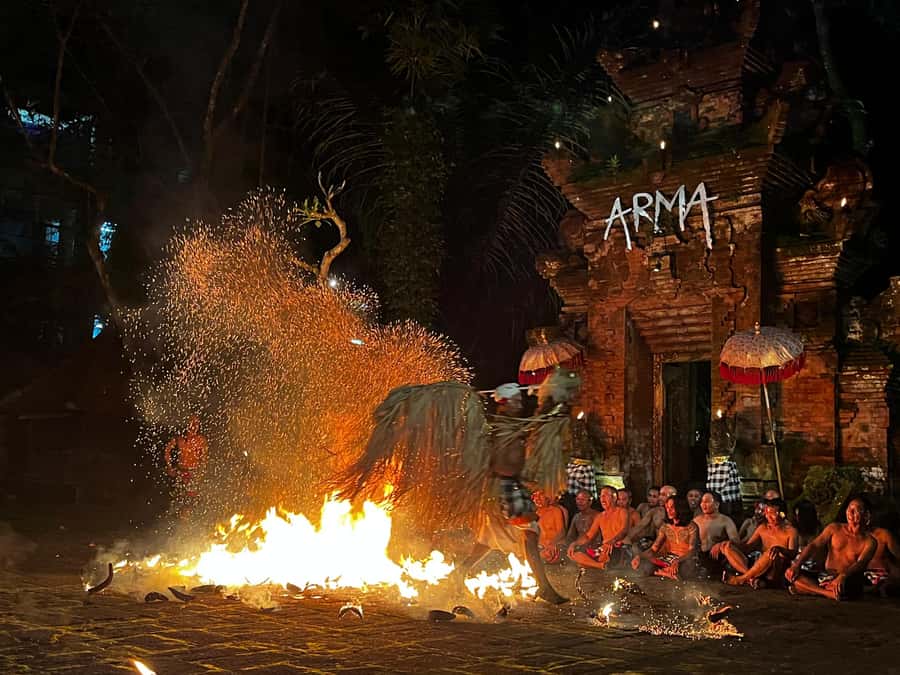
- Kecak Sang Hyang Jaran and the divine horse
- Barong Prakpak and Bali’s warning about deforestation
- Ramayana Ballet and the story of Rama
- Kecak Dance and the famous chorus
- Legong Dance Lasem Peliatan and royal conflict
- Barong Dance and the opening musical repertoire
- Costumes, gesture, and the value of a short show
- Is $9 good value for the performance?
- Timing, access, and small practical matters
- Who should choose this ARMA performance?
- Should you book the ARMA Cultural Dance Performance?
- FAQ
- Where does the ARMA Cultural Dance Performance take place?
- How long does the performance last?
- How much does the ticket cost?
- What performances can I choose from?
- Does the ticket include ARMA Museum gallery admission?
- Is hotel transportation included?
- Is food or drink included?
- Is the activity wheelchair accessible?
- What languages are available from the host or greeter?
- Can I cancel the booking for a refund?
Key things to know before you book
- Six different performance choices: Select from Kecak Sang Hyang Jaran, Barong Prakpak, Ramayana Ballet, Kecak Dance, Legong Dance Lasem Peliatan, and Barong Dance.
- A 45-minute cultural stop: The short running time fits neatly into an afternoon or evening in Ubud.
- About $9 per person: That is strong value if you want a focused introduction to Balinese dance rather than a long dinner show.
- Tickets do not include gallery admission: You pay for the selected performance only.
- English and Indonesian assistance: The host or greeter can help in either language.
- Accessible venue details: The activity is listed as wheelchair accessible, but pets, alcohol, and drugs are not allowed.
Why ARMA makes a good setting for Balinese dance
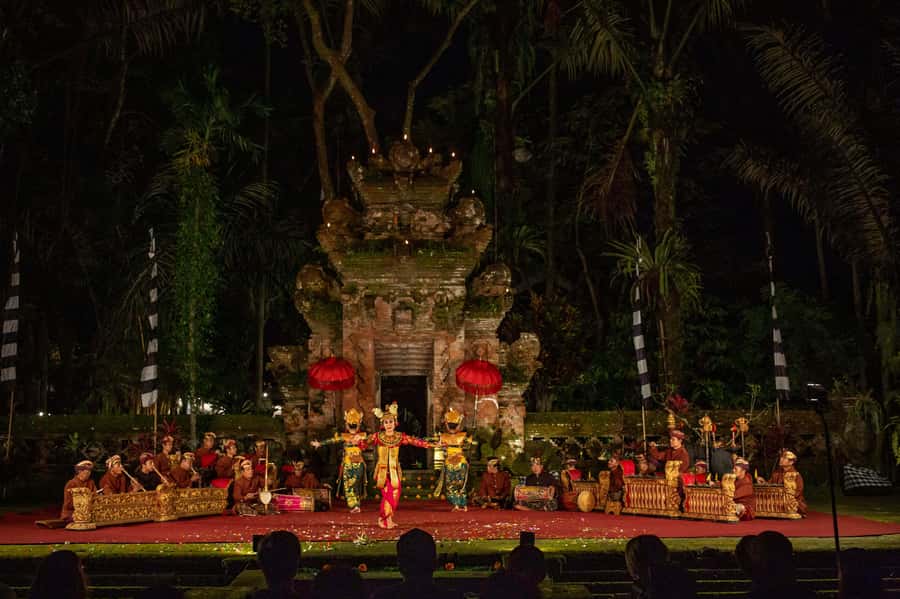
ARMA, the Museum Seni Agung Rai, gives this performance a natural cultural setting in Ubud. You are not simply buying a stage show detached from its surroundings. The museum is devoted to art, and the performance adds movement, music, costume, and storytelling to that setting.
The experience is brief, but Balinese dance is not a quick bit of entertainment with a simple plot. Facial expressions, hand gestures, footwork, body angles, and eye movements carry meaning. Many stories come from Hindu epics or older spiritual traditions, so the performance asks you to watch closely rather than wait for a spoken explanation.
I find that useful for first-time visitors to Bali. You do not need to know every god, prince, demon, or mythical creature before the curtain rises. You can follow the broad conflict, notice the costumes and gestures, and let the atmosphere do some of the work.
The venue is also described as intimate. That matters here. A small audience can make a traditional performance feel more immediate, especially during a scene built around precise movement or a chorus of chanting men. One verified booking from Canada specifically praised the great performance and small audience, which is a strong clue for people who prefer a personal setting over a huge tourist production.
More Balinese dance evenings:
- Bali: Ubud Palace Legong Dance Show Ticket
★ 4.4 · 3,979 reviews - Uluwatu Sunset, Kecak Dance, and Dinner Jimbaran Beach
★ 5.0 · 3,681 reviews - Bali: Ubud Kecak and Fire Dance Show Tickets
★ 4.4 · 2,631 reviews
What your 45 minutes may include
The exact program depends on the performance you select. The six options are not six stops on one continuous tour. They are separate cultural shows, so read the title carefully when choosing your ticket.
You can expect the selected performance to last about 45 minutes. That is long enough to present a complete story or ritual theme, but short enough to pair with another Ubud activity. I would place it alongside a museum visit, a meal, or a walk through town rather than treating it as an all-day plan.
Since general museum admission is not included, plan your visit around the show itself unless you buy gallery entry separately. This distinction is easy to miss. A performance ticket gets you into the chosen cultural presentation, not automatically into the museum’s art spaces.
Kecak Sang Hyang Jaran and the divine horse
Kecak Sang Hyang Jaran draws on the story of the Turning Mandara Giri. In the tale, the gods in Swarga Lokha become troubled by disasters, disease outbreaks, and destruction affecting the world.
The title refers to Sang Hyang Jaran, the divine horse. That gives the performance a spiritual and mythic focus rather than the purely theatrical battle scenes some people expect from Balinese dance.
I would choose this show if you want a performance shaped by religious imagery and cosmic concerns. It offers more than pretty costumes and formal movement. The story connects the human world with the gods and presents disorder as a problem that reaches beyond one character or kingdom.
The description does not give a full staging order or list of instruments, so do not arrive expecting a fixed presentation identical to every Kecak show in Bali. What you can count on is a 45-minute performance built around this particular tale and its supernatural theme.
Barong Prakpak and Bali’s warning about deforestation
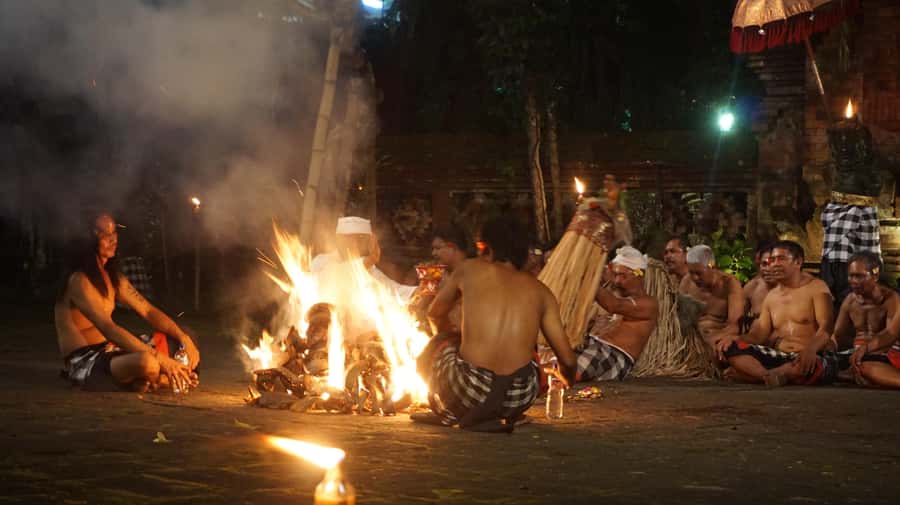
Barong Prakpak gives the program a modern ecological edge. Its story concerns humans damaging nature and the wider environment, with monkeys, birds, and frogs suffering as forests are cleared.
That subject makes this one of the more distinctive choices. Barong is often linked with powerful protective forces, but this production uses the character and animal figures to show the results of human actions. The story is easy to grasp even if you know little about Balinese mythology.
I like this option for families with older children, students, or anyone who wants a clear message alongside traditional dance. It may also suit you if you have already seen a standard Barong performance and want a different angle.
The title suggests a performance with both symbolic and animal-inspired movement. Expect the story to be presented through dance rather than a spoken environmental lecture. That is part of the appeal, though it also means some plot details may pass quickly if you are unfamiliar with Balinese performance language.
A few more Ubud half-days to weigh up
- Ubud: Sacred Monkey Forest Sanctuary Ticket and Guided Tour
★ 4.8 · 675 reviews - Bali Bird Park Admission Ticket
★ 4.5 · 202 reviews - Skip the Line Tirta Empul Temple Entrance Ticket All Inclusive
★ 5.0 · 198 reviews - Bali Iconic Tour with Buffet Lunch and Attraction Tickets
★ 5.0 · 66 reviews
Ramayana Ballet and the story of Rama
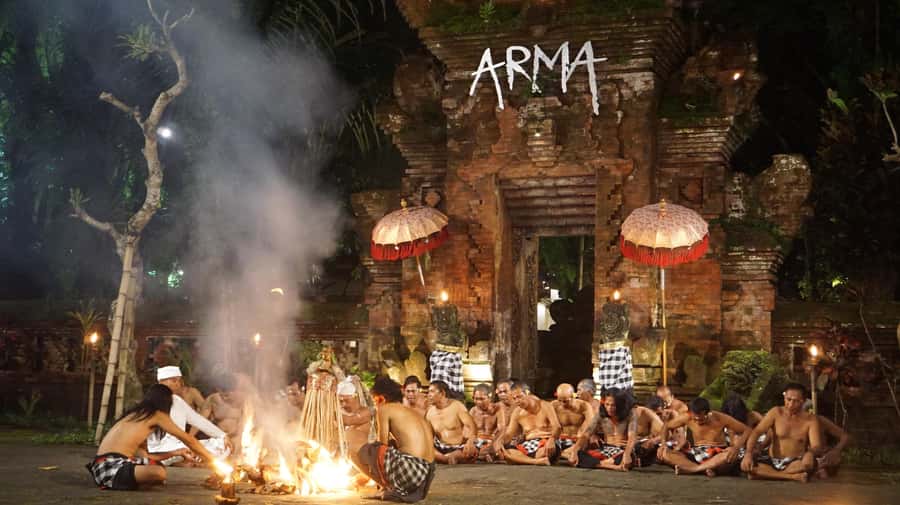
The Ramayana Ballet presents the famous Ramayana saga in a highly stylized dance form. The original epic was written in Sanskrit by Valmiki, and its story has shaped art and performance across South and Southeast Asia.
This is a good pick if you enjoy large legendary plots involving duty, love, conflict, loyalty, and heroic action. The story is well known, but the Balinese treatment gives it a distinct visual character through gesture, costume, and choreography.
You should not expect a spoken theater production with every plot point explained. A ballet communicates through movement, expression, and visual scenes. If you know the basic Ramayana story, you will likely catch more of the detail. If you do not, focus on the relationships and the repeated visual cues.
At 45 minutes, the presentation is likely a condensed version of the epic rather than the complete saga. That is a benefit for a short visit, but it also means the story can feel brisk. I would choose this show if you want a classic tale and a formal dance presentation in one sitting.
Kecak Dance and the famous chorus
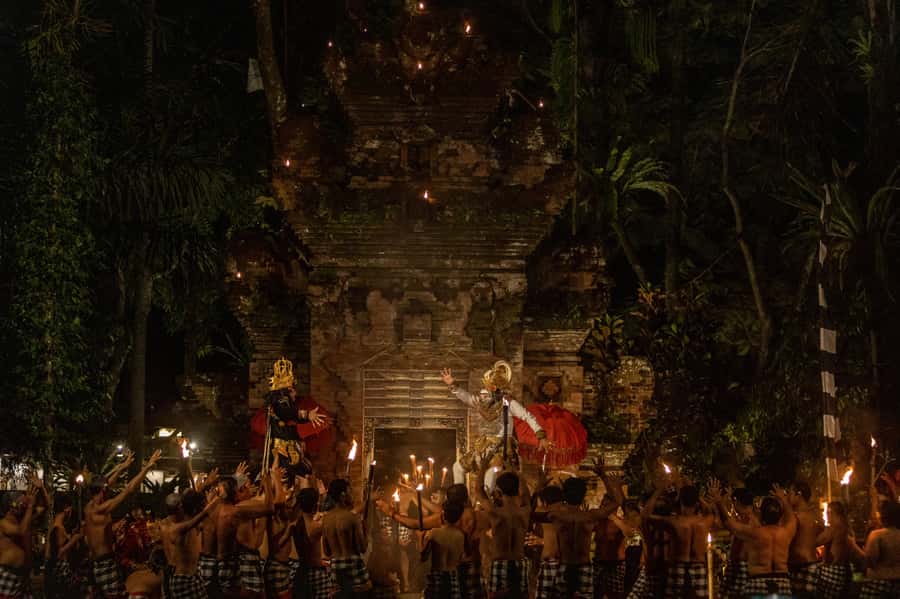
The Kecak Dance is the best-known title in the group for many people visiting Bali. It developed from a Balinese trance ritual, and Western artist Walter Spies worked with local dancer Limbak in the 1930s to create the performance form now associated with a chorus of around 100 men.
Unlike a dance supported by a conventional orchestra, this version is known for its vocal chorus and lack of musical accompaniment. The repeated vocal patterns create the pulse, while the dancers and singers carry the drama forward.
That sound is a major reason to choose Kecak. You are not just watching choreography. You are hearing a human chorus build rhythm and tension without relying on instruments.
The description does not state the precise cast size for this particular performance, so I would not assume that the full group of 100 men appears at every showing. Still, the show is rooted in the Kecak tradition and offers an accessible introduction to one of Bali’s most recognizable performance forms.
If this is your first Balinese dance, Kecak is a sensible choice. It has a clear visual identity and a style that is easy to recognize. If you have already seen Kecak elsewhere, choose another title for a broader look at Balinese storytelling.
Legong Dance Lasem Peliatan and royal conflict
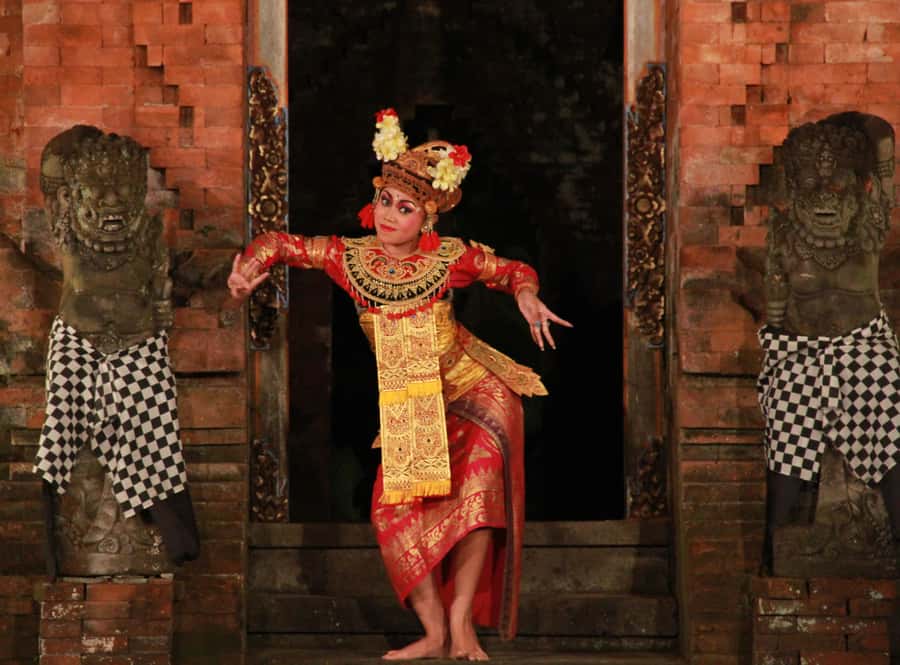
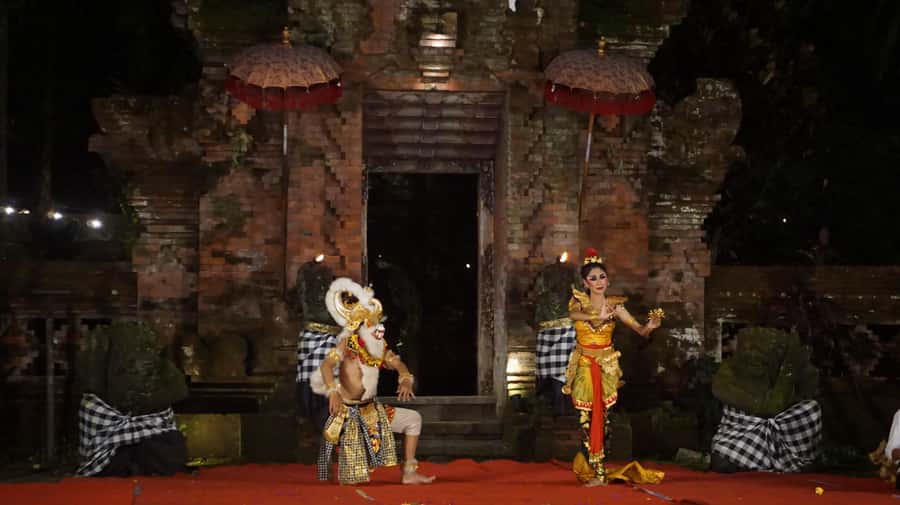
Legong Dance Lasem Peliatan tells the story of King Lasem, who wants to marry Princess Rangkesari of Gegelang. She refuses, so he attacks Gegelang and meets Prince Panji, Rangkesari’s brother, in battle.
This is a more focused courtly drama. The tension begins with a marriage proposal, moves into rejection and aggression, then reaches a confrontation between royal figures. That gives the dance a strong narrative line even though the performance is expressed through stylized movement.
Legong is known for detailed choreography and controlled gestures. Here, those movements serve a story about power, refusal, family loyalty, and conflict. I would select this show if you want a performance that feels intimate and character-driven rather than centered on a large chorus or a broad cosmic tale.
The name Peliatan is useful for identifying the tradition and style connected with the area around Ubud. As with the Ramayana Ballet, the 45-minute format means the story may be condensed. Watch the dancers’ hands, eyes, and posture, because small movements carry a great deal of the drama.
Barong Dance and the opening musical repertoire
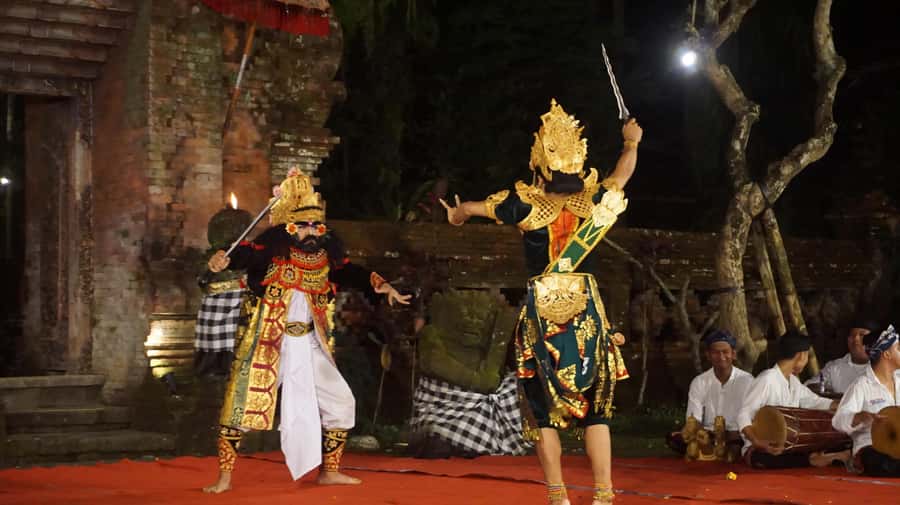
The Barong Dance performance begins with the Tabuh Penegak Bebarongan repertoire, used as accompaniment to the Barong dance. This opening gives the show a musical foundation before the central Barong presentation develops.
Barong is one of Bali’s most recognizable performance figures. The character’s movement can appear graceful, playful, or imposing, and the performance draws much of its force from the contrast between costume, music, and controlled body movement.
Choose this show if you want a traditional Barong presentation without the environmental theme of Barong Prakpak. The two titles are easy to confuse, but they offer different story ideas. Barong Prakpak focuses on damage to nature, while Barong Dance centers on the Barong performance and its musical accompaniment.
The available information does not provide the full plot or a detailed cast list for this version. That is worth keeping in mind if you are choosing based on a particular legend. You are guaranteed entry to the selected cultural performance, but not a full explanation of every scene in advance.
Costumes, gesture, and the value of a short show
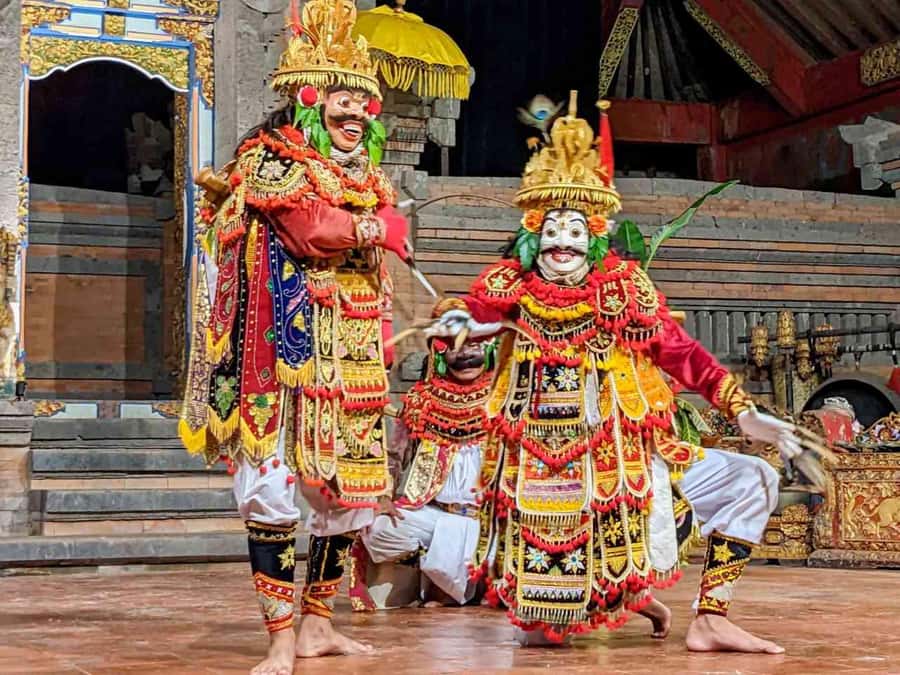
The main visual reward is the combination of elaborate costume, exact movement, and traditional storytelling. The clothing is not a simple decoration added for photographs. It helps identify characters and gives each gesture a stronger shape on stage.
Balinese dance can look calm one moment and highly charged the next. A slight turn of the head, a fixed gaze, or a precise hand position may signal a change in mood or status. You will get more from the show if you watch the performers’ faces and hands rather than only the larger movements.
The 45-minute duration is a real advantage. Ubud has plenty of cultural activities, but a long evening production can be hard to fit around meals and transport. This one gives you a concentrated look at Balinese performance without asking you to surrender an entire night.
The tradeoff is depth. A short show cannot explain every symbol or present a long epic in full. If you want a complete cultural lesson, you may need a museum guide, a book, or another performance. If you want a well-sized first encounter, the shorter format works well.
Is $9 good value for the performance?
At about $9 per person, this is an easy cultural purchase to justify. You are paying for entry to a selected 45-minute performance in a museum setting, with no hotel transfer, food, drinks, or general gallery admission included.
That low price is most useful if you already have your own way to reach ARMA and want a single cultural activity. You are not paying for a package with extras you may not use. The value comes from the performance itself.
I would not compare this directly with a full dinner-and-dance evening. Those experiences usually include different elements and may last much longer. Instead, compare it with the cost of other short activities in Ubud. For a focused show featuring traditional stories, costume, music, and choreography, the price is reasonable.
The 4.8 rating from 14 verified bookings supports the idea that the basic performance delivers well for its cost. The strongest praise focuses on the quality of the show, the intimate audience, and the setting. One booking from France called the performance a worthwhile cultural change of scene for the price, while another from Italy highlighted the atmospheric location, engaging presentation, and detailed production.
Timing, access, and small practical matters
The meeting point is Museum Seni Agung Rai, Ubud. Hotel transfer is not included, so you need to arrange your own transport to the museum.
The activity lasts 45 minutes, but the available starting times can vary. Check the date and time before paying, especially if you are fitting the performance between a meal, temple visit, or other Ubud plans.
A host or greeter is available in English or Indonesian. That is helpful for finding the performance area and dealing with basic questions, though the show itself is a visual performance and the supplied details do not promise a full spoken guide or translation.
The activity is listed as wheelchair accessible. Pets are not allowed, and alcohol and drugs are prohibited. Babies under one year are not considered suitable for the experience, so families with very young infants should choose another activity.
You can cancel up to 24 hours in advance for a full refund, and the reserve-now, pay-later option lets you hold a place without paying immediately. Those terms are useful when your Ubud schedule is still shifting.
Who should choose this ARMA performance?
I would recommend it to first-time Bali visitors who want a manageable introduction to local dance. It also suits art lovers, culture-minded couples, solo visitors, and families with children old enough to sit through a 45-minute performance.
Kecak is a strong first choice if you want the famous chorus and a distinctive sound. The Ramayana Ballet suits you if you prefer a classic epic. Legong Lasem Peliatan works well for a tighter royal drama, while Barong Prakpak offers the clearest environmental message.
I would be more cautious if you expect a full-day cultural program, a guided tour of the museum, or a meal with your ticket. None of those are included. You should also check the selected show carefully if you already have a specific story in mind.
Should you book the ARMA Cultural Dance Performance?
Book it if you want a low-cost, short, and focused look at Balinese dance in Ubud. The intimate setting, six performance choices, and strong 4.8 rating make it a practical addition to a day of sightseeing.
Pick your title with care. Kecak offers the most recognizable format, Barong Prakpak brings an environmental message, Ramayana gives you an epic, Legong presents a royal conflict, and Barong Dance focuses on the traditional Barong presentation with Tabuh Penegak Bebarongan accompaniment.
Skip it only if you need museum admission, transport, food, or a long guided explanation bundled into one ticket. For everyone else, about $9 for 45 minutes of live Balinese storytelling is a sound Ubud buy.
FAQ
Where does the ARMA Cultural Dance Performance take place?
The performance takes place at Museum Seni Agung Rai, also known as ARMA Museum, in Ubud, Bali.
How long does the performance last?
The cultural performance lasts 45 minutes.
How much does the ticket cost?
The listed price is $9 per person.
What performances can I choose from?
The available choices are Kecak Sang Hyang Jaran Dance, Barong Prakpak, Ramayana Ballet, Kecak Dance, Legong Dance Lasem Peliatan, and Barong Dance.
Does the ticket include ARMA Museum gallery admission?
No. General admission to the ARMA Museum galleries is not included.
Is hotel transportation included?
No. Hotel transfer is not included, so you must arrange your own way to the meeting point.
Is food or drink included?
No. Food and beverages are not included.
Is the activity wheelchair accessible?
Yes. The activity is listed as wheelchair accessible.
What languages are available from the host or greeter?
The host or greeter is available in English and Indonesian.
Can I cancel the booking for a refund?
Yes. You can cancel up to 24 hours in advance for a full refund. You can also reserve now and pay later.
Just added around Ubud
- Authentic hike in the forest with lunch at the inhabitant★ 5.0 · 3 reviews
- Heaven Gate, Tirtagangga and Tukad Cepung Waterfall – All Inclusive★ 5.0 · 3 reviews
- Half Day Uluwatu Temple Sunset, Kecak Dance and Seafood Dinner★ 3.5 · 3 reviews
- Ubud: White Water Rafting with visit Ubud Monkey Forest★ 5.0 · 3 reviews
- ️Bali All Inclusive Tour: Ubud – Tegalalang – Kintamani★ 5.0 · 3 reviews
- East Bali and Lempuyang Temple Tour★ 5.0 · 3 reviews
- Ubud: Temple, Swing, Waterfall, Rice Terrace & Monkey Forest★ 5.0 · 3 reviews
- Ubud Adventure: ATV Thrills, Monkey Encounters, & Waterfall★ 5.0 · 3 reviews
Balinese Dance Shows, compared.

Uluwatu Sunset, Kecak Dance, and Dinner Jimbaran Beach
Read our review →

Dance Show + Dinner at Lost City – Story of Humanity
Read our review →
Half-Day Tour: Uluwatu Temple and Kecak Fire Dance Show
Read our review →
Private Tour: Full-Day Tanah Lot and Uluwatu Temples with Kecak Fire Dance Show
Read our review →
Browse the lists this tour appears in