
Reviewed · RICE TERRACE TOURS
Electric bicycle tour in Jatiluwih UNESCO site
Jatiluwih is best seen at bicycle speed, not through a bus window. This half-day ride starts at Batukaru Temple and follows quiet country roads into Bali’s famous rice terraces, with bamboo forests, small streams, village lanes, and farmers still using traditional methods.
I like the easy electric mountain bikes, which let you enjoy the scenery without needing serious cycling fitness. I also like the local guiding, especially when guides such as Wayam explain how rice is grown and stop when you want a photo. The main consideration is weather: rain can arrive during the ride, and the tour still operates in wet conditions.
In This Review
- Key points at a glance
- Why Jatiluwih Works So Well by E-Bike
- Starting at Batukaru Temple
- Through Bamboo, Jungle, and Small Streams
- Reading the Rice Terraces
- What the Four-Volcano Valley Adds
- A Guide Who Keeps the Ride Human
- The Two-Hour Ride and Five-Hour Day
- Lunch After the Rice Fields
- Is $75 a Fair Price?
- Who Will Enjoy This Ride Most?
- Practical Tips Before You Go
- Should You Book the Jatiluwih E-Bike Tour?
- FAQ
- How long does the Jatiluwih e-bike tour last?
- Where does the cycling begin?
- Is cycling experience required?
- What food is included?
- Is hotel pickup available?
- What is the cancellation policy?
Key points at a glance
- Quiet roads from Batukaru Temple: The ride begins away from busy tourist traffic and heads toward Jatiluwih through rural Bali.
- Electric help on a scenic route: You still pedal, but the motor makes the ride more manageable on changing road surfaces and gentle rises.
- Four-volcano setting: The rice terraces sit in a broad valley shaped by four extinct volcanoes.
- Local insight from guides: Guides such as Wayam explain farming, answer questions, and adjust the pace for photos and comfort.
- Traditional lunch included: Finish with Balinese nasi campur, plus water, coffee, or tea, at a rural restaurant surrounded by nature.
- Small-group convenience: Pickup and drop-off are offered within 30 miles, or 45 kilometers, of Batukaru Temple, and groups are capped at 12.
Why Jatiluwih Works So Well by E-Bike
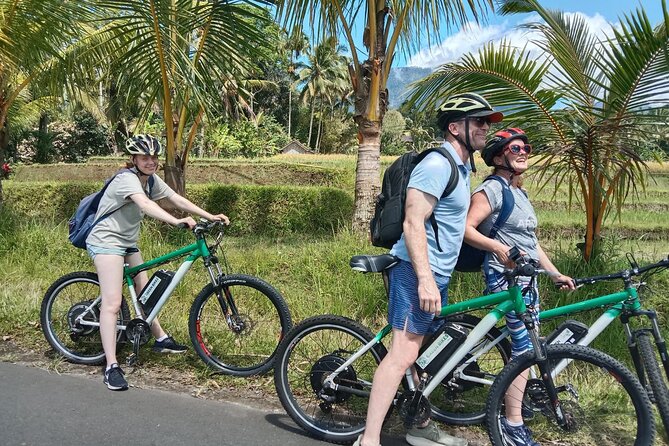
Jatiluwih is not just a place for a quick photo stop. Its appeal comes from the way the rice terraces spread through the countryside, with water, crops, forest, temples, and homes all sharing the same space.
A bicycle lets you move slowly enough to notice those details. You may see farmers working the fields with traditional methods, rather than simply viewing the terraces from a roadside lookout. You also get the changing scenery of rural Bali: giant bamboo, jungle growth, small rivers, streams, and village roads.
The electric bike is important here. You need to know how to ride a bicycle, but you do not need advanced cycling experience. Before setting off, the guides help you get comfortable with the controls and the bike itself. That short introduction matters, particularly if you have never used an e-bike.
You remain active, but the motor takes the sting out of the effort. I would choose this ride over a standard bicycle tour if I wanted to focus on the scenery and conversation rather than worry about keeping up.
More rice terrace walks near Ubud:
- Ubud: Monkey Forest, Jungle Swing, Rice Terrace, and Water Temple
★ 5.0 · 7,160 reviews - Ubud: Waterfalls, Water Temple & Rice Terraces Private Tour
★ 5.0 · 5,484 reviews - Ubud: Full-Day Rice Terrace, Monkey Forest & Waterfall
★ 5.0 · 2,634 reviews
Starting at Batukaru Temple
The ride begins at Batukaru Temple, a useful starting point because the route quickly moves into quieter countryside. Pickup is offered from locations within 30 miles, or 45 kilometers, of the temple, so the door-to-door service can remove much of the usual Bali transport hassle.
The route heads toward Jatiluwih on small roads. This is a key part of the experience. You are not spending the entire outing on a major road or being driven between separate viewpoints. The cycling connects the sights.
The temple itself is the launch point rather than the central focus of the five-hour outing. The supplied details do not describe a formal temple tour, so you should think of Batukaru as the place where the cycling begins, not necessarily a long guided visit inside the temple grounds.
That distinction helps set expectations. Book this for a countryside ride through the Jatiluwih area, with cultural and natural details along the way. Do not book it mainly for an extended temple lecture.
Through Bamboo, Jungle, and Small Streams
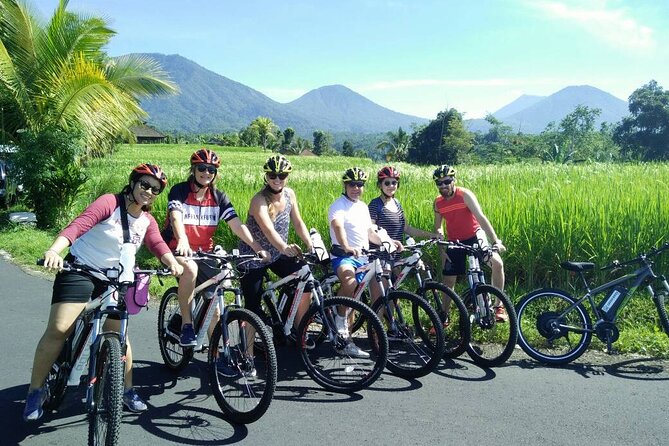
After leaving the temple area, the ride passes through giant bamboo forest, lush jungle, small rivers, and streams. The scenery changes often enough to keep the route interesting, even before the terraces open up.
The roads are described as small and quiet, but this is still an outdoor activity. Comfortable clothing and shoes are advised, and sunblock is a sensible choice. Bali’s weather can change quickly, and one person found that rain covered much of the ride. The wet conditions did not erase the views, but rain can make clothing, phones, and camera equipment harder to manage.
I would bring a light rain layer and protect electronics, even though those items are not listed as included. That is practical preparation, not a sign that the tour is poorly suited to wet weather. The ride can still be enjoyable in rain, but clear conditions will give you the sharpest views and easiest photography.
Your guide sets the pace and handles the route. Guides are local to the area and grew up around these roads, fields, and villages. That local connection gives the ride more meaning than simply following a marked cycling path.
Reading the Rice Terraces
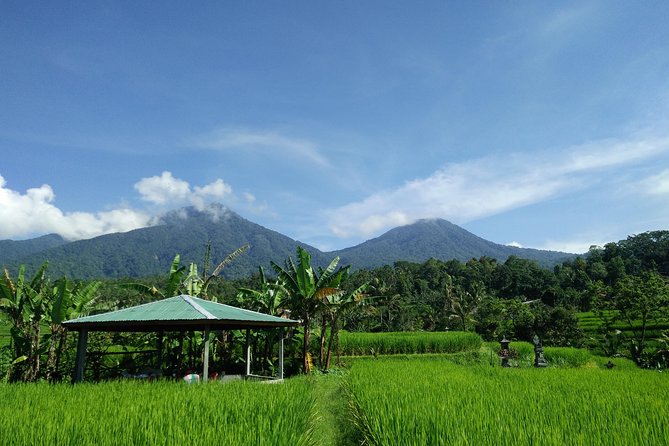
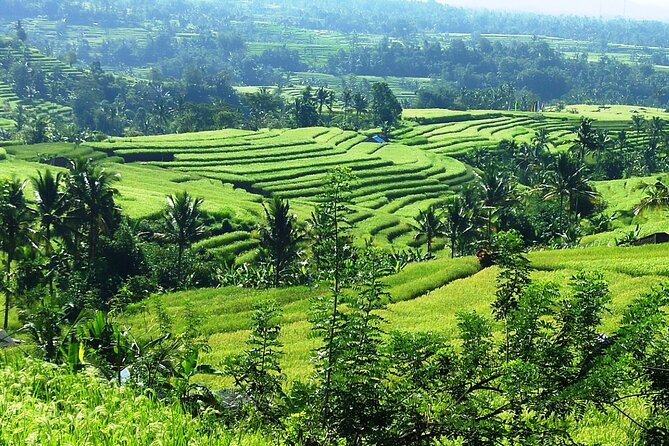
The rice fields are the heart of the tour. Jatiluwih forms part of Bali’s UNESCO World Heritage setting because of its traditional rice-growing system and terraced fields. The value here is not only visual. The terraces show how farming, water, religion, and village life fit together.
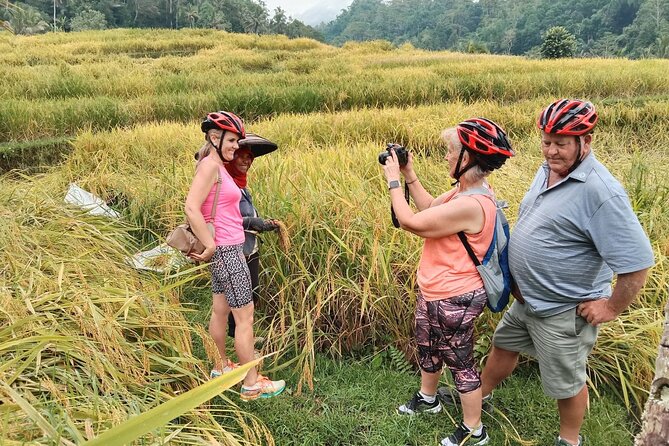
Your guide can explain how rice is grown and point out the work taking place in the fields. Wayam is praised for explaining the local area and farming practices in a cheerful, clear way. He also makes regular stops when you want photos and pays attention to comfort.
That flexibility is useful. A fixed bus tour gives you a view, then moves on. A bicycle tour lets you pause when the light is good, when a field catches your eye, or when you simply need a rest.
The route is not presented as a strenuous mountain ride, but the terrain is not completely flat in the ordinary sense of a city cycle path. You are riding rural roads through a volcanic valley, so the electric assistance is more than a gimmick. It helps keep the focus on the setting.
More cycling days around Ubud:
- Electric Cycling Tour of Ubud with Free Hotel Transfer and Lunch
★ 5.0 · 1,397 reviews - Ubud: Rice Terraces & Villages Half-Day Fat Tire E-Bike Tour
★ 4.9 · 602 reviews - Ubud: Downhill Cycling with Volcano, Rice Terraces and Meal
★ 5.0 · 536 reviews - Half-Day Ubud Electric Cycling Tour to Tirta Empul Water Temple
★ 5.0 · 315 reviews
What the Four-Volcano Valley Adds
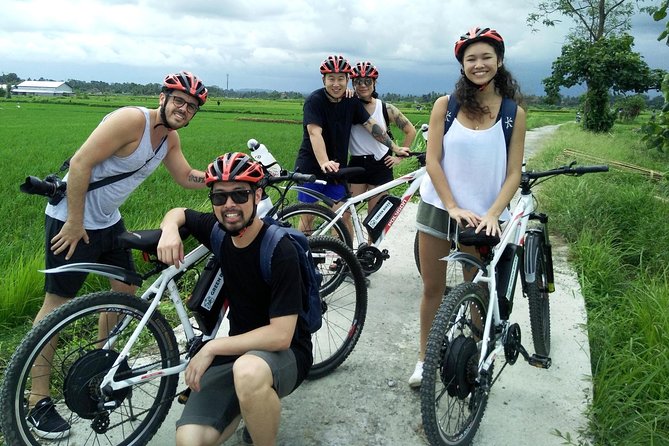
The rice terraces lie in a valley surrounded by four extinct volcanoes. That setting gives Jatiluwih its broad sense of space. Rather than looking at one small field from a single platform, you move through a large agricultural area shaped by mountains, water, and forest.
The view changes as you ride. One section may feel enclosed by bamboo and jungle, while another opens onto cultivated slopes and distant hills. You get a better sense of how extensive the farming area is because you cross it under your own power.
The ride also shows the contrast between nature and daily work. Forest and streams are not separate attractions placed beside the rice fields. They are part of the same rural system, alongside farmers, paths, temples, and villages.
That is the main cultural value of the outing. You are not simply looking at Bali’s scenery. You are being shown how people use it.
A Guide Who Keeps the Ride Human
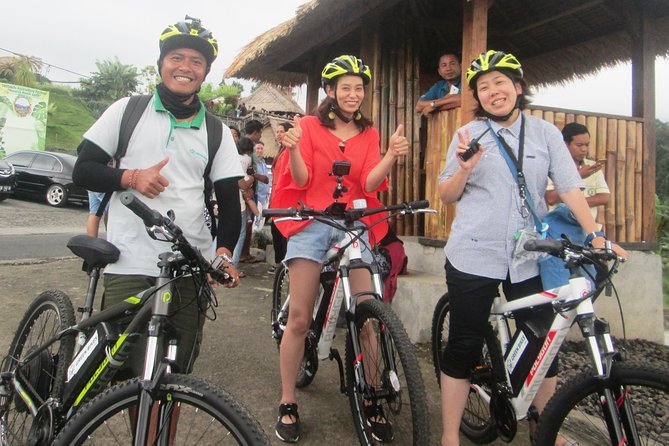
The group limit is 12 people, which is small enough for a guide to keep an eye on the group without making the ride feel like a private outing. A good guide matters here because the appeal depends on what you learn between the photo stops.
Wayam is specifically praised for his humor, explanations, and attention to individual needs. Another account names Wayang, so the guide roster may vary or names may be spelled differently. Either way, the important point is that guides are local, and they are expected to answer questions about the area rather than simply lead the bikes.
You can ask about rice cultivation, village life, or what you are seeing in the fields. You should also speak up if you want a photo stop or need a slower pace. The guiding style appears attentive rather than rushed.
No cycling experience beyond basic bicycle riding is required. Still, do not confuse an e-bike with a motor scooter. You need to balance, steer, brake, and remain comfortable on a bicycle. The minimum height is given as 140 to 150 centimeters, so families or shorter riders should confirm the exact requirement before booking.
The Two-Hour Ride and Five-Hour Day
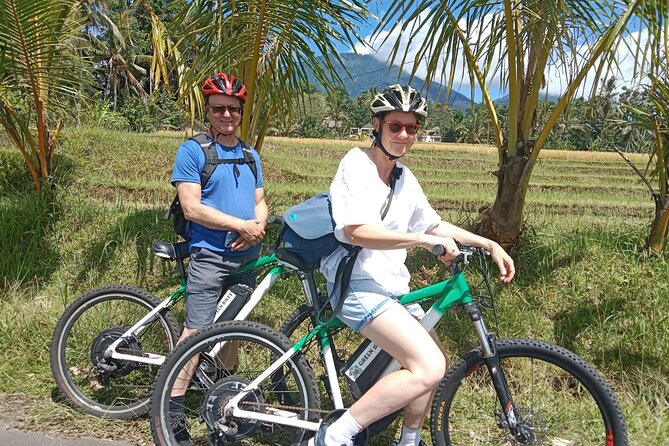
The cycling portion is listed at about two hours, while the full experience lasts roughly five hours. The extra time allows for pickup, bike fitting, orientation, stops, guiding, and lunch.
This is a good length for a half-day plan. You get a meaningful ride without giving up an entire day in Bali. It also leaves room for the route to feel unhurried. A rushed cycling tour would miss much of what makes Jatiluwih worthwhile.
The exact order and length of individual stops are not specified. Expect the day to be shaped by the group, weather, road conditions, and photography rather than by a rigid minute-by-minute schedule.
The maximum group size of 12 is worth noting. If the group is full, you will have less control over the pace than on a private ride. The trade-off is a lower price than many private day tours and the chance to share the experience with a few other people.
Lunch After the Rice Fields
The included meal is traditional Balinese nasi campur, a mixed plate with several small portions of local food. Water, coffee, and tea are included, while alcoholic drinks cost extra.
Lunch is served at a rural restaurant surrounded by nature. That setting fits the day better than a large urban restaurant would. After cycling, a proper local meal gives the outing a clear finish and lets you sit down before the return transfer.
Food is one of the strongest practical features of the package. You do not need to search for a restaurant after the ride, and the meal is not an afterthought such as a packaged snack. The food has been praised as good Indonesian cooking, though individual tastes vary and the exact dishes in the nasi campur are not specified.
If you have dietary restrictions, ask the operator before departure. The supplied details do not state that special diets are available, so do not assume the meal can be changed without notice.
Is $75 a Fair Price?
At $75 per person, this is not the cheapest way to see Jatiluwih, but the price covers a useful set of services: hotel pickup and drop-off, the e-bike, helmet, local guide, bottled water, lunch, coffee or tea, insurance, and taxes and handling fees.
The value is strongest if you are staying within the pickup area and would otherwise need to arrange a driver, bike rental, lunch, and entrance or activity details yourself. Door-to-door transport alone can simplify a Bali day, where distances on the map do not always translate into quick journeys.
You are also paying for route knowledge and equipment. Renting a bicycle independently might cost less, but it would not provide the same local explanations or a planned path through the fields and forest.
The price is less compelling if you only want a short photo stop at the rice terraces, or if you already have transport and prefer to explore independently. This is a guided experience with a set structure, not a cheap bike rental.
The fact that it is commonly booked about 17 days in advance suggests you should not leave it until the last moment if the date matters. Free cancellation is available until 24 hours before the start time. Changes or cancellations inside that window are not accepted for a refund.
Who Will Enjoy This Ride Most?
I would recommend it to you if you want an active way to see rural Bali but do not want a demanding cycling challenge. It fits couples, small groups, and curious visitors who prefer a guide to explain what they are seeing.
It is also a good choice if you value comfort. Pickup, equipment, lunch, and the return transfer are all handled, leaving you to concentrate on the route.
You should be comfortable with basic bicycle riding and prepared for sun or rain. The tour is not ideal if you want a long temple visit, a private guide, or complete control over the route and stops.
Families should check the minimum height carefully. The published requirement varies between 140 and 150 centimeters, and most participants can take part, but that does not guarantee that every child will fit the available bikes.
Practical Tips Before You Go
Wear clothes that are comfortable for pedaling and shoes that will stay secure on the bike. Use sunblock, and bring a rain layer because wet weather is possible even when the morning looks fine.
You receive a helmet and bottled water, but a small bag for personal items is useful. Keep cameras and phones protected from rain and splashes.
Tell the guide early if you want frequent photo stops or need help with the e-bike. The guides are described as attentive, and clear communication makes it easier for them to match the group to a comfortable pace.
Remember that the tour includes insurance, but that does not remove the need to ride sensibly. Pay attention during the bike briefing, use the brakes carefully, and do not treat the motor as permission to ride faster than you can control.
Should You Book the Jatiluwih E-Bike Tour?
Book it if you want Jatiluwih to feel like a real place rather than a single viewpoint. The combination of quiet roads, rice farming, bamboo, jungle, village scenery, local guiding, and a Balinese lunch gives you a fuller picture of the area.
The strongest reasons to choose it are the easy-to-use e-bikes, the local guides, and the practical all-in-one format. The main cautions are rain, the need to ride a bicycle, and the possibility that a group of up to 12 will not move at your personal pace.
For $75, the package offers solid value when you include transport, equipment, food, and guiding. I would choose it for an active half-day in central Bali, especially if you want scenery with context and do not mind letting someone else handle the roads and logistics.
FAQ
How long does the Jatiluwih e-bike tour last?
The full experience lasts approximately five hours. The cycling portion is listed at about two hours, with the remaining time used for transfers, preparation, stops, and lunch.
Where does the cycling begin?
The ride starts at Batukaru Temple and follows small, quiet roads toward Jatiluwih.
Is cycling experience required?
You need to know how to ride a bicycle, but advanced cycling experience is not required. The guides provide time to help you get comfortable with the electric mountain bike before departure.
What food is included?
Lunch is traditional Balinese nasi campur. Water, coffee, and tea are included. Alcoholic drinks are available to buy separately.
Is hotel pickup available?
Yes. Pickup and drop-off are offered from locations within 30 miles, or 45 kilometers, of Batukaru Temple.
What is the cancellation policy?
You can cancel up to 24 hours before the experience start time for a full refund. Cancellations or changes made less than 24 hours before the start are not accepted for a refund.
Just added around Ubud
- Authentic hike in the forest with lunch at the inhabitant★ 5.0 · 3 reviews
- Heaven Gate, Tirtagangga and Tukad Cepung Waterfall – All Inclusive★ 5.0 · 3 reviews
- Half Day Uluwatu Temple Sunset, Kecak Dance and Seafood Dinner★ 3.5 · 3 reviews
- Ubud: White Water Rafting with visit Ubud Monkey Forest★ 5.0 · 3 reviews
- ️Bali All Inclusive Tour: Ubud – Tegalalang – Kintamani★ 5.0 · 3 reviews
- East Bali and Lempuyang Temple Tour★ 5.0 · 3 reviews
- Ubud: Temple, Swing, Waterfall, Rice Terrace & Monkey Forest★ 5.0 · 3 reviews
- Blue Lagoon Snorkeling and Lunch with Tukad Cepung Waterfall★ 5.0 · 3 reviews
Rice Terrace Tours, compared.
Monkey Forest, Jungle Swing, Rice Terrace, and Water Temple
Read our review →
Waterfalls, Water Temple & Rice Terraces Private Tour
Read our review →
Full-Day Rice Terrace, Monkey Forest & Waterfall
Read our review →
Full-Day Tour to Water Temples and UNESCO Rice Terraces in Bali
Read our review →
Monkey Forest, Ceking Rice Terraces and More– Full Day
Read our review →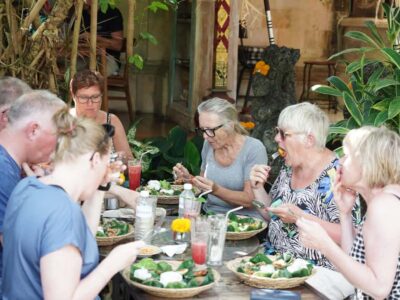
Rice Terraces & Villages Half-Day Fat Tire E-Bike Tour
Read our review →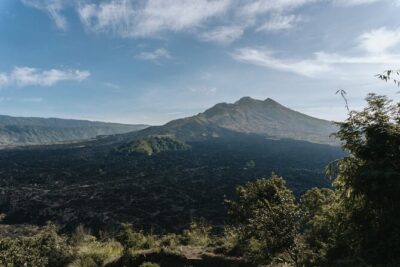
Downhill Cycling with Volcano, Rice Terraces and Meal
Read our review →
Ubud Top Attractions: Waterfalls, Temples and Rice Terraces
Read our review →Browse the lists this tour appears in