
Reviewed · RICE TERRACE TOURS
Bali UNESCO Sites: Water Temples and Jatiluwih Rice Terrace Tour
Bali’s traditional water culture comes into focus on this long private day out. You move from a royal temple garden to a lake shrine, then across the Jatiluwih rice terraces before ending at Tanah Lot for sunset. It is a big route, but it links places that make sense together.
I like the personal format and the chance to ask questions as you go. I also like that the driver-guide can help with photos, explain Balinese Hindu customs, and adjust the day for a solo visitor or private group. The main drawback is the length: nine and a half hours in a car, with traffic and a late finish.
In This Review
- Key things to know before booking
- Why this route works for a full day in Bali
- Starting at Taman Ayun’s royal gardens
- Ulun Danu Bratan and the lake setting
- Jatiluwih Rice Terraces, the tour’s cultural center
- Tanah Lot at sunset
- Optional stops and why they need a reality check
- What the private vehicle adds
- The guides and the quality of the day
- Is $38.18 a good price?
- Who should book this day?
- Should you book the Bali UNESCO Sites tour?
- FAQ
- How long does the Bali UNESCO Sites tour last?
- Which main sites are included?
- Is this a private tour?
- Where is pickup available?
- Are entrance tickets included?
- Can I cancel for a full refund?
Key things to know before booking
- The day connects four major sights: Taman Ayun, Ulun Danu Bratan, Jatiluwih, and Tanah Lot.
- Your guide is also your driver: Juli, Gede, Mika, and Teget are among the guides named in customer feedback.
- Jatiluwih is the cultural heart of the tour: you see broad rice fields shaped by Bali’s subak irrigation tradition.
- Tanah Lot is the finale: allow about 90 minutes for the temple area and sunset views.
- Pickup covers much of south Bali: service is offered from Ubud, Gianyar, Sanur, Kuta, Legian, Seminyak, Canggu, Jimbaran, Nusa Dua, and Denpasar.
- Check the ticket option carefully: entry tickets are included only if you choose the appropriate booking option.
Why this route works for a full day in Bali
This tour is built around a simple idea: Bali’s temples and rice fields are not separate sights. Water, farming, royal power, and religious practice have shaped the island together.
The subak irrigation system is recognized by UNESCO as an important part of Bali’s cultural heritage. Subak is not just a way to move water from one field to another. It connects farmers, temples, ceremonies, and shared decisions about planting and water use.
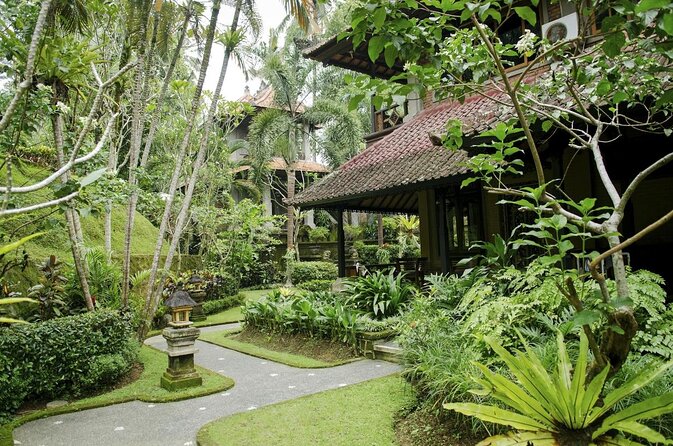
You will not study every part of that system in detail during a one-day outing, but the route gives you useful visual context. At Jatiluwih, the fields spread across rolling hills. At Ulun Danu Bratan, water becomes part of the temple setting. At Taman Ayun, a royal temple sits within carefully tended gardens and water features.
The private setup matters here. You are not tied to a large group’s pace, and you have one person to ask about customs, architecture, and local life. Guides Juli, Gede, Mika, and Teget have been singled out for patience, careful driving, cultural explanations, and help finding good photo angles. Your guide may be different, but the format gives you a chance to request the kind of day you want.
More rice terrace walks near Ubud:
- Ubud: Monkey Forest, Jungle Swing, Rice Terrace, and Water Temple
★ 5.0 · 7,160 reviews - Ubud: Waterfalls, Water Temple & Rice Terraces Private Tour
★ 5.0 · 5,484 reviews - Ubud: Full-Day Rice Terrace, Monkey Forest & Waterfall
★ 5.0 · 2,634 reviews
Starting at Taman Ayun’s royal gardens
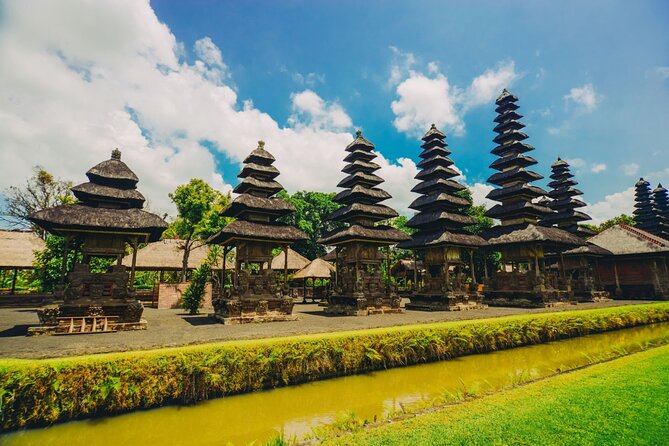
The first scheduled stop is Taman Ayun Temple, a 17th-century temple associated with Bali’s royal tradition. Plan on about an hour here.
The main visual feature is the group of tall, pagoda-like meru shrines. Their layered roofs give the temple a strong vertical shape, while the surrounding gardens keep the setting open and calm. The name Taman Ayun means beautiful garden, and the water-filled setting helps explain its appeal.
Your guide can help you understand the difference between a temple that serves a local village and one connected with a former royal center. That context makes the buildings easier to read. You are not simply looking at carved gates and shrine roofs. You are seeing how political power and religious duty were presented together.
One practical point: an hour is enough for a focused visit, but not for a slow study of every corner. Use your time for the main courtyard, garden views, and photographs. Wear clothing suitable for a temple visit, and follow any local entry rules given at the site.
Ulun Danu Bratan and the lake setting
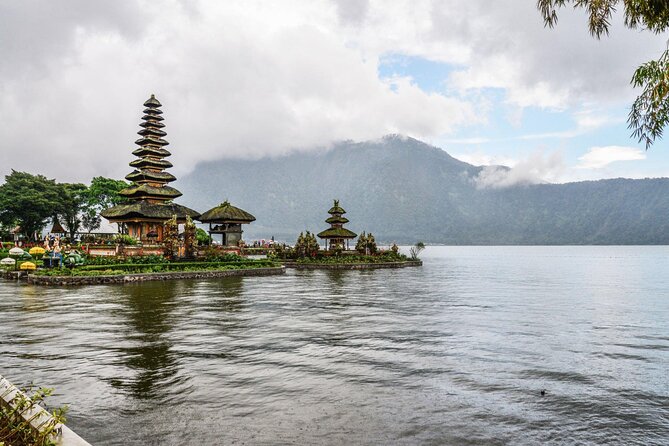
From Taman Ayun, the route continues toward Ulun Danu Bratan. This temple is one of Bali’s most recognizable sights because its shrine appears to sit on the water of Lake Bratan.
The temple honors Dewi Danu, the lake goddess. That fact gives the stop more meaning than a quick photo visit. The lake supplies water to the surrounding area, so the shrine reflects the link between religious belief and farming life.
You get about an hour here. The setting is especially attractive when mist or cloud softens the hills, though weather can change the view. The temple’s reflection, the water, and the mountain setting provide the kind of photographs many people associate with central Bali.
Still, this is a popular stop, and the famous view can feel busy at peak times. A private guide cannot control the crowd, but can help you move efficiently and explain what you are seeing instead of leaving you to wander without context.
The tour description also allows for a visit to one of Bali’s caldera lakes near Baturiti if time permits. Treat that as an optional addition, not a guaranteed stop. The four main locations already fill the day.
Jatiluwih Rice Terraces, the tour’s cultural center
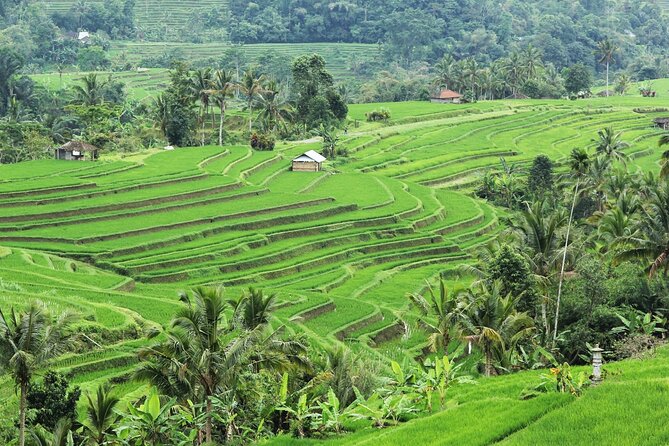
Jatiluwih is the place to slow down and look across Bali’s working countryside. The fields cover rolling slopes in broad layers, creating one of the island’s most impressive views.
You are scheduled to spend about an hour here. That gives you time for photographs and a general look at the terraces, though it is not a full walking tour. If you want long hikes through the fields, ask your guide before booking if the timing can be changed.
The value of Jatiluwih comes from seeing the irrigation system in practice. Rice farming here depends on shared water management, not only on individual plots. Temples and ceremonies are part of that system, so the fields are also a cultural setting.
I would pay close attention to the explanations here. A good guide can point out why the fields follow the hills, how water shapes the planting areas, and why the site matters beyond its appearance. Teget has been praised for patience and clear explanations about Balinese history and Hinduism. That kind of guide can turn a scenic stop into the most informative hour of the day.
The drawback is that the best views often require standing outdoors in full sun or changing weather. Bring water, a hat, and shoes that can handle uneven ground. Bottled water is included, but food is not, so carry a snack or plan to buy something during the day.
More temple days around Ubud:
- Full-Day Tour to Water Temples and UNESCO Rice Terraces in Bali
★ 5.0 · 2,539 reviews - Tirta Empul: Temple Tour with Optional Spiritual Cleansing
★ 4.9 · 1,257 reviews - Bali Instagram: Gate of Heaven Temple Tour
★ 5.0 · 737 reviews - Ubud Top Attractions: Waterfalls, Temples and Rice Terraces
★ 5.0 · 460 reviews
Tanah Lot at sunset
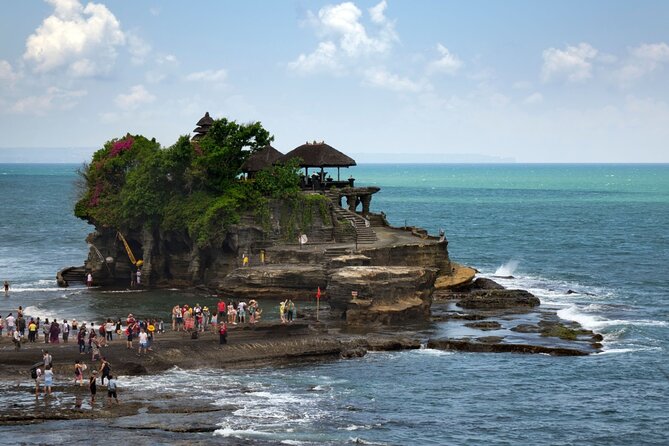
Tanah Lot closes the scheduled route with a sea temple set on a rocky islet. The temple is linked with Bali’s coastal shrines and is one of the island’s best-known sunset viewpoints.
You have about 90 minutes here, more time than at the other stops. That is useful because sunset requires patience. You may arrive before the best light, walk around the temple area, find a clear viewing spot, and stay as the sky changes.
The site is more than one isolated shrine. The surrounding area is set up for visitors, with paths and places to stop, so your guide can help you plan the final hour. At high tide, the rock is surrounded by water. Conditions affect how close you can get, and the temple itself is not simply a monument to enter like a museum.
Tanah Lot can be crowded, especially near sunset. That is the tradeoff for choosing one of Bali’s most famous views. If you prefer quiet temples, this may be the least peaceful stop. If you want a dramatic end to the day, the sea, rock, and evening light make it worthwhile.
The late finish also affects your evening plans. Do not book a tight dinner reservation or an airport transfer immediately afterward. Traffic can stretch the return journey, particularly when the pickup or drop-off point is in south Bali.
Optional stops and why they need a reality check
The route includes a long list of possible extra places if time permits. These may include a waterfall, an ogoh-ogoh museum, a botanical garden, hot springs, another rice terrace viewpoint, a butterfly park, and additional temples or beaches.
These possibilities sound appealing, but they are not part of the guaranteed core route. The scheduled four stops already account for about four and a half hours on site, before driving time, meals, parking, and sunset waiting time. A waterfall or hot spring may also require extra walking, changing clothes, or a longer detour.
Ask your guide at the start of the day which optional stop is realistic. You might choose one short photo stop, or you might prefer to spend more time at Jatiluwih. A private tour is most useful when you make that choice early instead of trying to fit in everything.
Some listed options are quite different from the main theme. A beach suits someone who wants a break from inland temples. A butterfly park or botanical garden suits someone interested in plants and insects. An ogoh-ogoh museum connects with a well-known Balinese tradition of large ceremonial figures. None should be treated as a promise that the day will include all of them.
What the private vehicle adds
Transportation is by private, air-conditioned vehicle, and the English-speaking guide also drives. Parking fees and bottled water are included.
The private car is a real advantage for this route. Public transport would make it difficult to connect Taman Ayun, the lake temple, Jatiluwih, and Tanah Lot in one day. You avoid arranging several separate rides and keep your belongings with you between stops.
The format also works well for solo visitors. One solo customer had trouble finding tours that accepted one person, then found this private arrangement flexible enough to match personal interests. Juli was described as patient with many questions and willing to share Balinese culture. For a solo booking, the per-person price may be higher than joining a large bus, but you gain control and direct attention.
Families and small groups may get stronger value, especially with group discounts. You are paying for the vehicle, driver-guide, parking, and route planning rather than only for entry to individual attractions.
Pickup is available from a wide area, including Ubud and many south Bali resort districts. Confirm your exact hotel location when booking, since the listed coverage names districts rather than every property.
The guides and the quality of the day
The guide can make or break a route this long. You spend many hours together, so a careful driver and an easy conversation matter as much as site knowledge.
Mika has been recognized for careful driving and strong attention to customer needs. Juli has been described as friendly, adaptable, and helpful with photographs. Gede is noted for explanations about Balinese history, culture, and Hinduism, as well as taking photos and videos. Teget is noted for patience and clear information at the temples and rice fields.
Those details point to the tour’s most valued feature: personal service. You can ask questions as they come up, request a photo stop, or discuss how much time to spend at each place. Your actual guide may vary, but the driver-guide arrangement is designed for that kind of contact.
The vehicle role also deserves attention. Bali roads can be tiring over a full day, and a careful driver helps you enjoy the route instead of worrying about every turn. The tour does not promise a separate guide and chauffeur, so expect one person to handle both tasks.
Is $38.18 a good price?
At $38.18 per person, the tour can offer strong value if your group wants all four major stops in one day. The price covers private air-conditioned transportation, pickup and drop-off in many parts of Bali, an English-speaking driver-guide, parking, and bottled water.
Entry tickets depend on the option you select. The tour information also describes an upgrade that includes tickets, so check the final price and inclusions before paying. A low starting price can look less attractive if you discover that admission is extra for several sites.
Food and drinks are not included. That is normal for a day tour, but you should budget for lunch and any purchases along the route. Gratuities are optional.
I see the best value for two or more people sharing the vehicle, or for a solo visitor who values flexibility enough to pay for a private day. If you only want one temple and a rice-field view, this is too much time on the road. If you want the western and central Bali highlights in one organized outing, the price is sensible.
Who should book this day?
I would recommend it to a first-time Bali visitor who wants a broad introduction to temples, water traditions, rice farming, and the coast. It also suits couples, families, small groups, and solo visitors who prefer direct help rather than a large coach.
You should be comfortable with a long day and changing scenery. The route is not a relaxed morning excursion. It begins at 8:30 am, covers several districts, and ends at sunset.
This is also a good choice if photography matters to you. You get temple roofs, gardens, lake views, rice fields, waterfalls if time allows, and a coastal sunset. Just remember that a famous photo spot may be busy, and weather can affect the views.
I would choose a different plan if you want extended hiking, quiet village contact, or a slow visit at only one site. The tour gives you range and convenience, not a deep stay in one place.
Should you book the Bali UNESCO Sites tour?
Book it if you want a private, efficient way to connect Bali’s major water temples, Jatiluwih’s rice terraces, and Tanah Lot in one day. The strongest reasons are the flexible driver-guide format, broad pickup coverage, and the chance to learn about subak and Balinese Hindu traditions while seeing the places themselves.
Before booking, confirm three things: the ticket option, your pickup point, and whether any optional stop is realistic. Plan for food, sun protection, and a late return. If you accept the long driving day, this tour gives you a useful look at how Bali’s temples, water, farms, and coast fit together.
FAQ
How long does the Bali UNESCO Sites tour last?
The tour lasts approximately 9 hours and 30 minutes. The listed start time is 8:30 am, and the day finishes after the Tanah Lot sunset visit and return transfer.
Which main sites are included?
The main route visits Taman Ayun Temple, Ulun Danu Bratan, Jatiluwih Rice Terraces, and Tanah Lot. The scheduled time is about one hour at each of the first three stops and about 90 minutes at Tanah Lot.
Is this a private tour?
Yes. Only your group participates, and transportation is provided in a private air-conditioned vehicle.
Where is pickup available?
Pickup and drop-off are offered in Ubud and Gianyar, Sanur, Kuta, Legian, Seminyak, Canggu, Jimbaran, Nusa Dua, and Denpasar.
Are entrance tickets included?
Entry tickets are included only when you select the option that includes them. Check the booking choice carefully because the base price and ticket-included price may differ.
Can I cancel for a full refund?
You can cancel up to 24 hours before the experience start time for a full refund. Cancellations or changes made less than 24 hours before the start time are not accepted for a refund.
Just added around Ubud
- Authentic hike in the forest with lunch at the inhabitant★ 5.0 · 3 reviews
- Heaven Gate, Tirtagangga and Tukad Cepung Waterfall – All Inclusive★ 5.0 · 3 reviews
- Half Day Uluwatu Temple Sunset, Kecak Dance and Seafood Dinner★ 3.5 · 3 reviews
- Ubud: White Water Rafting with visit Ubud Monkey Forest★ 5.0 · 3 reviews
- ️Bali All Inclusive Tour: Ubud – Tegalalang – Kintamani★ 5.0 · 3 reviews
- East Bali and Lempuyang Temple Tour★ 5.0 · 3 reviews
- Ubud: Temple, Swing, Waterfall, Rice Terrace & Monkey Forest★ 5.0 · 3 reviews
- Batur Volcano Jeep Tour & Explore Best Waterfall in Bali★ 5.0 · 3 reviews
Rice Terrace Tours, compared.

Monkey Forest, Jungle Swing, Rice Terrace, and Water Temple
Read our review →
Waterfalls, Water Temple & Rice Terraces Private Tour
Read our review →
Full-Day Rice Terrace, Monkey Forest & Waterfall
Read our review →
Full-Day Tour to Water Temples and UNESCO Rice Terraces in Bali
Read our review →
Monkey Forest, Ceking Rice Terraces and More– Full Day
Read our review →
Rice Terraces & Villages Half-Day Fat Tire E-Bike Tour
Read our review →
Downhill Cycling with Volcano, Rice Terraces and Meal
Read our review →
Ubud Top Attractions: Waterfalls, Temples and Rice Terraces
Read our review →Browse the lists this tour appears in