
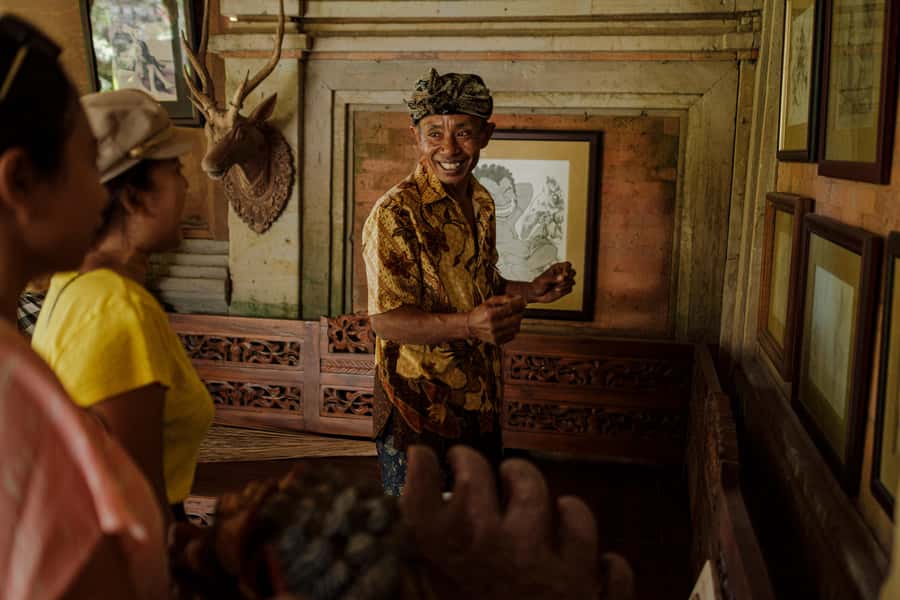
Reviewed · UBUD
Ubud’s Journey from Past to Present
Ubud’s past is easy to miss beneath its cafés, traffic, shops, and polished hotels. This three-hour walk takes you into the older layers of town, from a royal gate carved by a 116-year-old sculptor to the meeting point of two rivers and the temples, palaces, and art institutions that shaped modern Ubud. Guides including Joe, Win, Jo, and Bagus bring the story to life with clear explanations, photos, snacks, and plenty of local context.
I like the route’s variety. You move between spiritual sites and living streets, rather than spending the whole morning in one museum. I also like the small-group format, limited to eight people, which makes it easier to ask questions and keep the pace personal. The main drawback is the walk itself: uneven temple steps, steep sections, and patchy sidewalks require decent mobility, while Bali’s heat and sudden rain can affect the start time.
In This Review
- Key points worth knowing before you book
- Why this Ubud walk is different from a standard town tour
- Campuhan Temple begins the story at the river meeting
- The bridge and streets show old Ubud beneath the new
- Puri Lukisan puts Ubud’s art story in context
- Puri Agung Ubud explains royal power
- Puri Kantor and a private compound add local texture
- The guides make the history easier to follow
- What the $27 price really includes
- Heat, rain, stairs, and the right shoes
- Who should book this three-hour walk?
- Should you book Ubud’s Journey from Past to Present?
- FAQ
- How long is Ubud’s Journey from Past to Present?
- What time does the tour start?
- Which places are visited?
- Is museum admission included?
- Is hotel pickup included?
- How large is the group?
- What should I bring?
Key points worth knowing before you book
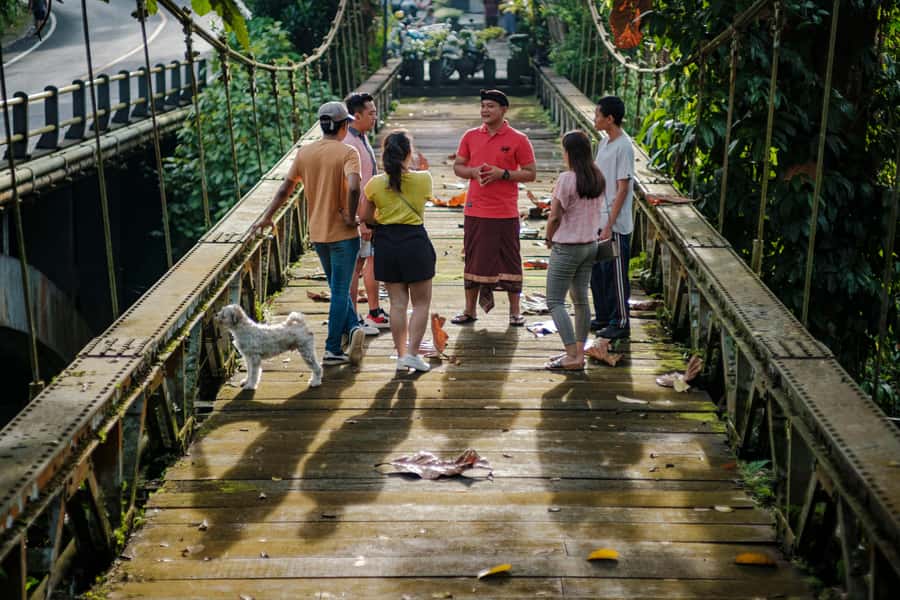
- Campuhan Temple and Bridge: Begin near the meeting of two rivers, a striking place to discuss Ubud’s spiritual geography and early settlement.
- Puri Lukisan admission included: The ticket, listed at Rp 95,000, adds a serious look at Balinese painting and the island’s early artistic links with Western visitors.
- Royal Ubud revealed: Puri Agung Ubud and Puri Kantor help explain how a former royal center grew into today’s downtown.
- Local details make the walk personal: Guides may bring traditional snacks, printed photos, umbrellas, mosquito spray, sun lotion, water, or a first aid kit.
- A true walking tour: Expect up to three hours in an urban setting, with stairs, gradients, and uneven pavement.
- Good value at $27: The price includes a live English-speaking guide, museum entry, access to a Balinese compound, and local discounts.
Why this Ubud walk is different from a standard town tour
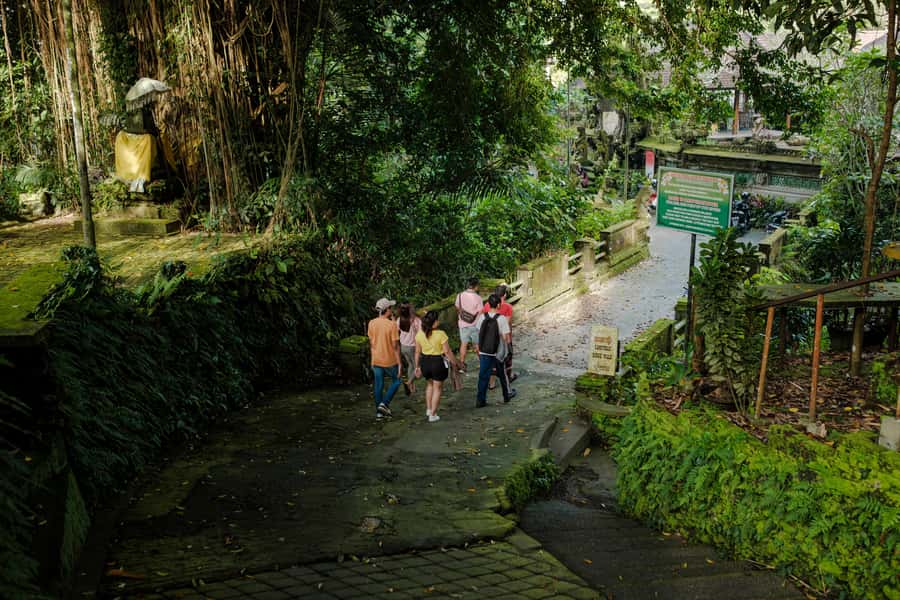
Many introductions to Ubud focus on shopping streets, restaurants, and the obvious palace entrance. This walk asks a more useful question: how did Ubud become the place you see today?
The route links older sacred places with modern central Ubud. You hear about royal power, Balinese religion, painting, architecture, and the outside artists who helped change the town’s direction. That mix gives you a better way to read Ubud afterward. A carved gateway is no longer just a photo stop. A temple is not simply an ornate building. A busy street can be understood as part of a much older settlement.
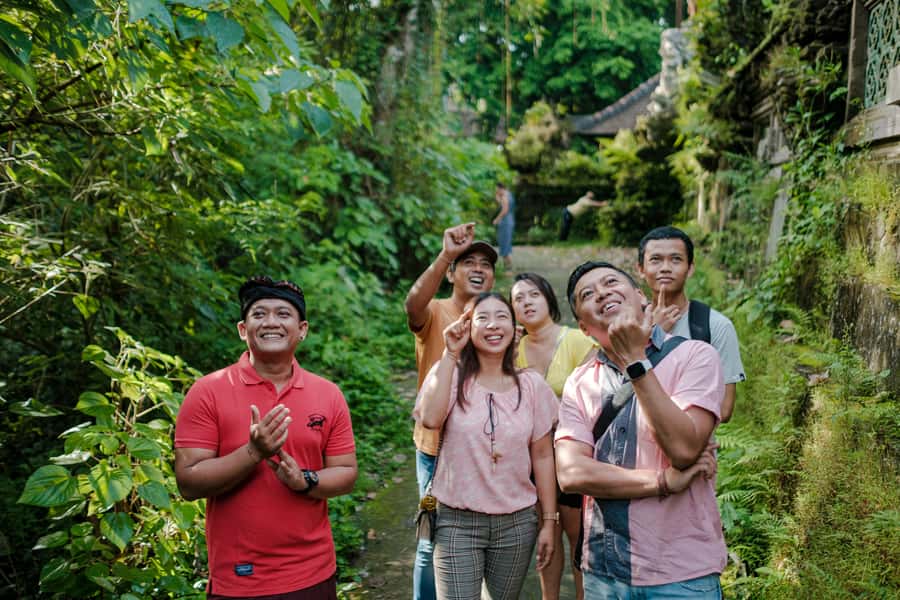
The experience is led in English and kept small, with no more than eight participants. That matters in Ubud, where narrow paths and busy roads can make a large group awkward. The format also leaves room for questions. Joe, in particular, has been praised for explaining local life, culture, nature, and architecture in a friendly, clear way. Win is especially strong on Bali’s political, spiritual, artistic, and cultural background.
You may not have the same guide on every departure, but the team includes Joe, Win, Jo, and Bagus. Their style appears to be warm and conversational rather than a memorized speech. Expect stories, questions, and small observations that you would probably miss while walking alone.
Other Ubud days people book alongside this one:
- All-Inclusive Ubud Private Tour
★ 5.0 · 14,344 reviews - Best of Ubud Full-Day Tour with Jungle Swing
★ 5.0 · 8,571 reviews - Ubud: Monkey Forest, Jungle Swing, Rice Terrace, and Water Temple
★ 5.0 · 7,160 reviews
Campuhan Temple begins the story at the river meeting
The route includes Pura Gunung Lebah, also called Campuhan Temple, near the meeting of two rivers. This is a fitting opening because the water junction is central to the character of the area. It gives the guide a natural starting point for explaining Balinese spiritual ideas and the importance of place.
Temple visits in Bali come with practical realities. You may need to climb uneven steps, and the ground can be slick or irregular after rain. Wear comfortable shoes and avoid treating this as a polished museum visit. You are walking through a living religious setting, not a staged attraction.
The temple also helps set the tone for the morning. Instead of beginning with a list of royal dates, you start with a physical location that connects nature, worship, and settlement. That makes the later discussion of Ubud’s growth easier to follow.
Campuhan Bridge adds another useful perspective. From here, the guide can connect the rivers and surrounding area to Ubud’s older identity, then show how roads, buildings, and daily life gradually filled in around these earlier landmarks.
The bridge and streets show old Ubud beneath the new
The walk is not confined to monuments. You spend time moving through modern Ubud, where cafés, shops, traffic, and sidewalks can obscure the older town. The point is not to pretend that present-day Ubud has disappeared. It is to show how the new town sits on top of an older royal, religious, and artistic center.
This is where a local guide earns the price of admission. A solo stroll can show you gates and walls, but it rarely explains why they matter or how the area changed from a more suburban setting into downtown Ubud. The tour’s central theme is that development, culture, and outside influence all worked together.
The urban walking section also requires patience. Sidewalks can be patchy, and steep gradients are part of the route. Bali’s traffic and heat may make some stretches less relaxing than the temple and museum stops. Still, that contrast is useful. You see Ubud as a functioning town, not only as a cultural display prepared for visitors.
If you prefer air-conditioned transport between sights, this is not the right format. If you want to understand how the town fits together, walking gives you more.
Puri Lukisan puts Ubud’s art story in context

Museum Puri Lukisan, known as the Palace of Paintings, is one of the tour’s strongest inclusions. The entrance ticket is covered in the $27 price, with a stated value of Rp 95,000. That makes the overall cost more attractive than a simple guided stroll.
The museum helps explain Ubud’s role in Balinese art. The tour presents it as part of an early alliance between Balinese and Western artists, a relationship that helped shape the town’s artistic reputation. This is a valuable stop because it adds background to the galleries and art shops you see throughout Ubud.
You should not expect the guide to replace a full museum visit. Three hours must cover several locations, so the time inside Puri Lukisan will be part of a larger story rather than a slow, detailed study of every room. If you love art, you may want to return later on your own and give the collection more time.
For most visitors, though, the museum works well in this sequence. You first see religious and royal settings, then explore how painting became part of Ubud’s public identity. The connection between sacred architecture, local artists, Western influence, and the growth of the town becomes clearer.
A completely different day out, same corner of Ubud:
- Ubud: Waterfalls, Water Temple & Rice Terraces Private Tour
★ 5.0 · 5,484 reviews - Ubud: All-Inclusive Tour with Optional Lunch
★ 4.9 · 5,438 reviews - Ubud: Guided ATV Quad Bike Jungle Adventure with Lunch
★ 4.8 · 4,881 reviews - Best of Ubud 1-Day Private Tour
★ 5.0 · 4,451 reviews
Puri Agung Ubud explains royal power
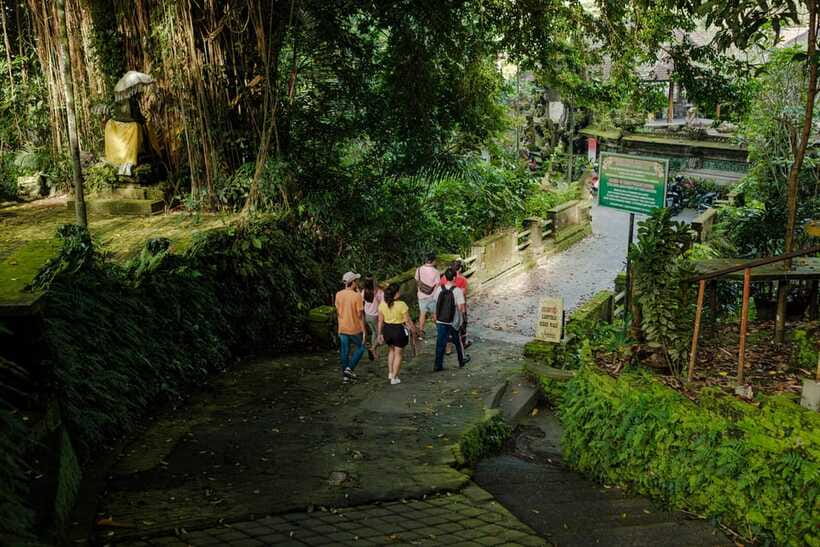
Puri Agung Ubud, the Ubud Royal Palace, is another major stop. The palace helps connect Ubud’s current status with its royal past. It also gives the guide a place to explain how authority, family compounds, ceremonies, and public space shaped the center of town.
A palace visit in Bali can be confusing without context. You may see courtyards, gates, shrines, and elaborate stonework without knowing which parts are ceremonial, residential, or symbolic. The value here is the explanation around the architecture.
The tour also points out a royal gate made by a sculptor who was 116 years old. That detail offers a memorable human angle. It reminds you that Balinese artistic traditions are not only old objects behind glass. They continue through living craftsmen, family knowledge, and active religious spaces.
Do keep your expectations practical. This is a walking tour with several stops, not a private royal ceremony or an extended palace study. The experience gives you a useful introduction, then moves on.
Puri Kantor and a private compound add local texture
Puri Kantor appears on the route as another link to Ubud’s royal and administrative past. Together with the main palace, it helps show that Ubud’s royal center was not one isolated building. It was part of a wider network of compounds and public spaces.
The tour also includes special access to a Balinese compound. This is one of the more valuable details in the program because compound architecture can be difficult to understand from the street. A guide can explain how the spaces fit together and why their arrangement matters to Balinese family and religious life.
The exact details of the compound visit are not specified, so you should think of it as an opportunity for added local context rather than a guaranteed formal demonstration or meal. Its value is in seeing a type of space that ordinary sightseeing often leaves unexplained.
Several guides add small touches to the walking experience. Joe has brought local snacks, umbrellas, mosquito spray, and water. Win has carried snacks, sun lotion, and a first aid kit. These extras are not listed as guaranteed inclusions, so do not book solely for them, but they show the practical care you may receive on the day.
The guides make the history easier to follow
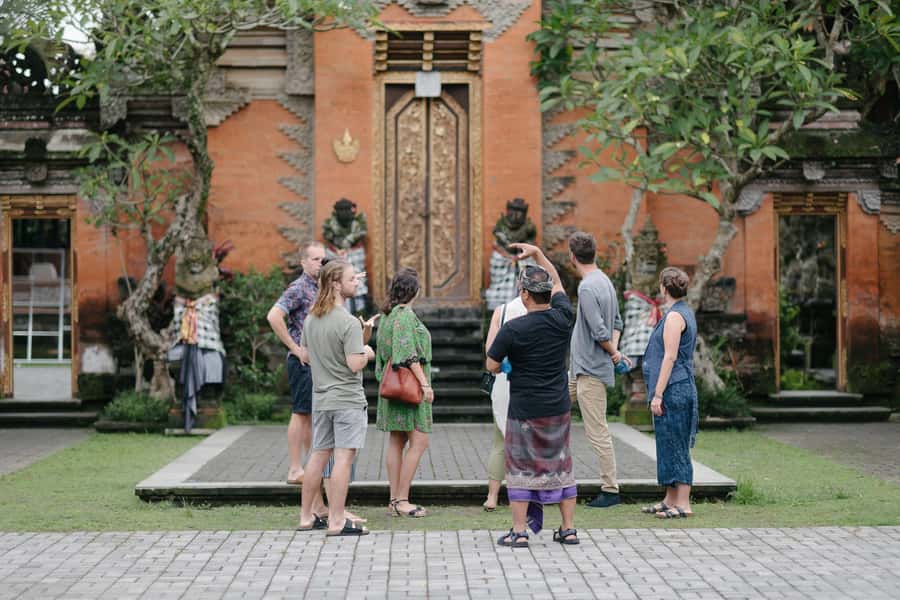
The strongest feature of this tour is the guide’s role. Historical walking tours can become a parade of names and dates. Here, the better guides connect politics, religion, art, nature, and ordinary local life.
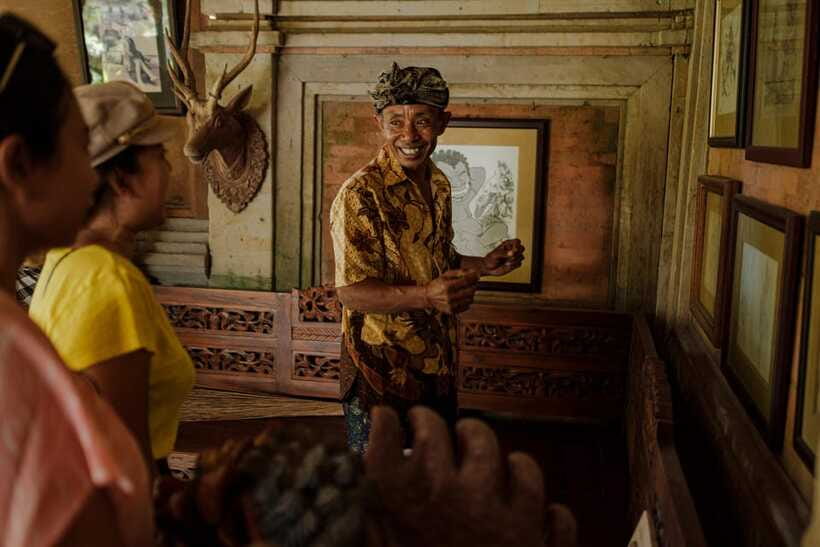
Joe is a particularly safe choice if you want a guide who is easy to talk with and comfortable answering detailed questions. His route explanations have included local snacks and informal photography help. Win brings strong coverage of Bali’s political and spiritual background and pays attention to visitor comfort in the heat. Jo has been described as polite, attentive, and good at balancing conversation with guiding.
That does not mean every departure will feel identical. Guides have different personalities, and the booking information does not promise a specific person. Still, the team’s repeated strengths are clear: solid English, warmth, preparation, and the ability to make the subject feel relevant.
The small group helps. With up to eight people, you can usually hear the explanation and ask for clarification without turning the walk into a private tour. Some departures may be much smaller, even just one or two participants, but that depends on bookings and is not guaranteed.
What the $27 price really includes

At $27 per person, this is a reasonable price for a three-hour guided experience in central Ubud. You are paying for more than a guide walking beside you. The package includes:
- An English-speaking local guide
- A guided walking route lasting about three hours
- Admission to Museum Puri Lukisan
- Special access to a Balinese compound
- Local discounts
The museum ticket alone accounts for Rp 95,000, so the remaining amount covers the guide, planning, historical interpretation, and access arrangements. You also avoid spending your first hours in Ubud trying to piece together the relationship between the palace, temples, museum, and streets.
The tour does not include food or drinks bought outside the experience. Snacks may be offered by some guides, but treat those as a kind extra rather than part of the formal package. Hotel pickup and drop-off are also not included, so you need to reach the meeting area yourself.
The published meeting information refers to an area near Murni’s Warung and also mentions a point near the Antonio Blanco Museum. Because those landmarks are not identical, read the exact meeting instructions emailed after booking and follow those rather than relying on a general map pin.
Heat, rain, stairs, and the right shoes
The tour starts at 8:30 a.m. for private tours, with other times available by checking the schedule or contacting the operator. A morning departure is sensible in Bali, since three hours of walking becomes harder as the day heats up.
The operation runs in rain and sunshine. Severe weather, such as an intense downpour, may lead to a delayed start, and the operator says it will call before the tour if conditions are serious. Bring a reusable water bottle, both for your own comfort and to help reduce plastic entering Bali’s rivers.
Comfortable shoes are essential. You should be able to climb steps and manage steep gradients. Uneven temple stairs and patchy sidewalks are part of the setting, not problems the operator can fully remove.
Bring sun protection and water. Mosquito spray or lotion can also be useful, especially around greener areas, though these items are not formal inclusions. If you have limited mobility, ask before booking. The historic route cannot be made fully step-free.
Who should book this three-hour walk?
I would recommend it to first-time Ubud visitors who want a clear introduction before exploring the town independently. It suits people who enjoy art, architecture, religion, local politics, and the practical details of how a place grows.
It is also a good choice if you have already seen the palace but found yourself wondering what the buildings and rituals mean. The route adds connections that a quick stop cannot provide.
Families with older children may enjoy the variety, especially if the children can manage three hours on foot. Couples, solo visitors, and small groups will appreciate the conversational format. It is less suitable if you want a relaxed café morning, a vehicle-based tour, or a route with no stairs.
I would schedule it near the start of your Ubud stay. Once you understand the royal, artistic, and spiritual background, later walks through the market streets and temple areas will make more sense.
Should you book Ubud’s Journey from Past to Present?
Book this tour if you want Ubud explained through its places rather than presented as a list of attractions. The combination of Campuhan Temple, the river meeting, Puri Lukisan, the royal palace, Puri Kantor, and a Balinese compound gives the morning a strong arc.
The price is fair because museum admission and special compound access are included, while the group size stays at eight or fewer. The guides are the main reason to choose it, especially if you value clear English, local stories, snacks, practical care, and time for questions.
Skip it if uneven ground, heat, or three hours of walking would make the day uncomfortable. Otherwise, this is a smart first look at Ubud, with enough substance to change how you see the town after the walk ends.
FAQ
How long is Ubud’s Journey from Past to Present?
The walking tour lasts three hours.
What time does the tour start?
Private tours start at 8:30 a.m. Other starting times may be available, so check availability or contact the operator.
Which places are visited?
The route includes Pura Gunung Lebah, also called Campuhan Temple, Campuhan Bridge, Museum Puri Lukisan, Puri Agung Ubud, and Puri Kantor. It also includes special access to a Balinese compound.
Is museum admission included?
Yes. The entrance ticket to Museum Puri Lukisan is included, with a listed value of Rp 95,000.
Is hotel pickup included?
No. Pickup and drop-off from your accommodation are not included. The exact meeting point is emailed after booking.
How large is the group?
The tour is a small-group experience limited to eight participants.
What should I bring?
Bring comfortable shoes and a reusable water bottle. The route includes uneven temple steps, steep gradients, patchy sidewalks, and up to three hours of walking.
Just added around Ubud
- Authentic hike in the forest with lunch at the inhabitant★ 5.0 · 3 reviews
- Heaven Gate, Tirtagangga and Tukad Cepung Waterfall – All Inclusive★ 5.0 · 3 reviews
- Half Day Uluwatu Temple Sunset, Kecak Dance and Seafood Dinner★ 3.5 · 3 reviews
- Ubud: White Water Rafting with visit Ubud Monkey Forest★ 5.0 · 3 reviews
- ️Bali All Inclusive Tour: Ubud – Tegalalang – Kintamani★ 5.0 · 3 reviews
- East Bali and Lempuyang Temple Tour★ 5.0 · 3 reviews
- Ubud: Temple, Swing, Waterfall, Rice Terrace & Monkey Forest★ 5.0 · 3 reviews
- Blue Lagoon Snorkeling and Lunch with Tukad Cepung Waterfall★ 5.0 · 3 reviews