
Reviewed · UBUD
Ubud Trip, The Best of Ubud in a day – All Inclusive
Ubud’s best sights spread well beyond the town center, and this private day tour links them in one long, culture-heavy loop. You’ll see batik, wood carving, painting, silverwork, a traditional house compound, a holy-water temple, rice terraces, and a waterfall, all without having to sort out Bali’s traffic yourself.
I like the private car and guide, since you can ask questions, set your pace, and request a change when the day allows. I also like that sarongs, water, transport, and entrance fees are covered. The main drawback is the packed schedule: ten hours and six stops can feel full, especially if you want time to swim or linger.
In This Review
- Key points to know before booking
- What this Ubud day tour is really trying to show you
- Batubulan: begin with Balinese cloth and village craft
- Batuan: a traditional compound and working artists
- Tirta Empul: understand the holy-water ritual
- Tegalalang: Bali’s famous rice terraces
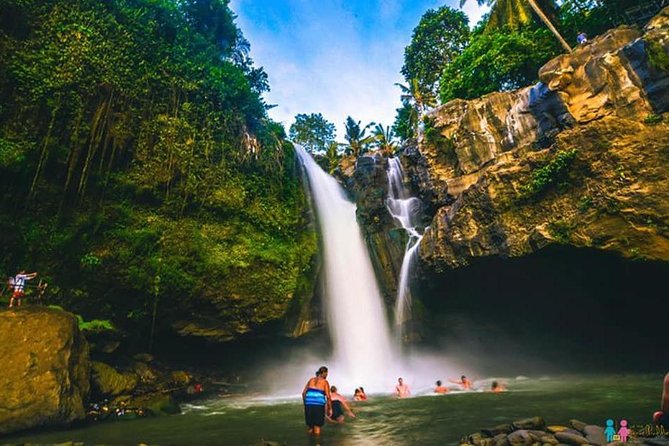
- Tegenungan Waterfall: a final natural stop
- Celuk: watch silver and gold jewelry being made
- Why the private car matters in Ubud
- Is $48.73 a good value?
- Timing, comfort, and what to bring
- Who will get the most from this tour?
- Should you book the Best of Ubud in a Day?
- FAQ
- How long does the Best of Ubud in a Day tour last?
- Is hotel pickup included?
- Is this a private tour?
- What kind of vehicle is used?
- Are entrance fees included?
- Is lunch included?
- Is mineral water provided?
- Are sarongs provided for temple visits?
- Can you swim at Tegenungan Waterfall?
Key points to know before booking
- Private, full-day transport: Your group travels in an air-conditioned car with a private driver-guide and pickup from your accommodation.
- Six very different stops: The day combines Balinese arts, a traditional compound, a holy-water temple, rice terraces, a waterfall, and jewelry making.
- Request Ketut if possible: Customer comments repeatedly praise guide Ketut, also spelled Katut in one comment, for his humor, cultural explanations, and flexible help.
- Most admissions are covered: Entrance fees, sarongs, and mineral water are included, but lunch, shopping, and personal spending are not.
- Plan for a long day: The stated duration is about 10 hours, with stop times ranging from one to two hours.
- Private does not mean quiet: Art and jewelry stops can include opportunities to buy local work, so budget time and money only if shopping interests you.
What this Ubud day tour is really trying to show you
This is not simply a photo stop tour. Its strongest feature is the way it connects everyday Balinese craft with religion, farming, and village life. You move from makers working with cloth, wood, paint, and precious metals to the systems and customs that shape the island.
The route also gives you a useful contrast. Tegalalang shows the famous stepped rice fields, while Tirta Empul introduces an active religious practice. Tegenungan adds a natural stop, though the day is still built around driving between several attractions rather than staying in one place.
Because the tour is private, the guide can explain what you are seeing instead of leaving you to guess. Ketut receives especially strong praise for explaining Balinese culture, ceremonies, rituals, temples, street life, and craftwork. He is also described as friendly, funny, and willing to adjust the plan for personal requests. If you can ask for a guide by name, Ketut is the obvious request, although guide assignments may vary.
Other Ubud days people book alongside this one:
- All-Inclusive Ubud Private Tour
★ 5.0 · 14,344 reviews - Best of Ubud Full-Day Tour with Jungle Swing
★ 5.0 · 8,571 reviews - Ubud: Monkey Forest, Jungle Swing, Rice Terrace, and Water Temple
★ 5.0 · 7,160 reviews
Batubulan: begin with Balinese cloth and village craft
The first listed stop is Batubulan, a village associated with art makers. You spend about an hour here, with a focus on batik and traditional Balinese cloth.
The useful part of this stop is seeing the making process rather than only seeing a finished souvenir. Your guide can help explain how the cloth is produced in traditional ways, giving you a clearer idea of the labor behind the patterns and colors.
There is a practical point to remember: craft villages often blur the line between cultural demonstration and shopping opportunity. That is not automatically a problem. If you are interested in Balinese textiles, this is a chance to look closely and ask questions. If you are not shopping, keep your expectations clear and enjoy the process without feeling obliged to buy.
The stop is listed with no admission charge, and its one-hour length helps keep the morning moving.
Batuan: a traditional compound and working artists
Batuan receives about two hours, making it one of the more substantial stops. Here you visit a traditional Balinese house compound and temples, then see wood carving and painting made in traditional ways.
This is one of the most useful sections of the day because it brings together domestic space, worship, and art. Instead of treating a temple as an isolated monument, you get a look at how a Balinese compound relates to daily life. The guide’s role matters here. A good explanation can help you understand what you are looking at, while a quick walk-through would leave the details flat.
The arts portion also gives you a chance to watch local makers at work. Ask about the wood, tools, designs, and time involved. The supplied information does not promise a hands-on workshop, so expect to observe and learn rather than make a carving or painting yourself.
Batuan is another place where shopping may be part of the setting. The tour price does not include purchases, so you can decide in advance how much time and money you want to give to art.
Tirta Empul: understand the holy-water ritual
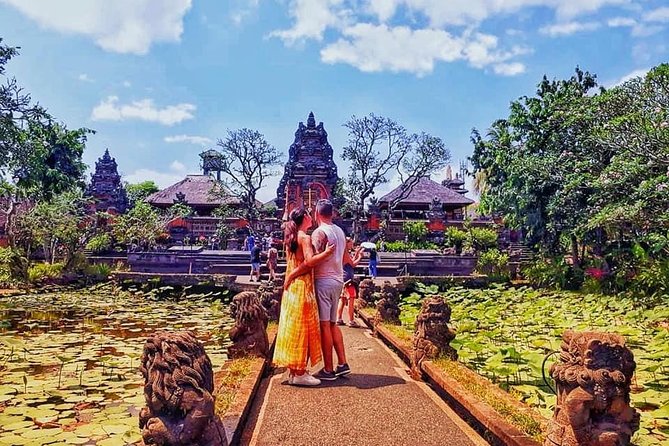
Tirta Empul is scheduled for about two hours and includes admission. It is described as Bali’s holy-water temple, known for cleansing and purification.
Here, you can see people enter clear water for a religious purification ritual. The practice is especially important on special days such as the full moon. This is not just a scenic temple stop, so approach it with care. Wear the provided sarong as required and follow your guide’s instructions about where to walk and what you may photograph.
The two-hour allocation is helpful because it allows time to see the temple and understand the ritual instead of rushing through. Still, conditions can vary. The tour does not state that you will take part in the purification ritual, so treat participation as something to clarify with the guide rather than an automatic part of the booking.
For many people, this will be the day’s most meaningful stop. Rice terraces and waterfalls are easy to admire. Tirta Empul asks you to pay attention to a living practice and to behave respectfully around it.
A completely different day out, same corner of Ubud:
- Ubud: Waterfalls, Water Temple & Rice Terraces Private Tour
★ 5.0 · 5,484 reviews - Ubud: All-Inclusive Tour with Optional Lunch
★ 4.9 · 5,438 reviews - Ubud: Guided ATV Quad Bike Jungle Adventure with Lunch
★ 4.8 · 4,881 reviews - Best of Ubud 1-Day Private Tour
★ 5.0 · 4,451 reviews
Tegalalang: Bali’s famous rice terraces
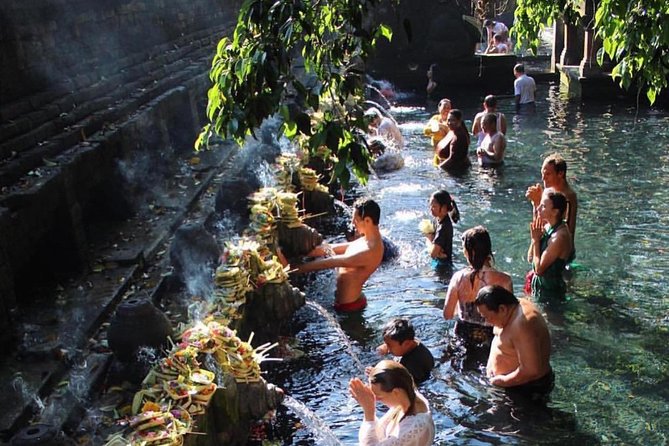
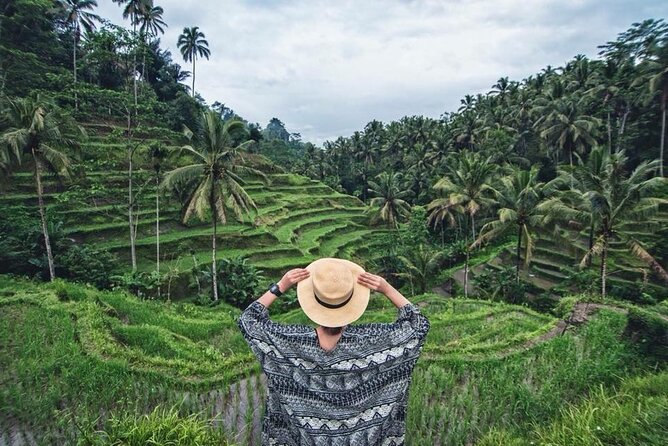
Tegalalang Rice Terrace receives about two hours and includes admission. It is one of Bali’s best-known rice-growing areas, shaped by a traditional irrigation system that reflects the island’s long farming customs.
The view is the main draw, but do not reduce the place to a quick photograph. Look at the stepped fields and the way water supports farming across the terraces. Your guide can explain the local irrigation tradition and help connect what you see to the wider role of rice in Balinese life.
The terrain can require walking, and the tour information does not give details about the exact walking route or surface. If you prefer a gentle pace, tell your guide early. A private tour gives you more control than a large group, but the schedule still has to account for the next stop.
Two hours sounds generous, yet it can pass quickly if you stop for views, listen to explanations, and browse any commercial areas along the route. This is a good place to keep your camera ready, but the cultural context is what makes the stop worthwhile.
Tegenungan Waterfall: a final natural stop
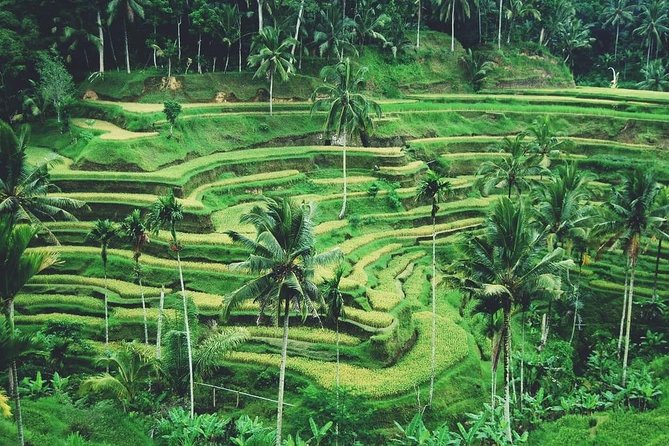
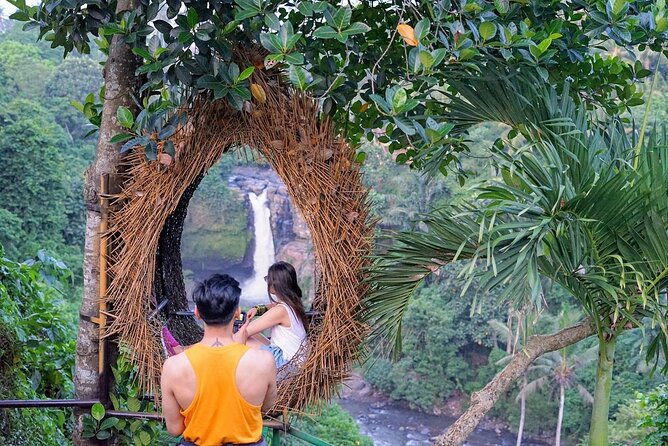
Tegenungan Waterfall is allotted about two hours and includes admission. Swimming is allowed when water conditions permit, so this is the stop that may benefit most from a little planning.
The important limitation is right in the condition: swimming depends on the water. Do not build the entire day around getting in. If swimming is not possible, you can still use the time to see the waterfall and enjoy a change from temples, fields, and workshops.
The waterfall completes the tour’s broad picture of a traditional Balinese village journey. It is also a reminder that this is a busy sightseeing day. After several cultural stops, a natural setting can feel refreshing, but walking and changing conditions may make the final section tiring.
Bring suitable clothing if you hope to swim, though the provided information does not specify changing facilities. Mineral water is supplied in the car, which is useful during a warm day of moving between outdoor sites.
Celuk: watch silver and gold jewelry being made
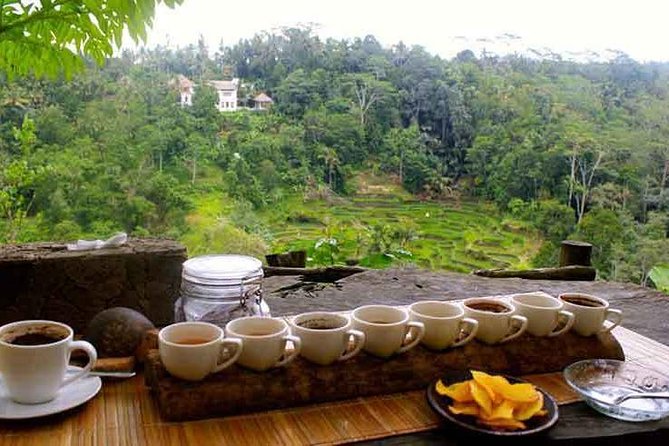
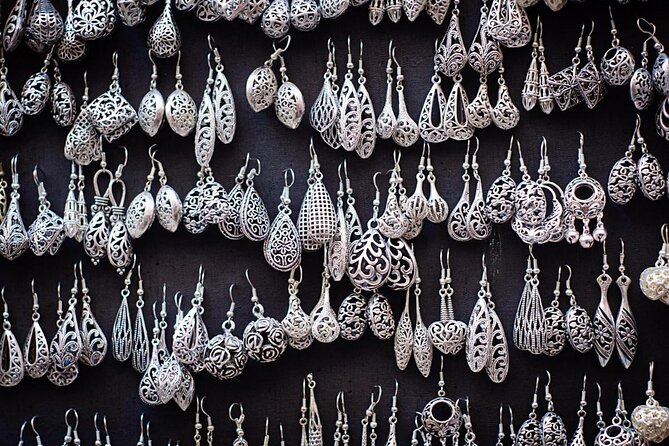
Celuk is the final named stop, with about an hour devoted to traditional silver and gold jewelry making. Like Batubulan and Batuan, it focuses on process.
This stop will suit you if you enjoy seeing skilled handwork up close. Ask the guide to explain how the jewelry is formed and finished. The tour presents the work as traditional making, not as a formal class, so expect a demonstration or viewing opportunity rather than guaranteed instruction.
Celuk is also a clear shopping point. Jewelry purchases are not included, and the price of the tour covers admission rather than anything you may choose to buy. You can enjoy the craftsmanship without purchasing, but if you are looking for Balinese silver or gold, set your own budget before arriving.
The one-hour stop is sensible at the end of a long day. It lets you see another major craft without adding another lengthy visit.
Why the private car matters in Ubud
The tour includes pickup, private transportation, an air-conditioned vehicle, and a private driver-guide. That combination is important in Bali, where a day spent linking villages and attractions can be awkward without local traffic knowledge.
You are not responsible for navigation, parking, or finding each entrance. The guide also handles the practical transitions between stops. The comments about Ketut are especially useful here: he is praised not only for reaching each destination but for explaining ceremonies, culture, temples, and street life along the way.
The private format means only your group participates. That gives you room to ask questions and request a change. One customer comment describes swapping a venue for a personal request, though you should understand that the full schedule may limit how much can be changed.
Pickup is offered in the stated area, but the exact pickup zone is not specified in the information provided. Confirm your accommodation location when booking.
Is $48.73 a good value?
At $48.73 per person, the tour offers a strong amount of coverage for a private ten-hour outing. You receive transport, a driver-guide, air conditioning, mineral water, sarongs, and all listed entrance fees.
The value improves when you consider the route. Booking separate transport to six places could take more planning and may make the day less efficient. You are also paying for local interpretation, which matters most at Tirta Empul, Batuan, and the craft villages.
Lunch is not included, nor are shopping and personal expenses. That is easy enough to manage, but do not mistake all-inclusive for every expense being covered. You will need to pay for your own meal and anything you buy at the art or jewelry stops.
The price works best for a small group that wants a private day without paying for a luxury experience. If you are a solo participant, the per-person price may feel higher than joining a group. If several people share the car, the private format becomes more attractive.
Timing, comfort, and what to bring
The total duration is about 10 hours. The listed stop times add up to about 10 hours as well, before accounting for driving, pickup, traffic, and any delays. In real use, you should expect a full day.
Wear clothing that works for temple visits and outdoor walking. Sarongs are included, which helps with temple dress requirements, but respectful clothing is still a sensible choice.
You may want:
- Comfortable walking shoes for terraces and the waterfall area
- Extra clothing if you hope to swim
- Money for lunch, shopping, and personal expenses
- A phone or camera for the rice terraces, waterfall, and craft work
The tour requires good weather. If poor weather cancels it, you are offered another date or a full refund. Normal cancellation allows a full refund when you cancel at least 24 hours before the start time. Changes or cancellations made later are not accepted for a refund.
Who will get the most from this tour?
I would choose this for a first visit to Ubud when you want a broad introduction in one day. It suits couples, families, and small groups who value a private vehicle and like having a guide explain culture instead of simply pointing out sights.
It is also a good fit if you want variety. You will not spend the whole day at temples or rice fields. You move through art villages, religious sites, farming country, a waterfall, and a jewelry center.
I would hesitate if your ideal day is slow and unplanned. Six named stops leave little room to linger. The tour also includes several maker villages, so someone who dislikes shopping-oriented settings may find parts of the route less appealing.
Most travelers can participate, according to the supplied details, but the information does not provide a detailed accessibility assessment. Ask the provider about walking conditions if that is important for your group.
Should you book the Best of Ubud in a Day?
Book it if you want efficient private transport, a local guide, and a wide look at Ubud’s culture for a reasonable price. The strongest reasons are the included admissions, the air-conditioned car, and the chance to hear detailed explanations from a guide such as Ketut.
Skip it if you want a slow day centered on one or two places, or if you do not want art and jewelry stops that may include shopping. For everyone else, this is a practical introduction to Ubud, especially when you treat the day as a cultural route with scenery rather than a relaxed resort outing.
FAQ
How long does the Best of Ubud in a Day tour last?
The tour lasts approximately 10 hours.
Is hotel pickup included?
Yes. Pickup from your accommodation is offered in the stated service area.
Is this a private tour?
Yes. Only your group participates in the activity.
What kind of vehicle is used?
The tour includes private transportation in an air-conditioned vehicle.
Are entrance fees included?
Yes. The listed temple, rice terrace, waterfall, and Celuk admissions are included.
Is lunch included?
No. Lunch is not included in the tour price.
Is mineral water provided?
Yes. Mineral water is provided in the car.
Are sarongs provided for temple visits?
Yes. Sarongs are included.
Can you swim at Tegenungan Waterfall?
Swimming is allowed when water conditions permit. The tour does not guarantee that swimming will be possible on the day of your visit.
Just added around Ubud
- Authentic hike in the forest with lunch at the inhabitant★ 5.0 · 3 reviews
- Heaven Gate, Tirtagangga and Tukad Cepung Waterfall – All Inclusive★ 5.0 · 3 reviews
- Half Day Uluwatu Temple Sunset, Kecak Dance and Seafood Dinner★ 3.5 · 3 reviews
- Ubud: White Water Rafting with visit Ubud Monkey Forest★ 5.0 · 3 reviews
- ️Bali All Inclusive Tour: Ubud – Tegalalang – Kintamani★ 5.0 · 3 reviews
- East Bali and Lempuyang Temple Tour★ 5.0 · 3 reviews
- Ubud: Temple, Swing, Waterfall, Rice Terrace & Monkey Forest★ 5.0 · 3 reviews
- Blue Lagoon Snorkeling and Lunch with Tukad Cepung Waterfall★ 5.0 · 3 reviews