Reviewed · GUIDED
Ubud: Elephant Cave & Pakerisan UNESCO Guided Tour
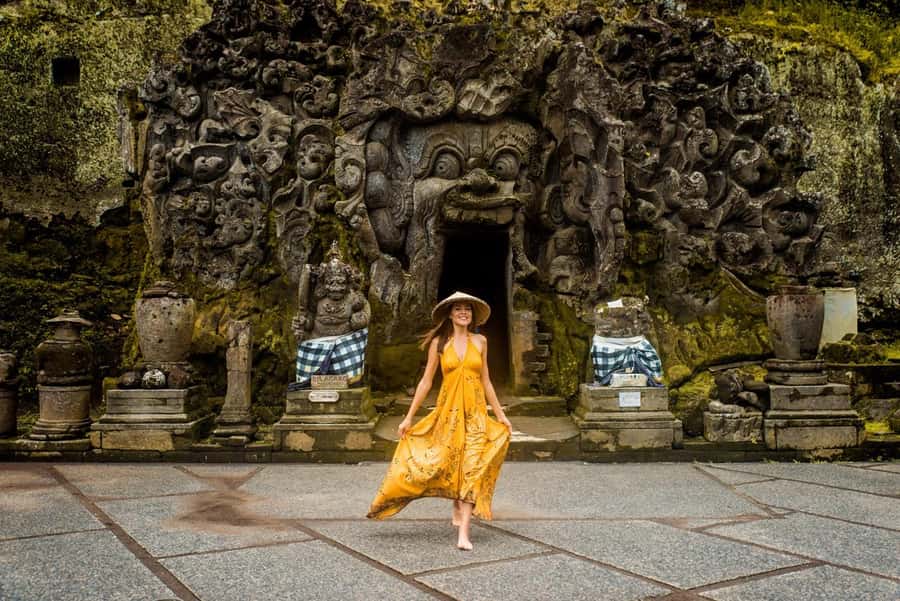
The most striking moment comes before you even enter the cave. You walk down into a cool, green ravine and face a carved demon mouth cut into the rock. Inside, the 9th-century sanctuary is small and dim, with stone idols and meditation niches that hint at its Hindu and Buddhist past.
I like the way this tour combines Goa Gajah’s dramatic entrance with quiet gardens and sacred bathing pools. I also like the practical choice of meeting at the site, meeting at Ubud Palace, or arranging a central Ubud hotel transfer. The main drawback is the access: several stone steps, damp paths, and a warm, humid setting make this a poor fit if you have limited mobility.
In This Review
- Key points to know before booking
- Why Goa Gajah feels different from a standard temple stop
- Walking down to the cave and back
- Inside the 9th-century Elephant Cave
- The sacred bathing pools and garden paths
- The Pakerisan River setting
- What the guide adds to the visit
- Choosing your meeting point and transfer option
- Is $18 good value for this Ubud outing?
- Who should book this Goa Gajah tour?
- What to bring and how to dress
- Should you book the Goa Gajah and Pakerisan tour?
- FAQ
- How much does the Goa Gajah and Pakerisan tour cost?
- How long does the experience last?
- What languages does the guide speak?
- Is hotel pickup included?
- What does the price include?
- What should I wear to Goa Gajah?
- Is the site suitable for wheelchair users?
Key points to know before booking
- The cave is reached through a carved demon’s face: The entrance is the visual centerpiece, but the interior itself is compact and simple.
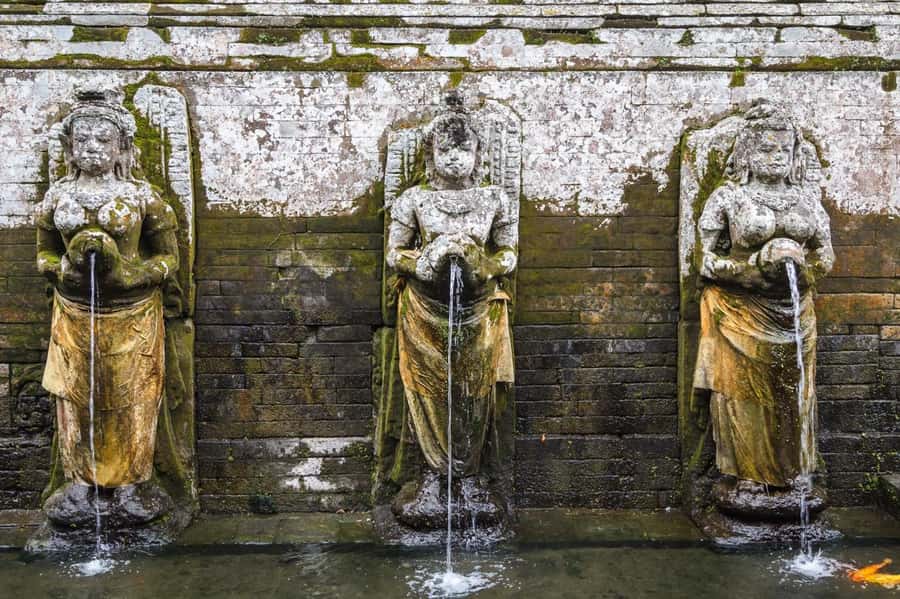
- The bathing pools were rediscovered in the 1950s: Six female statues pour water from urns into the sacred pools.
- The tour includes the Pakerisan River setting: You get more than a quick photo stop at the cave.
- Guides add cultural context: Suker, Sukar, and Sana are named in recent booking feedback, with explanations covering Balinese customs and Hinduism.
- The $18 price covers useful basics: Entry, a live English or Indonesian guide, mineral water, and central Ubud pickup if selected.
- Dress and conduct matter: Bring or wear a sarong and sash, cover your shoulders and knees, and do not touch idols or enter restricted areas.
Why Goa Gajah feels different from a standard temple stop
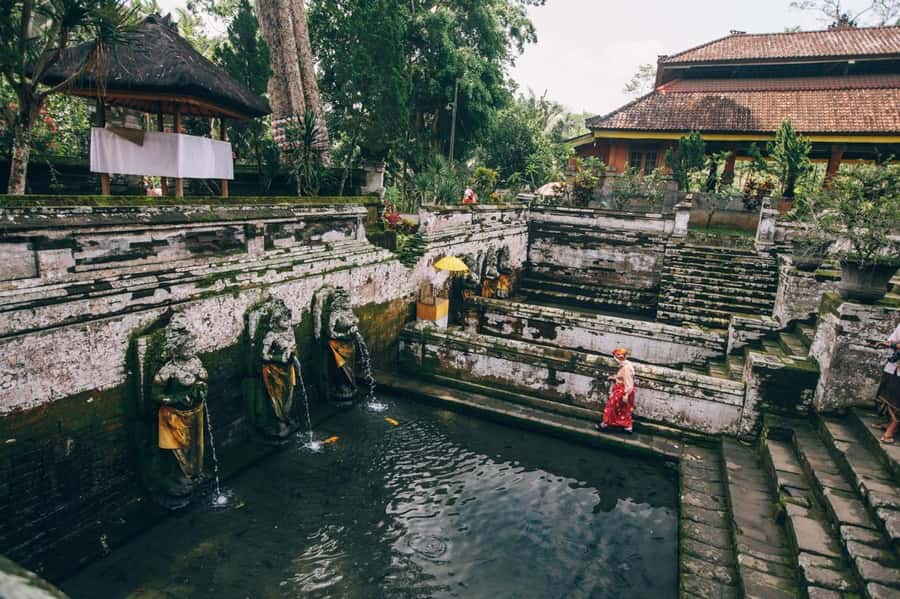
Goa Gajah means Elephant Cave, although the reason for the name is not fully clear from the site itself. The first sight is not an elephant carving, but a fierce face carved around the cave entrance. Its wide mouth, bulging eyes, and heavy stone features give the place a theatrical opening.
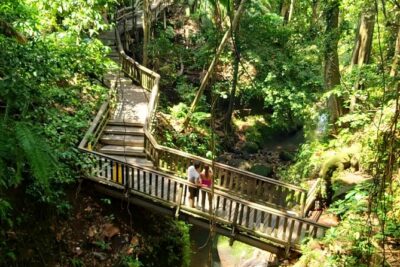
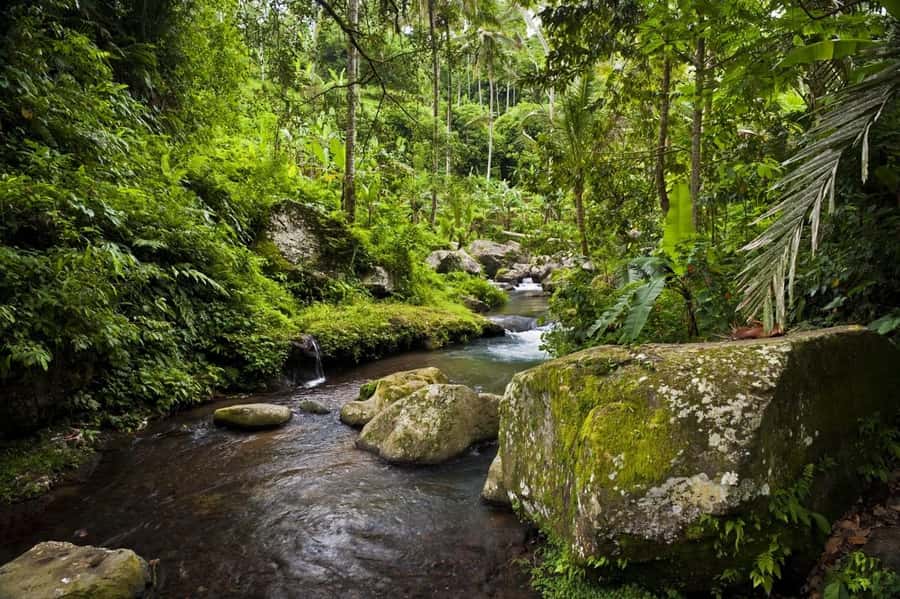
The effect is strongest when you approach on foot. The path leads down through a wooded ravine, with the Petanu River and tropical plants helping the site feel removed from Ubud’s streets. This short descent also sets the pace for the visit: slow down, listen, and look carefully.
I would not expect a vast temple complex or a long underground passage. The cave is modest in size. Its value comes from the atmosphere, the carvings, and the chance to hear how the site connects Hindu and Buddhist religious practice.
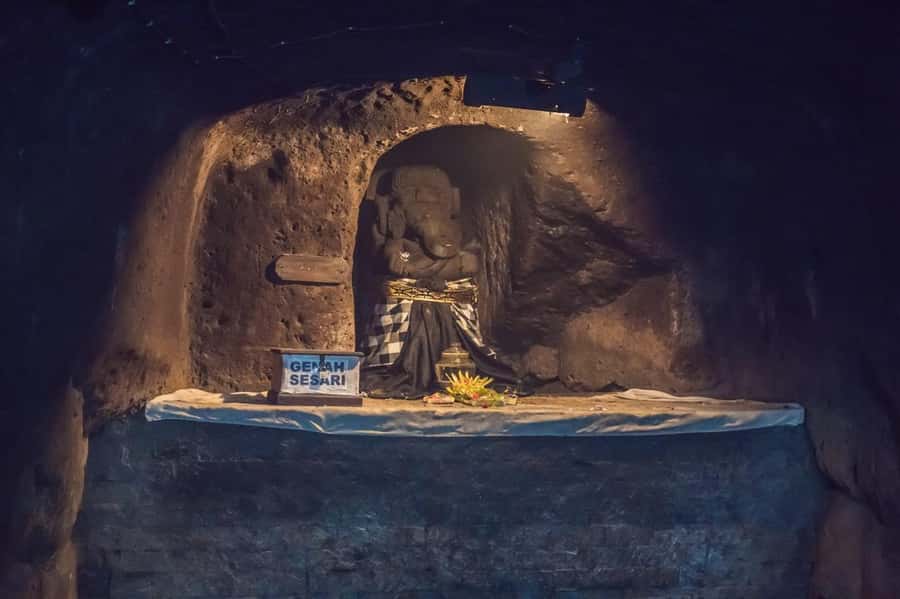
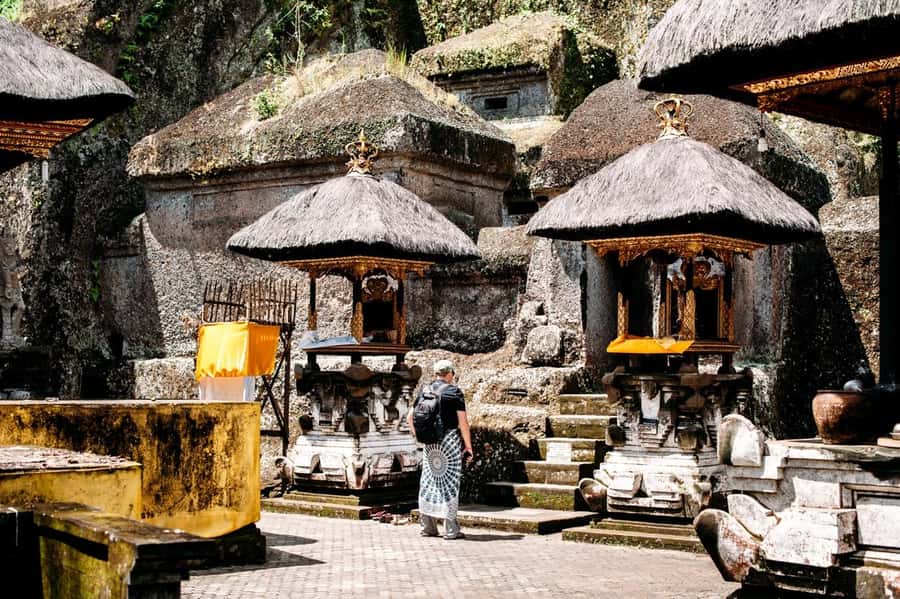
The cave dates to the 9th century. Its exact original purpose remains uncertain, but it is believed to have served as a sanctuary for Hindu and Buddhist monks. Inside, the low light, old stone idols, and small meditation niches make the space feel more like a place for private religious practice than a grand public hall.
Your guide is especially useful here. Without context, you may spend only a few minutes looking at the entrance and interior. With an English or Indonesian-speaking guide, you can learn about the religious elements and the customs that still shape behavior at the site.
A few more Ubud half-days to weigh up
- Ubud: Guided ATV Quad Bike Jungle Adventure with Lunch
★ 4.8 · 4,881 reviews - Ubud: Sacred Monkey Forest Sanctuary Ticket and Guided Tour
★ 4.8 · 675 reviews - Ubud All-Inclusive Private Guide Tour
★ 5.0 · 422 reviews
Walking down to the cave and back
Goa Gajah involves a short but noticeable walk down stone steps. The route is manageable for people with a basic level of mobility, but it is not designed for wheelchairs. You also need to climb back up at the end, so allow a little energy for the return.
The surrounding paths can be damp. Dense forest keeps parts of the site shaded, but warm, humid air and occasional slippery surfaces are part of the setting. Comfortable walking shoes are a better choice than smooth sandals.
I would visit early in the morning or later in the afternoon. Those times offer a calmer feel, and the shade is helpful in Bali’s heat. The exact starting time depends on availability, so check the schedule before you book.
Modest clothing is required. Your shoulders and knees should be covered, and you should wear a sarong and sash as a sign of respect. If you do not have suitable clothing, bring a sarong with you rather than relying on last-minute arrangements.
Photography is allowed, but this is still an active sacred place. Flower offerings and incense may be placed around the courtyards, and local worshippers may be carrying out rituals. Take pictures quietly, avoid touching idols, and stay out of areas marked as restricted.
Inside the 9th-century Elephant Cave
The carved entrance is the main visual reward, but the interior deserves a slower look. Once past the demon face, you enter a dark, narrow space with ancient stone figures and niches cut into the walls.
Do not expect bright decoration or a large collection of objects. The cave has a plain, worn character. That simplicity is part of its appeal, since you can focus on the shape of the rock, the traces of religious use, and the feeling of a sanctuary built for concentration.
The site’s Hindu and Buddhist elements make the visit more interesting than a simple photo stop. Their presence also explains why a guide can add real value. You are not only looking at old carvings. You are trying to understand how different spiritual practices occupied the same sacred area.
The cave is likely to take less than the full 1.5-hour visit period on its own. The longer walk includes the gardens, bathing pools, courtyards, river setting, and other relics around the complex. This is good news if you prefer a measured visit rather than rushing in, taking a picture, and leaving.
The sacred bathing pools and garden paths
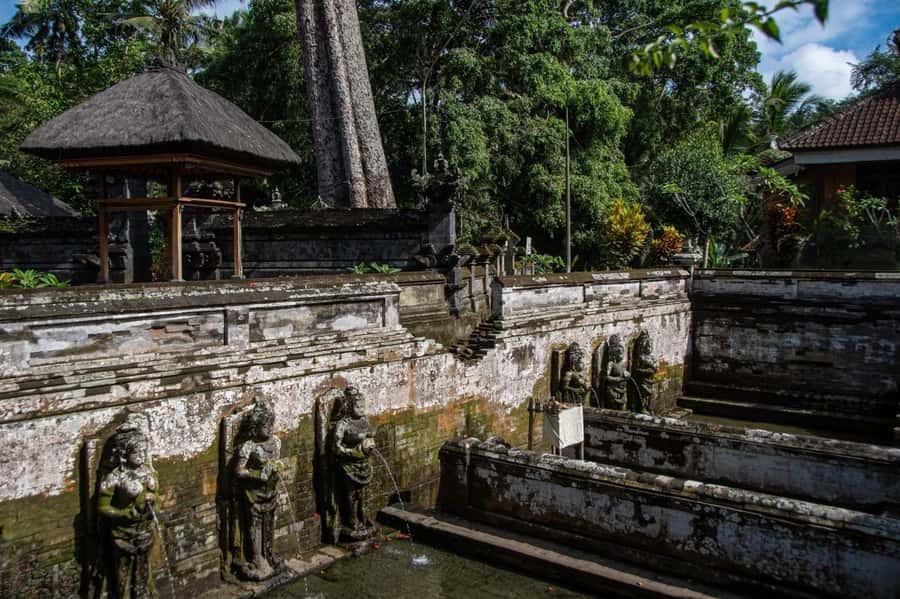
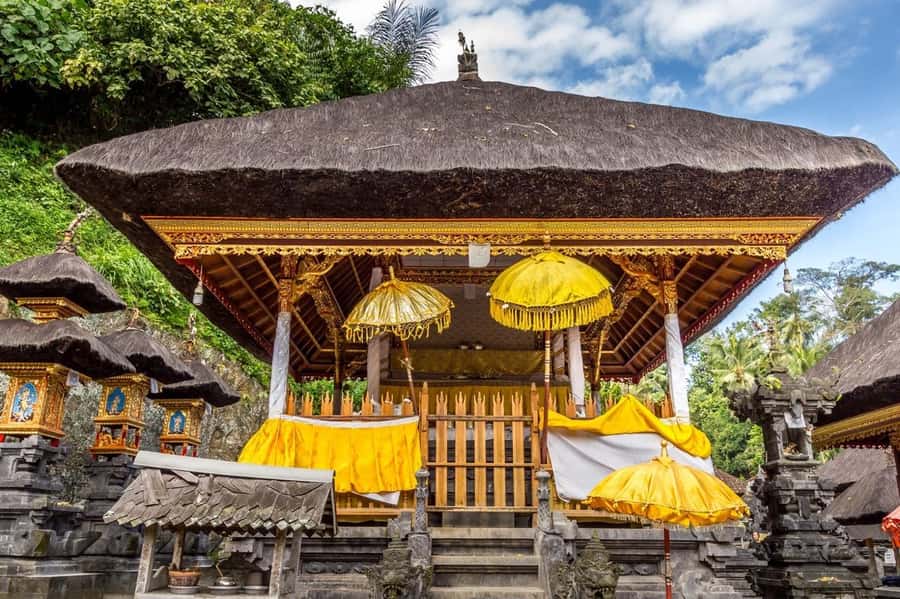
Outside the cave, the mood changes. The dark stone entrance gives way to open gardens, moss-covered statues, and courtyards softened by greenery. This part of Goa Gajah may appeal more to you than the cave if you enjoy quiet spaces and small details.
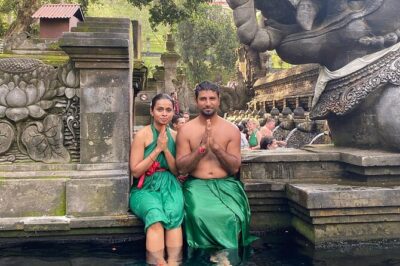
The bathing pools are the clearest feature. Six elegant female statues hold urns and pour water into the pools. These statues are associated with purification and blessing, adding a living religious meaning to what might otherwise look like an archaeological ruin.
The pools were covered by jungle for centuries and rediscovered in the 1950s. That detail helps explain their present condition and the way nature has become part of the site. Moss, damp stone, and plant growth are not distractions here. They are part of the visual character.
You can pause in the courtyards to watch offerings of flowers and incense being placed. The experience is best when you resist the urge to hurry. There is room for quiet reflection, but you should remember that the area is sacred, not simply a garden for tourist photographs.
Bring insect repellent, sunscreen, and water. Mineral water is included, but carrying your own bottle is still sensible in the humid conditions. A hat and sunglasses help in the open sections, while the cave itself is shaded.
A completely different day out, same corner of Ubud:
- All-Inclusive Ubud Private Tour
★ 5.0 · 14,344 reviews - Best of Ubud Full-Day Tour with Jungle Swing
★ 5.0 · 8,571 reviews - Ubud: Monkey Forest, Jungle Swing, Rice Terrace, and Water Temple
★ 5.0 · 7,160 reviews - Ubud: Waterfalls, Water Temple & Rice Terraces Private Tour
★ 5.0 · 5,484 reviews
The Pakerisan River setting
The Pakerisan River adds a wider sense of place to the visit. The cave is not isolated in a bare archaeological enclosure. It sits in a green ravine shaped by water, trees, and religious use.
The river portion is described as a guided part of the experience, but the available details do not promise a separate long riverside hike. Think of it as context for Goa Gajah rather than a standalone river excursion. Your guide can help connect the water, the ravine, and the sacred character of the site.
The tour is also presented as a way to see part of the Pakerisan UNESCO World Heritage area. That matters because the value is not only in one cave. The surrounding temples, springs, river corridors, and old religious sites form a wider cultural setting.
One piece of booking feedback praised a second stop called Gunung Kawi. However, the stated program for this activity lists Goa Gajah and the Pakerisan River, not a guaranteed Gunung Kawi visit. Do not book this tour expecting Gunung Kawi unless the provider confirms that addition directly.
What the guide adds to the visit
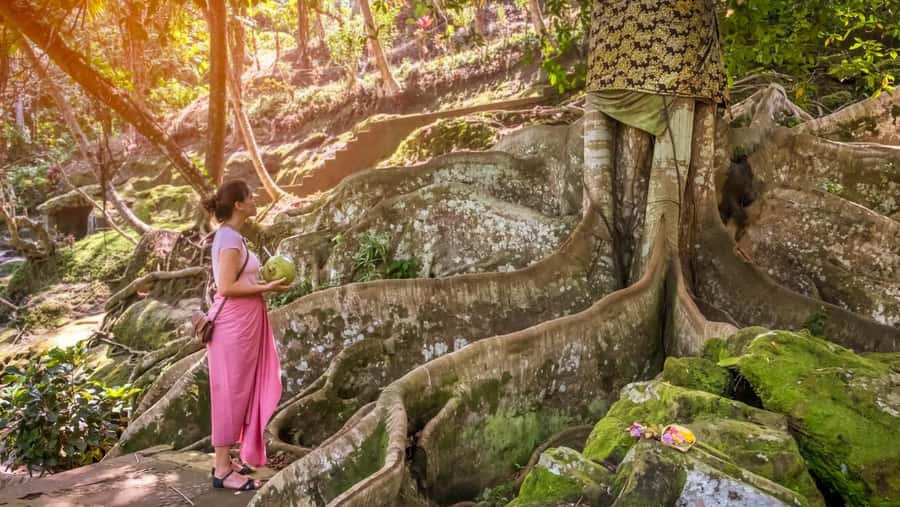
A guide can turn a short temple visit into a useful lesson in Balinese culture. The guides named in recent booking feedback include Suker, Sukar, and Sana. The spelling of the first two names varies in the supplied information, so check the contact details sent to you before pickup.
The strongest praise centers on friendly explanations, cultural background, and help during the drive. One guide was specifically appreciated for explaining the history of the sites and discussing Balinese customs and island culture along the way. Sana was described as attentive and clear when explaining Hinduism and local culture.
That kind of conversation is valuable in Bali, where temple rules and offerings can be easy to misunderstand. A guide can explain why you wear a sash, why certain spaces are restricted, and how to behave around worshippers.
The experience is available in English and Indonesian. It is a guided visit rather than a self-guided ticket with audio commentary, so the quality of your time depends partly on the guide assigned that day. The available feedback is very positive, but the small sample size means I would treat it as encouraging rather than a guarantee.
Choosing your meeting point and transfer option
You have three basic ways to begin: meet at Goa Gajah, meet at Ubud Palace, or choose a hotel transfer from central Ubud. This flexibility is one of the tour’s most useful features.
Meeting at Goa Gajah makes sense if you already have transport or are combining the visit with nearby plans. It also keeps the arrangement simple. Meeting at Ubud Palace may suit you if you are staying in central Ubud and want a clear, well-known starting point.
The hotel transfer option is more convenient, but it applies to central Ubud hotels. Pickup details are sent by email or WhatsApp the day before, or as late as one hour before the activity. The driver contacts you by WhatsApp for confirmation, and you should wait in your hotel lobby 15 minutes before the scheduled pickup.
Late arrival can affect the schedule. Keep your phone available and allow extra time in case Ubud traffic slows the pickup. The total duration is listed as two to four hours, so the length may depend on the selected option, transport, and pace of the visit.
Drop-off options include Ubud, Goa Gajah, and Ubud Palace. Confirm your preferred end point when booking, especially if you have a later reservation or transport connection.
Is $18 good value for this Ubud outing?
At $18 per person, this is a low-cost way to add a guided cultural site to your Ubud plans. The price includes the Goa Gajah entrance fee, a live guide, mineral water, and central Ubud hotel transfer when that option is selected.
Meals and personal expenses are not included. That is not a major concern for a two to four-hour visit, but you should eat beforehand if you are prone to getting hungry during walks. Bring cash for any personal purchases and keep your expectations focused on the temple visit rather than a full-day sightseeing program.
The value is strongest if you want explanation and transport without committing to a long tour. It is less suitable if you want a packed day of several major Bali attractions. Goa Gajah is a compact site, and the tour’s strength is its calm pace and cultural focus.
Free cancellation is available up to 24 hours before the activity for a full refund, and you can reserve now and pay later. Those terms make it easier to fit the visit into a changing Ubud schedule.
Who should book this Goa Gajah tour?
I would recommend it to first-time Bali visitors who want an introduction to temple etiquette and Balinese Hindu culture. It also suits anyone staying in Ubud who wants a short outing rather than a full day on the road.
The tour works well for people who enjoy archaeology, religious sites, photography, and peaceful gardens. You will get the most from it if you are willing to listen to the guide and take time with the small details.
It is not suitable for wheelchair users or people with mobility impairments. The stated restrictions also exclude people over 70 and over 95, which is unusually specific, so check the booking conditions carefully if age or mobility could be an issue.
Women who are menstruating are not allowed to enter the sacred areas under Balinese Hindu customs. This is an important rule to know before you arrive, since it affects access to the religious parts of the complex.
What to bring and how to dress
Pack light, but do not arrive unprepared. Your best kit includes:
- Comfortable shoes with a reliable grip
- Sarong and sash
- Modest clothing covering shoulders and knees
- Hat, sunglasses, and sunscreen
- Insect repellent
- Camera
- Cash
- Drinking water
Alcohol and drugs are not allowed. Pets are also not permitted.
A camera is welcome, but the most respectful approach is to photograph carvings and scenery without interrupting worship. If a ritual is taking place, step aside and let it continue.
Should you book the Goa Gajah and Pakerisan tour?
Book it if you want a short, affordable, guided visit to one of Ubud’s most atmospheric sacred sites. The cave, bathing pools, river ravine, and garden paths make a good half-day addition to an Ubud stay, and the guide can give you cultural context that a quick independent visit may miss.
Skip it if you need step-free access, dislike humid outdoor walks, or want a full-day tour with several major sights. Also confirm the exact route if you are hoping to see Gunung Kawi, since that stop is not clearly included in the stated program.
For most visitors who can manage the steps and follow temple dress rules, the $18 price is easy to justify. Choose an early or late visit, wear proper clothing, and give the cave and sacred pools more than a hurried photo stop.
FAQ
How much does the Goa Gajah and Pakerisan tour cost?
The tour costs $18 per person.
How long does the experience last?
The duration is listed as two to four hours. The Goa Gajah guided visit includes about 1.5 hours of walking and sightseeing.
What languages does the guide speak?
Live guides are available in English and Indonesian.
Is hotel pickup included?
Hotel pickup is included only when you select the transfer option, and it applies to central Ubud hotels. Other choices are meeting at Goa Gajah or Ubud Palace.
What does the price include?
The price includes a guided Goa Gajah tour, entrance fees, and mineral water. Central Ubud hotel transfer is included if you select that option.
What should I wear to Goa Gajah?
Wear modest clothing that covers your shoulders and knees. You should also wear a sarong and sash as a sign of respect.
Is the site suitable for wheelchair users?
No. The visit includes several stone steps and is not suitable for wheelchair users or people with mobility impairments.
Just added around Ubud
- Authentic hike in the forest with lunch at the inhabitant★ 5.0 · 3 reviews
- Heaven Gate, Tirtagangga and Tukad Cepung Waterfall – All Inclusive★ 5.0 · 3 reviews
- Half Day Uluwatu Temple Sunset, Kecak Dance and Seafood Dinner★ 3.5 · 3 reviews
- Ubud: White Water Rafting with visit Ubud Monkey Forest★ 5.0 · 3 reviews
- ️Bali All Inclusive Tour: Ubud – Tegalalang – Kintamani★ 5.0 · 3 reviews
- East Bali and Lempuyang Temple Tour★ 5.0 · 3 reviews
- Ubud: Temple, Swing, Waterfall, Rice Terrace & Monkey Forest★ 5.0 · 3 reviews
- Ubud Adventure: ATV Thrills, Monkey Encounters, & Waterfall★ 5.0 · 3 reviews
Guided, compared.

Guided ATV Quad Bike Jungle Adventure with Lunch
Read our review →
Sacred Monkey Forest Sanctuary Ticket and Guided Tour
Read our review →
Private Tour : Mount Batur Sunrise Trekking With Private Guide
Read our review →
Ayung River Guided Rafting Adventure with Lunch
Read our review →
Ubud Tour with Optional English, Spanish and Italian Guide
Read our review →