Reviewed · TOURS
Ubud Arts & Crafts Tour
Ubud’s art scene makes more sense when you see where Bali’s crafts are made. This four-hour outing links Celuk’s silver and gold workshops, Mas’s hand-carved masks, and Ubud’s painting galleries in one efficient trip.
I like the direct contact with working artisans, and I like the hotel pickup from Kuta, Seminyak, Sanur, Jimbaran, or Nusa Dua. The main caution is the shopping angle: some stops focus on expensive showrooms, so compare prices before buying.
In This Review
- Key points to know
- Why this short Bali art tour works
- Celuk: silver and gold in family workshops
- Mas: Bali’s woodcarving tradition
- Ubud: paintings, galleries, and a wider art scene
- Transport, timing, and group size
- What the guide adds
- The shopping question: art experience or buying trip?
- Who should book this four-hour outing?
- Booking and cancellation basics
- Should you book the Ubud Arts & Crafts Tour?
- FAQ
- How long does the Ubud Arts & Crafts Tour last?
- What time does the tour start?
- Which places does the tour visit?
- What is Celuk Village known for?
- What can I see in Mas Village?
- What kind of art is shown in Ubud?
- Is hotel pickup included?
- Are food and drinks included?
- How many people can join the tour?
- Can I cancel for a full refund?
Key points to know
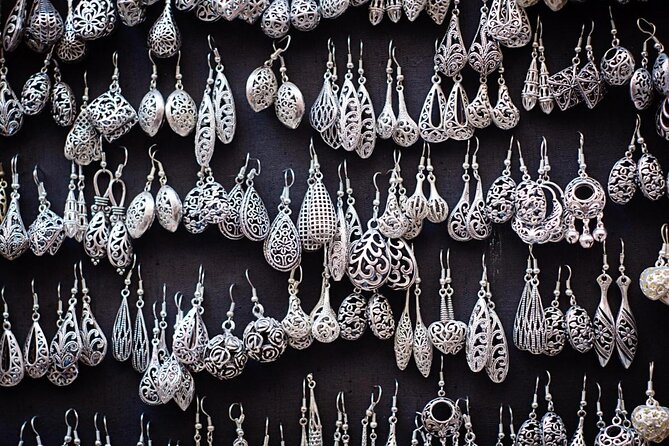
- Celuk comes first: Watch family-run gold and silver workshops shape intricate jewelry.
- Mas offers hand-carved art: See masks and mythological figures made with traditional tools.
- Ubud gives the tour its wider context: Browse traditional and contemporary paintings with your guide.
- The outing lasts about four hours: Each main stop receives roughly one hour.
- Hotel transfers are included: Pickup and drop-off serve major hotels in several south Bali areas.
- The group is limited to 15 people: That is small enough for questions without making the tour private.
Why this short Bali art tour works
Bali is often sold through beaches, rice fields, and temples. Those are good reasons to come, but the island’s arts and crafts reveal another side of daily life. Here, artistic work is not confined to a museum. It appears in family workshops, village studios, galleries, ceremonial objects, and items made for sale.
This tour gives you a compact introduction to that world. You do not spend a full day visiting every craft village, and you do not get a long workshop session of your own. Instead, you see three connected parts of Bali’s art economy: precious-metal work in Celuk, wood sculpture in Mas, and painting and gallery culture in Ubud.
At $50 per person, the value depends on how you use the time. The price covers the guide, transportation, admission to the listed stops, and hotel pickup and drop-off. For a first visit to Bali, that can be worthwhile, especially if you are staying in the south and would otherwise need to arrange a car and driver.
The tour is less compelling if your main goal is bargain shopping. You are taken to well-presented, higher-end stores and galleries, and one important piece of practical advice is to compare prices in Legian or Kuta before making a large purchase. You may find better deals there for similar items, although silver pieces can be an exception.
Other Ubud days people book alongside this one:
- All-Inclusive Ubud Private Tour
★ 5.0 · 14,344 reviews - Best of Ubud Full-Day Tour with Jungle Swing
★ 5.0 · 8,571 reviews - Ubud: Monkey Forest, Jungle Swing, Rice Terrace, and Water Temple
★ 5.0 · 7,160 reviews
Celuk: silver and gold in family workshops
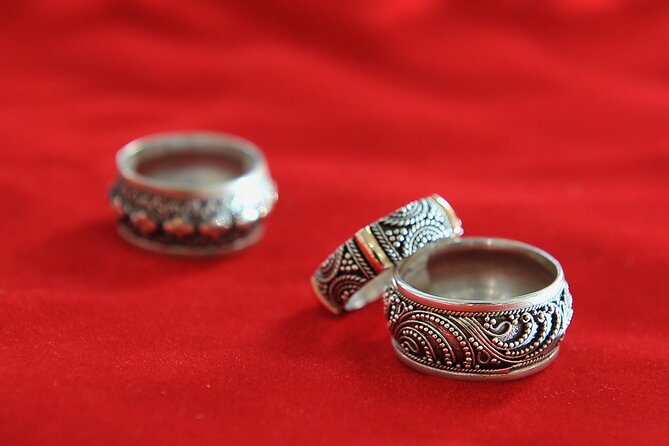
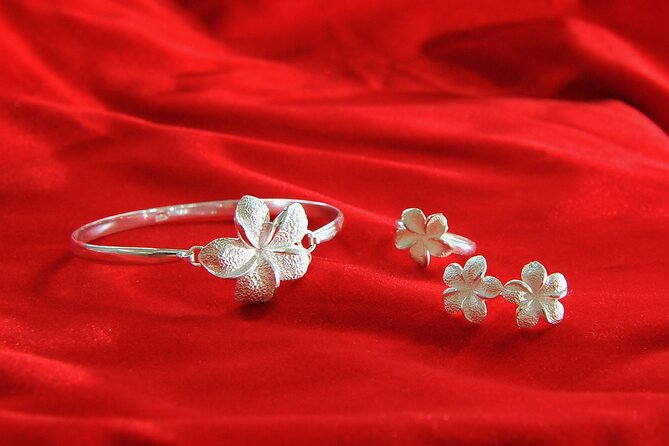
The first stop is Celuk Village, about one hour of the tour. The village is known for gold and silver work, and the visit focuses on the people and processes behind Bali’s jewelry.
With your guide, you can watch artisans shape rings, brooches, and other detailed pieces. The work can look simple from a display case, but the process involves many careful stages. Metal must be shaped, joined, decorated, polished, and checked before it becomes a finished piece.
The village’s family connections are part of what makes Celuk useful as a first stop. Jewelry-making has been passed through local families, and the workshops combine production space with galleries. You are not simply looking at finished products. You get a view of how a craft tradition supports a village and how skilled work reaches the buying public.
This is also the stop where you should set your shopping expectations. The displays may be attractive, and the workmanship can be impressive, but an elegant showroom does not automatically mean the price is right for you. Ask questions, take your time, and remember that browsing is part of the experience.
If you want to buy silver or gold, ask about the material, workmanship, and final price before committing. The tour does not promise a bargain, and food or drinks are not included, so keep your spending focused on what you genuinely want to take home.
Mas: Bali’s woodcarving tradition
The second stop is Mas Carving Center, also planned for about one hour. Mas is known for distinctive wood sculptures, including naturalistic forms and figures from Hindu mythology.
This stop adds texture to the tour because woodcarving is more than decorative shopping. You can see how local artists turn a block of wood into a mask, figure, or ceremonial object. The guide explains the role of woodcarving on Bali and points out the style associated with Mas.
Traditional Balinese masks are especially interesting. They are used in dance and ritual performances, so their expressions and shapes carry meaning beyond appearance. A mask may look strange or dramatic to an outsider, but its design connects to performance, mythology, and ceremony.
You can also meet carvers who still use hand tools. That detail matters. It lets you see the pace and precision required to make intricate pieces without reducing the craft to a row of finished souvenirs.
The drawback is that one hour only gives you an introduction. You will not become an expert in Balinese carving during this visit, and the tour does not list a hands-on carving class. Still, Mas is a useful stop if you want to understand why Bali’s wood art includes both natural forms and characters from Hindu stories.
Look carefully at the differences between pieces. Some may feel highly polished and commercial, while others show a more individual touch. Your guide can help explain what you are seeing, which is one reason this tour is more useful than simply walking through a shop alone.
Ubud: paintings, galleries, and a wider art scene

The final main stop is Ubud, Bali’s best-known center for art and culture. You visit a high-quality shop or gallery with your guide and see both traditional Balinese paintings and contemporary work.
Ubud adds the broadest view of the three stops. Celuk is focused on jewelry. Mas is focused on wood. Ubud shows how Bali’s artistic traditions meet newer styles and international influence.
The town has long attracted local artists as well as painters from abroad. That mix can be seen in the galleries, where traditional subjects may sit alongside modern approaches. You might find paintings connected to Balinese stories, daily life, or ceremony, as well as work that looks less tied to older forms.
Your guide’s explanation is useful here because art can be difficult to judge without context. A painting may look decorative at first glance, but its subject, technique, and place in Balinese art can change how you understand it. The guide helps you notice what separates local work from generic island-themed decoration.
The Ubud stop also explains why some people wish they had stayed closer to town. One booking account described Ubud as fascinating and suggested that more time there would have been welcome. That is a fair warning. This tour gives you a taste of Ubud, not a full visit.
You may have time to browse, but the schedule does not promise a long walk through every street, market, museum, or gallery. If Ubud is your main interest, consider adding a separate visit on another day. Use this tour as an introduction, then return with more time and fewer clock worries.
A completely different day out, same corner of Ubud:
- Ubud: Waterfalls, Water Temple & Rice Terraces Private Tour
★ 5.0 · 5,484 reviews - Ubud: All-Inclusive Tour with Optional Lunch
★ 4.9 · 5,438 reviews - Ubud: Guided ATV Quad Bike Jungle Adventure with Lunch
★ 4.8 · 4,881 reviews - Best of Ubud 1-Day Private Tour
★ 5.0 · 4,451 reviews
Transport, timing, and group size
The outing begins at 8:30 a.m. and lasts about four hours. Hotel pickup and drop-off are offered from major hotels in Kuta, Seminyak, Sanur, Jimbaran, and Nusa Dua.
The transportation matters because the craft villages and Ubud are separate stops. A hired car could cover the route, but a guided group outing removes the need to arrange each transfer yourself. You also get explanations during the day instead of having to research every village independently.
The information lists Celuk as the meeting point while also offering hotel pickup. If you are booking from a hotel, confirm the exact pickup instructions and timing at booking. Cruise passengers should expect additional charges.
The group maximum is 15 people. That is not a private tour, but it is smaller than a large coach group. You should have a reasonable chance to hear the guide and ask questions, although the experience may feel more structured than a private car tour.
Because each stop receives about an hour, the pace is brisk. You move from jewelry to woodcarving to paintings without spending too long in any one place. That suits you if you want a useful overview during a short Bali stay. It may frustrate you if you prefer slow shopping or long conversations with individual artists.
What the guide adds
The guide is central to the value here. Without explanations, the tour could become a sequence of shops. With a good guide, you can understand how family jewelry work, village carving, and gallery painting fit into Bali’s cultural life.
The strongest praise connected to this outing has been directed at the guides. That makes sense, since the schedule depends on clear interpretation rather than major monuments or long activities. Ask questions about the materials, the purpose of masks, the meaning of painting subjects, and how traditional styles are adapted today.
You should also expect the guide to lead you toward selected stores and galleries. That is part of the format. It can be helpful when you want a filtered introduction to quality work, but it is not the same as wandering freely through every shop in town.
A guide can explain why one piece costs more than another, but you should still make your own buying decision. Treat the shopping stops as a chance to learn and compare, not as a requirement to purchase.
The shopping question: art experience or buying trip?
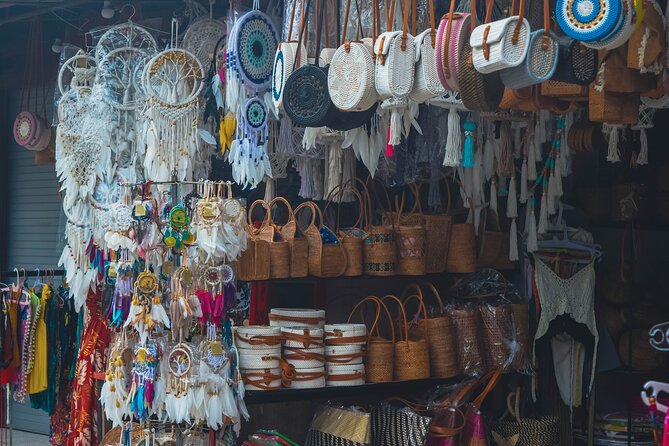
This tour works best when you see shopping as one part of the cultural experience. Celuk and Mas are working craft centers, and Ubud’s galleries show how art is presented and sold. That combination gives you a practical look at Bali’s creative economy.
It is less suitable if you want only low prices. The route includes top-end stores, and the most polished showroom may not offer the cheapest price for a similar item. If you are staying in Legian or Kuta, compare silver, wood, and decorative pieces there before spending heavily.
You should also allow room for personal taste. Not every ornate Balinese object will suit your home, and not every contemporary painting will appeal to you. The tour gives you a chance to see a wide range, from ceremonial masks to jewelry to modern paintings, without insisting that you buy.
The best purchase is usually the one you still want after stepping away from the display. Ask about shipping only if you are seriously interested, and check the final cost before agreeing. Those practical habits matter more than a quick decision during a scheduled stop.
Who should book this four-hour outing?
I would recommend it to first-time visitors staying in south Bali who want an introduction to Ubud without planning a full independent day. It also suits anyone interested in handmade objects, Balinese design, jewelry, or painting.
Families and mixed-interest groups may find the format useful because each stop offers something different. One person can focus on metalwork, another on masks, and another on paintings. Most people can participate, and the group limit keeps the outing manageable.
It may not suit you if you have already spent several days in Ubud or if you want a slow, personal art walk. You may prefer a private driver, more time in one village, or a full day based in Ubud itself.
The early start is sensible. You get the craft stops and Ubud visit done in the morning, then return to your hotel around midday. Food and drinks are not included, so plan your own meal afterward. One past account praised lunch as beautiful, but do not assume lunch is part of this package.
Booking and cancellation basics
The tour is usually booked about six days ahead, so it is not generally a last-minute decision for many visitors. Confirmation is provided at booking, and free cancellation is available if you cancel at least 24 hours before the local start time.
Changes or cancellations made less than 24 hours before the start are not accepted for a refund. That rule is worth noting if your Bali plans may shift.
The experience is operated by Tour East Indonesia. Pickup is available from the listed south Bali areas, and the activity ends back at the meeting point or your arranged pickup location.
Should you book the Ubud Arts & Crafts Tour?
Book it if you want a short, guided introduction to Bali’s craft traditions and you value simple hotel transportation. The combination of Celuk jewelry, Mas woodcarving, and Ubud painting gives you more range than a single gallery visit, and the guides are an important part of making the stops meaningful.
Skip it if your priority is bargain shopping, a long stay in Ubud, or complete freedom to choose your own workshops. The high-end stores may not suit every budget, and four hours leaves only a brief look at Ubud itself.
For most first-time visitors based in Kuta, Seminyak, Sanur, Jimbaran, or Nusa Dua, $50 is a fair price for the transport, guide, admissions, and compact route. Go with curiosity rather than a shopping list, compare prices carefully, and you will get the most from the day.
FAQ
How long does the Ubud Arts & Crafts Tour last?
The tour lasts approximately four hours.
What time does the tour start?
The start time is 8:30 a.m.
Which places does the tour visit?
The tour visits Celuk Village, Mas Carving Center, and Ubud Art Market or a selected Ubud gallery and shop.
What is Celuk Village known for?
Celuk Village is known for gold and silver workshops, where artisans create detailed jewelry and other metalwork.
What can I see in Mas Village?
You can see wood sculptures, naturalistic designs, Hindu mythological figures, and traditional Balinese masks made by local carvers.
What kind of art is shown in Ubud?
The Ubud stop includes traditional Balinese paintings and works by contemporary artists.
Is hotel pickup included?
Yes. Pickup and drop-off are offered from major hotels in Kuta, Seminyak, Sanur, Jimbaran, and Nusa Dua.
Are food and drinks included?
No. Food and drinks are not included in the tour price.
How many people can join the tour?
The activity has a maximum group size of 15 people.
Can I cancel for a full refund?
Yes, if you cancel at least 24 hours before the experience start time. Cancellations made less than 24 hours before the start are not refunded.
Just added around Ubud
- Authentic hike in the forest with lunch at the inhabitant★ 5.0 · 3 reviews
- Heaven Gate, Tirtagangga and Tukad Cepung Waterfall – All Inclusive★ 5.0 · 3 reviews
- Half Day Uluwatu Temple Sunset, Kecak Dance and Seafood Dinner★ 3.5 · 3 reviews
- Ubud: White Water Rafting with visit Ubud Monkey Forest★ 5.0 · 3 reviews
- ️Bali All Inclusive Tour: Ubud – Tegalalang – Kintamani★ 5.0 · 3 reviews
- East Bali and Lempuyang Temple Tour★ 5.0 · 3 reviews
- Ubud: Temple, Swing, Waterfall, Rice Terrace & Monkey Forest★ 5.0 · 3 reviews
- Ubud Adventure: ATV Thrills, Monkey Encounters, & Waterfall★ 5.0 · 3 reviews
Tours, compared.


Waterfalls, Water Temple & Rice Terraces Private Tour
Read our review →


Tanah Lot and North Bali Tour: Scenic Journey
Read our review →
Full-Day Tour to Water Temples and UNESCO Rice Terraces in Bali
Read our review →