
Reviewed · UBUD
Traditional Balinese Meal in Ubud in Dewa’s Family Village Home
The best part of this Ubud food experience is not just the plate. You enter a traditional Balinese family compound, see its courtyards and household shrines, learn about garden ingredients, and eat food prepared in a real home. I like the ten-minute walk through the village and the chance to see how herbs such as galangal, cloves, cacao, and nutmeg fit into Balinese cooking.
I also like the personal scale. This is a private outing, not a restaurant meal shared with a large tour group, and the hosts may be Dewa and Jero or another family member such as Putu. The main consideration is cultural: your hosts do not sit at the table with you, as their family tradition favors eating alone and focusing on personal meditation.
In This Review
- Key points at a glance
- A village home beyond central Ubud
- The short walk through the garden
- Inside Dewa and Jero’s family compound
- What may appear on your plate
- Meal, cooking class, or both?
- The important dining custom
- How the two-hour schedule works
- Is $56 good value?
- Who will enjoy this most?
- Timing, booking, and cancellation
- Should you book the family meal?
- FAQ
- How long does the experience last?
- Is hotel pickup included?
- Where should I meet the host if I am not staying in Ubud?
- Who hosts the meal?
- What food might be served?
- Is a vegetarian meal available?
- Do the hosts eat with you?
- Can I cancel for a full refund?
Key points at a glance
- A real family compound: Walk through a walled home with open pavilions arranged around a central courtyard.
- Fresh garden ingredients: Learn about galangal, cloves, cacao, nutmeg, Balinese fruits, herbs, and their medicinal uses.
- Classic home cooking: Your meal may include pepes ikan, bumbu kuning, bregedel, and jukut urab.
- Private and personal: Only your group takes part, with a host from Dewa and Jero’s family.
- Ubud pickup included: Hotel pickup and drop-off are available within Ubud, but not outside the area.
- A cultural note worth knowing: The hosts do not share the meal at the table, following their spiritual family custom.
A village home beyond central Ubud
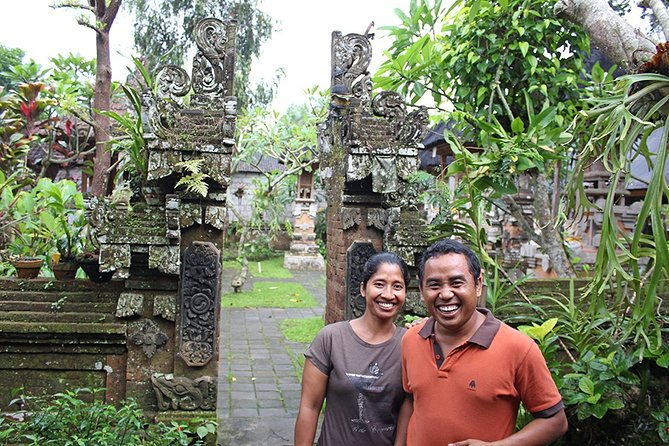
This experience takes you north of central Ubud, into Keliki, a village in the terraced foothills. The setting is different from the cafés, galleries, and traffic of central Ubud. You reach a traditional walled compound where several open pavilions face a central courtyard and extended family life unfolds around them.
That layout matters. A Balinese home compound is not simply one house with a garden. It is a family space with separate structures and shared outdoor areas. The visit gives you a chance to see how the buildings relate to one another and how daily life fits within the walls.
I find this kind of visit more useful than a quick photo stop at a grand temple. You are not only looking at architecture. You are being shown a lived-in home, with cooking, gardening, family routines, and spiritual customs all part of the visit.
The exact meeting information deserves a little care. The listed meeting point is Rumah Makan Jero Nini in Keliki, while visitors coming from outside Ubud are asked to meet Dewa at Alam Sari Resort on Jl. Raya Keliki. If you are staying outside Ubud, confirm the arrangement before setting out.
Other Ubud days people book alongside this one:
- All-Inclusive Ubud Private Tour
★ 5.0 · 14,344 reviews - Best of Ubud Full-Day Tour with Jungle Swing
★ 5.0 · 8,571 reviews - Ubud: Monkey Forest, Jungle Swing, Rice Terrace, and Water Temple
★ 5.0 · 7,160 reviews
The short walk through the garden
Near the family home, you explore plants used in Balinese cooking and traditional remedies. Galangal, cloves, cacao, and nutmeg are specifically included, along with local fruits, herbs, and spices. This is a small part of the outing, but it helps explain why Balinese food has such layered flavor.
You may already know turmeric or coconut from restaurant menus. Seeing these ingredients in a family setting gives them more meaning. You can connect the plant to the kitchen, then connect the kitchen to the meal on your plate.
The walk to the house takes about ten minutes. It is not presented as a strenuous hike, and most people can take part, but you should be comfortable walking through a village setting. The greenery and local homes are part of the appeal, so this transfer is not dead time.
The garden visit also gives the experience a farm-to-table quality, although you should not expect every ingredient in every dish to come from the family plot. The hosts explain what they grow and use, and the food is prepared as a home meal rather than a standardized restaurant tasting.
Inside Dewa and Jero’s family compound
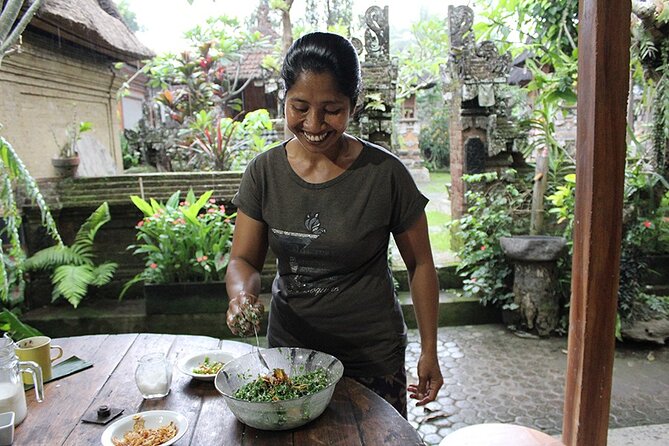
After the walk, you tour the family compound before sitting down to eat. Dewa and his wife Jero are the named hosts, although the booking notes that another equally welcoming family member may host alongside them. Several people who took part describe Putu or Puto as their host, cooking teacher, and guide.
That name difference is worth noting rather than treating it as a problem. Family members may share hosting duties, and the experience provider lists Dewa or another member of the household. If meeting a particular host matters to you, ask when you book.
The compound visit is the cultural heart of the outing. You see open pavilions, the courtyard, gardens, and the arrangement of a multigenerational Balinese home. The tour is especially useful if you have wondered what the family temples and traditional houses around Bali are used for, rather than simply admiring them from the roadside.
The setting is private, but it is still a family home. I would approach it with the same care you would use when visiting anyone’s house: dress comfortably and respectfully, listen before photographing, and remember that the family is sharing a personal space rather than operating a public attraction.
What may appear on your plate
The menu can include several familiar Balinese dishes:
- Pepes ikan, tuna grilled in banana leaves
- Bumbu kuning, chicken cooked in a fresh turmeric and coconut milk sauce
- Bregedel, corn fritters
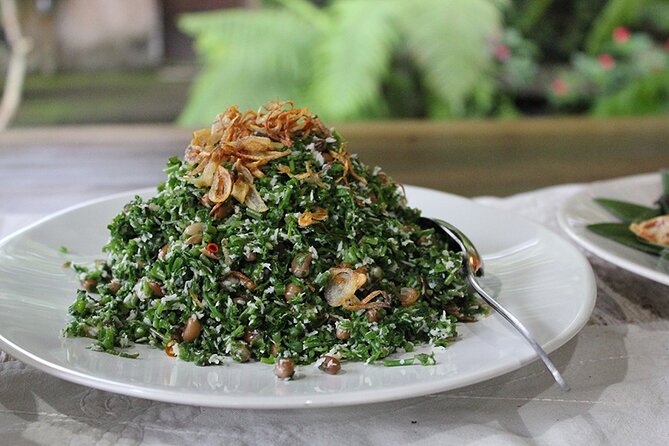
- Jukut urab, seasonal vegetables with grated coconut and fried shallots
The meal offers a good spread of textures and flavors. Pepes ikan is delicate and savory, with the banana leaf helping hold in moisture. Bumbu kuning brings turmeric and coconut milk into a softer, fuller sauce. The corn fritters add a crisp contrast, while the vegetables and coconut provide freshness.
Because this is home cooking, the point is not a fixed menu that looks exactly the same each day. Ingredients are seasonal, and the food reflects what the household prepares. The description says your feast may include the dishes above, so treat them as examples rather than a guaranteed menu.
The experience also includes beverages. A vegetarian option is available, but you need to request it at booking. That is important because the sample dishes include tuna and chicken, and a last-minute request may not be easy to accommodate in a private home kitchen.
A completely different day out, same corner of Ubud:
- Ubud: Waterfalls, Water Temple & Rice Terraces Private Tour
★ 5.0 · 5,484 reviews - Ubud: All-Inclusive Tour with Optional Lunch
★ 4.9 · 5,438 reviews - Ubud: Guided ATV Quad Bike Jungle Adventure with Lunch
★ 4.8 · 4,881 reviews - Best of Ubud 1-Day Private Tour
★ 5.0 · 4,451 reviews
Meal, cooking class, or both?
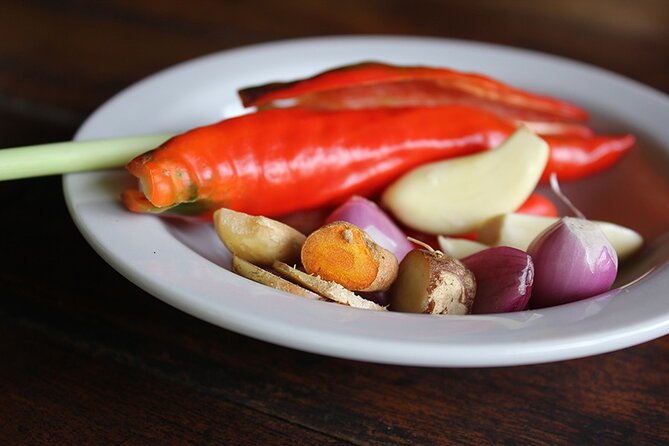
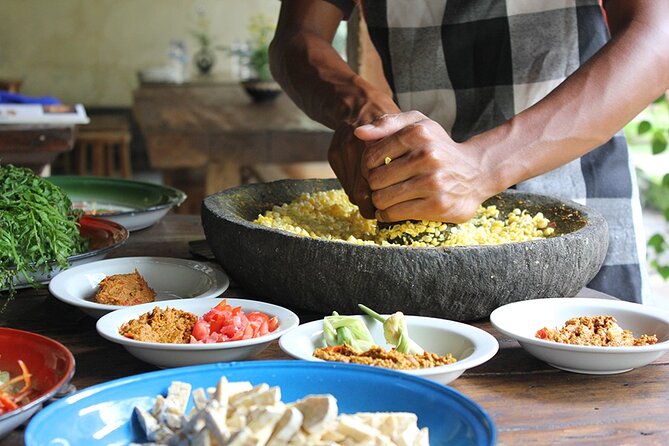
The main description promises an authentic home-cooked meal, while the experience can also involve cooking instruction. The amount of hands-on cooking may vary, so I would not book it expecting a full professional cooking school with a long lesson and a printed curriculum.
What you can expect is a close look at how Balinese food is prepared, with explanations from the host and, depending on the arrangement, guidance as you help with parts of the cooking. Putu is described as patient and helpful, and the cooking portion has been especially useful for people who wanted recipes that differ from the versions served in mainstream restaurants.
You leave with family recipes, according to the experience details. That is a valuable touch. A restaurant can show you the finished dish, but a home visit can explain how the ingredients are combined and why certain herbs and spices matter.
If your priority is cooking technique, ask how much participation is planned. If your priority is food, conversation, and a look inside Balinese family life, the format should suit you well.
The important dining custom
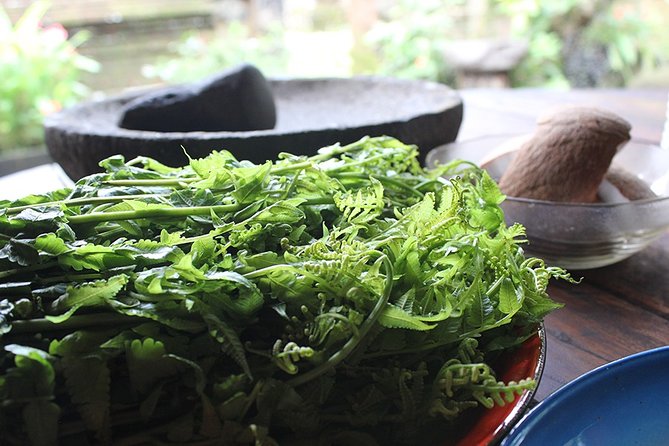
There is one unusual feature that you should understand before booking. Your hosts do not sit and eat with you at the dining table. Their family tradition favors eating independently and using mealtime for personal meditation and a positive state of mind.
Some people may find this less social than expected. Many home dining experiences are built around everyone eating together, so you should not assume that the hosts will linger over dinner as restaurant companions.
At the same time, this custom is part of what makes the visit culturally specific. You are not being placed in a staged dinner designed to copy Western ideas of hospitality. The hosts are welcoming you into their home while following their own spiritual practice.
You can still speak with the family during the garden walk, compound tour, and cooking portion. The meal itself simply follows their custom. I would treat that difference as a reason to read the description carefully, not as a fault.
How the two-hour schedule works
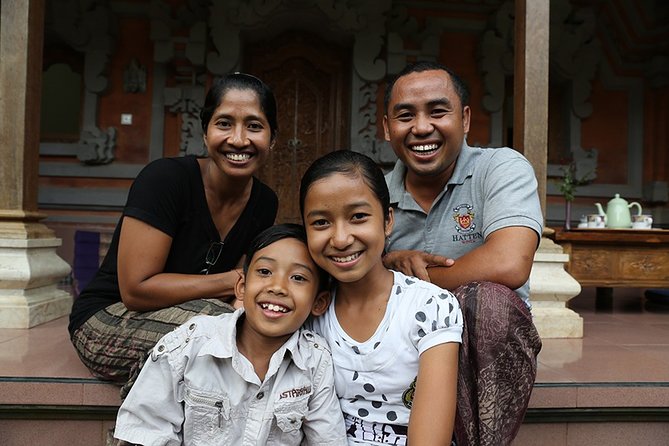
The listed duration is about two hours, which makes this a manageable addition to an Ubud itinerary. The outing generally flows like this:
First, you are picked up from your Ubud hotel, if your hotel is within the listed pickup area. You then travel to the village near Keliki. If you are staying outside Ubud, you make your own way to the agreed meeting point.
Next comes the ingredient and garden walk. You learn about local fruits, herbs, spices, and their medicinal uses. The walk to the family home takes roughly ten minutes.
At the home, you tour the compound and meet the hosting family. The cooking and meal follow, with the dishes served in the family setting. The activity ends back at the meeting point, with drop-off available to Ubud hotels.
Two hours goes quickly here. You get a focused introduction rather than an entire day of market shopping, cooking, and eating. That is good if you have limited time, though it also means the experience will not cover every corner of Balinese food culture.
Several descriptions connected with the experience also mention a village market visit and buying fresh fruit, but the core schedule provided for this outing centers on the garden, compound tour, cooking, and meal. Ask in advance if a market stop is important to you.
Is $56 good value?
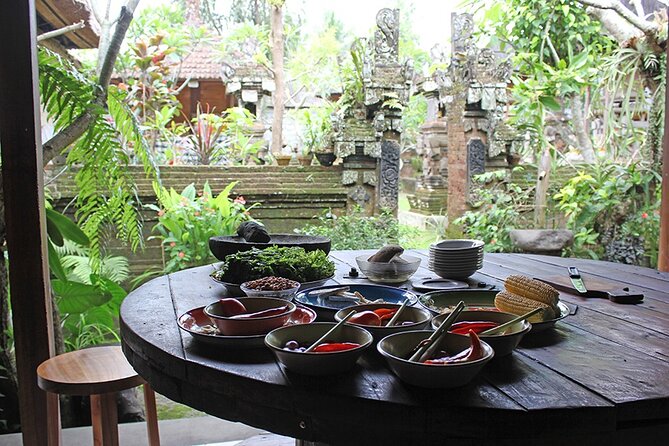
At $56 per person, this costs more than a standard meal in Ubud. You are not paying only for food. The price covers a private host, transport from Ubud hotels, the family compound visit, the garden explanation, beverages, the meal, and gratuities.
For me, the value depends on what you want from dinner. If you want the cheapest way to eat Balinese food, this is not the right choice. You can find inexpensive local dishes elsewhere.
If you want access to a private family home, explanations of local ingredients, and a meal that connects food with household life, the price is easier to justify. The private format matters too. Your group does not share the activity with strangers, so you can ask questions and set the pace within the two-hour window.
Pickup adds practical value if you are staying in Ubud. It saves you from arranging transport to Keliki and makes an evening visit simpler. If your hotel is outside Ubud, transport is not included, and you need to budget for getting to Alam Sari Resort or the confirmed meeting point.
The experience has a 4.8 rating from 19 posted ratings, with 95 percent recommending it. That suggests strong satisfaction, but the sample is still small. I would use those figures as a useful sign, not as the only reason to book.
Who will enjoy this most?
I would recommend this to you if you want more than a restaurant meal and are curious about how Balinese families live. It suits people who value conversation, food traditions, gardens, and home architecture.
It also works well for couples and small private groups. Since only your group participates, you can ask about ingredients, family customs, and the compound without worrying about a large tour moving on.
Food lovers will appreciate the contrast between home recipes and restaurant versions. The experience is particularly useful if you want to learn about turmeric, coconut, herbs, and vegetables in a practical setting.
It may be less suitable if you want a long, structured cooking class, a busy social dinner with the hosts, or a fixed menu you can select in advance. The hosts’ dining custom may also surprise you if you expect everyone to sit together.
Most people can participate, and service animals are allowed. The activity is near public transportation, but hotel pickup is limited to Ubud. Confirm your hotel location before booking.
Timing, booking, and cancellation
Confirmation arrives within 48 hours, subject to availability. The experience is often booked about 18 days ahead, so I would not leave it until the last minute if this is a priority during your Ubud stay.
You can cancel for a full refund up to 24 hours before the local start time. Cancellations or changes made less than 24 hours in advance are not accepted for a refund.
The booking includes gratuities, beverages, and pickup and drop-off from Ubud hotels. It does not include transport outside the Ubud region. Tell the provider about a vegetarian requirement when you book, and contact them to confirm that your hotel is on the pickup list.
Should you book the family meal?
Book it if you want a personal look at Balinese home life, not just another dinner in town. The garden walk, traditional compound, family recipes, and dishes such as pepes ikan and bumbu kuning give the evening a clear sense of place.
I would skip it if your main goal is a low-cost meal or a conventional cooking class with the teacher seated beside you throughout dinner. The hosts’ spiritual dining practice is central to the format, and you should be comfortable respecting it.
For many visitors, $56 buys an experience that stays with them longer than a single restaurant meal. Just confirm the pickup point, request vegetarian food in advance if needed, and go in expecting a cultural home visit with food at its center.
FAQ
How long does the experience last?
The activity lasts approximately two hours.
Is hotel pickup included?
Pickup and drop-off are included for hotels in Ubud only. Hotels outside the Ubud region are not covered.
Where should I meet the host if I am not staying in Ubud?
You are asked to meet Dewa at Alam Sari Resort, Jl. Raya Keliki, Keliki. Confirm the meeting details before the day of the activity.
Who hosts the meal?
The named hosts are Dewa and his wife Jero. The booking also allows for Dewa or an equally welcoming family member to host, and Putu or Puto may lead the experience.
What food might be served?
Possible dishes include pepes ikan, bumbu kuning, bregedel, and jukut urab. The menu may vary with seasonal ingredients.
Is a vegetarian meal available?
Yes. A vegetarian option is available, but you must request it when booking.
Do the hosts eat with you?
No. Following their Balinese family tradition and spiritual practice, the hosts do not share the meal at the dining table.
Can I cancel for a full refund?
Yes. You can cancel at least 24 hours before the local start time for a full refund. Changes or cancellations made less than 24 hours ahead are not accepted for a refund.
Just added around Ubud
- Authentic hike in the forest with lunch at the inhabitant★ 5.0 · 3 reviews
- Heaven Gate, Tirtagangga and Tukad Cepung Waterfall – All Inclusive★ 5.0 · 3 reviews
- Half Day Uluwatu Temple Sunset, Kecak Dance and Seafood Dinner★ 3.5 · 3 reviews
- Ubud: White Water Rafting with visit Ubud Monkey Forest★ 5.0 · 3 reviews
- ️Bali All Inclusive Tour: Ubud – Tegalalang – Kintamani★ 5.0 · 3 reviews
- East Bali and Lempuyang Temple Tour★ 5.0 · 3 reviews
- Ubud: Temple, Swing, Waterfall, Rice Terrace & Monkey Forest★ 5.0 · 3 reviews
- Blue Lagoon Snorkeling and Lunch with Tukad Cepung Waterfall★ 5.0 · 3 reviews