Reviewed · TOURS
The Enchantment of Ubud Tour
Ubud’s artistic character comes into focus through four very different stops: Puri Lukisan Museum, the former royal palace, the traditional art market, and Petulu Village, where white herons gather in the trees. You get both culture and countryside in about seven hours, with hotel transport included.
I like the clear connection between Bali’s paintings, woodcarving, architecture, and daily craft trade. I also like the chance to see Petulu’s herons after leaving central Ubud, since it adds a peaceful rural note to a museum-and-market day.
The main caution is value. Some departures have included shopping-oriented gallery stops, and several guests found the guide commentary too thin. At $62.83 per person, the tour works best when you want transport and a guide, not simply admission to sights you could visit on your own.
In This Review
- Key points to know before booking
- What this Ubud tour is really designed to do
- Puri Lukisan Museum and Bali’s painting traditions
- Puri Saren Ubud, the former royal residence
- Ubud Traditional Art Market and the question of shopping
- Petulu Village and the white herons
- Does $62.83 offer good value?
- Guide quality can make or break the day
- Practical fit for different types of visitors
- Should you book The Enchantment of Ubud Tour?
- FAQ
- How long does The Enchantment of Ubud Tour last?
- What time does the tour start?
- What places are included?
- Is hotel pickup included?
- Is transportation included?
- Is a guide included?
- Are food and drinks included?
- When is the best time to see the Petulu herons?
Key points to know before booking
- See four sides of Ubud in one afternoon: Art museum, royal compound, market, and countryside are combined in a seven-hour outing.
- Puri Lukisan gives the day its strongest cultural focus: You see wayang-style painting along with Batuan, Sanur, and modern Ubud works.
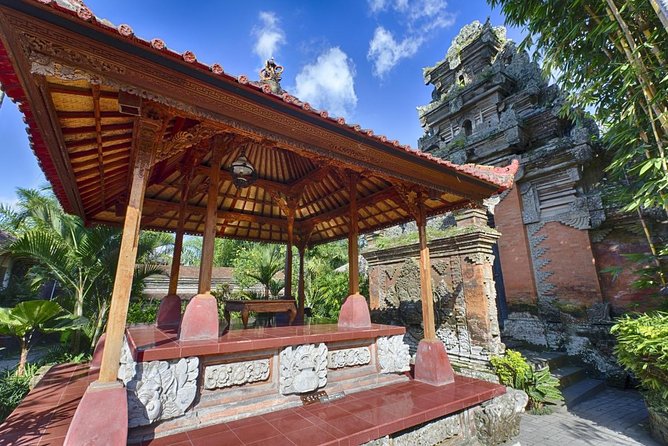
- Ubud Palace is an architectural stop, not a full royal tour: Its carved buildings offer a glimpse of the former ruling family’s world.
- Petulu is seasonal: The white herons are most numerous from October through March, when chicks hatch.
- Hotel pickup covers major resort areas: Pickup and return are offered in Kuta, Seminyak, Sanur, Jimbaran, and Nusa Dua.
- Shopping expectations need care: Ask your guide at the start if gallery or store visits are part of your departure.
What this Ubud tour is really designed to do
This is an art-and-culture circuit rather than a broad survey of every major Ubud sight. The day begins at 1 p.m. and lasts about seven hours, so expect an afternoon and early evening outing rather than a morning-to-night program.
The route links Ubud’s artistic traditions to the places where they developed. You see paintings in a museum, stone and wood detail at the royal compound, handmade goods in the market, and village life around Petulu. That combination gives the tour a useful shape, especially if this is your first visit to Ubud.
Transport matters in Bali. The included air-conditioned vehicle saves you from arranging a driver, checking separate entrance fees, and working out a route through central Ubud and the surrounding countryside. The group is capped at 15 people, though one account describes an uncomfortable mini-bus ride, particularly for two older passengers. Vehicle comfort may depend on the day’s group and the transport assigned.
The tour includes an English-speaking licensed guide. That is important here because the sights are more rewarding with context. The museum’s paintings are not always easy to understand at a glance, and the palace can look like a collection of handsome gates unless someone explains its former role.
Other Ubud days people book alongside this one:
- All-Inclusive Ubud Private Tour
★ 5.0 · 14,344 reviews - Best of Ubud Full-Day Tour with Jungle Swing
★ 5.0 · 8,571 reviews - Ubud: Monkey Forest, Jungle Swing, Rice Terrace, and Water Temple
★ 5.0 · 7,160 reviews
Puri Lukisan Museum and Bali’s painting traditions
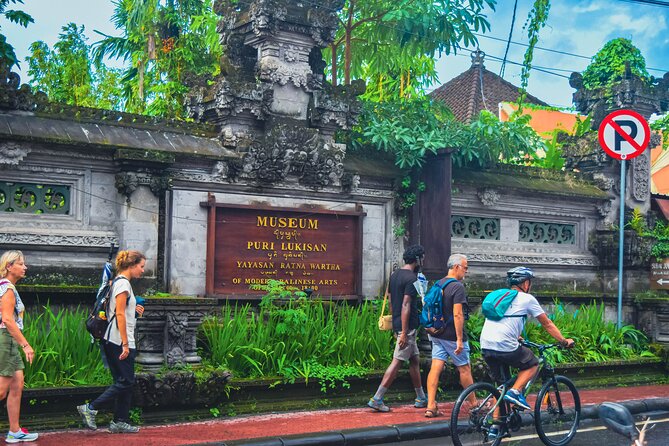
The first listed stop is Museum Puri Lukisan, with about an hour to look around. This is the cultural center of the outing, and it is where the guide’s ability makes the biggest difference.
You can expect paintings and sculpture connected with well-known Balinese artists, including traditional and contemporary work. A useful subject here is the wayang style, a colorful, story-based form that made up much of Bali’s painted output before the 1920s. The museum also presents Batuan painting, associated with Brahman artists, and the highly stylized Sanur approach, often used to show animals.
I like this stop because it gives you vocabulary for the rest of the day. Once you know to look for differences between Batuan, Sanur, wayang, and newer Ubud work, the market becomes less of a wall of decorative pictures and more of a place where you can spot changing styles.
Allow yourself time to look closely rather than rushing through. The planned visit is about one hour, which is enough for an introduction but not a serious study of every exhibit. If the guide gives only brief explanations, ask direct questions about the artists, the stories shown, and the difference between traditional and contemporary work.
There is an important expectation to set here. The published route describes Puri Lukisan, but some experiences connected with this tour have been criticized for omitting the museum or replacing cultural stops with commercial galleries. Confirm the day’s stops when you meet your guide. If seeing the museum is your main reason for booking, say so clearly before leaving the pickup point.
Puri Saren Ubud, the former royal residence
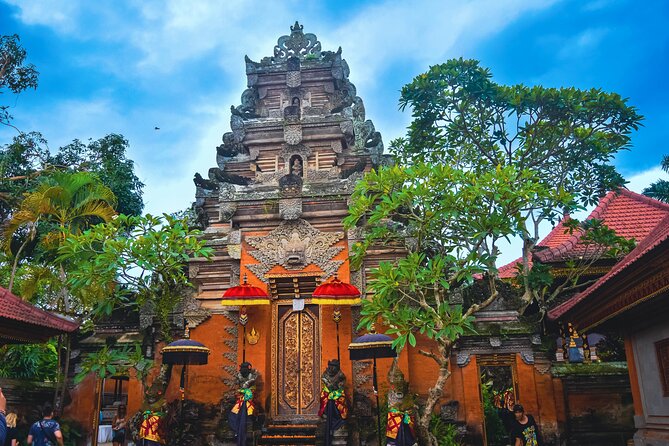
Next comes Puri Saren Ubud, usually called Ubud Palace, with about an hour planned. This was the home of Bali’s last monarch and a gathering place for the island’s high-ranking families.
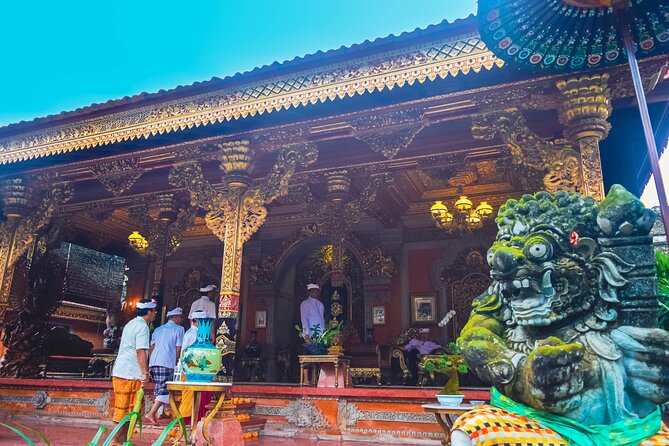
The compound is known for carved lintels, gateways, courtyards, and traditional buildings. Some details are described as having once been covered with gems, though what matters most today is the craftsmanship of the stone and woodwork. You get a glimpse of royal life rather than a complete palace museum.
This stop pairs well with Puri Lukisan. The museum shows how Balinese artists worked on a flat surface, while the palace surrounds you with art built into walls, doors, and ceremonial structures. Look up and around as you walk. The small carved details are easy to miss if you focus only on the larger gates.
The palace visit is not a substitute for a long temple tour. It is a compact architectural visit in central Ubud, and the available time may include walking, pauses for explanation, and the pace of the group. A guide who explains how the royal compound functioned can make the stop worthwhile. Without that context, you may feel you are simply looking at ornate buildings.
One strong point is location. The palace sits across from the traditional market, so the transition from royal architecture to working commerce is immediate. You do not need another transfer between these two central Ubud stops.
Ubud Traditional Art Market and the question of shopping

The market visit lasts about an hour and is likely to be the most hands-on part of the tour. You can browse paintings, wood carvings, sculptures, and other handmade crafts, with both older-looking traditional styles and newer designs on offer.
Your guide is meant to help with bargaining. That can be useful if you are not familiar with local market customs or are unsure how to judge an opening price. It is also a chance to ask how an item was made, what material was used, and whether a design is traditional or mainly made for the souvenir trade.
Still, keep your guard up. Several poor experiences centered on expensive shops and gallery visits where people felt pressure to buy. That does not mean every departure will follow the same pattern, but it is a real consideration. Ask whether the market is the main shopping stop, whether optional galleries are included, and whether you can browse without buying.
I would also avoid treating the first attractive painting or carving as your only choice. The market is better used for comparison. Look at several stalls, check the finish from different angles, and decide whether you actually want to carry the piece home. If you do buy, confirm the price and what is included before handing over money.
This stop adds value only if you want to shop or learn about Balinese craft. If you have no interest in buying art, an hour here may feel long, especially if the guide focuses more on sales than on technique or local use.
A completely different day out, same corner of Ubud:
- Ubud: Waterfalls, Water Temple & Rice Terraces Private Tour
★ 5.0 · 5,484 reviews - Ubud: All-Inclusive Tour with Optional Lunch
★ 4.9 · 5,438 reviews - Ubud: Guided ATV Quad Bike Jungle Adventure with Lunch
★ 4.8 · 4,881 reviews - Best of Ubud 1-Day Private Tour
★ 5.0 · 4,451 reviews
Petulu Village and the white herons
The final major stop takes you out of central Ubud to Petulu Village. The setting changes quickly from palace walls and market stalls to rice fields, village roads, and open views toward the mountains.
Petulu is known for its white herons, called kokokan locally. The birds have used the village as a nesting area since 1965. From October through March, when chicks hatch, the trees can hold thousands of birds. This seasonal detail is essential. You may still see herons at another time, but the large nesting spectacle is most closely tied to those months.
The heron stop gives the tour a welcome change of pace. You are not simply moving from one indoor display to another. You get a look at rural Bali and the relationship between a village and the wildlife that returns each year.
The exact bird experience can change with the season, weather, and timing. The tour description does not promise a guaranteed number of birds, so book this as a chance to see the site, not as a fixed wildlife show. If the herons are your priority, October through March is the safest period based on the information provided.
The countryside drive is also part of the appeal. You pass rice fields and may see wide mountain views on the return to your hotel. This is a good reason to sit by a window if you can, though seating is not specified and depends on the vehicle.
Does $62.83 offer good value?
At $62.83 per person, the price is reasonable only if you use the included services. You are paying for a local guide, air-conditioned transport, hotel pickup and drop-off from selected resort areas, and entrance fees. For someone staying in Kuta, Seminyak, Sanur, Jimbaran, or Nusa Dua, those transfers can save time and reduce the hassle of arranging a private driver.
The value is weaker if you are already staying in Ubud and can easily reach the palace, market, and museum yourself. One person found the central sights simple to visit independently, and that is a fair point. The tour’s extra cost then rests on the guide’s explanations, the countryside transfer to Petulu, and the convenience of having the route organized.
Food and drinks are not included. Bring your own water and plan to eat before or after the activity, since the stated schedule does not include a meal. The 1 p.m. start also means you should not expect lunch to be part of the outing.
Group discounts may improve the price for a larger party, but the maximum group size is 15. A small group should make it easier to ask questions and move through the market without getting lost. A fuller group may feel less personal, particularly if the vehicle is compact.
Guide quality can make or break the day
This experience depends heavily on the guide. The most positive feedback gives credit to guides who explained Balinese culture and history, helped make the day feel personal, and brought the paintings to life. One guide named Weda is specifically associated with a very warm account of the experience.
The negative side is just as useful to know. Some departures had little commentary, and one guide was criticized for trying to sell additional private tours. You should not have to accept a sales pitch as the price of cultural explanation.
At the start, tell your guide what matters most to you: painting styles, palace architecture, market bargaining, or the herons. Ask for clear confirmation of the four main stops. If you are not interested in shopping, say that politely before the vehicle heads out.
The licensed English-speaking guide is a valuable feature on paper, but the title alone does not guarantee a lively or detailed visit. Your questions can help, though the quality of the response will vary by guide.
Practical fit for different types of visitors
This tour suits you best if you want a structured introduction to Ubud and are staying outside the town. It is especially useful for first-time visitors who want art, a royal site, a market, and countryside without planning separate rides.
It also suits people who want to shop for Balinese paintings or woodcarvings but would like help with bargaining. The market visit is more useful when you are open to looking carefully and asking about the work, rather than rushing in to buy the first souvenir.
You may want another plan if you are a serious art fan seeking long museum time. One hour at Puri Lukisan is an introduction, not a specialist visit. You should also think twice if you dislike group transport, have trouble with tight seating, or want complete control over every stop.
The tour operates in all weather, so dress for changing conditions. Comfortable clothing and shoes make sense, though no specific dress code is provided. Most people can participate, but the report of cramped transport is worth considering if comfort or mobility is a concern.
The route description also mentions Goa Gajah and Gunung Kawi, but the detailed stop schedule centers on Puri Lukisan, Ubud Palace, the market, and Petulu Village. Do not book this experience expecting a full visit to Elephant Cave or the rock-cut shrines at Gunung Kawi unless the operator confirms those stops.
Should you book The Enchantment of Ubud Tour?
Book it if you want a convenient, guided introduction to Ubud’s art traditions and are staying in one of the covered beach resort areas. The combination of museum, palace, market, and Petulu is well chosen, and the heron village gives the afternoon more character than a simple shopping circuit.
I would book only after confirming that Puri Lukisan is included and asking about gallery stops. The experience earns its price through transport and interpretation, not through the admission tickets alone.
If you are already based in Ubud, comfortable arranging a driver, and prefer to set your own pace, visiting the museum, palace, and market independently may offer better value. If you go with this tour, aim for the October to March period for the best chance of seeing Petulu’s trees filled with nesting herons, and make your priorities clear to the guide at the outset.
Free cancellation is available if you cancel at least 24 hours before the 1 p.m. start time. Changes or cancellations made later are not accepted for a refund.
FAQ
How long does The Enchantment of Ubud Tour last?
The experience lasts approximately seven hours.
What time does the tour start?
The stated start time is 1 p.m.
What places are included?
The detailed route includes Puri Lukisan Museum, Puri Saren Ubud or Ubud Palace, Ubud Traditional Art Market, and Petulu Village.
Is hotel pickup included?
Yes. Pickup and drop-off are offered from major hotels in Kuta, Seminyak, Sanur, Jimbaran, and Nusa Dua.
Is transportation included?
Yes. Transport is provided in an air-conditioned vehicle.
Is a guide included?
Yes. The tour includes a local English-speaking licensed guide.
Are food and drinks included?
No. Food and drinks are not included in the price.
When is the best time to see the Petulu herons?
The herons are most numerous from October through March, when their chicks hatch.
Just added around Ubud
- Authentic hike in the forest with lunch at the inhabitant★ 5.0 · 3 reviews
- Heaven Gate, Tirtagangga and Tukad Cepung Waterfall – All Inclusive★ 5.0 · 3 reviews
- Half Day Uluwatu Temple Sunset, Kecak Dance and Seafood Dinner★ 3.5 · 3 reviews
- Ubud: White Water Rafting with visit Ubud Monkey Forest★ 5.0 · 3 reviews
- ️Bali All Inclusive Tour: Ubud – Tegalalang – Kintamani★ 5.0 · 3 reviews
- East Bali and Lempuyang Temple Tour★ 5.0 · 3 reviews
- Ubud: Temple, Swing, Waterfall, Rice Terrace & Monkey Forest★ 5.0 · 3 reviews
- Blue Lagoon Snorkeling and Lunch with Tukad Cepung Waterfall★ 5.0 · 3 reviews
Tours, compared.


Waterfalls, Water Temple & Rice Terraces Private Tour
Read our review →


Tanah Lot and North Bali Tour: Scenic Journey
Read our review →
Full-Day Tour to Water Temples and UNESCO Rice Terraces in Bali
Read our review →