
Reviewed · WALKING TOURS
Myth of Pejeng Walking Tour
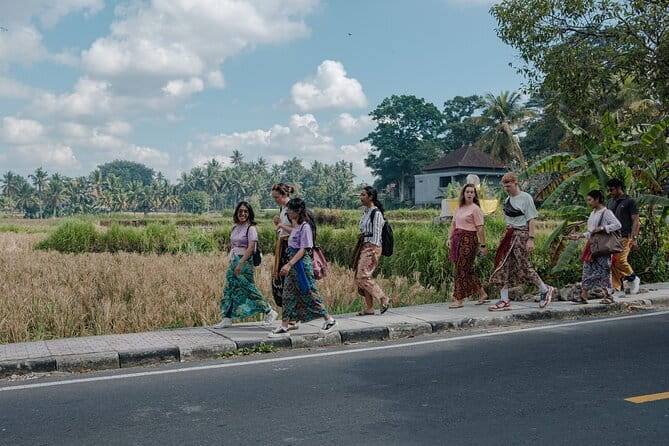
Pejeng gives you a side of Bali that is easy to miss from Ubud’s busy streets: old temples, strange stone figures, sacred drums, and huge sarcophagi spread through a quieter village setting. The highlight is special access to the great bronze drum at Pura Penataran Sasih, linked to the famous Moon of Pejeng legend.
I like the small group limit of eight, which leaves room for questions and gives the guide time to explain local beliefs. I also like that temple donations, sarongs, sashes, a drink, and a snack are included. The main consideration is the walking itself: uneven steps, steep patches, and rough sidewalks make this a poor match for anyone who struggles with a two-hour walk.
In This Review
- Key points at a glance
- Why Pejeng makes a better history walk than another Ubud street
- Meeting the guide at 8:30 am in Pejeng
- Pura Penataran Sasih and the great bronze drum
- Pura Pusering Jagat and Bali’s sacred center
- Kebo Edan and the 13th-century Bhairawa figure
- Arca Building Archaeological Museum and pre-Hindu Bali
- What the two-hour format really feels like
- Sarongs, coffee, and the small extras that matter
- Who will get the most from this Pejeng walk
- Is $21.40 a fair price?
- Booking advice and cancellation terms
- Should you book the Myth of Pejeng Walking Tour?
- FAQ
- Where does the Myth of Pejeng Walking Tour start?
- Where does the tour finish?
- Is hotel pickup included?
- How long does the tour last?
- How many people can join the tour?
- What should I wear to the temples?
- Are food and drinks included?
- Can I cancel for a full refund?
Key points at a glance
- See the Moon of Pejeng drum: Enter Pura Penataran Sasih for a close look at Southeast Asia’s largest bronze kettle drum.
- Visit four sites in one walk: The route links three temples with the Arca Building Archaeological Museum.
- Hear local stories, not just dates: Guides such as Joe, Bagus, and Win are noted for answering detailed questions about religion, myth, and history.
- Explore pre-Hindu Bali: Giant stone sarcophagi offer a rare look at customs from before Hindu influence became central on the island.
- Expect a modest physical workout: The walk covers more than 4,000 steps in some cases, though one account found very few stairs.
- Start early and arrange your own transport: Meet at 8:30 am at the Indomaret in Pejeng and finish at the archaeological museum.
Why Pejeng makes a better history walk than another Ubud street
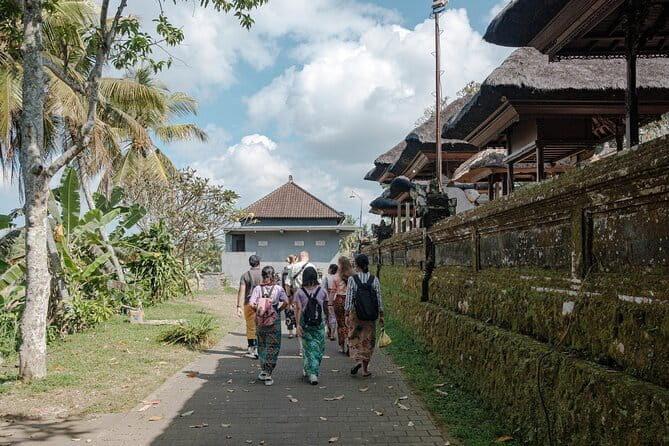
Ubud is famous for art, rice fields, galleries, and temples. Pejeng, just outside the town center, gives you a quieter and more focused look at Bali’s older religious traditions. This is not a walk built around photo stops and shopping. It is about the stories attached to objects and places.
The experience connects several layers of Balinese culture. At the first temple, you hear about the Moon of Pejeng and see a huge bronze drum. At the next, you visit a temple believed to sit at the center of the island. At Kebo Edan, an unsettling Bhairawa statue opens a conversation about ritual and power. The final stop reaches even further back, to a time before Hindu Bali.
That sequence gives the tour real shape. You are not simply ticking off four compounds. You move from myth, to sacred geography, to unusual religious imagery, and then to archaeology.
The tour costs $21.40 per person. For that price, I think the value is good because the fee covers a local English-speaking guide, temple donations of Rp 60,000, traditional clothing, refreshments, and access to a private Balinese compound. You still need to pay for getting to Pejeng and back from the museum, but the core experience has few extra charges.
More walking tours in Ubud:
- Sidemen Trekking: A Walk from a Different Perspective
★ 5.0 · 94 reviews - Ubud Guided Walking Tour
★ 5.0 · 79 reviews - Ubud Countryside Tour: Campuhan Ridge Walk and Rice Terrace
★ 5.0 · 72 reviews
Meeting the guide at 8:30 am in Pejeng
The meeting point is the Indomaret at Jl. Raya Dr. Ir. Sukarno No. 552 in Bedulu, Pejeng. The tour starts at 8:30 am, and you need to make your own way there because hotel pickup and drop-off are not provided.
That detail matters. If you are staying in central Ubud, check the route and allow enough time to reach the meeting point. The tour ends at the Arca Building Archaeological Museum, not back at the Indomaret, so you should also think about your onward transport before you set out.
The group maximum is eight people. That is a useful size for temple visits, where a large crowd can make explanations hard to follow and can feel intrusive in a sacred setting. A small group also makes it easier to stop and ask about details that catch your eye.
Guides named in past bookings include Joe, Bagus, and Win. The guide assigned to your departure may differ, but the format calls for an English-speaking local guide, and an Indonesian guide is also available. Joe is especially noted for taking time with complex questions, while Win has been described as attentive with practical touches such as bringing proper temple clothing, sun protection, and insect repellent.
You should not expect a fixed script delivered at speed. The strongest part of this walk is the chance to ask why a temple uses a certain symbol, how a story fits Balinese beliefs, or what an object tells us about earlier society.
Pura Penataran Sasih and the great bronze drum
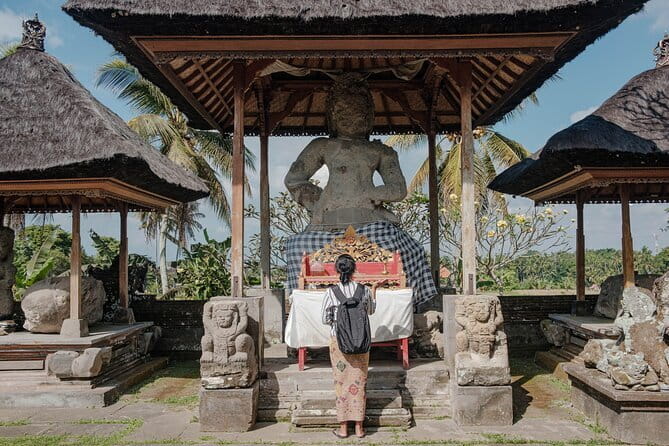
Your first stop is Pura Penataran Sasih, one of Bali’s oldest temples. You put on a sarong and sash before entering, then receive special access to the enormous bronze kettle drum associated with Pejeng’s most famous legend.
The drum is commonly linked to the Moon of Pejeng story, and this is where the tour title comes alive. The guide explains the local myth and helps you understand why the drum is more than an old metal object. It sits within a living religious setting, so the visit is about belief as well as age and size.
You have about 20 minutes here. That is enough for an explanation and a careful look, but not so long that the tour becomes slow at the first stop. You will want to listen closely because the meaning of the drum is the main thread connecting the rest of the walk.
This is also the point where temple etiquette becomes practical. Men and women must cover their legs below the knee with a sarong, and a sash is worn as part of the required dress. You may bring your own sarong, or use one supplied by the tour.
Do not treat the drum as a museum display. Temples in Bali remain places of worship. Follow the guide’s instructions, dress modestly, and keep your manner respectful.
Pura Pusering Jagat and Bali’s sacred center
The walk continues to Pura Pusering Jagat, one of Bali’s six main Kahyangan directional temples. It is believed to lie at the center of the island, giving the site an important place in Balinese religious geography.
You spend about 20 minutes exploring the complex and examining its carved details. This is a good point to ask questions about how Balinese temples are organized and how religious ideas shape the placement and use of sacred spaces.
The value here is less about one famous object and more about putting the island’s spiritual map into context. A guide can explain why direction, center points, gateways, carvings, and temple compounds matter. Without that context, you might see an elaborate complex but miss the ideas behind it.
The route between temples is part of the experience. You walk through Pejeng rather than moving from one isolated attraction to the next in a vehicle. The village setting is quieter than central Ubud, and that makes the transition between sites feel natural.
Still, this is a walking tour, not a coach excursion with short steps from parking lot to entrance. Sidewalks can be patchy, and the route includes uneven ground and steep sections. One completed walk was described as more than 4,000 steps with very few actual stairs, but conditions can vary.
A completely different day out, same corner of Ubud:
- All-Inclusive Ubud Private Tour
★ 5.0 · 14,344 reviews - Best of Ubud Full-Day Tour with Jungle Swing
★ 5.0 · 8,571 reviews - Ubud: Monkey Forest, Jungle Swing, Rice Terrace, and Water Temple
★ 5.0 · 7,160 reviews - Ubud: Waterfalls, Water Temple & Rice Terraces Private Tour
★ 5.0 · 5,484 reviews
Kebo Edan and the 13th-century Bhairawa figure

Kebo Edan means Temple of the Crazy Buffalo. It is a smaller site, but the main statue here gives the stop a strong visual and dramatic focus.
You will see an imposing 13th-century Bhairawa statue, recovered from nearby rice fields. Its unusual appearance leads into a discussion of its possible origins and purpose. This is one of the places where a good guide adds real value, since the object raises questions that are not answered by a quick label or a photograph.
Allow around 20 minutes. The stop is compact, so the time is used for looking closely and listening rather than covering a large compound. The Bhairawa figure may appeal most to you if you enjoy the stranger, less polished side of religious art.
This temple also shows why the walk works better with interpretation. The statue can seem fierce or puzzling at first glance. The guide helps place it within a wider discussion of ritual traditions and the many layers of Balinese belief. You do not need prior knowledge, but you should come ready to hear ideas that may not fit a simple tourist explanation.
Ceremonies sometimes take place at local temples. If one happens during your visit, you may see the compound in active use, with people and religious activity adding another layer to the stop. That is a fortunate possibility, not a promised part of every departure, so you should not book the tour solely for that reason.
Arca Building Archaeological Museum and pre-Hindu Bali

The final stop is the Arca Building Archaeological Museum, where the focus shifts from active temples to objects connected with Bali before Hindu influence became dominant.
The museum’s open courtyard contains giant sarcophagi. These are the sort of objects that can change your idea of Bali’s past. Many visitors know the island through Hindu ceremonies and temple architecture, but these stone burial objects point to earlier customs and communities.
You have about 30 minutes here, making it the longest stop. That extra time is useful because the sarcophagi are large and unusual, and the guide can explain what they reveal about ancient Balinese life. The stop gives the walk a strong finish by showing that Bali’s culture did not begin with the temples and practices you see today.
The museum is also the end point, so take note of that before starting. You are not returned to the Indomaret or your accommodation. If you want to continue sightseeing, you need to arrange the next leg yourself.
What the two-hour format really feels like

The official duration is about two hours, with roughly 20 minutes at each of the first three temples and 30 minutes at the museum. The rest of the time is spent walking between sites, listening to the guide, and handling temple entry.
In practice, you should leave room for the tour to run longer. One account described a 2.5-hour outing, with more than 4,000 steps. That is not a major difference, but it matters if you have a lunch booking, a transfer, or another timed activity afterward.
The walk is described as manageable for most people, but that does not mean it is effortless. You need to cope with uneven temple stairs, steep gradients, and patchy sidewalks. Wear secure walking shoes or sandals and bring water. The operator asks you to carry a reusable bottle, with refills intended to help reduce plastic waste in Bali’s rivers.
The tour operates in rain or shine. Severe weather, such as an intense downpour, may affect the start time, and the operator says it will call you if conditions are serious. A light shower is part of the practical reality of Bali, so bring suitable protection and keep your schedule flexible.
Sarongs, coffee, and the small extras that matter
Temple donations are included, as are a sarong and sash. That saves you from searching for suitable clothing at the last minute and helps ensure you meet local dress expectations.
You also receive Balinese coffee, tea, and a snack. This is not a meal, and you should not count on it to replace breakfast. Since the start time is early, eat beforehand if you need a substantial meal.
The tour includes special access to a Balinese compound. The supplied details do not promise a specific private-home visit format, so I would treat this as an added cultural element rather than assume a long hosted meal or workshop. The main value remains the temple and archaeology route.
Service animals are allowed, and the tour is near public transportation. Most people can take part, but the physical notes should guide your decision more than the broad participation statement. Anyone with trouble managing uneven steps or walking for up to two hours should ask for clarification before booking.
Who will get the most from this Pejeng walk
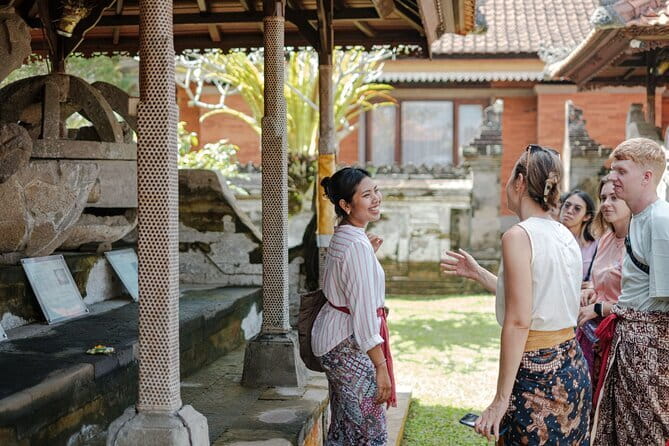
I would choose this experience if you have already seen some of central Ubud and want more than another market, gallery, or standard temple photo stop. It suits you if you enjoy stories, religious customs, archaeology, and the chance to ask questions.
It also works well for families with older children who can walk steadily and listen for periods of time. An 83-year-old participant completed the route with her family, but that does not mean the route is easy for every older person. Fitness, balance, and comfort on uneven ground matter.
The tour may be a good match for you if you are curious about the parts of Bali that came before modern tourism and before the Hindu traditions most visitors first encounter. The pre-Hindu sarcophagi alone make it different from a standard Ubud cultural tour.
I would look elsewhere if you want hotel transport, a relaxed vehicle-based visit, long free time at each site, or a tour centered on scenery. You may also prefer another activity if you dislike religious sites where modest dress and respectful behavior are required.
Is $21.40 a fair price?
At $21.40, this is an inexpensive guided experience for a small group. The price includes the guide, entry donations, sarong and sash, coffee or tea, a snack, and access to four culturally important sites.
The strongest value comes from the interpretation. You could potentially reach Pejeng on your own, but you would lose much of the connection between the Moon of Pejeng, the island’s sacred center, the Bhairawa image, and the pre-Hindu burial objects. The guide turns separate stops into one story.
You should factor in transport costs because pickup and drop-off are not included. The start and end points differ, so the total cost is not only the advertised per-person price. Even so, the fee remains reasonable if you want a focused introduction to Pejeng rather than a full-day private tour.
The small maximum of eight is another reason the price works. You are paying for access to a local guide in a setting where conversation and careful explanation matter more than luxury.
Booking advice and cancellation terms
The tour is often reserved about 31 days ahead, which suggests you should book early if the 8:30 am departure fits your plans. Confirmation is received at booking, and the experience has free cancellation if you cancel at least 24 hours before the local start time.
Changes or cancellations made less than 24 hours before departure are not accepted for a refund. Keep that rule in mind if your Bali plans depend on weather or transport.
Before booking, check three things: your ability to walk for up to two hours, your transport to the Indomaret, and your transport onward from the museum. Those details will affect your day more than the modest tour fee.
Should you book the Myth of Pejeng Walking Tour?
Book it if you want a compact, thoughtful look at Bali’s religious and archaeological past, especially after spending time in central Ubud. The Moon of Pejeng drum, the unusual Bhairawa statue, and the giant sarcophagi give the route plenty of substance.
I especially recommend it for curious visitors who value a good guide. Joe, Bagus, and Win are among the guides associated with past departures, and the experience is built around explanation and questions rather than rushing through four sites.
Skip it if you need door-to-door transport, cannot manage uneven paths, or want a polished sightseeing route with little walking. For everyone else, $21.40 buys a small-group morning with genuine local context and several sights you are unlikely to understand fully on your own.
FAQ
Where does the Myth of Pejeng Walking Tour start?
The tour starts at 8:30 am at the Indomaret on Jl. Raya Dr. Ir. Sukarno No. 552, Bedulu, Blahbatuh, Gianyar, Bali 80552.
Where does the tour finish?
The walk ends at the Arca Building Archaeological Museum in Bedulu, Blahbatuh, Gianyar Regency. It does not return to the starting point.
Is hotel pickup included?
No. You must arrange your own transport to the Indomaret meeting point, and no drop-off at your accommodation is provided.
How long does the tour last?
The advertised duration is approximately two hours. You should allow extra time, since the route has taken about 2.5 hours on some departures.
How many people can join the tour?
The maximum group size is eight people.
What should I wear to the temples?
Men and women must wear a sarong covering the legs below the knee and a sash. You may bring your own sarong, or use one provided by the tour.
Are food and drinks included?
Balinese coffee, tea, and a snack are included. Personal food and drinks purchased outside the tour are not included.
Can I cancel for a full refund?
Yes. You can cancel at least 24 hours before the experience start time for a full refund. Cancellations or changes made less than 24 hours before the start are not accepted for a refund.
Just added around Ubud
- Authentic hike in the forest with lunch at the inhabitant★ 5.0 · 3 reviews
- Heaven Gate, Tirtagangga and Tukad Cepung Waterfall – All Inclusive★ 5.0 · 3 reviews
- Half Day Uluwatu Temple Sunset, Kecak Dance and Seafood Dinner★ 3.5 · 3 reviews
- Ubud: White Water Rafting with visit Ubud Monkey Forest★ 5.0 · 3 reviews
- ️Bali All Inclusive Tour: Ubud – Tegalalang – Kintamani★ 5.0 · 3 reviews
- East Bali and Lempuyang Temple Tour★ 5.0 · 3 reviews
- Ubud: Temple, Swing, Waterfall, Rice Terrace & Monkey Forest★ 5.0 · 3 reviews
- Blue Lagoon Snorkeling and Lunch with Tukad Cepung Waterfall★ 5.0 · 3 reviews
Walking Tours, compared.

Sidemen Trekking: A Walk from a Different Perspective
Read our review →

Ubud Countryside Tour: Campuhan Ridge Walk and Rice Terrace
Read our review →
Campuhan Ridge Walk, Tegallalang Rice Terrace & More
Read our review →

Keliki Village Tour And Rice Field Walk Including Lunch Or Dinner
Read our review →Browse the lists this tour appears in