
Reviewed · UBUD
Day with a Balinese Family in a Village
A village day near Ubud offers something many Bali tours miss: time inside the rhythm of ordinary life. You walk past rice fields and plantations, watch how rice is grown, then sit down at a family home to make coconut oil and prepare a meal over a wood fire. It is less about checking off sights and more about learning how a household works.
I like the small maximum of five people, which should make questions and conversation easier. I also like the hands-on details, especially making coconut oil and weaving the leaf offerings used in Balinese religious life. The main consideration is that this is a six-hour cultural visit, not a fast-moving sightseeing tour. If you need temples, photo stops, and a packed schedule, this may feel slow.
In This Review
- Key points to know before you book
- A slower, more personal side of Ubud
- Meeting at Coco Supermarket at 8:30 am
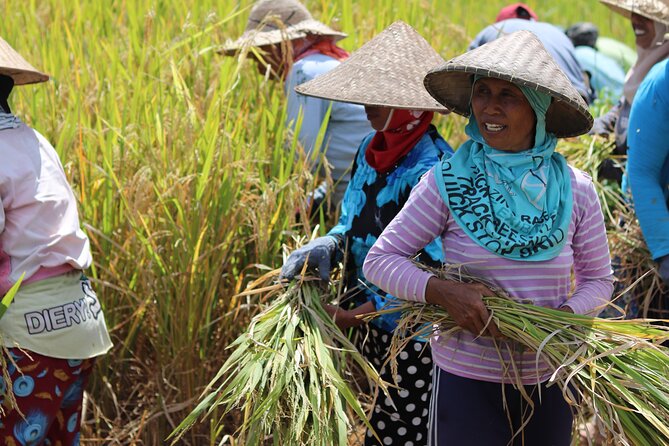
- Walking among rice fields and plantations
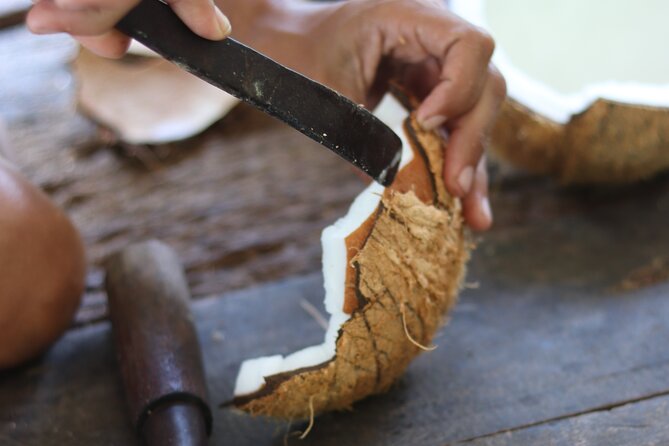
- Making coconut oil by hand
- A wood-fired lunch in the family home
- Weaving leaves into Balinese offerings
- Language, hosting, and the human side
- Who will enjoy this six-hour village day
- Is $72.08 a fair price?
- Practical details that matter
- Should you book this Balinese family visit?
- FAQ
- Where does the activity start?
- What time does the experience begin?
- How long does the activity last?
- Where does the activity end?
- Is pickup available?
- What language does the guide speak?
- Is lunch included?
- How large is the group?
- Can I cancel for a full refund?
Key points to know before you book
- Walk through working rice fields: You observe village life and different ways rice is cultivated, rather than simply viewing the paddies from a road.
- Learn practical home crafts: The visit includes making coconut oil and creating colorful offerings from leaves and plant fibers.
- Share lunch at a family home: Food is prepared locally over a wood fire, with homemade coffee or tea included.
- Ask questions in French or English: The guide speaks one of these languages, and French-language hosting has been particularly useful for cultural questions.
- Keep the group personal: The activity accepts no more than five people, a good fit for couples and families.
- Start early from Ubud: Meet at Coco Supermarket in Pengosekan at 8:30 am, then return there after roughly six hours.
A slower, more personal side of Ubud
Ubud is famous for temples, dance, galleries, and traffic. Not far from town, the mood changes. Village lanes lead to rice fields and plantations, and the day focuses on the people who live and work there.
That change of pace is the point. You are not just looking at Bali from behind a vehicle window. You have a chance to ask how rice is cultivated, why offerings are made, and how coconut becomes a useful household product.
The family welcome is central to the experience. The hosts share their daily work, beliefs, food, and home skills. Names appearing in the experience’s guest feedback include Gaia and Ganyar, and the French-speaking guide has been praised for making it easy to ask detailed questions. Since the exact host can vary, think of these names as examples of the people connected with the experience rather than a guarantee of who will lead your visit.
This is a good choice if you want cultural contact without the pressure of a formal lecture. The learning happens while walking, cooking, weaving, and talking.
Other Ubud days people book alongside this one:
- All-Inclusive Ubud Private Tour
★ 5.0 · 14,344 reviews - Best of Ubud Full-Day Tour with Jungle Swing
★ 5.0 · 8,571 reviews - Ubud: Monkey Forest, Jungle Swing, Rice Terrace, and Water Temple
★ 5.0 · 7,160 reviews
Meeting at Coco Supermarket at 8:30 am
The stated meeting point is Coco Supermarket on Jalan Raya Pengosekan in Ubud. Pickup is offered, but the supplied details identify the supermarket as the start point, so confirm the pickup arrangement when booking if you do not plan to meet there.
The start time is 8:30 am, and the activity lasts about six hours. An air-conditioned vehicle is included, which matters in Bali’s heat and gives you a more comfortable link between Ubud and the village area.
The small group limit is a real advantage. With no more than five people, you should have a better chance to hear explanations, follow demonstrations, and speak directly with the family. It also suits a family group, a couple, or a solo visitor who prefers a quieter setting.
The activity ends back at the meeting point. Lunch, coffee or tea, a donation, transport, and taxes are included. Tips are not included, so carry some local currency if you want to thank the guide or driver.
Walking among rice fields and plantations
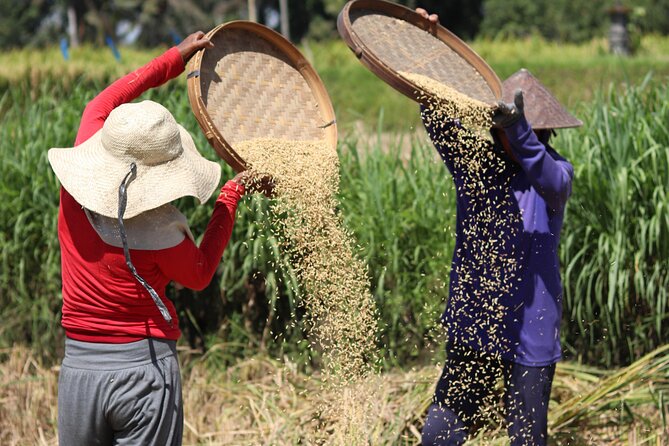
The first main activity is a walk through the village’s rice fields. This is not simply a scenic stroll. The guide explains daily village life and the different methods used to grow rice.
That detail gives the views more meaning. In Bali, rice is closely tied to work, food, water, family life, and local customs. Seeing the fields while hearing about cultivation helps you understand that the paddies are not just a pretty background for photographs.
The route also passes plantations. The supplied information does not specify the exact crops or the walking distance, so you should not expect a fixed hiking route with a published mileage. The important feature is the contact with working farmland and the chance to observe village practices at close range.
Wear comfortable shoes and clothing suited to warm weather. The walk is described as part of a relaxed day, and most people can take part, but rice-field paths may not feel as smooth as paved streets. If you have mobility concerns, ask the operator about the walking conditions before booking.
This section will appeal to you if you like seeing how a place functions. It may feel less satisfying if your main goal is a dramatic viewpoint or a long nature hike.
Making coconut oil by hand
At the family home, you learn about the small-scale production of coconut oil. This is one of the most memorable parts because it turns a familiar ingredient into a process you can see and handle.
Coconut oil is used for cooking and massage, and the demonstration connects both uses to everyday life. Rather than hearing a general explanation about Balinese culture, you take part in a task that belongs to the household economy.
The activity description also refers to making milk and coconut oil, and one family experience included doing this by hand. The exact sequence may depend on the family and the day, but you can expect a practical introduction rather than a factory-style demonstration.
I like this kind of activity because it gives you something concrete to remember. You leave with a clearer sense of the labor behind a product that often appears in shops as a finished bottle.
Do not expect a commercial cooking class with a printed recipe or a formal kitchen setup. The appeal is the home setting and the chance to learn directly from the people who use these methods.
A completely different day out, same corner of Ubud:
- Ubud: Waterfalls, Water Temple & Rice Terraces Private Tour
★ 5.0 · 5,484 reviews - Ubud: All-Inclusive Tour with Optional Lunch
★ 4.9 · 5,438 reviews - Ubud: Guided ATV Quad Bike Jungle Adventure with Lunch
★ 4.8 · 4,881 reviews - Best of Ubud 1-Day Private Tour
★ 5.0 · 4,451 reviews
A wood-fired lunch in the family home
Lunch is served at the inhabitant’s house and prepared as local food over a wood fire. That setting matters. Eating in the same place where the meal is prepared creates a natural pause in the day and gives you more time to talk with your hosts.
The meal is included in the price, as are coffee and tea. Homemade coffee has been singled out as part of the welcome, so coffee lovers should make room for a cup even if the morning began early.
The menu is not specified, and you should not book this expecting a named dish list or a choice of restaurant courses. If you have dietary restrictions, ask in advance. The provided information does not confirm vegetarian, vegan, allergy, or religious-diet arrangements.
A home meal can be one of the strongest parts of a cultural visit, but it also asks you to be flexible. Service will not have the timing or polish of a restaurant. You are there to share food in a family setting, not to compare the meal with a hotel buffet.
For many people, this is where the day feels most social. The hosts are not only demonstrating a craft. They are welcoming you into a domestic space and sharing something made for the household.
Weaving leaves into Balinese offerings
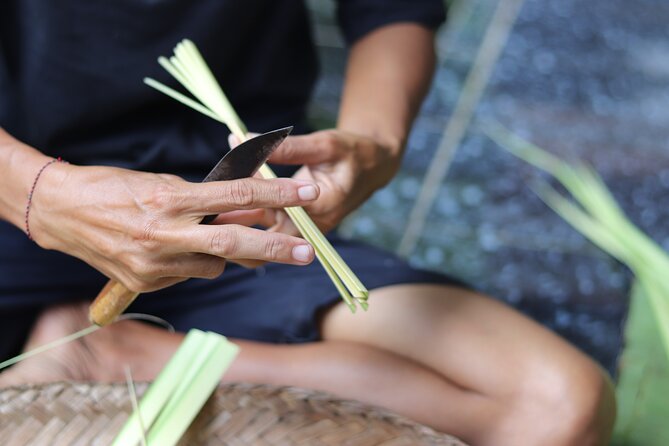
The final major activity introduces you to the making of traditional offerings. You use leaves and plant fibers to create different colorful forms, while the guide explains their meanings.
This is a small craft with a large cultural connection. Offerings are part of daily religious practice in Bali, and learning how they are made helps explain objects you may notice outside homes, shops, temples, and shrines throughout the island.
The hands-on element makes the lesson easier to remember. You are not only told that offerings matter. You see the materials, try to interweave them, and learn why the finished forms are prepared with care.
The task may require patience. If your first attempt looks uneven, that is part of the fun. The family’s role is to guide you, not to turn the activity into a test.
This is also a respectful way to learn about belief. The experience presents the making of offerings through daily practice and conversation, rather than treating Balinese customs as a performance arranged only for photographs.
Language, hosting, and the human side
The experience includes a French or English-speaking guide. French speakers have a particular reason to consider it, since the French-language guide has been praised for answering questions about village culture and customs with warmth and humor.
The supplied details connect the experience with hosts named Gaia and Ganyar. Gaia is described as welcoming visitors into her home, showing how offerings and coconut oil are made, and sharing a meal. Ganyar and the family are associated with a warm welcome and a homemade meal. Your host may differ, but these accounts suggest that the family connection is not an incidental stop.
A driver is also part of the arrangement. The driver has been described as punctual, friendly, and good-humored, useful qualities when a six-hour activity begins and ends at a fixed point.
The guide and host make a major difference here. The rice fields and coconut trees are attractive, but the day depends on conversation. I would book this for the opportunity to ask questions and listen, not just for the scenery.
Who will enjoy this six-hour village day
This activity suits you best if you:
- Want to understand Balinese customs through daily work
- Prefer a small group to a large coach tour
- Enjoy home cooking and informal conversation
- Like hands-on activities such as weaving and food preparation
- Are traveling as a couple, solo, or with older children
- Want French-language support in Bali
- Have six hours available for a gentle cultural outing
Families can do well here. The experience has been enjoyed by children aged seven and twelve, who liked the activities and family setting. Younger children may need help during the walk and craft work, but the supplied information says most people can participate.
It is less suited to you if you want a strenuous walk, a long list of famous landmarks, or a polished culinary workshop. There is no stated temple visit, dance performance, shopping stop, or formal cooking-class menu. The value comes from time spent with a family.
Is $72.08 a fair price?
At $72.08 per person, the price is higher than paying for a simple meal or hiring a driver for a short village outing. But the comparison is not quite fair. The fee covers about six hours, an air-conditioned vehicle, a guide, lunch, coffee or tea, taxes, and a donation, along with the family-based activities.
The small group size improves the value. A private or nearly private conversation is harder to arrange independently, especially if you do not speak Indonesian. The guide also helps explain details that you might otherwise miss while walking through the fields or watching an offering take shape.
The strongest value is cultural access. You are paying for time, interpretation, transport, and a welcome into a household. If you would happily spend part of your Bali holiday learning how people work, cook, and practice traditions, the cost is reasonable.
If you mainly want attractive photographs, you can see rice fields more cheaply. The price makes sense only if you want the personal contact and hands-on parts too.
The activity is often booked well ahead, with an average booking time of about 36 days before the visit. That is not a rule, but it suggests that you should reserve early if your Ubud dates are fixed, especially for a group of up to five.
Practical details that matter
Confirmation is provided when you book. Pickup is offered, while the named meeting point is Coco Supermarket in Pengosekan. Since the experience returns there, plan your day around that starting and ending location.
Service animals are allowed, and the activity states that most people can participate. The walking portion and village setting still make sensible footwear important. Ask ahead about any specific mobility, food, or language needs because the supplied details do not give more precise arrangements.
The cancellation rule is straightforward: cancel at least 24 hours before the 8:30 am start for a full refund. Changes or cancellations made inside that 24-hour window are not accepted for a refund. If the operator cancels because the minimum number of people is not met, you are offered another date or experience, or a full refund.
Should you book this Balinese family visit?
Book it if you want a human-scale day near Ubud. The strongest reasons are the tiny group, the family meal, the rice-field walk, the coconut-oil demonstration, and the chance to make offerings while learning what they mean.
I would especially recommend it to couples, families with school-age children, solo visitors, and French speakers who want room for questions. It is also a good choice if you have already seen several temples and want to spend a morning and afternoon learning how village life works.
Skip it if your Bali schedule is packed with major sights or if you dislike unstructured conversation. This is not a rapid tour. It asks you to slow down, accept a home setting, and take interest in ordinary tasks.
For the right kind of visitor, that is exactly why it is worth the time and price.
FAQ
Where does the activity start?
It starts at Coco Supermarket on Jalan Raya Pengosekan in Ubud, Kecamatan Ubud, Kabupaten Gianyar, Bali 80571, Indonesia.
What time does the experience begin?
The stated start time is 8:30 am.
How long does the activity last?
The experience lasts approximately six hours.
Where does the activity end?
It ends back at the meeting point, Coco Supermarket.
Is pickup available?
Pickup is offered. The listed meeting point is Coco Supermarket, so confirm the pickup details when booking.
What language does the guide speak?
A French or English-speaking guide is included.
Is lunch included?
Yes. Lunch at the inhabitant’s home is included, along with coffee and tea.
How large is the group?
The activity has a maximum of five people.
Can I cancel for a full refund?
Yes. You can receive a full refund if you cancel at least 24 hours before the experience start time. Cancellations or changes made less than 24 hours in advance are not refunded.
Just added around Ubud
- Authentic hike in the forest with lunch at the inhabitant★ 5.0 · 3 reviews
- Heaven Gate, Tirtagangga and Tukad Cepung Waterfall – All Inclusive★ 5.0 · 3 reviews
- Half Day Uluwatu Temple Sunset, Kecak Dance and Seafood Dinner★ 3.5 · 3 reviews
- Ubud: White Water Rafting with visit Ubud Monkey Forest★ 5.0 · 3 reviews
- ️Bali All Inclusive Tour: Ubud – Tegalalang – Kintamani★ 5.0 · 3 reviews
- East Bali and Lempuyang Temple Tour★ 5.0 · 3 reviews
- Ubud: Temple, Swing, Waterfall, Rice Terrace & Monkey Forest★ 5.0 · 3 reviews
- Blue Lagoon Snorkeling and Lunch with Tukad Cepung Waterfall★ 5.0 · 3 reviews