
Reviewed · HISTORICAL TOURS
Crafting Heritage Batik Painting Workshops
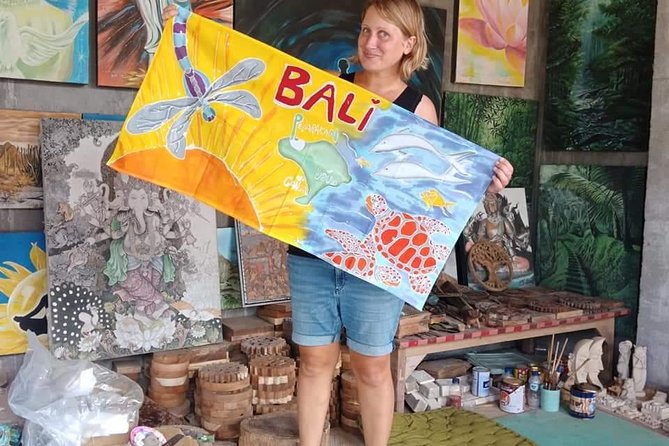
Batik painting turns a few quiet hours near Ubud into a hands-on lesson in Indonesian craft. At Five Art Studio, you sketch a motif, trace it with hot wax, add dye where you want color, then wash away the wax to reveal the original fabric beneath. Your finished piece becomes a personal souvenir, not another shop-bought trinket.
I like the choice between working at your own pace and getting close help from the tutors. I also like the setting: this is a working studio in a Balinese family compound, not a polished activity room built only for tourists. The main consideration is patience. Applying wax neatly is harder than it looks, and small drips or uneven lines are part of the process.
In This Review
- Key points
- Why Batik Makes a Better Souvenir Than Another Shop Purchase
- Arriving at Five Art Studio in Keliki
- Sketching a Design You Can Actually Finish
- The Hot-Wax Stage Requires a Light Hand
- Adding Dye and Watching the Pattern Take Shape
- The Reveal Makes the Three Hours Worthwhile
- How the Teaching Style Shapes the Experience
- What the $29 Price Includes
- Who Will Enjoy This Batik Class Most
- Small Details That Make Planning Easier
- Should You Book Five Art Studio?
- FAQ
- Where is the batik workshop held?
- How long does the experience last?
- What will I learn to make?
- Are materials included?
- Are refreshments included?
- Is lunch included?
- Can beginners and children take part?
- What is the cancellation policy?
Key points
- Make your own original batik: Sketch, wax, dye, and finish a fabric design under guidance.
- Learn in a family compound: Five Art Studio sits outside Ubud in Keliki, giving the class a local, home-based feel.
- Choose your level of help: You can work independently or ask instructors such as Dika and Agong for close instruction.
- Suitable for beginners: You do not need an artistic background, though careful wax work takes patience.
- Refreshments are included: Coffee, tea, snacks, and mineral water are provided during the roughly three-hour session.
- A good-value Bali souvenir: At $29 per person, the class includes materials, instruction, and something handmade to take home.
Why Batik Makes a Better Souvenir Than Another Shop Purchase
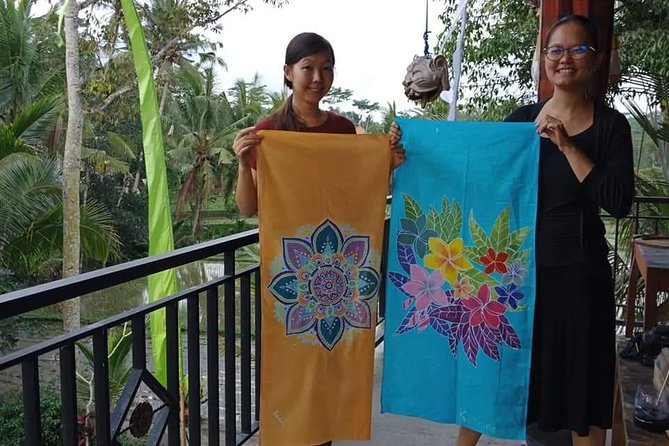
Batik is not simply fabric decorated with pretty color. The method depends on controlling where dye can go. Hot wax acts as a barrier, so the areas covered by wax keep their original color while the uncovered sections absorb dye. Once the wax is removed, the design appears through the contrast between dyed and undyed cloth.
That process gives you a better sense of the craft than a short demonstration would. You are not just watching someone produce a finished textile. You are making decisions about the motif, the lines, and the colors, then living with the results when the wax does not land exactly where you intended.
I especially like this as a souvenir for people who have already bought enough carved wood, printed shirts, and decorative objects. Your finished batik may not look factory-perfect, but it carries the memory of a particular afternoon in Bali. The little irregularities are part of its story.
The class welcomes beginners, and the teaching style is designed to help you succeed. Still, you should not expect a quick coloring session. One participant described the process as harder than expected, while also being pleased with the final result. That is a fair warning: you will have fun, but you will need to slow down and accept a few happy accidents.
A few more Ubud half-days to weigh up
- Hands-On Silver Jewelry Making Near Ubud’s Monkey Forest
★ 4.9 · 1,789 reviews - Ubud Cooking Class Bali with Balinese Chef
★ 5.0 · 1,609 reviews - Ubud Silver Class Jewelry making in bali
★ 5.0 · 978 reviews
Arriving at Five Art Studio in Keliki
The meeting point is Five Art Studio on Jl. Raya Keliki, in Keliki, Tegallalang, Gianyar, north of central Ubud. The session begins and ends at the studio, so plan your own way there. The information provided notes access near public transportation, but it does not include hotel pickup or a return transfer.
The location matters. Instead of spending the class in a large commercial workshop, you work in a casual studio connected with a family home compound. That gives you a look at how a Balinese artist lives and works, while also placing you in a real creative setting.
The studio has been described as peaceful, rustic, and active. You might find local artists, children, expatriates, and first-time painters working in the same space. That mix can make the experience feel less like a formal lesson and more like an open art afternoon.
On arrival, you can expect a comfortable welcome with mineral water, coffee or tea, and snacks. If you arrive before the class begins, one instructor has offered a short look around the studio and tea while waiting. The atmosphere is informal, but the materials and work areas are set up for the full process.
Sketching a Design You Can Actually Finish
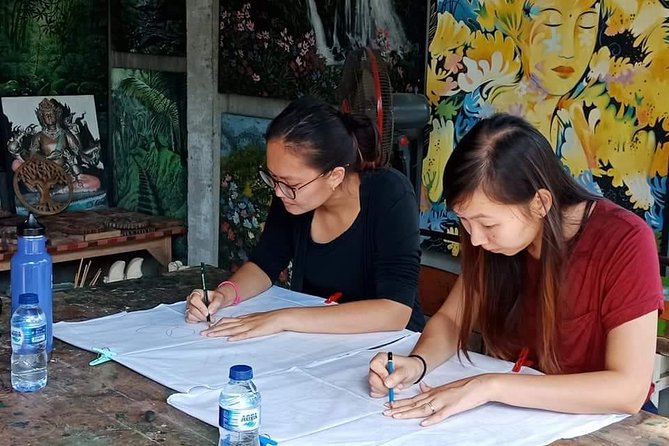
The first creative choice is your design. You can bring your own idea or select from motifs and stencils prepared by the studio. The available designs range from simple outlines to more detailed patterns, so you can choose a project that matches your patience and confidence.
This is an important part of the class. A very complicated image may look appealing at the start, but every line must later be traced with hot wax. If you are new to batik, a simpler design gives you more room to learn the technique without spending the whole session worrying about tiny details.
You begin by sketching or tracing the design onto fabric. The instructors explain each stage and help you understand how the wax and dye will affect the final image. You can follow a suggested motif closely, or change it with your own details.
The class works well for mixed groups because the process can be adjusted. Confident artists can make more independent choices, while beginners can ask for a template and direct assistance. A six-year-old has been helped through the entire activity, though the stated tour information also asks participants to have a strong level of physical fitness. Families should judge the age and energy of each child for themselves.
The Hot-Wax Stage Requires a Light Hand
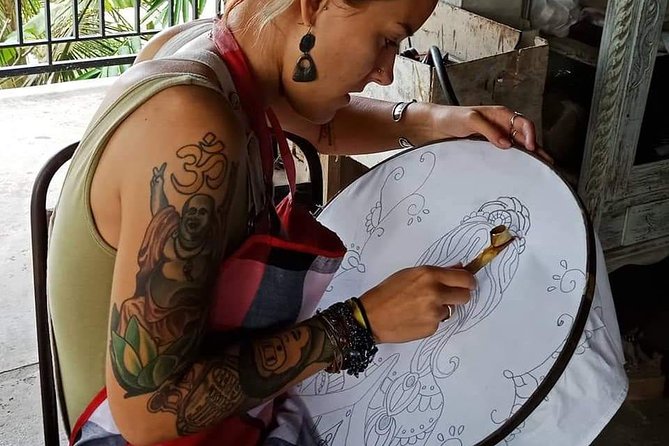
The most delicate stage is applying hot wax to the fabric. You use the wax to create barriers around areas that should remain their original color. This is where the class becomes more demanding than ordinary painting.
Wax can drip. Lines can become thicker than planned. A hand that moves too quickly may create gaps, while a hand that hesitates can leave an unwanted blob. You should expect the instructor to demonstrate the method, then let you practice under supervision.
The teachers are patient and encouraging. Dika is specifically praised for giving clear help, and Agong has guided children through the complete process. The instruction is not presented as a rigid technical exam. You are shown how to proceed, then given space to add your own touch.
That balance is one of the strongest reasons to book. Some art workshops take over and leave you feeling as if you only followed orders. Here, you can ask for help when needed without giving up control of the design.
Do not judge your fabric too early. At the wax stage, the piece may look messy or unfinished. The result becomes clearer once color is added and the wax is removed. If you drop wax in the wrong place, the instructor can help you adapt the design rather than treating the mistake as a failure.
A completely different day out, same corner of Ubud:
- All-Inclusive Ubud Private Tour
★ 5.0 · 14,344 reviews - Best of Ubud Full-Day Tour with Jungle Swing
★ 5.0 · 8,571 reviews - Ubud: Monkey Forest, Jungle Swing, Rice Terrace, and Water Temple
★ 5.0 · 7,160 reviews - Ubud: Waterfalls, Water Temple & Rice Terraces Private Tour
★ 5.0 · 5,484 reviews
Adding Dye and Watching the Pattern Take Shape
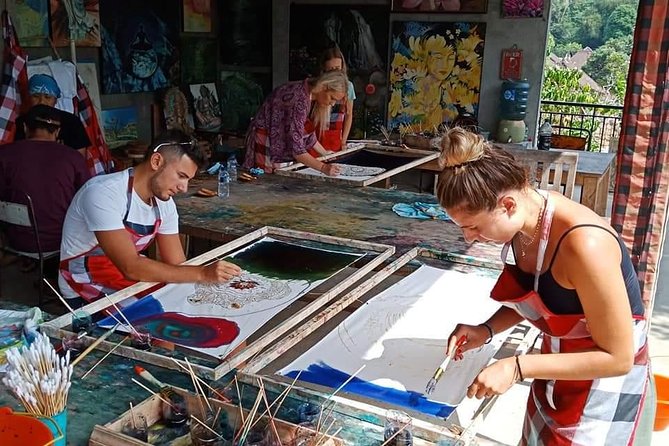
After the wax lines are in place, you add colorful dyes to selected parts of the fabric. You can use the suggested colors or experiment with blends. The studio team guides you through the painting process, but the color choices remain yours.
This is where the class becomes more playful. Wax work calls for control, while dye lets you make broader visual choices. You might keep the colors simple, build contrasts, or blend shades for a softer effect.
The method also teaches you to think ahead. If a section is protected by wax, the dye will not cover it in the same way as the open fabric. The order of your choices matters, and the instructors can explain what to expect before you commit.
The dye stage is friendly to non-artists because the goal is not exact reproduction of a masterwork. One participant who described being uncoordinated still produced something they felt proud of. That is the right expectation for this class: aim for a meaningful handmade piece, not museum-level precision.
You may find that the painting takes more concentration than expected. That can be a good break from sightseeing. After days of traffic, markets, temples, and scheduled stops, focusing on one small piece of fabric gives your attention somewhere calm to go.
The Reveal Makes the Three Hours Worthwhile
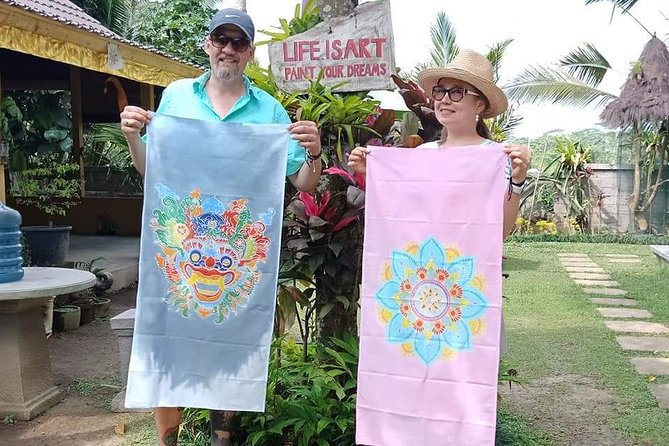
The most satisfying moment comes when the wax is washed away and the protected outlines remain in the original color. The design suddenly makes sense. Lines that seemed too thick, and color choices that looked uncertain, come together as a finished batik.
The final piece is yours to take home. The exact size and finishing details are not specified, so you should ask the studio team what form your work will be in before you begin if packing space matters. The key point is that the class includes the materials and produces a personal fabric artwork.
The result may show uneven edges or small marks. That is not a defect to hide. It records the fact that you made it by hand, in a Balinese studio, during your own holiday.
I would allow the full three hours rather than trying to squeeze this into a tight morning between other plans. The work has several stages, and rushing the wax or dye can make the class less enjoyable. The session ends back at Five Art Studio, with no further scheduled stop included.
How the Teaching Style Shapes the Experience
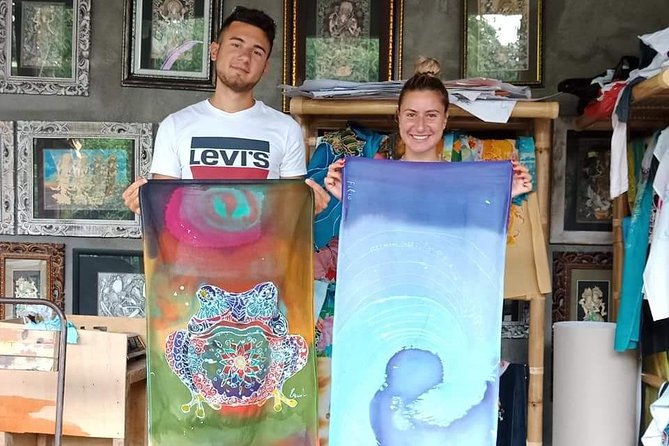
The instructors are the heart of this activity. The team introduces the basic background of batik, demonstrates the process, and then stays available while you work. English-language guidance has been praised, and individual support is available when someone gets stuck.
You can work independently if you prefer not to be hovered over. That suits experienced artists or anyone who wants a quiet creative project. If you are nervous about the hot wax, the design, or the color stage, ask for more direct help.
The class has also received strong praise for its relaxed mood. The staff are described as kind, helpful, patient, and encouraging. Those qualities matter more here than a formal lecture because batik requires repeated small decisions. You want a teacher who can correct your technique without taking over the project.
The maximum group size is 30 people. That is a fairly large possible group for a craft activity, so the feel may depend on the number booked that day. A smaller class can give you more one-to-one time. One person attended alone and received individual instruction, though they felt a few more students might have made the social side more fun.
What the $29 Price Includes
At $29 per person, the value is good if you want an activity that combines instruction, materials, refreshments, and a take-home object. You are paying for roughly three hours of guided work, not simply a short demonstration.
The included materials are important. You do not need to source fabric, wax, dyes, or painting tools before arriving. Coffee, tea, snacks, and mineral water are also included, which helps keep the session comfortable without turning it into a full meal.
Lunch is not included, but local food can be ordered. Alcohol is available to purchase. Since lunch is an optional add-on rather than part of the class, plan accordingly if you expect to be at the studio around midday.
The price does not include transportation to Keliki. You should factor in your own transfer costs and travel time from Ubud. The mobile ticket makes entry convenient, but it does not remove the need to arrange the journey to the meeting point.
Free cancellation is available if you cancel at least 24 hours before the local start time. Cancellations or changes inside that window do not qualify for a refund.
Who Will Enjoy This Batik Class Most
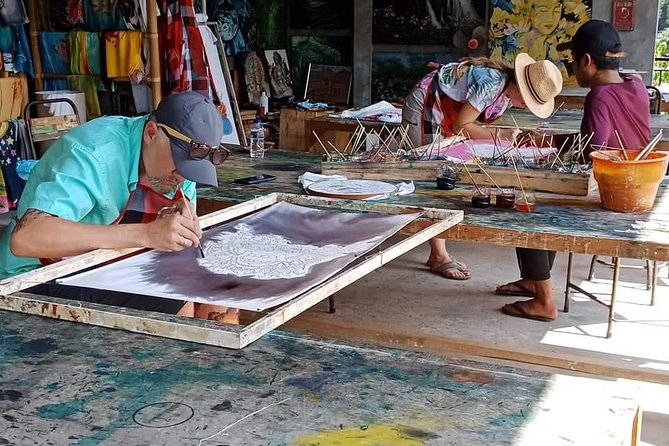
This is a strong choice for you if you want a quieter Bali activity with a clear sense of place. It suits couples, families, solo visitors, and anyone who likes making things with their hands.
You do not need to call yourself artistic. The studio offers designs and guidance, and the instructors can help you through each step. You do need to accept that handmade work takes time and that the finished piece may not match the picture in your head.
Families should appreciate the flexible teaching. Children can take part with close help, though hot wax means adults should pay attention throughout. The activity can also work well for a group with different skill levels because each person can choose a simple or detailed design.
It may be less suitable if you want a fast, polished attraction with constant entertainment. Batik rewards concentration. If you dislike careful tracing, slow work, or imperfect results, you may find the process frustrating.
The stated fitness requirement is worth noting, even though the activity is primarily artistic. The supplied information does not explain what level of mobility is needed, so contact the provider if you have concerns about the studio setup or time spent working there.
Small Details That Make Planning Easier
The activity is listed for about three hours and returns to the same meeting point. Build extra time around it for getting to and from Keliki, since no hotel transfer is included.
Bring your mobile ticket and choose clothing you do not mind wearing during a dye-based craft session. The provided details do not state a dress code or a specific packing list, so the safest approach is practical clothing and a willingness to work carefully.
The class accepts service animals and is near public transportation. The maximum capacity is 30 people, but the actual group size can vary. If personal instruction is important to you, ask about the expected class size when booking.
The studio has received a 5 out of 5 rating from 164 published ratings, with 99 percent recommending it. Those figures suggest a very dependable experience, but they do not change the basic tradeoff: the best results come from patience, not from rushing to finish.
Should You Book Five Art Studio?
Book this class if you want to learn a traditional Indonesian art form, meet local artists in a family compound, and take home something you made yourself. At $29, the combination of instruction, materials, refreshments, and a finished batik offers solid value.
I would choose it over a standard souvenir stop, especially if your Bali schedule already includes enough sightseeing. Just allow the full three hours, arrange your own transport to Keliki, and arrive ready for wax drips, uneven lines, and a little creative problem-solving.
Skip it if you want a passive show or have no patience for detailed handwork. For everyone else, this is an affordable, personal way to spend an afternoon near Ubud and come away with a souvenir that carries your own fingerprints.
FAQ
Where is the batik workshop held?
The workshop is held at Five Art Studio, Jl. Raya Keliki, Keliki, Tegallalang, Gianyar, Bali 80561, Indonesia.
How long does the experience last?
The workshop lasts approximately three hours.
What will I learn to make?
You will create your own batik fabric artwork using a design, hot wax, and colorful dyes.
Are materials included?
Yes. The materials needed to make your original batik are included.
Are refreshments included?
Yes. Snacks, coffee or tea, and mineral water are included.
Is lunch included?
Lunch is not included, but local food is available to order at the studio.
Can beginners and children take part?
Yes. The activity is suitable for beginners, and the instructors can provide close help. The provided information also notes that children can be guided through the process, though participants should have a strong level of physical fitness.
What is the cancellation policy?
You can cancel at least 24 hours before the local start time for a full refund. Cancellations or changes made less than 24 hours before the start time are not refunded or accepted.
Just added around Ubud
- Authentic hike in the forest with lunch at the inhabitant★ 5.0 · 3 reviews
- Heaven Gate, Tirtagangga and Tukad Cepung Waterfall – All Inclusive★ 5.0 · 3 reviews
- Half Day Uluwatu Temple Sunset, Kecak Dance and Seafood Dinner★ 3.5 · 3 reviews
- Ubud: White Water Rafting with visit Ubud Monkey Forest★ 5.0 · 3 reviews
- ️Bali All Inclusive Tour: Ubud – Tegalalang – Kintamani★ 5.0 · 3 reviews
- East Bali and Lempuyang Temple Tour★ 5.0 · 3 reviews
- Ubud: Temple, Swing, Waterfall, Rice Terrace & Monkey Forest★ 5.0 · 3 reviews
- Blue Lagoon Snorkeling and Lunch with Tukad Cepung Waterfall★ 5.0 · 3 reviews
Historical Tours, compared.

Private Jatiluwih Rice Terraces Heritage Site and Culture Tour
Read our review →

Nungnung Waterfall,Jatiluwih Heritage UNESCO and Bedugul Tour
Read our review →
Browse the lists this tour appears in