
Reviewed · UBUD
ARMA Museum Visit
ARMA is more than a room full of paintings. This Ubud art center combines a permanent collection with temporary exhibitions, performances, classes, workshops, and quiet reading spaces. You set the pace, so you can make a quick art stop or give the visit a proper afternoon.
I like the flexible admission and the included coffee or tea. I also like the setting within a larger cultural center, close to other things worth doing in Ubud. The main consideration is that this is an admission visit, not a structured guided tour, so you should not expect a named guide or a detailed commentary at every artwork.
In This Review
- Key points
- ARMA Museum gives you more than a quick art stop
- What you see inside the Agung Rai Museum of Art
- A cultural center, not just a museum
- How long should you allow at ARMA?
- Why the self-paced format works well
- The free coffee or tea adds practical value
- Is the $9.38 ticket good value?
- Who will get the most from this visit?
- Practical planning for your Ubud day
- My final take on ARMA Museum
- FAQ
- Where is the ARMA Museum Visit located?
- How much does admission cost?
- How long does the museum visit take?
- Is a hot drink included?
- Is lunch included?
- Are other food and drinks included?
- Do I have to follow a group?
- Can most people participate?
- Can I cancel for a full refund?
Key points
- A self-paced Ubud art visit: Spend about 30 minutes to 2 hours exploring without waiting for a group.
- A broad Indonesian collection: Look for traditional batik paintings alongside contemporary works.
- More than gallery rooms: ARMA also includes performing arts, classes, workshops, a library, and cultural programs.
- Coffee or tea included: Redeem your admission for one free hot drink.
- Useful advance planning: Entry is secured ahead of time, and the activity is commonly booked about 24 days before the visit.
- A small but well-rated cultural stop: The experience has a 4.5 rating from 46 ratings, with 93 percent recommending it.
ARMA Museum gives you more than a quick art stop
The Agung Rai Museum of Art, usually called ARMA, is one of Ubud’s best-known places for Indonesian art. Your ticket gives you a reason to slow down and look closely at work that can be missed when Ubud is treated only as a base for temples, rice fields, and restaurants.
I like the fact that the visit is not locked to a short group schedule. You can move through the collection at your own speed, pause when a painting catches your eye, and leave after half an hour if you have other plans. If you are the kind of person who reads every label and wants time with the art, you can stay for up to about two hours.
The ticket also helps reduce the uncertainty of arriving without a plan. Advance admission is useful during a busy Ubud day, especially if you have arranged several activities around a fixed schedule. It does not turn the museum into a guided tour, but it gives you a simple, low-commitment cultural activity.
Other Ubud days people book alongside this one:
- All-Inclusive Ubud Private Tour
★ 5.0 · 14,344 reviews - Best of Ubud Full-Day Tour with Jungle Swing
★ 5.0 · 8,571 reviews - Ubud: Monkey Forest, Jungle Swing, Rice Terrace, and Water Temple
★ 5.0 · 7,160 reviews
What you see inside the Agung Rai Museum of Art
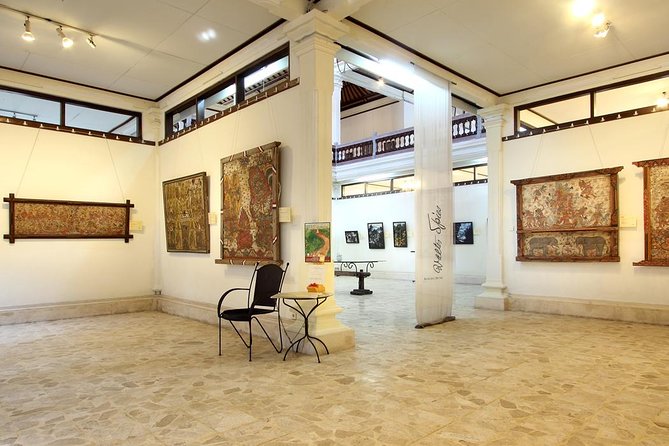
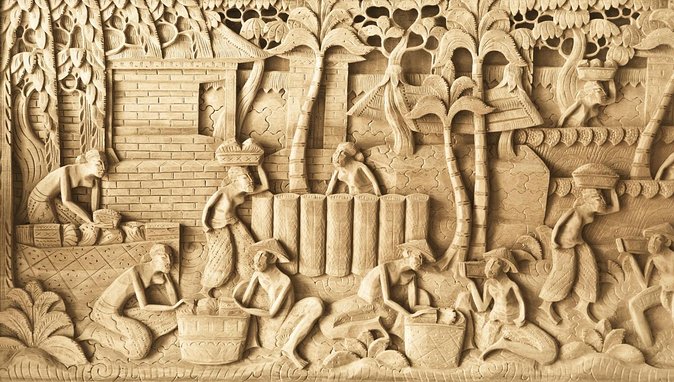
ARMA’s collection covers traditional batik paintings as well as contemporary masterpieces. That range matters. You are not looking at one narrow period or one single style, but at different ways Indonesian artists have used cloth, paint, subject, and technique.
Batik is especially important to notice. Batik painting is tied to a familiar Indonesian art form, but museum pieces let you consider it as fine art rather than as a souvenir pattern. Take time to look at the surface, repeated shapes, and detailed work before moving on.
The contemporary pieces give the visit a different rhythm. After traditional works, newer paintings can feel less formal and more open to personal interpretation. You may prefer one section to another, but the contrast is useful because it shows how Indonesian art can connect older methods with newer ideas.
The available information does not provide a room-by-room map or a full list of artists. I would treat that as a reason to leave some room in your schedule rather than trying to plan every painting in advance. The museum is best approached with curiosity, not with a checklist.
A cultural center, not just a museum
ARMA’s purpose reaches beyond its permanent collection. The center supports visual and performing arts, with programs that may include theater, dance, music, painting classes, cultural workshops, conferences, seminars, and training programs.
Your admission is centered on the museum visit, so the ticket should not be treated as a promise that every performance or class will be running during your visit. Still, the wider program changes the feel of the place. You are visiting a center built to keep art connected with practice, teaching, and public events.
There is also a bookshop, library, and reading room. These features will matter most if you want a slower cultural stop rather than a quick gallery walk. I would not rush straight through the rooms and call it done. The reading and cultural spaces can help you understand why ARMA is designed as an arts institution rather than only a display venue.
The museum’s stated aim is to present the uniqueness and variety of Balinese and Indonesian culture to an international audience. That gives the visit a clear purpose. You are not simply looking at attractive pictures. You are seeing an institution built to support Indonesian culture through exhibitions, education, and performance.
How long should you allow at ARMA?
The official visit time is about 30 minutes to 2 hours. That wide range is helpful because it suits different Ubud itineraries.
Allow around 30 minutes if you want a short introduction to Indonesian art between other activities. You can see part of the collection, enjoy the included hot drink, and continue with your day. This works well if your schedule already includes several stops.
Plan closer to two hours if you want to examine the paintings, visit the cultural facilities, and take the visit at a calm pace. Art museums can feel tiring when you rush, and ARMA gives you enough flexibility to avoid that problem.
I would not build an entire day around this ticket based on the information available. The visit is more naturally paired with other plans in Ubud. One particularly useful detail is its location near other things to do, making it easy to place ARMA into a broader day rather than making a separate long journey only for the museum.
A completely different day out, same corner of Ubud:
- Ubud: Waterfalls, Water Temple & Rice Terraces Private Tour
★ 5.0 · 5,484 reviews - Ubud: All-Inclusive Tour with Optional Lunch
★ 4.9 · 5,438 reviews - Ubud: Guided ATV Quad Bike Jungle Adventure with Lunch
★ 4.8 · 4,881 reviews - Best of Ubud 1-Day Private Tour
★ 5.0 · 4,451 reviews
Why the self-paced format works well
A fixed tour can be useful when you want every detail explained. It can also be frustrating if the group moves on just as you begin to appreciate a painting. ARMA’s admission format avoids that tradeoff by letting you explore without waiting for a group.
You should choose this format if you enjoy deciding what deserves your attention. You can linger over batik, move faster through works that do not interest you, or return to a gallery before leaving. That freedom is the strongest feature of the visit.
The tradeoff is equally clear. You may need to form your own impressions, since the information provided does not promise a dedicated guide or scheduled explanation. A multilingual guide may operate the activity, but you should not book this expecting a private art lecture.
For many people, that is not a problem. Ubud has plenty of days when you want one quiet, independent stop. ARMA fits that mood better than a tightly timed tour.
The free coffee or tea adds practical value
A hot drink is included with the admission. It is a small detail, but it makes the ticket feel more useful, especially if you are planning a relaxed visit rather than a quick entry and exit.
You should distinguish the included drink from the other food and beverage costs. Lunch is not included, and additional food, drinks, and alcoholic drinks are available to purchase separately. The included item is coffee or tea, not a full meal.
One rating specifically praised the museum and restaurant together, describing the visit as a first-class experience and noting the location near other worthwhile activities. I would read that as a useful planning clue: you can treat ARMA as part of a longer outing, with time for refreshments or a meal nearby, but you should budget separately for anything beyond the included hot drink.
Is the $9.38 ticket good value?
At $9.38 per person, the ticket is reasonably priced for a flexible museum visit in Ubud. The value comes from several small advantages working together: secured entry, no group schedule, access to an established Indonesian art collection, and one included hot drink.
You get the best value if you care about art or want a cultural break from outdoor sightseeing. A person who spends only 30 minutes inside may still find the ticket worthwhile, but the cost becomes easier to justify when you give yourself enough time to look carefully.
The price is less compelling if you want a full guided explanation, transport, lunch, or a packed schedule of activities. None of those are part of the admission. You are paying for entry and freedom, not for an all-day escorted program.
The timing of advance bookings is worth noting. This activity is booked about 24 days ahead on average, which suggests that people often plan it as part of an Ubud itinerary rather than decide at the last minute. That does not guarantee the museum will be crowded on your date, but booking ahead gives you firmer plans and secured admission.
Who will get the most from this visit?
I would recommend ARMA to anyone with a real interest in Indonesian art, especially if you want to see traditional and contemporary work in the same cultural setting. It is also a good choice for someone who wants an easy independent activity with no need to match a guide’s pace.
Families and mixed-interest groups may find the flexible length helpful. One person can make a shorter visit while another takes more time. The available information says most people can participate, and the maximum group size is 100, though your own museum visit is not described as a required group activity.
The visit also suits repeat visitors to Ubud. If you have already seen the major outdoor sights, ARMA offers a different way to spend part of the day. It gives you a chance to focus on local culture without requiring a long excursion.
You may want to choose another activity if your main goal is hands-on participation, transport, or a detailed introduction from a specialist. Painting classes and cultural workshops are part of ARMA’s wider program, but they are not listed as included elements of this admission ticket.
Practical planning for your Ubud day
Book in advance if having a confirmed cultural stop matters to you. Confirmation is provided at booking, and the entry format is designed to let you spend less time waiting and more time inside the museum.
Keep your schedule loose after arrival. The visit can take 30 minutes or two hours, and it is difficult to know in advance which paintings or spaces will hold your attention. A little spare time also lets you enjoy the hot drink instead of treating it as something to collect on the way out.
Do not count on the admission covering lunch or a full food stop. Food and drinks can be purchased separately, and alcoholic drinks are also available at an additional cost. If you want to combine the museum with a meal, plan that as a separate part of the day.
The activity may be operated by a multilingual guide, but the central format remains independent admission. If you need art explained in depth, check what language support is available before booking rather than assuming a personal guide is included.
Cancellation is flexible up to 24 hours before the start time. You can receive a full refund if you cancel at least 24 hours in advance, but cancellations or changes made within 24 hours are not accepted for a refund. The cut-off follows local time in Indonesia, so keep that in mind if you are arranging plans from abroad.
My final take on ARMA Museum
I would book this ticket if you want a calm, affordable art visit that fits neatly into a busy Ubud day. The free-roaming format is the main reason to choose it, and the coffee or tea is a pleasant extra rather than the reason to go.
The museum is a stronger choice for people who enjoy looking at art without needing a guide at every turn. Its mix of batik, contemporary painting, performances, classes, and cultural facilities gives you more context than a quick gallery stop, even though the ticket itself does not include every program.
I would skip it only if your schedule is already packed or if you expect transport, lunch, or a private art lesson. For everyone else, the $9.38 price, flexible 30-minute to 2-hour visit, and location near other Ubud activities make ARMA a practical cultural addition.
FAQ
Where is the ARMA Museum Visit located?
The experience takes place at the Agung Rai Museum of Art, known as ARMA, in Ubud, Indonesia.
How much does admission cost?
The listed price is $9.38 per person.
How long does the museum visit take?
The visit lasts approximately 30 minutes to 2 hours, depending on how much time you spend exploring.
Is a hot drink included?
Yes. Coffee or tea is included with the admission.
Is lunch included?
No. Lunch is not included.
Are other food and drinks included?
No. Additional food and drinks are not included, although drinks and alcoholic drinks are available to purchase separately.
Do I have to follow a group?
No. You can explore the museum at your own pace without waiting for a group.
Can most people participate?
Yes. The activity information states that most people can participate.
Can I cancel for a full refund?
Yes, if you cancel at least 24 hours before the experience start time. Cancellations or changes made less than 24 hours before the start time are not eligible for a refund.
Just added around Ubud
- Authentic hike in the forest with lunch at the inhabitant★ 5.0 · 3 reviews
- Heaven Gate, Tirtagangga and Tukad Cepung Waterfall – All Inclusive★ 5.0 · 3 reviews
- Half Day Uluwatu Temple Sunset, Kecak Dance and Seafood Dinner★ 3.5 · 3 reviews
- Ubud: White Water Rafting with visit Ubud Monkey Forest★ 5.0 · 3 reviews
- ️Bali All Inclusive Tour: Ubud – Tegalalang – Kintamani★ 5.0 · 3 reviews
- East Bali and Lempuyang Temple Tour★ 5.0 · 3 reviews
- Ubud: Temple, Swing, Waterfall, Rice Terrace & Monkey Forest★ 5.0 · 3 reviews
- Blue Lagoon Snorkeling and Lunch with Tukad Cepung Waterfall★ 5.0 · 3 reviews